Doubles-First Pathway 2026: Net Skills to College Tennis
 Tommy
Tommy
Why doubles-first in 2026 works
If you want a faster route into a college lineup and a quicker taste of pro competition, start with doubles. Coaches fill three doubles courts every dual match, and they must trust pairs to create early momentum and steal the doubles point. The fall season has also raised the stakes for individual doubles results, with 32-pair draws and selection criteria that coaches now follow closely. For context on format and timing, see the 32-pair doubles fields at the 2025 NCAA individual championships on the official site: 2025 NCAA DI doubles draws.
Beyond college, doubles can be a quicker on-ramp to professional experience. Futures and Challengers often offer qualifying or main draw opportunities where strong serves, returns, and net instincts create earlier breakthroughs than in deep singles fields. Build a doubles calling card now and you can win matches that open doors to stronger partners, better events, and more coach attention.
This article gives you a step-by-step doubles-first blueprint. It covers formations, serve and return patterns, poach and read cues, communication habits, explosive-fitness mini blocks, partner and tournament selection, and how to package your results and highlights. You will also see a concrete doubles block you can run inside the daily schedule at Gomez Tennis Academy in Naples, Florida.
What makes a recruitable doubles profile
College coaches scan video and notes fast. Help them see these markers within 30 seconds:
- First step to the middle: quick crossover and decisive close from the net player.
- Volley contact in front: crisp, shoulder-high forehand volley; firm backhand volley without a drop.
- Serve and return reliability: heavy first serves to locations, second serves with spin and height, returns that get down on time.
- Formation fluency: clean execution of I and Australian, with simple signals.
- Left-right complementarity: pairs that cover middle balls and switch without confusion.
- Communication: planned signals, short between-point chats, and clear post-point adjustments.
- Close of big points: breaker poaches, body serves on no-ad points, and confident mid-court finishes.
Package those markers in a short highlight and summary. We cover that below.
Formations that scale: I and Australian made simple
Think of formations like interchangeable Lego bricks. Start from two shapes that work against most returners and keep your playbook tight so you can repeat them under pressure.
I formation basics
- Setup: Server starts near the center mark. Net player crouches on the service line along the center to hide direction. Signal with one hand behind the back for poach, stay, fake, or switch after.
- Deuce court use case: If the returner attacks wide serves or avoids your net player, the I shape crowds the middle and hides intent. Serve T or body; net player commits to poach or fake.
- Ad court use case: Neutralize backhand returns by serving at the body while the net player pinches middle lanes.
- Progression drill: Serve eight balls deuce side, alternating T and body. Net player executes a sequence of stay, poach, fake, then switch. Track first volley contact height and whether you close to inside foot or outside foot.
Australian formation basics
- Setup: Server positions on the same side as the net player, leaving the other half of the court wide. This dares the returner to go line.
- Deuce court use case: Protect a server who struggles to hit the wide slice, or punish a returner who loves crosscourt patterns.
- Ad court use case: Force a shaky backhand returner to change direction down the line, which is lower percentage.
- Progression drill: Ten-ball series. Serve wide to open court while the net player guards the line first, then crashes middle on any cross. Chart how many returns land short when you show Australian early.
When to choose which
- If the returner is grooved crosscourt and lining you up, show Australian and force a decision.
- If the returner hides intention well or is teeing off on the middle, go I formation to disguise and intercept.
- If your server hits a consistent T serve, the I formation rewards you with predictable middle balls.
Keep the signals simple
- One finger: net player stays. Two: proactive poach. Three: fake and recover. Thumb out: switch after first ball. Tap the thigh for serve location; inside thigh is T, outside thigh is wide, belt buckle is body.
Serve and return patterns that win big points
Serve and return patterns are the language of doubles. Build three serves and three returns per side, then mix with your formation choices.
Serve patterns
- Deuce court
- T serve plus net player poach: claim the middle and cut off the high-percentage cross return.
- Body serve plus net player stay and pinch: jam the returner and invite a short block you can finish.
- Wide serve plus net player fake: bait the cross return and recover to the alley.
- Ad court
- Body serve into the hip: late contact leads to floaters.
- Wide slice plus switch after first ball: pull the returner off court and free the middle.
- T serve on no-ad point: safest target under pressure, net player active across the tape.
Return patterns
- Deuce court
- Drive low at the net player’s outside hip; this neutralizes aggressive poachers.
- Heavy cross deep through the baseline corner; buy time to deploy a lob on ball two.
- Short angle dip cross to the server’s feet; invite an error volley.
- Ad court
- Body-back return that jams the server; look for a sitter on ball two.
- Backhand lob return down the line when the net player is pinching middle.
- Firm down the line through the doubles alley when they show a lazy Australian.
Point-planning for no-ad
On deciding points, reduce variables. Call a formation that removes your opponent’s best pattern. On serve, go T or body most often. On return, choose your highest make pattern: deep cross, body-back, or a practiced lob.
Poach and read cues: what the best see
Great doubles looks slow because the net player is reading early.
- Toss direction: wide and out front often signals wide serve; a toss tugged over the head usually means T.
- Server’s first step: opening the front hip toward the sideline hints at a wide delivery; a closed step suggests T or body.
- Backswing speed: a short punchy backswing often produces a block return; big loops telegraph drives.
- Contact height and strings angle: open face and low contact suggest a float; closed face at shoulder height can drive.
To sharpen this skill, layer in the progressions from Anticipation drills that win points.
Poach timing cues
- Move on the server’s upward swing, not after contact. Think first micro step as the server leaves the ground, second step through contact, reach across and catch the return out in front.
- If you fake, sell it with a hip turn and shoulder tilt, not only a foot shuffle. The goal is to redirect the returner’s aim.
Drills to build reads
- Shadow reads: stand at net and call serve location from toss without a ball. Ten reps each side.
- Return mapping: feed machine returns to the server’s body, T, and wide; the net player calls early read and acts.
- Poach ladder: eight returns cross, two down the line. Net player must intercept at least four of the eight cross balls.
Communication habits: three conversations every point
You need one mini talk before, one silent talk during, and one debrief after.
- Before the point: signal serve spot and net action. Say the first ball plan in six words or fewer. Example: T serve, you poach, I cover.
- During the point: hand flash to claim middle, verbal mine on floaters, yours on balls behind you. Nonverbal is faster than full sentences.
- After the point: three seconds only. Keep, tweak, or change. Example: keep T serve; my first step was late.
At changeovers, confirm rotations with formations. Decide which return target you will take away next game. Assign one player to track whether formations created the look you wanted.
Explosive-fitness add-ons to feel faster at the net
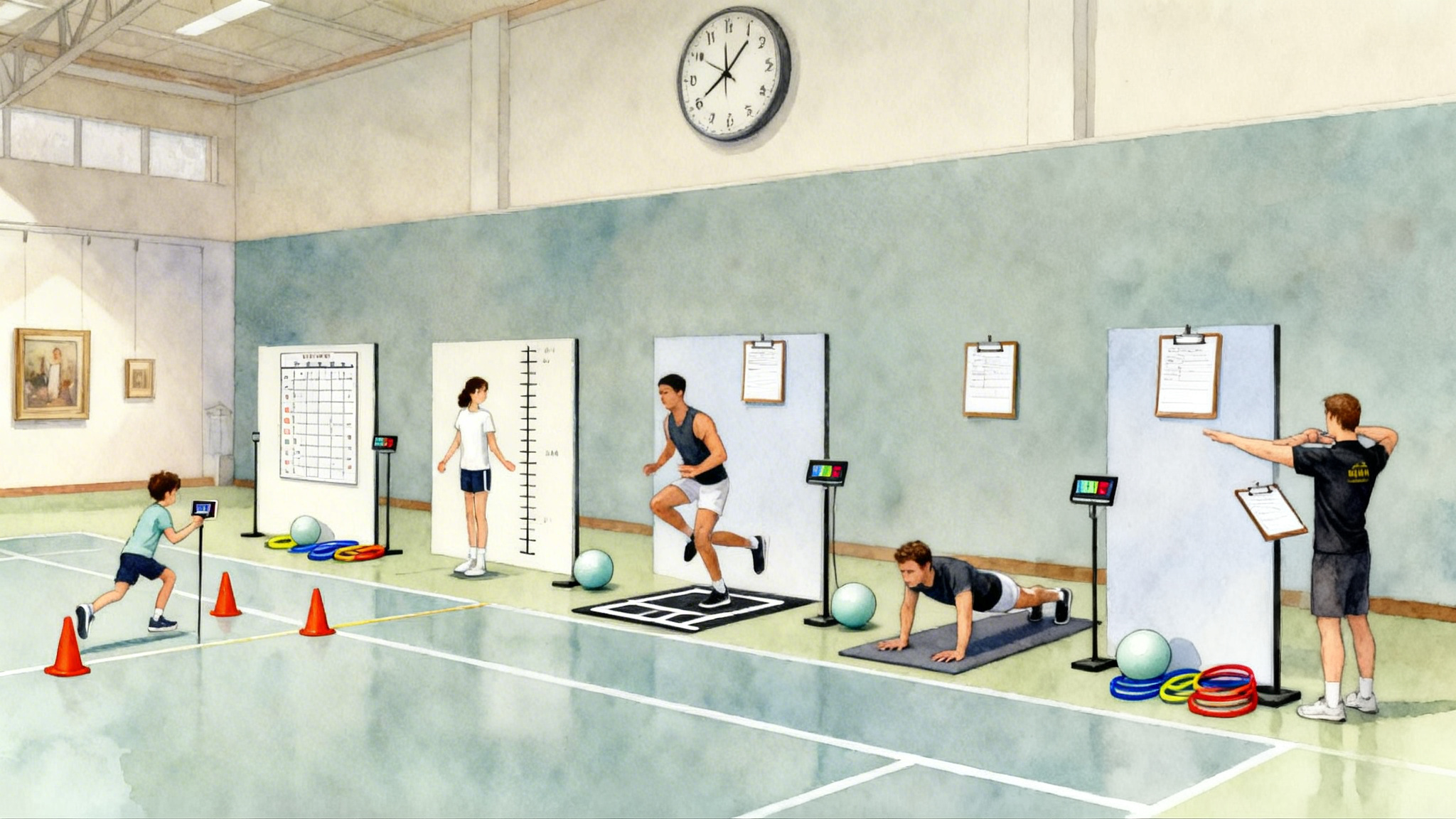
A doubles-first pathway rewards short, explosive work. Add 10 to 15 minutes before or after practice.
- Med ball rotational throws: 3 sets of 6 per side; focus on hip-to-shoulder whip.
- Resisted crossover starts: 3 sets of 10 yards; band or sled; eyes level.
- Lateral skater bounds into stick: 3 sets of 6 per side; soft landings, hold one second.
- Mini-hurdle quick steps plus volley shadow: 3 sets of 12 seconds; hands out front.
- Band row to chest pass: 2 sets of 8; finish with a quick step forward as if closing the net.
- Short-court reaction: coach tosses from service line; you step across and volley to targets for 30 seconds on, 30 seconds off, 4 rounds.
Microdose this work. On heavy tennis days, pick two of the above. On lighter days, do four. Track jump height or sprint time once a week to see if the speed you feel becomes speed you can measure.
Partner and tournament selection: ladder your way up
Choose partners and events that put your strengths in the middle of points.
How to pick a partner
- Complementary serves and returns: a righty with a strong deuce serve pairs well with a lefty who hits heavy ad returns, or vice versa.
- Net instincts: at least one proactive poacher. Two is ideal, but one confident closer wins a lot of points.
- Temperament and roles: decide in advance who calls formations, who is the energy voice, and how you reset after tough points.
- Scouting matchups: if you are a soft-handed volleyer, team with a big server; if you are a heavy returner, pair with a sticky net player.
Which events and when
- Juniors: aim for events that publish doubles draws with meaningful ranking impact. Balance local wins with regional or national events where you can beat ranked pairs. Plan two doubles-focused blocks per month with one higher-level event for stretch.
- College prospects: where permitted, play summer tournaments with college-caliber doubles fields. Results against known college pairs give coaches clear reference points.
- Competitive adults: play USTA statewide or sectional events that draw strong doubles fields. Enter Open or combined-level tournaments where you can claim ranked wins. Upgrade slowly: two successful events at your level, then one stretch event above.
Track opponents and results in a live document. Note formation success percentages and which serve-return combos earned you the most no-ad points. Build a simple rating of your pair’s strength on deuce and ad.
Package results and highlights for coaches
Think like a product manager. Make it easy to evaluate you.
- One-page doubles profile: height, dominant hand, backhand side preference, serve spots by percentage, return targets by side, favorite formation on no-ad points, win-loss record with partners, and notable wins.
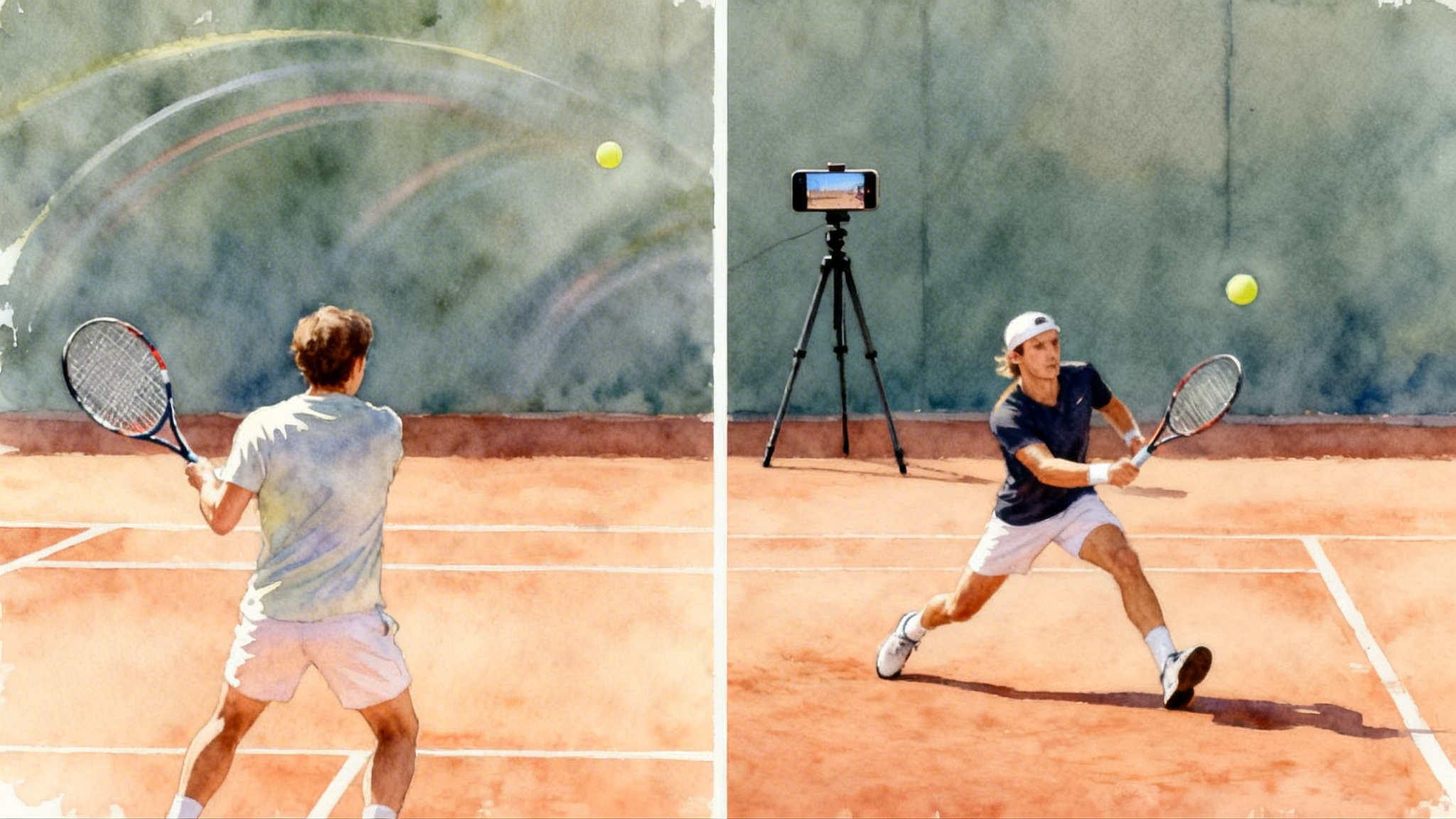
- Video highlight: 60 to 90 seconds. Start with a five second slate that lists name, grad year if relevant, current city, and contact. Then show three sequences: serve plus first volley; return plus poach; neutral-to-finish in the middle. Avoid long rallies. Coaches want first steps and decisions. For filming and tagging, see the AI Tennis Video 2026 guide.
- Full match sample: link one full set against a quality pair. Add timestamps for four key points that show your formations at work.
- File naming: lastname_firstname_doubles_highlight_2026.mp4 and lastname_firstname_doubles_profile_2026.pdf.
- Email subject: Doubles profile and film: Firstname Lastname, class year or adult, city. Body: 2 to 3 sentences, key results, link to profile and highlight, upcoming schedule. Respect recruiting calendars and contact rules for your level.
A Gomez-style doubles block you can run this week
Gomez Tennis Academy publishes a structured day with two tennis blocks and fitness, which makes it simple to insert a focused doubles session. Use that scaffolding and run the following inside one block. For a snapshot of the setup, see the Gomez Tennis Academy program overview.
1:30 to 4:00 p.m. doubles block template
- 1:30 to 1:40 Warm up and footwork: short-court volleys, mini-hurdle quick steps, and one med ball series.
- 1:40 to 1:55 Serve and return calibration: three locations each side; 12 balls per player; track make rates.
- 1:55 to 2:25 I formation live reps: 12-point games starting deuce side only; server chooses T or body; net player alternates poach and fake every other point.
- 2:25 to 2:55 Australian formation live reps: 12-point games, ad side emphasis; server wide then body; net player guards line for the first two balls then crashes middle.
- 2:55 to 3:15 Poach-read ladder: coach feeds returns with varied pace; net player must intercept 5 of 10 cross returns; on a down-the-line tag, server sprints and digs one ball to reset.
- 3:15 to 3:35 Pressure games: no-ad games starting 30 all only; server must call T or body before each point; net player calls stay or go. Losers add a 10 second isometric lunge hold between games as small punishment.
- 3:35 to 3:50 Match play with constraints: first three points of each game are formation-mandated, last points are free. Score to four games. Capture video clips of two deciding points.
- 3:50 to 4:00 Debrief and upload: update make rates, note which calls earned free points, and a single change to try tomorrow.
This entire block fits within a published tennis window and can be repeated three times per week with slight constraint changes.
A 6-week doubles-first blueprint by age and stage
You can layer the above into six weeks. Adjust the volume to your age and schedule.
Juniors 13 to 15
- Goal: form two stable partnerships and learn I and Australian well enough to call them on no-ad points.
- Weekly plan: two doubles blocks, one match day, one video session of 20 minutes. Track serve and return make rates and a simple poach success count.
- Tournament target: two local events in six weeks; aim for three ranked wins as a pair. Do not chase draws every weekend. Instead, get repeatable patterns.
Juniors 16 to 18 with college goals
- Goal: show formation fluency, high make rates on second serve and return, and clutch no-ad execution.
- Weekly plan: three doubles blocks inside team or academy schedule, one singles maintenance day, fitness microdoses after three days.
- Evidence package: one-page doubles profile, 60 to 90 second highlight, and a full set against a ranked pair. List notable wins, formation usage in deciding points, and upcoming events.
- Events: mix one stretch event with one level event every two to three weeks. Prioritize competitions where your results will be visible to college coaches.
College players looking for lineup impact
- Goal: upgrade your pair’s no-ad point conversion. Aim for 60 percent or better over six weeks.
- Weekly plan: embed doubles segments before team practice; short constraints like 30 all start, formation call required, and server must hit body or T.
- Film: tag every deciding point with serve spot, formation, and outcome. Surface one trend to your coach weekly with a proposed fix.
Competitive adults
- Goal: climb one level over a season through better formations and targeted events.
- Weekly plan: one structured doubles block, one sparring match with scoring constraints, weekend event every three to four weeks.
- Partner plan: find a complementary server or returner and commit to eight weeks. Stability beats constant partner changes.
- Events: enter strong local doubles tournaments or state sectional events. Record not just wins, but formation usage and break chances created.
Common mistakes and quick fixes
- Overcalling formations: if you change every point, you never learn what actually works. Run a three point pattern before adjusting.
- Faking without moving hips: sell the fake with a visible hip turn so the returner sees it in the corner of their eye.
- Returns that float too high: lower the contact height by backing up six inches and shortening the backswing.
- Net player stands too deep: if you volley from the service line, you invite lobs and give up angles. Start one step inside and close.
- No plan for deciding points: script the next no-ad point right now. Write it on your wrist tape if needed.
Your next 48 hours
- Choose one formation to emphasize this week based on your most common returner type.
- Film one set and tag all deciding points with serve spot and formation call. For better reads and timing, layer drills from Anticipation drills that win points.
- Update your doubles profile and cut a 60 second highlight with three clean sequences using the AI Tennis Video 2026 guide.
- Book the next event where you can beat a known pair or a seeded team at your level.
Conclusion: double down on what scales
Doubles rewards skills that scale fast. Learn to read, move first, and communicate in short, sharp bursts. Your highlight should show poise on deciding points, a plan with formations, and a first step that owns the middle. Put those pieces on film and into events where coaches and partners can see them. The result is a pathway that gets you into college lineups sooner and gives you earlier cracks at professional matches. Start this week, run the block, and keep score on what actually moves the needle. That is how you turn net skills into real opportunities in 2026.