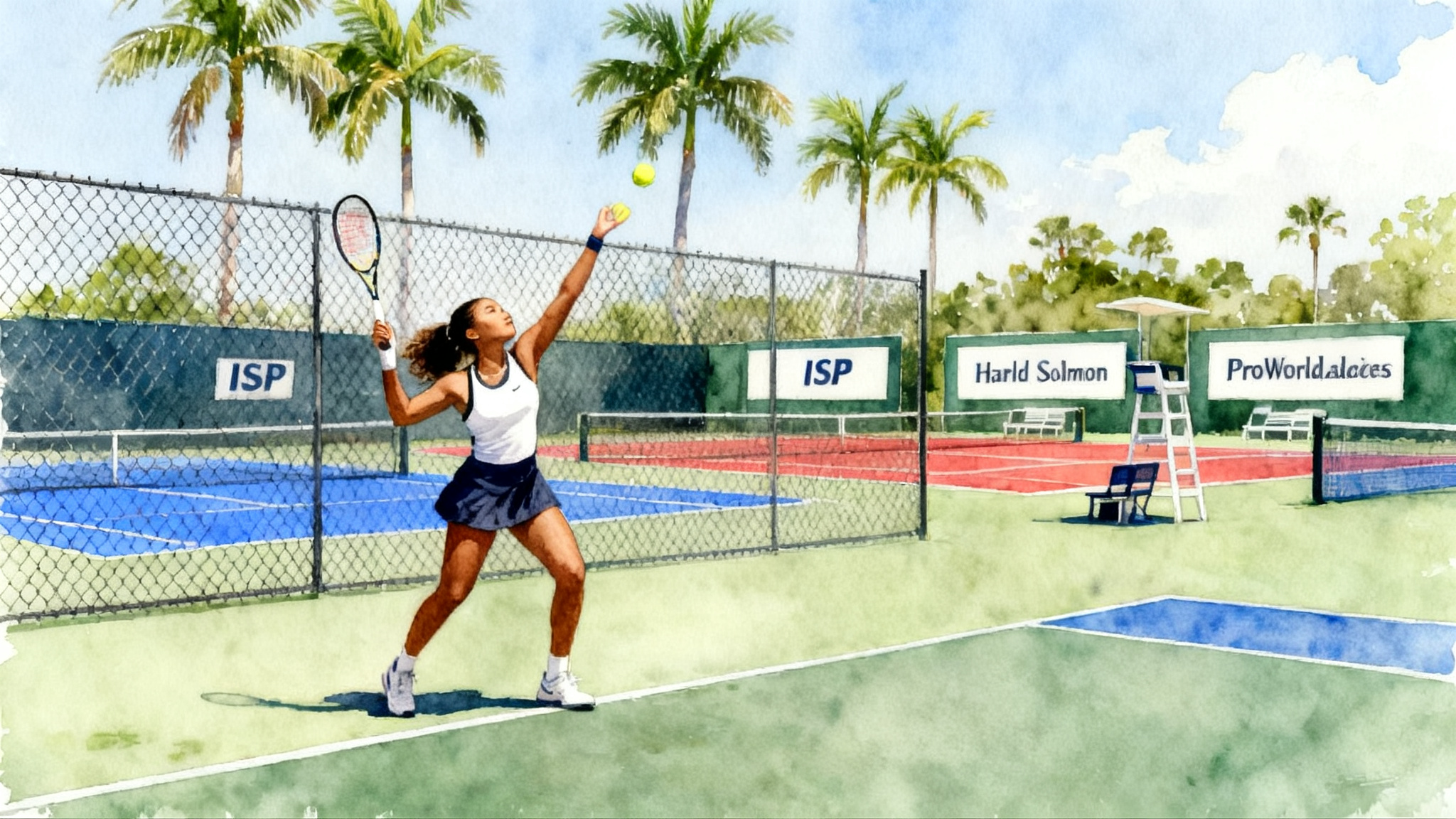
From Beijing to Barcelona: How Academies Built Zheng Qinwen’s Breakthrough
Zheng Qinwen’s rise was not an accident. It was the product of shrewd academy moves, a clay-first training plan, and a Barcelona base with coach Pere Riba. Here is her real pathway and what families can learn about timing relocations, choosing surfaces, and blending support.
 Tommy
Tommy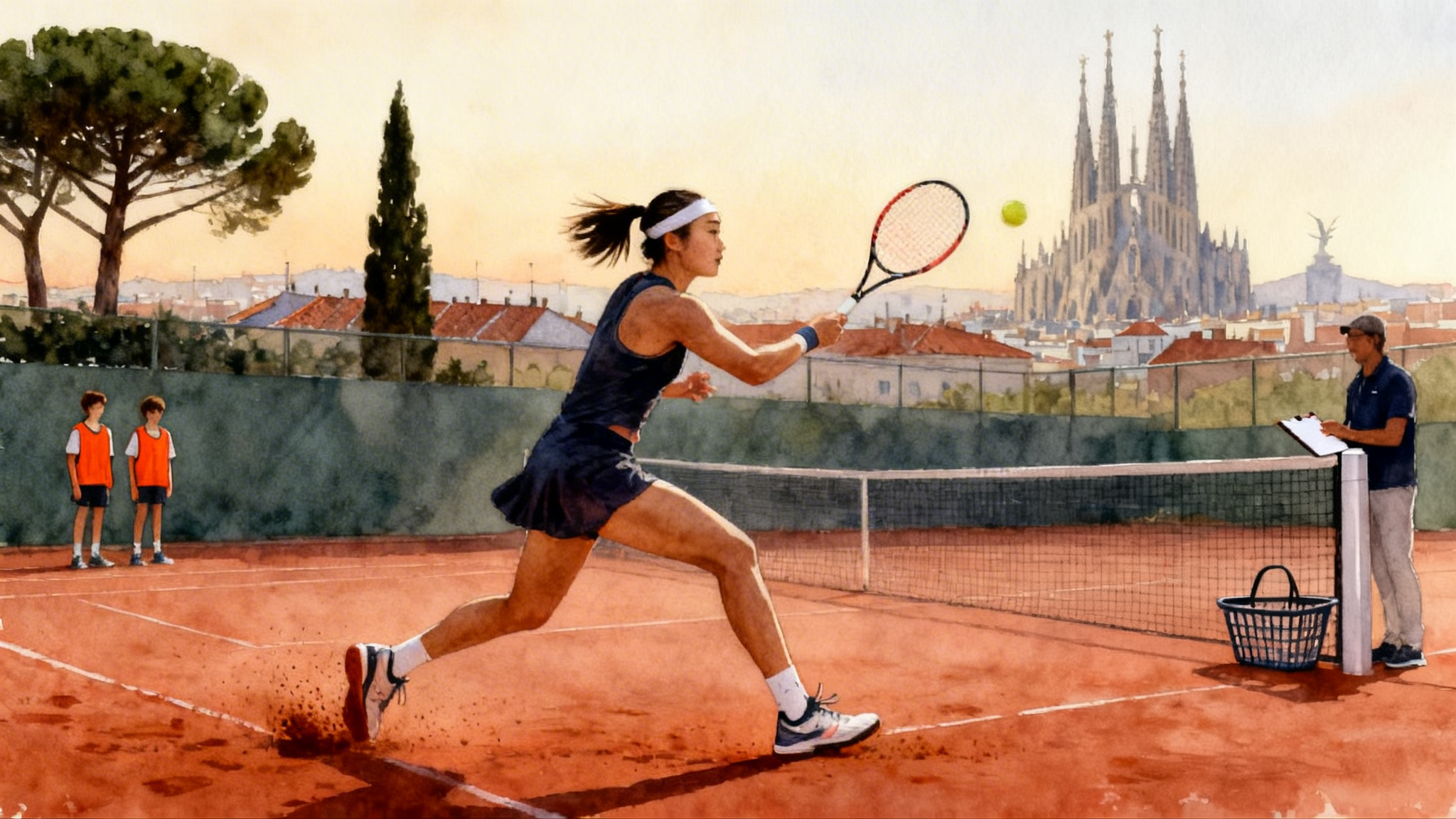
The road map that made a champion
Before the finals, medals, and photo calls, Zheng Qinwen’s family plotted a route more like a startup’s growth plan than a straight tennis ladder. The path began with strong fundamentals in China, gained international scale through targeted academy stints, then settled into a long runway in Barcelona to sharpen identity and habits. That sequence produced results you can measure: the 2024 Australian Open final and an Olympic singles gold in Paris in 2024. It also produced a replicable playbook for ambitious families.
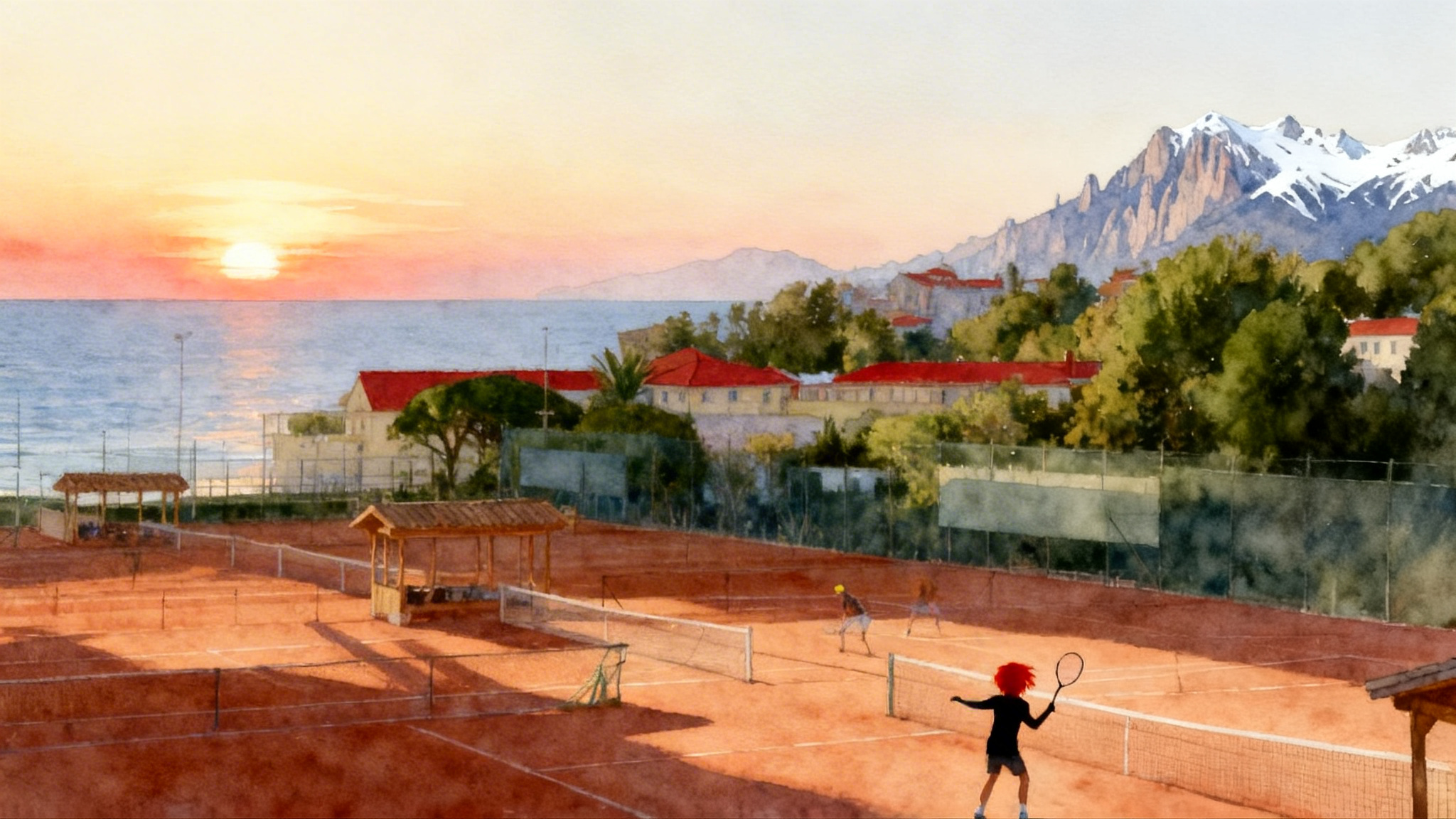
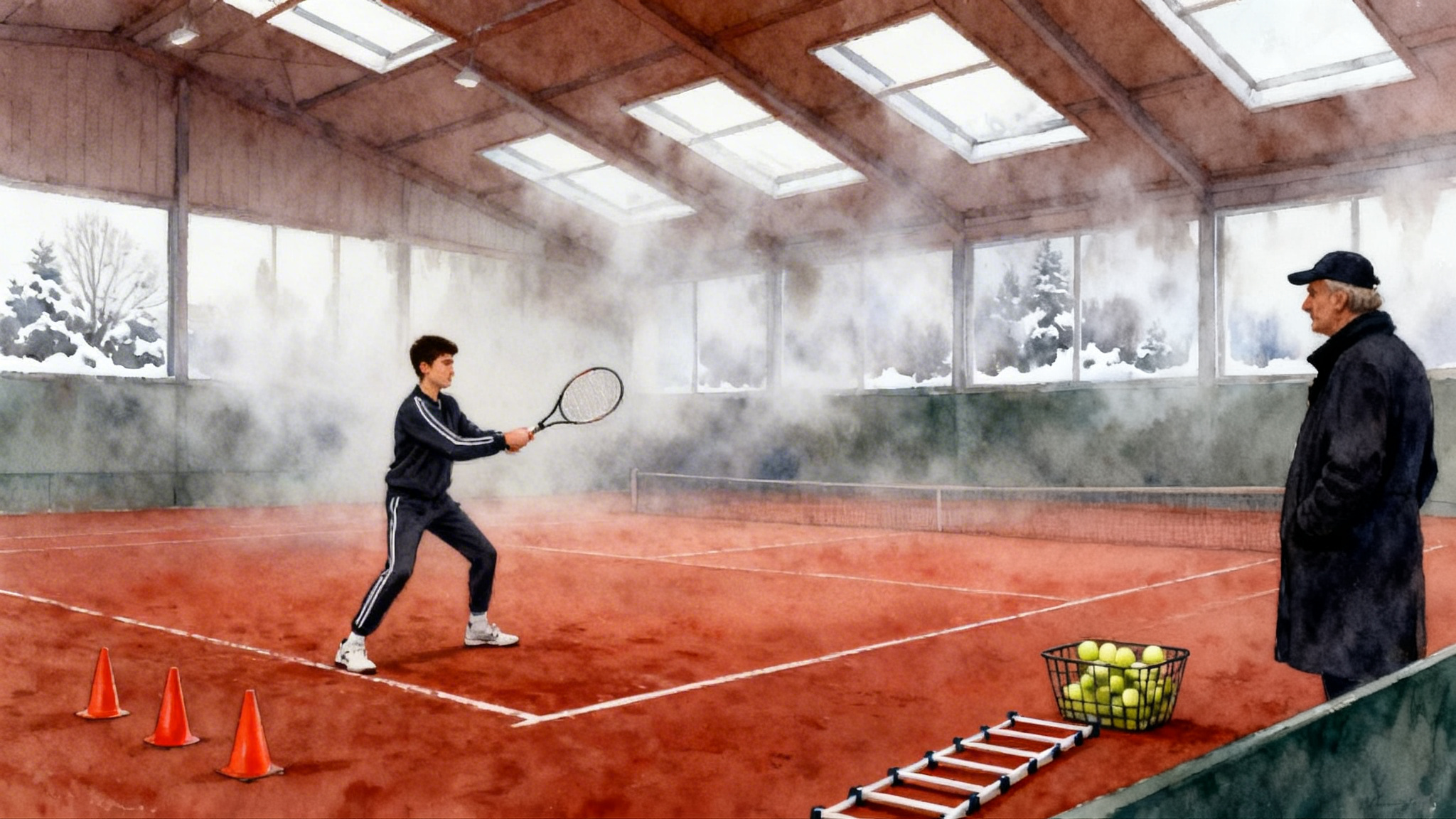
A quick trace of the early pathway helps. Zheng left her hometown in Hubei for Wuhan as a child, then moved to Beijing for higher-level coaching. There she trained under Argentine master coach Carlos Rodríguez, the longtime mentor of Justine Henin and later Li Na. Multiple profiles have noted this Beijing chapter as formative for both discipline and technique, with Rodríguez’s system emphasizing balance, movement, and decision making. In her late teens, Zheng and her mother relocated to Spain, ultimately basing in Barcelona and working with Spanish coach Pere Riba. The clay and the city suited the project. Her team doubled down on a patient, pattern-rich style, built with heavy base repetitions on slow courts.
One data point matters more than biography. A clay-first training bias did not make her a clay-only player. It made her a problem solver. That is why a player raised on Chinese hard courts and tuned on Spanish red dirt could handle the nerve and pace of a first major final in Melbourne, then months later walk into Roland Garros for the Olympic Games and win singles gold. When the training environment is designed to build habits that travel, surfaces stop being labels and become tools.
Why the clay-first bet worked
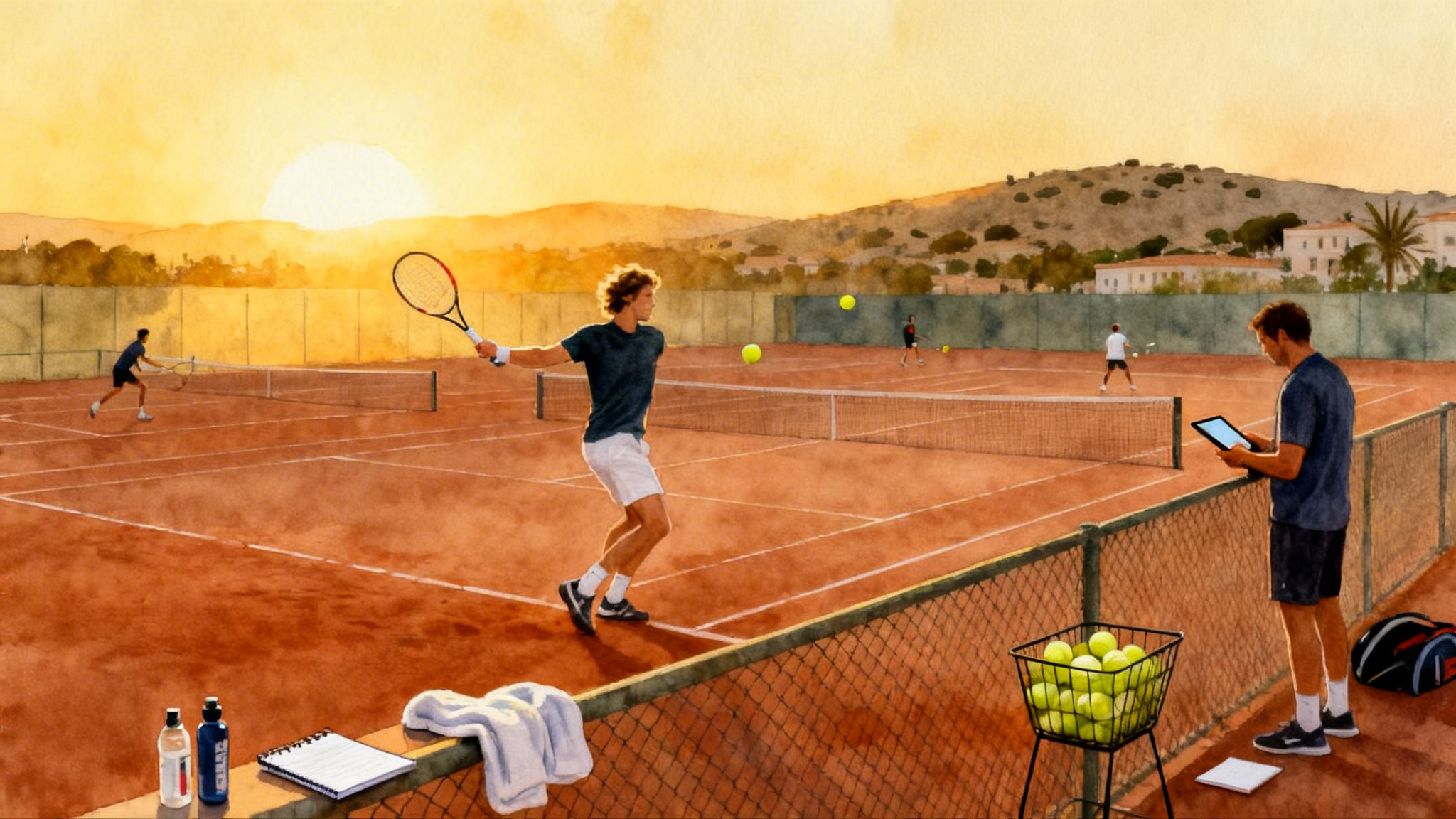
Clay demands patience, height tolerance over the net, shot selection, and the stamina to repeat a good choice under fatigue. On clay, a reckless flat forehand does not finish points; it offers counters. Zheng’s staff leaned into that constraint to shape her decision tree. The result was cleaner point construction on every surface. Widen with a heavy forehand, take time away with the backhand up the line, then step inside the baseline for the short ball. That script shows up on hard courts as clearly as on clay.
This was not accidental. As she rose on tour, Zheng spoke openly about embracing clay in Spain to steady her temperament and improve consistency. Public profiles from the women’s tour have documented both the Beijing start with Rodríguez and the shift to Riba and clay in Barcelona, tying those choices to gains in point building and restraint. See the WTA feature detailing how she trained under Carlos Rodríguez in Beijing and then used Barcelona clay to add patience and patterns.
The clay-first choice also dovetails with a second principle: load tolerance. Heavy volumes on slow courts allow for higher ball contacts and longer rallies in practice without stacking injury risk from constant open-stance, abrupt stops on gritty hard courts. Think of clay as a treadmill set to incline. You can run longer with less pounding while still building the engine you will use everywhere else.
Camps, not just contracts: the role of multi-academy stints
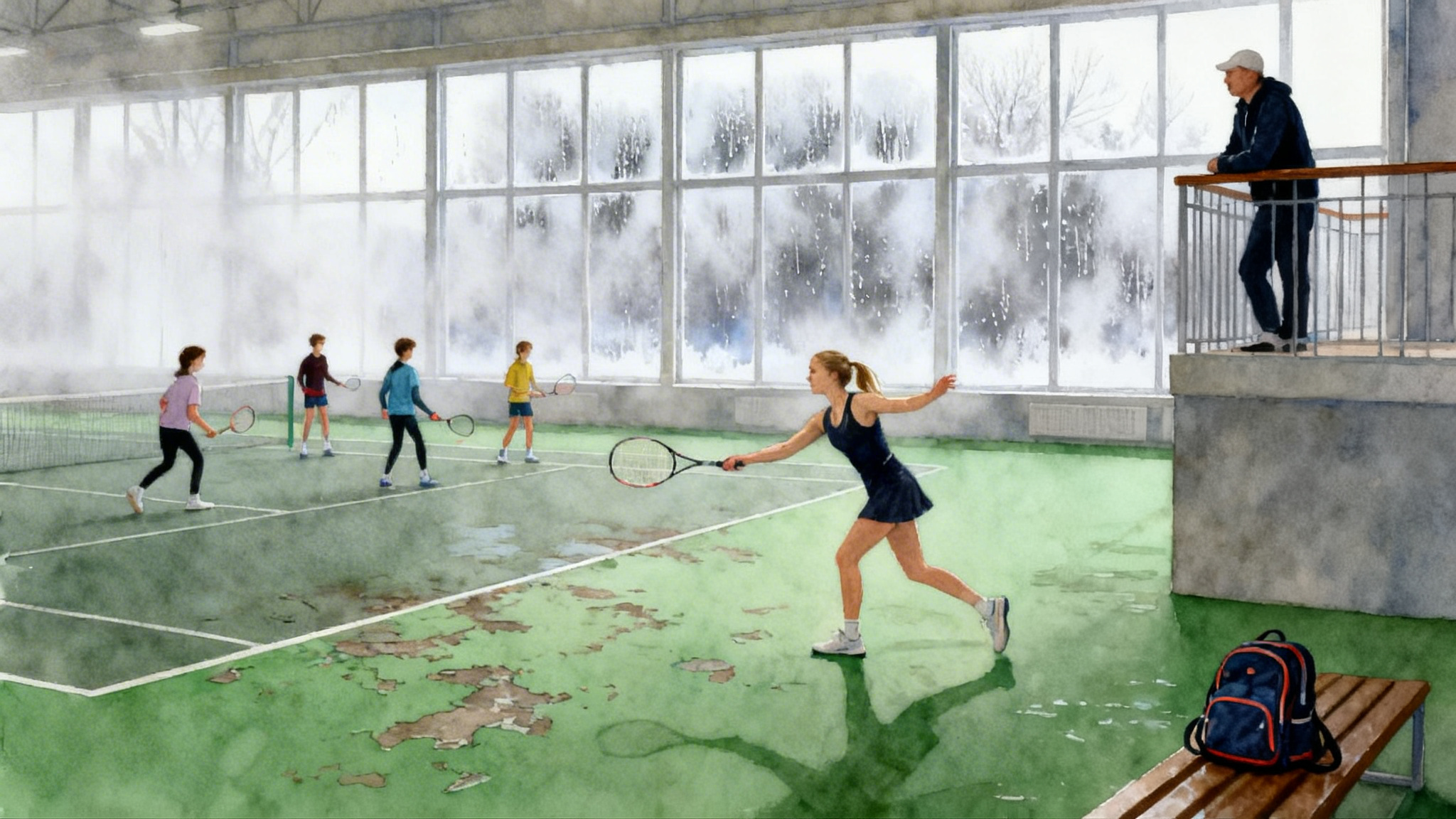
Families often ask whether to pick an academy or to find a coach. Zheng’s path shows a third option that sits between. Early on, she leveraged targeted stints at multiple academies to access different sparring pools, physical programs, and tournament scheduling, all before cementing a base in Spain. Former staff around her Beijing years have described how the family knew she had to leave China to test and scale in Europe and the United States. A detailed interview with her ex-trainer explains that she logged time at several places, including stints at IMG and Mouratoglou, before building a permanent setup. For more on that ecosystem, see our Mouratoglou and Coco Gauff profile.
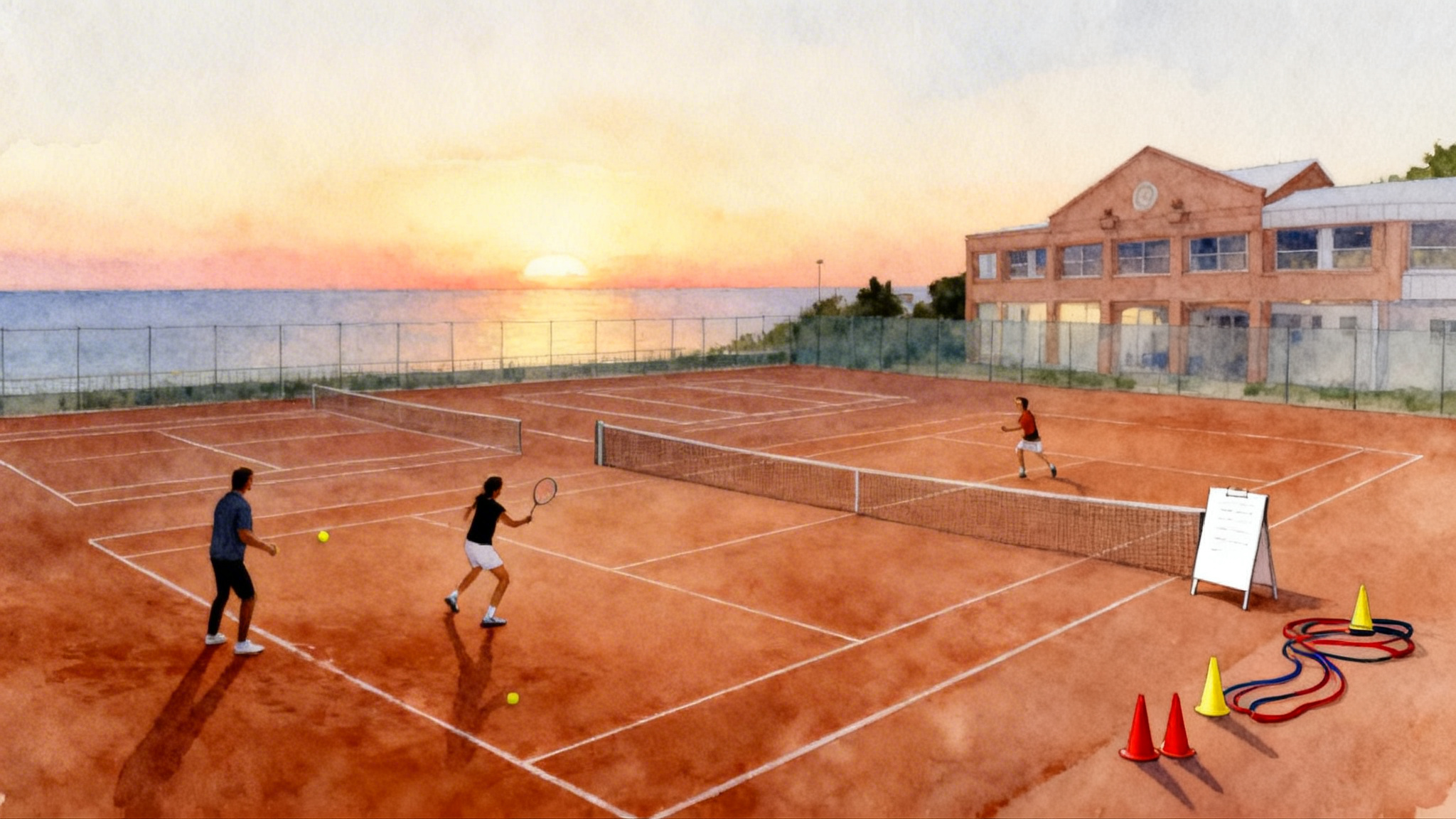
This camp-first mindset uses academies like you might use specialized clinics in other sports. You go in with a problem statement, not just a dream. For example: six weeks to raise first-serve percentage with a biomechanics block, or three weeks on clay to rehearse inside-out patterns and footwork. The point is not to collect brand names. It is to collect capabilities.
The Barcelona base and a serial builder in Pere Riba
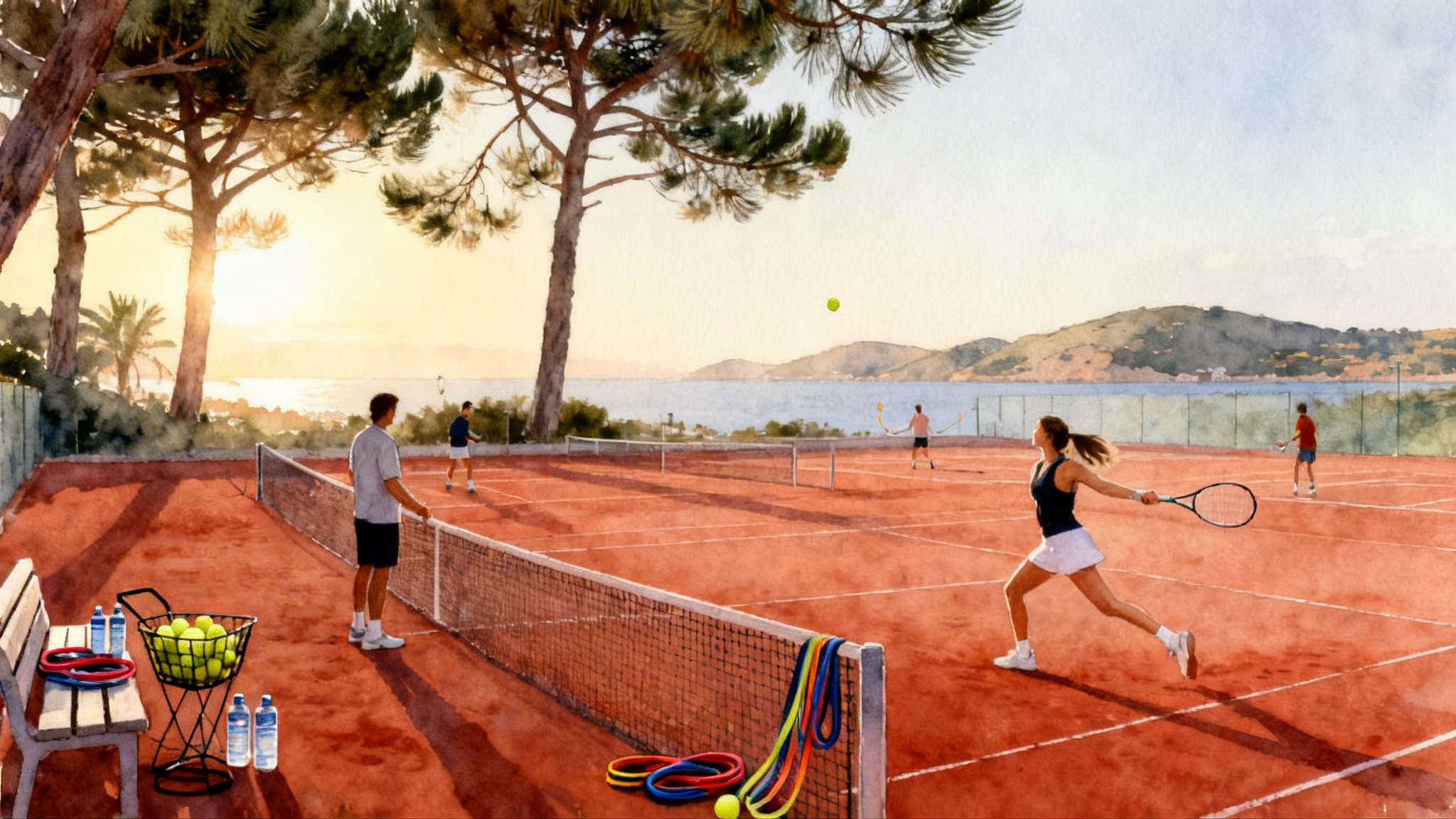
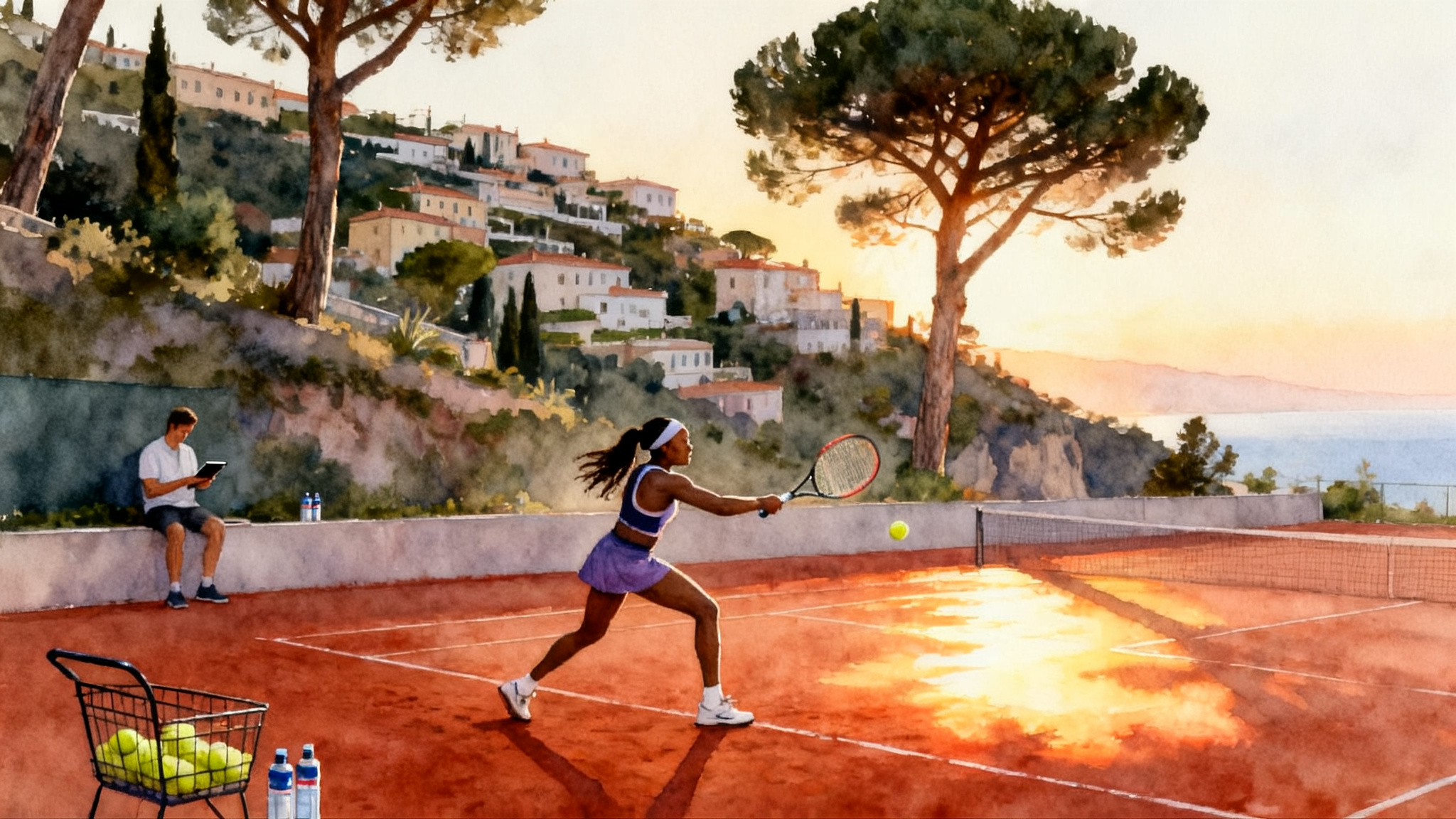
A base camp matters for tennis nomads, and Barcelona gives three gifts to a developing pro. First, density of hitters. On any week, you can find top juniors, challengers, and tour players on the same strip of clubs. Second, surface optionality. Clay is the default, but indoor hard and outdoor hard are readily available. Third, coaching culture. Spanish coaches are used to building serially, layer by layer, and they schedule like chess players. For a Spanish dual-surface reference, see our Tenerife Tennis Academy overview.
Enter Pere Riba. His work with Zheng began in 2021, paused, then resumed for 2024. Riba’s value in this context is method. One week to harden the forehand pattern under pressure. One week to simplify second-serve targets and neutral-ball height. One week to integrate patterns into live points. He treats progress like a sequence of short sprints that add up to a marathon. By the time Zheng reached her first major final in January 2024 and then captured Olympic gold in August 2024, you could see the structural gains. She was not trying to hit her way out of trouble. She was playing from a plan she had practiced.
How the decisions translated into results
-
Australian Open 2024: Melbourne’s true pace often rewards first-strike ball striking. Zheng’s clay-built patience paid off in a different way. She resisted overpressing in neutral exchanges, earned short balls with width, and accepted long rallies to keep tempo on her terms. Reaching the final in her first deep run in Melbourne was less a surprise than a validation of her habit stack.
-
Paris 2024 Olympics: Roland Garros courts play a touch quicker in summer than in spring but remain clay. That matters. The muscle memory from thousands of Barcelona reps travels well on that surface. In key moments she showed two clay-coded virtues: patience to reset with height and the courage to change direction only when the ball was in her strike zone. The gold medal confirmed that a surface identity can lift performances across the calendar rather than pigeonhole a player.
There is a broader truth here. When families look at results, they see fireworks. When coaches look, they see wiring. The right academy moves and surface choices rewired Zheng to compete with composure in very different conditions.
Takeaways for families: when to relocate
Relocation is not a magic trick. It is a logistics and load decision. Use these signals:
- Competition density at home has flatlined. If your player repeats the same opponents and rarely encounters new problem sets, a temporary camp or relocation can inject new patterns and stressors.
- You can name the gap precisely. “Backhand breaks down on deep crosscourt heavy spin” is a problem worth moving for. “We want better coaching” is not a plan.
- Your tournament schedule needs a European or United States corridor. If rankings and budgets require four to six events in a tight window, basing near those routes makes sense. Barcelona, Nice, and northern Italy offer efficient access to both clay and hard events from March to July. For a comparable blueprint, read how Piatti forged Jannik Sinner.
- The family can sustain the duty cycle. Travel is work. Before moving, test your week on the road with school, sleep, and nutrition. If it breaks at two weeks, it will not hold at ten.
Action template:
- Pilot a four to six week camp block in spring or summer with clear goals and exit metrics.
- Review results: performance trends, wellness, budget burn, academics.
- Decide whether to extend into a seasonal base or return home and plan the next targeted block.
Choosing a surface strategy
- If your player is impulsive or relies on winners too early, train primarily on clay for 60 to 70 percent of practice weeks for one season. Objectives: improve height control, recover to the middle faster, and raise rally tolerance.
- If your player struggles to take time away or rushes on fast courts, balance with 30 to 40 percent hard-court blocks that emphasize first-strike accuracy and return depth.
- Use mini-cycles. Three weeks on clay, one week on hard courts, then back to clay. This preserves the clay habits while preventing hard-court rust.
- Measure what matters. Track unforced errors by height category, plus percentage of balls struck inside the baseline. Surface choices must move those numbers, not just feel good.
Blending federation, academy, and private-coach support
Zheng’s build shows you can use all three without political chaos if you define roles.
- Federation: testing, sport science screens, wildcard pathways, and occasional training weeks. Treat the federation like an on-call hospital for diagnostics and logistics, not as your daily doctor.
- Academy: facilities, sparring variety, and periodized training camps. Bring a problem statement, agree on a work plan, and leave with documentation you can continue at home.
- Private coach: system owner. The private coach decides how the pieces connect. He or she guards the player’s technical identity, edits the schedule, and sets training intensity so that camps do not become junk volume.
Rules that kept Zheng’s version of this blend intact can work for families too:
- One calendar. All parties see the same 52-week plan with training blocks, camps, and tournament corridors. If it is not on the calendar, it is not real.
- One vocabulary. Define what neutral ball, red ball, green light, and reset mean and have everyone use those words. Confusion wastes months.
- One feedback loop. After any two to three week camp, the academy sends a one-page report to the private coach. Adjustments happen at home base first.
Budget and logistics you should expect
- Camp weeks on the Riviera or in Barcelona can cost what a small family vacation costs, once you add housing and meals. Price the full stack: court time, coaching blocks, physio, gym, and tournament travel.
- Build a sponsor and scholarship plan early. International academies often offer sliding-scale packages for genuine prospects with verified results. Ask directly. The answer is often yes if the request is specific.
- Protect school continuity. If you base overseas, lock a school solution before you book a coach. Players who are not worried about academics train more freely.
- Plan for health. In clay-heavy cycles, invest in calf strength, glute endurance, and shoulder external rotation balance. On hard-court phases, watch knee load and hip mobility.
A practical relocation checklist
- Competitive need: at least four tournaments in the target region within eight weeks.
- Training goals: three measurable objectives, for example, first-serve percentage up five points, forehand height errors down 30 percent, neutral-point hold rate up ten points.
- Staffing: named on-court lead, physio access, and hitting partners confirmed for the first two weeks.
- Surfaces: guaranteed daily clay access if you choose a clay-first phase, plus scheduled cross-over to hard courts every third or fourth week.
- Documentation: a two-page camp plan with daily theme, drill inventory, and testing days. Insist on a one-page exit report.
- Budget: tuition, housing, meals, transport, medical buffer, and a 15 percent contingency.
The bigger lesson from Zheng’s route
Zheng Qinwen did not become a finalist in Melbourne and an Olympic champion in Paris by chasing hype. She and her team made a sequence of boring decisions that compound. Start in Beijing with a coach who teaches movement and choices. Sample top academies to stress test against new opponents and ideas. Choose a base that fits your style, in her case Barcelona with a coach who builds in short, repeatable blocks. Embrace clay to teach patience, then translate those habits everywhere.
The result is a player who can win in a stadium full of noise because her daily work is quiet and exact. Families do not need the same passports or sponsors to copy the logic. Define the gaps. Choose the surface that best teaches the missing skills. Use academies as labs. Let one coach own the system. Then give the project time. Finals and medals arrive when the habits are ready.