Australian and I-Formation: A Doubles Playbook for All Ages
A step-by-step, pictures-first guide for juniors, families, and adult league players to run the Australian and I-Formation with simple signals, clear roles, counters, and 60-minute practice plans plus printable cue cards.
 Tommy
Tommy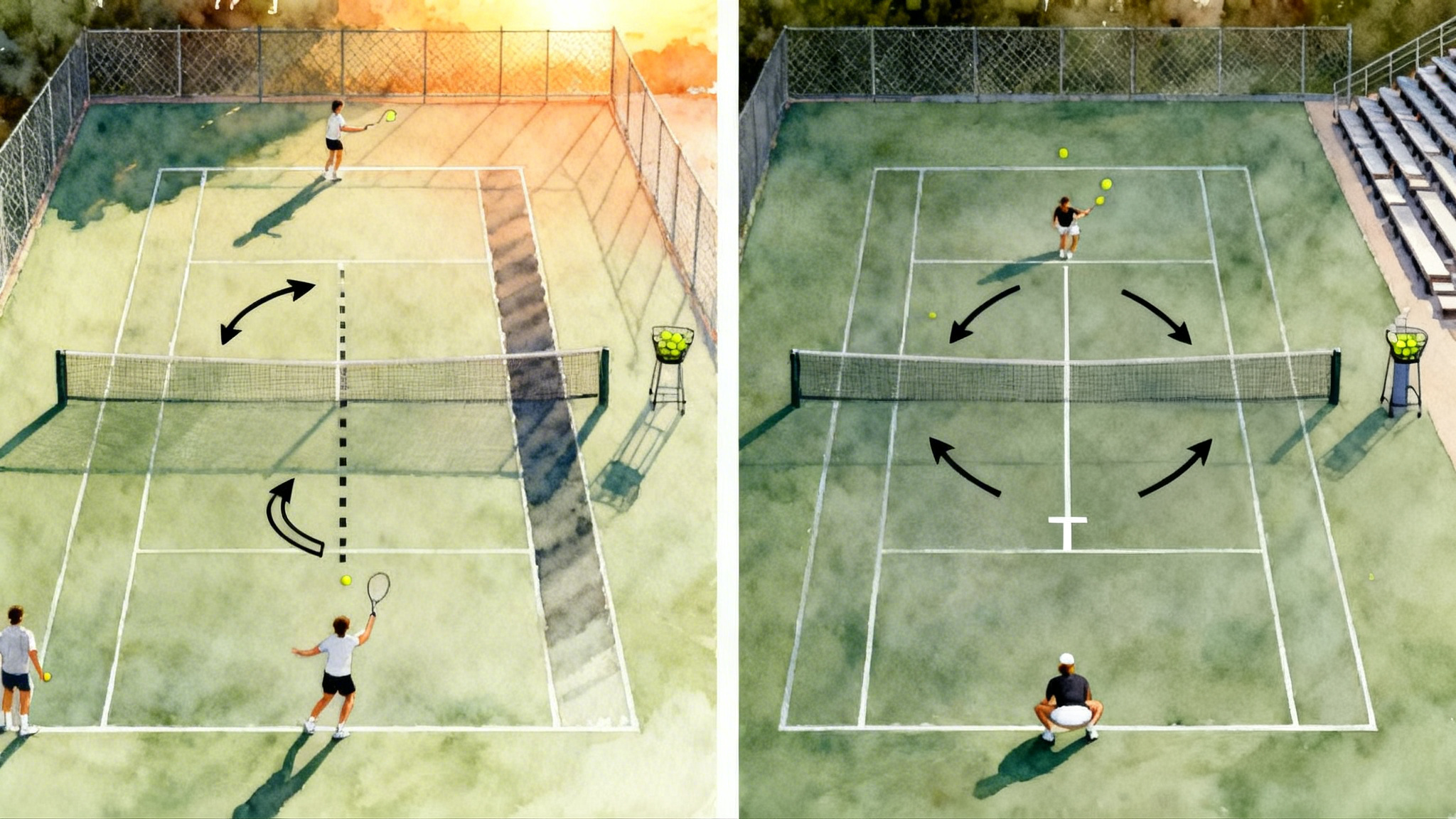
Why these two formations change everything
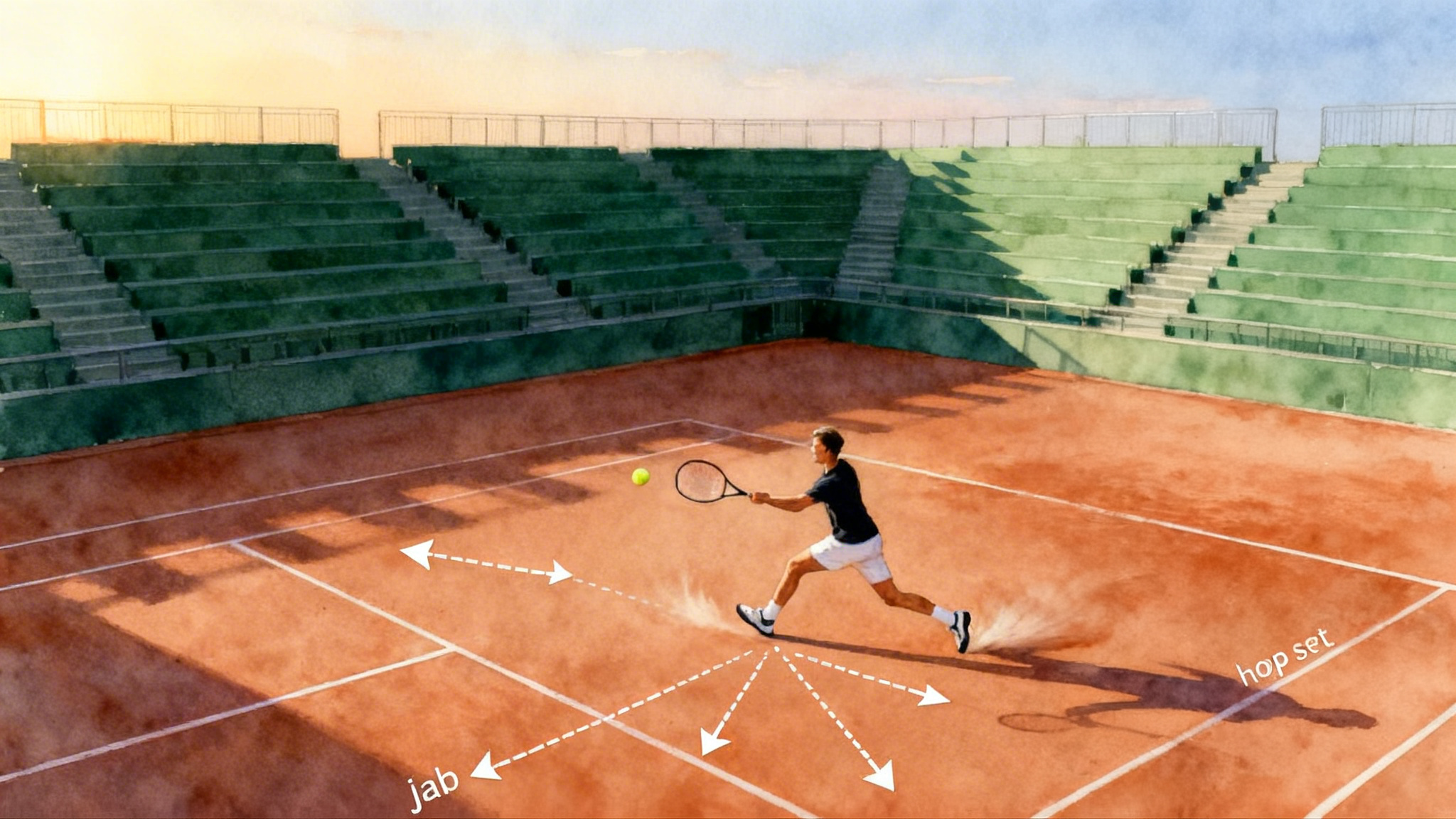
Most doubles points are decided in the first three shots. The Australian and the I-Formation help you script those shots so you start every point with an edge. Instead of guessing, you choreograph who moves where, what the serve or return tries to force, and how the net player pounces. This playbook is written so parents and captains can run a useful session without a coach, and so juniors and adult league players can plug these patterns straight into match day. For crisper returns that fit these patterns, see our Return of Serve Mastery guide.
You will learn five things:
- Where to stand and why
- The exact hand signals to call
- Server and net player roles for deuce and ad courts
- Return plays and the best counters
- Short, repeatable 60-minute practice plans and printable cue cards
Throughout, we will reference common formats in the United States like high school team matches, United States Tennis Association (USTA) league play, and college style no-ad tiebreaks used by the Intercollegiate Tennis Association (ITA). No-ad means at 40-all the next point decides the game.
What the formations look like
Use these quick diagrams as mental pictures. S = Server, N = Server’s net player, R = Returner, P = Returner’s partner. T marks the service box T.
Australian Formation
The net player starts on the same side as the server will serve into, daring the returner to go down the line.
Baseline                          Net
P               |      N         |
                |                |
                |                |
R       <-return lanes->         |
---------T-------------T---------|
            S                     |
Core idea: shrink the crosscourt return lane and invite the low-percentage down-the-line. Server aims mostly T and body. Net player guards the down-the-line like a shortstop.
I-Formation
The net player crouches on the center line. The returner cannot read which side the net player or server will cover until after the serve.
Baseline                          Net
P               |                 |
                |        n        |
                |       (c)       |
R                              <--|
---------T-------------T---------|
            S                     |
Here n(c) means the net player is crouched on the center line, signaling secretly where they will pop after the serve. The server will slide the first step the opposite way.
Why these work: geometry and psychology
- Geometry: Most returns fly crosscourt because of distance and net height. Australian formation moves a defender into that lane and forces a tougher angle. I-Formation hides coverage and yo-yos the returner’s eyes at contact, which reduces swing quality.
- Psychology: Pre-deciding makes you proactive. The server and net player know exactly what to do if the serve lands T, body, or wide. That clarity raises first-serve percentage and net aggression.
The hand signals that run the show
Signals come from the net player, given behind the lower back while standing tall or while crouched in I-Formation. The server gives a small head nod to confirm. If either player is unsure, reset and call again.
Use one hand to signal net player movement and the other to signal serve target. If you are just getting started, use only movement signals for three sessions, then add serve targets.
Movement signals
- Closed fist: Net player stays on their side after the serve
- Open hand: Net player poaches to the middle after the serve
- Pinky finger: Net player fakes a poach then returns to starting side
- Thumb pointing line: Net player shades hard to protect the line
Serve target signals
- One finger: Serve T
- Two fingers: Serve body
- Three fingers: Serve wide
Coverage reminder
- Tap left hip: Server covers left half after serve
- Tap right hip: Server covers right half after serve
Confirmations and timing
- Net player shows signals while the server bounces the ball
- Server nods once, then begins the routine without delay
- If wind or nerves hit, call only stay or poach and aim T
Roles and footwork that make signals work
Server
- Start with feet set to hit your highest-percentage serve
- Serve and take one explosive crossover step toward your assigned half
- If the net player poaches, you slide one more step to fill their vacated side
- Speak first between points: “Same call” or “Different look”
Net player
- In Australian: start two racquet lengths from the net, inside the alley line you are protecting
- In I-Formation: crouch with a stable base on the center line, shoulders square, strings pointing at the returner
- First move is triggered by the server’s contact, not by the toss
- If you poach, commit across the center line with your body, not just your racquet
Returner’s partner
- In Australian against you: watch the net player’s first step, call “line” or “middle” as early as safe
- In I-Formation against you: split step on server’s contact, then mirror your partner’s ball
Australian Formation: step-by-step plays
Use these three base plays. Run each for six points in a row during practice so rhythm builds.
Play A1: Deuce court, right-handed server
- Signal: open hand plus one finger
- Serve: flat or slice T to the backhand of most right-handers
- Net player: protect line with the first step, then attack any ball struck inside the singles sideline
- Server: cover the middle after the serve
- What you get: rushed backhand returns and floaters for the poach
Play A2: Ad court body jam
- Signal: closed fist plus two fingers
- Serve: kick or flat body, chest-high into the returner
- Net player: hold position, racquet high, looking for a reflex volley
- Server: take the first forehand from the middle
- What you get: jammed returns and short balls
Play A3: Lefty server variation
- Signal: open hand plus one finger on deuce, three fingers on ad
- Serve: slice T on deuce, slice wide on ad to drag the returner off court
- Net player: poach into the open court
- Server: recover to cover the vacated alley
Counters you must expect and how to answer
- Down-the-line laser: if you were poached on early, start the next point with closed fist and thumb line. Make them prove they can beat the stationary wall.
- Lob return: net player starts one half step deeper, server recovers diagonally to cover the overhead. Next point, show pinky finger to fake and take away the lob read.
- Chip-chip pattern: server mixes more body serves, net player hunts the floating second ball.
I-Formation: step-by-step plays
Use I-Formation to hide your plan and to pry errors from returners who want to hit crosscourt without thinking.
Play I1: Classic poach to the forehand side
- Signal: open hand with tap right hip
- Serve: body serve that lands deep and heavy
- Net player: explode to the right on contact, cut the middle like a safety intercepting a slant route
- Server: slide left to cover the vacated side
Play I2: Stay and bait
- Signal: closed fist with one finger
- Serve: firm T
- Net player: hold on the center line for a count of one, then recover two steps back to your original side
- Why it works: the returner often dumps the ball to where they think you just moved from
Play I3: Ad court squeeze on no-ad point
- Signal: open hand with two fingers
- Serve: heavy body serve to the backhand for most right-handers
- Net player: hard poach to the middle
- Server: cover opposite half and expect a reflex flick down the line
Counters and your answers
- Early chip line: next point show thumb line and closed fist. Start one step closer to the line. Make the pass go over you.
- Lob over the poach: server’s first step must be deeper, not just lateral. Net player finishes poach with a small split and is ready to retreat if needed.
- Big crosscourt rip: mix two T serves in a row to shrink that lane, then return to body once they tighten up.
Return playbook against Australian and I-Formation
Your team also needs a plan when the other side runs these formations.
Versus Australian
- Inside-out heavy crosscourt: aim deep middle to neutralize the net player’s presence
- First ball lob: shape a high topspin lob across the net player when they lean line
- Chip line and follow: only if your feet are calm and your partner is ready to cover middle
Versus I-Formation
- Commit early: pick a side and swing through the target, do not wait on the read
- Body neutralizer: drive hard into the deepest part of the court, then look to attack the next ball
- Planned lob: when the server is tall and covers line well, a planned lob tests their overhead discipline
60-minute practice plans you can run today
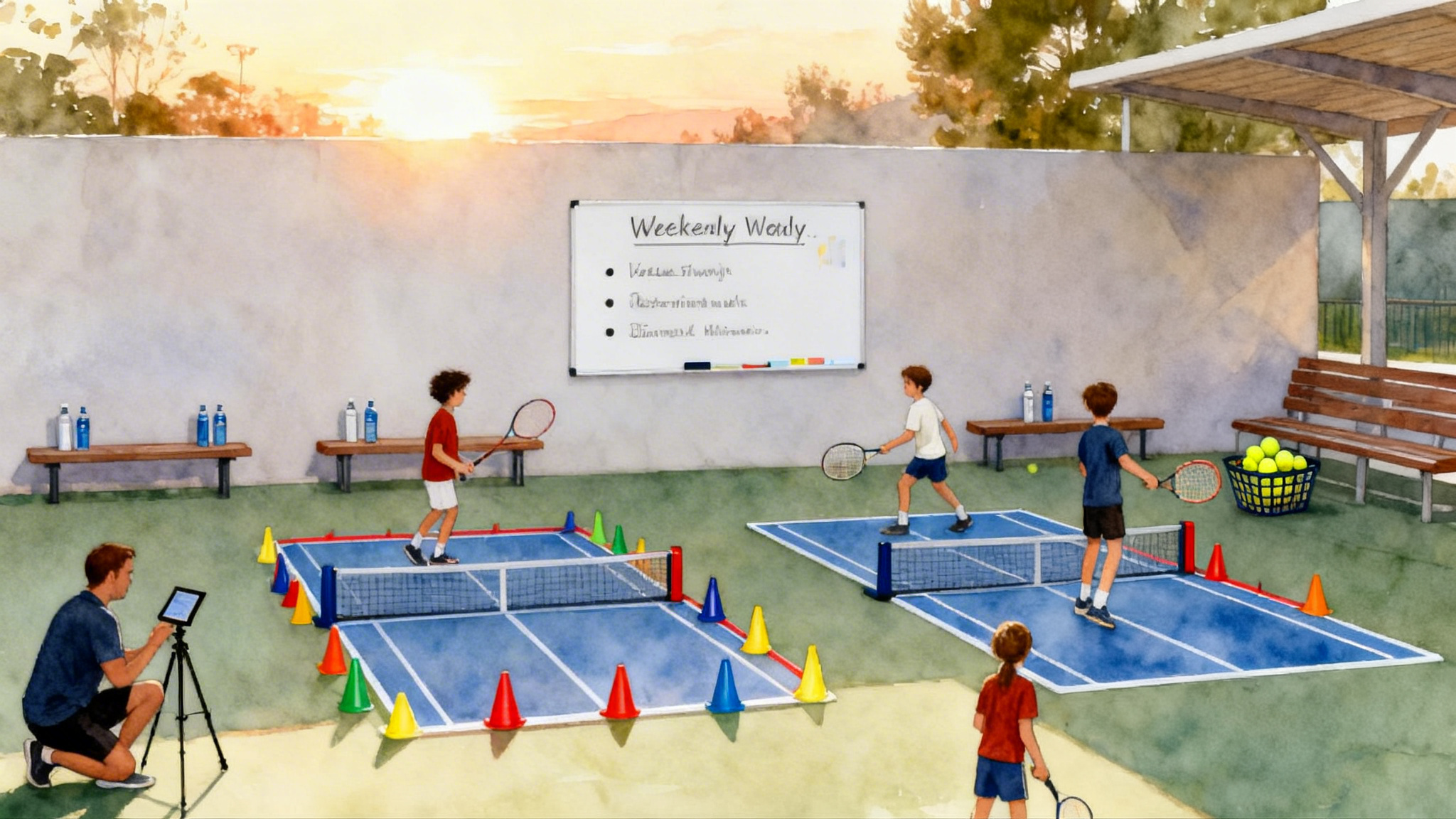
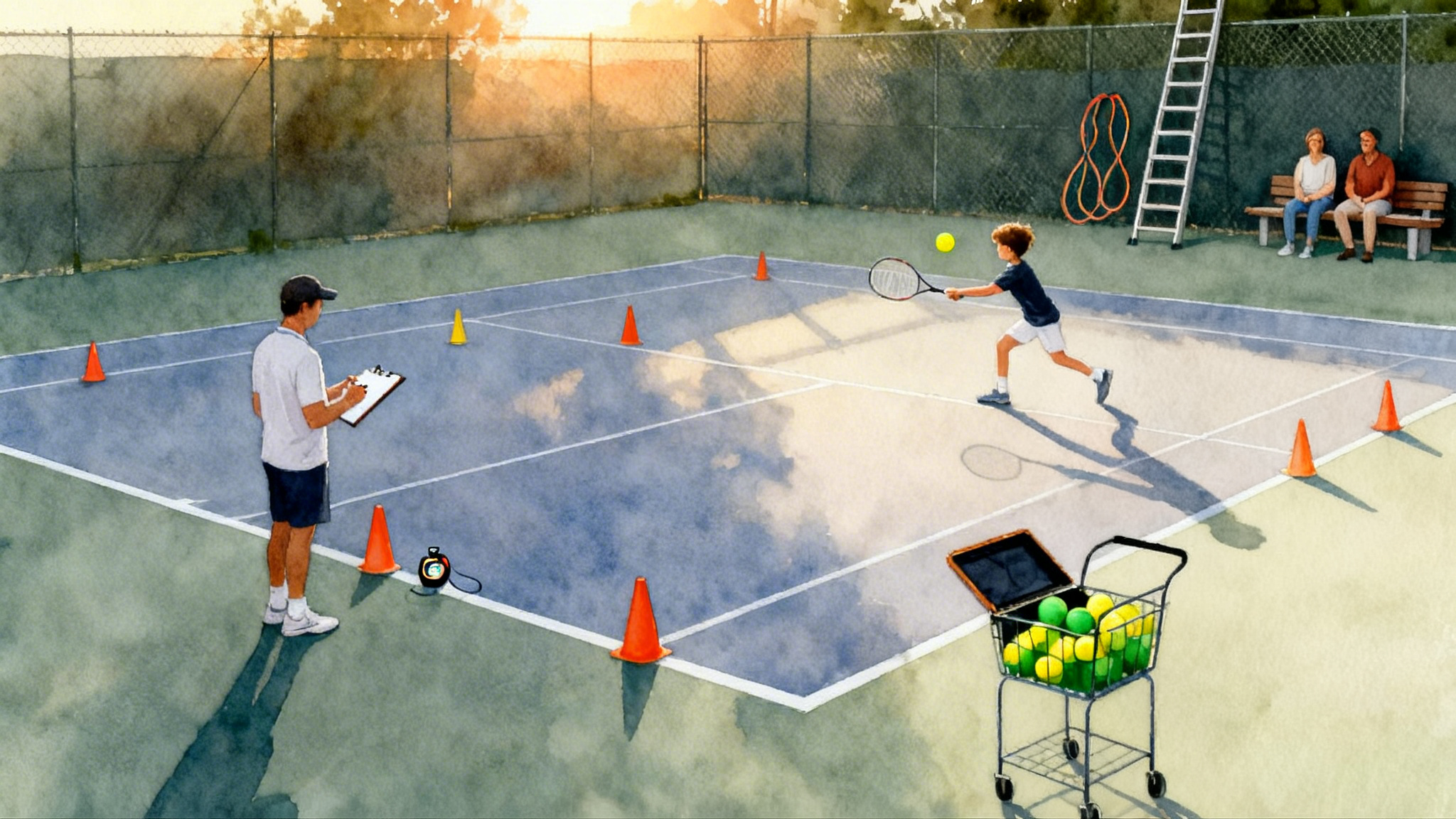
Each plan fits a single court with four players. Use a stopwatch. Rotate roles every 10 minutes. If you have kids plus parents, pair a confident server with a younger net player, then switch. To show up ready to perform, skim our Match-Day Tennis Blueprint checklist.
Plan 1: Family or mixed group starter
- 0 to 8 min: Warmup mini tennis, then baseline to baseline. Last two minutes of high first-serve rhythm.
- 8 to 20 min: Australian A1 block. Six points in a row, then switch roles. Score first to 12 points.
- 20 to 32 min: I-Formation I1 block. Net player crouches, calls three in a row. Switch pairs.
- 32 to 44 min: Return practice versus Australian. Focus on the first ball lob and the inside-out drive.
- 44 to 56 min: Games to 7 with no-ad. Every deuce point must be I-Formation. Force decisions under pressure.
- 56 to 60 min: Debrief. Each player names one winning call and one adjustment for next time.
Plan 2: High school team progression
- 0 to 10 min: Serve plus first step. Servers land and cross into position, ten reps each side.
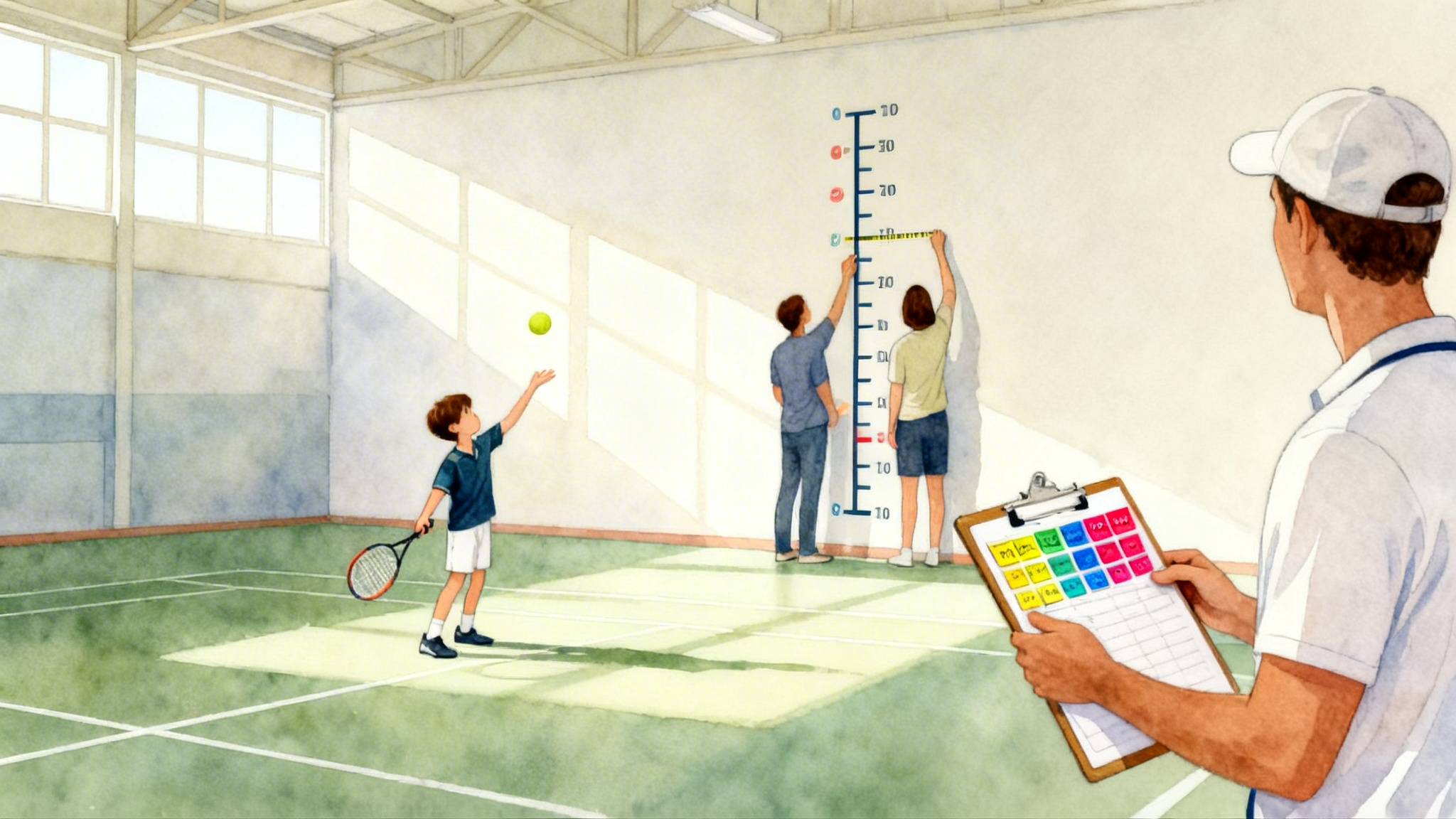
- 10 to 20 min: Australian A2 body jam. Chart unreturned balls. Goal is 35 percent or higher.
- 20 to 30 min: I-Formation I2 stay and bait. Coach or captain feeds second balls to the poaching zone.
- 30 to 45 min: Pattern ladder. Run A1 for four points, I1 for four, A3 for four, I3 for four. Repeat.
- 45 to 60 min: No-ad tiebreak sets to 7. Deuce points must use a called play. Partners state the call out loud before the serve to simulate pressure.
Plan 3: USTA league or adult clinic
- 0 to 8 min: Cooperative warmup, then serve plus two. Server and net player win the rally in three or fewer balls.
- 8 to 18 min: Australian situational points. Start 30-all, run A1 twice, then A2 twice. Switch teams.
- 18 to 28 min: I-Formation pressure ladder. Every miss on the called poach costs a point. Score race to 10.
- 28 to 40 min: Returners’ choice. Opponents must announce Australian or I-Formation before the serve. Returners pick the counter and say it: “Deep middle,” “Chip line,” or “Lob.”
- 40 to 60 min: Live games first to 6 with a 7-point tiebreak at 6-all. All game points are called plays.
Progression drills that build in layers
You can stack difficulty by changing only one variable at a time.
Progression 1: Shadow to live
- Shadow walk the movement with no ball
- Toss and catch, server lands and moves while net player shuffles
- Half speed serves, target only T
- Live serves with called coverage
Progression 2: Vision and timing
- Net player calls the return direction out loud on second bounce
- Add a coach or parent with a foam ball to toss a surprise lob during poaches
- Use an orange cone in the middle to force poaches around a physical cue
Progression 3: Scoring constraints
- You only get the point if you execute the correct first two steps
- On a miss, repeat the same call until you win it
- Play first to 11 by twos with no-ad at 10-all
Partner selection and chemistry tips
You do not need twins to run these systems. You need two compatible roles.
What to look for
- One talker and one tracker. The talker is comfortable giving signals and calling adjustments. The tracker quietly reads returns and fills space.
- First-serve strength from at least one partner. It makes Australian much more dangerous.
- A willing poacher. Aggression beats perfect technique at club and junior levels.
- Complementary wings. A righty with a strong forehand pairs well with a lefty or with a two-handed backhand who loves middle balls.
Red flags
- Silent change of plan between bounces. Keep the call unless the toss is wild.
- Both players trying to protect the line at once. Middle first, line second.
Printable cue cards
Print, trim, and bring to the court. Parents can run a session by reading one card per drill. Place these on the bench. No coaching jargon, only actions.
Australian quick card
Call: Stay, Poach, Fake, Line
Target: T or Body
Server: Serve, one big crossover to your half
Net: Protect line first step, then hunt middle
Counters vs them: Line pass, first ball lob, deep middle
Checklist: Nod yes, land balanced, say Same or Change
I-Formation quick card
Call: Stay or Poach + Left or Right cover
Target: T or Body
Server: Serve, slide opposite the net player
Net: Crouch center, explode on contact, commit across
Counters vs them: Commit early, body neutralizer, planned lob
Checklist: Signal early, no flinching on toss, split after poach
Return quick card
Vs Australian: Deep middle, line chip, first ball lob
Vs I-Formation: Pick a side, swing through, body drive
Partner calls: Middle or Line, loud and early
Rule: Make the middle your safe target
No-ad point menu
If you are serving: I-Formation squeeze middle, body serve
If they are lobbing: Australian with net player one step deeper
If returner loves crosscourt: Australian with serve T
If returner loves line: I-Formation stay call and hard T
Common mistakes and fast fixes
- Telegraphing the poach: net player rocks too early. Fix by counting one-thousand-one before the first step.
- Overcooking the serve wide in Australian: it feeds the line return. Fix by living on T and body until the returner adjusts.
- Poaching with only the racquet: body stays home, arm reaches. Fix by crossing the center line with your front foot and finishing inside the court.
- Silence after the point: no learning happens. Fix by a three-second huddle. Ask, “Keep or change? Why?” Then move on.
How to coach yourself mid-match
- Track two numbers: first-serve percentage and forced errors on the first ball. If either dips, simplify to Stay plus T for two games.
- Scout the returner’s tell: do they open shoulders early when going line or drop the racquet head for the lob? Adjust the next call, not the one that just passed.
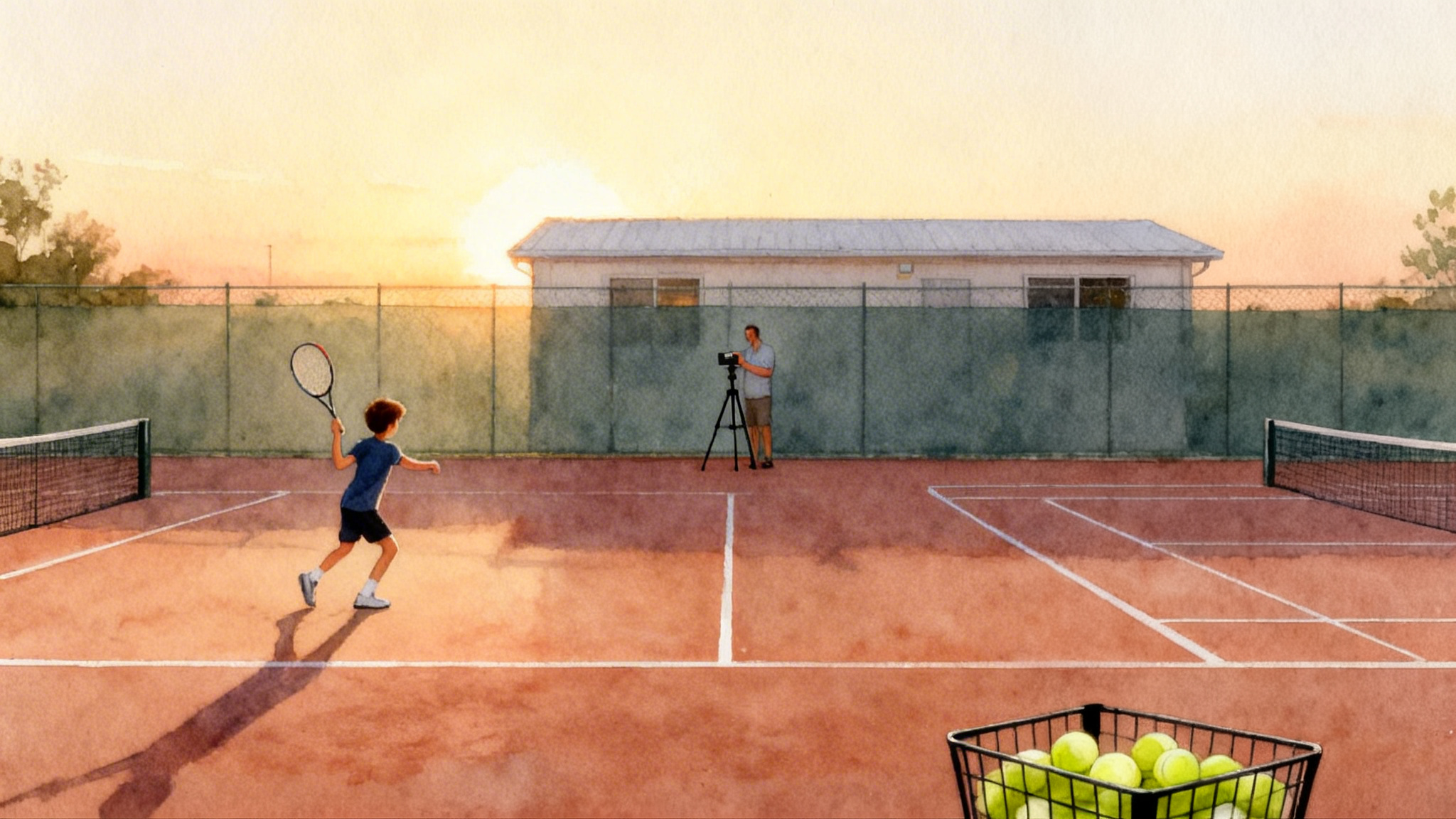
- Use the server’s best pitch: if the slider T is cooking, ride Australian all set. If the body kick jams them, live in I-Formation. To capture patterns between games, use our Smartphone Tennis Video guide.
When to call what
- You want quick holds: Australian with T serves, poach when ahead in the game.
- You want confusion: I-Formation on every deuce, vary only the coverage.
- You need a momentum stop: return no-ad with a planned lob. Take time and air out of the rally.
Real world models to study
Watch high level doubles teams that live on patterns. The Bryan brothers built careers on pre-planned movement and middle control. College programs in the United States call poaches nearly every point in big moments because the first ball decides rallies. Your version does not need pro speed. It needs pro clarity.
Bring it all together
You now have a compact playbook that turns four people on a public court into a coordinated team. Run the calls. Aim for the T or the body. Let the net player be the tip of the spear. When the other side adjusts, you have the counters and the no-ad menu ready. Print the cue cards, put them in a zip bag in your tennis tote, and make the first three shots of every point yours.
The secret is not complexity. It is repetition. Choose one Australian play and one I-Formation play as your weekly staples, then layer in a counter every other practice. In a month, you will stand on the baseline feeling like you have the answer key before the test begins. That is doubles done right.