Arm-Safe Racquets and Strings 2026: A Level-Specific Guide
 Tommy
Tommy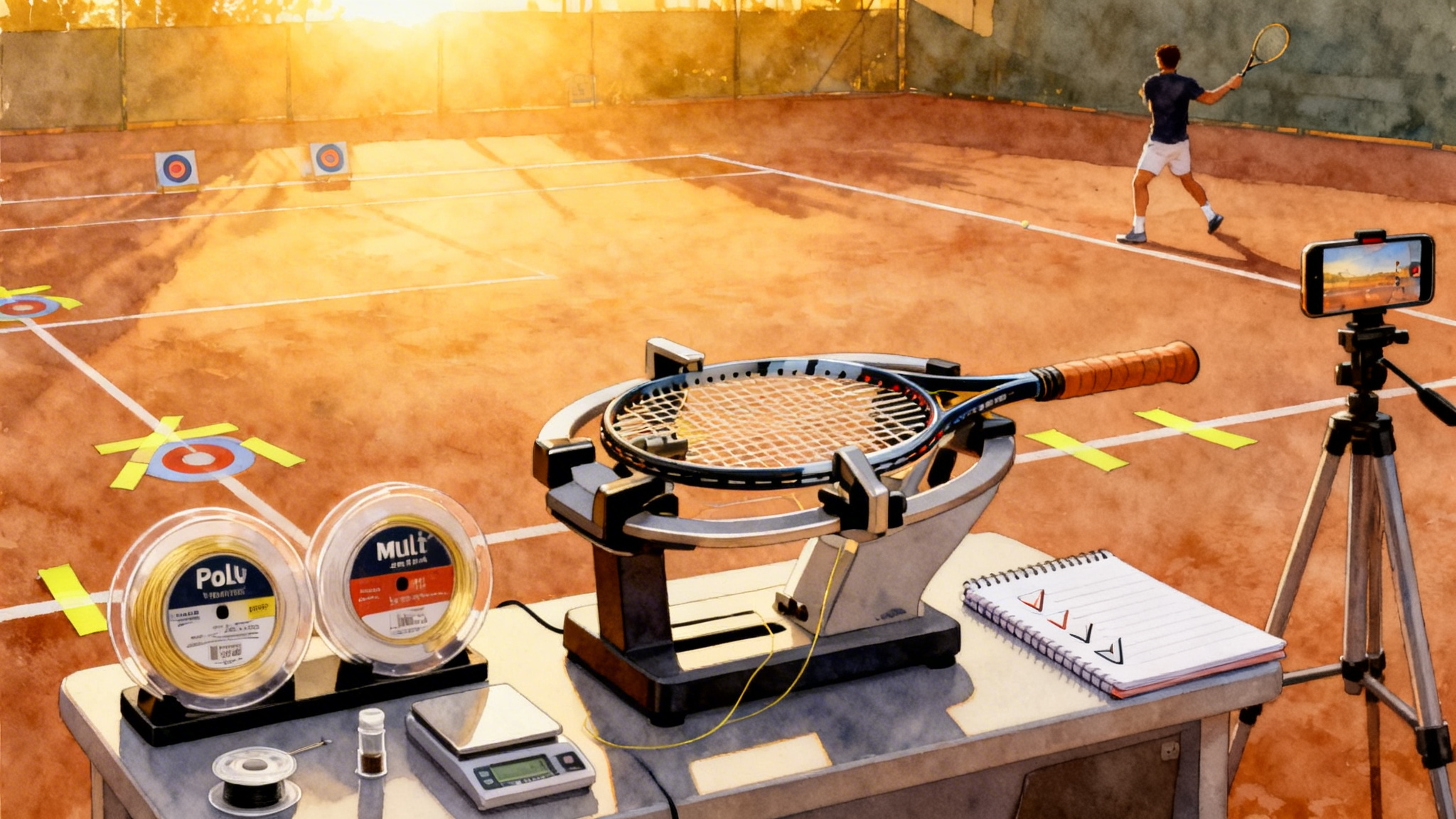
Why an arm-friendly setup matters in 2026
Racquets and strings have never been more powerful. That is good for winning points, but it can be rough on elbows and shoulders if the setup is mismatched to your age, strength, or swing style. The right combination reduces shock at impact, lowers vibration traveling up the forearm, and helps you swing freely without guarding the stroke. The payoff is concrete. You keep racquet head speed late in matches, your second serve does not flatten out, and you train more days in a row without hot spots near the outer elbow.
The comfort equation in plain English
Think of impact like a car going over a speed bump. A soft suspension smooths the hit. Tennis has three main suspension parts:
- The frame: stiffness, weight, balance, and how resistant it is to twisting on off-center hits
- The stringbed: material, gauge, tension, and how slick the strings are against each other
- Your grip and technique: grip size, contact point, and the speed you can produce without strain
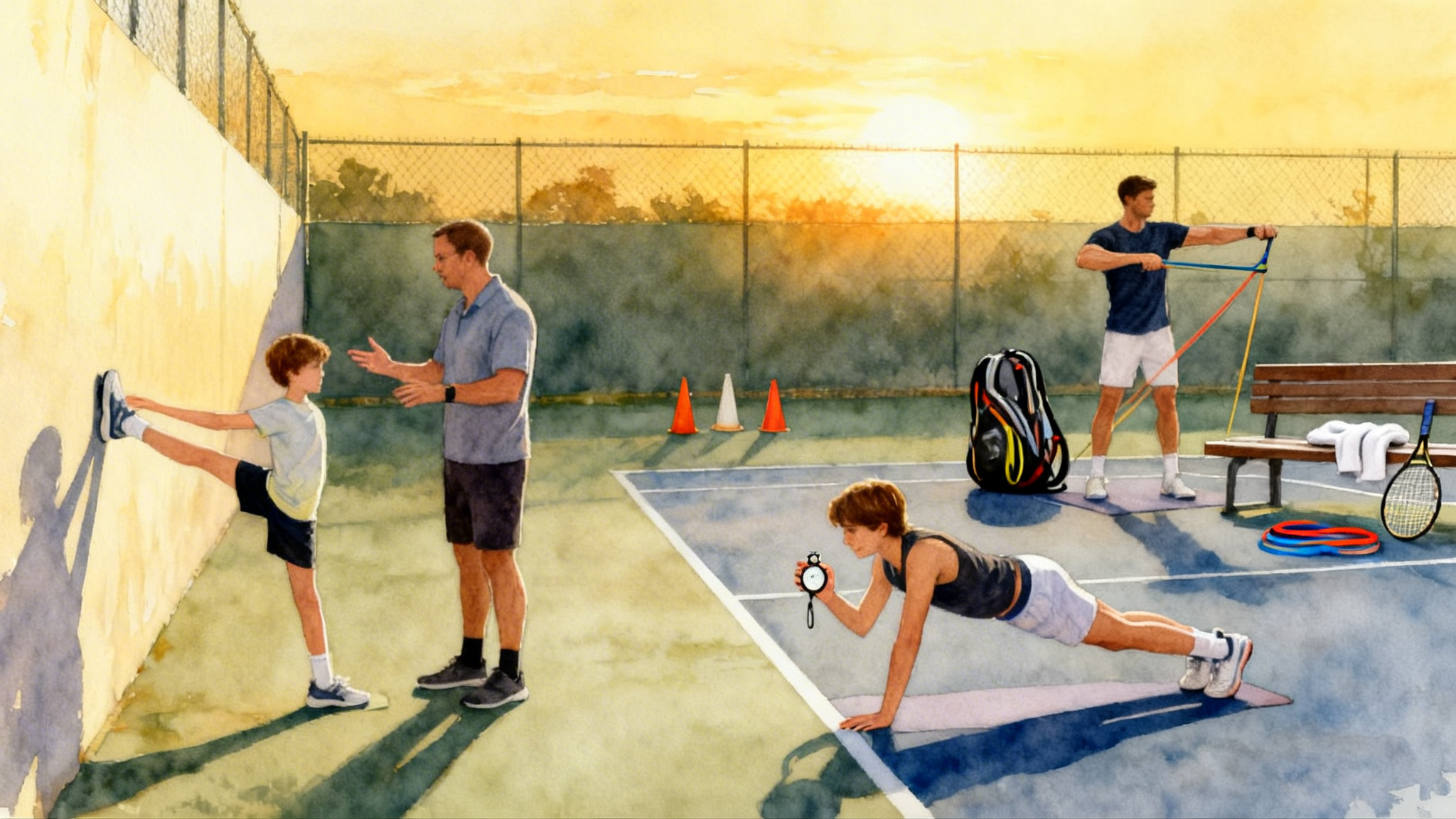
A more flexible frame and a softer, more elastic stringbed reduce the height of the speed bump. Enough mass and stability keep the racquet from wobbling on contact. The right grip size lets your forearm stay relaxed rather than locked. Pair gear changes with the 12-minute tennis prehab plan to keep tissues resilient.
The string menu you actually need
Most players only need to choose among three families. Here is how to think about each, with concrete use cases:
- Polyester (co-poly): greatest control and snapback-driven spin, least power and least comfort, tension drops faster. Best for faster swing speeds and frequent restringing. Use at lower tensions than you think, especially if you value your arm.
- Multifilament: bundles of fibers that mimic natural gut’s softness. High comfort, easy depth, and solid power. Less spin and control at full speed than poly, and can notch and fray sooner. Great for juniors and adults who value comfort.
- Hybrid: one string type in the mains and a different one in the crosses. The classic is natural gut or a soft multi in the mains for power and comfort, paired with a smooth polyester in the crosses for control and spin. Hybrids are the best middle path for many players.
Natural gut is still the gold standard for comfort. Synthetic gut is a simple, affordable option with a crisp feel that sits between multi and poly.
Safe starting-point specs at a glance
Numbers are strung and ready-to-play targets unless noted. Treat them as a launch pad, then fine tune during the playtest.
- Racquet stiffness (RA): aim for 66 or lower on a Racket Diagnostic Center test when possible. Lower can feel plusher, but stability matters too.
- Swingweight: how heavy the racquet feels in motion. Most arm-safe windows land here:
- Juniors: 270 to 300
- College-bound players: 315 to 330
- Adults: 300 to 320
- Static weight: scale weight of the racquet, strung, without dampener or overgrip. Typical arm-friendly ranges:
- Juniors: 280 to 305 grams
- College-bound players: 305 to 325 grams
- Adults: 295 to 315 grams
- Balance: 2 to 7 points head light helps maneuverability and keeps the shoulder happy.
- Grip size: when holding a forehand grip, there should be just enough room to slide the index finger of your non-dominant hand between your fingertips and palm. United States grip sizes are written as 4 inches, 4 1/8, 4 1/4, 4 3/8, 4 1/2, 4 5/8. Most juniors land at 4 to 4 1/8. Many college-bound players and adults settle at 4 3/8 with one overgrip.
- String gauges: 17 gauge for feel and spin, 16 gauge for durability. If you break strings in under 8 hours, go thicker or try a slicker cross.
Level-by-level recommendations that protect the arm and raise your ceiling
Juniors: build speed without stress
Profile: players still growing, learning to generate spin, and logging many training hours per week.
- Frame: 100 square inches is a sweet spot. Stiffness RA 60 to 66. Swingweight 270 to 300. Balance 3 to 6 points head light. Avoid very stiff and very light combinations that can buzz in the hand on off-center hits.
- Strings: full multifilament at 50 to 54 pounds is a safe start. If control is a problem, try a hybrid with a soft multi or natural gut main at 52 to 54 and a smooth, soft co-poly cross at 46 to 50. Do not begin with a full bed of firm polyester.
- Why this works: juniors need a stringbed that rebounds the ball without forcing extra squeeze from the forearm. A soft main string plus a slick cross gives access to spin without the harshness of full poly.
- Grip: for many, 4 inches to 4 1/8. Add a single overgrip if the racquet twists in the hand or if there is elbow twinge from overgripping.
- Restringing: every 6 to 10 weeks for multis, or every 12 to 16 hitting hours if any poly is in the bed, whichever comes first.
College-bound players: show coaches ball quality and durability
Profile: tournament juniors and gap-year players targeting National Collegiate Athletic Association lineups who practice 12 to 20 hours weekly and handle heavier balls.
- Frame: 98 to 100 square inches keeps control high and launch predictable. Stiffness RA 62 to 66. Swingweight 315 to 330. Balance 2 to 6 points head light. You want enough stability to return pace and defend without arming the ball.
- Strings: two strong options
- Natural gut or soft multifilament mains at 50 to 55 with a slick, round co-poly cross at 45 to 49. This gives heavy ball shape without beating up the arm.
- Full soft co-poly at 44 to 50 for those with naturally high racquet head speed. If arm comfort dips, drop tension by 2 pounds or go back to a hybrid.
- Why this works: college tennis rewards first-strike patterns, deep rally tolerance, and kick on second serve. A gut or multi main provides elasticity for depth, the poly cross locks in trajectory and spin. Full soft poly at low tension keeps trajectories tight for big hitters who restring often.
- Grip: many settle at 4 3/8 with one overgrip. A slightly larger handle can reduce the urge to squeeze on returns.
- Restringing: every 8 to 12 hours of on-court time for full poly. For hybrids, cut out by 15 to 20 hours or when control drifts.
- Coach translation: show that your setup holds depth and kick through a full two-set practice match. Share your tension, string type, and restringing schedule. It signals you are maintenance-ready for team match density.
Adults: protect the arm, unlock easy depth
Profile: competitive league players and returners who want comfort first but still need spin and control.
- Frame: 100 to 102 square inches. Stiffness RA 58 to 66. Swingweight 300 to 320. Balance 3 to 7 points head light. A little more head light helps the shoulder through long doubles nights.
- Strings: start with full multifilament at 50 to 56. If serves sail, try a hybrid with multi or gut mains at 52 to 55 and a soft, slick poly cross at 46 to 50. If you insist on full poly, pick the softest co-poly you can find and string 40 to 46. Check comfort carefully in the first two sessions.
- Grip: 4 1/4 or 4 3/8 for most. If you feel wrist strain on kick serves, consider building up by one overgrip.
- Restringing: do not wait for a break. If the stringbed sounds dull, has lost 10 to 15 percent of pitch when plucked, or your depth shrinks by a full racquet length, it is time.
A practical 14-day playtest that makes decisions obvious
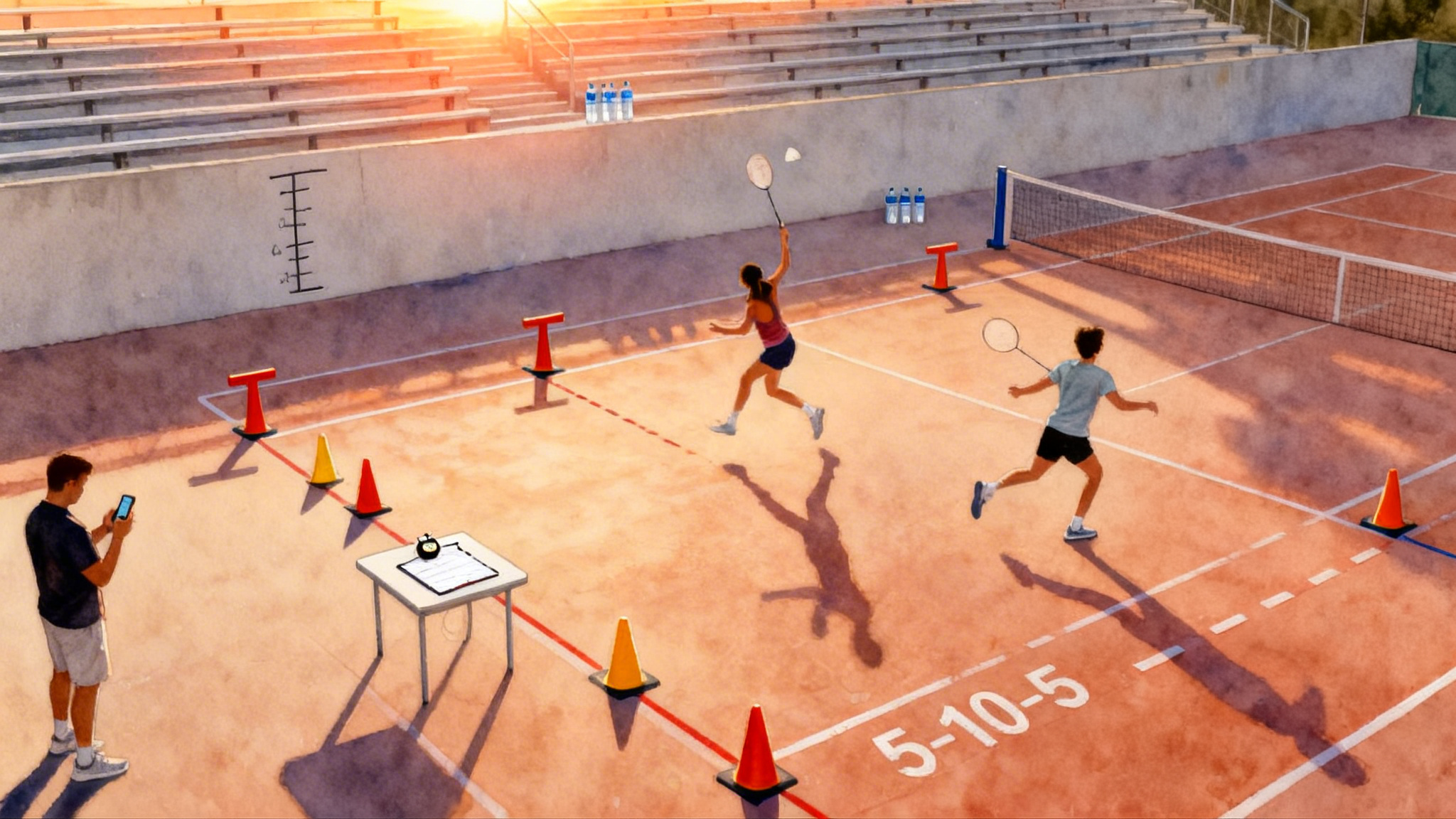
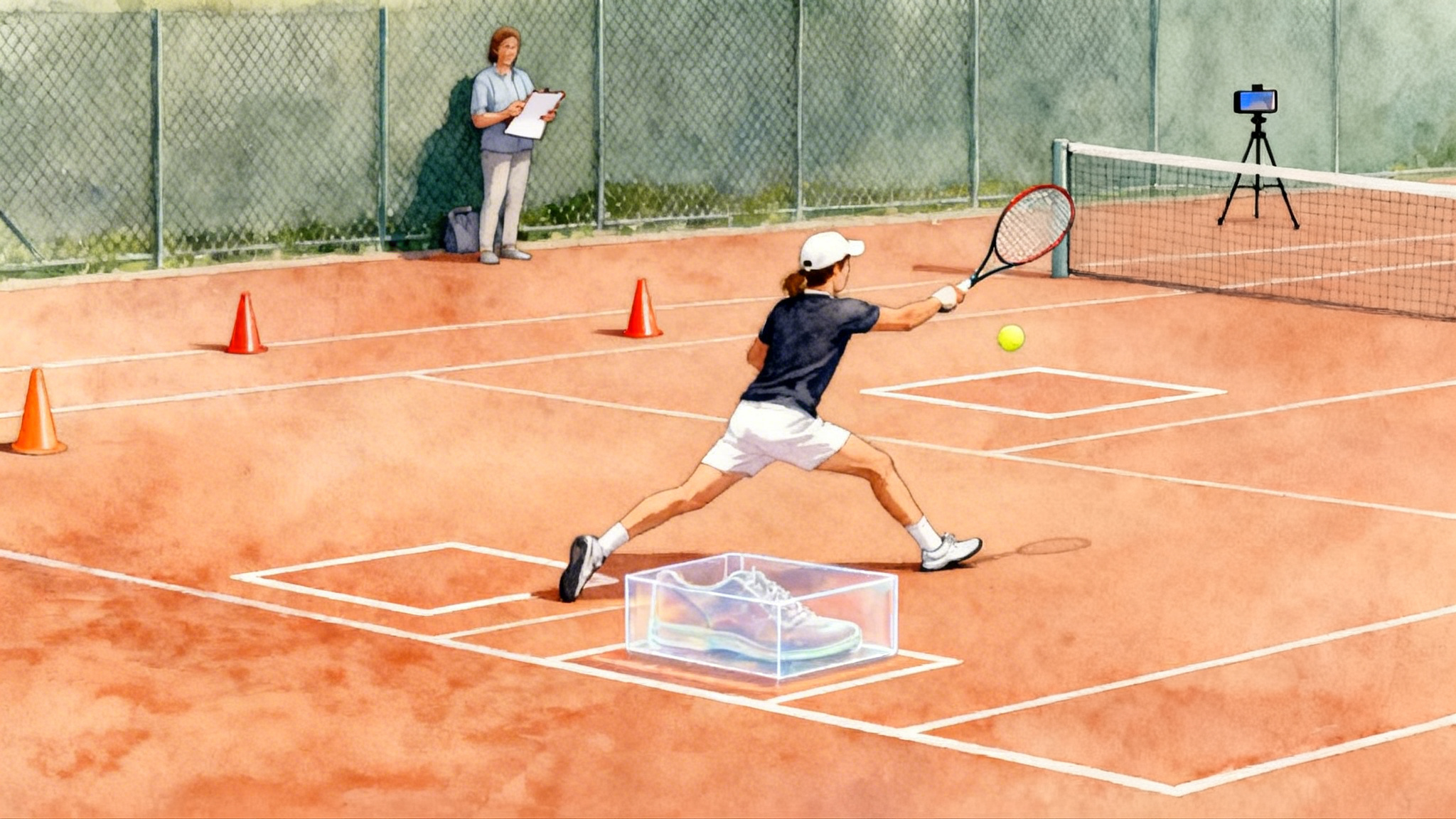
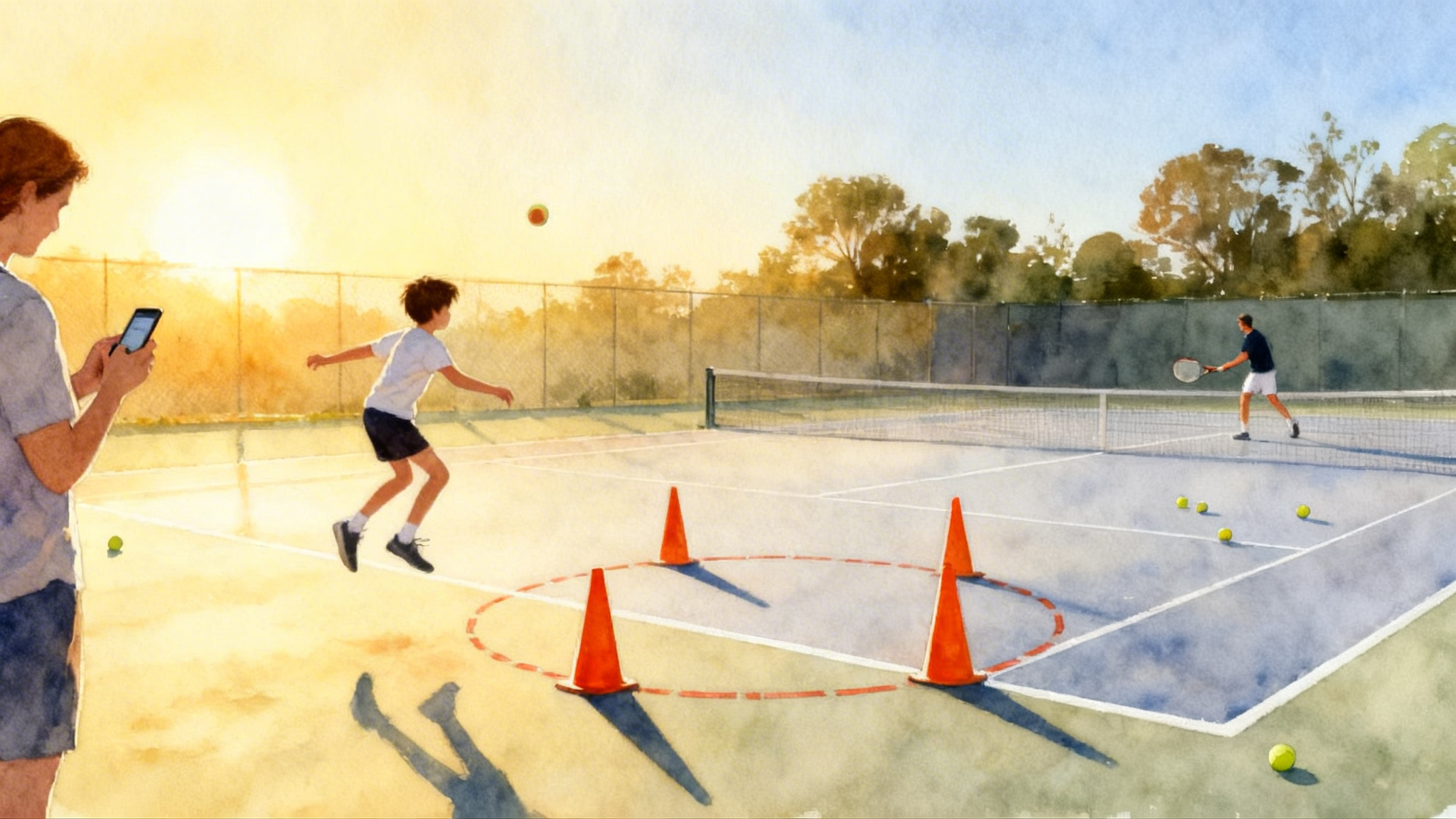
You do not need a lab to validate a setup. You need 30 minutes, some painter’s tape, a phone camera, and honest notes. Here is a simple protocol that works for juniors, college-bound players, and adults.
Tools and setup
- A new string job installed within 24 hours of Day 1
- Painter’s tape to mark targets
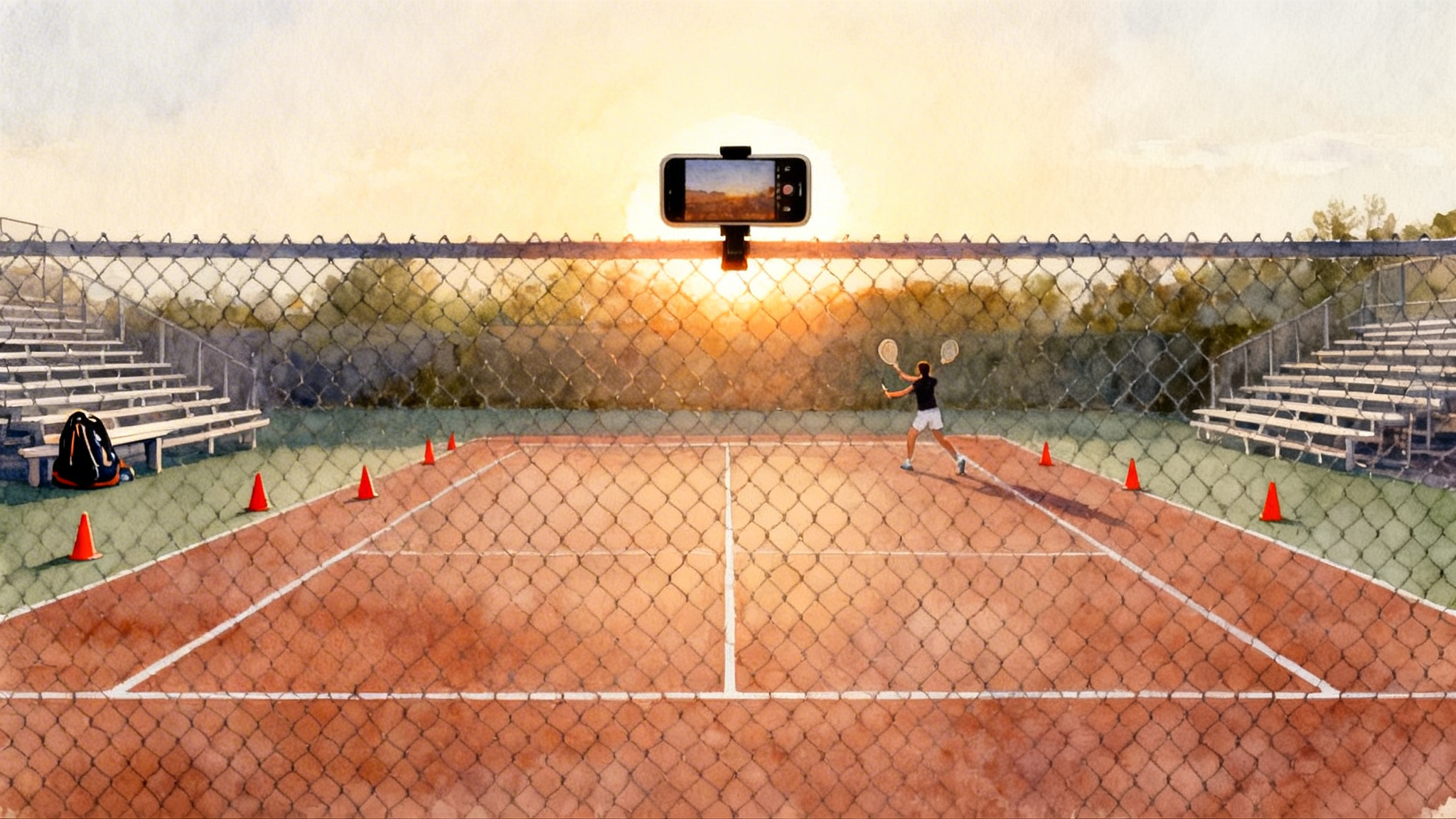
- A phone tripod or fence mount for consistent video angles
- A notebook or notes app
- Optional: a stringbed frequency app or a tuner to track pitch when plucked, one inexpensive pocket radar, or a smartwatch accelerometer reading for relative racquet speed
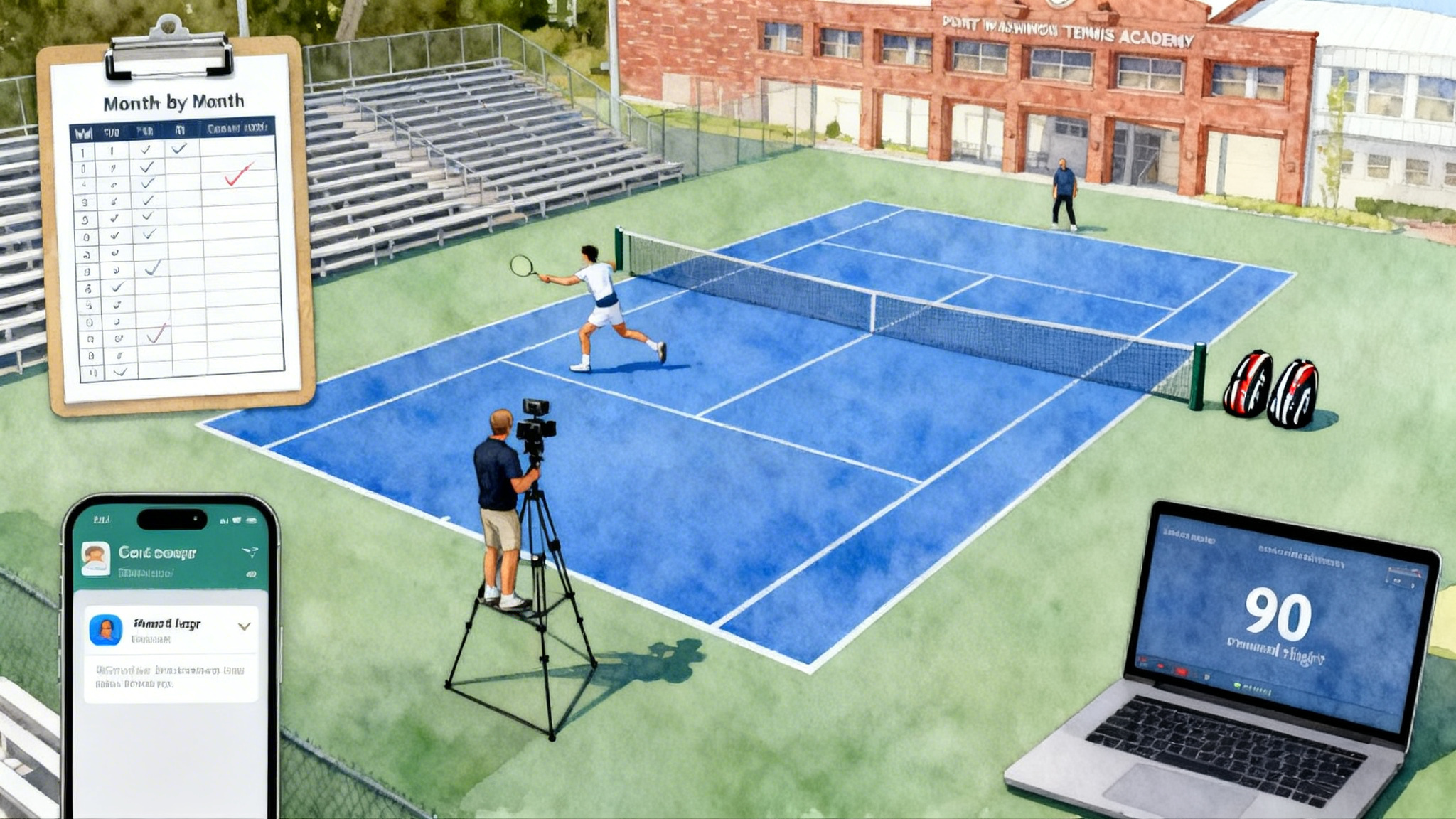
For cleaner video and faster review, use this smartphone tennis video checklist.
Targets to mark
- Two deep target strips: a two-foot tape line parallel to each baseline, three feet inside
- Two crosscourt targets: a two-foot by two-foot square near each singles sideline, two feet short of the baseline
- One serve target: a one-foot strip two feet inside the service line out wide on the deuce side
Week 1: learn the behavior
- Day 1, Baseline depth set: 40 crosscourt forehands and 40 backhands to the deep strips at 70 percent effort. Track how many land on or beyond the tape. Note any elbow or shoulder zing on mishits.
- Day 2, Spin check: Hit 30 heavy crosscourt forehands and 30 backhands at 75 percent. Film from behind the baseline. Count bounces that jump above hip height at the service line. This is a simple proxy for spin and trajectory.
- Day 3, Serve window: 30 first serves to the wide target on deuce, 30 second serves kick up the T on ad. Make percentage and make height on the fence your two numbers. A rising second serve that clears the net by three to four feet is friendly to the arm and the scoreboard.
- Day 4, Racquet head speed: Film 10 forehands and 10 backhands from the side with the camera at waist height. Use the slow-motion setting if available. You want to see if you can accelerate late without forcing the wrist. If contact drifts behind your body, the setup may be too sluggish or too tight.
- Day 5, Live-ball set: One practice set to four games with a partner who can rally steadily. Do not hunt winners. Grade yourself on the number of neutral rally balls you can send past the deep strip while staying smooth.
- Day 6, Comfort audit: Light 30-minute hit, then 10 minutes of ball pickup. Minor discomfort that fades within an hour can be from workload. Sharp pain or next-morning stiffness is a red flag. Record it.
- Day 7, Stringbed check: Pluck the main strings, note the pitch or the reading on your tuner app. If the pitch drops by more than 10 percent from Day 1, expect a launch change.
Week 2: confirm under pressure
- Day 8, Pattern test: Run three plus-one patterns on each side at 80 percent. Example: serve wide, forehand to the open court. Measure depth to the strip. This checks if the frame and string still steer when your feet move.
- Day 9, Defense test: Feed or have a partner feed 20 shoulder-high forehands and 20 backhands. Your job is to loop them crosscourt past the deep strips. If the stringbed is too stiff or too loose, you will see it here.
- Day 10, Return test: 30 second-serve returns crosscourt with height over the net tape. Note any jarring sensations on blocked returns. A stable, not-too-stiff setup shines here.
- Day 11, Match play: One full practice match to six games. Record your deep-ball percentage on five random rallies each set. Do not chase highlight shots. Judge how your arm and shoulder feel during the last two games.
- Day 12, Serve endurance: 60 serves total, first and second mixed. Break into sets of 10 with one minute rest. Note whether velocity or height falls off in the last 20 balls. If it does, tension or swingweight may be too high.
- Day 13, Comparison hit: Borrow a friend’s or a demo racquet that is slightly lower swingweight or lower tension. Repeat a 15-minute version of Days 1 to 3. Use this as a reality check.
- Day 14, Decision rules: pick one
- If your deep-ball percentage is 60 percent or higher and comfort is clean, keep the setup.
- If depth is short by a racquet length, drop tension 2 pounds or use a softer main string.
- If shots fly, raise tension 2 pounds or move from multi to a hybrid.
- If the shoulder tires early, trim swingweight by removing 2 to 3 grams at 12 o’clock or switching to a frame 10 points lower in swingweight.
How to talk about your setup with college coaches
Coaches have limited time. They want three things from your equipment story because each one predicts on-court reliability:
- Stability without drama: a frame that does not shudder on pace or stretch on heavy balls. You can say you are at a 320 to 330 swingweight and 2 to 4 points head light, which keeps defense and counterpunching consistent.
- A string plan: if you play full poly, plan to cut it out every 8 to 12 hours of hitting. If you run a hybrid, track tension drops and restring by 15 to 20 hours. Share the exact tension you used in your most recent tournament and the logic for any change.
- Proof of ball quality: bring your 14-day notes. Show that your deep-ball percentage and second-serve height hold late in sets. Coaches care less about chalking lines than about repeatable heaviness at 70 to 85 percent rally speed.
Grip sizing that saves your forearm
The wrong handle size forces the wrong muscles to do the work. Use this quick method:
- Measure from the middle crease of your palm to the tip of your ring finger. Round to the nearest eighth of an inch. That is your starting grip size.
- If you hit a two-handed backhand with a lot of top hand work, err a quarter size down to help wrist mobility.
- Add one overgrip if you feel racquet twist at impact or if the bevels feel too sharp during serves.
- If you feel forearm burn or you squeeze hard to control the face, go up a size or add a second overgrip temporarily and retest in the protocol.
Smart customization without overthinking
You can make small, reversible tweaks at home. Move in two to three gram steps and test.
- Stability on off-center hits: add 1 gram at both 3 o’clock and 9 o’clock. This raises twist resistance and can reduce shock.
- A touch more plow on serves: add 2 grams at 12 o’clock. Expect swingweight to climb by about 6 to 8 points. If your shoulder complains, remove it.
- Faster handling at net: shift weight to the handle under the butt cap or use a slightly thicker grip sleeve. This can drop perceived swingweight without changing the frame.
- Dampeners: they change feel and sound, not the shock that reaches your arm. Use them for comfort in your hand, not as a fix for a harsh setup.
Troubleshooting checklist
- Elbow twinges on blocked returns: try a softer main string, add 2 grams at 3 and 9, or lower tension by 2 pounds.
- Shoulder fatigue in long rallies: reduce swingweight by 5 to 10 points, go one frame size larger in head light balance, or lower string tension by 2 pounds.
- Depth fades late in matches: strings may have lost elasticity. Restring, or move to a hybrid with a more elastic main.
- Balls fly long in heat: tension rises and falls with temperature and string age. Increase tension by 2 pounds for hot days, test, and keep notes.
Model and brand examples to ground the ideas
You do not need the latest release to play well. The following brand families illustrate the concepts in this guide:
- Control-leaning, arm-friendly families: frames marketed for flex or comfort from Wilson, Yonex, Head, and Prince. Examples include lines known for lower measured stiffness or flexible shoulders.
- Power-leaning frames with comfort tuning: look for models with built-in dampening foams or grommet systems. Pair them with softer strings or hybrids to control launch.
- Strings: soft co-polys advertised for playability, multifilaments that mimic natural gut, and natural gut itself for maximum comfort. Remember the tension rules above and the restring schedule.
Put it all together in one page
Here is the one-page plan you can hand to a coach or keep in your bag:
- Frame: 98 to 100 square inches, RA 62 to 66, 2 to 6 points head light
- Swingweight: juniors 270 to 300, college-bound 315 to 330, adults 300 to 320
- Strings: multi or gut mains at 50 to 55 with slick poly cross at 45 to 49, or full soft poly at 44 to 50 if you swing fast and restring often
- Gauge: 16 for durability, 17 for feel and spin
- Grip: start at measured size, add one overgrip to fine tune
- Restringing: full poly 8 to 12 hours of use, hybrids 15 to 20 hours, full multi every 6 to 10 weeks or sooner if feel fades
- Testing: run the 14-day protocol, record deep-ball percentage, second-serve height, and comfort notes
Ready for pro validation and customization?
The fastest path from theory to confidence is a hands-on session that matches your technique to your equipment. Book a pro stringing and customization visit at Gomez Tennis Academy. Bring this guide and your 14-day notes. We will install the setup, make small weight moves, and validate it in live-ball drills so you feel the difference on contact, on defense, and at match point. If you want help scheduling, you can book a customization session and include a note about live-ball validation.
A smart setup does more than protect your elbow and shoulder. It gives you a playable identity. When the frame, strings, and grip let you swing freely, the ball does the talking. That is how you train more days, impress college coaches with reliability, and enjoy the game for years to come.