From Belgrade to Munich: Niki Pilic’s Impact on Djokovic
At 13 in 1999, Novak Djokovic left Belgrade for Niki Pilic’s academy in Munich. Inside that move were training blocks, discipline, and mentorship that refined his return, movement, and resilience. Here is what parents can learn.
 Tommy
Tommy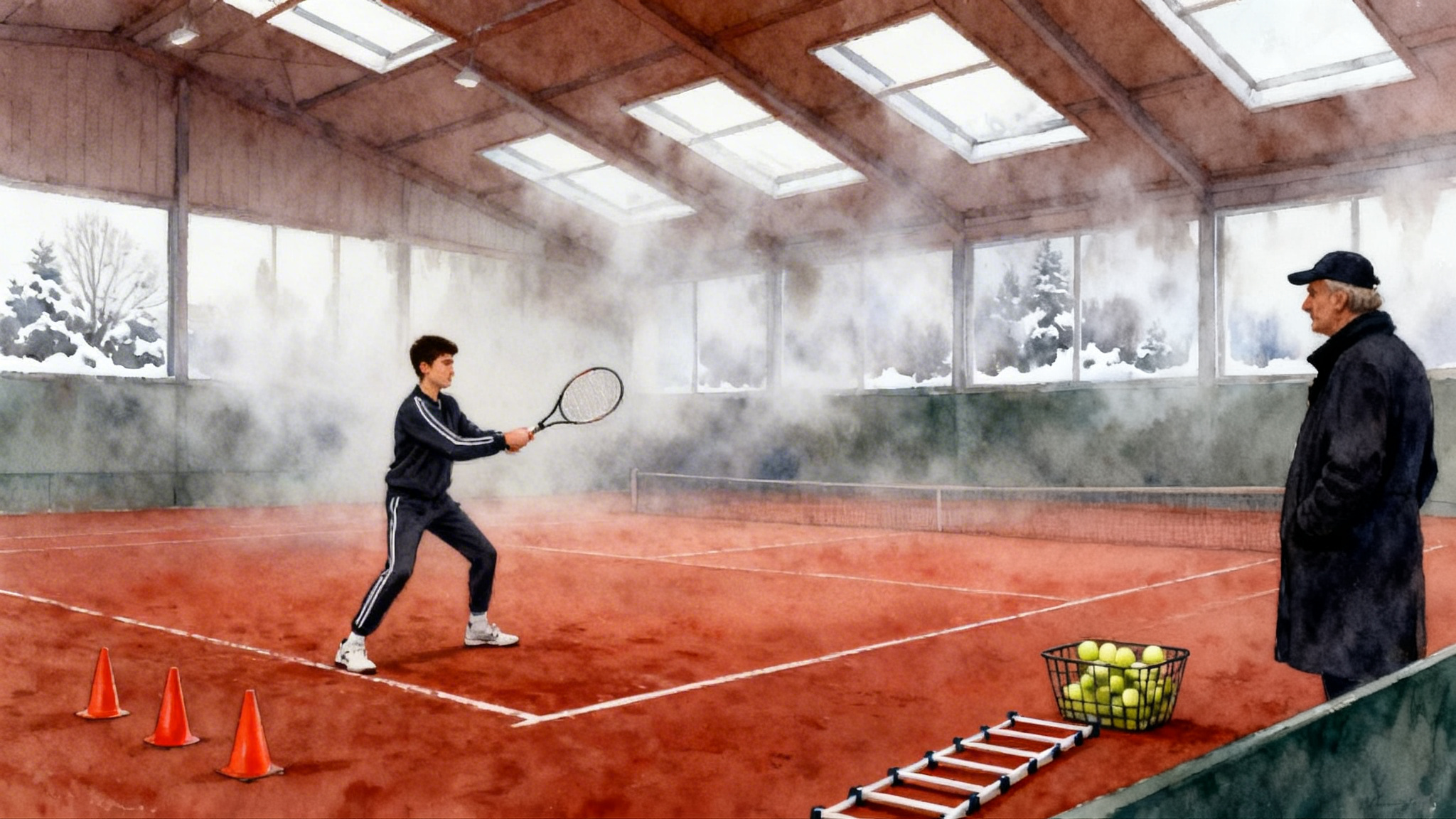
A 13-year-old’s leap that changed tennis
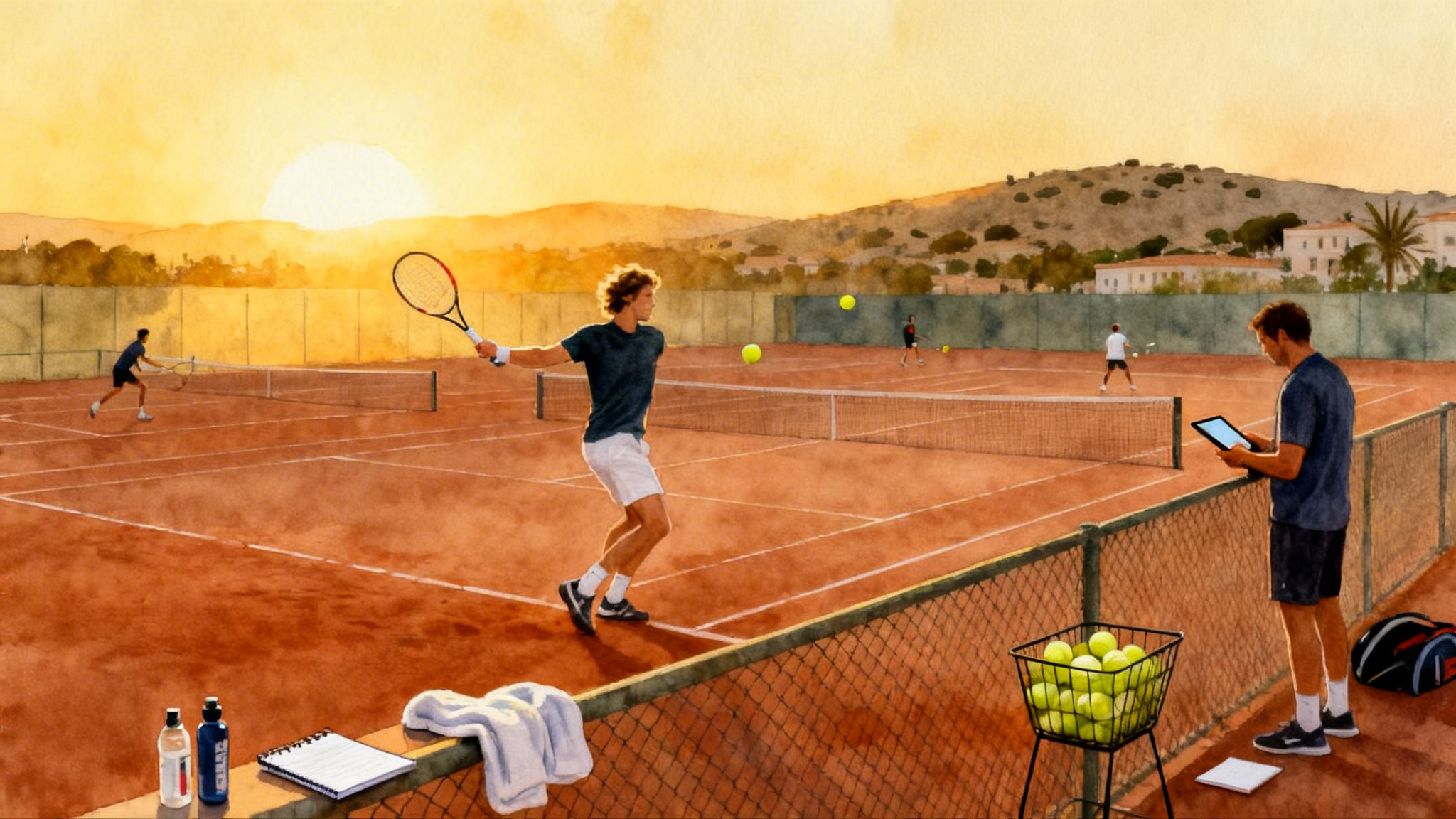
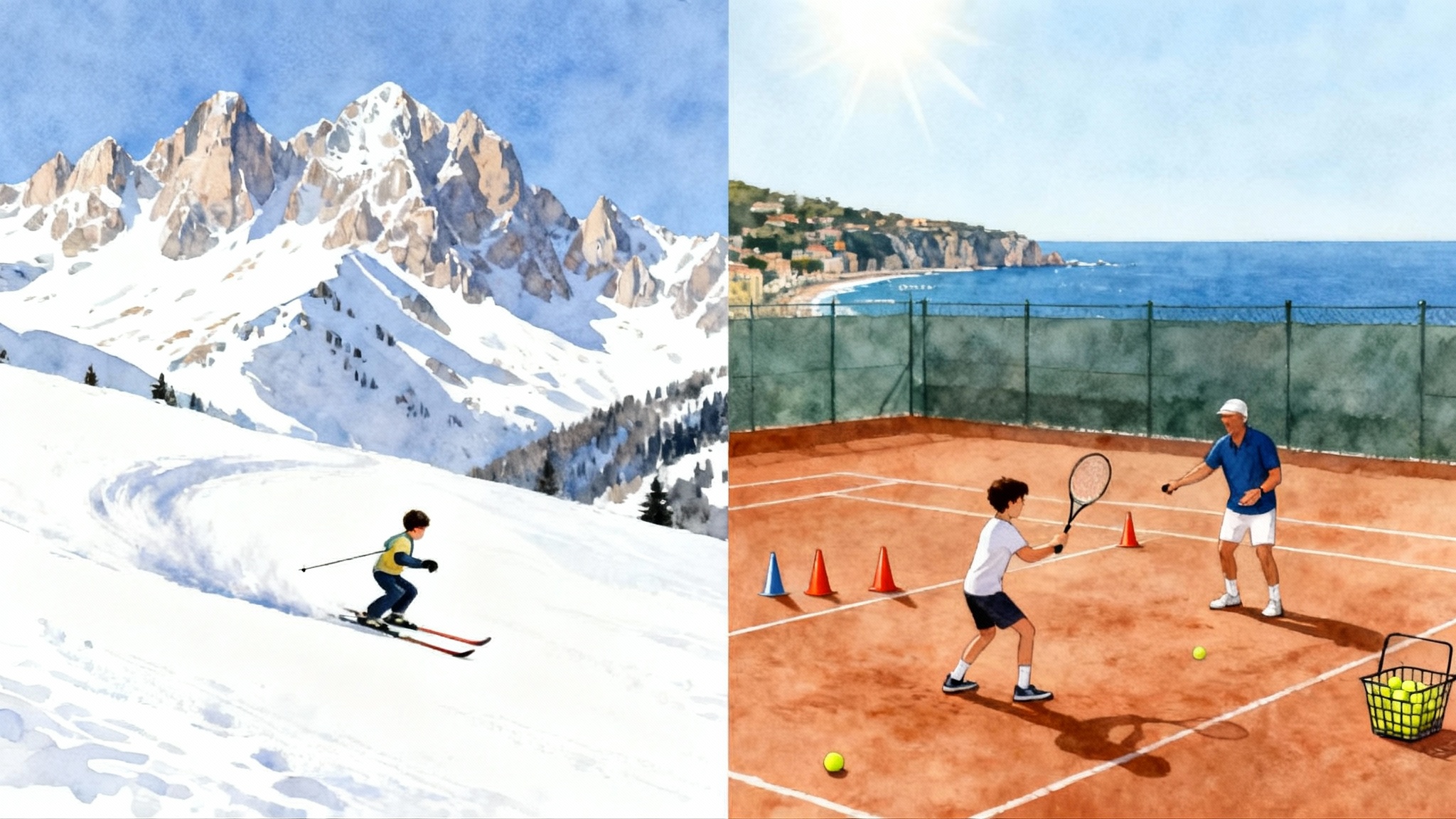
In 1999, a Belgrade teenager packed a racquet bag and a winter coat and flew to Munich. That boy was Novak Djokovic. He was 12 turning 13, and the destination was the Niki Pilic Tennis Academy. For a family from a country still rebuilding, it was a bold and costly decision. For world tennis, it was the beginning of a very specific kind of polish that would later define the most complete returner and mover the sport has seen.
The move is not a myth. Contemporary profiles documented that Djokovic trained for years at Niki Pilic’s base near Munich after leaving Serbia in 1999. Readers who want a concise factual overview can consult the Britannica biography of Novak Djokovic. Families comparing pathways can also see how a structured academy relocation shaped another top pro in our profile on Rafa Nadal Academy fueled Casper Ruud.
This story is not about a magic academy wand. It is about the right move at the right time, backed by the right mentors, with the right training blocks repeated with almost stubborn consistency.
Why the relocation made sense at 13
Age 13 is not a random number. For a talented player, it is the start of adolescence when growth, strength, and coordination begin to climb, and when competition expands beyond local and regional events. A year too early, and a child risks burnout and homesickness. A year too late, and the player can miss the deep repetitions of technique and habits that are hard to retrofit at 16.
By 1999, Djokovic had a sturdy base from his early coach back home. He already loved the ball, took it early, and was curious about why shots worked. What he lacked was volume against stronger peers, structured physical preparation, and the kind of day-in, day-out accountability that top academies use to turn promise into a professional skill stack.
Inside Pilic’s environment
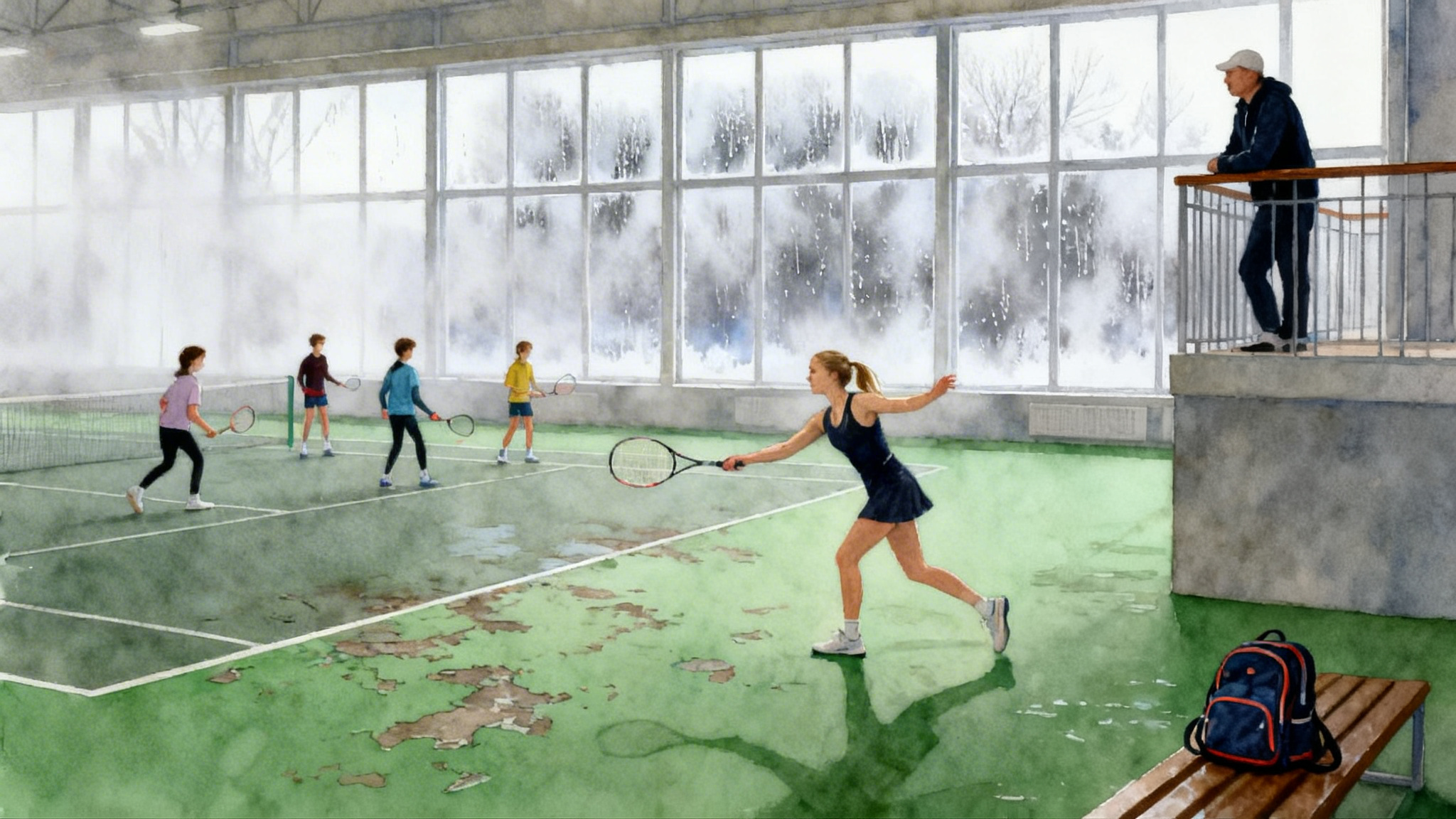
Niki Pilic was famous for direct standards. The academy’s rhythm resembled a small professional club. Players trained beside older juniors and young pros. The message was clear. Show up prepared, compete with focus, and let the work teach you. The surfaces rotated, often with indoor red clay in colder months and hard courts in better weather. That variety mattered for Djokovic. It forced him to adapt his balance and use his legs with the same discipline on every surface. For families exploring Germany today, ToBe Tennis Academy in Germany offers a compact, high-touch option built around similar clarity of standards.
Coaches tracked more than strokes. They watched daily habits. Who warmed up precisely. Who finished the last sprint. Who could repeat a drill under pressure without drifting into ball-bashing. A teenager sees who he could become by looking one court over. That social mirror can shape a career.
The training blocks that built the return
Djokovic’s return of serve did not appear out of nowhere. It grew out of specific blocks that any serious program can copy:
- Positioning and cues: Coaches taught players to pick a consistent ready position with small adjustments by opponent, surface, and score. Djokovic learned to see the toss as a traffic light. Ball toss behind the head suggested a kick serve; toss to the right hinted slice. These were not tricks. They were pre-contact cues drilled until they felt like sight-reading a score.
- Compact swing map: The academy emphasized a short loop, early shoulder turn, and a contact point slightly in front. The cue was simple. Turn early, see the ball twice, then send it. The goal was to remove excess arm movement so that the racquet could meet first-serve pace without panic.
- Two-ball return sets: Players returned two serves in a row and then immediately stepped forward to take the third ball on the rise. This stacked the return with an aggressive first shot. It taught that the return starts a pattern, it does not end one.
- Deep-to-short ladder: A series of six returns, each one landing a little shorter by design, finishing with a chip-dip at the server’s feet. This trained control, not just contact.
- Lefty-righty alternation: Alternating servers forced operators to change grip pressure and contact height quickly. The body learned to shift micro-timing without complaint.
In each block the stopwatch mattered. Rest times were strict. Reps were counted. The goal was to meet first-serve speed with a still head, steady base, and a plan for ball three.
Movement on every court, not just clay
Observers often point to sliding as a trademark, but the foundation at Pilic’s academy was simpler. It was shape and balance.
- Split-step timing: Each rally began with a demand to split on the striker’s forward swing, not at contact. This tiny shift gives the body a head start. Djokovic treated it like a drumbeat he could not miss.
- Hip-shoulder separation: Footwork ladders were not vanity. They built the habit of setting the outside foot, loading the hip, and letting the shoulders wind just enough to store elastic energy. This is a running forehand that does not leak power.
- Inside-out and inside-in patterns: Pattern plays were graphed. Djokovic learned to fall in love with recovery angles. Hit, recover to the correct cone, check the opponent’s court position, then move again. The rhythm took ego out of decisions.
- Short-stop braking: On slick surfaces, coaches encouraged micro slides as brakes, not as style. Sliding happened because the player was late to stop, not because sliding was the plan. That distinction kept players safe and balanced.
The result was not acrobatics. It was neutrality. Djokovic could arrive in balance one ball earlier than opponents expected. That allowed him to turn neutral balls into offense and heavy offense into neutral again.
Learning to suffer well
Relocation is never only about tennis. It is school, language, new food, and missing family. Pilic’s environment leaned on simple rules that taught resilience.
- Punctuality as a skill: Arriving early was treated as part of training, not as politeness.
- Simple meal routines: Repetition of balanced meals around training windows reduced guesswork. Many parents overlook how much decision fatigue drains young athletes.
- Journal and review: Players were asked to write one sentence each day about what they learned. Not a page, not a list, one sentence. That makes reflection a habit.
Resilience grows when discomfort is normal but not overwhelming. The academy raised the bar but wrapped it in predictable structure so that nothing felt random.
Mentorship from Niki Pilic
Mentorship is not a TED talk. It is a coach fixing your toss for the hundredth time and refusing to lower the bar when you look tired. Pilic’s reputation was built on that steadiness. He did not promise shortcuts. He offered standards:
- Be coachable without being passive. Ask why. Then try it without flinching.
- Seek the hardest opponent you can find that day. Value being stretched more than being praised.
- Measure improvement by patterns, not by trophies. If you are winning with junk that will not scale, change it now.
These are not slogans. They are operational choices that a teenager can apply today. They explain why Djokovic’s tennis aged well. His game was organized around repeatable cues and stable patterns that survived pressure and time zones.
For readers who like an official overview of Djokovic’s pathway to the top, the Olympics.com player profile sketches the arc from junior development to major titles.
How competition was structured during the academy years
The Pilic model blended blocks of technical work with targeted tournament spikes. Weeks looked like this:
- Block weeks: Ten to twelve on-court sessions, three to four strength sessions, two mobility blocks, and one matchplay day with charting. The goal was skill consolidation and fitness.
- Competition windows: Two or three events across nearby countries, chosen for surface match and draw size. The goal was to test specific themes. For example, use the backhand line change at 30-all, or attack second serves to the body twice per game.
- De-load: A short reset to restore freshness and review match video, then back to a block.
Djokovic learned to compete often but not constantly. He experienced peaking and reloading, which later helped him calibrate a professional season with precision. For a contrasting route that also leverages targeted blocks, see how Elite Tennis Center built Medvedev.
What parents can take from this journey
You do not need Munich to apply Munich’s lessons. Here is a decision framework for families, with actions you can take now.
When to relocate: a readiness checklist
Relocation is justified when most of the boxes below are true:
- Training ceiling at home: Your child has outgrown local sparring partners and cannot regularly hit with older, stronger players.
- Coach plateau: The current coach is supportive but acknowledges that specialized input and more matchplay are needed.
- Academic plan: There is a concrete schooling pathway that fits training hours without forcing late-night homework marathons.
- Emotional readiness: Your child pushes to practice without nudging, wakes with an agenda, and recovers well after losses. Homesickness will still happen, but motivation is self-propelled.
- Financial clarity: You have a written budget for tuition, travel, accommodation, physio, and tournament entries. Surprises sink plans faster than setbacks.
If two or more of these are shaky, delay the move and simulate an academy at home for six months. Stack sparring days with older players, schedule small away tournaments, and track outcomes.
How to choose an academy: evaluation criteria you can verify
Do not be won over by photo walls. Compare academies on specifics you can measure:
- Coach to court ratio: Watch a session unannounced if possible. Count how many players each coach actively instructs for more than ten minutes per hour. If attention is thin, skills will be too.
- Daily structure: Ask for a written weekly plan that names themes. For example, Monday morning forehand inside-out footwork and Monday afternoon return blocks. Vague calendars signal vague coaching.
- Matchplay with charting: Insist that practice sets are charted by a coach or trained peer. You want first-serve percentage, return depth zones, unforced error types, and patterns after the serve or return.
- Strength and injury prevention: Request the strength screen used for new athletes. A simple landing and squat assessment is not enough. Look for shoulder external rotation checks, hip internal rotation, and ankle dorsiflexion measures. Ask how they progress loads.
- Tournament planning: Review a sample three-month schedule for a player similar to your child. Verify surface alignment and travel sanity. Back-to-back events in different countries with long drives kill quality reps.
- Progress reviews: Demand a monthly review with video clips that illustrate changes. A meeting without footage becomes a speech.
How to structure competition and training after a move
Steal the block-window rhythm:
- Six-week mesocycle: Four weeks of progressive training, two weeks of targeted tournaments. In training weeks, stack one theme per day and repeat it twice that week. In competition weeks, set two match goals, not five.
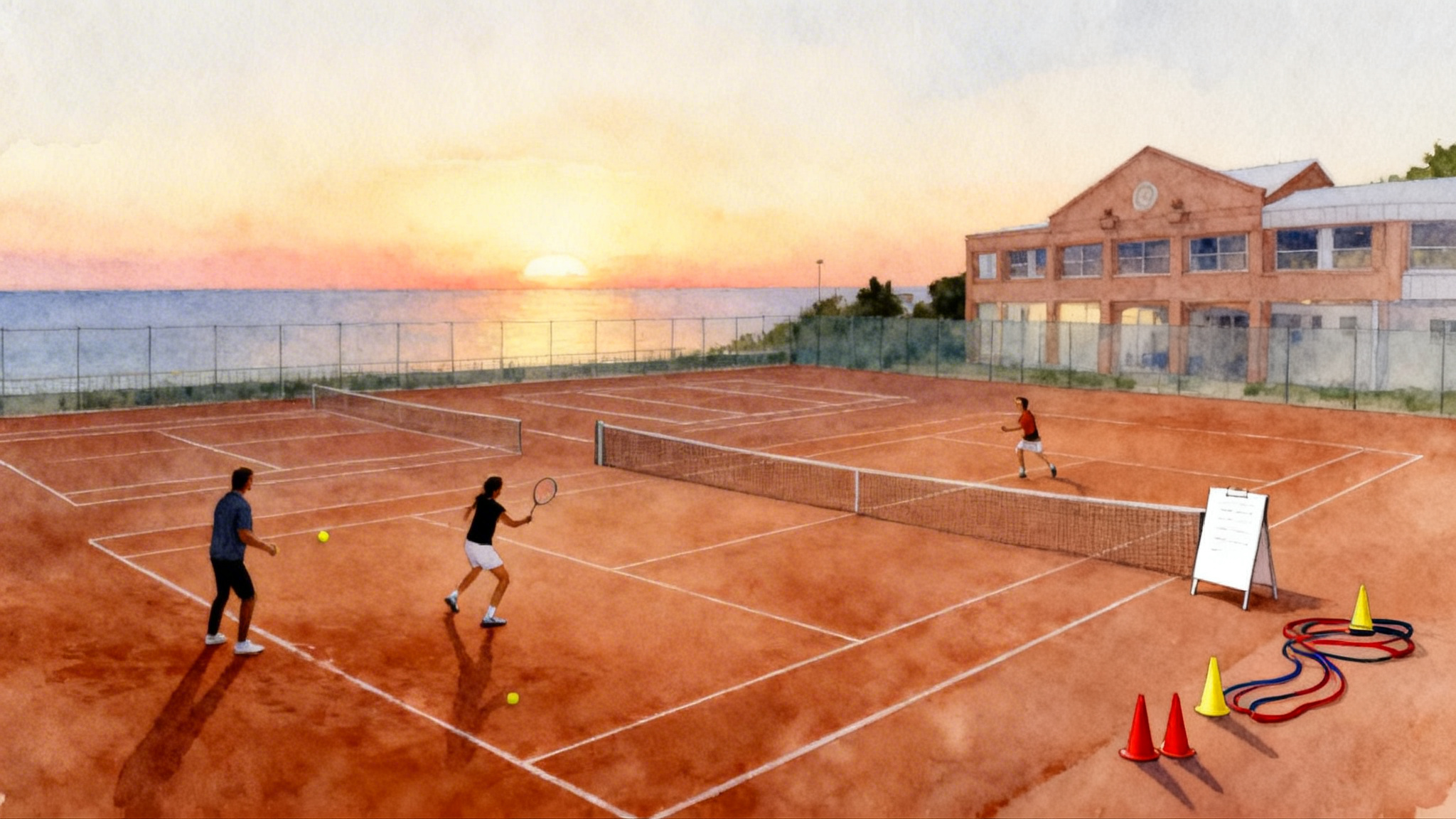
- Skill-day focus: Use short labels on a whiteboard. Return plus one. High forehand, line change. Low backhand, depth. Serve plus two. The player should recite the day’s label during warm-up.
- Micro-dosing video: Ten minutes after practice, not an hour at night. Watch two rallies that show the theme done well and one that needs work. Praise first, fix second.
- Recovery as training: Sleep and soft-tissue work sit on the calendar, not in the margins. If it is not scheduled, it will be skipped.
Managing coaching transitions without drama
At some point, your child will outgrow a coach or need a specialist. Here is how to make the change clean:
- Write a handover memo: One page that explains what has been trained, what is stable, and what is in progress. Include two or three clips with timestamps. This respects the outgoing coach and helps the incoming coach avoid guesswork.
- Keep one anchor cue: When changing technique, hold one familiar cue so the player does not feel lost. For example, keep the same return stance while adjusting the first step.
- Timebox the experiment: New coaching changes get four to six weeks before you judge outcomes, unless pain or injury appears.
- Parent role clarity: Parents handle logistics and peace of mind. Coaches handle tennis. Do not cross the streams.
A simple template parents can apply this month
You can build a mini-Pilic week without a plane ticket. Try this five-day plan for a motivated 12 to 14-year-old:
- Monday: Return blocks. Short loop, toss-reading drills, and two-ball return sets. Finish with six minutes of med-ball throws for power sequencing.
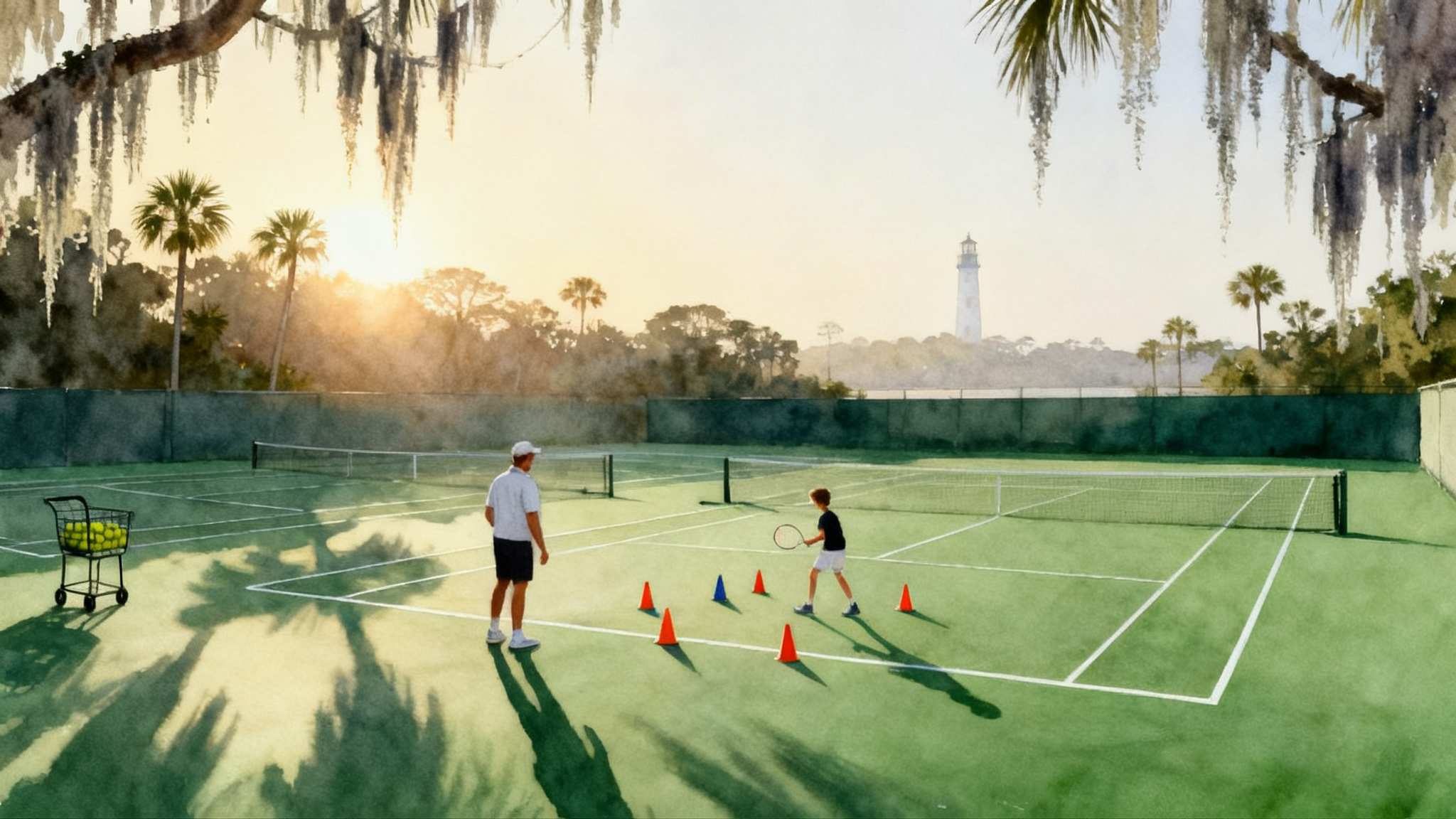
- Tuesday: Movement patterns. Split-step timing games, ladder work into open-stance forehands, and recovery to the correct cone after each shot. Light mobility cooldown.
- Wednesday: Serve plus one. First serves to four targets with simple progressions. Immediately follow each serve with a scripted first groundstroke to the opposite corner. Chart first-serve percentage and first-ball errors.
- Thursday: Matchplay with charting. One practice set where a peer or coach tracks return depth zones and unforced errors by wing.
- Friday: Video and strength. Ten minutes of clips from the week, then basic strength with emphasis on single-leg balance, hip rotation control, and shoulder health.
Add two rest days with active recovery. Keep schoolwork predictable and front-load assignments before competition windows.
Cost, context, and the long view
There is no pretending that relocation is affordable for every family. If a full-time move is out of reach, consider seasonal residencies of four to eight weeks that target a theme. Many academies offer camp blocks that mirror pro-style structure. Success does not require living abroad for years. It requires cycles of focused work that compound.
Also remember context. Djokovic’s rise happened because environment and personality met at the right time. He was curious, stubborn in the best way, and willing to repeat the same quality rep until it felt automatic. An academy provided the volume and standards. The player provided the engine.
The last word
From Belgrade to Munich, one decision at 13 set a course. In the Pilic environment, Novak Djokovic learned to return by reading the world before the ball left the strings. He learned to move as if balance were a skill, not a gift. He learned to suffer well in a new language and a new rhythm. The tennis world later saw trophies. What happened first were quiet, specific blocks done well, then better, then best.
The takeaway for parents is practical. Choose action over aura. Use checklists. Demand structure. Measure by patterns. When relocation is right, treat it like a business plan with budgets, reviews, and clear roles. When relocation is not possible, build a mini-academy at home with steady habits and two or three themes that repeat until they hold under pressure.
If you follow that path, you may not produce the next Djokovic. You will produce a resilient competitor who knows how to work, and that is a victory that lasts long after junior rankings fade.