Austin Hill Country Tennis: Year-Round Training at Legend
Trade rain delays for music, trails, and reliable court time. Austin’s October to April mild season and May to September night sessions make Legend Tennis Academy an ideal base. Build a 5–7 day camp, recover at Lake Travis, and anchor progress with UTR and USTA match play.
 Tommy
Tommy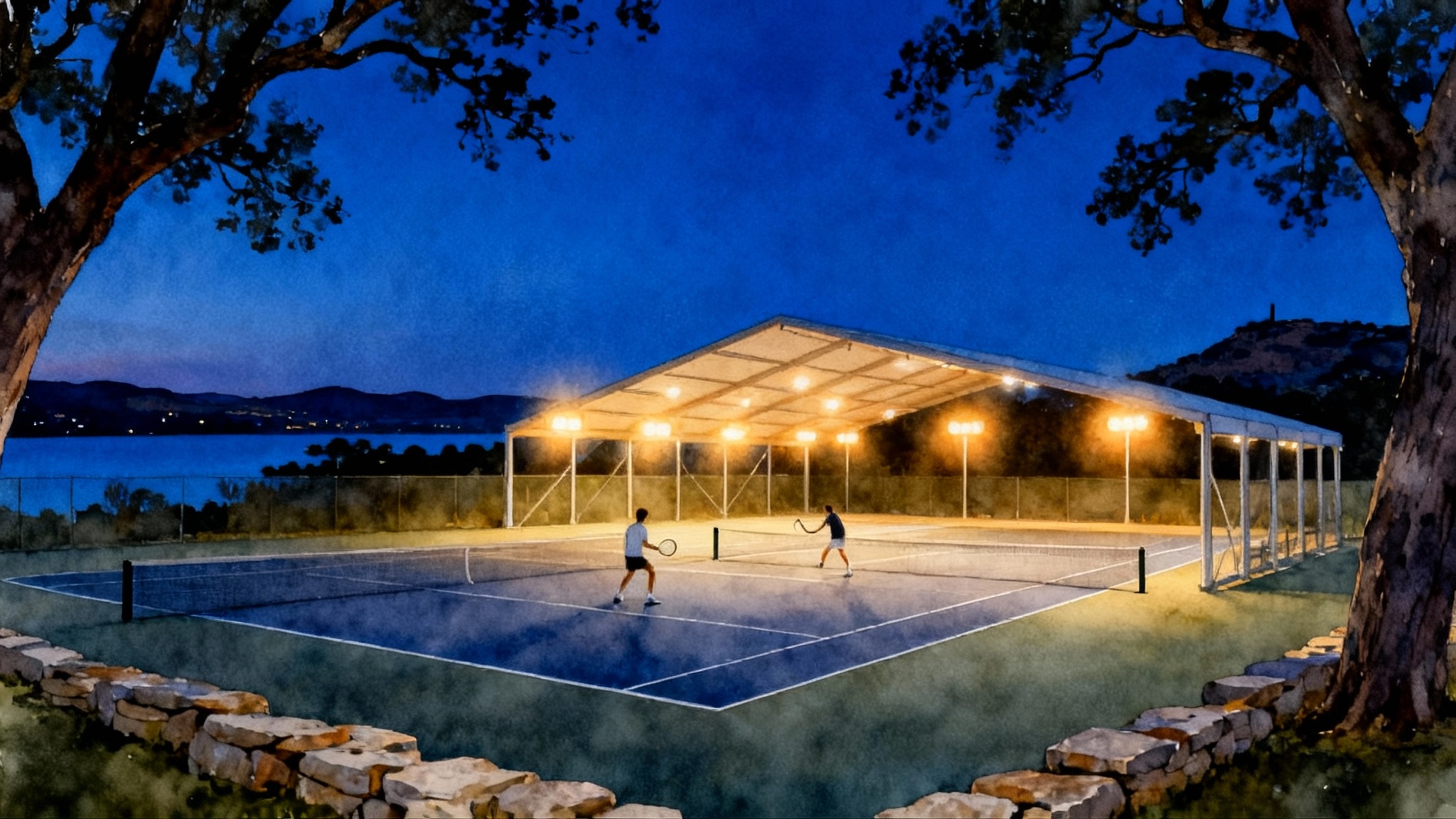
Why Austin becomes your year-round tennis base
If you are tired of juggling rain delays and humidity spikes on a training trip, aim west to the Hill Country. Austin gives you reliable outdoor court time, a drier feel than coastal Florida, and a culture that keeps energy high away from the baseline. You can train in the morning, hike oak-covered trails in the afternoon, then catch live music after dinner. That blend matters, because a strong training block is not just the hours you spend on court. It is also the recovery, the environment, and the motivation you bring back the next day.
Legend Tennis Academy in Spicewood sits in the heart of this rhythm. It is your hub for structured progress, with covered, lighted courts that let you choose your hours rather than letting weather choose them for you. Come in October through April for mild days that invite two-a-day sessions. Return from May through September to flip the day, training at dusk and under lights for cooler, crisper work. Either way, you can stack a professional plan on top of Austin’s reliable conditions and get measurable results.
If you are shaping a broader season, balance this Austin block with our Indoor Tennis Capitals winter guide or plan a spring desert week with the Indian Wells to Palm Springs training guide.
October to April: the mild season for volume and skill build
From October through April you get comfortable mornings and manageable afternoons. That makes it the prime window for technical rebuilds and volume. You can spend more time in the learning zone, where you break down a stroke, film it, build it back with shadow swings, then lock it in with live ball and point play. The mild season is also the time to expand your aerobic base on the trails or on the water without heat overwhelm.
What this means in practice:
- Two training blocks per day are realistic. Mornings for high-quality technical reps and serve work, afternoons for live ball and patterns.
- Court surfaces play true without heat shimmer. Footwork adjustments and timing translate cleanly to competition.
- Recovery options are plentiful. You can use Lake Travis for a cold flush, do an easy hill walk, then sleep well with quiet evening temperatures.
When you frame your trip between October and April, plan for slightly longer daily sessions and more on-court learning. This is the window to log the reps that stick.
May to September: cooler night sessions under the lights
Central Texas summer rewards smart scheduling. From May through September, shift to later starts and finish under the lights on Legend Tennis Academy’s covered courts. You will feel the difference when the sun drops and the court cools. This schedule keeps quality high while protecting your energy and hydration.
Key adjustments for the summer window:
- Train after 6 p.m. Warm up with movement prep at sunset. Hit your main ball-striking block at night when the ball is lively but the heat radiates less.
- Use mornings for strength work, mobility, and short video sessions indoors. Save your on-court intensity for the evening.
- Emphasize hydration, electrolytes, and shade recovery. Bring two shirts per session, a small towel for grip, and a light cap you can rinse.
By changing time slots, you turn a potential obstacle into a performance tool. Night sessions sharpen decision speed and reaction, which is exactly what you need before tournaments.
A 5 to 7 day camp block that actually builds skills
The best training trips are structured like a good match: a clear opening plan, mid-course adjustments, and a close that converts progress into confidence. Below is a simple template that fits either the mild season or summer nights.
Day 1: Baseline and benchmarks
- Morning: Movement screen, simple fitness tests, and a 30 to 45 minute hit to capture video of forehand, backhand, serve, and returns. Establish two or three priority themes, such as earlier unit turn on the forehand or a higher contact window on the serve.
- Afternoon or evening: Live ball patterns at medium intensity. Focus on spacing and rally depth. Finish with serve targets and a five-point tiebreak to get a first competitive feel.
Metrics to record:
- First serve percentage and double faults per set in live play.
- Rally ball depth: percentage that lands beyond the service line.
- Footwork intensity: number of split steps per rally in two sample games.
Day 2: Technique lock-in
- Morning: Basket-fed progressions for priority strokes. Use shadow swings, then slow live feeds, then rhythmic crosscourt rallies. Blend in serves with specific targets like deuce wide slice and ad body.
- Afternoon or evening: Situational points. For example, deuce-court serve plus one to the opponent’s backhand, or neutral to offense from a deep crosscourt forehand.
Add one change you can keep under pressure, such as a wider base on return or a shorter takeback on the backhand. Do not chase five changes at once. Keep two themes and repeat them.
Day 3: Patterns and pressure
- Morning: Pattern building. Alternate crosscourt depth balls with on-time directional changes down the line. Mix in approach plus first volley sequences.
- Afternoon or evening: Pressure sets. Play short sets to four with no-ad scoring to increase intensity. Chart first serve points won and break point conversion.
Day 4: Fitness and serve day
- Morning: Lower-impact aerobic session such as trail run or bike, followed by core and shoulder stability. Keep it short and sharp.
- Afternoon or evening: Serve day. High volume with clear targets, including second serve kick height over the net tape. Finish with return plus two balls.
Day 5: Rehearsal and match play
- Morning: Light rehearsal of priority skills. Ten-minute blocks for forehand shape, backhand height control, and transition footwork.
- Afternoon or evening: Match play set with charting. Capture video for a few key games.
Day 6 and 7: Extend or compete
For a seven-day block, use Day 6 for recovery in the morning and a practice set in the evening, then convert Day 7 into a competitive match or local event. If you opt for five days, shift the match play into Day 5 and travel on Day 6.
Two sample daily timetables
Mild season timetable (October to April):
- 8:00 a.m. Activation, mobility, and dynamic warmup
- 8:30 to 10:30 a.m. Technical block and serve targets
- 1:00 p.m. Film review or short strength session
- 3:30 to 5:30 p.m. Live ball patterns and point play
- Evening: Recovery walk and light stretch
Summer timetable (May to September):
- 9:00 a.m. Indoor strength and mobility, plus video check
- 6:30 p.m. Sunset warmup and rhythm hits
- 7:00 to 8:30 p.m. Main striking block under the lights
- 8:30 to 9:15 p.m. Situational points and serve plus one
- 9:15 p.m. Cooldown, hydration, and notes
Recovery that feels like a reward: Lake Travis
Recovery is not a chore here; it is a change of scenery. Lake Travis sits a short drive from Hill Country courts and gives you natural cold immersion, gentle movement, and views that calm the brain after a hard session.
Where to go:
- Bob Wentz Park at Windy Point: Sandy entry and steady breeze for a short swim or easy paddle.
- Mansfield Dam Park: Clear water and shaded spots for a 10-minute contrast dip after a match.
- Pace Bend Park: Wider shoreline and loop roads if you want a light spin on a bike before a quick lake soak.
Simple recovery menus:
- Contrast dip: Three minutes in the lake, two minutes out in the shade, repeat for three rounds.
- Paddle flush: Twenty to thirty minutes of easy stand-up paddleboarding to move the legs and back without load.
- Walk and breathe: Fifteen-minute shoreline walk with four-second nasal inhale and six-second exhale to switch on recovery.
These low-friction options help you bounce back without scheduling a complicated spa day. You finish fresher, sleep deeper, and return to the court with better focus.
Family-friendly lodging that supports training
You want a base that keeps everyone comfortable and close to courts. In the Hill Country, several properties hit the sweet spot of kitchen access, quiet rooms, and easy drives.
Good options to consider:
- Lakeway Resort and Spa: Family pools, lake views, and quick access to Lake Travis recovery spots.
- Omni Barton Creek Resort and Spa: Multiple pools, hiking paths, and calm nights for early sleep.
- Sonesta Bee Cave Austin: Walkable dining and a quick route toward Hill Country courts.
- Vacation rentals near Lake Travis: Many homes offer kitchens and laundry, which simplify nutrition and gear management.
When choosing lodging, prioritize three things:
- Kitchen or kitchenette. It lets you control breakfast and post-session meals.
- Quiet evening profile. Night noise subtracts from recovery and reaction time the next day.
- Drive time under 25 minutes to Legend Tennis Academy. Shorter commutes mean more time for warmups and cooldowns.
Tie training to measurable progress with weekend match play
It is easy to feel good after a week on court. It is better to prove it. Anchor the end of your block to competitive play through the Universal Tennis Rating system and United States Tennis Association events.
How to pick the right event:
- Target a draw where your likely first match puts you near even odds. That is where new skills face the right level of stress.
- If you are building match fitness, choose a format that guarantees two matches, such as a compass draw, rather than single elimination.
- If you are sharpening for a ranking push, choose a smaller draw where you can play deeper rounds for confidence.
What to measure during the event:
- First serve percentage and points won behind first serve.
- Break point conversion percentage.
- Unforced errors by stroke family: forehand, backhand, and volleys.
- Rally ball depth percentage, with a simple rule that deep means beyond the service line.
- Return contact height: track whether you take more balls waist high or above, which signals better positioning.
Create a one-page match sheet before you arrive. After each set, circle two numbers you will attack tomorrow, such as raising first serve percentage to the mid sixties and pushing break point conversion above forty percent. Progress is not abstract; it is a few numbers that improve because your training was targeted.
Drills, themes, and simple tools that travel well
You do not need a lab to make meaningful changes. Bring a few small tools and choose drills that teach the body without complicated instructions.
- Tools: a twelve-foot string for footwork spacing, two cones, three targets, a resistance band, and a tripod for your phone.
- Serve build: place two targets on deuce wide and ad T. Keep score out of twenty serves per side. Log makes and misses.
- Forehand shape: alternate five deep crosscourt balls with one down-the-line finish. Count how many of the five land deep.
- Backhand height control: rally five balls above net tape height, then one drive slice that lands deep and bites.
- Transition footwork: start in the middle, feed a short ball, approach with a split step, then volley to the open court.
Film ten swings of each stroke at the end of a session, not the start. You want to see the real version under light fatigue, which mirrors match play.
Nutrition, hydration, and sun strategy that fits Austin
In the mild season, you can carry your normal routine with small tweaks. In summer, your hydration plan gets top billing.
- Hydration: drink steadily, not in spikes. Aim for a bottle per hour on court with electrolytes. Add a second bottle if your shirt is soaked halfway through the session.
- Fuel: choose easy-to-digest carbs during play, such as bananas or simple chews. Eat a full meal within an hour after training with protein and a carbohydrate source.
- Sun: wear a light cap and apply sunscreen thirty minutes before you start. Reapply on the changeovers if you are playing midday.
These small habits compound. By Day 3 you will feel the energy difference between a plan and guesswork.
Packing checklist for a smooth week
- Racquets: bring three, strung two pounds tighter in summer to control livelier balls, or keep your normal tension in the mild season.
- Grips and towels: at least six overgrips and a small towel for the handle.
- Shoes: one pair for training, one pair for matches if you plan weekend competition.
- Clothing: two shirts per session in summer and a light layer for cool mornings in winter.
- Tech: phone tripod, charger, and a small notebook for your daily plan and metrics.
- Recovery: compact massage ball and a band for shoulder work.
Place extra grips, sunscreen, and electrolyte packets in a small court pouch so you never scramble on the changeover.
A simple budget and logistics plan
- Courts and coaching: book a package at Legend Tennis Academy in Spicewood so your sessions and court time are locked in. Ask for a mix of private technical work and small-group live ball.
- Lodging: compare family-friendly options near Lake Travis and Barton Creek. Kitchens trim costs and keep meals on schedule.
- Ground transport: a rental car gives you flexibility to reach parks and late sessions. If you rely on rideshares, build in buffers and confirm pickup spots near the covered courts.
- Free time: pencil two music nights and one countryside drive. This is Austin; let the city refill your motivation tank between sessions.
Putting it all together
The most powerful part of an Austin Hill Country tennis trip is how cleanly the pieces fit. From October through April, you take advantage of mild days to rebuild technique and add volume. From May through September, you flip to cooler night sessions under the lights so quality stays high. The lake provides recovery without fuss. Family-friendly lodging keeps the group happy and sleep consistent. Weekend United States Tennis Association events and the Universal Tennis Rating system convert training into data and confidence.
Start with one question: which two skills will change your match results the fastest in the next four weeks. Lock those into a five to seven day plan at Legend Tennis Academy in Spicewood. Book your courts, set your night or day schedule, and choose a weekend event. When you leave Austin, you will not be guessing whether you improved. You will have the film, the numbers, and the feeling of a plan that worked.
That is what a base should give you. Not just courts, but clarity. Not just effort, but progress you can see and measure.