Best Florida Tennis Academies 2026: Miami, Orlando, Tampa, Naples
 Tommy
Tommy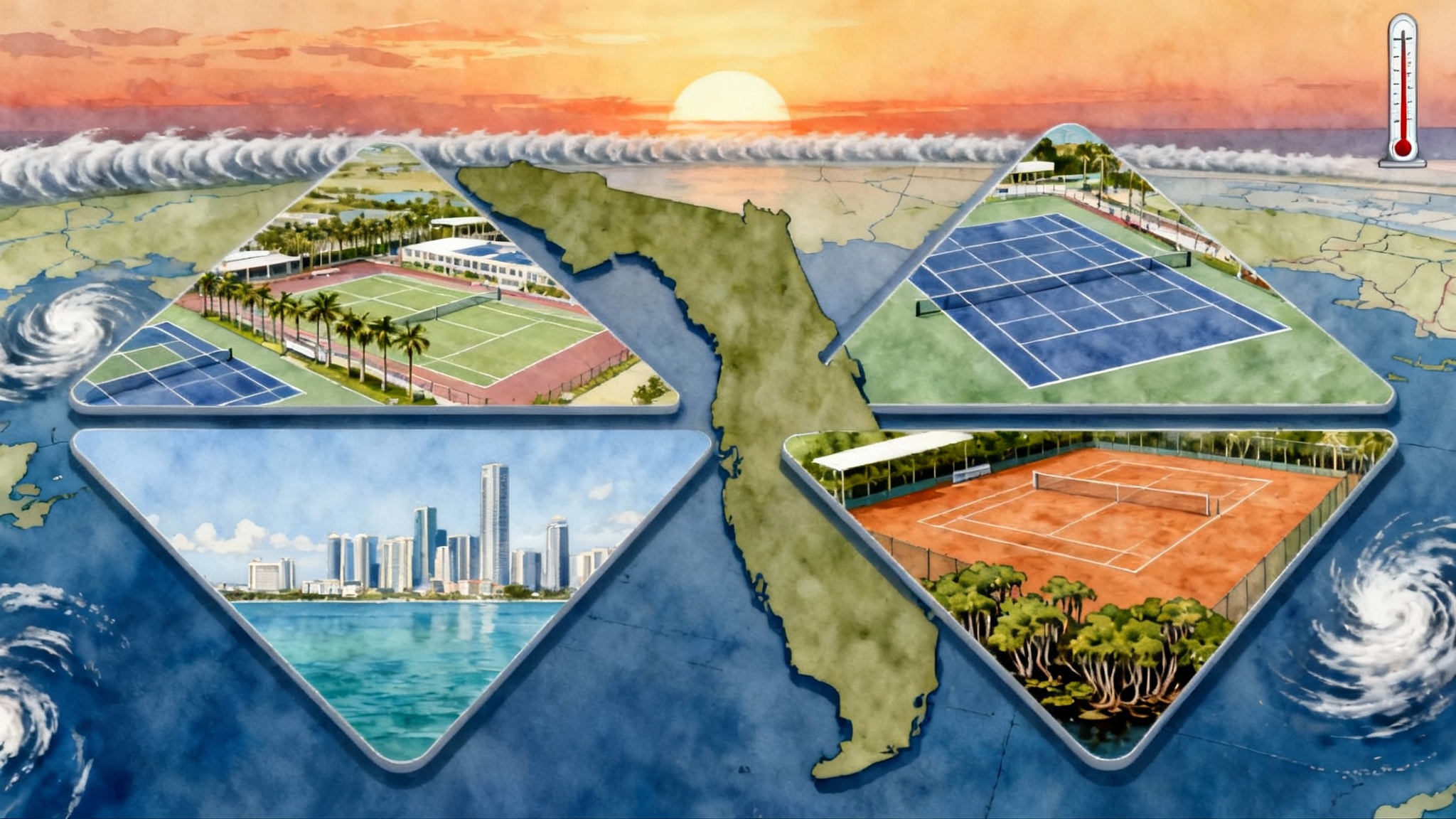
How we compared Florida's 2026 academy options
Parents ask the same question in different ways: Where will my child improve fastest without burning out or sacrificing school? We built this guide around measurable inputs and outcomes, not slogans. We focused on four hubs that families ask about most often: Miami, Orlando, Tampa Bay, and Naples. Our framework looks at coach-to-player ratios, daily training blocks and surfaces, college placement and Universal Tennis Rating progress, price and scholarships, boarding and academics, travel and tournament density, and heat and hurricane protocols.
- Coach-to-player ratios: Look for 1 coach to 4 players on technical work and 1 to 6 on sparring. Ratios above 1 to 8 make individualized feedback hard. For serve work and match charting, 1 to 2 or 1 to 3 accelerates progress.
- Training blocks and surfaces: Two on-court blocks per day is the common high performance cadence, often 2 to 3 hours each, plus strength and mobility. Hard courts build tolerance and point patterns. Har-Tru (green clay) slows the bounce, lengthens rallies, and teaches balance, patience, and defense. A mix across the week is ideal.
- College placement and UTR progress: A strong academy can show year-by-year lists of college signings and anonymized UTR progress charts for players with similar profiles to your child. Expect a typical rising junior who trains seriously to climb roughly 0.5 to 1.0 UTR points per year after the early gains, with variance driven by baseline level, growth spurts, and match volume.
- Price and scholarships: Annual totals for full-time programs usually sit in the mid to high five figures when you include training, fitness, and tournament coaching. Scholarships are mostly partial and tied to potential, results, or financial need. Ask for written terms and renewal conditions.
- Boarding, day life, and academics: Big campuses integrate housing and an accredited school. Boutique programs often pair with local schools, approved online providers, or bespoke tutoring. The right fit balances training hours with sleep, nutrition, homework, and recovery.
- Travel and tournament density: Florida's calendar is busy. Central and South Florida offer frequent Universal Tennis and United States Tennis Association events within one to two hours by car most weekends. That matters for match reps without excessive travel days.
- Heat and hurricane protocols: Summers are hot and storms are part of life. You want wet bulb globe temperature monitoring, shade and cold-water access each court bank, and lightning sensors. During storm season, look for an explicit closure and shelter plan that communicates early and clearly.
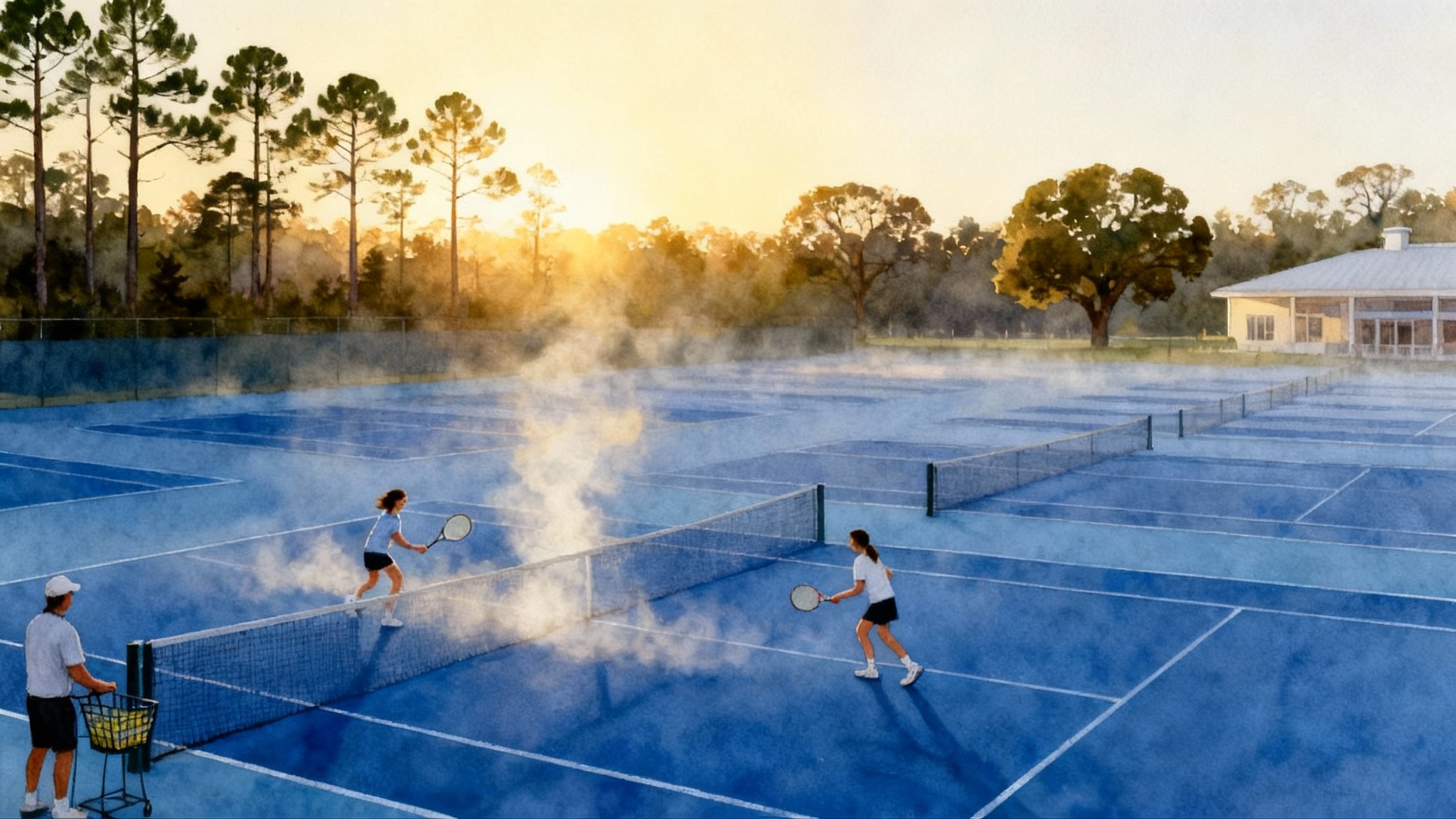
For families new to Florida, Orlando is anchored by the largest public tennis center in the country at Lake Nona. Review the USTA National Campus overview to calibrate what a scaled facility looks like, then compare how private academies structure similar resources.
What actually drives progression
Two players can train the same number of hours and see different results. The difference is often in how the hours are built.
- Ratio and contact time
- Serve and return stations should run at 1 to 2 or 1 to 3. With 1 to 6, players spend too much time waiting and too little time repeating the motion.
- If your child needs technical rebuilds, ask how many minutes of slow ball and filmed reps they will get each week. Video plus immediate feedback cuts learning cycles.
- Surface mix and periodization
- A Monday to Friday plan might use hard courts early week for cardio tolerance and pace, then Har-Tru midweek for patterns and balance, and a match day Friday.
- Ask for the 12-week block plan. You want load progressions, a deload week, and tournament peaks rather than a constant red line.
- Fitness, injury prevention, and recovery
- A quality program includes two to three strength sessions per week, daily mobility, and hamstring and shoulder care. Look for evidence-based screening, not just sprints and ladders.
- Recovery should be baked in: foam roll and stretch blocks, hydration plans, and when needed, cold tubs or simple cooling strategies.
- Match volume and feedback loop
- Tournament coaching matters. The coach who knows the practice plan should watch real matches, chart a few key patterns, and tie assignments back on Monday.
- Ask for a sample match report and how it shapes the next two practice blocks.
- Academics and mental bandwidth
- Busy schedules collapse if school is a scramble. Whether on-campus or online, ask about quiet study hours, proctoring, test scheduling, and tutor access.
- Mental skills training should show up as routines, self talk, and between-point structure, not only motivational talks.
City-by-city shortlists and what to expect
Orlando: Scale, science, and central travel
- Landscape: Orlando's Lake Nona area offers enormous court capacity and a deep event calendar. Big facilities can run full day programs with clear ladders for groups by age and UTR band. Families exploring day-academy setups can review the Revolution Tennis Academy Orlando profile for a sense of commute-friendly structure.
- Ratios and blocks: Expect 1 to 4 on technical work, 1 to 6 on live ball, and two on-court blocks daily. Fitness blocks are usually inside air-conditioned spaces in the late afternoon during peak heat.
- Surfaces: A healthy mix of hard and Har-Tru is available, which supports both speed and sliding skills.
- College and UTR outcomes: Central Florida programs tend to host college showcases and bring NCAA coaches through regularly. Families should ask for the last three years of signings by division and average UTR gains for cohorts.
- Price and scholarships: Full-time training without school often lands in the low to mid five figures per year. With private or partner-school academics and tournament travel support, totals rise to the high five figures.
- Boarding and academics: Large programs often partner with established day schools and online providers. Commuter families like Orlando because airport access is easy and tournaments cluster within a short drive.
- Heat and hurricane policies: Leading programs use wet bulb globe temperature thresholds to adjust sessions, add extra water breaks, and move fitness indoors. Lightning sensors trigger automatic delays.
Parent action in Orlando
- Ask for a written 12-week periodization plan and how they move a player from a UTR 6 to UTR 8 in one year.
- Confirm which days are hard versus Har-Tru and why, not just what is open.
- Request a sample weekly budget that includes travel coaching to two local events per month.
Tampa Bay: Two heavyweight campuses and deep match play
- Landscape: The Tampa Bay region blends big-campus training with frequent Universal Tennis and United States Tennis Association events. That density supports steady competitive reps.
- Major-campus strengths: Large academies here usually offer integrated housing, on-site or partner academics, sports science, and multiple surfaces. Day students can still access the same training blocks if the commute is realistic.
- Ratios and blocks: 1 to 4 is common on technical stations, 1 to 6 on situational live ball, and supervised match play most afternoons.
- Surfaces: A full menu of hard and Har-Tru is typical. Some facilities keep a few European red clay courts for footwork work and transition training.
- College and UTR outcomes: The brand recognition of the big campuses draws college coaches and international competition, which can speed UTR growth for players who are ready for deeper draws.
- Price and scholarships: The all-in boarding packages are among the state's highest. Families often combine a day-student plan with homestay or independent housing to reduce cost.
- Boarding and academics: On-site schools streamline the day. If your child needs Advanced Placement classes or a specific curriculum, verify transcripts, accreditation, and teacher contact hours.
- Heat and hurricane policies: Expect detailed manuals, generator plans for dorms, and strict lightning rules. Ask how missed days are credited during storm closures.
Parent action in Tampa Bay
- Ask for coach bios and who will be on court with your child more than 50 percent of the week.
- Request two recent college placement case studies that match your child's age and UTR.
- Get clarity on tournament coaching fees and how many players a coach supports per event.
Naples: Boutique precision with Gomez Tennis Academy
- Landscape: Naples skews boutique, quieter, and technical. The training day is focused, and commutes are short. Families choose it for attention to detail.
- Spotlight boutique: Gomez Tennis Academy is a well-known Naples option that emphasizes small groups, hands-on technical work, and match play intensity. Review the Gomez Tennis Academy Naples profile to see how a boutique program communicates philosophy, weekly cadence, and player pathways.
- Ratios and blocks: Boutique settings often run 1 to 3 or 1 to 4 on-court and will flex to 1 to 2 for rebuilds. Expect two focused on-court blocks plus strength and mobility.
- Surfaces: Programs lean on Har-Tru for pattern building and joints, with hard courts used for pace tolerance and serve targets. The mix helps players who need more balance and patience in rallies.
- College and UTR outcomes: Boutiques tend to showcase individual progress charts and personalized college targeting. Ask to see anonymized year-over-year UTR changes for players with similar starting points.
- Price and scholarships: Fees are usually below the very largest campuses, but the per-coach contact time is high. Partial scholarships may be available based on promise and fit.
- Boarding and academics: Boarding is often via vetted homestays or small residences. Academics are handled through local schools or established online programs with tutoring blocks scheduled around training.
- Heat and hurricane policies: Naples programs move early during storm watches and have tight communication with host families. Hydration and shade are built into the daily rhythm.
Parent action in Naples
- Ask for a technical plan with two or three key swing checkpoints and how those will be measured on video.
- Request a monthly match calendar and who will coach courtside.
- Clarify homestay rules, supervision, transportation, and study halls.
Miami: Tournament magnet and boutique depth
- Landscape: Miami is a tournament hub, with deep weekend draws and holiday events that attract national and international players. The city offers many strong boutique programs and private-coach pods with high performance groups.
- Ratios and blocks: 1 to 3 to 1 to 5 is common, with targeted technique in the morning and high-level sparring in the afternoon.
- Surfaces: A healthy mix of hard and Har-Tru exists across the metro area, and many programs use clay day midweek to ingrain defense and transition variety.
- College and UTR outcomes: The tournament magnet effect is strong. Players can rack up meaningful wins without flights, which supports steady UTR increases if the week is built well.
- Price and scholarships: Prices vary widely. Boutique programs may be more flexible with partial scholarships or training credits tied to tournament coaching commitments.
- Boarding and academics: Most Miami families operate as day students. Boarding, when offered, is usually small scale or via vetted homestays. Schools and online programs are plentiful, but commute planning matters.
- Heat and hurricane policies: Expect strict heat timing, early morning blocks in summer, and conservative lightning rules. Storm planning includes early closures and clear make-up policies.
Parent action in Miami
- Ask for two weeks of trial with measurable goals so you can judge fit and commute feasibility.
- Verify how coaches split time between on-court training and weekend tournament coaching.
- Confirm hard versus Har-Tru access on the exact practice days you need.
A simple comparison matrix you can fill in
Use this template during tours. Ask each academy for concrete numbers and write them down.
- Coach-to-player ratios
- Technical stations: ________
- Live ball and point play: ________
- Serve and return: ________
- Daily schedule
- Morning on-court: ________ hours
- Afternoon on-court: ________ hours
- Strength and mobility: ________ hours
- Surfaces each week
- Hard days: ________
- Har-Tru days: ________
- Outcomes
- Last 12 months UTR change for similar players: ________
- College placement last 3 years that match our goals: ________
- Price and scholarships
- Annual training: $________
- Boarding or housing: $________
- Tournament coaching per day: $________
- Partial scholarship terms and renewal triggers: ________
- Academics
- On-site school or partner: ________
- Teacher contact hours and proctoring: ________
- Travel and tournament density
- Typical weekend drive time to events: ________ minutes
- Planned events per month in season: ________
- Heat and hurricane protocols
- Wet bulb thresholds and break rules: ________
- Lightning delay system used: ________
- Storm closure and credit policy: ________
Budget snapshots for planning
These are common patterns families use to control cost without compromising development. Fill in the numbers you get from each academy.
-
Day-student in Orlando or Miami
- Training only, five days per week during school year
- Tournament coaching two weekends per month, mostly drive-to events
- Local school or online program
- Annual total target: mid five figures depending on coaching add-ons
-
Hybrid in Tampa Bay
- Train at a large campus, live off-site, enroll in a local partner school
- Use a targeted fitness membership and a private tutor for exam weeks
- Annual total target: upper five figures with control over housing costs
-
Boutique in Naples
- Small-group training with 1 to 3 to 1 to 4 ratios, homestay housing
- Match play blocks tailored to specific tournament calendar
- Annual total target: mid to upper five figures, often below the largest campuses
Cost control tips
- Buy used frames from the academy network and freshen with new strings.
- Split tournament coaching with one other family when matches do not overlap.
- Book refundable hotel rates and lock in early for holiday events.
Har-Tru vs hard: what to ask and why it matters
- If your child rushes points or struggles on defense, prioritize at least two Har-Tru sessions a week to slow patterns down and build point construction.
- If your child lacks pace tolerance or timing on faster balls, ask for early-week hard court sessions with tempo control drills.
- Check shoes, slide training qualifications, and brush contact education on clay days. Good clay work should influence hard-court success later.
Safety and summer heat
- Look for wet bulb globe temperature monitoring with written thresholds for work, rest, and hydration. Shade tents and ice water should be visible at every court bank.
- Training blocks should shift earlier or indoors on extreme days. Fitness can move to mobility circuits and breathing work rather than sprints.
- Coaches should be certified in cardiopulmonary resuscitation and automated external defibrillator use, with an automated external defibrillator on site.
Hurricane readiness you can verify in writing
- Communication: You should receive timeline emails for watches and warnings, not last minute notes.
- Facilities and housing: Ask about generators, storm shutters, and how food and water are stocked for dorms or homestays.
- Make-up policy: Confirm how closures are credited and when training is rescheduled.
How to run your visits and trials
- Before you tour, set one performance goal for eight weeks, such as first serve percentage, neutral ball errors per set, or a specific UTR band you expect to compete against.
- During a two-day trial, watch how often a coach speaks directly to your child and whether feedback is specific. Count it. You want dozens of small corrections, not a single pep talk.
- After practice, ask your child to explain the day's main technical focus in their own words. If they cannot, the plan was not clear.
Internal resources to keep you organized
- Use our comparison worksheet to track ratios, schedules, and tuition for each visit.
- To understand regional alternatives, see our Southeast Tennis Academies 2026 guide.
- When you are ready to narrow to a boutique option, review the Gomez Tennis Academy Naples profile and the Revolution Tennis Academy Orlando profile.
A quick word on culture and fit
Beyond facilities and price, culture matters. Watch how older players treat younger ones, how coaches speak during tough points, and whether effort is praised more than outcome. You want a place where your child can fail in practice without fear, then compete with resilience on the weekend.
Bottom line
Florida offers four distinct bets. Orlando provides scale, systems, and central travel. Tampa Bay delivers heavyweight campuses and deep match play. Naples shines for boutique precision and hands-on development, with Gomez Tennis Academy a leading example of that model. Miami is a tournament magnet with strong boutique options and flexible day-student plans. Choose on ratio, surface mix, measurable coaching contact, and an academic plan you can live with. If the plan is clear on paper and your child is excited to return after a two-day trial, you are likely in the right place.