Northern California Tennis Academies 2026: Buyer’s Guide
A rain-season aware, no-hype guide to Northern California tennis academies. Compare training hours, coach ratios, UTR and USTA integration, surfaces, indoor access, schooling, college placement, and real monthly cost.
 Tommy
Tommy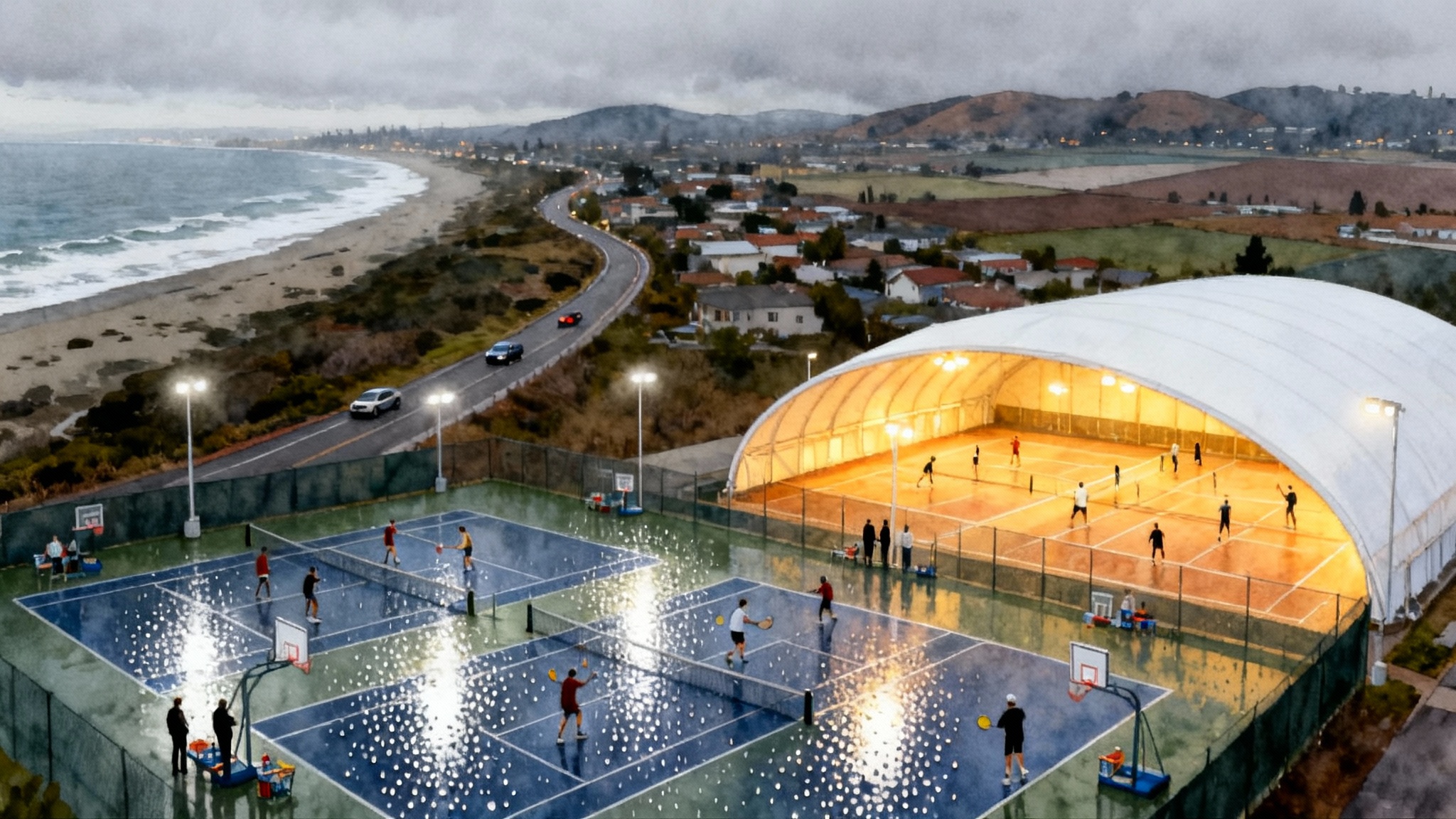
How to use this guide
Northern California tennis is a gift in September and a puzzle by January. The first big decision is not forehand vs. backhand. It is where your player can train consistently when rain turns courts into mirrors. This guide cuts through marketing and focuses on the levers that decide outcomes for juniors and competitive adults:
- Training hours and weekly rhythm
- Coach to player ratio when the balls start flying
- Integration with Universal Tennis Rating and United States Tennis Association match play
- Surface mix and whether your player can touch clay at least sometimes
- Indoor or covered access when it rains
- Schooling or boarding options for full time tracks
- College placement outcomes and how to judge them
- What the month really costs once you add the hidden pieces
Where useful, we link to primary sources. To keep this readable, we limit external links and focus on how to decide, not just what exists. For contrast with dry weather markets, see our Best Southern California academies 2026 guide.
Rain-season reality: who can keep you on court
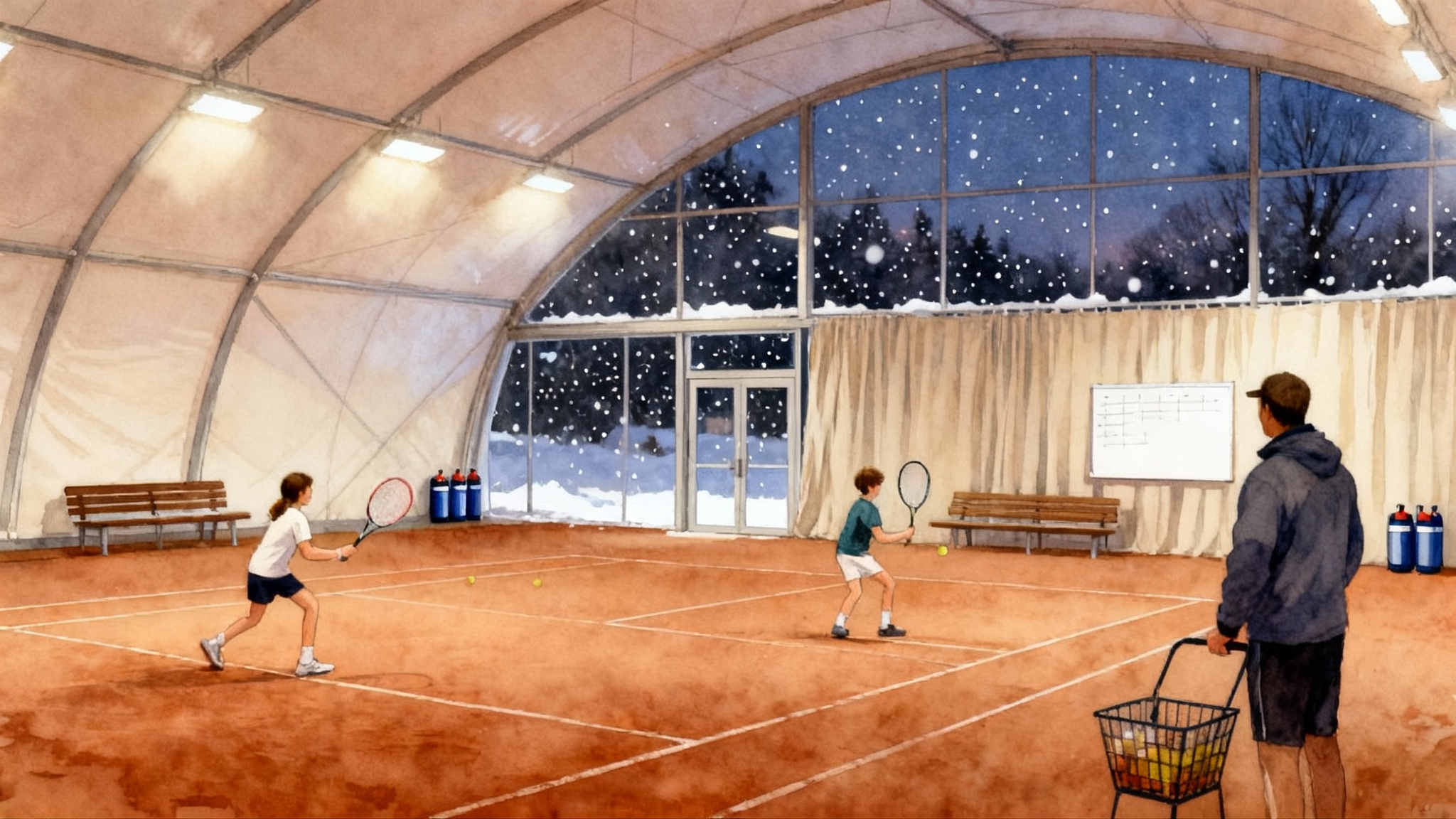
Most Bay Area academies train on outdoor hard courts. Rain changes everything. Sacramento has a strategic advantage because Spare Time Sports Clubs operates an indoor tennis center in Gold River with eight climate controlled courts that clubs and academies can use in wet months. If your junior’s training must stay on schedule through February, put “indoor access plan” at the top of your checklist and ask for it in writing. See the facility details for the Gold River center with rates and season blocks at the operator’s page for indoor tennis in Gold River.
In the Bay Area, true indoor courts are scarce. Burlingame has an indoor complex available to Bay Club members, which many private coaches and adult teams use in winter. San Francisco’s Goldman Tennis Center is newly rebuilt and superbly maintained, but it is outdoors, which means strong programming and great lights, yet weather dependent. That is not a drawback if your academy has a rain plan with fitness, video review, and rescheduled match play, but you should verify the plan before you enroll.
The seven decision levers, explained with specifics
1. Training hours and weekly rhythm
Growth happens when deliberate practice accumulates. For D1 track juniors, four to six days per week with planned intensity beats two long days of random drilling. Ask for a written weekly cycle that shows skill blocks, live ball, match play, and fitness. If technique is the current bottleneck, pair academy hours with the Build a consistent forehand guide.
2. Coach to player ratio
Ratios drift across a session. Good programs keep live ball in the 1:4 to 1:6 range and shrink ratios during serve mechanics, footwork ladders, or tactical huddles. When you tour, count coaches and players during peak hour, not just at the start.
3. UTR and USTA integration
UTR is the most elastic measure for juniors. Academies that tier clinics by UTR bands and enter players regularly in verified events build faster match IQ. USTA league and tournament calendars still matter for sectional habits and doubles reps. Ask to see the academy’s seasonal tournament plan with target events highlighted.
4. Surface mix
Hard dominates in Northern California. Clay is rare, so academies simulate it through tempo constraints, rally length games, and pattern goals. If your player needs clay reps for national events, plan targeted travel weeks rather than hoping for local access.
5. Indoor or covered courts
A yes here does not always mean included. Some sites require a separate club membership or block time purchase. Confirm whether indoor time is guaranteed for the academy block or only reserved ad hoc during storms.
6. Schooling and boarding
Full time programs expect homeschool or flexible schooling. If an academy mentions boarding, ask whether it is on site, host family based, or a partner residence, and what the supervision ratios are overnight and on travel weekends.
7. College placement outcomes
Do not accept a collage of logos. Request a three year list with grad year, name, gender, UTR at commitment, and scholarship notes. The ratio of rostered players to Power Five logos tells you more than a single headline signing.
Academy snapshots from the Bay Area to Sacramento
Below are concise profiles of programs Northern California families ask us about most often. Use them to frame your questions during a visit.
Eagle Fustar Tennis Academy (South Bay and San Francisco)
- Footprint: Sunnyvale, Saratoga, Menlo, Los Gatos, and a robust presence at San Francisco’s Goldman Tennis Center. Programs are grouped by UTR bands, which simplifies placement and progression.
- Training hours: Daily clinics year round plus a full time track at Sunnyvale. Strength and conditioning and mental skills are available as add ons.
- Match play: Regular on court point play within clinics, plus integration with public facility round robins and tournament calendars.
- Indoor access: Primarily outdoors. On heavy rain days, expect fitness blocks, classroom review, or schedule shifts. Ask for the written rain plan if you rely on weeknight training.
- Schooling and boarding: Full time option without boarding. You will need a homeschool or hybrid school partner.
- College placement: A wide range of NCAA destinations in recent years. Ask to see a current list that includes UTR at commitment to gauge fit by band.
- Best fit: High motor juniors who thrive in larger performance groups and want UTR banded peers in both South Bay and San Francisco.
JMG Tennis Academy (Sacramento area)
- Footprint: Sacramento with an academy group that trains multiple blocks per day.
- Training hours: The academy track runs four to six hours per day in season, with fitness and match play scheduled into the block. The program states that academy players should be homeschooled or on flexible schedules. You can see the schedule structure on the JMG site under academy training program details.
- Match play: Built into the daily cycle two to three days per week, plus tournament planning.
- Indoor access: Outdoors by default. Many Sacramento area programs coordinate contingency sessions and can leverage the Gold River indoor center for continuity. Confirm how often JMG secures indoor time during long wet stretches.
- Schooling and boarding: No boarding. Academic flexibility is essential for the full time track.
- College placement: A consistent pipeline to strong Division I and Division III programs. Ask for a three year placement grid with UTR bands to see where your player fits.
- Best fit: Serious juniors who want a small group, high hour environment and can make Sacramento their training base.
Gorin Tennis Academy (Napa Valley, South Bay, East Bay)
- Footprint: Napa Valley for the full time program, plus after school tournament training in Saratoga, De Anza, Sunnyvale, and Walnut Creek.
- Training hours: Full time Napa runs a classic two session day with morning technical work, afternoon tactical and match play, plus scheduled conditioning. After school sites run two hour tournament sessions.
- Match play: The full time program includes weekly match play blocks. After school programs include coached point play.
- Indoor access: Outdoor training. Families sometimes pair Napa training with targeted trips to indoor facilities when needed during winter.
- Schooling and boarding: Napa full time includes a boarding option. Confirm housing type, supervision, and school coordination in your parent packet.
- College placement: Steady placements at Division I and Division II, with occasional professional transitions. Ask for recent signings with UTR at commitment by gender.
- Best fit: Players who want a technical foundation supported by long daily blocks, or families seeking a boarding option within Northern California.
Spare Time Junior Tennis Academy network (Greater Sacramento)
- Footprint: Multiple clubs across the Sacramento region with the ability to shift sessions indoors at Gold River during rain. The umbrella club structure means you can often train at more than one site.
- Training hours: After school academy blocks most weekdays with generous session access for committed players.
- Match play: Regular in house match play ladders and broad support for USTA teams and local tournaments.
- Indoor access: Strong. The network can route training into the indoor center during wet months, a major advantage for continuity. Confirm whether your specific clinic block has an indoor reservation if it rains.
- Schooling and boarding: No boarding. Works well with traditional school schedules.
- College placement: Solid track across divisions, particularly for late bloomers who rack up match reps year round.
- Best fit: Families that value reliable winter court time and a large ecosystem of teams and events.
NorCal Tennis Academy (San Jose and Fremont corridor)
- Footprint: South San Jose and Fremont locations with a long running team and tournament culture.
- Training hours: Tiered by age and level. Competitive groups commonly run ninety minutes to three hours, with additional tournament training blocks on weekends.
- Match play: Emphasis on USTA Junior Team Tennis for younger players and tournament prep for competitive juniors.
- Indoor access: Outdoor hard courts. Ask how rainouts are handled and whether makeups are guaranteed in the same session.
- Schooling and boarding: Traditional school friendly schedules. No boarding.
- College placement: A steady trickle into Division III and strong club programs, with occasional Division I placements. Ask for names and UTR at commitment.
- Best fit: Late starters and developing juniors who want strong fundamentals, reliable structure, and a pathway into tournaments and school teams.
Silicon Valley Tennis Academy and similar boutique programs
- Footprint: Mountain View and Santa Clara, with small group high performance and fundamentals tracks.
- Training hours: Two to four days per week is common. Private lesson integration is the norm.
- Match play: Coaches often help plan UTR verified events and local tournament schedules. Expect more bespoke guidance and fewer mega group ladders.
- Indoor access: Outdoor facilities. Rain plans vary. Ask how many sessions were lost the prior winter and how they were made up.
- Schooling and boarding: Traditional school friendly. No boarding.
- College placement: Boutique programs usually rely on private lesson plus clinic models and individualized recruiting help. Ask for recent case studies and contact two families directly.
- Best fit: Families who want coach attention in smaller groups and will supplement with weekly privates and target events.
What it really costs per month in 2026
Think in layers, not a line item. Prices vary by academy and membership rules, but the structure is predictable. Use these conservative Bay Area and Sacramento ranges to plan.
- Base training
- Part time junior track, 2 to 3 clinics per week: 300 to 700 dollars monthly depending on clinic length and club membership rules.
- High performance track, 4 to 5 clinics per week: 700 to 1,400 dollars monthly.
- Full time junior program, school day model: 1,500 to 3,000 dollars monthly depending on inclusions.
- Private lessons
- One lesson per week at 100 to 160 dollars per hour adds 400 to 640 dollars monthly.
- Strength and conditioning
- Group strength and conditioning two sessions per week: 120 to 300 dollars monthly. Private strength and conditioning raises this quickly.
- Match play and tournaments
- UTR or USTA entries and balls: 120 to 240 dollars monthly if you compete two to three weekends.
- Local travel and stringing: 80 to 200 dollars monthly for gas, snacks, and two to four restrings.
- Rain-season contingencies
- Indoor block time or facility fees when available: 0 to 200 dollars monthly depending on access model and whether the academy absorbs it.
Two examples to sanity check your budget:
- Late starter teen on a three day clinic plan with a private every other week: 500 to 900 dollars monthly.
- D1 track junior on a five day high performance plan with weekly private, strength and conditioning, and two events per month: 1,700 to 2,800 dollars monthly. Full time programs and travel elevate this.
Tip: before you sign, ask for a sample month invoice that includes every typical add on. If the academy cannot produce one, build your own from the list above and review it with the director.
Quick pick recommendations
-
D1 track junior who needs structure and hours
- Best for consistency and hour density: JMG Tennis Academy in Sacramento for the multi block academy day and integrated match play. Confirm rain continuity and any indoor allocations. Review the academy schedule on the program page linked above.
- Best for a boarding option in Northern California: Gorin Tennis Academy in Napa for the full time technical mornings plus match play afternoons and a boarding path.
- Best for UTR banded peer groups near San Jose or San Francisco: Eagle Fustar for clear tiering, broad location coverage, and frequent point play.
-
Late starter age 11 to 15 who must balance school and reps
- East Bay or Sacramento family: the Spare Time Junior Tennis Academy network for multi site access and reliable winter court time indoors when needed.
- South Bay family: NorCal Tennis Academy or a boutique Silicon Valley program that keeps ratios tight and adds USTA team play for low pressure match reps.
-
Competitive adult who wants year round improvement
- Peninsula: Bay Club’s Burlingame indoor complex for protected league nights and reliable winter clinics.
- San Francisco: Goldman Tennis Center for deep program menus, lights, and frequent round robins. In heavy rain periods, pair with a coach who offers video analysis or reserve indoor time on the Peninsula when possible.
A 60 minute on site checklist
- Count ratios during live ball. Four to six players per coach is the sweet spot. If you see ten to one during drills, ask whether that is normal.
- Ask for the rain plan. Where will the block go tomorrow if it rains at 2 p.m., and who decides by what time.
- Request the next twelve weeks of target tournaments for your player’s UTR band.
- Confirm who runs strength and conditioning. Is it tennis specific and coordinated with court workload.
- Look at the stringing log or talk to the stringer. Frequent competitors usually restring every 10 to 20 hours of heavy hitting.
- Review the last three college placements and contact two families. Ask what exactly the academy did in junior year.
- Build a mock invoice for next month and have the director initial it.
Final thoughts
Northern California’s tennis advantage is a long season and a deep player pool. Its challenge is winter rain and a shortage of true indoor courts. The best academies solve that with planning, not slogans. Start with your player’s weekly rhythm, verify that the academy can keep it intact through February, and price the full month, not just the clinic fee. If you might relocate for winter coverage, compare options in the Best Northeast tennis academies 2026. Choose with those lenses and your 2026 season will make real, measurable progress.