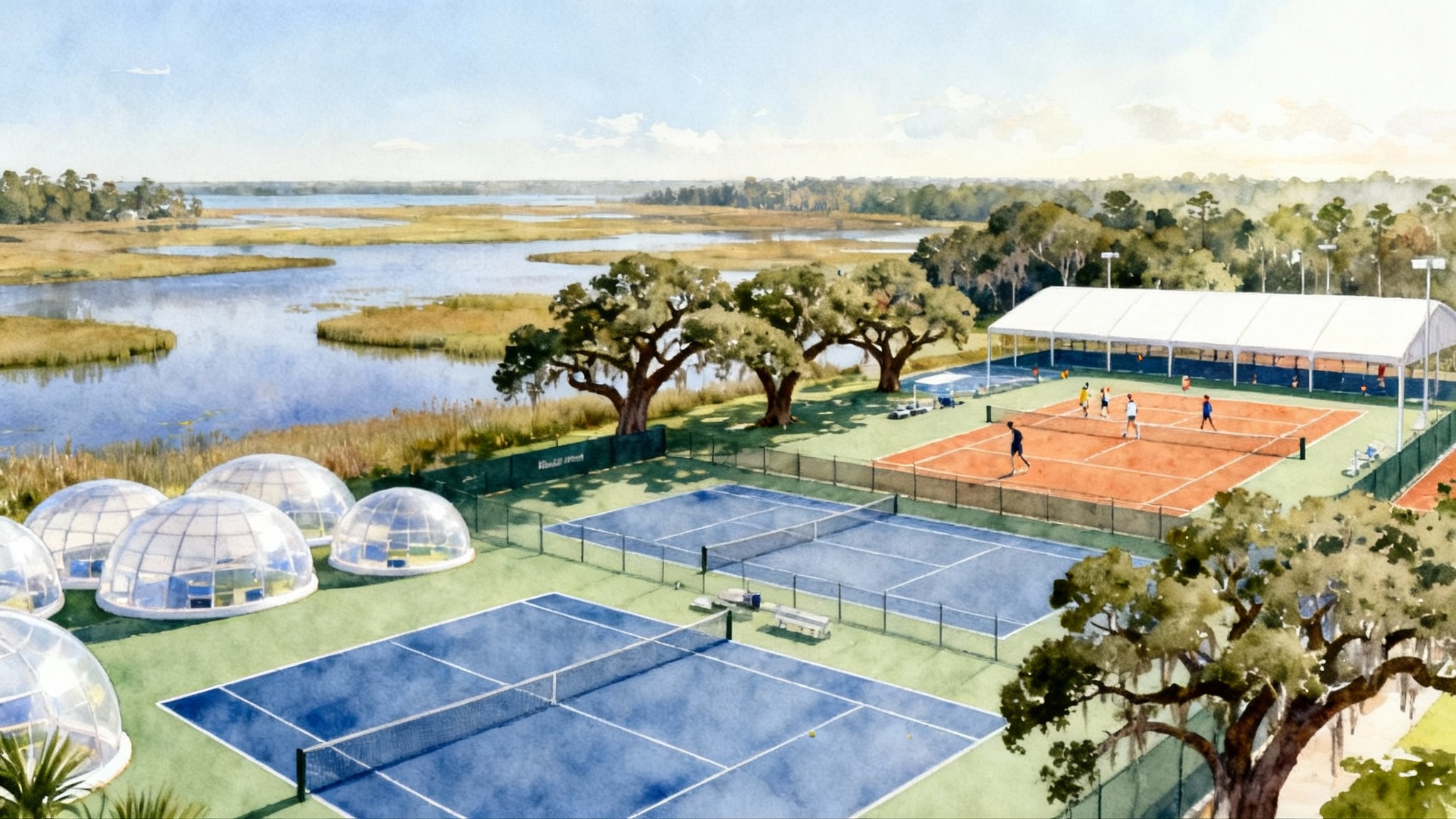
Best Northeast Tennis Academies 2026: New York to New England
A parent-first guide to winter-proof tennis training across New York City and Long Island, North Jersey, Boston, and Connecticut. Compare coaching, indoor access, UTR growth, NCAA placement, academics, travel to events, and real costs for 2026.
 Tommy
Tommy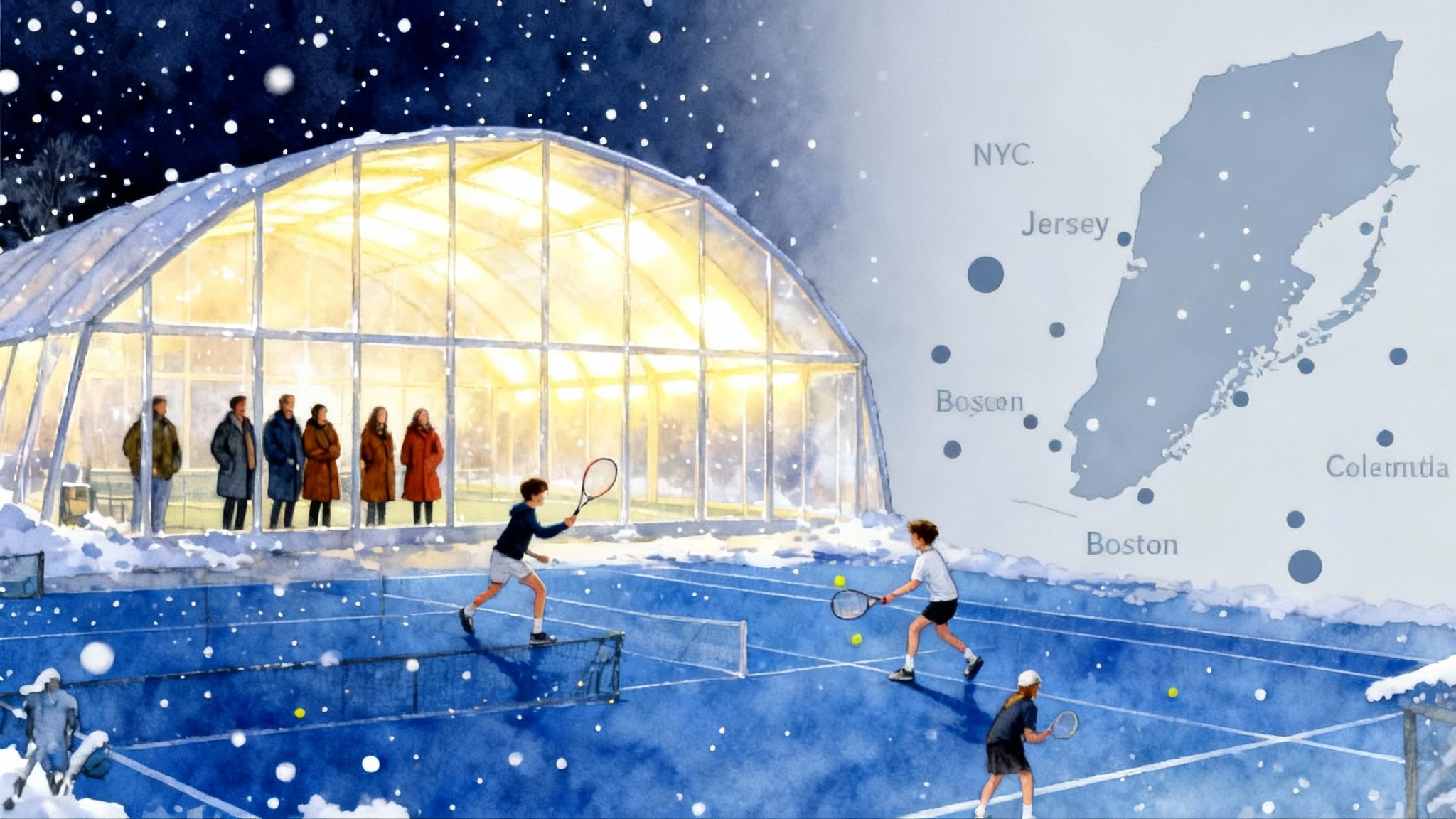
How to choose a winter-proof academy in the Northeast
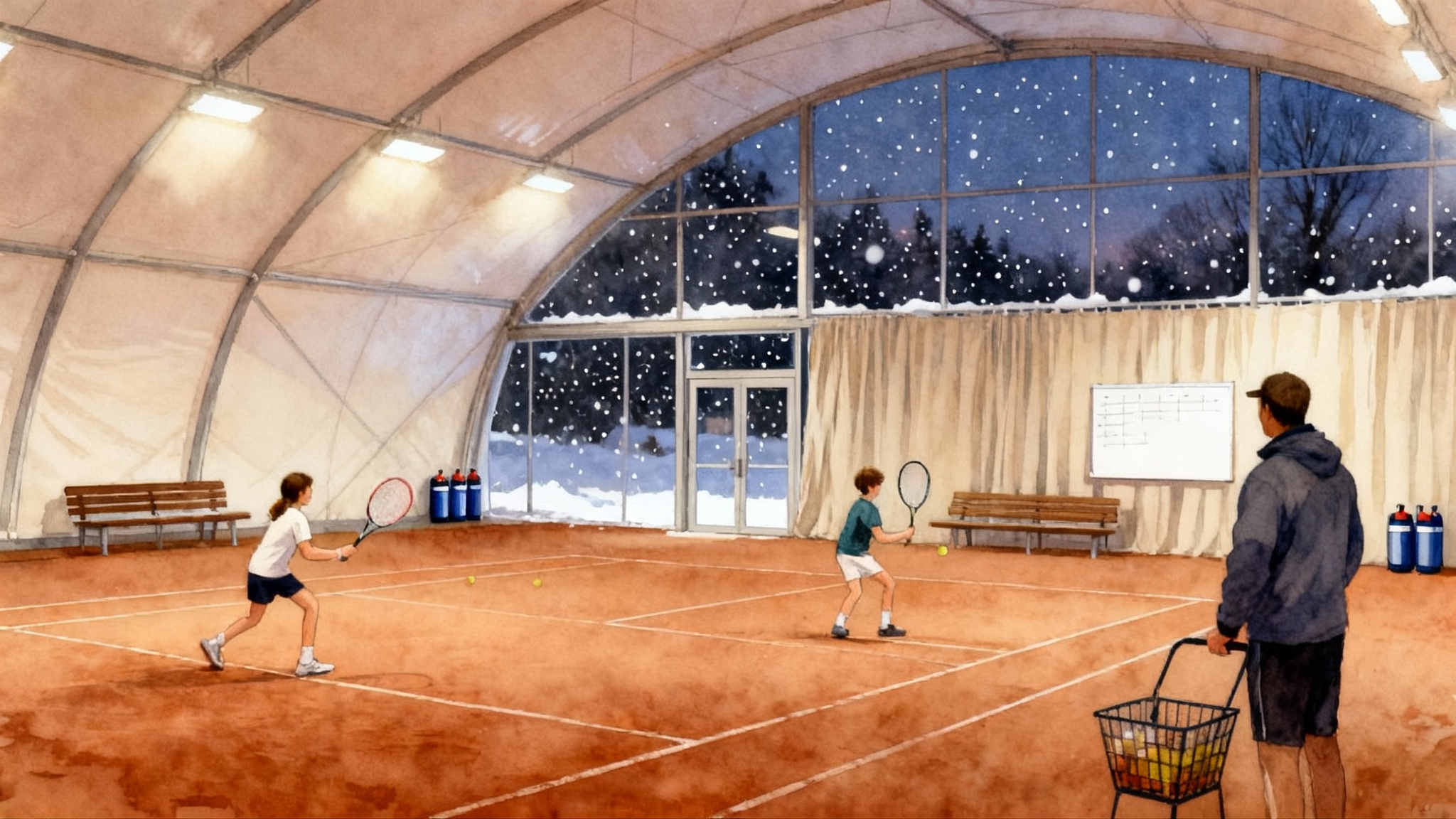
If your player trains in the Northeast, winter is not just a season. It is a stress test. Indoor court supply tightens, costs rise, and tournament travel gets tricky. The right academy absorbs that shock. It protects reps when it snows, keeps Universal Tennis Rating growth on track, and balances schoolwork with match play.
This guide focuses on New York City and Long Island, North Jersey, Boston, and Connecticut. We compare coaching quality, indoor court access, Universal Tennis Rating movement, NCAA placement records, academics and boarding, travel to events, and real-world costs for 2026. When you are ready to shortlist and track notes, use our academy profiles index and the comparison view.
First, map the competition calendar that will shape your year. Start with the USTA junior tournament search to see sectional and national dates. Then check the Universal Tennis event map for Verified events that fill gaps and accelerate match volume.
If you are considering warm-weather training weeks, compare options in our Florida tennis academies 2026 guide and our Southern California academies 2026 guide.
Quick scorecard: what matters most in winter
- Court access and reliability: How many indoor courts, how many hours reserved for the program, and what happens when a bubble goes down. Ask for a written court plan for December through March.
- Coaching continuity: Who actually runs the hitting blocks, and what is the coach-to-court ratio on busy winter evenings. Titles on a website mean less than who holds the basket at 7 p.m. on a Tuesday.
- Measured UTR progress: Look for a periodized plan with match count targets, not just lesson packages. Monthly match goals keep Universal Tennis Rating movement real.
- Academic fit: School-day schedules, tutoring options, and late-evening study halls for commuters stuck in traffic.
- Tournament logistics: Van rides, chaperoned groups, and a calendar that includes both USTA and Universal Tennis events in drivable ranges.
- Cost clarity: See all-in numbers. Winter creates hidden charges such as guest indoor fees, ball fees, van surcharges, or weather reschedules.
Action: Build a one-page checklist and bring it to every tour or Zoom. Ask for documents, not promises.
Regional breakdowns for 2026
New York City and Long Island
Profile: Highest density of aspiring college players, tightest indoor supply, and the sharpest time pressures. Expect weekday sessions after school and weekend match blocks. Long Island bubbles and field houses expand access relative to the five boroughs.
Coaching quality: Top programs pair a head of player development with court captains who run live-ball patterns and point construction blocks. You should see video review, serve biomechanics sessions, and written match plans for tournaments.
Indoor access: Ask for the winter schedule posted by week. Long Island programs that control several bubbles can flex court time during storms. In the city, clubs that share space with adult leagues may shift juniors later into the evening.
UTR movement: Expect a push to stack Verified match nights and weekend Universal Tennis flex draws. A realistic target is 30 to 45 matches from January through April for a college-bound junior.
Travel: USTA and Universal Tennis routes include Queens, Nassau County, Suffolk County, Westchester, and occasional trips up the Hudson Valley. Winter highway timing is your hidden variable.
Costs in 2026: Group blocks often range from 1,800 to 3,500 dollars per month for four to five days per week in the peak winter months, with private lessons 140 to 260 dollars per hour and separate indoor court fees in some facilities. Long Island commute costs are nontrivial; many families carpool.
Action: For New York City families, favor academies that guarantee a minimum number of indoor hours per week and publish a weather fallback plan in writing.
North Jersey
Profile: Excellent highway access and a dense web of indoor clubs. The junior pathway often blends academy blocks with club Universal Tennis leagues.
Coaching quality: Look for squads segmented by style group in addition to UTR band. Example segments include counterpunchers, all-court players, and aggressive baseliners. Style groups make drilling more realistic in winter when space is limited.
Indoor access: Many facilities have 6 to 12 indoor courts, which creates room for match play ladders on weeknights. Watch the prime-time squeeze from 5 p.m. to 8 p.m.
UTR movement: Expect consistent Verified match nights and ladder play. Strong programs run in-house draws on snow days so players still bank verified results.
Travel: Easy reach into Metro New York and Pennsylvania expands options. Families often stack a Saturday USTA draw in North Jersey with a Sunday Universal Tennis event near the city.
Costs in 2026: Group winter blocks typically range from 1,600 to 3,200 dollars per month for multi-day programs. Private training 120 to 240 dollars per hour. Ladder or match-night fees are usually separate.
Action: Prioritize programs that put a weekly match ladder on the calendar and publish results, so you can correlate training with UTR movement.
Boston area
Profile: Strong academics, deep college tennis culture, and a network of indoor clubs north and west of the city. Winter storms can be sharper, so reliability matters.
Coaching quality: Seek a staff with college placement experience and connections to New England Division III and Division I programs. Ask for sample emails used to present player résumés to college coaches.
Indoor access: Winter bubbles and multi-court complexes help, but public school schedules and traffic compete for the same evening windows. Expect late finishes for high school players.
UTR movement: The best programs use block scheduling. Example: Tuesday patterns to points, Thursday serve plus one and return patterns, weekend match blocks with post-match stat sheets.
Travel: New England allows reasonable drives to Rhode Island, New Hampshire, and Connecticut. In storms, reliable local draws matter more than long hauls.
Costs in 2026: Expect 1,700 to 3,400 dollars per month for four to five days per week in winter, and 140 to 250 dollars per hour for privates. Academics push many players into two weekday sessions and a double on weekends.
Action: Ask for a winter competition calendar that avoids school exam weeks and lines up with college showcase events in March and April.
Connecticut
Profile: A balance of suburban accessibility and strong scholastic tennis. Many families split time between a home club and an academy one or two towns away.
Coaching quality: The strongest programs track weekly themes, injury-prevention blocks, and mental skills. You want a written plan with monthly goals and simple metrics like first-serve percentage and break points converted.
Indoor access: Courts are more available than in Manhattan, less than on Long Island. Watch for programs that can extend court time during school breaks for mini-camps.
UTR movement: Expect measured growth if the program blends USTA weekends with weekly Verified play.
Travel: Hartford, New Haven, and Fairfield County form a triangle of reachable events, plus cross-border trips into Westchester or Rhode Island.
Costs in 2026: Group winter programs often range from 1,400 to 3,000 dollars per month. Private lessons 120 to 220 dollars per hour. Some facilities bundle court fees into group packages, which simplifies budgeting.
Action: Choose a program that publishes a minimum match count for winter and assigns a coach of record to monitor progress.
Spotlight: Empire Tennis Academy, Rochester, New York
Why it belongs in a winter guide: Upstate winters are real. Empire Tennis Academy, Rochester has built programming that treats winter as a season to make big gains rather than just hold form. Families report dependable indoor access, structured point-construction sessions, and tournament travel plans that include Buffalo, Syracuse, and cross-border events when appropriate.
Fit: Players who thrive with consistent routines, prefer smaller travel pods, and want coaches who track UTR movement with weekly goals.
What to ask on a visit:
- How many indoor courts can the academy guarantee during peak weeks in January and February.
- The coach-to-court ratio on weeknights, and who runs the competitive sets.
- The written winter competition calendar, including USTA and Universal Tennis options, and how the academy handles weather disruptions.
- Academic support for commuters driving in from surrounding towns.
Bottom line: Empire is a practical, winter-tough option for families who value reliability, measured progress, and a clear plan for match volume.
Fit-by-player profiles for 2026
Every player path is different, but these archetypes help parents match needs to programs.
- College-bound upperclassman, UTR 9 to 11, age 16 to 17
- Needs: High match volume, college coach visibility, and injury prevention.
- Program fit: Five-day week with two targeted private sessions, plus weekend Verified events. Add two strength sessions and a mobility block.
- What to insist on: A named coach of record, a college outreach plan, and video analytics on serve and return.
- Rising freshman, UTR 6 to 8, age 13 to 14
- Needs: Pattern development and confidence in pressure games.
- Program fit: Four-day week with heavy live ball, one technique private, and a Sunday ladder league.
- What to insist on: A written theme progression by month and a match-count target.
- Late starter, UTR 4 to 6, age 14 to 16
- Needs: Fundamentals at pace and fast reps.
- Program fit: Three-day week of high-rep drilling, plus green or yellow ball Verified matches to build competitive habits.
- What to insist on: Small group sizes and a daily technical focus with a one-sentence cue to take home.
- Advanced 10 to 12 year old
- Needs: Footwork, contact height discipline, and balanced multi-sport strength.
- Program fit: Three group sessions, one private, and a light match night every other week. Keep form healthy and fun.
- What to insist on: No over-scheduling. Growth is still the priority.
Two sample winter weeks
These examples show how families in the Northeast often structure training when the weather is tight.
Commuter, New York City or North Jersey
- Monday: 90-minute academy group, 45-minute mobility at home, homework block by 9 p.m.
- Tuesday: 60-minute private on serve and return, 45-minute video review.
- Wednesday: Group plus 30-minute recovery. Lights out by 10 p.m.
- Thursday: Strength session with movement prep and posterior chain work.
- Friday: Match ladder sets or Verified evening draw.
- Saturday: USTA tournament singles and doubles.
- Sunday: Light hit or rest, plus exam prep.
Boarding-style or long commute, Boston or Connecticut suburbs
- Monday: Afternoon study hall, evening group practice.
- Tuesday: Early mobility, afternoon private focused on forehand height control, evening lift.
- Wednesday: Group practice with patterns to points and pressure games.
- Thursday: Rest from tennis, focused academics, short bike or swim.
- Friday: Verified match night.
- Saturday: USTA tournament or travel day.
- Sunday: Tournament day two, recovery, next-week planning with coach.
NCAA placement and academic balance
NCAA placement is not a single data point. It is a process. Strong academies keep track of the last three graduating classes, the divisions those players joined, and whether they stayed on the team after the first year. Ask for examples of introduction emails to college coaches, highlight videos, and a timeline for the player résumé.
Academic support in winter matters. Look for:
- Study halls before or after practice, so commuters can beat traffic without losing homework time.
- Access to tutors in math or language classes during peak season.
- A clear policy for missing practices for exams, with make-up options.
Action: Request a sample placement report and an academic support plan. If the academy has neither, consider it a warning sign.
Travel to tournaments and the UTR map
A winter-friendly academy makes travel simple. The best publish van schedules, driver lists, and chaperone ratios, and they register players as a block so entry deadlines are not missed. To plan weekends, reference the UTR event map noted above for Verified draws near your home base. Combine that with your USTA calendar to avoid long gaps in competition.
Action: Print both calendars and highlight the most realistic winter weekends. Schedule rest days in advance. Winter wins come from consistency, not random spikes.
Real-world costs for 2026
Here is how most families in the Northeast actually spend during winter months:
- Group training: 1,400 to 3,500 dollars per month depending on days per week and time slots.
- Private lessons: 120 to 260 dollars per hour, often higher for a director.
- Indoor court fees: Sometimes included, sometimes 30 to 90 dollars per hour add-on for privates. Clarify in writing.
- Strength and recovery: 60 to 120 dollars per session if outsourced.
- Tournaments: 70 to 150 dollars per event entry, plus travel and meals.
- Travel: Fuel or train fares, hotel on some weekends, and occasional winter equipment such as snow tires or chains in rural drives.
Action: Build a monthly budget with a 10 to 20 percent weather buffer. Ask academies to provide all-in invoices that show court fees and match-night costs upfront.
Scholarships, aid, and ways to stretch the budget
Scholarship language varies. Here are realistic avenues in 2026:
- Need-based aid: Some academies allocate a percentage of slots to means-tested aid. Ask about application windows in August and November.
- Talent awards: Limited and often tied to leadership or mentoring. Expect partial, not full packages.
- Work-study: Hitting partner or assistant roles for mature players. Make sure this does not displace training time.
- Sibling discounts: Common but small. Useful for families with multiple players.
- Seasonal prepay discounts: Pay upfront for the winter block and lock a lower rate. Confirm refund policies for injuries.
Action: Request a written aid policy and dates. Ask how many awards were granted last winter and average amounts. If answers are vague, plan without aid.
How to evaluate coaching quality in one visit
Use this three-part test the day you tour.
- On-court: Do coaches provide short cues and reset the drill instantly after errors. Do players rotate quickly and keep a ball on the strings during explanations.
- Structure: Is there a clear theme for the day, like neutral ball depth or second-serve plus one. Are games aligned with the theme.
- Feedback loop: Do players record one or two stats after matches, such as first-serve percentage or rally ball depth. Does anyone own the data.
Bonus: Ask to watch a video review session. If there is no video in winter, progress is hard to measure.
Red flags worth heeding
- A beautiful website and chaotic courts. Watch real sessions.
- No written winter calendar or no contingency for bubble issues.
- Promises of unrealistic UTR jumps without match volume.
- All technique, no point play. Winter requires both.
- No academic plan for exam weeks.
A practical shortlist for 2026
Build a list of three programs per region and visit them in this order: Long Island or North Jersey first for indoor depth, then your closest commute option, then a stretch option with exceptional coaching. For upstate families, include Empire Tennis Academy, Rochester, as a winter reliability anchor.
Use the comparison view to line up schedules, costs, and coaching bios side by side. Bring your one-page checklist and ask each program to fill in the details while you watch a live session.
Final take
Winter in the Northeast rewards families who plan like college programs. Do not chase the one perfect academy. Choose the most reliable winter court access you can afford, pair it with coaches who measure progress, and commit to a steady diet of matches. If you build a clear calendar, guard study time, and insist on data-driven coaching, your player will leave March stronger than in November, ready to surge through spring tryouts and summer showcases.