Best Southern California Tennis Academies 2026: LA, OC, SD
A criteria-led guide to the best Southern California tennis academies in 2026. Compare coaching ratios, college placement, UTR and USTA matchplay access, surfaces, year-round court availability, pricing, boarding, and commute.
 Tommy
Tommy
Why Southern California is a year-round tennis classroom
Southern California offers what players and parents want most: reliable sunshine, deep competition, and dense tennis communities. Courts are everywhere from Los Angeles park facilities and private clubs to Orange County school sites and San Diego coastal centers. Competition runs nearly every week of the year, which helps players stack meaningful match reps. The challenge is not finding an academy. It is choosing one quickly and well.
This guide gives you a clear framework to rank academies in Los Angeles, Orange County, and San Diego. You will score options on coaching ratios, college placement outcomes, Universal Tennis Rating and United States Tennis Association matchplay access, training surfaces, year-round court availability, pricing and boarding, and commute convenience. You will also get a trial-session checklist and sample weekly schedules for juniors and adults so you can move from research to decision without losing momentum. If you are comparing other regions, see our Best Florida junior academies and the Northeast tennis academies 2026 guide. For an international lens, read Spain vs France academy pathways.
How to use this ranking system
Give each category a score from 1 to 5, then multiply by the weight. Add up the totals and compare.
- Coaching ratio and staff quality (weight 3): Look for consistent 1 to 4 or better in small group drilling, and 1 to 6 maximum for live ball. Check head coach presence on court, not just in sales meetings.
- College placement and player development (weight 3): Evaluate multi-year outcomes, not isolated success stories. Track how many graduates play college tennis, at what levels, and how long they stay on rosters.
- UTR and USTA matchplay access (weight 2): You want frequent, well-run verified matches and clear entry into weekend tournaments. The rating language most colleges use is the UTR rating explained. In Southern California, USTA events are plentiful. Bookmark the USTA Southern California tournaments page to confirm volume and categories.
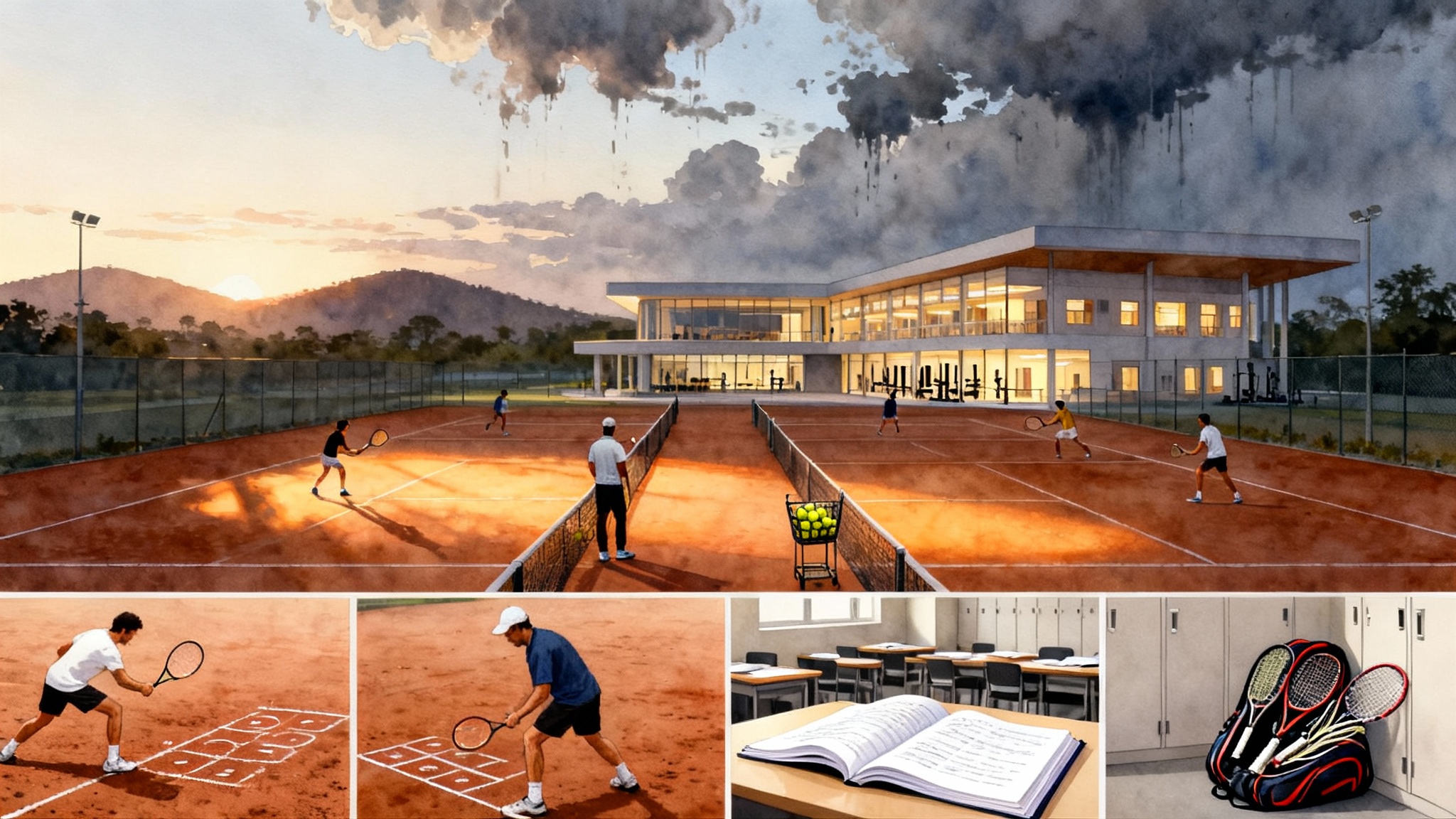
- Surfaces and facility quality (weight 1): Hard courts dominate in SoCal. Clay is rarer and often booked. If your player needs clay blocks for development or injury prevention, verify real daily access.
- Year-round court availability (weight 1): Ask how many courts the academy controls at peak hours, how many lights, and how rain plans are handled. In winter drizzles, some facilities have blowers and squeegees ready within minutes.
- Pricing and boarding options (weight 1): Compare by cost per coached hour, not just package price. For boarding, prioritize adult supervision ratios and academic support.
- Commute convenience (weight 1): Time in the car replaces time on homework, recovery, and sleep. Build a realistic door-to-gate plan for rush hour.
A strong total for a high-commitment junior is above 70 percent of the maximum. Adults often optimize differently, valuing commute and flexible hours over junior-style volume.
What “best” looks like in each county
Every county has strengths. Use these profiles to narrow your search.
- Los Angeles: Deepest pool of players and coaches, high-density UTR events, many public and private facilities. Tradeoff is traffic. If you need frequent live ball and diverse hitting partners, LA can feel like a tennis city.
- Orange County: Efficient commutes within the county, very strong junior pipelines, many well-maintained facilities. If your family schedule is tight and you want consistent coaching plus access to matchplay, OC is highly pragmatic.
- San Diego: Slightly calmer pace, strong high school programs, ocean-cooled weather that is comfortable for longer practices. If you value a balanced training environment with clean logistics, San Diego is compelling.
Coaching ratios and the on-court litmus test
Coaching is the engine. Watch a session without announcing yourself. Look for these signals:
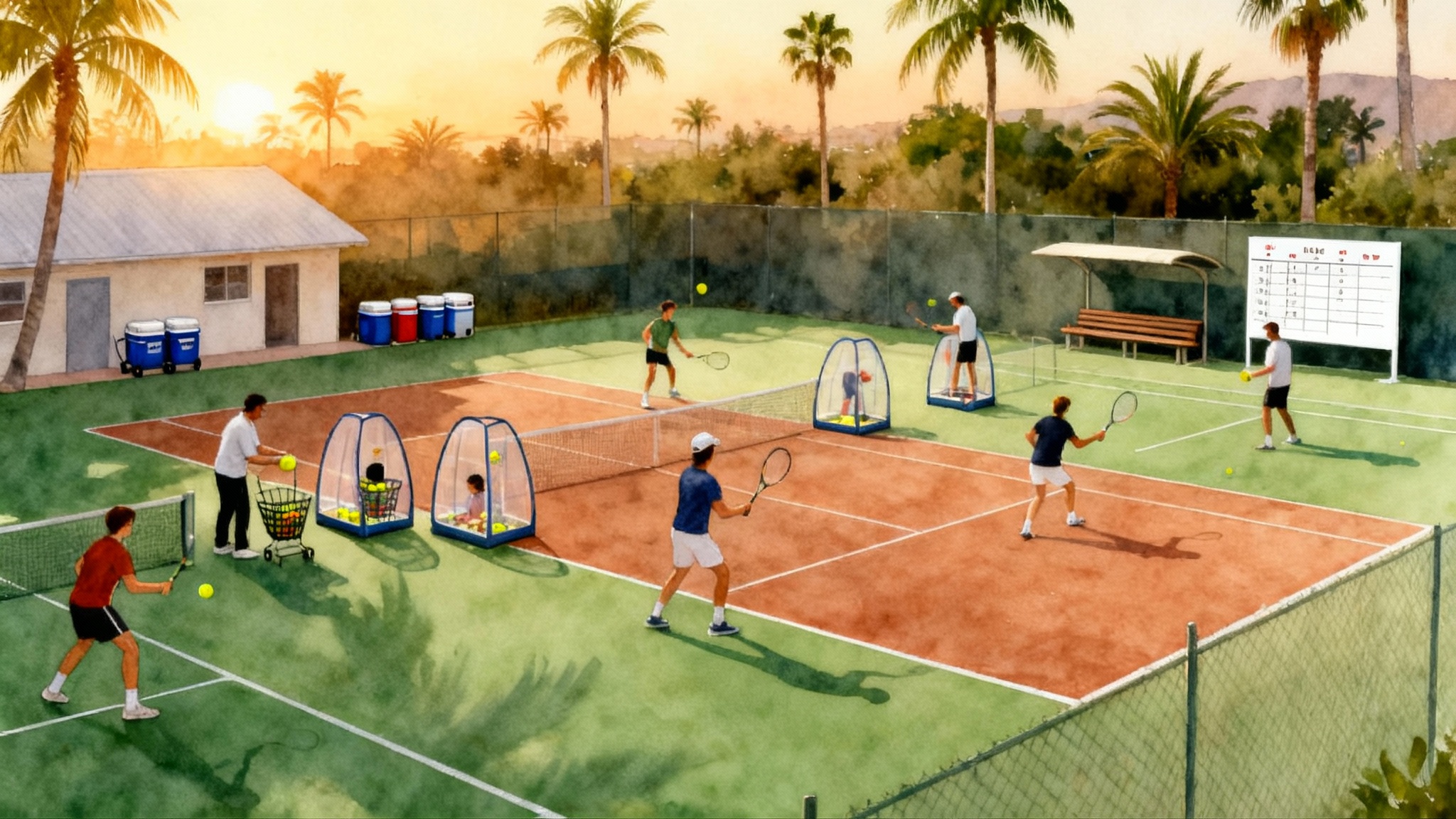
- Coach to player ratio: 1 to 4 for technical stations, 1 to 6 for live ball, and a roaming supervisor who corrects court patterns. If you see a coach feeding to eight or more, development slows and feedback becomes generic.
- Specific feedback: Great coaches name the mistake and the fix in a single sentence. For example, Load the outside hip more on the forehand and track your racquet head through contact.
- Ball quality and tempo: Newer balls for technical work, used balls for volume, and constant ball replacement to keep bounce consistent. Tempo should rise across the session, not start frantic and fade.
- Pattern progression: Drills that progress from hand feeds, to controlled rallies, to open points. The lesson should feel like a story with a beginning, middle, and final test.
Ask the director: Who will be my player’s primary coach three days a week, and how will we track progress? Then request a 30 day plan in writing with two measurable checkpoints.
College placement and development, without the smoke
A credible academy shows a multi-year track record. Look at cohort size and outcomes over at least three graduating classes. Ask for a roster list that includes graduation year, college level, and whether the athlete is still on the team after the first season. One superstar does not prove a system. A steady pipeline into National Collegiate Athletic Association Division I mid-majors, Division II powers, and top National Association of Intercollegiate Athletics programs shows depth.
Mechanisms matter more than slogans. What is the system for weekly matchplay, video review, fitness periodization, and academic counseling for recruiting? Does the academy host college coach visits or video days so your player learns to communicate like a prospective student athlete? A good program turns recruiting into a calendar with tasks, not a series of last minute emails.
UTR and USTA matchplay access in SoCal
The modern recruiting language is UTR. College coaches compare like for like using verified results. Learn how your player’s rating changes with each match by reading the UTR rating explained. Then evaluate the academy’s calendar. You want weekly verified matchplay blocks and staff who actively organize UTR counted sets.
USTA Southern California hosts frequent junior and adult tournaments across levels. Check local availability and plan your month with the USTA Southern California tournaments page. Ask the academy which events they target, who coordinates entries, and how they handle on-site coaching or debriefs. The gold standard is a Sunday evening film and notes session after a tournament weekend, even if it is just phone video and a written debrief.
Surfaces and facilities by region
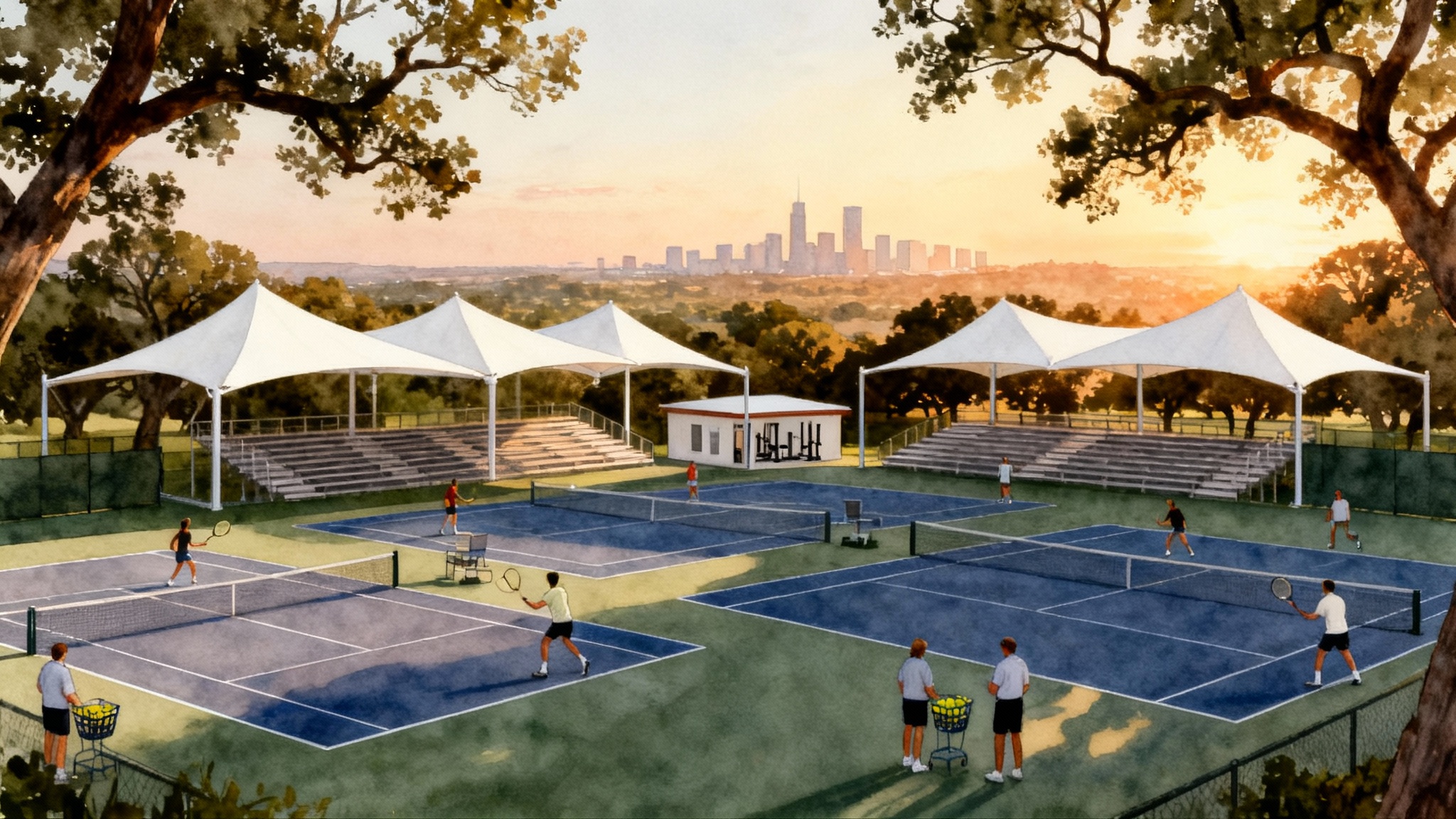
- Los Angeles: Mostly hard courts with isolated clay pockets. If the academy advertises clay, confirm how many hours per week your player will actually get on it. Indoors are rare but some sites have covered courts or wind-protected bowls that play truer on breezy days.
- Orange County: Abundant well-lit hard courts and tidy facilities. Clay access exists but can be limited during after-school prime time. Many academies leverage school sites or city partnerships, which helps with evening availability.
- San Diego: Hard courts dominate. Coastal fog can make night sessions cooler and heavier, which subtly trains endurance and patience on rally balls. If your player is recovering from injury, ask for lower-impact court options and progressive return-to-play drills.
Facility checks you can do in five minutes:
- Count the light poles and ask for lux ratings if posted. Even lighting reduces late-day mishits.
- Ask about wind screens and court orientation. North-south courts reduce sun blindness late in the day.
- Inspect the ball carts and stringing area. Attention to small details often mirrors attention to coaching details.
Year-round court availability and rain plans
Southern California weather is forgiving, but schedules still tighten from November through February when sunset comes earlier. Confirm these items:
- Reserved courts at peak hours: 4 p.m. to 7 p.m. Monday to Friday for juniors, early mornings and late evenings for adults.
- Rain protocols: Do they own squeegees and blowers, and will staff dry courts promptly? Some academies also keep one to two indoor fitness spaces for footwork circuits during drizzle.
- Holiday schedules: Winter and spring breaks should include training blocks, not just closures. College coaches value consistent match volume across the whole year.
Pricing and boarding options in 2026
Pricing varies widely. Use cost per coached hour as your anchor. Here are realistic ranges you will see in Los Angeles, Orange County, and San Diego:
- After-school junior programs: 30 to 65 dollars per coached hour, depending on ratio and facility quality. Small group technical blocks with video often sit at the higher end.
- Full-time junior day programs: 900 to 2,200 dollars per month for three to five days per week, typically four to five hours per day including fitness.
- Adult clinics: 25 to 60 dollars per hour for groups, 90 to 160 dollars per hour for privates, often with package discounts.
- Boarding add-ons: 2,000 to 4,500 dollars per month for housing, meals, transportation, and supervision.
For boarding, request:
- Supervision ratio and staff credentials. Ask who sleeps on site and how overnight issues are handled.
- Academic support details. Is there a quiet study block with adult oversight and tutoring partners for math, science, and college prep?
- Medical and nutrition protocols. Ask about athletic trainers, return-to-play steps after injuries, and meal plans for long training days.
Commute convenience: get real about traffic
Commute is where plans fail. Build a conservative drive-time estimate for your specific route during real practice hours. In LA, a 10 mile cross-town drive at 5 p.m. can take 45 minutes. In Orange County, 15 to 25 minutes is common within the same city. In San Diego, coastal routes move more smoothly, but freeway incidents still add surprise delays.
Practical tips:
- Choose two time windows and test the drive twice before enrolling. Do one trial on a school night after homework begins.
- If your player carpools, write down backup contacts and set a shared calendar.
- For adults, target early morning clinics that finish before work or late evening live ball after 7 p.m. when traffic ebbs.
Trial-session checklist you can print
Bring this list to a trial. Mark yes, no, or needs follow up.
Coaching
- Ratio is 1 to 4 or better for technical work
- Head coach seen teaching, not just selling
- Specific corrections with clear next steps
- Drills progress to live points and serve returns
Player care
- Warm up is structured and includes mobility
- Fitness is supervised and age appropriate
- Water breaks on a clock, not random
- Coaches track volume and intensity across the week
Matchplay and planning
- Weekly verified matches planned in advance
- Tournament calendar shared monthly
- Post-match review offered within 48 hours
- Recruiting or adult improvement plan written down
Facility and logistics
- Courts are clean with even lighting
- Rain plan is explained concretely
- Parking and pick up are safe and easy
- Payment, refund, and makeup policies are transparent
Sample weekly schedules that actually work
Use these as starting templates. Adjust for school, work, and recovery.
Junior, ages 10 to 12 developmental focus
- Monday: 90 minutes technique, 30 minutes footwork, 30 minutes serves
- Tuesday: 60 minutes live ball, 45 minutes points, 30 minutes flexibility
- Wednesday: Rest or 45 minutes wall work and mobility
- Thursday: 90 minutes technique with video, 30 minutes serves
- Friday: 60 minutes matchplay, 30 minutes returns, 30 minutes conditioning games
- Weekend: One UTR or USTA match window, light bike ride, and stretch
Junior, ages 13 to 16 performance pathway
- Monday: 2 hours drilling and patterns, 45 minutes strength and stability
- Tuesday: 90 minutes live ball, 45 minutes serves and returns, video review of three patterns
- Wednesday: Active recovery, mobility, and school focus
- Thursday: 2 hours matchplay sets, 30 minutes mental rehearsal
- Friday: 90 minutes pressure drills, 30 minutes sprints and agility
- Weekend: Tournament or two to three UTR verified sets, post-match debrief
Junior, ages 17 to 18 college-bound
- Monday: 2 hours patterns and point construction, 45 minutes strength
- Tuesday: 2 hours matchplay with specific tactical goals
- Wednesday: Rest or light mobility and serve practice
- Thursday: 2 hours pattern rehearsal under fatigue, 30 minutes returns and transition volleys
- Friday: 2 hours practice sets, 15 minutes recruiting email tasks
- Weekend: Tournament or college-style dual match simulation, film review
Adult, 3.0 to 3.5 level
- Monday morning: 60 minutes technical clinic focused on forehand contact point
- Wednesday evening: 90 minutes live ball and serve targets
- Friday: 45 minutes private lesson for one key fix
- Weekend: League match or social doubles, 15 minutes flexibility
Adult, 4.0 and higher
- Monday: 90 minutes pattern drilling and serve plus one
- Wednesday: 90 minutes live ball that is fed by coaches who keep tempo
- Friday: 60 minutes targeted private lesson, video check on backhand or return
- Weekend: Two verified sets and 20 minutes mobility
Fast decision plan: choose in 48 hours
Day 1 morning
- Shortlist two academies in your county based on commute and schedule fit.
- Email both for a drop in trial and ask for specific ratios and session plans.
Day 1 afternoon
- Test the drive at the exact hour you would normally go.
- Watch practice for 30 minutes from a distance with your checklist.
Day 1 evening
- Score each academy using the weighted rubric. Note any missing answers.
Day 2 morning
- Do the second trial or talk with the head coach for 15 minutes about your player’s goals or your adult league timeline.
Day 2 afternoon
- Confirm UTR and USTA matchplay logistics. Ask who books entries and how debriefs happen.
Day 2 evening
- Decide. Enroll for 30 days, not a full semester. Put two review dates on your calendar to reassess fit and progress.
What parents and adult players often miss
- Consistency beats hero sessions. Three solid days per week for months will outpace occasional marathon days.
- Recovery earns improvement. Add two mobility sessions and a weekly off day. Players who sleep eight hours progress faster and get injured less.
- Communication is a skill. Teach your player to ask for feedback with a specific question at the end of each session. Adults should send a short note to the coach each month with one goal and one constraint.
The bottom line
The best Southern California academy for 2026 is the one that reliably delivers coaching attention, verified matchplay, manageable logistics, and a plan you can follow week after week. Use the weights to rank options, run the trial checklist, and arrange a 30 day test. If the plan is clear, the commute is realistic, and the matches are on the calendar, you will see progress in both rating and confidence by the end of the first month.