Texas Tennis Academies 2026: Austin Dallas Houston San Antonio
A timely buyer’s guide to Texas tennis academies in 2026. Compare training models, indoor and clay access, school and boarding options, UTR and USTA pipelines, pricing signals, and travel logistics across Austin, Dallas, Houston, and San Antonio.
 Tommy
Tommy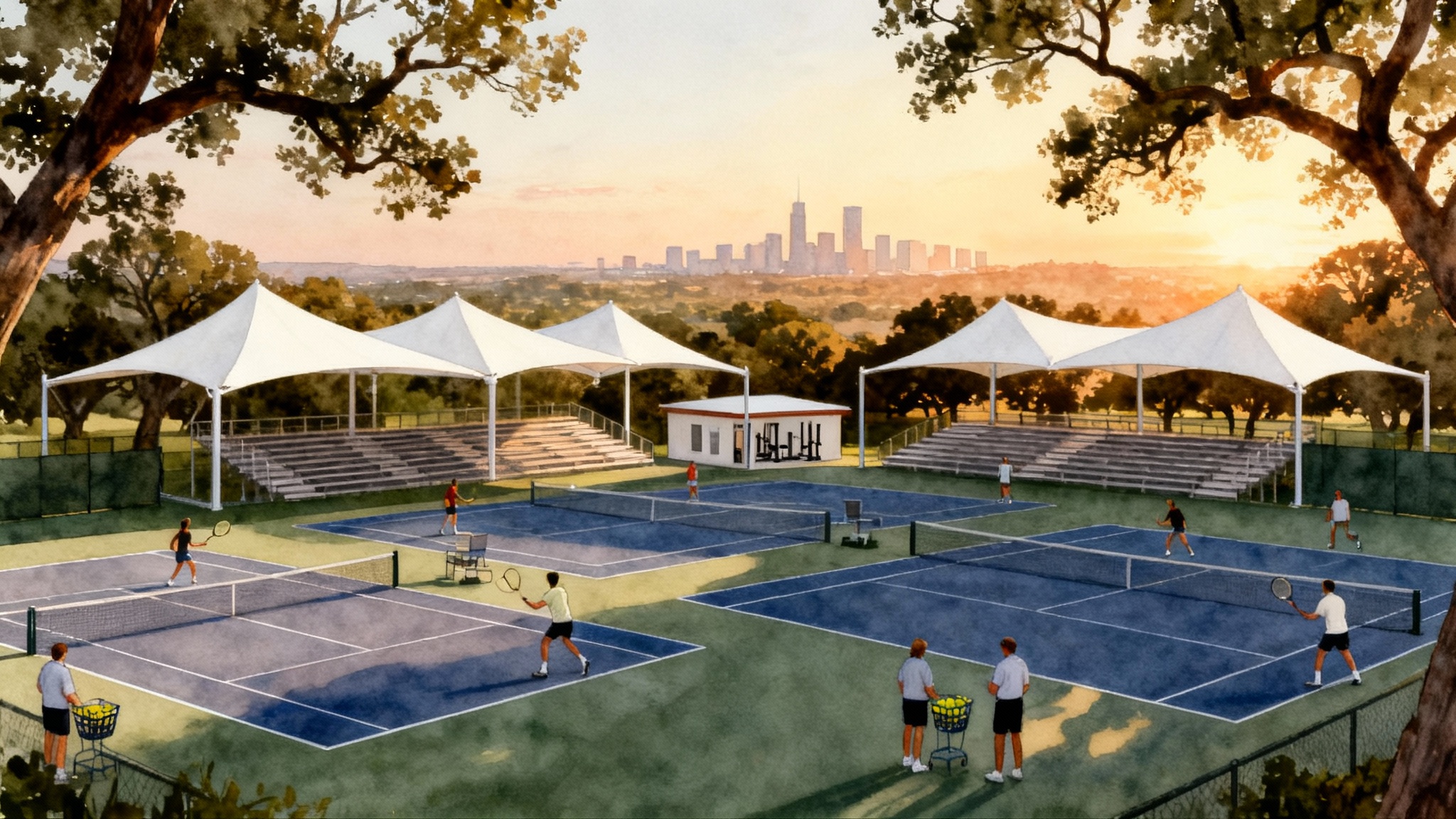
How to choose a Texas tennis academy in 2026
Texas has the talent, the tournaments, and a growing set of indoor and covered courts to keep training on schedule when the forecast gets extreme. This guide simplifies the big decisions parents and players face, then compares the best options across Austin, Dallas, Houston, and San Antonio.
Training models you will encounter
- Periodized high performance: Built around tournament calendars and recovery weeks. Expect detailed session plans, tracked fitness metrics, mental skills blocks, and coaches who help set a monthly match plan.
- Primary coach system: One lead coach steers your player’s technique, fitness priorities, and tournament schedule while the wider staff supports day to day work. This model is common in Texas and reduces mixed messages for juniors.
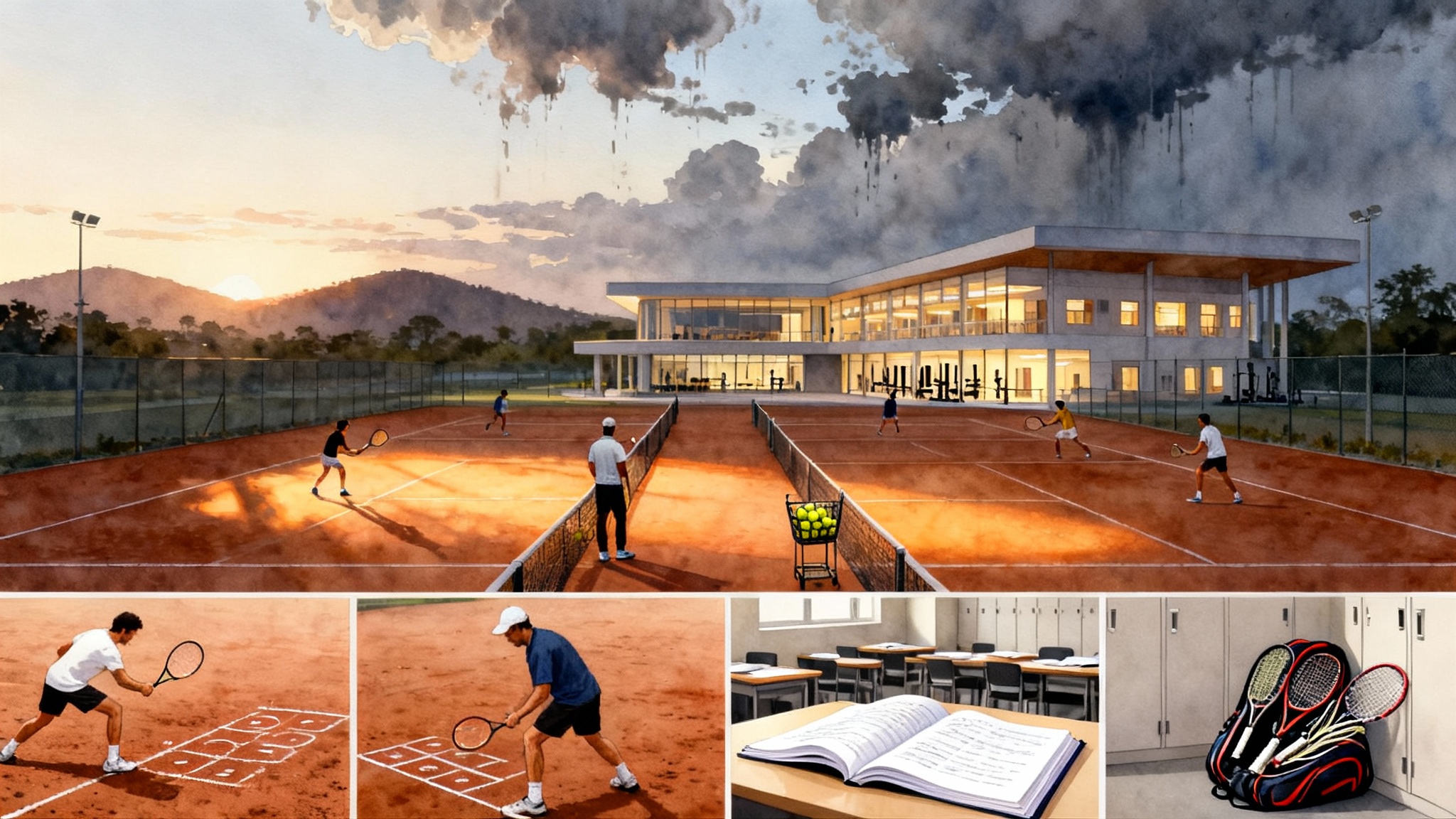
- Integrated school model: Tennis, academics, and strength and conditioning live on the same campus, which reduces commute time and lets athletes train during off peak heat windows.
Surface mix and heat plans
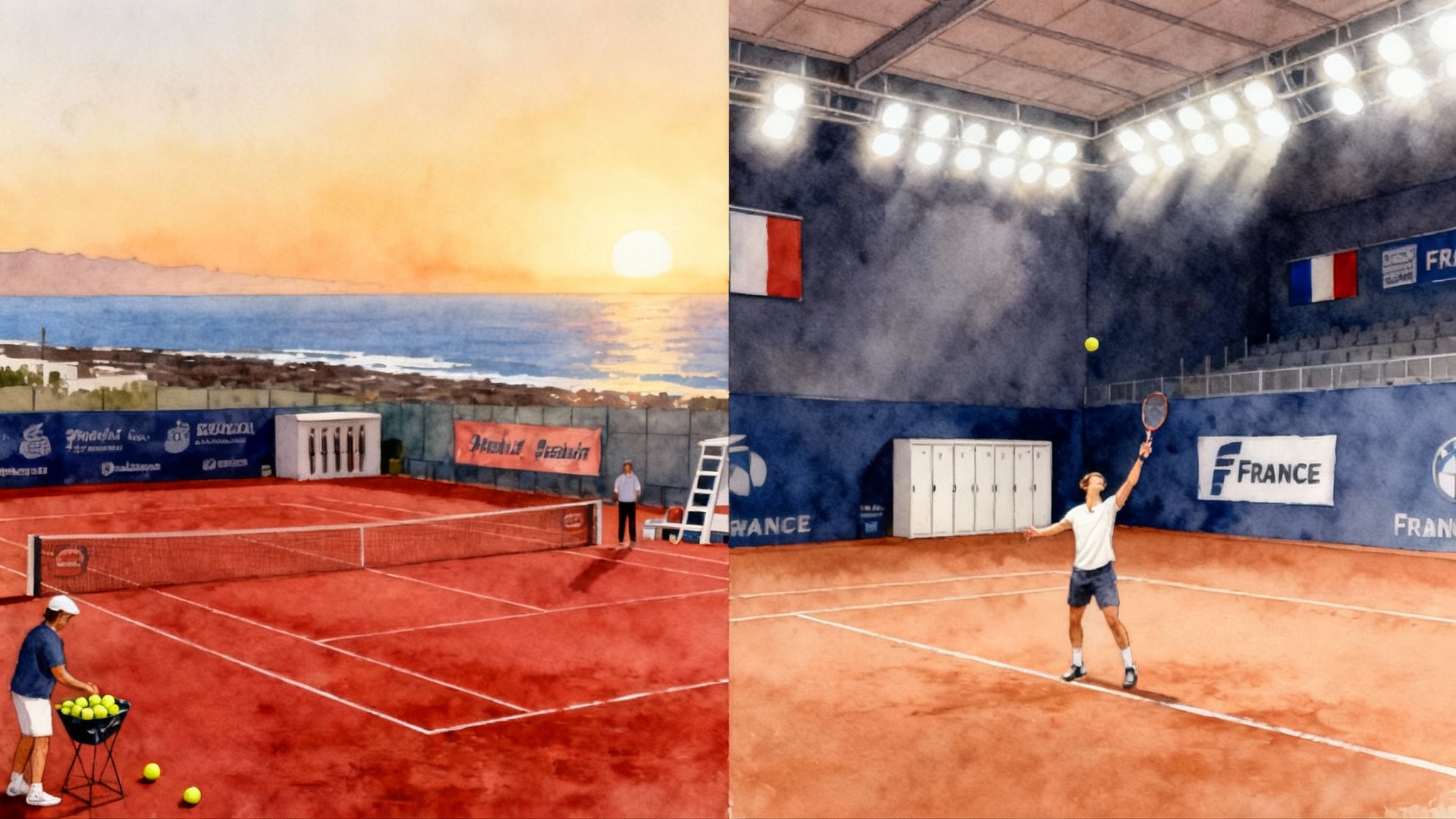
Texas heat shapes training. Indoor courts and shade structures are not a luxury. They protect training volume in July and August and keep skill development on track when storms roll in. Clay courts add value too. On slower clay, players learn sliding, balance, defense, and longer point construction. A weekly rhythm that alternates hard and clay days helps reduce joint load while expanding tactical range.
The match play pipeline explained
Two acronyms matter. Universal Tennis Rating is a global rating that moves with every verified result. The United States Tennis Association runs the state and national junior pathway with levels from entry play to national championships. When you evaluate an academy, ask exactly how they plug athletes into both systems and who manages registrations, travel blocks, and back to back weekend loads. For a quick explainer of the ranking levels and how Texas structures events, see the USTA Texas junior tournament structure.
School and boarding options
Full time programs in Texas range from on campus private schools to partnerships with accredited providers. Look for clear academic hours, teacher access next to the courts, and a homework plan for travel weeks. For boarding, ask about supervision, transportation to and from tournaments, and weekend nutrition. A good boarding setup feels like a small college team environment rather than a hotel with racquets.
Pricing signals that actually help
List prices vary widely and change often, so focus on signals that drive value:
- Court access in the heat: Indoor or covered space increases cost but protects training volume. That can be worth more than an extra private lesson in August.
- Match play scheduling: Weekly verified match blocks, in house Universal Tennis events, and travel coordination save time and reduce burnout.
- Fitness integration: If the gym is steps from the courts, your player is more likely to lift consistently and recover properly.
Travel logistics
Texas is large, so proximity to airports matters. Think in drive time windows. Fifteen to thirty minutes from a major airport simplifies out of state tournaments and recruiting visits. Also check daily traffic patterns from likely housing to the courts at 7 a.m. and 4 p.m. The best facility on paper can become a grind if the route snarls twice a day.
Austin spotlight: Legend Tennis Academy vs. Austin Tennis Academy
Legend Tennis Academy, Spicewood and the Hill Country
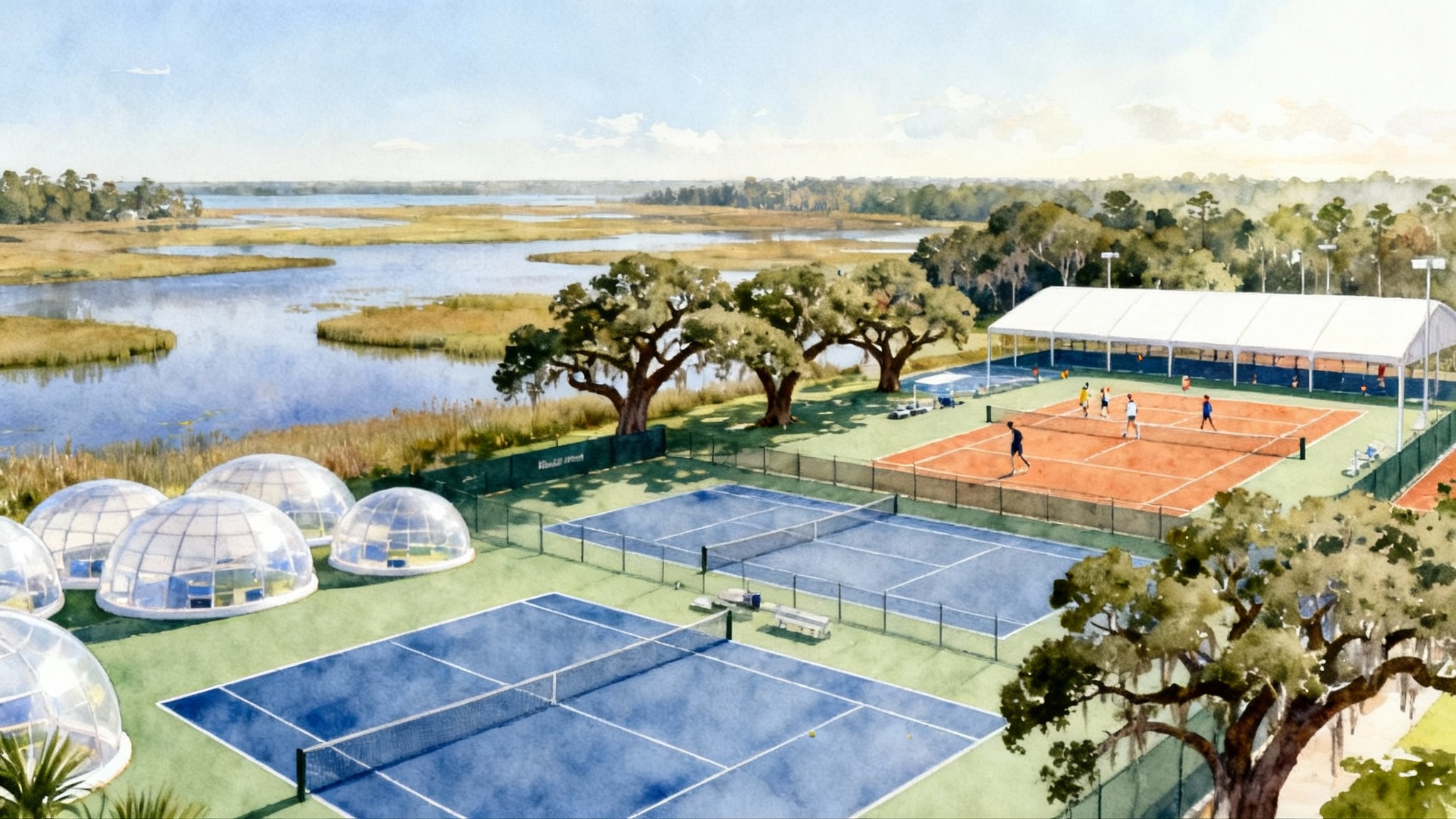
What is new: Legend opened in the Bee Cave and Spicewood corridor with covered and lighted courts for all season play, plus an indoor phase in development. That heat plan is the main differentiator on the west side of Austin. For context on the facility buildout and the covered court approach, see the USTA feature on Legend Spicewood facility. You can also review the Legend Tennis Academy profile for programs and contact details.
Training model: Small group sessions with a clear progression from Red and Orange ball to Junior Elite, a gym on site, and a calendar that mixes drills with match play blocks. The academy positions itself as a personalized, family friendly environment that scales intensity as players advance.
Surface mix and weather: Covered hard courts and shade extend playable hours in peak summer. Phase two indoor courts are planned, which, if delivered on schedule, gives Legend an all weather advantage during storm season.
School and boarding: Legend currently emphasizes after school and weekend training for local families. If you need daytime hours during the school year, ask about custom blocks and how they partner with nearby academic providers.
Who fits best: Families in Lakeway, Bee Cave, and Spicewood who want consistent summer volume without chasing indoor court time across town. Juniors transitioning into their first Level 6 or Level 7 weekends will appreciate the blend of coaching attention and match play reps.
Austin Tennis Academy, Spanish Oaks
Why it is established: Austin Tennis Academy pairs a primary coach system with an on campus private school, so academics, fitness, and court time live in one footprint. The result is fewer car hours and steadier practice during the school week. For a broader regional comparison of models and trade offs, see our Florida academies buyer’s guide.
- Training model: Primary coach oversight plus structured squads for Tournament Tough players. Coaches help plan USTA travel and college recruiting timelines from early high school.
- Surface mix: Twelve outdoor hard courts and two Italian red clay courts support tactical growth. Clay days are valuable for developing rally tolerance and transition skills.
- School and boarding: The on campus school is the big sell. Daytime training blocks are coordinated with class schedules, and teachers can find athletes between court blocks. Boarding is limited, so families considering a full residential setup often look to the Hill Country or San Antonio for that piece.
Who fits best: College pathway juniors who want academic structure alongside a stable tournament schedule. The model also suits local families who can commute to Spanish Oaks without fighting cross city traffic.
Recommendation in Austin
- Juniors starting tournament play: Legend for covered court consistency and starter Universal Tennis events.
- College pathway player grades 8 to 12: Austin Tennis Academy for integrated school plus clay exposure. Consider adding a summer block of indoor days at Legend or in Dallas when temperatures spike.
- Adult performance: Legend for shaded evening groups and the ability to avoid peak sun.
Dallas powerhouses: T Bar M and Brookhaven
T Bar M Racquet Club, North Dallas
What stands out: A large, tournament proven campus with indoor courts, clay options, and a performance team under the same roof. Renovations have modernized the footprint and expanded recovery and fitness spaces. If you are weighing Southeast options too, our Georgia and Carolinas guide outlines how facilities scale outside Texas.
- Training model: A clear ladder from pre tournament squads to full time academy. Expect strength and mobility in the weekly rhythm, plus shoulder care and recovery standards that matter during the hottest weeks.
- Surface mix and weather: Multiple indoor courts keep volume stable during heat waves and thunderstorms. Clay blocks broaden point construction skills.
- School and boarding: The full time track can coordinate with flexible schooling options. Boarding is limited on campus, so out of town families often use nearby housing with supervised transport.
Who fits best: College pathway juniors who need reliable year round volume and want to be near a heavy tournament calendar. Also strong for adults chasing measurable performance gains with indoor access.
Brookhaven Country Club, Farmers Branch
What stands out: Size and variety. Brookhaven’s racquet complex includes indoor courts, covered courts, and clay, plus an active junior academy that keeps the calendar full. The sheer number of courts means weather delays often turn into court swaps rather than cancellations.
- Training model: Group squads with tournament prep blocks and a steady stream of supervised match play. Adults can layer in leagues and private sessions without hunting for scarce court times.
- Surface mix and weather: Indoor and covered courts plus five clay courts support both volume and variety.
- School and boarding: Primarily a commuter setup. For families relocating to Dallas, the corridor between Dallas Love Field and Farmers Branch offers practical housing options that minimize drive time.
Recommendation in Dallas
- Juniors starting or climbing levels: Brookhaven for breadth of court access and frequent match play.
- College pathway and performance first adults: T Bar M for integrated performance support and indoor reliability.
Houston choices: Giammalva Elite and Houston Tennis Academy at Club Westside
Giammalva Elite Tennis Academy, Northwest Houston
What stands out: A tennis focused community with a defined academy progression, boarding options for out of town athletes, and a prep school partnership for daytime training. The boarding plus education combination is a differentiator inside Houston city limits.
- Training model: Small coach to player ratios for drilling, dedicated fitness and match play blocks, and targeted Saturday sessions when school is in session.
- Surface mix and weather: Mostly outdoor hard courts with shade and lighting. Ask about heat plans in July and August, and check whether indoor backup courts are reserved during storm season.
- School and boarding: The academy’s partnership with an academic provider and its housing options make the weekly schedule more predictable for non local families.
Who fits best: Out of town juniors who want residential options inside a major city and a clear weekly structure. Also a good fit for families in Northwest Houston who want a tennis centered community.
Houston Tennis Academy at Club Westside, West Houston
What stands out: A club with both indoor and outdoor courts, which is unusually helpful in Houston’s summer humidity and frequent storms. Squads range from Quick Start to Super Champ, and strength facilities are a short walk from the courts.
- Training model: In club progression with frequent supervised match play and easy crossover into adult leagues for older teens and parents.
- Surface mix and weather: Four indoor courts plus many outdoor courts allow scheduling around heat indexes and rain.
- School and boarding: Primarily commuter. The Westchase and Energy Corridor neighborhoods offer sensible housing and school options with manageable drive times to Wilcrest Drive.
Recommendation in Houston
- Juniors early in the pathway: Club Westside for dependable indoor backup and a wide age ladder under one roof.
- College pathway and boarding need: Giammalva Elite for integrated academics and housing.
- Adult performance: Club Westside for year round play that does not depend on the forecast.
San Antonio and the Hill Country: John Newcombe Tennis Ranch
New Braunfels is home base for a Texas classic. John Newcombe Tennis Ranch blends a residential camp feel with a results focused academy calendar. The staff emphasizes match play volume, tournament scheduling, and fitness in a concentrated environment that feels like a small college program.
- Training model: Weeks built around verified match play, specific tactical themes, and high level fitness. Good for players who want immersion without city distractions.
- Surface mix and weather: Outdoor hard courts with shade and lighting. The staff is experienced at moving sessions to cooler parts of the day when the heat index spikes.
- School and boarding: The ranch is built for residential blocks, including summer and custom weeks during the school year. Commuter options exist for local families.
Who fits best: Players who respond to immersive, residential environments and want to stack verified matches in a short window. Also a strong fit for adults who enjoy the camp atmosphere while working with serious coaches.
Your UTR and USTA pathway from Texas
A smart Texas plan stacks weekly verified matches with monthly travel. The state’s United States Tennis Association calendar provides Level 6 and Level 7 events almost every weekend, with higher levels sprinkled in. The academy’s role is to place your athlete in events that fit current Universal Tennis Rating, then adjust practice loads based on how many sets were played that weekend. A good sign is a posted plan for the next four to six weeks and a coach who can explain how each event supports long term progress.
Action you can take this week
- Ask for last month’s in house match play counts. More verified sets usually beats more standing basket drills.
- Request a sample week in July, including heat adjustments and backup courts. If plans depend on luck, look elsewhere.
- For school year training, ask for a written policy on missed classes during travel weeks and how tutoring is scheduled.
Quick travel notes
- Austin: Austin Tennis Academy sits in Spanish Oaks near Bee Cave. Expect about a half hour from Austin Bergstrom International Airport outside rush hour. Legend is northwest in Spicewood and Lakeway. Many families pair housing near Bee Cave with carpools to either site.
- Dallas: T Bar M is north of Interstate 635 near the Galleria. Dallas Love Field is the easy airport for domestic travel. Brookhaven is in Farmers Branch just west of the Dallas North Tollway.
- Houston: Club Westside is on Wilcrest Drive with straightforward access to the Westpark Tollway and Beltway 8. Giammalva is in Northwest Houston with direct routes to both major airports.
- San Antonio and the Hill Country: John Newcombe Tennis Ranch in New Braunfels sits between San Antonio International Airport and Austin Bergstrom, which gives families two flight options.
Who should go where in 2026
- Junior newcomers, ages 8 to 13: Choose a program with a clear ball color ladder, small coach ratios, and weekly match play. Legend in Spicewood and Club Westside in Houston check those boxes and offer weather resilience that protects confidence during the summer.
- Serious juniors on the college pathway: Austin Tennis Academy and T Bar M are your pace setters. Integrated school at Austin Tennis Academy cuts friction during the year. T Bar M’s indoor volume, clay options, and performance integration help you keep training steady when the forecast is not friendly. Layer in residential blocks at John Newcombe to sharpen competitive edge before big events.
- Adult performance and league captains: Dallas stands out for indoor access at scale. Start with T Bar M or Brookhaven for year round groups and fitness. In Austin, Legend’s covered courts keep evening drills crisp and safer in July. In Houston, Club Westside lets you schedule around rain without losing a session.
A weekend recon plan that works
- Friday night: Watch the top junior squad. Look for tempo, ball quality, and how coaches correct footwork under pressure.
- Saturday morning: Ask for a fitness session and a short private to test communication. Good programs explain the why behind each cue.
- Midday: Confirm the next six weeks of tournaments by level and location. Ask exactly who handles entries and travel planning.
- Afternoon: Tour classrooms if academics are part of your plan. Meet the person who schedules tutoring during travel.
- Sunday: Play a Universal Tennis event or at least supervised sets. You learn more from two real tiebreaks than a dozen static feeding drills.
The bottom line
Texas gives you four distinct ecosystems in 2026. In Austin, Legend’s covered courts and planned indoor phase create dependable summer training, while Austin Tennis Academy’s primary coach model and on campus school remain a proven pathway. Dallas brings scale and indoor reliability through T Bar M and Brookhaven. Houston splits between the boarding plus school structure at Giammalva and the indoor backup advantage at Club Westside. San Antonio’s John Newcombe presence anchors residential training with a competition first rhythm.
Pick the place that protects training volume in bad weather, plugs you into verified matches every week, and simplifies school days during the season. Do that, and the details that matter most ratings, rankings, and confidence in big points will take care of themselves.