Best Tennis Academies 2026: Georgia, North and South Carolina
A parent-focused, data-driven guide to Southeast tennis academies for 2026. Compare day and boarding options in Georgia, North Carolina, and South Carolina with details on courts, academics, match play, costs, and travel.
 Tommy
Tommy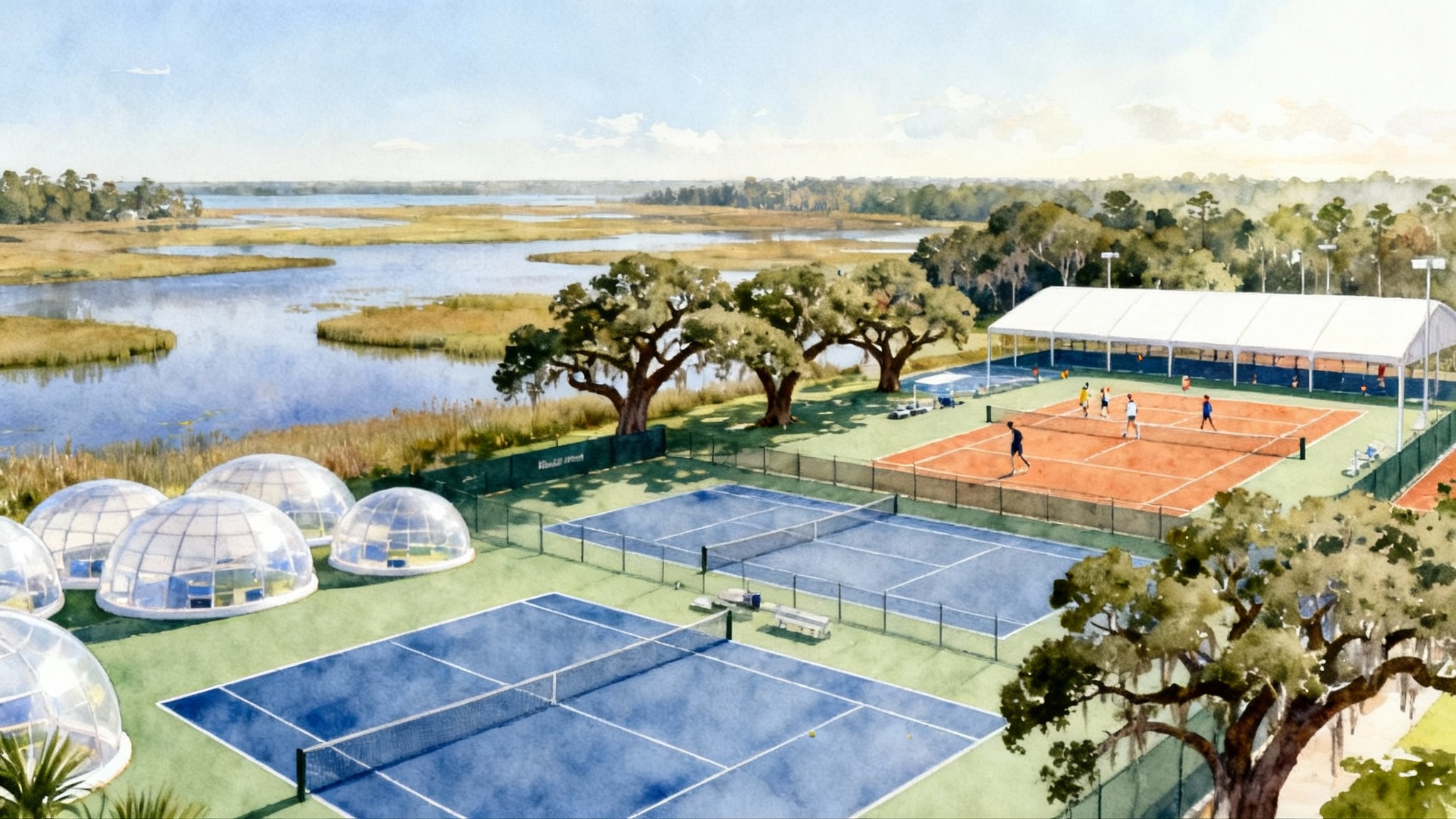
How to use this guide
If you are deciding where your player should train in 2026, think like a college recruiter. Recruiters care about the volume and quality of matches, the player’s trajectory, and whether academics stay on track. This guide compares leading Georgia, North Carolina, and South Carolina options through the lenses parents actually need: year-round court access, indoor coverage, academics integration, Universal Tennis Rating match access, United States Tennis Association calendars, college placement support, real-world costs, travel logistics, and sample training weeks.
What follows is a clear framework plus a practical shortlist. Use it to plan visits, run side-by-side comparisons, and commit with confidence.
Climate and court access in the Southeast
The Southeast offers long outdoor seasons with occasional winter cold snaps and summer heat stress. What matters is not “sunny most days,” but how reliably your player can complete scheduled reps.
- Georgia, especially the Atlanta area, combines deep tournament calendars with facilities that include indoor hard courts. This is helpful for uninterrupted training on rain days or during cold spells.
- North Carolina’s Triangle region has covered court capacity at flagship public facilities, along with a dense network of USTA events across Raleigh, Durham, and Cary, which keeps match play practical most weeks of the year.
- South Carolina’s Lowcountry is clay-rich and tournament-active, though true indoor courts are limited. Boarding academies on Hilton Head mitigate weather risk with flexible scheduling, early starts, and match play blocks during the most playable hours.
Takeaway: prioritize programs that can show you their monthly weather backup plan. Ask to see typical winter and summer day plans, including where sessions move when courts are wet or temperatures spike.
How we compare programs
When you visit or call, use these questions to make apples-to-apples comparisons.
- Courts and surfaces: How many courts are dedicated to academy blocks during peak hours, and what is the hard versus clay split? Is there indoor or covered capacity, and who gets priority when weather shifts?
- Weekly match access: How many verified UTR matches per month does a typical academy player get, and how many USTA tournament starts are practical within a 60 to 90 minute radius? Ask for the last three months of suggested schedules.
- Academics integration: What do school day hours look like for full-time athletes? If online school is used, who monitors class time and assignment completion? If a local brick-and-mortar partner is used, how are transportation and midday meals handled?
- Strength and conditioning: Who writes the plan, how is it individualized, and how is growth tracked across mobility, speed, and repeat sprint ability?
- College placement: Ask for a three-year list of college placements with the contact person who handled each recruiting process. Confirm whether coaches attend key showcases and how they prepare video and transcripts.
- Transparent costs: Request a one-page estimate that includes tuition, fitness, sports medicine, housing or host family costs, tournament coaching fees, travel, and stringing.
Shortlist for 2026
Below are three strong hubs that fit the parent brief for this region. They are not the only viable choices, but they are reliable places to start a decision process.
Life Time Tennis Academy, Peachtree Corners, Georgia
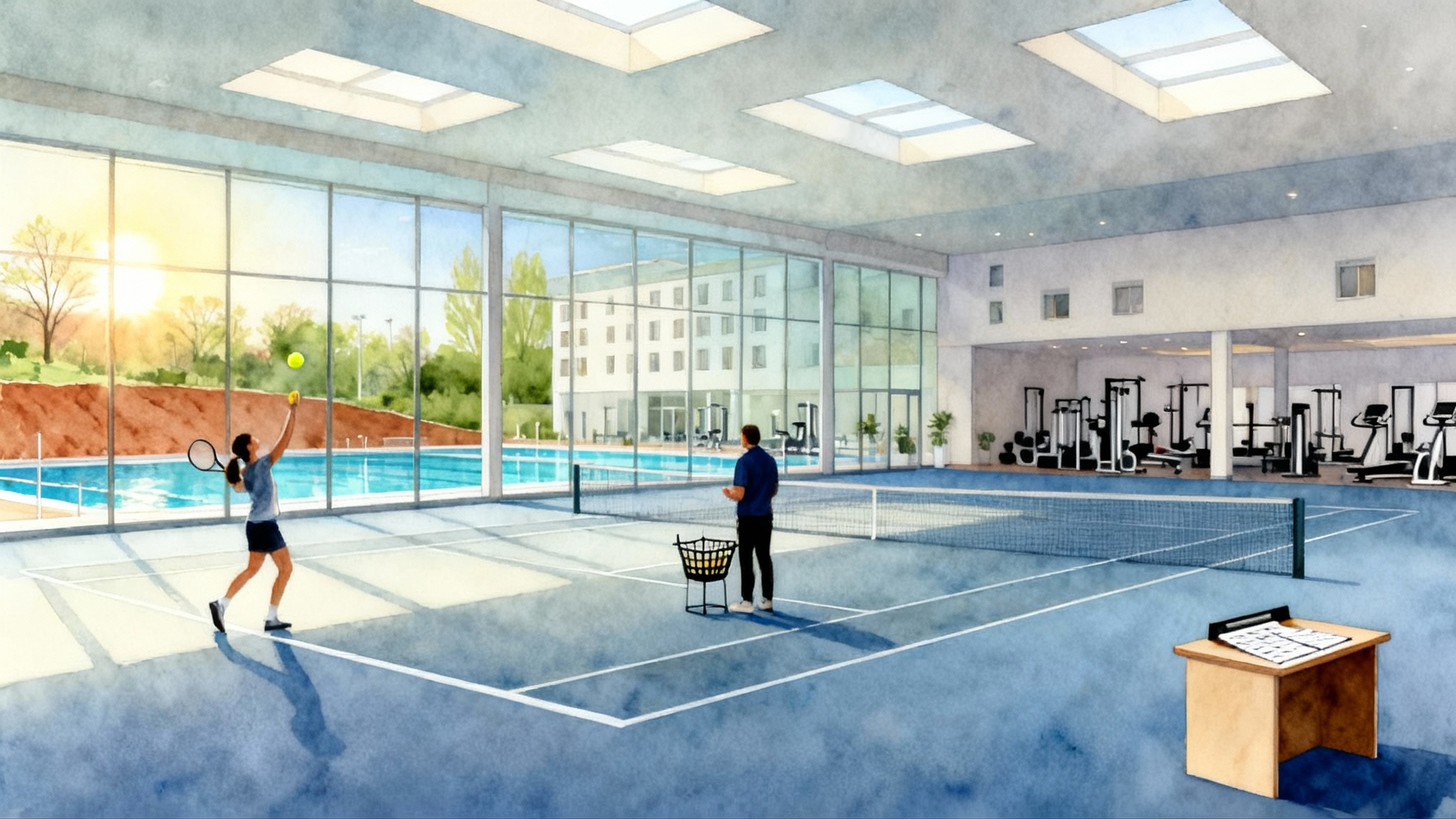
For families prioritizing indoor access near a major airport, Life Time’s Peachtree Corners campus is a practical base. The club lists 18 total tennis courts with a mix of hard and clay, including four indoor hard courts, which stabilizes training through winter rain and cold snaps. See facility details directly on the club page at Life Time Peachtree Corners tennis courts.
For a deeper look at this pathway, read the Life Time Tennis Academy profile.
Why it matters
- Indoor coverage reduces cancelled reps, which keeps volume steady and limits skill decay.
- The Atlanta metro has dense USTA and UTR calendars, which simplifies week-to-week match planning without excessive travel.
- Day students can pair after-school training with local public or private schools, while homeschoolers can train mid-day and return for afternoon point play.
Sample day-student training week
- Monday: 3:30 to 5:30 p.m. technical blocks, 30 minutes mobility and shoulder care
- Tuesday: 3:30 to 6:00 p.m. live ball and point patterns, 20 minutes serve targets
- Wednesday: 2:00 to 3:00 p.m. strength and conditioning, 3:15 to 5:15 p.m. situational sets
- Thursday: 3:30 to 5:30 p.m. pattern progression and video feedback, 20 minutes return reps
- Friday: 3:00 to 5:00 p.m. match simulation with scoring consequences
- Weekend: One USTA tournament start or two UTR verified matches, recovery session the other day
Travel logistics
- Primary airport: Hartsfield-Jackson Atlanta International, about 40 to 60 minutes by car depending on traffic.
- Hotel and short-term stays: plentiful within 15 minutes, which simplifies parent visit schedules and trial weeks.
Budget cues
- Expect a membership component if you are not already part of the club community. Request clear pricing that separates coaching blocks, fitness, and any tournament coaching add-ons.
Hilton Head Island, South Carolina: Smith Stearns and Van Der Meer
Hilton Head is a classic destination for junior development. The island offers deep clay court access, a competition culture that rewards patience and point construction, and two long-running academies that support serious schedules. Families looking for boarding often start here. If you are also comparing Florida options, see our Florida academies 2026 guide.
Why it matters
- Boarding simplifies logistics for families outside the region, and it makes two-a-day training blocks easier to sustain.
- Clay exposure accelerates footwork discipline, point building, and shot tolerance, which are differentiators in college recruiting.
Programs to evaluate on the island
- Smith Stearns Tennis Academy at Sea Pines: known for individualized planning and boarding, with on-court and off-court structures built for full-time players. Review Smith Stearns travel and boarding details.
- Van Der Meer Tennis Academy: a long-standing option with full-time academy and seasonal camps. It is a strong place to stage multi-week blocks around tournament schedules.
Sample boarding-student training week
- Monday to Friday mornings: 8:00 to 10:00 a.m. drilling and pattern work; rotate through themed days such as first-strike patterns, neutral depth, short ball conversion, and defensive resets
- Midday: academics block with monitored study hall, lunch, and light activation
- Afternoons: 2:30 to 5:15 p.m. point play and situational sets; last 30 minutes reserved for serve and return volumes
- Strength and conditioning: two to three evenings per week, emphasis on repeat sprint ability, trunk rotation, and ankle mobility
- Saturday morning: 8:00 to 10:00 a.m. match play or team duals, recovery and mobility in the afternoon
- Sunday: full recovery, school catch-up, optional video review
Travel logistics
- Primary airports: Hilton Head Island Airport is a short drive, and Savannah Hilton Head International is about an hour. Many boarding programs arrange pickups for arriving students.
Budget cues
- Full-time boarding programs often quote a nine to ten month tuition window, with summer add-ons. Ask for a monthly cash-flow view that includes housing, meals, laundry, and tournament coaching on travel weekends.
The Triangle, North Carolina: Cary Tennis Park Academy and regional high-performance hubs
The Raleigh-Durham-Chapel Hill area blends public-sector excellence and a deep junior calendar. Cary Tennis Park Academy serves as a centerpiece with tiered training groups that align with UTR ratings and tournament activity. The public facility model keeps costs contained while maintaining year-round programming, including winter match play on covered courts during rain or colder months. Families relocating along the East Coast can also compare options in our Northeast academies 2026 guide.
Why it matters
- Families can scale volume up or down without relocating, since the region hosts frequent USTA events across several venues.
- Covered court access during winter reduces cancellations and keeps competitive rhythm intact.
- The academy model emphasizes tournament scheduling, parent meetings, and player goal setting, which helps new families build a clear plan.
Sample day-student training week in the Triangle
- Monday: after-school academy team session, technical theme with constraints games
- Tuesday: live ball plus supervised serve targets and return repetitions
- Wednesday: strength and conditioning at the park or a nearby partner facility
- Thursday: small-group court with 3 to 4 players per coach, stroke and pattern tuning
- Friday: sets with scoring consequences, followed by mobility
- Weekend: local USTA junior team tennis or a UTR verified match block, every second weekend a sectional tournament within driving distance
Travel logistics
- Primary airport: Raleigh-Durham International, about 15 to 30 minutes from most Triangle courts.
- Lodging: broad range of hotels near Cary, Morrisville, and North Raleigh, plus many short-term rentals near major facilities.
Budget cues
- Public facilities typically publish class pricing and private lesson rates. Build your plan by combining academy blocks, a private each week or every other week, and tournament weekends.
Academics integration that actually works
A realistic school plan prevents burnout and keeps college pathways open. Ask each program the same questions.
- School partner or online: If a local school is used, verify bell times, travel between school and courts, and how early dismissal is handled for away tournaments. If online school is used, ask who supervises daily progress and how late work is handled after tournament travel.
- Teacher communication: Who contacts teachers or counselors, and how often? Ask to see a proactive communication template that includes tournament dates, expected absences, and makeup work plans.
- Study hall hours: For boarding programs, confirm where study hall happens, who supervises, and how devices are controlled during sessions.
Clear action: request a two-week mock calendar that overlays class time, training blocks, and a tournament weekend. This single document exposes most hidden friction points.
UTR and USTA match calendars, explained simply
- Universal Tennis Rating is a continuous rating system that updates with verified results. The fastest way to move a rating is to stack high-quality, verified matches against rated opponents every week, not to play only occasionally.
- United States Tennis Association events create the backbone of weekend competition. Level selection should match the player’s current wins and performance goals. A reliable monthly plan mixes local UTR match play with USTA events every two to three weeks.
Clear action: ask each academy for three recent example months of competition plans for a player at your child’s level. Look for short drives, realistic recovery time, and a blend of formats. The plan is more important than any single tournament.
What college placement support should include
College placement is not magic; it is a process you can evaluate.
- A list of recent placements with contact names for each athlete
- A standard highlight video script and two example videos
- A communication calendar that starts junior year, showing when to email coaches, when to visit, and when to send grade updates
- Honest target lists of programs across divisions, not just a reel of top names
Clear action: ask for two recent families you can call. Ten minutes with a parent who just finished the recruiting process will tell you more than a slide deck ever will.
Real-world costs in 2026, with planning tips
Costs vary by program, but parents can plan for typical ranges.
- Day academy tuition: often 1,200 to 2,400 dollars per month for multi-day weekly training and fitness
- Full-time boarding: often 3,500 to 6,500 dollars per month across nine to ten months, plus a summer option
- Tournament weekends: 300 to 1,000 dollars per event counting entry, coaching, travel, housing, and stringing
- Travel and housing: 200 to 600 dollars per month for day families who add periodic hotel nights and gas, more for boarding families flying several times per year
Planning tips
- Ask for a written monthly budget that includes hidden line items such as injury screening, physical therapy check-ins, and racquet service.
- Build a twelve-month cash-flow view, not just academic-year costs, because summer is often a second full season.
Travel logistics at a glance
- Peachtree Corners, Georgia: fly to Hartsfield-Jackson Atlanta International, plan for 40 to 60 minute drives depending on time of day.
- Hilton Head Island, South Carolina: fly to Hilton Head Island or to Savannah Hilton Head International, then shuttle or drive to island courts.
- The Triangle, North Carolina: fly to Raleigh-Durham International, 15 to 30 minutes to most high-use facilities.
Clear action: when you schedule visits, build a travel day worksheet with drive times at your planned arrival hour. Ten minutes at a map can save you thirty minutes in rush hour every day.
Visit checklists and red flags
When you tour, carry a one-page checklist.
What to see
- A live practice block with typical coach-to-player ratios
- A current tournament board for the next four weeks
- The strength space during an actual session, plus recovery tools on hand
- Study hall in session if you are considering boarding
Questions to ask
- Who writes the individual plan, and how often is it updated based on match data?
- How does the program handle late arrivals, injuries, and missed school work?
- What is the pathway from developmental groups into high performance, and what are the criteria for advancement?
Red flags
- Vague answers about match volume or a heavy focus on drills without specific point-play objectives
- No written plan for heat and humidity management in summer
- No clear academic supervision plan for online learners
Quick picks by parent priority
- Need indoor reliability near a major airport: start with Life Time Peachtree Corners in Georgia for the indoor courts and dense tournament calendar.
- Want full-time boarding in a clay-heavy training environment: evaluate Smith Stearns and Van Der Meer on Hilton Head.
- Prefer a public-facility model with strong tournament access and covered court match play in winter: tour Cary Tennis Park Academy and compare to nearby high-performance hubs across the Triangle.
Final word
The best academy is not a brand; it is the daily system that keeps your player healthy, motivated, and match-ready. Pick the place that can show you, on paper, how your next twelve weeks will look, then visit to confirm that reality matches the plan. If the schedule, academics, and travel all align, you will feel it. The calendar will make sense, the workload will be sustainable, and your player will have enough matches to keep improving. That is the signal that you have found the right fit for 2026.