Best Poland Tennis Academies 2025–2026: Warsaw, Kraków, Tri-City
 Tommy
Tommy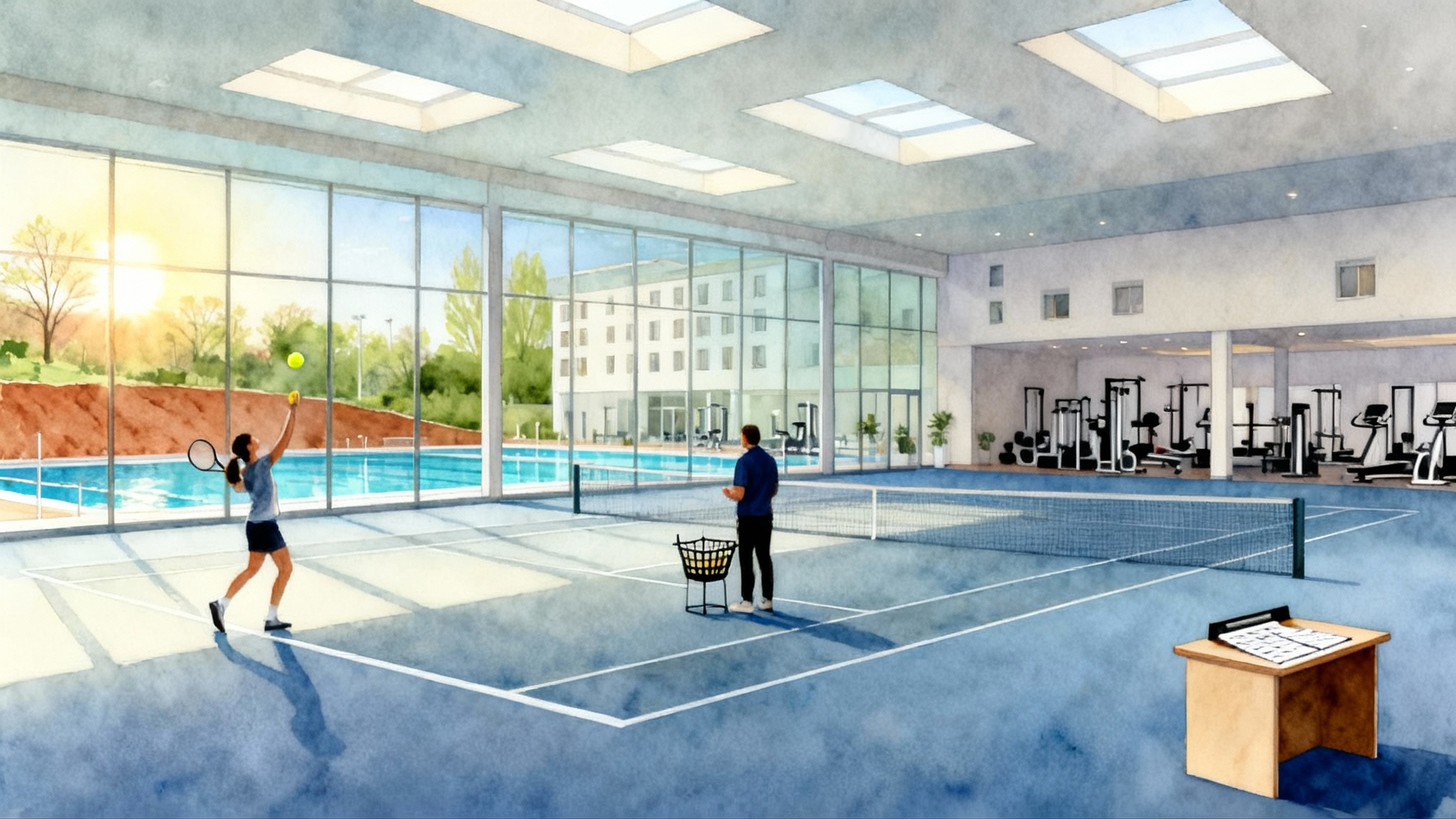
Why Poland is on the junior tennis map in 2025–2026
Poland offers three things parents care about most for development years: a long indoor season, abundant clay for movement and point construction, and a dense calendar of national and international tournaments. The value equation is attractive as well. Court time and qualified coaching remain affordable compared with many Western European capitals, while air links to Warsaw, Kraków, and Gdańsk make weekend scouting trips feasible.
On the tournament side, Poland’s summer swing blends national events with International Tennis Federation entry points. The calendar includes multiple Women’s and Men’s World Tennis Tour stops and a junior circuit that allows a smooth step from regional match play to international draws. See the official PZT Polish Tour 2025 calendar for a representative snapshot of how M15, W15, and higher‑grade events are spread across the country, including Kozerki and Kraków.
What follows is a parent’s guide to how the leading academies compare on the practical items that matter: year‑round indoor access, clay‑court blocks, boarding and schooling, total costs, and realistic UTR or ITF match pathways. We anchor the analysis around Tenis Kozerki near Warsaw, then highlight the strongest options in Kraków and the Tri‑City of Gdańsk, Sopot, and Gdynia.
Deep dive: Tenis Kozerki near Warsaw
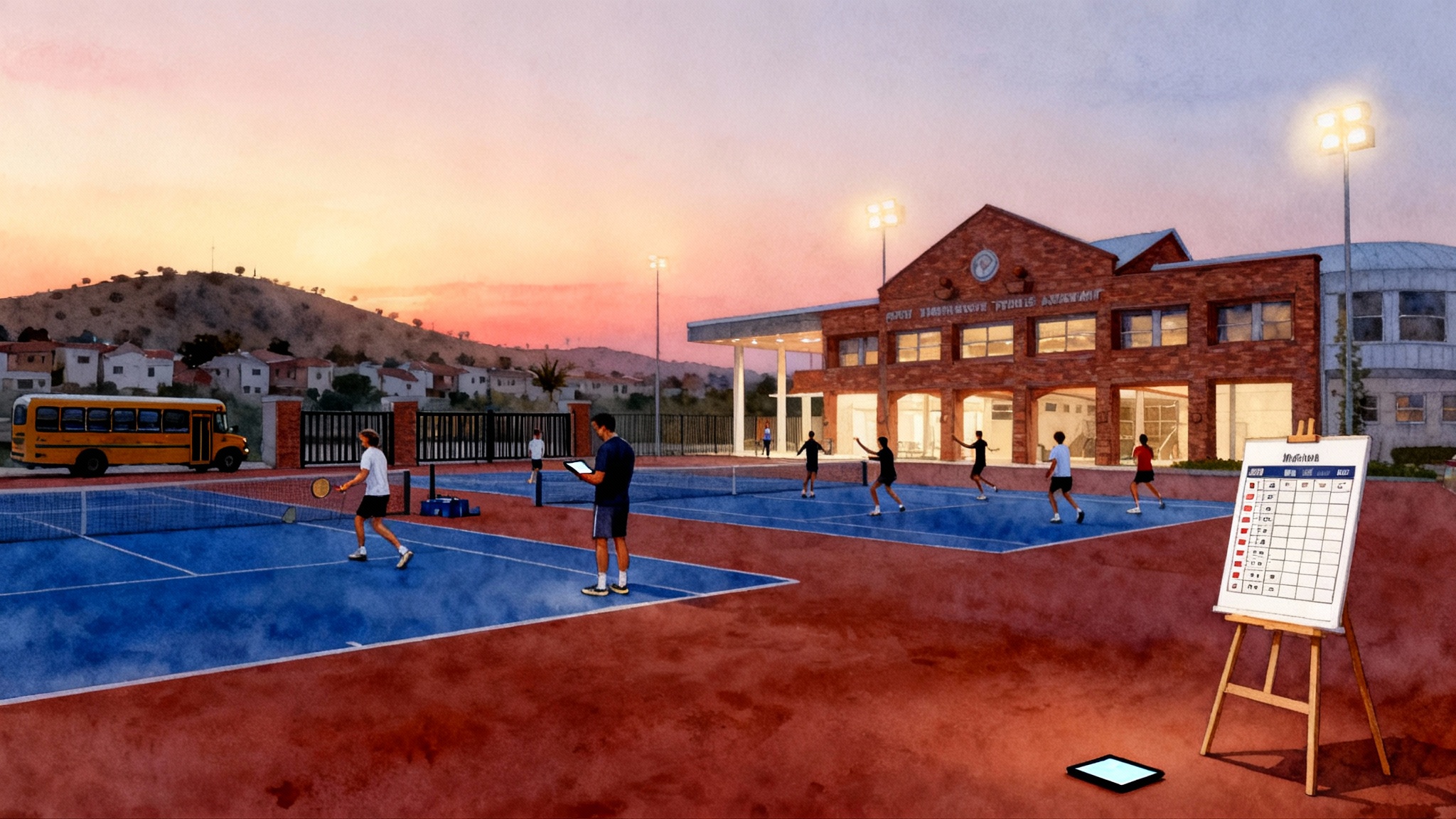
Location and vibe: Kozerki is a purpose‑built tennis campus in Grodzisk Mazowiecki, about 30 to 45 minutes by car from Warsaw Chopin Airport depending on traffic. The training village clusters courts, gym, pool, recovery, and lodging in one walkable footprint. For parents, this “everything on one lane” setup removes a common European headache of shuttling between club, gym, and off‑site accommodation. For background and contact details, see our Tenis Kozerki academy profile.
Courts and surfaces: Kozerki runs a bank of indoor hard courts that operate year round, plus outdoor hard and clay. The clay shuts during deep winter but reopens for long spring and summer blocks, which is when the site hosts national and international tournaments. The indoor stock allows reliable winter training blocks with little disruption from weather.
Boarding and athlete life: The on‑site hotel caters to sports stays, so players can live next to the courts, eat on a performance schedule, and walk to strength and recovery. Families who prefer apartment living can base in Grodzisk Mazowiecki or southwest Warsaw and commute. International school options are reachable in Warsaw for full‑year placements.
Competition pathway on campus: The Kozerki site is an established tournament venue. Poland’s summer pro swing routes through Kozerki for Men’s World Tennis Tour weeks and it sits within a network of national federation events. That means players can stack match weeks without long transfers. When ranked appropriately, older juniors can test themselves in qualifying at local pro events, while younger players focus on national junior draws and selected ITF Juniors.
Who thrives here: Players on a semi‑professional path who need volume and routine. The campus suits families seeking a structured environment with minimal logistics and predictable winter training.
A realistic weekly load at Kozerki in tournament prep might look like this:
- Monday: morning mobility and pre‑hab; 90 minutes patterns and depth control; 60 minutes strength; afternoon 60 minutes serve plus plus‑one; 30 minutes video review.
- Tuesday: 90 minutes live baseline patterns; 60 minutes interval sprints and footwork; 60 minutes sets or tiebreaks.
- Wednesday: 75 minutes volley and transition; 45 minutes return plus first ball; 60 minutes match play; recovery pool.
- Thursday: 60 minutes pattern serve games; 60 minutes lower‑body strength; 45 minutes overhead and lobs; sports psychology check‑in.
- Friday: 2 hours match play; 30 minutes flexibility; tournament travel or rest.
- Saturday: Tournament or practice sets.
- Sunday: Light hit or full rest, depending on competition load.
Typical add‑ons: language support for international players, SAT or International Baccalaureate tutoring coordinated midweek, and airport transfers for unaccompanied minors.
Cost picture to plan for: Program fees vary by intensity and age bracket. Parents should budget across four buckets: 1) coaching and on‑court hours, 2) court fees when training outside program blocks, 3) strength and physio, and 4) tournament travel and entry. A common high‑performance structure uses a mix of squad sessions plus targeted private lessons. Private session rates in major Polish cities commonly fall in the 150 to 220 PLN range per 55 to 60 minutes for off‑program lessons, with team rates for enrolled academy players often lower on a per‑hour basis. Strength sessions and physio typically add a few hundred PLN per week during heavy training blocks. Lodging at the on‑site hotel varies by season; sports packages reduce cost per night when bundled with training. Always request a written quote that itemizes on‑court hours, fitness, and match coaching, and ask how indoor court costs are handled in winter.
Admissions tips: Kozerki accepts rolling inquiries. Families coming from abroad should submit match video, a recent training week, academic needs, and target dates. Plan a trial week in spring or late summer and ask for a two‑week look that includes at least one tournament weekend.
Warsaw alternatives: Legia and WKT Mera
If you want to base in central Warsaw, two historic clubs anchor the scene. Legia and WKT Mera both offer strong coaching depth, extensive junior programs, and year‑round indoor access. The upside is city life and easier academic placement. The trade‑off is that competition days may require more cross‑town travel, especially if you rely on public transit. For players who thrive in a big‑club environment with many hitting partners, these are excellent complements or alternatives to Kozerki.
What to ask on a visit:
- How many weekly high‑performance squad hours are indoor in winter and what is the coach‑to‑court ratio.
- Whether private lessons can be booked at team rates for enrolled juniors.
- How often the club hosts PZT or ITF Juniors and if visiting players can enter club matchplay nights to build UTR.
Kraków: an emerging hub with smart scheduling
Kraków’s strength is its academic ecosystem and a city that parents enjoy. The city has multiple coaching groups that run year‑round on mixed facilities, while flagship events like the Kraków Open provide a local target for ambitious juniors each August. Indoor access is spread across municipal halls and private bubbles, and prices are transparent. Public rate cards for winter indoor halls in the city fall in the 60 to 100 PLN per hour range for off‑peak to peak, which gives families a baseline for budgeting. Private lessons offered to the international community typically price between 160 and 200 PLN per hour in the autumn and winter season.
Who thrives here: Students balancing academics and tennis who want a thoughtful mix of team sessions, targeted private work, and frequent weekend matchplay. Kraków is also practical for families using short European flights, thanks to Kraków Airport and fast rail links to Warsaw.
Sample Kraków training week during school term:
- Three squad sessions of 90 minutes each, with 60 minutes of fitness across two days.
- One technical private lesson to address a priority theme, such as serve rhythm or backhand down the line.
- Saturday or Sunday matchplay block or a regional PZT tournament.
Admissions tips: Many Kraków programs run September to June with winter bubbles from October through April. For a 2025–2026 start, contact programs by March 2025 for fall intake, ask for a trial week in May or June, and lock winter bubble hours by early September 2025.
Tri‑City: Gdańsk, Sopot, and Gdynia by the sea
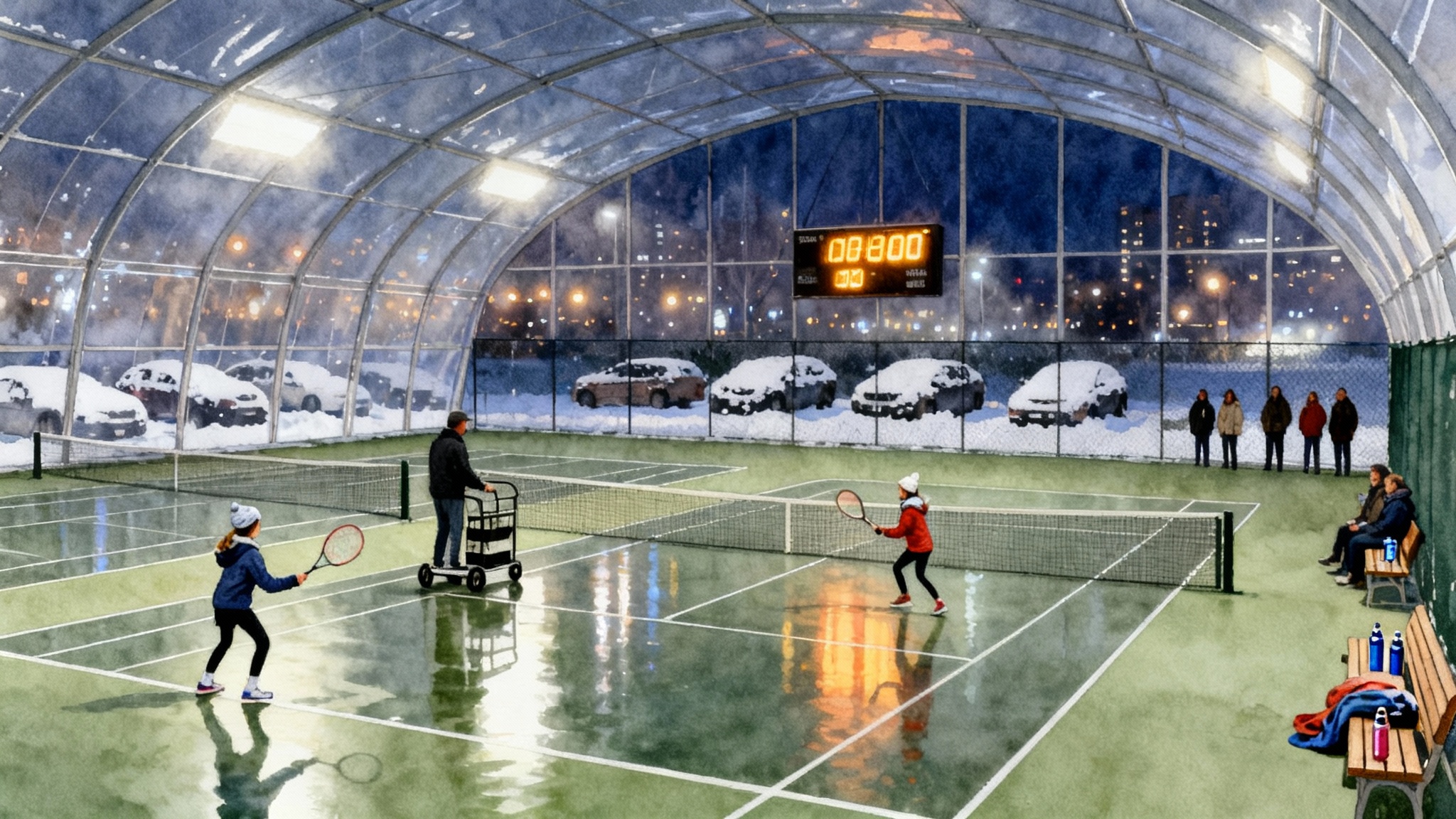
The Tri‑City cluster offers one of the country’s largest concentrations of outdoor clay, framed by forest and the Baltic coast. Clubs here host national events and have a tradition of staging important matches. Winter training relies on domes or halls, typically from October to April, and summer brings long clay blocks with high match density within a short drive.
Who thrives here: Clay‑first players and families who value a coastal environment with many clubs and camps to choose from. Summer is especially dense with camps, which makes the Tri‑City a good seasonal base for match accumulation.
Practical notes for winter 2025–2026: Reserve indoor blocks early. Ask each club about the exact indoor count, the cost differential for peak hours after school, and whether they guarantee same‑coach continuity for squad groups through the whole winter.
Year‑round indoor access: how the cities compare
- Warsaw region: Highest reliability for winter training due to large indoor inventories across multiple venues, including Kozerki’s campus setup. For December through March, you can expect most high‑performance hours to be indoors with minimal weather disruption.
- Kraków: Good access via mixed municipal and private halls. Peak hour demand is strong, so lock your winter schedule early. Schools are accustomed to flexible timetables for student‑athletes.
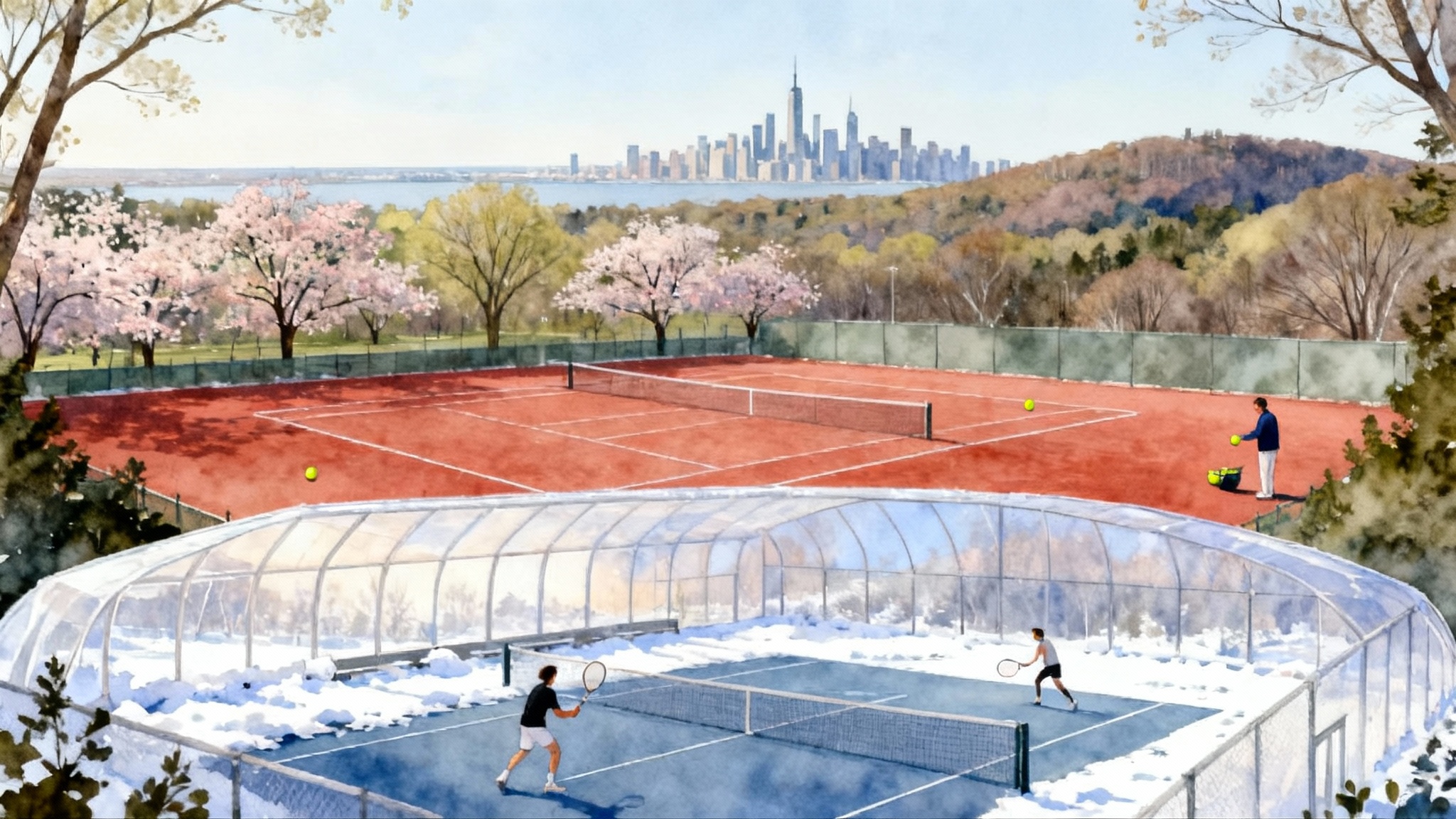
- Tri‑City: Solid, but more seasonal. Plan to be indoors October to April. From May to September, the clay season is long and productive, and travel between Gdańsk, Sopot, and Gdynia is quick for daily matchplay.
Clay‑court blocks and match building
Clay time is plentiful in all three hubs from late spring through summer. Parents should think in four‑week blocks that progress from volume and patterns, to pressure sets, and finally to tournament entries. For a junior stepping from regional to national competition, structure a June fundamentals block, a July pressure block with two weekend events, and an August peak around a local ITF Juniors or senior entry week if the ranking fits. The national federation calendar and the international summer swing make this sequencing straightforward in Poland.
Boarding and schooling options
- Kozerki: On‑site hotel with sports packages, recovery, and food service. This is the simplest boarding choice because it sits within the campus footprint. For full‑year schooling, coordinate with Warsaw‑area international schools; commutes are manageable with a driver or train plus short transfers.
- Warsaw city clubs: City apartments or homestays near the club. International schools are plentiful; ask programs how they integrate day schedules with training times.
- Kraków and Tri‑City: Boarding is usually apartment or vetted homestay rather than on‑site dorms. Ask for references from international families and confirm adult supervision, airport transfer routines, and who handles tournament chaperoning.
Due diligence checklist:
- Coach‑to‑athlete ratio in squad blocks and whether the same coach handles match coaching.
- Who manages injury prevention and load: daily monitoring, pre‑hab, and physio referrals.
- Academic coordination and language support for non‑Polish speakers.
- Safeguarding policy, background checks, and who is the 24‑hour contact person.
Costs: build a realistic 12‑month budget
Think in categories rather than a single monthly fee.
- Training and courts
- Squad programs: priced by term or month; bundles are better value than ad‑hoc lessons.
- Private lessons: often 150 to 220 PLN per hour in major cities for off‑program bookings. Academy player rates may be lower when pre‑purchased in packs.
- Indoor premium: winter dome or hall time often carries a higher rate than outdoor clay. Ask if your fees include indoor court rental or if it is billed separately.
- Physical preparation and care
- Strength and conditioning: one to three sessions weekly. Plan for several hundred PLN per week during high load.
- Physiotherapy: include a preventive visit every two to four weeks during tournament blocks.
- Competition
- National and international entry fees, match coaching, and travel. Many families stack three events in four weeks over summer; budget transport, shared lodging, and a per‑diem for the coach during travel weeks.
- Lodging and schooling
- On‑site hotel or apartment rental, plus meals. Confirm whether athlete menus and recovery access are included.
Two questions that lower surprises:
- What happens to training hours when the player competes Friday through Sunday. Can you shift the week or add recovery on Monday.
- Does the academy include coach presence at national events, or is it billed only when requested.
UTR and ITF pathways that actually work
- Under 14: Aim for frequent national federation events and club matchplay to stabilize UTR. Use UTR only as a guide for weekly progress, not as the selection tool.
- Ages 15 to 16: Blend national events with selected ITF Juniors. Choose draws where a first or second round win is realistic. If the home week is too strong, enter a regional event the same weekend.
- Ages 16 to 18: Add senior entries strategically, including qualifying at W15 or M15 events that Poland hosts in summer. This complements juniors with pressure reps and adult pace. The summer pro weeks cluster to make this feasible without costly travel.
Coaches in Warsaw, Kraków, and the Tri‑City understand this staircase. The key is honest placement. Ask the academy to present a 12‑month tournament map with “A, B, C” priorities and a green-yellow-red risk score for each event.
Admissions timeline for 2025–2026
Use absolute dates so airline prices and indoor bookings do not catch you out.
- January to March 2025: Initial outreach. Send match clips, a verified UTR link if you have one, a summary of injuries, and school constraints. Ask for a proposed trial week.
- April to June 2025: Trial weeks in Poland. Target late April or May for Warsaw and Kraków, and late May or June for the Tri‑City as domes come down and clay expands. Reserve indoor winter slots for 2025–2026 by early June if the academy offers pre‑booking.
- July to September 2025: Summer blocks and first tournament stack. Use July for volume and August for pressure events. If you plan a full‑year move, arrive by the last week of August to settle before school starts in early September.
- October 2025 to March 2026: Winter cycle under domes or halls. Reassess the plan after the New Year and book a late February or March mini‑peak for an indoor event.
- April to June 2026: Transition back outdoors, tune movement patterns, and confirm summer tournament entries by early May 2026.
Paperwork triggers:
- School enrollment for 2025–2026 usually opens March to May 2025. International schools in Warsaw fill quickly.
- Guardianship arrangements for minors must be documented before the student boards a flight for a full‑year placement.
Travel and visa notes for EU and international families
Poland is in the Schengen Area, so the 90 days in any 180 days rule applies to visa‑exempt travelers. Since October 12, 2025, the European Union has begun operating the Entry and Exit System that registers non‑EU travelers’ border movements. The rollout runs through April 10, 2026, and replaces manual passport stamps with electronic records. For specifics, see the European Commission’s summary of EES start and rollout details.
What this means in practice in 2026:
- Track your 90 days used across all Schengen countries. Entry and exit days count as full days.
- Expect a one‑time biometric capture on first entry once EES is active at your entry point. Subsequent trips are faster.
- Long stays beyond 90 days require a national visa or residence permit. Families pursuing a full school year should contact the nearest Polish consulate well in advance.
About ETIAS: The European Union has announced that ETIAS, a pre‑travel authorization for visa‑exempt visitors, is scheduled to start in the last quarter of 2026. As of December 29, 2025, no ETIAS is required to enter Poland. Plan to apply once the official system goes live and follow the European Commission’s announcements through 2026.
Smart logistics:
- Airports: Warsaw Chopin for Kozerki and city clubs; Kraków John Paul II for Kraków programs; Gdańsk Lech Wałęsa for the Tri‑City. Domestic rail between these cities is frequent and comfortable.
- Health insurance: Bring proof of coverage accepted in Poland. Ask the academy whether they require a specific policy.
- Equipment: Clay eats through shoes. Budget two pairs for summer blocks and rotate them.
How to choose between Warsaw, Kraków, and the Tri‑City
- Choose Kozerki or a central Warsaw club if you want maximal indoor reliability and a dense pool of hitters year round.
- Choose Kraków if the family wants strong academics, excellent value on indoor court time, and a balanced training week that fits school windows.
- Choose the Tri‑City if summer clay volume and a coastal environment top your list, and you are happy to plan winter training carefully under domes.
If you are comparing other European bases, these guides can help: Germany academies 2025–2026 guide and Croatia vs Spain academies.
Parent action items:
- Ask every academy for a written, itemized plan with weekly hours, coach names, and the competition calendar mapped month by month.
- Run a two‑week trial in spring 2025 or late summer 2025 that includes a tournament weekend. Treat it as an audition on both sides.
- Lock winter 2025–2026 indoor hours by early September 2025 and add a mid‑winter review date to re‑aim the plan.
Bottom line
Poland gives junior players a rare blend of affordability, clay‑court schooling, and reliable winter training. Tenis Kozerki is the simplest all‑in campus near Warsaw for families who want everything under one roof. Kraków rewards careful scheduling with strong academics and steady progress. The Tri‑City delivers long summer clay blocks and a deep club culture. Start early, plan in clear blocks, and treat the calendar as your fourth coach. If you do, Poland’s 2025–2026 season can be the year your player builds match‑proof skills, not just pretty practice habits.