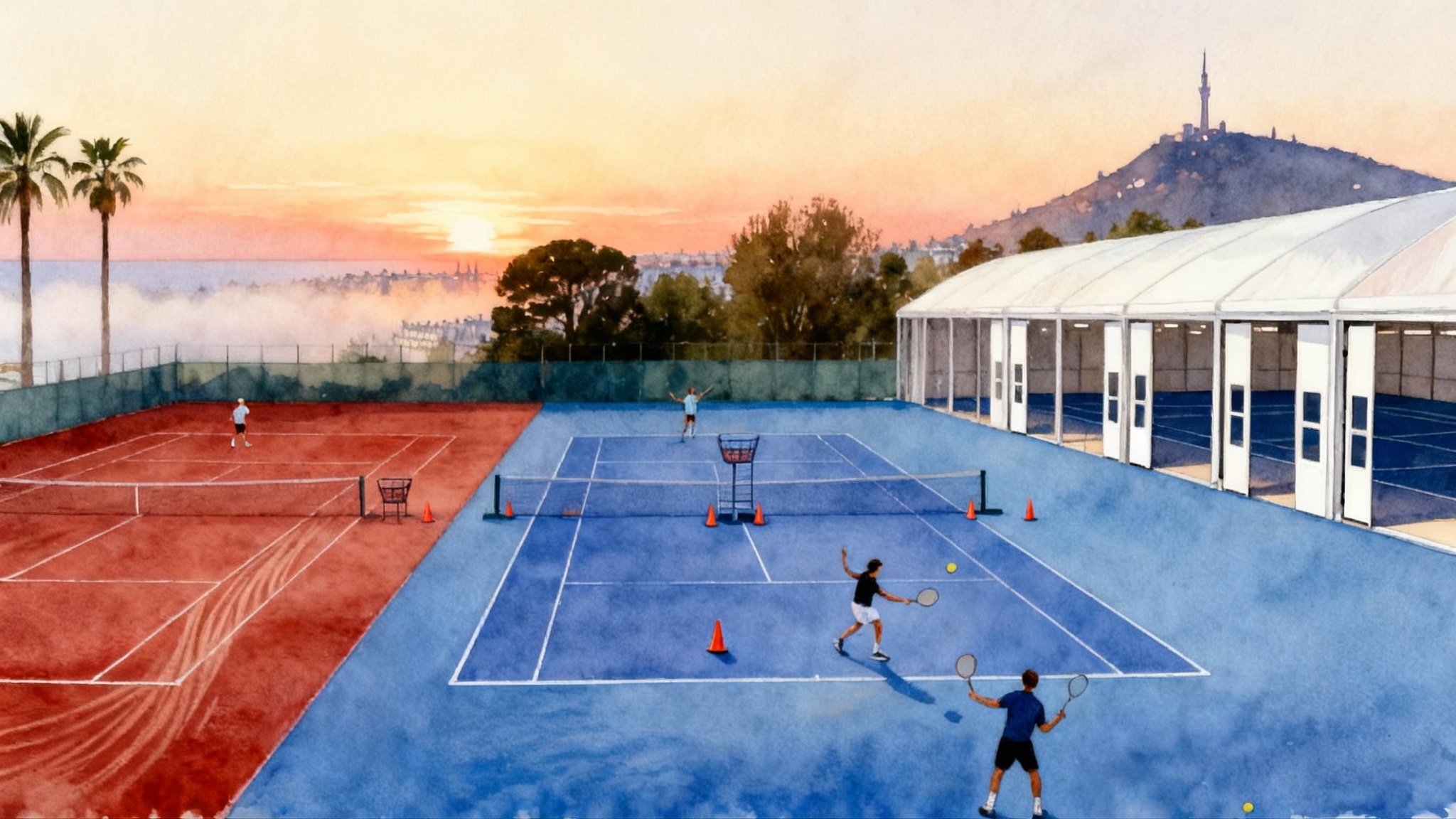
Best Tennis Academies in the Canary Islands 2025–2026
 Tommy
Tommy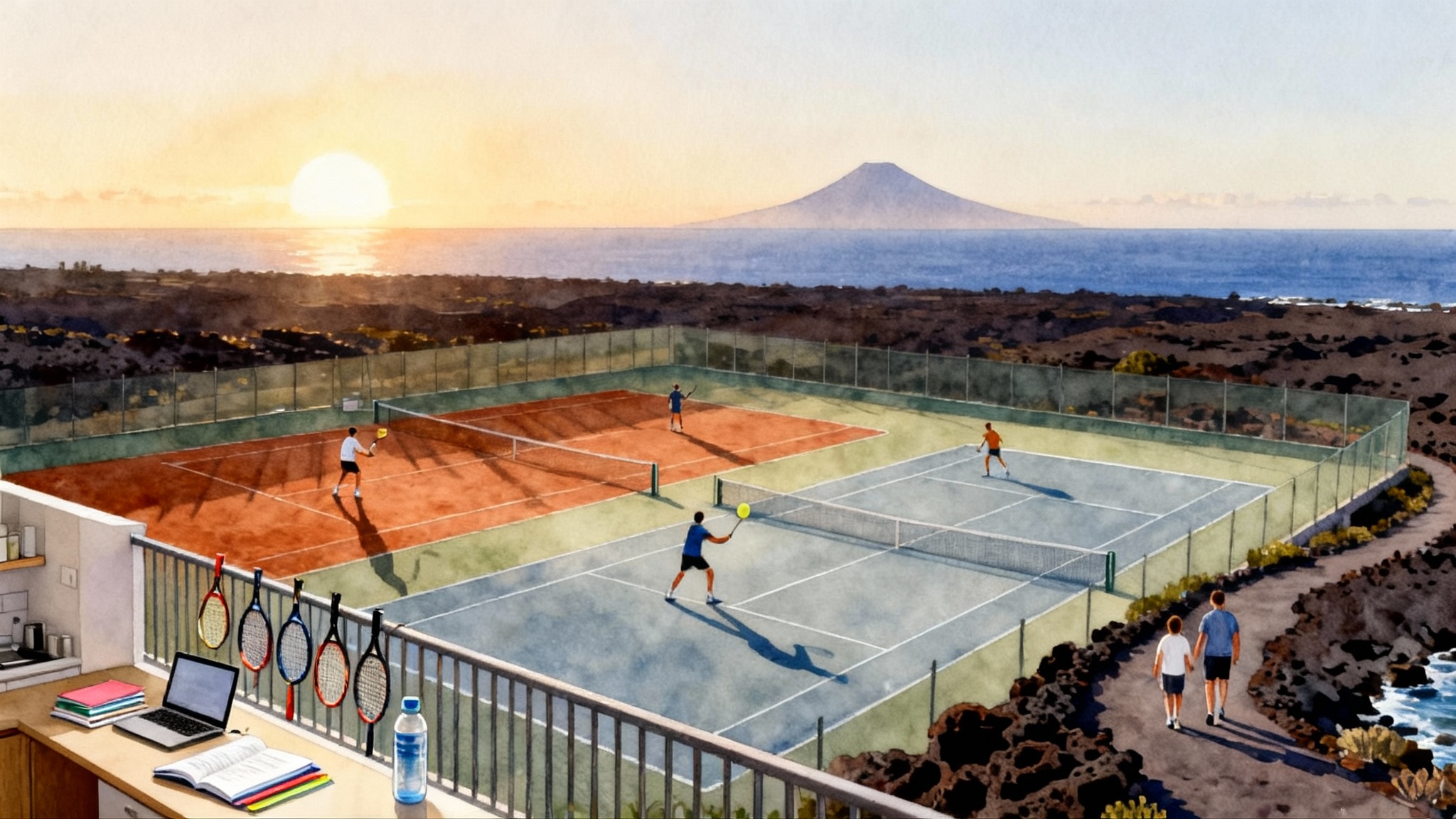
Why the Canary Islands are the smart winter-sun tennis choice
If you want reliable outdoor training between November 2025 and March 2026, the Canary Islands solve a problem that mainland Spain struggles with in winter: how to guarantee playable hours without paying for indoor courts or losing days to rain and cold. The subtropical latitude and steady trade winds mean mild temperatures and a high percentage of dry, sunny days. For players who need volume, that consistency turns into real value. More sessions finish on time. More ball striking. Fewer last-minute cancellations. Fewer wasted euros.
This guide compares leading academy options on Tenerife, Gran Canaria, and Lanzarote, with a feature review of Tenerife Tennis Academy, then lays out sample training weeks, realistic budgets, housing choices, and family-friendly itineraries. We also stack the islands head to head against mainland Spain so you can see where the hours and euros go.
Snapshot: which island fits your goals
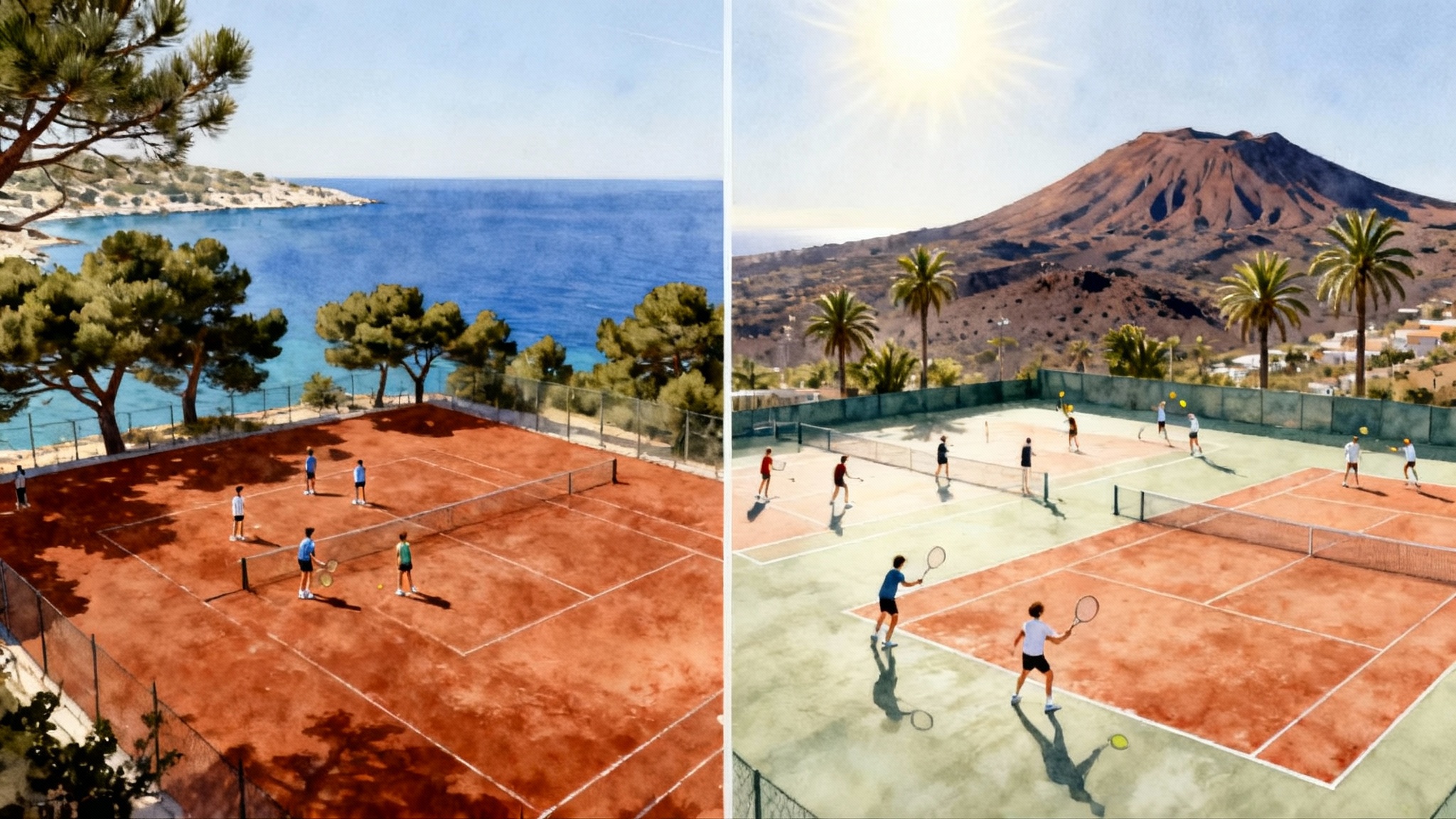
- Tenerife: Best all-round choice for families and serious juniors who want structured programs, dual-surface training, and convenient amenities. Diverse microclimates and a long coastline provide cool mornings for work and warm afternoons for recovery.
- Gran Canaria: Strong option for adults who want a balanced week of tennis and beach time, plus good value apartments near resort clusters. The south is sunnier in winter while the north offers a livelier city base in Las Palmas.
- Lanzarote: A quieter, windswept training base with dramatic volcanic scenery, ideal for focused camps and cross-training. Great for riders and runners in the family who want coastal paths and national park hikes.
Use our on-site filters to compare specific programs by surface, price, and weekly hours.
Feature review: Tenerife Tennis Academy
Tenerife Tennis Academy stands out for three reasons that matter in winter: surfaces, academics, and scheduling discipline. Preview programs, dates, and housing partners on the Tenerife Tennis Academy profile.
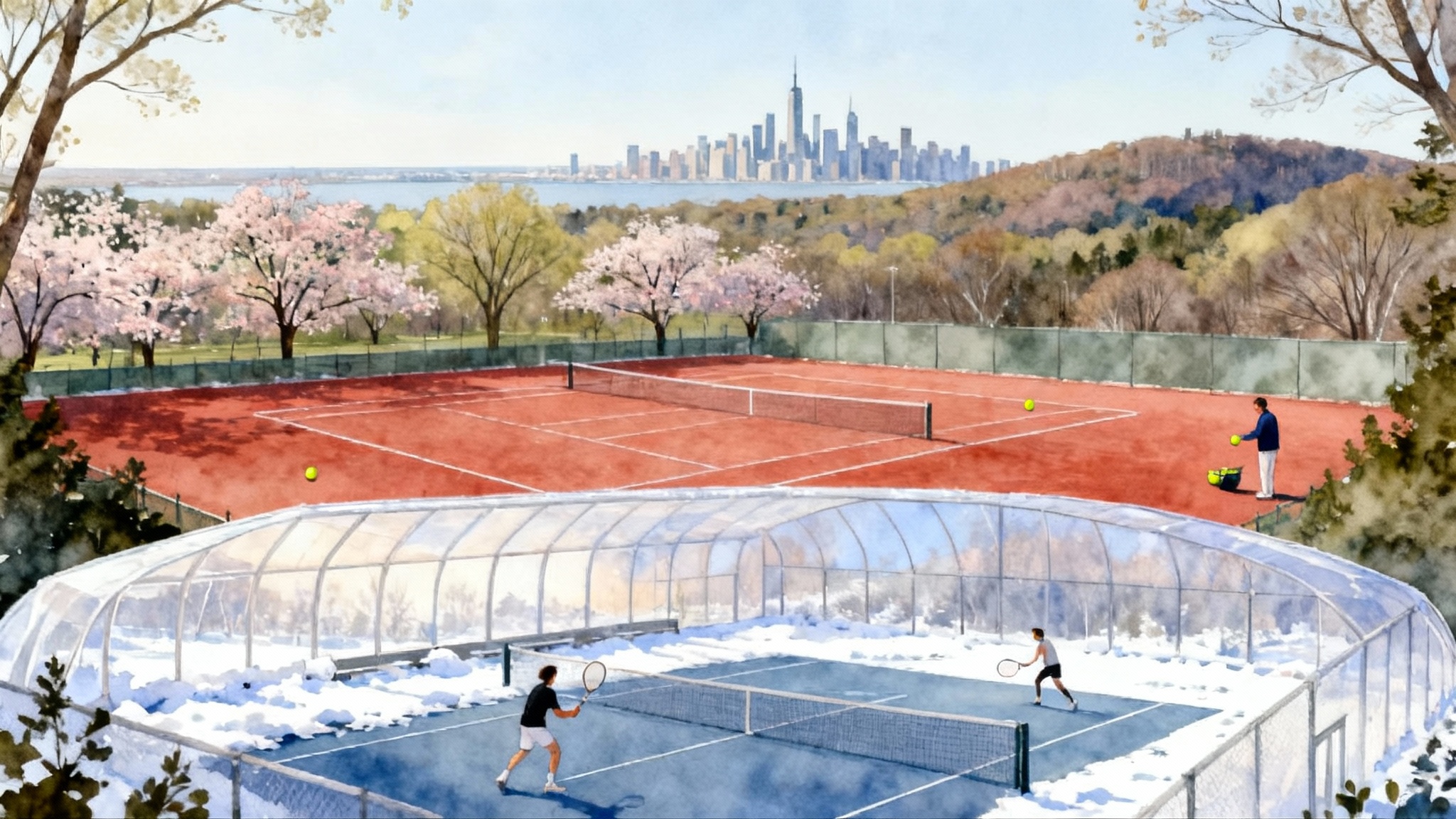
- Dual-surface setup: Train on both clay and hard courts in the same week. Coaches can program clay for footwork and point construction, then switch to hard courts for pace, serve patterns, and returns. This mix helps juniors who compete across surfaces and adults who want balanced skill transfer. Switching surfaces within one facility means no time lost driving.
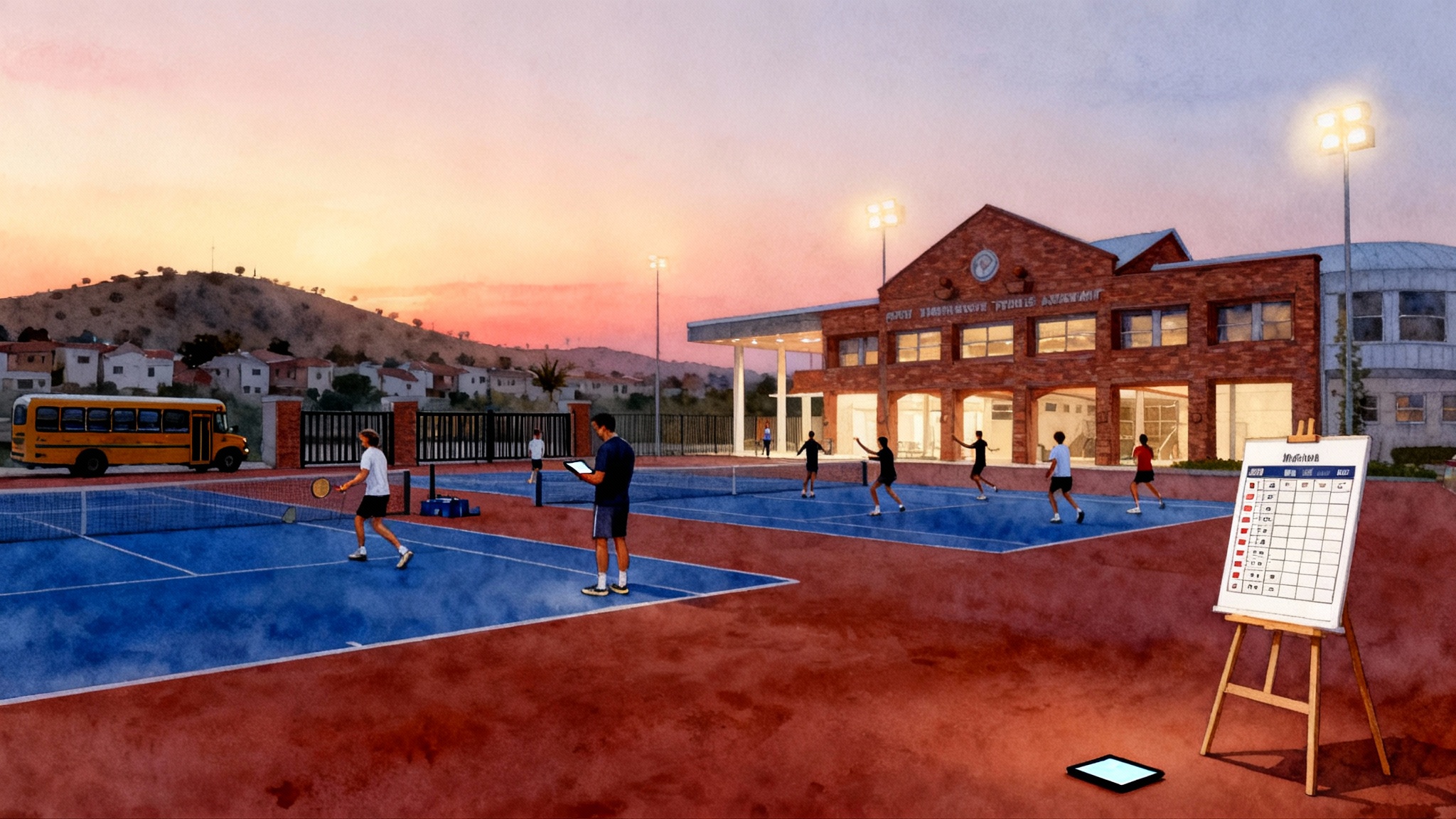
- In-house academics: Full-time juniors can stay on track with school. The academy runs structured study blocks with supervised homework spaces and exam support. Many student athletes use accredited online schools, and staff help coordinate timetables, progress checkpoints, and proctored assessments. Design beats decoration: study happens next to the courts, breaks match practice windows, and quiet hours are enforced.
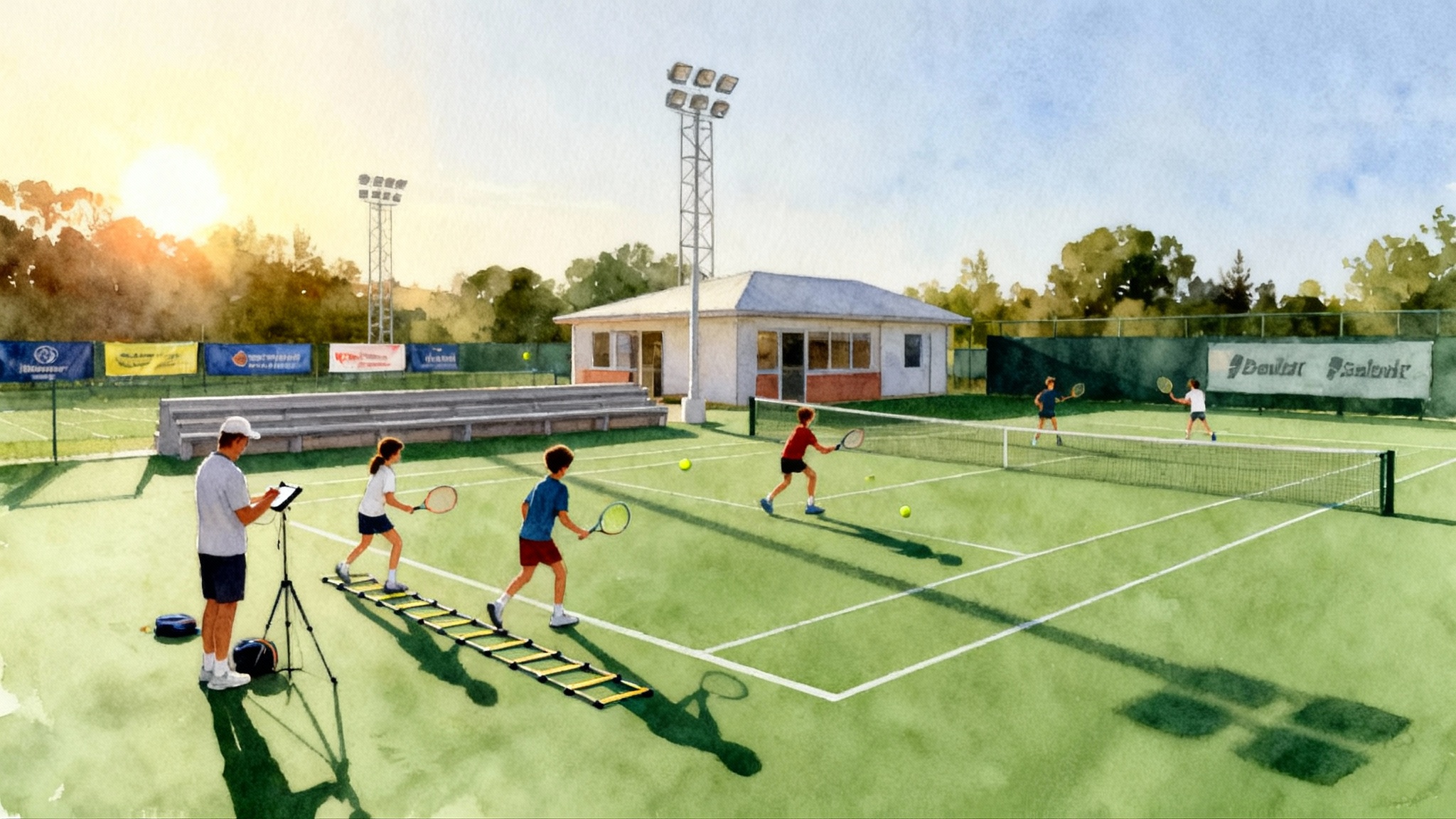
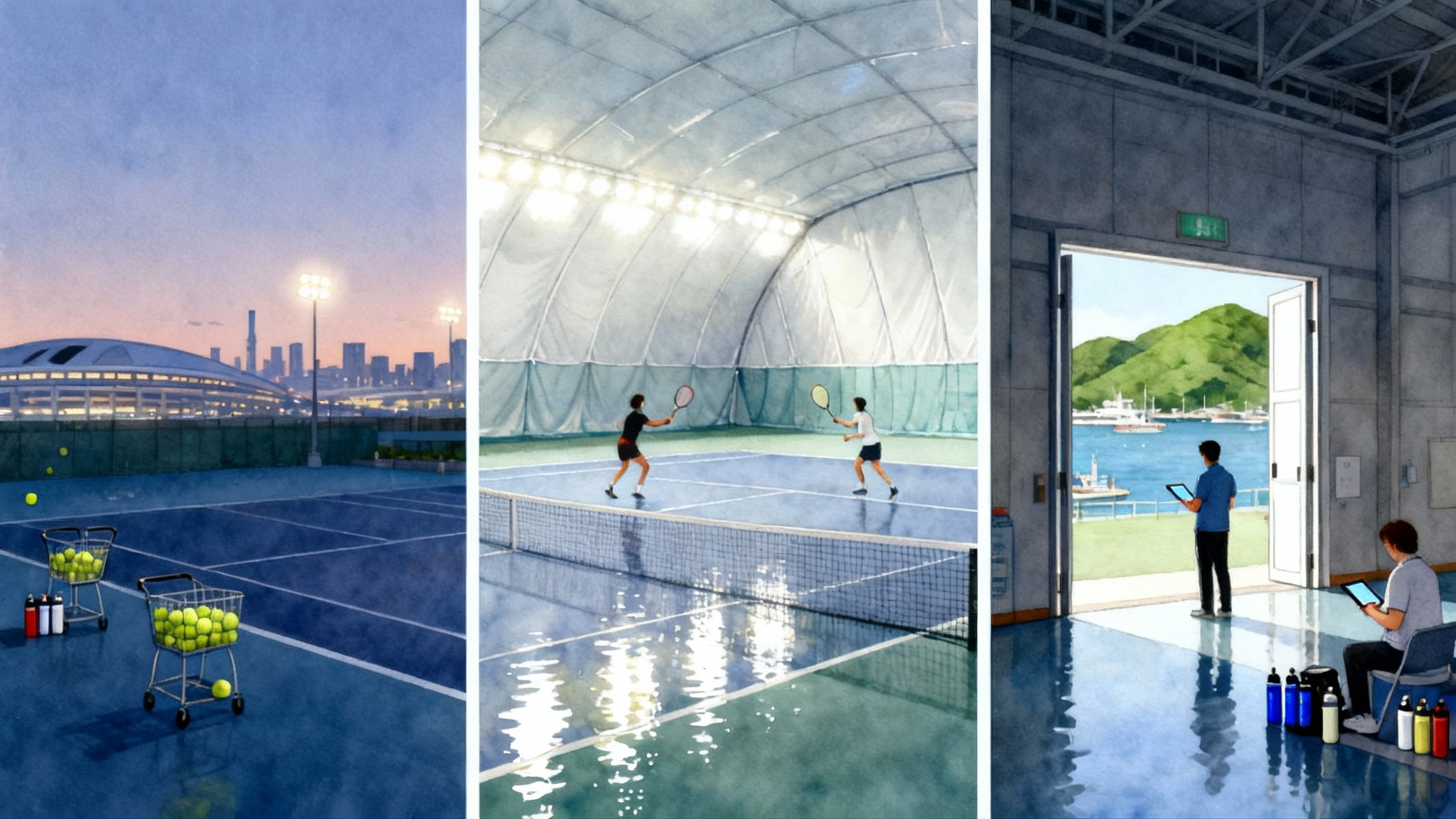
- Consistent weather planning: The daily schedule stacks high-intensity court work in the morning, tactical sessions and video review after lunch, and finishes with fitness or match play while the sun is lower. On marginal days, staff call court squeegees early and move groups to hard courts that dry faster. Players do not sit around hoping. They keep the day moving.
Typical program structure at Tenerife Tennis Academy
- Morning block: Technical themes and live ball repetitions. Serve plus one patterns, return development, and basket-fed footwork to groove spacing.
- Midday: Tactics and video. Short, specific clips from your morning rallies to diagnose spacing, spin choice, and court position.
- Afternoon: Match play or point-based games. Transition games, crosscourt to down-the-line switches, and pressure drills that force clean racket head speed.
- Fitness: Injury-preventive strength for juniors, mobility and shoulder care for adults, and smart conditioning that respects total weekly load.
Families appreciate the campus-like layout and the walkable radius to apartments and supermarkets.
How the islands compare with mainland Spain in winter
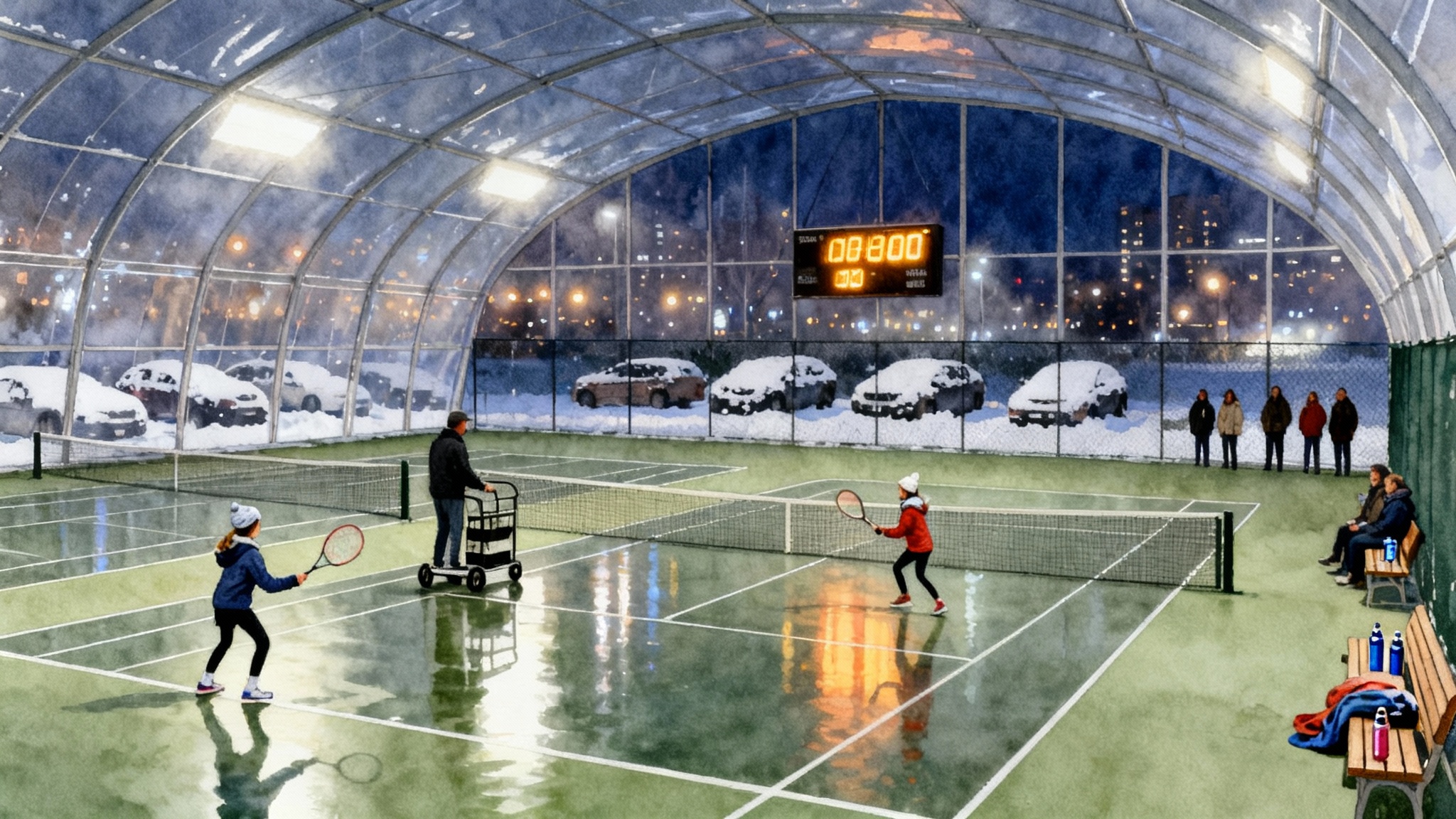
The question is not only price on paper. It is price per completed hour. Mainland Spain offers strong academies in Barcelona, Valencia, Mallorca, and Marbella. In winter, you often need indoor courts for guaranteed sessions, which cost more and book out during peak hours. Outdoor days run shorter and colder, which can reduce session quality for touch work and serve rhythm.
On the islands, you tend to complete more of what you schedule. Simple math shows why that matters.
- Example mainland week: You book 5 days of two-hour group sessions. Rain or wind cancels one day and cuts two others. You complete roughly 6 to 7 hours of quality court time.
- Example Canary Islands week: You book the same plan. You complete 9 to 10 hours because the weather holds and the courts dry quickly after a passing shower.
For a broader continental perspective, see our Croatia vs Spain academy comparison.
What a good value week looks like
Below are sample weeks with prices shown as ballpark ranges. Treat these as planning anchors. Actual quotes change with season, lead time, and availability.
Juniors, Tenerife, seven nights
- Training: 5 group days at two hours per day, plus two match play sessions. 380 to 520 euros.
- Fitness and recovery: Three structured sessions, mobility and shoulder care. Often included, or 40 to 70 euros total if add-on.
- Private lesson: Two sessions at 45 minutes. 90 to 140 euros total.
- Housing: Shared academy residence or host family, half board. 350 to 520 euros.
- Meals not included: 70 to 120 euros.
- Local transport: Shared shuttle or public bus. 25 to 45 euros.
- Total typical: 915 to 1,345 euros.
Adults, Gran Canaria, seven nights
- Training: 5 morning clinics at 90 minutes, plus three evening match play socials. 290 to 420 euros.
- Private lesson: One 60 minute tune-up. 50 to 80 euros.
- Housing: Self-catering apartment near the courts. 420 to 700 euros depending on location and season.
- Meals and groceries: 120 to 180 euros.
- Local transport: Small car for five days or bus pass. 65 to 140 euros.
- Total typical: 945 to 1,520 euros.
Focused camp, Lanzarote, five nights
- Training: Four days at two hours plus two private sessions. 360 to 520 euros.
- Housing: Boutique aparthotel near the coast. 300 to 560 euros.
- Meals: 100 to 160 euros.
- Transport: Car two to three days for national park visits. 45 to 110 euros.
- Total typical: 805 to 1,350 euros.
These ranges assume shoulder season winter pricing and moderate lead times. Book earlier for late December and early January.
Housing options that work in winter
- Academy residence: Best for juniors who need supervision, structure, and quick walks to courts. Ask about room configuration, study hours, laundry, and weekend supervision.
- Host family: Adds language immersion and home cooking. Good for responsible teens. Confirm rules about evening curfew and weekend activities.
- Self-catering apartments: Ideal for families and adult players. Kitchens reduce dining costs. Look for locations within a 10 to 20 minute walk to courts or near reliable bus lines.
- Family resorts: Handy for younger siblings. Choose ones with quiet zones or kids clubs so training and rest do not clash with pool noise.
Pro tip: Bring a small clothesline and a few strong clips. Volcanic breezes dry gear fast on a balcony and keep the room from smelling like a locker.
Island by island: programs and neighborhoods
Tenerife
- Where to base: The southwest corridor for the sunniest winter, from Costa Adeje to Los Cristianos. Families like short walks to beaches and supermarkets. For a cooler base and greener views, the north around Puerto de la Cruz has a classic Canary feel.
- Court surfaces: Wide availability of both clay and hard courts near major resort zones. Tenerife Tennis Academy uses both, so you can divide your week by theme.
- Who thrives here: Families with mixed levels, juniors who need academics, and adults who want dual-surface skills.
- Non-tennis days: Mount Teide for sunrise or a guided stargazing night, coastal walks in La Caleta, and a day at a water park for recovery and family smiles.
Explore details and weekly options on the Tenerife Tennis Academy profile.
Gran Canaria
- Where to base: The south around Maspalomas and Meloneras for winter sun, or Las Palmas for a city vibe with surf, promenades, and restaurants. The island’s ring road makes cross-island trips simple.
- Court surfaces: Mostly hard courts around resorts, with some clay in club settings. Check lighting and wind shielding if evening play matters to you.
- Who thrives here: Adults and mixed groups that want clinics in the morning and relaxed afternoons, plus easy apartment living.
- Non-tennis days: Sand dunes at Maspalomas, a walk to Roque Nublo, and a tapas evening in the old quarter of Vegueta.
Lanzarote
- Where to base: Playa Blanca and Costa Teguise for access to courts and calm beaches. The island’s stark volcanic beauty makes recovery walks memorable.
- Court surfaces: Mostly hard courts. Wind can pick up in the afternoon, so schedule precision work early.
- Who thrives here: Players who want a quiet base, focused training blocks, and strong cross-training options like cycling or coastal runs.
- Non-tennis days: Timanfaya National Park, lava tubes and caves, and a coastal bike path with coffee stops.
Sample daily schedules you can copy
Juniors, two-a-day structure (Monday to Friday)
- 07:30 Breakfast and mobility
- 08:30 Court session 1: Footwork ladders, contact point spacing, live crosscourt patterns
- 10:30 Snack and review: Two clips reviewed with a coach, one practice goal written down
- 11:00 Study block: Schoolwork, language practice, or reading
- 13:00 Lunch and rest
- 15:30 Court session 2: Serve and return, pattern play, tie-break sets
- 17:30 Strength and conditioning: Hips, scapular stability, and landing mechanics
- 19:00 Dinner and recovery walk
- 20:00 Homework and lights out
Adults, one main session with optional add-ons
- 08:00 Warm up, band work, dynamic mobility
- 09:00 Clinic: Theme of the day such as neutral ball depth or second serve patterns
- 10:30 Coffee and notes: Write one swing thought, one footwork cue
- 12:00 Optional private: Video serve tune-up or return rhythm session
- 15:30 Match play: Rotating partners, short sets, one constraint per set
- 18:00 Stretch, beach walk, early dinner
Why this structure works in winter: mornings are cooler and calmer for technique, afternoons are better for point play and fitness. Study blocks placed before lunch let juniors get academics done while alert and free the late afternoon for match play.
How to pick the right academy in three steps
-
Start with the problem you want to solve. Juniors who spray forehands under pressure need patterned live ball work on clay and specific footwork language. Adults who miss short returns need a week that front-loads return reps and targets upper body sequencing.
-
Select surface and schedule before price. Surfaces shape shot selection and confidence. If your season includes clay, pick a week with at least half of your sessions on clay. If you play fast hard court leagues, split time and add extra return work on hard courts.
-
Confirm logistics in writing. Ask for a written weekly plan, coach ratios, and what happens when the weather wobbles. Good academies tell you who moves indoors, who shifts times, and who gets priority for video analysis.
If you want a warm US alternative, browse our Florida junior academies guide.
Budgeting for the islands: where the money goes
- Training: The core spend. Prioritize coach ratio over extras. A 1 to 4 coach-to-player ratio beats a crowded court with free T shirts. Ask whether balls are changed midweek and how match play is organized.
- Housing: Apartments save families money through cooking. Residences and host families save time and mental load for juniors.
- Transport: South Tenerife and south Gran Canaria work well with buses and rideshares. Lanzarote often benefits from a car for national park visits.
- Food: Supermarkets carry fresh produce and good dairy. Plan simple breakfasts and recovery snacks so the on-court window stays the main event.
Price trap to avoid: Bargain group sessions that become 1 to 8 or 1 to 10 ratios when the week gets busy. Ask how the academy caps numbers and how courts are allocated during peak holiday weeks.
Family itineraries that pair well with training
Tenerife, three-day add-on
- Day 1: Morning at the academy, lunch in La Caleta, tide pool walk and an early swim.
- Day 2: Cable car to Mount Teide or a guided stargazing night. Light morning hit only, then full rest.
- Day 3: Whale watching from Costa Adeje, sunset along the promenade, gelato reward for match winners.
Gran Canaria, long weekend
- Day 1: Tennis in the morning, Maspalomas dunes in the afternoon, dinner in Meloneras.
- Day 2: Drive to Roque Nublo for a short hike and island views. Stop in the mountain towns for coffee.
- Day 3: City day in Las Palmas, promenade walk at Las Canteras, tapas in Vegueta.
Lanzarote, two easy days
- Day 1: Tennis then Timanfaya National Park. Watch the geothermal demos and eat early.
- Day 2: Morning coastal cycle or run while players rest, afternoon swim at a sheltered beach.
Keep training days sacred. Stack excursions on rest days or after lighter technical mornings so you do not dilute the quality of point play sessions.
Travel logistics that reduce friction
- Airports: Each island has a main gateway near resort corridors. Choose flights that arrive by mid afternoon so you can settle, shop, and sleep before day one. Ask the academy about transfer partners and meeting points.
- Packing list: Grippy hard court shoes and a clay pair if you plan to train on both. A light jacket for evenings, two hats, sunscreen, resistance bands, a mini foam roller, and spare overgrips. Add a thin rain jacket for short showers and a few laundry pods for apartment stays.
- Health and recovery: Sun is a gift and a load. Plan electrolytes, a simple magnesium routine, and early dinners. The ocean is your free ice bath. Ten minutes at chest depth after afternoon matches is enough.
Mainland or islands: a direct value call
Pick the Canary Islands if your priority is volume of completed outdoor sessions and simple family logistics. Pick mainland Spain if you want access to a dense weekend tournament calendar and do not mind some indoor bookings or colder outdoor windows. Many families do a hybrid plan. Two winter weeks in the Canaries to build base skills and confidence, then a spring week on the mainland to bridge into clay season tournaments.
Final checklist before you book
- Confirm surfaces and ratios for the exact week you want
- Ask for a written weekly plan with session themes and match play windows
- Book cancellable housing and flights that arrive before dinner
- Align study hours with training blocks if you are a full-time junior
- Decide on one private lesson focus and pre-send match clips
- Reserve rest days and family trips so tennis wins the mornings
Conclusion: make your winter work for you
Winter training is a simple equation. More completed quality hours produce better timing, cleaner decision making, and calmer match play. The Canary Islands give you those hours with minimal fuss, friendly prices, and a family setting that keeps everyone happy. Tenerife anchors the region with dual-surface training and in-house academics for juniors. Gran Canaria and Lanzarote complete the picture with flexible adult programs and quieter focused camps. Decide the problem you want to solve, shape your week around that problem, and let the islands’ consistency do the rest.