Best Southeast Tennis Academies 2025–2026: GA, NC, SC, TN, AL
 Tommy
Tommy
How to use this guide
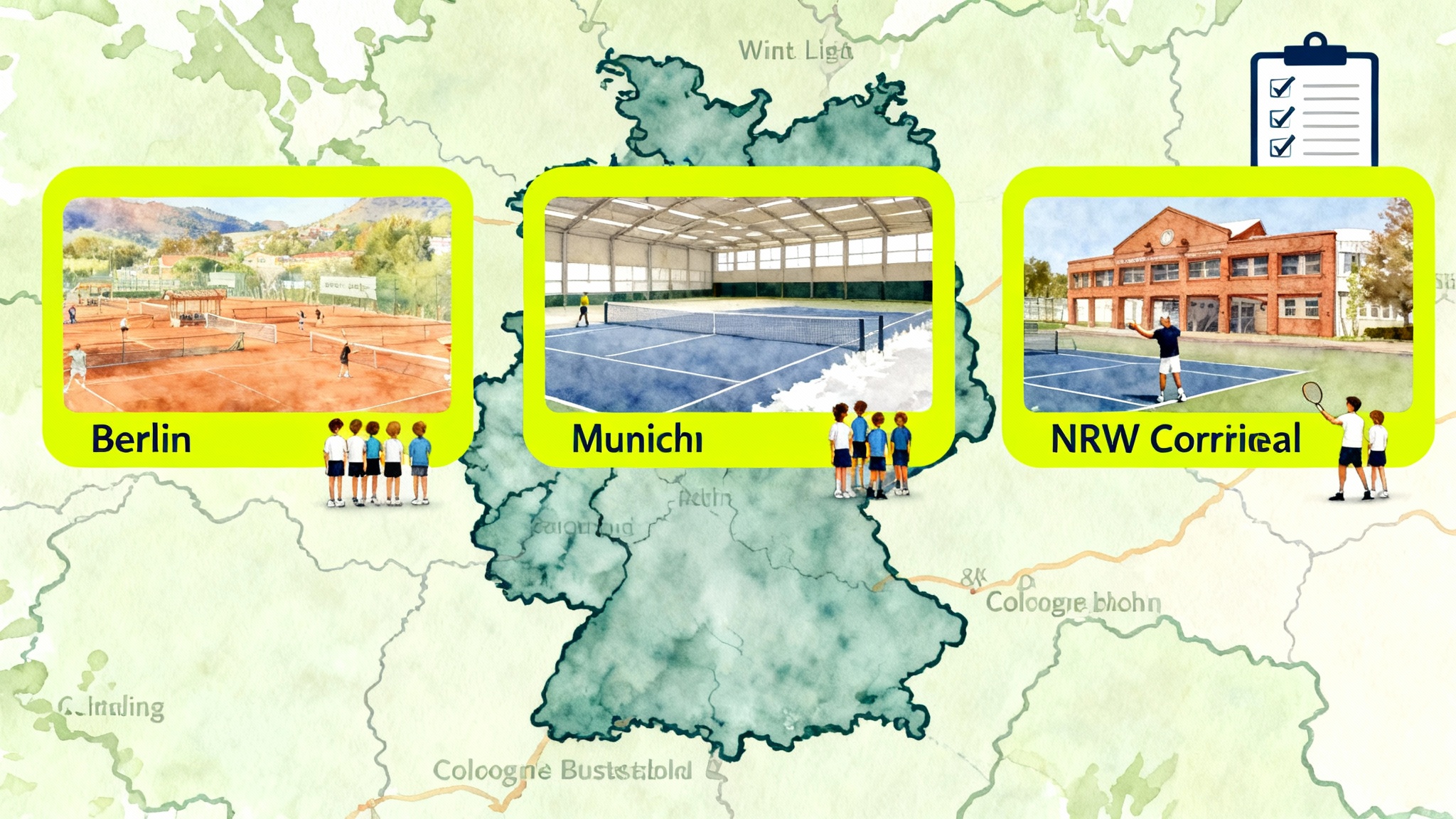
You asked for a practical, parent-first comparison of the best non-Florida tennis academies in the Southeast. We focused on the metros where families can combine strong training with dense match play and reasonable logistics: Atlanta, Charlotte and Raleigh, Charleston and Hilton Head Island, Nashville and Chattanooga, and Birmingham and Mobile. Each section below explains what to expect for day academies versus boarding options, typical monthly costs, surface access, match-play density, integrated academics, and how to handle travel. If Florida is in play for your family, compare options using our Florida tennis academies guide.
Two quick notes before you dive in:
- Prices change. Treat the numbers here as realistic ranges to start conversations with each program.
- Ratings and match play matter. If your player uses Universal Tennis Rating to gauge progress, read how UTR is calculated.
The five levers that matter
Think of your academy decision as five levers you can move up or down. The sweet spot depends on age, ambition, and your family’s calendar.
- Day academy vs boarding
- Day academies are best when you live within 30–45 minutes of courts that offer daily training and frequent weekend tournaments.
- Boarding makes sense if your player needs a denser peer group, lives far from strong training, or travels often. Most boarding solutions in this region sit in South Carolina and Tennessee, with a few day-school plus housing hybrids.
- Monthly costs to expect
- Day academies: for 3–5 weekly sessions plus fitness, expect 600 to 1,500 dollars per month. Elite add-ons like private lessons, video analysis, and travel coaching can raise that to 1,800 to 2,400 dollars in heavy blocks.
- Boarding: when tuition, housing, meals, academics, and coaching are bundled, families typically budget 3,500 to 6,500 dollars per month during the school year, plus tournament travel.
- Clay vs hard-court access
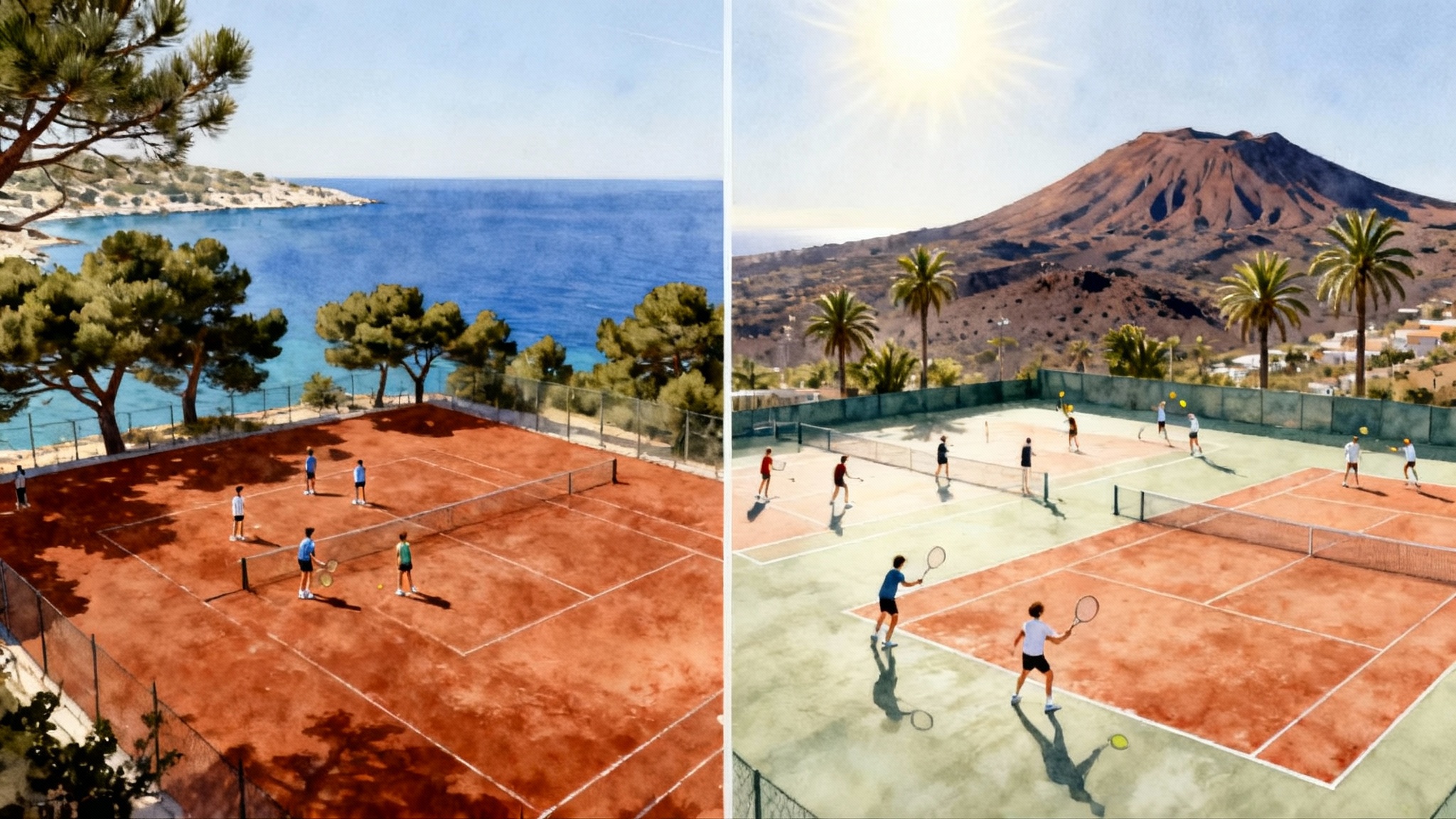
- College and tour schedules reward versatility. A weekly mix of green clay and hard courts develops patience, patterns, and points tolerance. In this region, Atlanta, Charleston, Hilton Head, and Birmingham offer abundant clay; Raleigh, Nashville, and Charlotte have reliable hard-court volume with spot clay.
- UTR and USTA match-play density
- Plan on one rated event every 2–4 weeks. Urban hubs make this easier. In this region, the heaviest calendars usually sit around Atlanta, Raleigh–Cary, Charleston, Chattanooga, and Mobile.
- When you plan your calendar, use the USTA portal to search USTA junior tournaments. Build a six-month block with at least one event per month and a heavier two-event block ahead of key ranking deadlines.
- Integrated academics
- Younger players can thrive in strong local schools with late-afternoon training. By middle school and especially high school, look at hybrid models: brick-and-mortar mornings plus academy afternoons, or accredited online coursework supervised on campus by tutors.
Metro snapshots: what it feels like on the ground
Atlanta, Georgia
- Day-academy depth: Atlanta is one of the densest junior ecosystems in the United States. Families can find true high-performance groups at multiple public centers and clubs inside the perimeter and in the northern suburbs. Agape at Bitsy Grant, Blackburn, and Chastain are common anchors. Club-embedded models like the Life Time Tennis Academy profile can offer year-round consistency.
- Surfaces: excellent mix. Bitsy Grant has public clay and hard; multiple other centers offer both.
- Typical monthly day-academy spend: 700 to 1,500 dollars for 3–5 weekly sessions plus fitness; add 300 to 1,200 dollars for privates, stringing, and event fees.
- Match play: very dense USTA and UTR calendars within a 60-minute radius, so travel costs stay modest.
- Travel logistics: Hartsfield–Jackson makes regional and national tournament weekends simple, which matters for 16U and 18U college-track players.
Shortlist to tour:
- A multi-site public-center program with high-performance tiers and clay access.
- A northern suburban academy with strong weekday pods and weekend UTR blocks.
- A club-based program in a school-friendly time slot for 11–14s.
Charlotte and Raleigh–Cary, North Carolina
- Day-academy depth: Cary Tennis Park runs a well-structured academy ladder with clear entry standards by age and UTR, plus Select groups for college-bound players. If your player thrives with schedule clarity and on-site guidance for tournament planning, this kind of municipal-run, academy-style program is gold.
- Charlotte’s private academy scene is smaller but focused. Seek year-round high-performance groups that emphasize mental skills and match simulation.
- Surfaces: hard-court dominant with targeted clay options; indoor back-up exists for rain and winter.
- Typical monthly day-academy spend: 650 to 1,400 dollars for 3–5 weekly sessions and fitness; privates add 300 to 900 dollars depending on cadence.
- Match play: Raleigh–Cary is a tournament magnet, and Charlotte adds depth within two hours in every direction.
- Travel logistics: Charlotte Douglas and Raleigh–Durham airports keep flights short to national events.
Shortlist to tour:
- Cary Tennis Park academy groups that fit your player’s metrics and school schedule.
- A Charlotte high-performance program with proven 14–18 placement into college tennis.
Charleston and Hilton Head Island, South Carolina
- Day-academy depth: The Daniel Island complex in Charleston offers both clay and hard courts and hosts a major WTA event, which brings in coaching talent and seasonal match-play opportunities. It is a strong day-academy anchor if you want a clay-heavy week without boarding.
- Boarding options: Two of the Southeast’s best boarding pathways sit on Hilton Head. Van Der Meer runs full-time and camp tracks on island courts. Smith Stearns layers full-day and PM-only training with integrated academics through Hilton Head Preparatory School, which is useful for families seeking an on-island school day plus split-session training.
- Surfaces: abundant clay with hard-court access for speed calibration.
- Typical monthly spend: day academy 700 to 1,500 dollars; boarding packages 4,000 to 6,500 dollars depending on housing and school support.
- Match play: Charleston and Hilton Head offer steady weekend calendars within easy drives to Savannah, Columbia, and Augusta.
- Travel logistics: Charleston’s airport is small but efficient; Savannah and Jacksonville expand options.
Shortlist to tour:
- A Daniel Island high-performance block that includes weekly clay and hard.
- A Hilton Head boarding consult day that includes a school visit, fitness screening, and a live hit in the age-appropriate pod.
Nashville and Chattanooga, Tennessee
- Day-academy depth: Nashville’s Centennial Sportsplex anchors the public pathway with beginner through high-performance clinics, including a structured track for tournament-level players. Families often combine Sportsplex weekday reps with club privates and frequent local tournaments.
- Boarding options: Chattanooga’s historic college-prep schools operate robust tennis environments with multiple indoor and outdoor courts and summer boarding camps. For some families, this becomes a transitional step toward full boarding in grades 8–11.
- Surfaces: hard-court heavy; indoor access helps keep winter volume stable.
- Typical monthly spend: day academy 600 to 1,300 dollars; short-term boarding or supervised housing during camp or term blocks varies widely.
- Match play: Nashville and Chattanooga together create a reliable loop of USTA events and UTR match play within two hours of Knoxville and Atlanta.
- Travel logistics: Nashville International is a central hub; Chattanooga is an easy drive target for weekend events.
Shortlist to tour:
- A Sportsplex high-performance evaluation plus two weeks of trial sessions.
- A Chattanooga boarding-school hit and campus walk-through during a regular training afternoon.
Birmingham and Mobile, Alabama
- Day-academy depth: Pelham Racquet Club near Birmingham runs a tiered junior pathway through Intermediate and High Performance Academy groups. The facility’s 20 clay and 5 hard courts give juniors the kind of surface variety that builds point-construction patience and first-strike confidence.
- Match-play density: Mobile Tennis Center is one of the largest public facilities in the world with 60 lighted hard courts and a year-round slate of USTA junior tournaments. If you live within a few hours, you can build a very full calendar without flying.
- Typical monthly spend: 550 to 1,200 dollars for Pelham’s multi-day training; add travel for Mobile weekends.
- Travel logistics: Birmingham–Shuttlesworth and Mobile International cover regional hops; driving keeps budgets in check.
Shortlist to tour:
- Pelham’s High Performance evening blocks during the school year and morning blocks in summer.
- A Mobile weekend that stacks a Level 6 or Level 5 tournament with Monday coaching debriefs.
State-by-state shortlists and what they are best at
Georgia
- Best for: ultra-dense weekly match play, clay and hard mix, many high-performance pods for 11–18.
- Programs to prioritize: multi-site public-center high performance in town, plus a suburban academy for consistent weekday volume.
North Carolina
- Best for: structured municipal academy ladders, strong high school league pathways, indoor back-ups in winter.
- Programs to prioritize: the Cary ladder that matches your player’s current UTR and tournament volume, plus a Charlotte high-performance group for weekend simulation blocks.
South Carolina
- Best for: boarding pathways and clay development with year-round outdoor volume.
- Programs to prioritize: Daniel Island day academy for clay-heavy weeks, Hilton Head boarding with integrated academics if your 14–18 plans lean college-recruiting heavy.
Tennessee
- Best for: combining public-center high performance in Nashville with frequent tournament weekends and a Chattanooga boarding bridge if needed.
- Programs to prioritize: Centennial Sportsplex high performance plus private-lesson cadence; a Chattanooga campus hit to sample boarding life.
Alabama
- Best for: affordable clay-heavy training and high tournament density within a drive.
- Programs to prioritize: Pelham’s tiered academies for consistent reps; Mobile tournament blocks every 4–6 weeks.
Decision checklists by age and pathway
Ages 8–10: build love of the game and body literacy
- Surfaces: mostly hard, introduce green clay once a week for variety.
- Sessions: 2–3 group clinics per week plus 30–45 minutes of parent-run ball-control games at home.
- Match play: team-based leagues or festival-style play days monthly. Keep the experience simple and fun.
- Red flags: two-hour clinics that are mostly static feeding; long car commutes that crowd out school and sleep.
Ages 11–13: skills hardening and movement patterns
- Surfaces: split weeks between hard and clay when possible.
- Sessions: 3–4 academy days plus one private lesson focused on serve and first-ball patterns.
- Match play: one rated event every 3–4 weeks; debrief every Monday with measurable goals for the next block.
- Add-ons: light strength and mobility twice weekly; teach routines for between-point resets and changeovers.
- Red flags: jumping to boarding before a player asks for more court time than you can supply locally.
Ages 14–16 (college-curious)
- Surfaces: keep the mix; clay to build patterns, hard to sharpen pace and returns.
- Sessions: 4–5 academy days, fitness 2–3 times weekly, serve and return blocks before or after squads.
- Match play: rotate Level 6, Level 5, and Level 4 events based on current UTR; schedule a cluster of two events in a three-week span before important showcases.
- Academics: ask day academies if they can proctor tests or coordinate with teachers during travel weeks.
- College actions: begin a one-page player resume, light video library, and a target list of conferences and schools.
Ages 15–18 (pro-inspired or Division I aiming)
- Sessions: 5–6 academy days, targeted privates, and periodized strength blocks.
- Match play: weekly verified UTR or USTA action when the body is fresh. Treat it like a class you cannot skip.
- Boarding filter: favor programs that coordinate on-site academics, daily fitness screening, and tournament travel coaching. Ask how many college coaches visit in person and how often they place players into the levels your athlete is targeting.
- College actions: email updates every 6–8 weeks to target programs with results, upcoming schedule, and 60–90 seconds of fresh match footage.
How to pressure-test an academy in one week
Use this template during any trial week, then compare notes across two or three programs.
- Monday: arrive early, watch a full squad block, then have your player do the same session. Ask for one measurable focus for Tuesday.
- Tuesday: private lesson on serve and first ball. Ask for video and a three-point action plan.
- Wednesday: mixed-level match play inside the academy group. Track free points won on first serve and return plus errors in first four balls.
- Thursday: fitness and movement screen. Ask for one strength and one mobility homework block your player can do in a hotel or small apartment.
- Friday: simulated pressure set with coaching limited to changeovers. Collect one technical and one tactical priority for the next 30 days.
- Weekend: play a rated event within one hour’s drive. Debrief Monday with the academy coach and request the next four-week plan.
Travel planning that saves money and time
- Drive radius first: in this region, 60–120 minute drives cover strong USTA calendars. Fly only when points pressure or level-based matchmaking requires it.
- Combine tournaments with college visits: for 16–18s, plan one campus walk-through for every two out-of-state events.
- Share coaching travel: ask academies to pool coaching on busy weekends so you pay a fraction of the bill.
- If you split time between regions, compare calendars with our Best Northeast tennis academies.
Final sort: day vs boarding
Choose day academy when:
- You can reach quality squads 4–5 days a week and hit monthly tournaments within a two-hour drive.
- Your player is progressing on schedule and asking for steady training but not a full environment change.
Choose boarding when:
- Your local pods are too small for reliable same-level hits, or weather and facilities limit daily volume.
- Your player is self-driven, wants a team-style daily environment, and your family prefers integrated academics with supervised travel.
The last word
In the Southeast outside Florida, you can build a college-ready or pro-serious pathway without moving across the country. Start with a six-month calendar anchored to weekly squads and monthly match play. Pressure-test two programs with the same one-week plan. Then choose the environment that makes your player look forward to the next session and the next match.