Best Tennis Academies 2025–26: Delhi, Mumbai, Bengaluru, Mohali
 Tommy
Tommy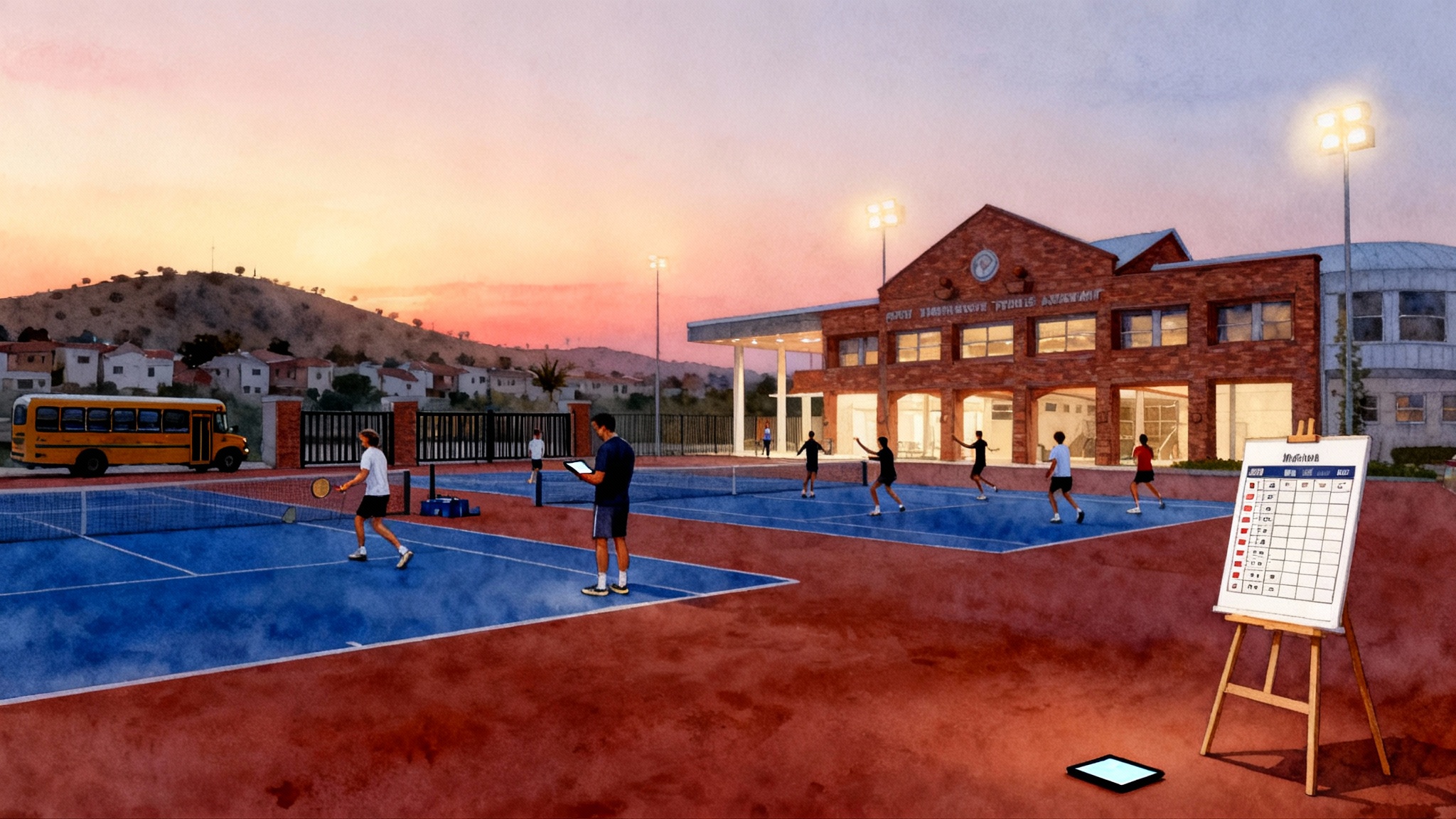
How to use this guide
You are choosing an environment that will shape a player’s next two to four years, not just a set of courts. This guide compares leading high-performance options across Delhi NCR, Mumbai, Bengaluru, and Mohali, and then goes deep on RoundGlass Tennis Academy in Mohali. You will find clear explanations of training models, court surfaces, schooling options, scholarship routes, how AITA and ITF tournament blocks fit into training, realistic cost bands, and step-by-step instructions to book an evaluation week for 2026 intake.
If you are also weighing overseas pathways, compare styles and costs in our regional roundups such as Croatia vs Spain academies: best path in 2025 to 2026 and Best California tennis academies 2025–2026.
The 2025–2026 landscape at a glance
- Delhi NCR offers volume: dense tournament calendars, many private programs, and easy access to AITA events and national camps at DLTA. Day-scholar options are plentiful; boarding is limited to a few residential schools that run tennis seriously.
- Mumbai delivers quality coaching in club settings and good competition density. Space is tight, so hard courts are more common than clay; boarding is rare within city limits.
- Bengaluru combines altitude, mild weather, and strong coaching lineages. Clay and hard are both available, and year-round outdoor training is the norm.
- Mohali and the Chandigarh Tricity are a growing base, anchored by RoundGlass and a practical tournament circuit within day-trip range.
The best choice is the one that matches the player’s goals, stage, and temperament. For example, a 12 to 14-year-old in growth spurts may benefit from a clay-first program that builds movement economy and point construction. A 16-year-old targeting ITF J200 to J300 entries may need a hard-court-heavy block before travel.
What top academies actually do: training models that work
Squads, individual work, and periodization
High-performance academies in India generally run two models:
- Squad-centric: Players grouped by objective and game style, with two to three on a court and frequent live-ball drills. One or two individual slots per week are layered on top. This suits most players because it blends intensity, decision making, and peer learning.
- Individual-first: Daily one-on-one technical sessions plus reduced squad volume. This is appropriate during technical rebuilds or before returns from injury but is expensive and can under-develop competitive decision making if overused.
A good week loads like this in season: 15 to 18 hours on court, 6 to 8 hours of strength and conditioning, 2 hours of mobility and prehab, and one matchplay block. During tournament weeks, volume drops while intensity stays high.
Court surfaces: clay versus hard access
- Clay courts promote point construction, sliding mechanics, and recovery between exchanges. They reduce peak joint load but add lower-limb eccentric demands. Players who train on clay often show better shot tolerance and use height and spin more creatively.
- Hard courts sharpen serve and return patterns, reward first-strike tennis, and expose footwork inefficiencies quickly. They are essential for late-stage juniors preparing for pro-style tempo.
For 2025–2026, target a 60 to 40 split between clay and hard for ages 12 to 15, and a balanced 50 to 50 for ages 16 to 18, with the ratio flipped toward hard in the four weeks before hard-court tours.
Strength and conditioning, sports science, and recovery
Look for programs that test quarterly, track readiness, and individualize loads. Minimum viable support includes:
- Baseline and quarterly screens of mobility, asymmetries, and power
- Strength plans built around hinge, squat, push, pull, rotate, and anti-rotate patterns
- Sprint mechanics coaching, not just generic running
- Heat management protocols for summer blocks
- On-site physio who communicates with coaches
Close-up: RoundGlass Tennis Academy, Mohali
RoundGlass Tennis Academy profile shows a purpose-designed environment in Mohali with a clear objective: long-term development for Indian juniors who can compete internationally. Families consistently point to three strengths: integrated coaching teams, predictable training loads, and aligned academics.
What to expect:
- Training design: A squad-centric week with individual technical slots layered in. Tactical themes rotate weekly, for example first-ball patterns on serve plus one, or neutralizing deep middle.
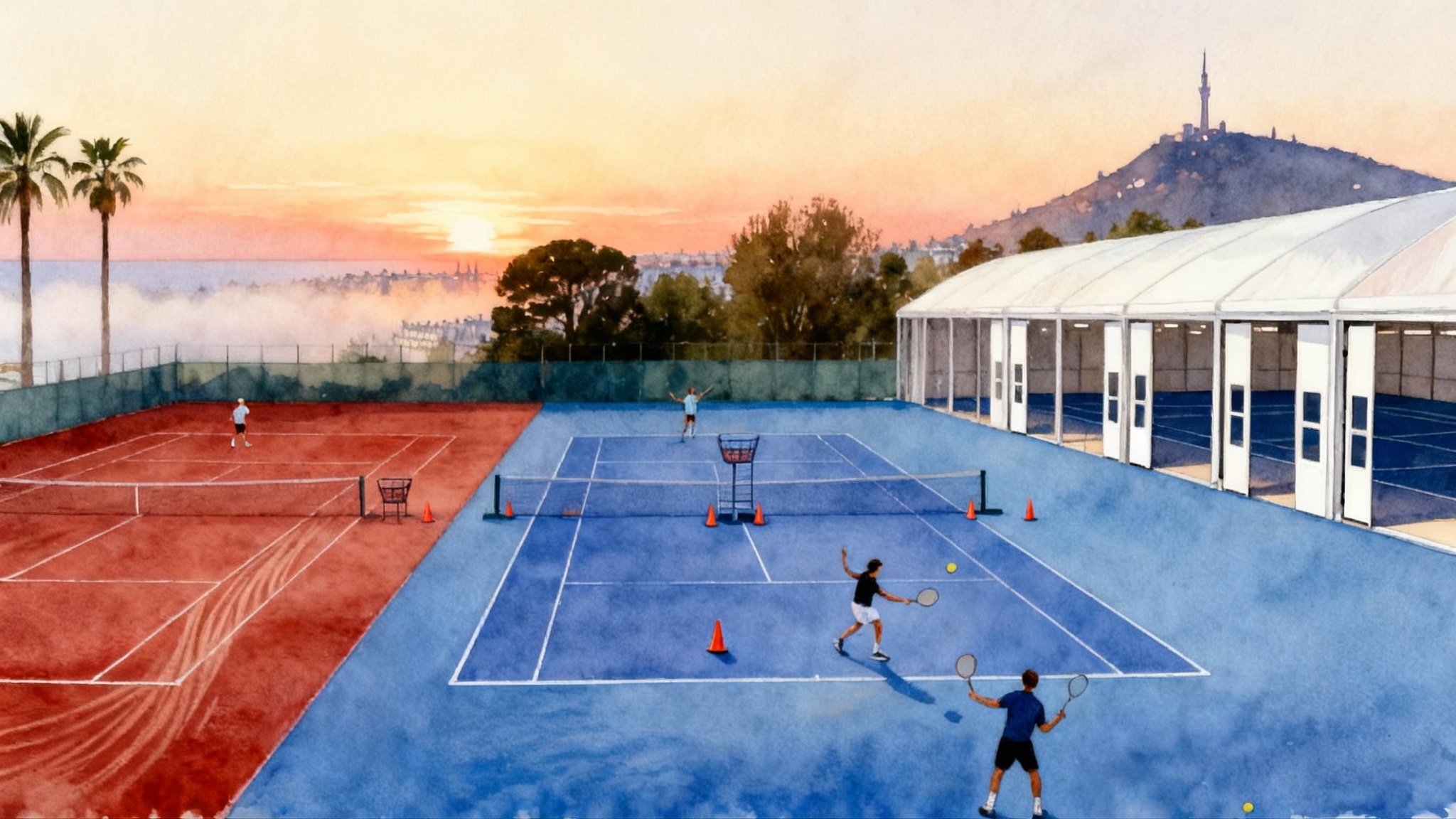
- Surfaces: Access to both clay and hard, with block planning that shifts surfaces to match upcoming tournament demands.
- Sports science: Strength and conditioning, physio, and monitoring are built into the day, not bolted on. Prehab work is scheduled, not optional.
- Boarding and academics: Boarding is available, and school partnerships allow a normal academic pathway with flexibility during tournament travel. Expect supervised study hours and structured nutrition.
- Tournament integration: AITA events in the Tricity and nearby states allow match density without exhausting travel. For ITF Juniors, blocks are planned with windows for recovery and taper.
- Player profile: RoundGlass suits athletes who want a residential setup with high daily standards and stable coaching voices.
Delhi NCR: volume, variety, and event access
Delhi NCR’s advantage is access. The calendar is packed, and travel logistics are simple. Private high-performance programs operate across South Delhi and Gurgaon. Day-scholar routes dominate, but a small number of boarding schools run strong tennis streams. When you evaluate Delhi programs, focus on:
- Surface mix and availability during peak hours
- Whether technical work is planned or reactive
- How coaches manage transition from orange and green ball to full compression for younger athletes
- Clear tournament planning for AITA plus selected ITF Juniors
For day scholars up to age 15, Delhi can be ideal. For players who require structure around sleep, food, and school, a residential environment in another city may still be the better choice.
Mumbai: club excellence and first-strike tennis
Mumbai’s programs often operate inside private clubs with limited court inventories. The upside is strong coaching and competitive squads. The trade-off is court scarcity at prime times. For players whose strengths lean toward serve, return, and drive through contact, Mumbai’s hard-court bias can accelerate development.
Questions to ask:
- How many uninterrupted hitting hours can a player expect on weekday afternoons
- Is there guaranteed matchplay with peers of similar Universal Tennis Rating bands
- Where do players complete weekend long-set match blocks when club schedules are tight
Boarding setups are rare in the city. Families usually assemble a day-scholar package and add strength and conditioning in independent facilities.
Bengaluru: altitude, weather, and lineage
Bengaluru offers training at roughly 900 meters above sea level, which subtly changes ball flight and rewards timing, footwork, and fitness. Several respected programs operate here, including long-standing academies with national team coaching experience. Players who need consistent weather and balanced clay and hard access often thrive in the city.
Checklist for Bengaluru:
- Who leads the performance program on court daily
- How the academy periodizes around the South and West Zone AITA clusters
- What academic options exist for grades 9 through 12 without compromising daily training
Residential options exist, though many families still run day-scholar plans with reliable commute windows.
Mohali and the Tricity: purpose-built structure
With RoundGlass as the anchor and nearby competition pockets across Punjab, Haryana, and Himachal Pradesh, the Tricity region has become a practical base for players who need residential structure plus sensible travel. The combination of both surfaces, on-site recovery, and predictable schedules is the main attraction. For families outside the region, proximity to the Chandigarh airport simplifies tournament travel.
Scholarships: how they really work
Scholarships in India are usually a blend of merit and need, and they tend to take three forms:
- Training fee reductions for top national or international performers
- Boarding and meal support for residential athletes who meet performance and character benchmarks
- Travel grants tied to specific tour blocks or international events
What committees look for:
- Results trend, not a single hot week. Coaches will ask what changed in your game after a final or title.
- Ratings and rankings that forecast competitiveness one to two levels up. For example, a Universal Tennis Rating band that projects wins at the next tier, combined with AITA seeding and match quality.
- Coachability and habits. Video logs that show pre-serve routines, point construction under pressure, and recovery in long rallies help more than highlight reels.
How to prepare:
- Build a one-page tennis resume with age, height, play style, strengths to build on, current goals, and the last three months of competitive results.
- Add unedited match clips of four to six points from serve games and return games against comparable opponents.
- Be explicit about academic standing and your family’s plan for school if boarding.
AITA and ITF integration without burnout
Three principles keep progress steady:
-
Schedule by training need, not calendar fear. Each eight-week mesocycle should have a technical focus, a weapons block, a matchplay block, and a taper before competition.
-
Use local AITA events to practice specific themes. Decide a match theme in advance, such as committing to high-percentage crosscourt patterns on big points, or defending with depth through the middle.
-
Treat ITF Junior travel as a campaign. Position a two-event cluster with three weeks of prep, and plan recovery the week after. Chasing points without rest will backfire.
Realistic costs for 2025
Costs vary by city, staff seniority, and the balance of individual lessons, but the following bands are realistic starting points. Always request a written fee sheet.
- Day-scholar high-performance training: ₹20,000 to ₹60,000 per month for 5 to 6 days per week, excluding individual lessons
- Individual technical sessions: ₹2,000 to ₹6,000 per hour depending on coach seniority
- Strength and conditioning plus physio: ₹8,000 to ₹25,000 per month depending on frequency and on-site access
- Boarding at residential programs with schooling: ₹6,00,000 to ₹18,00,000 per year inclusive of training blocks, accommodation, and meals
- Tournament travel within India: ₹2,00,000 to ₹6,00,000 per year for AITA-heavy schedules
- International ITF Junior travel: ₹10,00,000 to ₹25,00,000 per year depending on the number of trips and whether costs are shared among teammates
Hidden costs to surface early:
- Stringing and replacement frames during growth spurts
- Physiotherapy and imaging when needed
- Exam fees or school board costs for flexible academic plans
- Off-season camps and external sparring partners
How to book an evaluation week for 2026 intake
An evaluation week is a five to seven day stretch where coaches watch a player across core sessions, matchplay, and strength and conditioning. The goal is mutual fit. Use this step-by-step approach for any academy in this guide.
Timeline
- January to March 2026: Best window for first-round evaluations
- April to May 2026: Second-round visits and scholarship decisions
- June 2026: Final paperwork for July starts or August after exams
Documents to prepare
- One-page tennis resume and academic summary
- Unedited match clips totaling 8 to 12 minutes
- Medical clearance from a sports physician
- Consent letter for minors if boarding is under consideration
Booking steps
- Shortlist three academies and request evaluation windows in two possible weeks each. Email is fine, but a single shared folder with your materials speeds responses.
- Confirm what the week includes: number of squad sessions, individual technical reviews, matchplay sets, and strength and conditioning entries.
- Ask for a written quote that lists the evaluation fee, whether accommodation and meals are included, and any refundable portion if the academy offers a place.
- Share your current tournament plan so coaches can place you in an appropriate squad.
- Debrief in writing. Ask for a one-page evaluation with strengths, priorities for the next eight weeks, and a yes or no on fit.
Specific to RoundGlass in Mohali
- When to inquire: Start in January 2026 for March and April windows.
- What they will look for: Movement quality, spacing to contact, patterns on serve and first ball, and the ability to hold a plan in live points.
- Likely inclusions: A mix of clay and hard sessions, a technical review, fitness testing, physio screening, and supervised matchplay.
- Academic conversation: Expect a dedicated slot to map school expectations and travel calendars.
To request a slot, reach out via the RoundGlass Tennis Academy profile so your materials are routed correctly.
Sample weekly schedule for high-performance players
Monday to Friday
- 07:00–07:30 Activation and mobility
- 07:30–09:30 On-court squads with live-ball patterns
- 10:00–11:15 Strength and conditioning, speed and plyometrics
- 15:30–17:30 On-court technical or situational point play
- 17:30–18:00 Mobility and recovery
Saturday
- 08:00–11:00 Matchplay sets or tournament matches
- 16:00–17:00 Video review and planning
Sunday
- Off or light bike and mobility, plus school catch-up for boarders
City-by-city shortlists and who they fit
These snapshots are designed to shape your questions, not to crown a winner.
- Delhi NCR: Ideal for day scholars who want dense tournament calendars and frequent matchplay. Verify that your program guarantees court time during peak hours and can pivot between clay and hard ahead of events.
- Mumbai: Best for players who thrive with hard-court tempo and club competition. Ask how the academy protects your uninterrupted hitting time and builds serve and return patterns.
- Bengaluru: Suits players who need balanced surfaces, reliable weather, and a culture of structured training. Confirm who leads your daily work on court and how academics are organized around travel.
- Mohali: Strong for residential athletes who need predictable structure, integrated sports science, and both surfaces. Clarify school pathways and how tournament clusters are built each quarter.
Decision framework: four questions that simplify everything
-
Does the program’s weekly plan reflect your next competitive goal, or is it generic fit-all volume
-
Can the coaches explain what will change in your technique or tactics in the next eight weeks and how they will measure it
-
Do you have reliable access to both clay and hard courts in the month before key tournaments
-
Will academics and recovery be protected in real life, not just on a brochure
If you can answer yes to all four, you are likely looking at a good match.
Final take
High-performance tennis is a long project built from ordinary days done unusually well. Choose the place where your player will look forward to Monday mornings, where the plan is understood by athlete, coach, and parent, and where training weeks and tournament blocks reinforce each other. For 2025–2026, Delhi NCR, Mumbai, Bengaluru, and Mohali all offer strong routes. The right decision is the one that aligns training detail, surfaces, schooling, and budget with a player’s next clear goal. Book an evaluation week, demand a written plan, and let the daily work show you the fit.