Best Tennis Academies in France 2025–2026: Paris, Riviera, Lyon
A comparison-driven guide to France’s top tennis academies for 2025–2026. We weigh clay vs hard-court balance, coaching depth, boarding and schooling, cost transparency, weather, and college or pro outcomes to help families choose.
 Tommy
Tommy
Why France in 2025–2026
France remains a smart base for junior and pre‑pro development because it combines deep clay‑court culture with increasingly balanced hard‑court access, intelligent coaching structures, and strong school partnerships. For families targeting a spring clay push plus year‑round progress, three hubs rise to the top: the Paris region, the French Riviera, and Lyon. Each offers a distinct mix of surfaces, climate, and program style. This guide compares those hubs head to head and spotlights All In Academy alongside top Riviera and Paris options so that you can match your player’s goals to the right environment.
If you are also surveying Europe, compare the Spain academies Barcelona and Mallorca and our Germany academies Berlin to Munich roundups for context on surfaces and seasonality.
Think of your choice like selecting a home course in golf. The layout, the weather, and the practice facilities will nudge daily habits and long‑term strengths. Get the match right and the environment will do quiet work for you every week of the year.
How to read this comparison
We focus on six factors families tell us decide outcomes:
- Clay vs hard‑court balance
- Coaching depth and daily structure
- Boarding and schooling integrations
- Cost transparency and budgeting
- Weather seasonality
- College and pro outcomes
The exact best fit varies by athlete profile, but the tradeoffs are knowable. Use the checklists and sample profiles later to narrow quickly.
Clay vs hard‑court balance by region
-
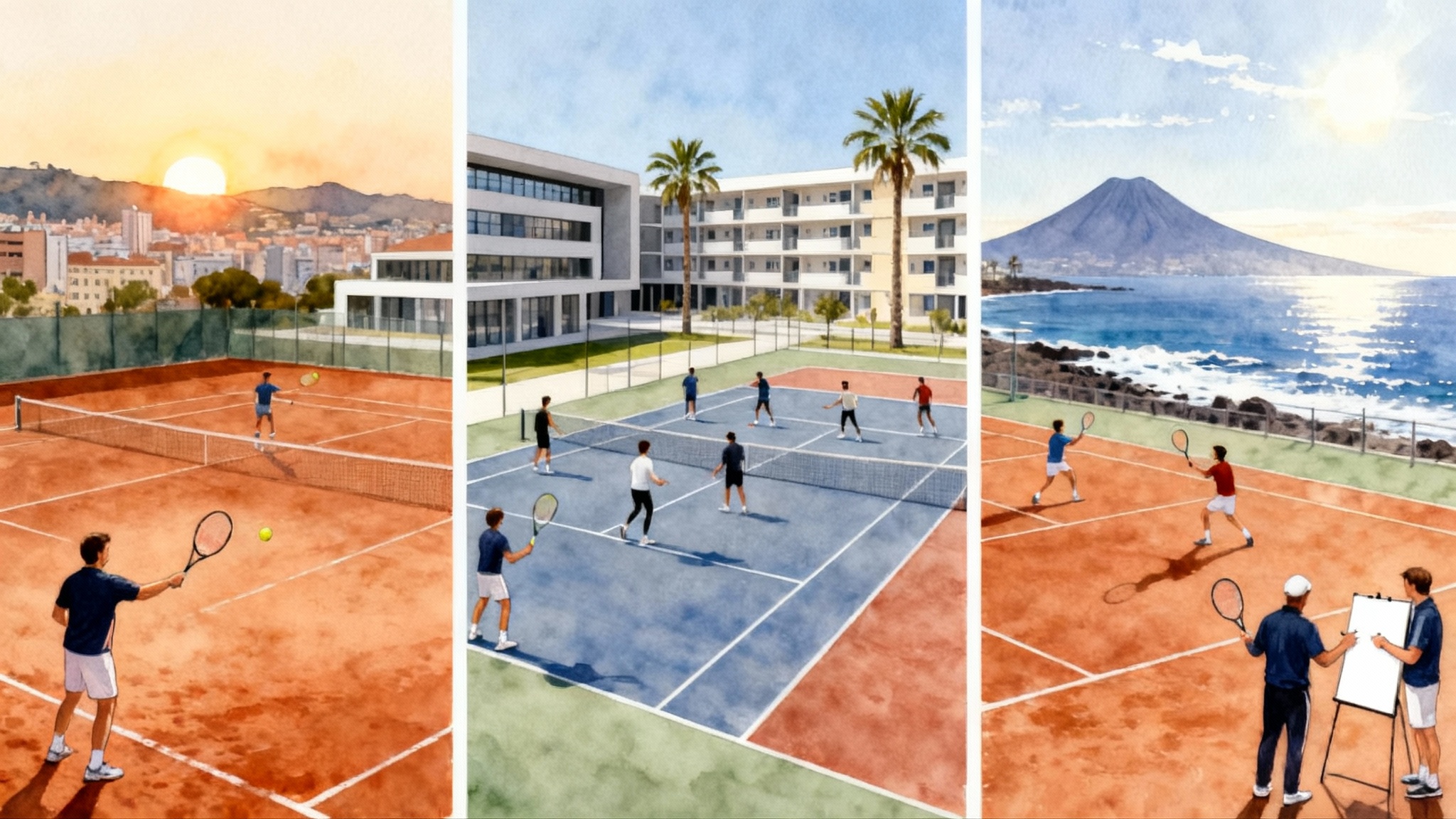
Paris: Parisian clubs lean traditional French clay outdoors with solid indoor coverage for colder months. Expect a mix of red clay and indoor hard courts, especially in well‑resourced multi‑sport clubs. For a player who needs clay reps without losing hard‑court rhythm, Paris offers a practical 60–40 or 70–30 clay tilt, depending on venue.
-
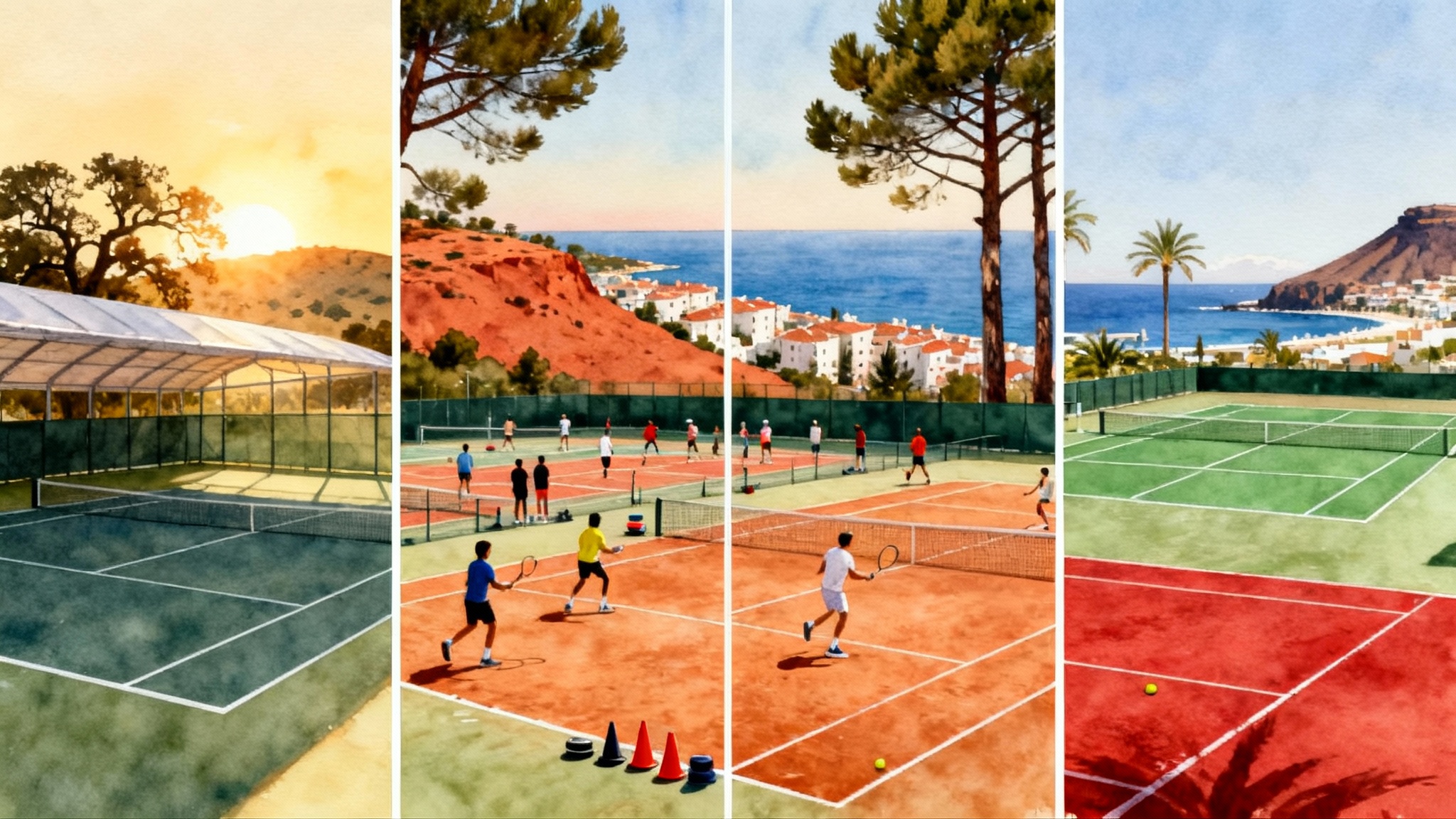
Riviera: The Côte d’Azur lives on clay but now pairs it with growing hard‑court access in larger academies. Facilities are expansive and weather cooperates, so week‑to‑week planning is simpler. If you want high‑volume clay blocks from March through November and no winter shutdown, the Riviera is hard to beat.
-
Lyon: Lyon brings a balanced profile. The metro has good indoor hard availability due to real winters, and suburban complexes offer both hard and clay. If your athlete is building an all‑court game or transitioning from hard to a more European style, Lyon’s balance suits a two‑surface plan.
Coaching depth and daily structure
-
Paris leaders: The top Paris programs are often embedded in historic multi‑sport clubs. That club culture can be a secret advantage. You get seasoned technicians who have seen many styles and a steady weekly cadence of match play with strong sparring partners. The tradeoff is that Paris programs may be more distributed across venues, so you must vet the daily flow meticulously. Ask for the actual Monday to Friday training grid and how sparring partners are assigned.
-
Riviera flagships: The Riviera is home to large high‑visibility academies with layered staff, visiting consultants, and frequent international campers who raise the level of practice sets. The upside is variety and density. You will find more hitters who play like your future opponents on the international circuit. The tradeoff is scale. In a big academy, you must insist on a named lead coach and clearly defined touchpoints.
-
Lyon’s All In model: Lyon’s top option emphasizes continuity around a defined staff group. If your athlete thrives with a smaller circle and consistent eyes on technical themes, Lyon will feel more personal while still offering national‑level competition on weekends.
Boarding and schooling
French academies increasingly run schooling as a parallel track, not an afterthought. You will see three models:
-
On‑campus partner school: Classes on or adjacent to the academy site with staggered schedules for morning or afternoon training blocks. This is common in larger Riviera settings.
-
Club plus external school: More common in Paris, where students enroll at a local school and commute to training. This can work well for families already based in the city or with a parent on site.
-
Hybrid and online: Used to customize for tournament travel or intensive blocks. When you hear hybrid, ask who is accountable for proctoring exams, tracking credits, and coordinating makeup work.
Key questions to ask any program:
- Who owns the school relationship day to day? Name the individual.
- How many missed school hours per week are baked into the timetable during tournament blocks?
- What diploma pathways are supported, such as the French Baccalauréat or International Baccalaureate, and what is the track record with English language instruction?
- What is the class size and how are language placements handled for late arrivals?
Cost transparency and budgeting
In France, full‑time academy with boarding, school, and travel services typically lands in a broad band once you add everything up. The key is to break the budget into components so the surprises do not show up in month three.
Use this structure when comparing quotes:
- Core tuition: On‑court training, fitness, video, sports science.
- Boarding: Room, meals, weekend supervision.
- Schooling: Tuition, exam fees, language support.
- Medical and performance: Physiotherapy access, injury screening, performance labs.
- Tournaments and travel: Coaching on site, hotel, transport, per diem. Clarify ratios for shared costs when several players go to the same event.
- Extras: Stringing, equipment, mental skills sessions, private lessons, and winter indoor court surcharges in colder regions.
Ask for a season‑long projection with three scenarios: conservative schedule, standard schedule, and aggressive schedule. Request that each scenario list the number of coached tournament days included. If the proposal offers only a monthly subscription without line items, push for the ledger behind it. The best programs either publish ranges by category or will create a written quote with unit costs so you can forecast.
Weather seasonality
-
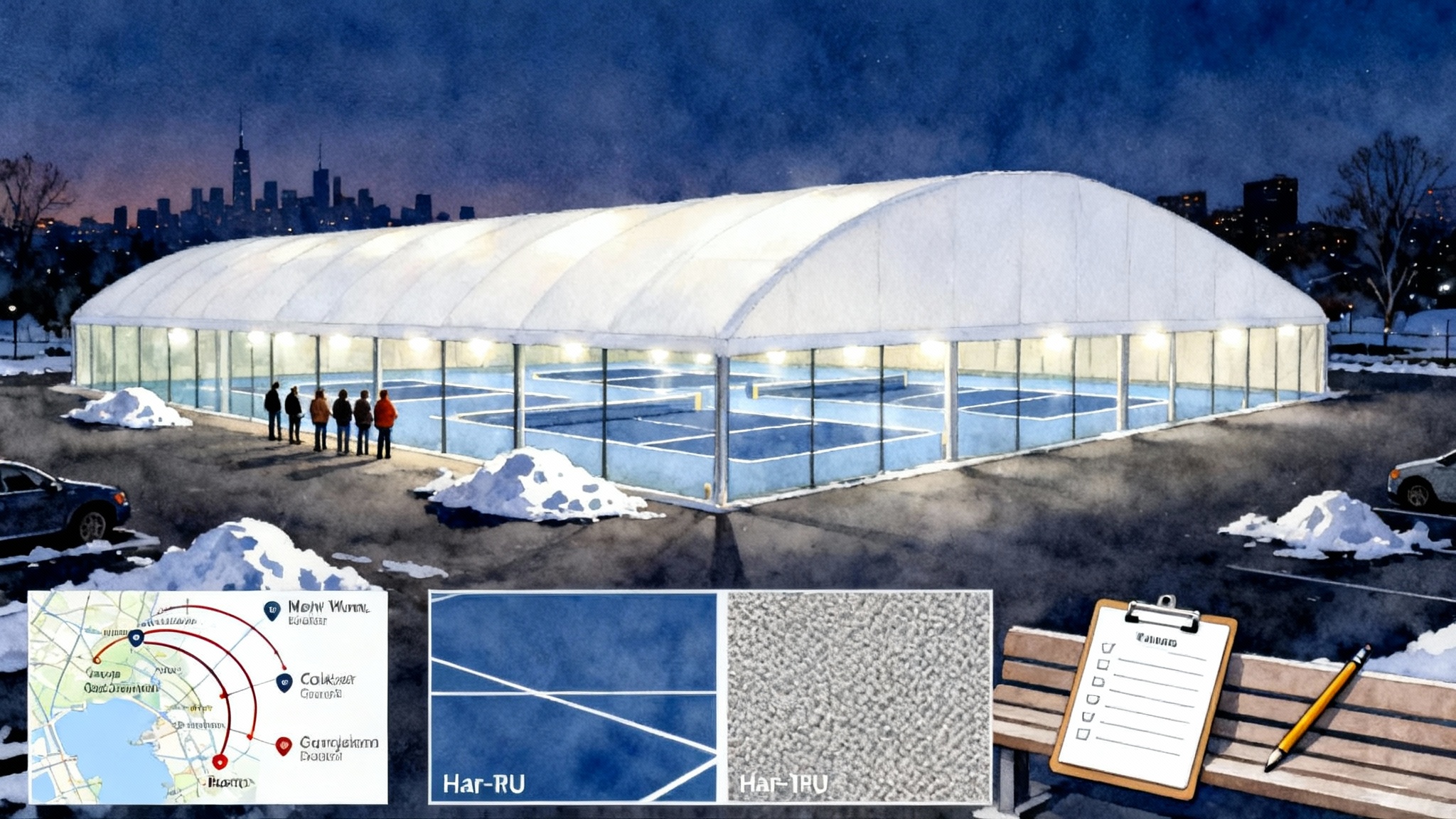
Paris: True winter with short daylight, frequent rain, and frost. Indoor courts keep training viable, but match play and tournament weekends can be disrupted by weather. Families should expect a slightly heavier indoor hard‑court ratio from November through February.
-
Riviera: Mediterranean climate with mild winters and long outdoor windows. This is the most reliable choice for uninterrupted clay work from late winter into late fall. If your player needs confidence through sheer repetition, the Riviera gives you that volume.
-
Lyon: Four distinct seasons. Winters are real, which drives strong indoor planning and good hard‑court competency. Spring arrives a touch later than the Riviera, but the city’s central location makes national tournament travel efficient.
College and pro outcomes
French academies do two things well for college‑bound players. First, they build point‑winning patterns on slow courts, which hardens patience and shot selection. Second, they normalize tournament travel so a first‑year student‑athlete is not surprised by back‑to‑back matches or quick turnarounds.
If college tennis is the target, ask each academy for a two‑page college placement summary from the last three graduating classes. Look for the mix of NCAA Division One through Division Three programs, scholarship totals, and where international students landed. If the pro tour is the target, ask to see how many players have earned ATP or WTA points in the last 24 months while training primarily at the academy, not just visiting during off weeks.
Academy spotlights
Below are three representative choices that fit the Paris, Riviera, and Lyon map. This is not an exhaustive list, but these examples illustrate the tradeoffs families should weigh.
Riviera: Mouratoglou Tennis Academy
The Riviera’s flagship model is the large, fully integrated campus with deep staff, high‑volume competition, and comprehensive schooling. The best known example is the Mouratoglou campus near Nice. Families choose it for the density of sparring levels, the breadth of services on site, and the predictability of weather. Alumni and training guests over the years span junior Grand Slam champions, college standouts, and tour professionals. For a player who needs daily variety and match‑like intensity inside practice, this kind of campus delivers. Review the current program menu and school options on the official page for Mouratoglou Tennis Academy programs.
What to verify if you shortlist a large Riviera campus:
- Named lead coach with weekly check‑ins and quarterly plan reviews.
- A written plan for balancing clay and hard volumes by month.
- Clear unit pricing for coached tournament days and private lessons.
- School integration with a named academic advisor.
Lyon: All In Academy
Lyon’s headline option emphasizes a tighter coaching loop and balanced surfaces. Families like the continuity of staff attention and the city’s central travel options for French and European events. Winters are structured with indoor hard blocks that raise first‑strike confidence, while spring and summer bring clay periods that build point construction. If your athlete benefits from consistent technical cues and a smaller training cohort, Lyon’s approach is attractive. Explore the program structure and campus details on the official site for All In Academy Lyon. For more background, see our independent All In Academy profile.
What to verify if you shortlist a Lyon base:
- Weekly technical themes and how they link to match video review.
- Indoor court allocation during peak winter weeks.
- School language support for international arrivals.
- How often staff travel to tournaments and who covers when the lead coach is away.
Paris region: club‑centered high performance groups
Paris is different. Rather than one dominant boarding campus, you will find high performance programs anchored in historic clubs such as Tennis Club de Paris, Lagardère Paris Racing, and Stade Français. The advantage is coaching wisdom rooted in decades of French tennis and a deep local match ecosystem. For families living in or around Paris, this can be the most efficient choice.
The tradeoff is logistics. Boarding is limited or off‑site, school partnerships vary by district, and training may be split across indoor and outdoor venues. If Paris is your target, treat your visit like a detective project. Ask for:
- The precise weekly schedule across venues and who drives transportation.
- Names and bios of the two coaches who will see your athlete the most.
- The indoor court plan from November to February and the exact surface split.
- A mock four‑week calendar that shows school blocks, fitness, and match play.
Which base fits which player profile
-
Transitioning hard‑court player who needs clay instincts: Choose Lyon or the Riviera. Start with two clay‑heavy months to build patterns, then alternate one hard‑court week every third week so serve plus first ball do not atrophy.
-
Clay‑native player who must raise first‑strike tennis and serve speed: Consider Paris or Lyon in winter for indoor hard blocks. Layer short Riviera stages for outdoor confidence as spring warms.
-
College‑bound 2026 graduate needing match volume and visibility: Riviera makes sense for high‑density practice sets and back‑to‑back events. Ask for a senior‑year calendar that includes French national events and strategically chosen ITF junior tournaments.
-
Younger junior who thrives on routine and coach continuity: Lyon’s tighter loop suits a growth model where you compound small technical gains over many months.
-
Family living in Paris with strong academics and a parent on site: A club‑based Paris program can deliver great coaching and competition without the cost of boarding.
How to run an effective scouting trip
A two to three day visit in each region is enough to see what you need if you prepare the right requests.
Before you arrive, ask for:
- A sample day placed on your athlete’s calendar with assigned groups.
- A meeting with the school liaison and a tour of classrooms.
- One technical session with video plus a written debrief.
- One match‑play set against a stronger hitter.
- A transparent cost sheet with unit pricing for add‑ons.
On site, look for:
- Coach‑to‑player ratio and how often coaches pick up the basket to shape repetition.
- Specific language in feedback. “Racquet speed at contact” is more useful than “hit through it.”
- How athletes behave between drills. Are players self‑starting and purposeful or waiting to be told what to do?
- The energy in the fitness room. Strength and movement quality on land predict resilience on tour.
After the visit, request:
- A one‑page plan with the first twelve weeks spelled out by surface, physical themes, and tournament targets.
- Named accountability: one lead coach and one academic point person.
- A calendar that shows match play by week and travel assumptions.
A simple comparison grid you can adapt
Score each item from 1 to 5 and add comments.
- Surfaces by month: Clay and hard split with indoor coverage noted.
- Coaching depth: Named lead coach plus two secondary coaches who know your player.
- Daily structure: Warm‑up, two on‑court blocks, fitness, recovery, video.
- Boarding: Room type, weekend supervision, nutrition plan.
- Schooling: Diploma path, language support, timetable integration.
- Cost clarity: Line items for tuition, boarding, school, travel, privates.
- Tournament support: Coaching on site with defined rates and travel policies.
- College or pro pathway: Placement history and recent players earning points.
The bottom line for 2025–2026
-
If you want volume on clay with minimal weather disruption and a large pool of hitters, the Riviera is the obvious first look. Anchor your season there and you can peak for spring clay without losing summer momentum.
-
If you want balance across surfaces with a close coaching loop, Lyon makes a persuasive case. All In Academy’s structure pairs well with families who value continuity as much as variety.
-
If you already live in or near Paris, the smartest play may be a club‑based high performance group. You will gain seasoned coaching and a deep local match scene, provided you can handle school and transport.
Whichever base you choose, put process over brochures. Insist on a named coach, a written twelve‑week plan with surface ratios, and a clear cost sheet. Do those three things and the right French base will do its quiet daily work. Your player will not just survive a long season. They will build a game that travels in 2025 and beyond.