Best Florida Junior Tennis Academies 2026 Buyer’s Guide
A families-first, data-backed guide to Florida’s top junior tennis academies in 2026. Compare coaching ratios, surface mix, UTR match play volume, boarding and school integration, pricing, NCAA placement, tryouts, and scholarships.
 Tommy
Tommy
How to use this guide
Choosing a Florida tennis academy for your junior in 2026 is a family decision that blends sport, school, budget, and personality fit. This guide organizes top options by metro, defines the metrics that matter, and gives you a practical scorecard to compare programs side by side. We highlight two programs in depth, Gomez Tennis Academy in Naples and Revolution Tennis Academy in the Orlando area, and we benchmark Florida choices against larger household names so you can decide with confidence.
Unless noted otherwise, ranges and ratios below reflect program details reported to TennisAcademy.app and direct program materials as of December 2025. Always confirm with each academy before you apply or enroll. For regional context, parents comparing broader options in the South often start with the Best Southeast Tennis Academies 2025–2026.
What matters most for juniors and families
Below are the key variables parents told us drive outcomes and day-to-day happiness. Use these as your comparison headings when you tour or call directors.
-
Coaching ratio on court
Target range for high-performance squads: 3 to 1 to 4 to 1 during drilling, 1 to 1 or 2 to 1 for set-play and video review, 6 to 1 for fitness. Ratios shift with age and phase of the year. Ask for ratios by session type, not just a single number. -
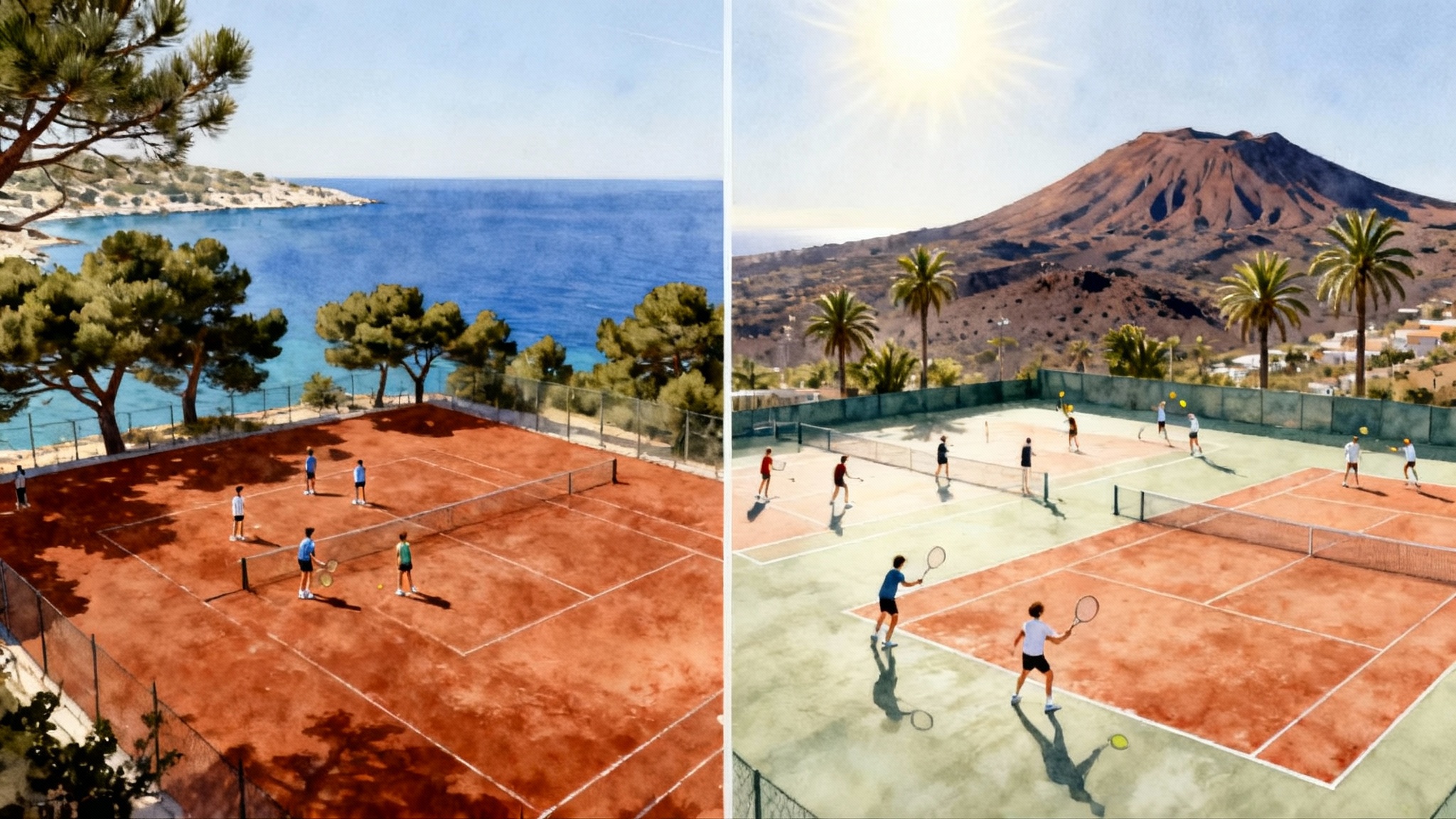
Surface mix, hard versus Har-Tru
Florida offers a unique blend. Miami and Naples often run heavier on Har-Tru, while Orlando and Tampa–St. Petersburg offer more hard courts plus some Har-Tru access. For players targeting spring school tennis or hard-court college seasons, ensure at least 40 percent hard-court training. For players seeking point construction and movement skill on slower courts, 40 to 70 percent Har-Tru can accelerate learning. -
UTR match-play volume
For competitive development, count weekly verified match sets, not only live-ball. A solid target is 6 to 10 verified sets per week in training phases, plus weekend Universal Tennis Rating events in build phases. Ask how many sets your athlete of a given UTR typically plays in a normal week, and how often those sets are reported. -
Boarding and school integration
Boarding programs should show how dorm staff, athletic trainers, and academic partners coordinate. For day students, push to see the bell-to-court shuttle plan, nutrition windows, and late-study support after evening fitness. -
Pricing bands for 2026 budgets
Day student high-performance: typically 1,400 to 2,400 dollars per month during the school year. Full boarding: typically 50,000 to 78,000 dollars per academic year when housing, meals, and school tuition are bundled. Summer weeks: 950 to 1,500 dollars per week for high-performance, often less for day-only options. Clarify whether private lessons, athletic training, physio, and tournament travel are included or billed separately. -
NCAA placement outcomes
Look for a five-year rolling placement rate, not a single highlight class. Strong developmental programs share complete lists by class year, division, and scholarship type. Ask what percent of graduates sign Division I, Division II, Division III, or NAIA, and how many walk on versus scholarship.
Florida benchmarks vs national giants
Florida families often compare regional programs with national hubs. The USTA presence in Orlando is a significant advantage for match play and facilities. The USTA National Campus facility overview shows the scale families can tap for tournaments and practice courts, which can complement a boutique academy’s individualized coaching.
Meanwhile, the Bradenton giant provides a full boarding ecosystem. Review the scope and schedule depth on the IMG Academy tennis program, then ask Florida academies to map how they match or intentionally differ on coaching ratio, dorm life, and tournament travel. Your goal is to decide whether you need a megacampus, a mid-sized program with strong school integration, or a boutique cohort that moves as a team.
Metro snapshots and shortlists
Each metro below includes typical surface mix, match play access, and 2026 tryout windows. Use these to time visits and plan your calendar.
Miami metro
-
Surface mix and training feel
Many clubs and academies rely on Har-Tru, which rewards point building, patience, and movement patterns. Hard courts are available, but you will want to confirm weekly hard-court reps if your junior peaks on speed and first-strike patterns. -
UTR match play
Dense tournament calendar within 60 to 90 minutes. Expect Wednesday or Friday academy match blocks plus weekend events. Ask how the program pairs players across age and UTR so sets are competitive. -
School integration and boarding
Day-student heavy with strong private school partners. Boarding exists in select programs but often through host-family models. Confirm transportation between school and training. -
2026 tryout windows
Spring on-court evaluations in March and April. Summer showcases in late June and mid July. Late admissions and transfer evaluations in August. For January starts, many programs hold a December skills assessment. -
Pricing and aid
Day high-performance commonly 1,600 to 2,400 dollars per month. Merit scholarships are limited and usually tied to national results, while need-based aid flows through partner schools. -
Fit signal
Great for patient baseliners and families who want strong academics with day-student routines and deep tournament density.
Orlando metro
-
Surface mix and training feel
Heavy access to hard courts with key Har-Tru clusters. The area benefits from events and practice opportunities that orbit the National Campus at Lake Nona. -
UTR match play
Reliable midweek set play and abundant weekend events. Look for programs that schedule weekly verified sets so your junior’s UTR evolves predictably. -
Boarding and school
Balance of boarding and day-student options. Strong integration with private and online schools. Transportation logistics are well worn due to concentrated training zones. -
2026 tryout windows
On-court assessments as early as February for fall 2026. Major showcases in mid June and late July. Rolling evaluations in September for January 2027 entry. -
Pricing and aid
Day programs often 1,500 to 2,200 dollars per month. Boarding bundles vary widely. Scholarships are usually fractional and performance based, with additional need-based aid through academic partners. -
Fit signal
Ideal for aggressive baseliners and all-court players who thrive on frequent hard-court sets and a predictable tournament calendar.
Tampa–St. Petersburg
-
Surface mix and training feel
Balanced hard and Har-Tru access. Training often mixes live-ball with serve and return reps due to strong college-style influences in the region. -
UTR match play
Solid league and event calendar, with travel times generally lighter than South Florida. Ask about academy-vs-academy duals. -
Boarding and school
Options exist, but many athletes are day students who drive 20 to 40 minutes. Confirm early dismissal plans with partner schools if training starts mid afternoon. -
2026 tryout windows
Spring evaluation days in March and April, plus summer showcases in June. Many programs will schedule private tryouts within 10 days of inquiry. -
Pricing and aid
Day high-performance commonly 1,400 to 2,000 dollars per month. Boarding options vary; families often piece together housing during tournament blocks rather than full-year dorms. -
Fit signal
Good for families seeking balance between cost, commute, and competitive access, with a slightly more relaxed tournament cadence than Miami.
Naples
-
Surface mix and training feel
Strong Har-Tru identity with high technical standards and an emphasis on patterns, defense-to-offense transitions, and physical endurance. Hard courts are available but scarcer; plan weekly hard-court sessions if your junior peaks on pace. -
UTR match play
Consistent in-house set play, plus weekend travel north or across the state for certain draws. Ask whether training blocks end with competitive sets and whether those sets are verified. -
Boarding and school
Smaller boarding footprints, often boutique, with hands-on staff. Day-student routes are straightforward for local families. -
2026 tryout windows
Spring and early summer evaluations from April to July, plus rolling private assessments for transfer students. -
Pricing and aid
Day high-performance commonly 1,600 to 2,200 dollars per month. Limited merit awards; need-based aid depends on partner school programs. -
Fit signal
Ideal for players who need detailed coaching on point construction, transition defense, and patient offense. Families who prefer a smaller, more personal environment.
Spotlight: Gomez Tennis Academy, Naples
What sets it apart
- Boutique cohorts with a strong emphasis on individual progressions. Expect deliberate drilling that builds point patterns and shot tolerance, especially on Har-Tru. Athletes often learn to manage momentum changes and long rallies, a valuable skill in college tennis.
Coaching ratio and structure
- Typical small-group drilling with targeted private lesson blocks during the week. Families report clear written plans that track technical changes and competitive goals.
UTR match-play plan
- Regular in-house verified sets and travel blocks to reach the right draws. Ask to see the month-by-month match calendar and where verified sets live in the schedule.
School integration and boarding
- Day student friendly, with boutique boarding for select athletes. Confirm shuttle timing between academics and courts, along with supervised study blocks.
Pricing and aid for 2026
- In line with Naples norms for day high-performance. Private lesson add-ons and tournament travel are typically billed separately. Limited merit-based awards may be available for nationally ranked athletes.
Who thrives here
- Players who need detailed coaching on point construction, transition defense, and patient offense. Families who prefer a smaller, more personal environment.
Learn more
- See the Gomez Tennis Academy profile for updated schedules and contacts.
Sample weekly schedule, day student
- Monday: Warm up and movement prep, live-ball patterns on Har-Tru, serve plus first ball, verified practice set, strength and mobility
- Tuesday: Technical block with video, return games, transition approach drills, competitive tiebreak sets, recovery
- Wednesday: Pattern reinforcement, cross-court tolerance sets, multi-ball footwork, upper body strength and athletic training
- Thursday: Serve targets and second-serve pressure games, doubles formations, match simulation, mobility
- Friday: Point building on slower courts, verified match play, evaluations and goal setting
- Saturday or Sunday: Tournament or travel block as assigned
Spotlight: Revolution Tennis Academy, Orlando area
What sets it apart
- Mid-sized training groups that blend intensity with individualized checkpoints. Convenient access to a large event ecosystem means predictable weekly match sets.
Coaching ratio and structure
- Small-group drilling early week, situation-based set play midweek, and verified matches before tournament weekends. Data logs help families track serve percentage, break points converted, and rally length.
UTR match-play plan
- Expect 6 to 10 verified sets per week in training phases, with targeted UTR events layered on weekends. Ask for the written progression by UTR band to ensure your junior faces appropriate opponents.
School integration and boarding
- Mix of day students and boarding. Established relationships with private and online schools. Students typically have supervised study halls and access to academic tutoring.
Pricing and aid for 2026
- Similar to broader Orlando bands for day high-performance, with incremental costs for private lessons and travel coaching. Partial performance scholarships may be available.
Who thrives here
- Athletes who like a hard-court rhythm, want frequent verified matches, and enjoy training near a major competitive hub.
Learn more
- Visit the Revolution Tennis Academy profile for current schedules and director contacts.
Sample weekly schedule, boarder
- Monday: School block, lunch, court warm up, live-ball tempo work, serve targets, lift and mobility, study hall with tutoring
- Tuesday: Video review, technical progressions, return patterns, match sets, recovery and nutrition consult
- Wednesday: Fitness emphasis in morning, doubles formations, approach and volley patterns, short-set round robin
- Thursday: Pressure games on hard courts, second-serve plus plus-one patterns, mental skills session, study hall
- Friday: Verified match block, coach feedback notes, tournament travel brief
- Weekend: Tournament or showcase, with coach reporting and recovery protocol
Pricing reality check for 2026
Use these questions to avoid surprises before you commit a deposit.
- What is included in the base fee versus billed as private lessons or add-ons?
- Does the monthly fee change during summer build phases? Some programs increase hours and adjust pricing from June to August.
- How are tournament travel days billed? Day rate, per match, or per draw?
- What is the deposit and refund policy for fall 2026 enrollment? Get the policy in writing.
- Are there equipment or stringing packages? Players who break strings twice a week will want an annual plan.
Benchmark against the boarding megacampus menu to ensure apples-to-apples comparisons on services, dorm oversight, and sports medicine access. Cross check your list with the published inclusions on the IMG site above and ask smaller programs to map where they match and where they intentionally differ.
Scholarships and financial aid
-
Performance awards
Partial tuition reductions for nationally ranked players or essential roster needs. Expect modest percentages, most often for boarding. -
Need-based aid
Typically flows through partner schools for academic tuition. Ask the academy to connect you with the school’s financial aid office and deadlines. -
Work study and leadership roles
Some programs create assistant-captain or mentorship roles that come with small stipends or fee offsets. Clarify hours and expectations. -
Early deposits and payment plans
Many programs offer a small discount for early commitment or full-year prepayment. Confirm whether the plan affects refund terms.
NCAA placement decoded
A meaningful placement metric looks like this: five-year rolling outcomes by division with scholarship notes. Ask academies to share an anonymized list that includes the graduate’s year, college, division, and whether the athlete received athletic or academic aid.
-
Healthy outcome ranges
Boutique academies with strong development often place 50 to 80 percent of their graduating class into college tennis across divisions. Division distribution varies by class strength and academic goals. Beware of lists that show a single highlight without the rest of the cohort. -
Mechanism that drives placement
Verified match play against the right UTR bands, consistent serve and return repetition, and performance tracking. Families should see written reports at least monthly during the recruiting window. -
Action for parents
Request two contacts from the academy’s last two graduating classes and ask those families what surprised them, what worked, and what they would change.
2026 tryout and showcase calendar
Every academy sets its own dates, but most Florida programs follow a similar cadence. Plan backward from your preferred start date.
-
January to February 2026
Remote interviews, academic transcript review, initial Zoom with director, and video evaluation submission. -
March to April 2026
On-court evaluations, skills assessments, and class placement decisions for fall starts. -
June to July 2026
Summer showcases and camp weeks that double as extended tryouts. This is the best time to feel the full schedule and culture. -
August 2026
Late transfer evaluations, final boarding placements, and academic orientation.
Track published dates on our Florida tryout calendar 2026 and request private assessments directly with each academy.
Sample weekly schedules you can adapt
Below are two templates you can compare across academies. Ask each program to overlay their hours and show where verified sets appear.
-
Day student template
- Monday: School 8:00 to 1:30, training 2:30 to 5:30, mobility 5:30 to 6:00
- Tuesday: School 8:00 to 1:30, training 2:30 to 5:30 with video feedback, study 7:30 to 9:00
- Wednesday: School 8:00 to 1:00, training 2:00 to 5:00, match sets 5:00 to 6:00
- Thursday: School 8:00 to 1:30, training 2:30 to 5:30, recovery 5:30 to 6:00
- Friday: School 8:00 to 12:30, verified match block 2:00 to 5:00, coach review 5:00 to 5:30
- Weekend: Tournament or active recovery, with optional private lesson
-
Boarder template
- Monday: Breakfast and study hall, training 9:00 to 12:00, lunch, video review 1:00 to 1:45, training 2:00 to 4:00, lift 4:15 to 5:00, supervised study 7:30 to 9:00
- Tuesday: Training 9:00 to 12:00 with serve and return focus, lunch, match sets 2:00 to 4:00, recovery and nutrition 4:15 to 5:00
- Wednesday: Mobility 8:30 to 9:00, live-ball patterns 9:00 to 11:30, doubles 2:00 to 3:30, mental skills 3:30 to 4:00, study hall 7:30 to 9:00
- Thursday: Technical progressions 9:00 to 11:30, strength 1:00 to 1:45, competitive sets 2:00 to 4:00
- Friday: Verified match play 9:30 to 12:00, coach notes and goals 12:00 to 12:30, travel brief 2:00
- Weekend: Tournament draw or showcase, with coach reporting
Build your family scorecard
When you tour, carry a one-page scorecard. Score each item from 1 to 5 and total it at the end. Keep notes as if you were writing a recommendation for another parent.
- Coaching ratio during drilling
- Ratio during set play
- Surface mix that fits your child’s style goals
- Verified sets per week for your UTR band
- Boarding or commute plan that keeps academics stable
- School partnership quality and homework support
- Price fit for the year and for summer
- College placement transparency
- Culture and coaching feedback style
You can print a blank version by recreating these headings in a notes app or spreadsheet before your visits.
Quick metro-by-metro at a glance
-
Miami
Har-Tru heavy, deep tournament density, day-student friendly, showcases in June and July. -
Orlando
Hard-court abundant, steady verified sets, balanced day and boarding, strong school partners, showcases June to late July. -
Tampa–St. Pete
Balanced surfaces, lighter commute pressure, private tryouts available most months. -
Naples
Boutique training culture, Har-Tru emphasis, rolling private evaluations April to July.
Final checks before you sign
- Ask for a written weekly schedule with verified sets highlighted in yellow.
- Request two alumni parent references from the last 24 months.
- Get deposit and refund terms for fall 2026 in writing.
- Confirm who calls the tactical plan during tournaments, academy coach or private coach, and how costs are handled.
Conclusion
Florida gives families four distinct training ecosystems within a half day’s drive of each other. Miami and Naples sharpen patience and point construction on Har-Tru. Orlando and Tampa–St. Pete deliver hard-court rhythm and reliable verified sets. Boutique academies like Gomez in Naples and mid-sized programs like Revolution in the Orlando area offer individualized attention that can rival the scope of national giants if the weekly plan is specific, the match play is verified, and the school fit is right. If you use the metrics and checklists in this guide, tour with a scorecard in hand, and align your junior’s style with the surface mix and verified match volume, you will narrow quickly to a best-fit academy and enter 2026 with a plan you believe in.