Best Tennis Academies Germany 2026: Berlin, NRW, Bavaria Guide
A parent-focused buyer’s guide to Germany’s top junior and high-performance programs in 2026. Compare TennisTree in Berlin and ToBe in Alsdorf across surfaces, winter indoor access, coaching ratios, academics, UTR and DTB pathways, pricing, travel, and sample week plans.
 Tommy
Tommy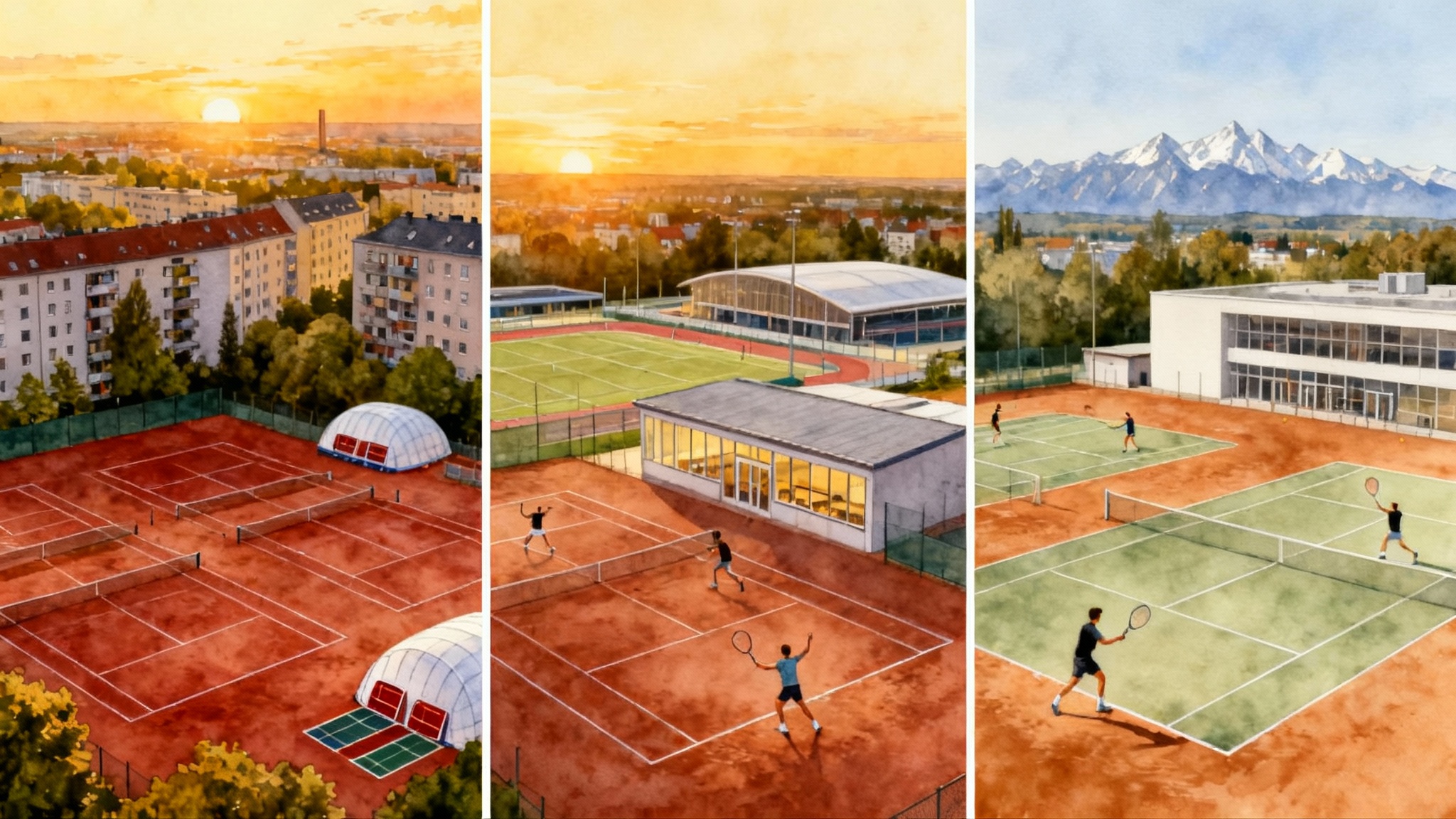
How to choose a German tennis academy in 2026
If you are a parent weighing a serious tennis pathway in Germany, this guide keeps you grounded in what truly moves a young player forward. We compare Berlin, North Rhine-Westphalia, and Bavaria with a spotlight on two programs families ask us about most often: TennisTree in Berlin and ToBe Tennis Academy in Alsdorf. You will find concrete checks on surfaces and winter indoor access, realistic coaching ratios, how academics and boarding can work, the Universal Tennis Rating and German Tennis Federation pathways, price bands, travel logistics, a decision checklist, and sample week plans. For cross-border planning, see our Poland tennis academies guide.
Think of the process like test driving a car in different weather. Your player needs grip on clay in July, predictable ball speed on indoor courts in January, and a training group that challenges but does not overwhelm. The more you can visualize an average week in each place, the better your decision will be.
What to compare at a glance
Use this shortlist to score each option on a 1 to 5 scale. A clear winner usually emerges when you tally it.
- Surfaces mix in season: clay, hard, or both; how often your child will actually train on each
- Winter indoor access: number of indoor courts available at training time, not just on the brochure
- Coaching ratios by session type: technical, patterns, point play, strength and conditioning
- Matchplay frequency: internal ladder, verified matchplay, and local league access
- Video and data: regular use of video, ball tracking, and objective fitness testing
- Academics: on-site tutoring, school partnerships, exam flexibility, language options
- Boarding or host family: quality control, mealtime supervision, and commute time
- Competition pathway: mix of DTB events, league matches, and UTR-verified play
- Price band: total monthly cost including indoor court fees, private lessons, and transport
- Logistics: airport proximity, public transit to courts and school, and realistic daily schedule
Surfaces and winter indoor access in Germany
Germany trains a lot on clay from April to October. From mid autumn to early spring, most players move indoors onto carpet or hard courts under domes or in permanent halls. A good academy plans for both. Ask how many weekly hours shift indoors between November and March, and whether matchplay still runs in winter. The answer tells you whether your player will stagnate or keep progressing.
Berlin spotlight: TennisTree
Where you train and play
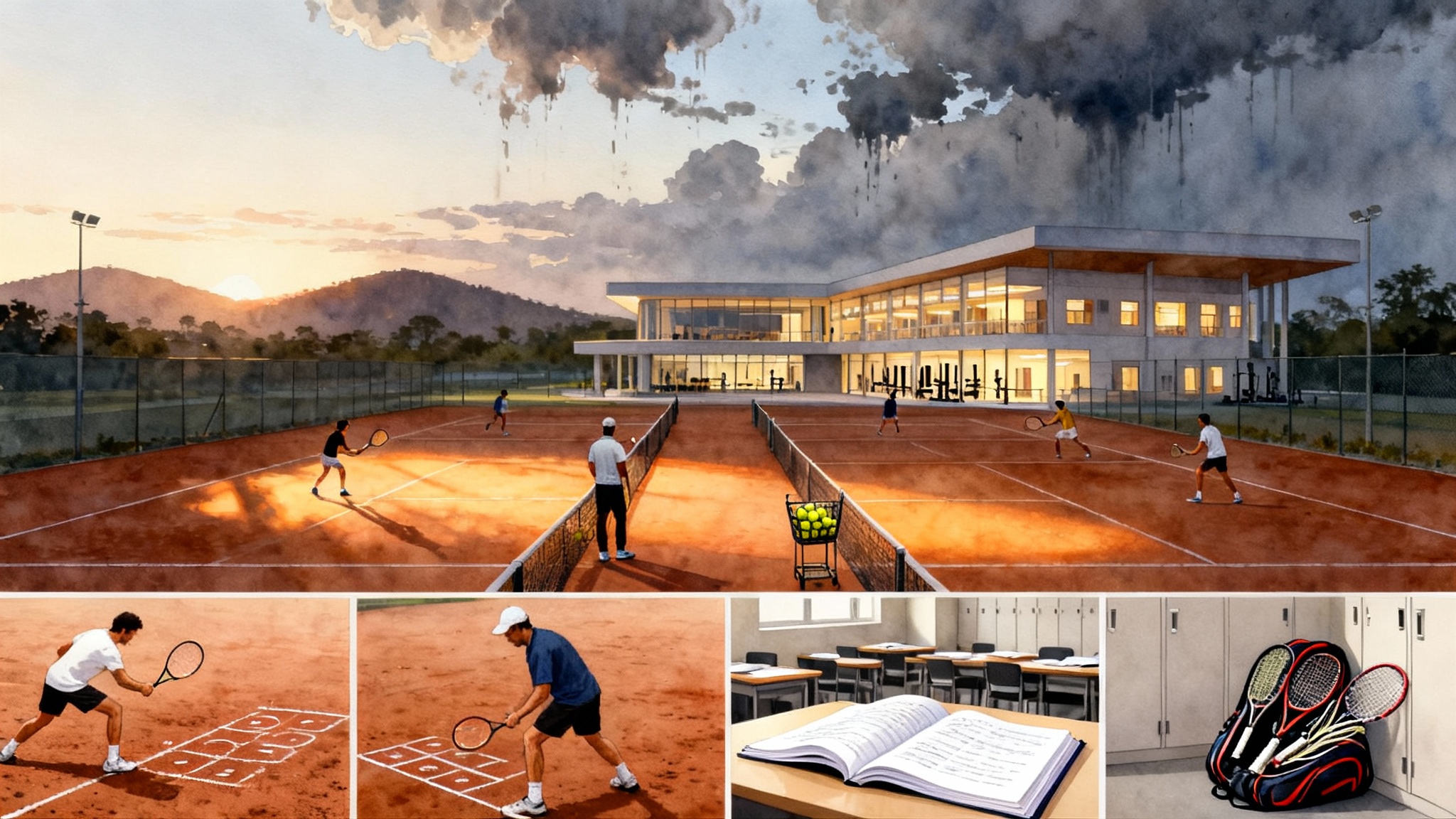
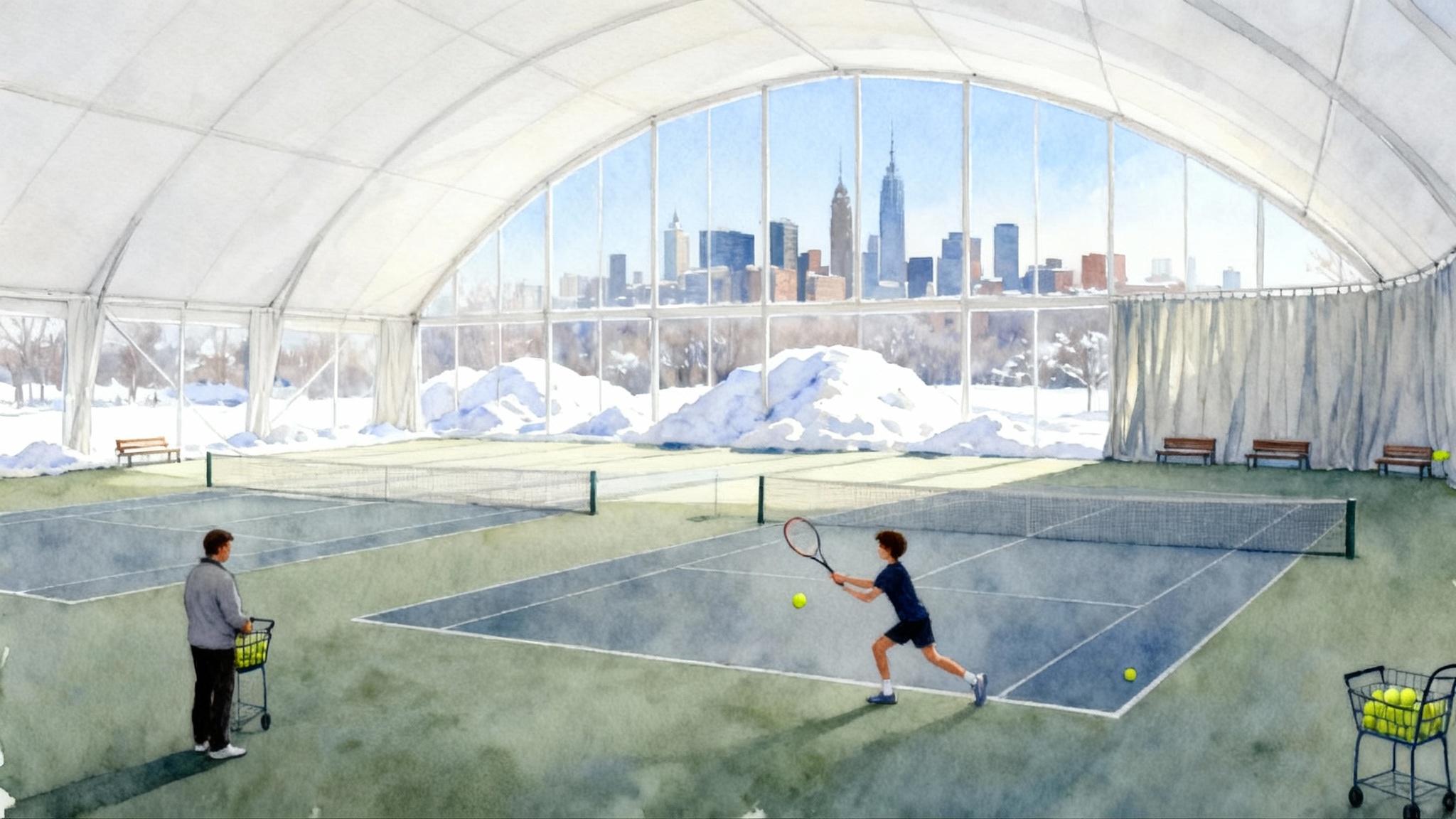
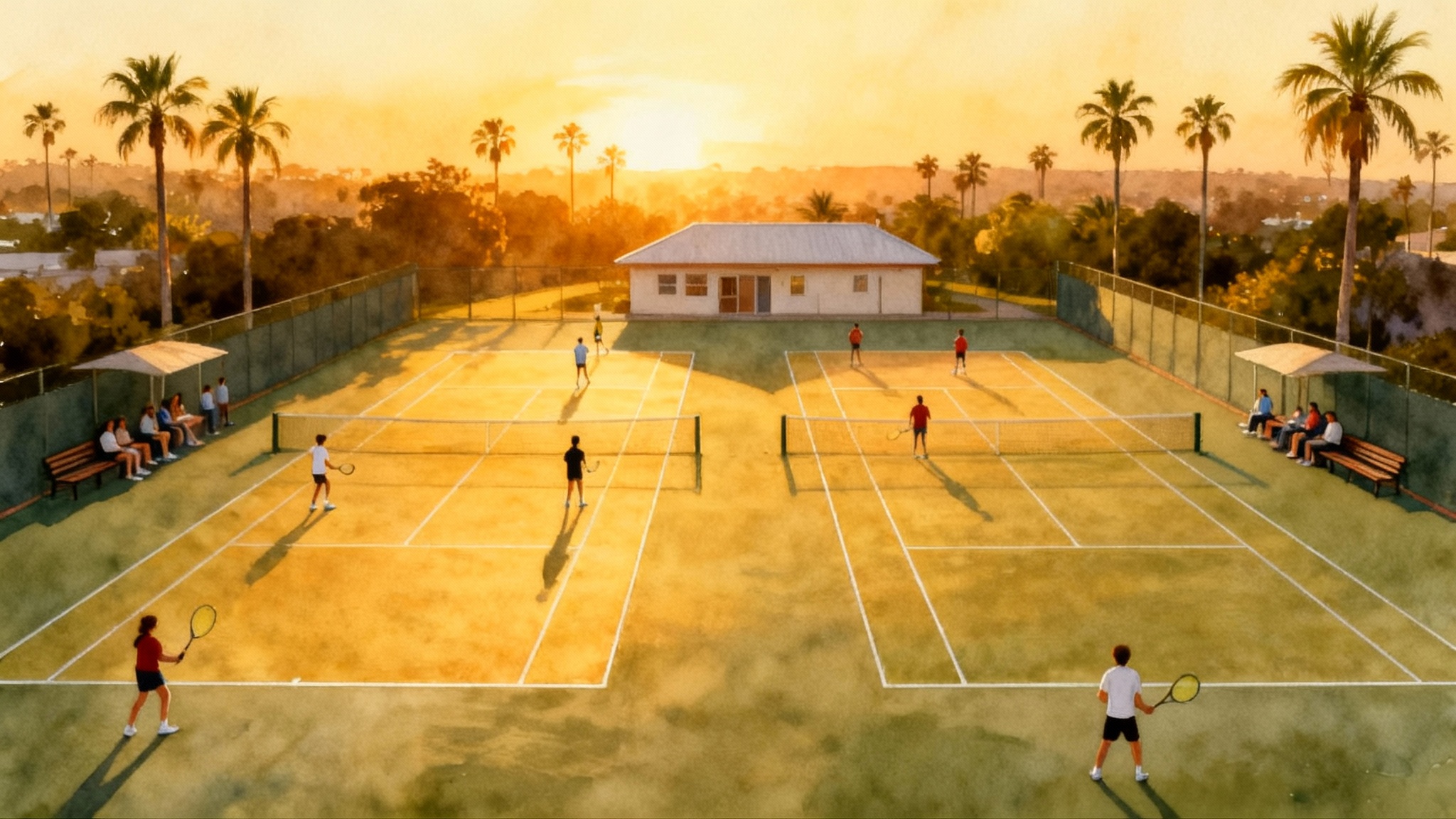
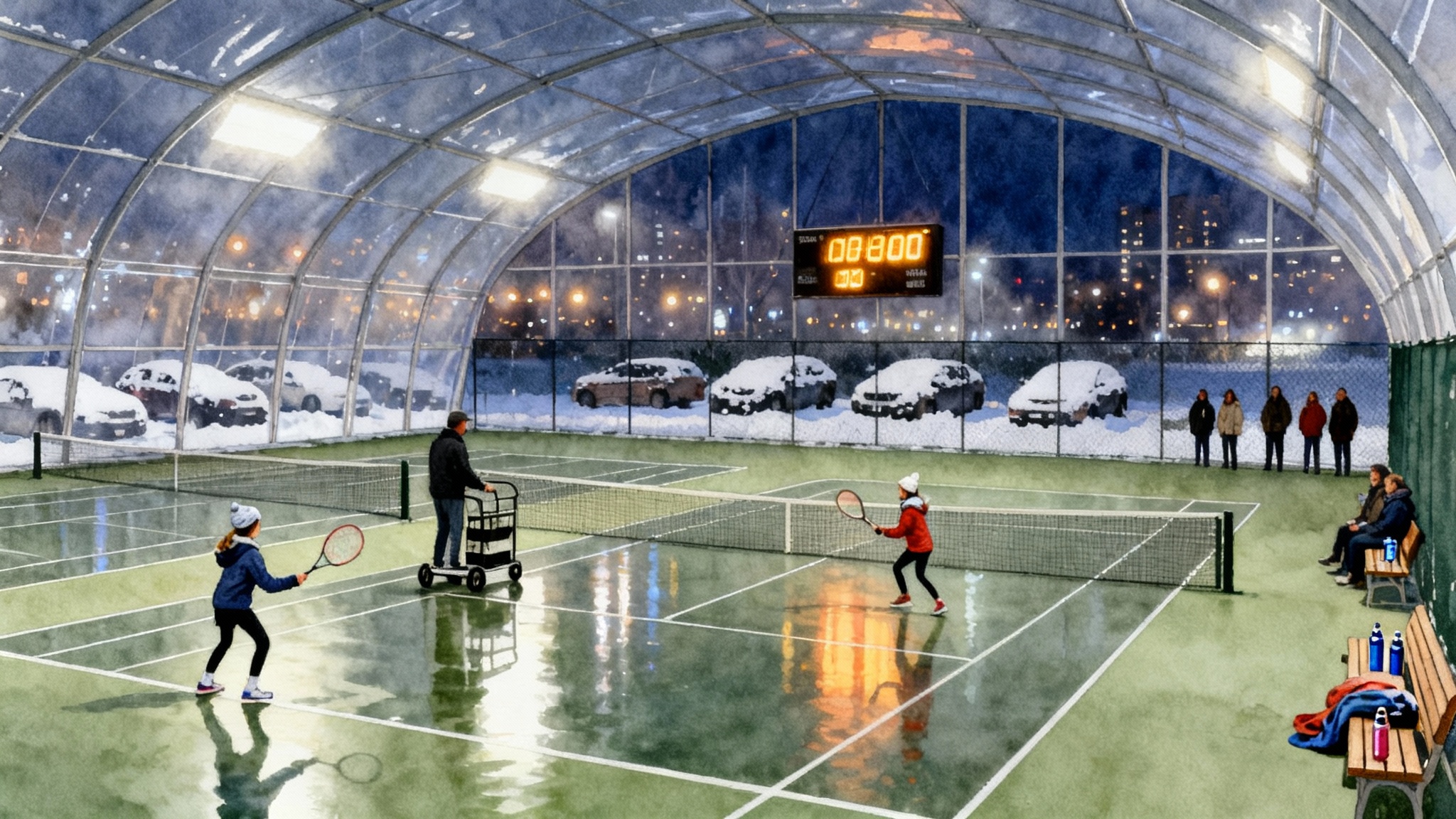
TennisTree runs its academy sessions at a southwest Berlin club with multiple outdoor clay courts and a two-court air dome in winter, which keeps training consistent when temperatures drop. Families appreciate that the courts are a short ride from the Rathaus Steglitz transit hub, which helps with after-school logistics.
Coaching model and ratios
TennisTree’s method is game-based. Instead of long lines, players solve on-court problems through themed constraints and mini-competitions. That typically means small-sided games where a coach can watch decision making as closely as stroke shape. In practice, expect a mix of small groups for pattern work and occasional one-to-one technical sessions for upgrades such as serve rhythm or backhand contact height. The academy emphasizes learning the why before the how, which suits curious players who like to think and compete.
What to ask on your visit
- Group size on technical blocks versus point play
- How often video is used for serve and return
- How weekly objectives are written and reviewed with players and parents
Academics, boarding, and daily life
TennisTree is a club-based academy without an on-site boarding school. That makes it attractive to families already living in Berlin or relocating for a year. Berlin offers a wide range of public and international school options, and the commute to the courts is usually feasible by public transit. For boarding, families often arrange host stays. Ask the academy for vetted contacts and agree on curfew, meals, and study time before arrival.
Competition pathways from Berlin
Berlin has a deep calendar of league matches and regional DTB events. Many families use winter to focus on serve and return upgrades indoors, then lean into tournament clusters in spring and early summer. For internationally minded juniors, Berlin also works as a base for quick weekend trips into neighboring countries for additional events. Confirm how the academy supports tournament entry, transport pooling, and coach coverage at matches.
What it costs in Berlin
Club-based academies in Berlin typically fall into these ranges, excluding private school tuition:
- Group training packages, three to five on-court sessions per week: about 300 to 700 euros per month depending on indoor fees and group size
- One private technical session per week: add 160 to 300 euros per month
- Strength and conditioning, one to two sessions per week: add 80 to 200 euros per month
- Winter dome fees and extra indoor bookings can increase monthly totals by 20 to 35 percent between November and March
These are planning numbers. Always request a written monthly budget that includes indoor court surcharges and match coaching.
Travel notes for Berlin
From Berlin Brandenburg Airport, plan roughly one hour on public transit to the southwest districts during peak times. Families who aim for a car-free stay can manage well using the S-Bahn and U-Bahn, especially if school and accommodation are in the southwest.
North Rhine-Westphalia spotlight: ToBe Tennis Academy in Alsdorf
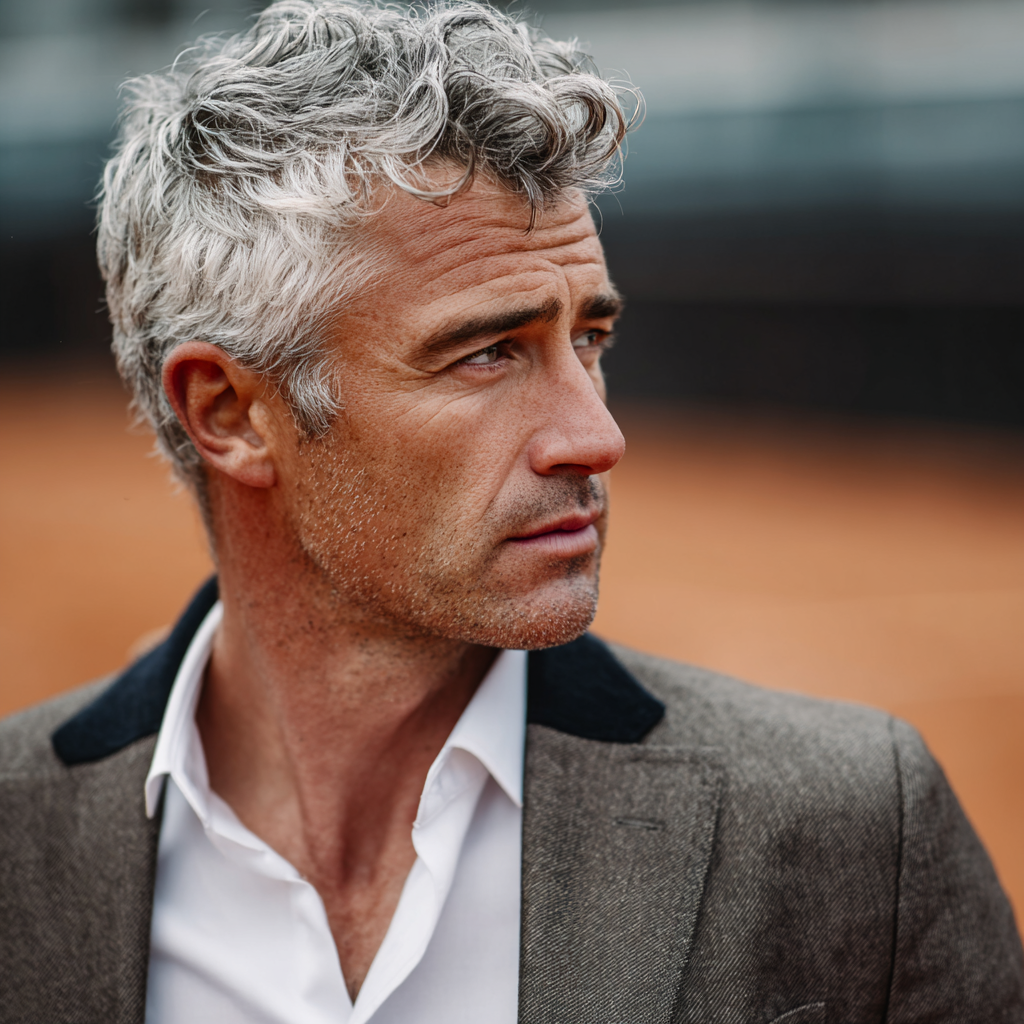
ToBe is led by former professional Tomas Behrend and operates at a club base near Aachen. The program offers elite training blocks with integrated fitness and mental coaching.
Facilities and winter plan
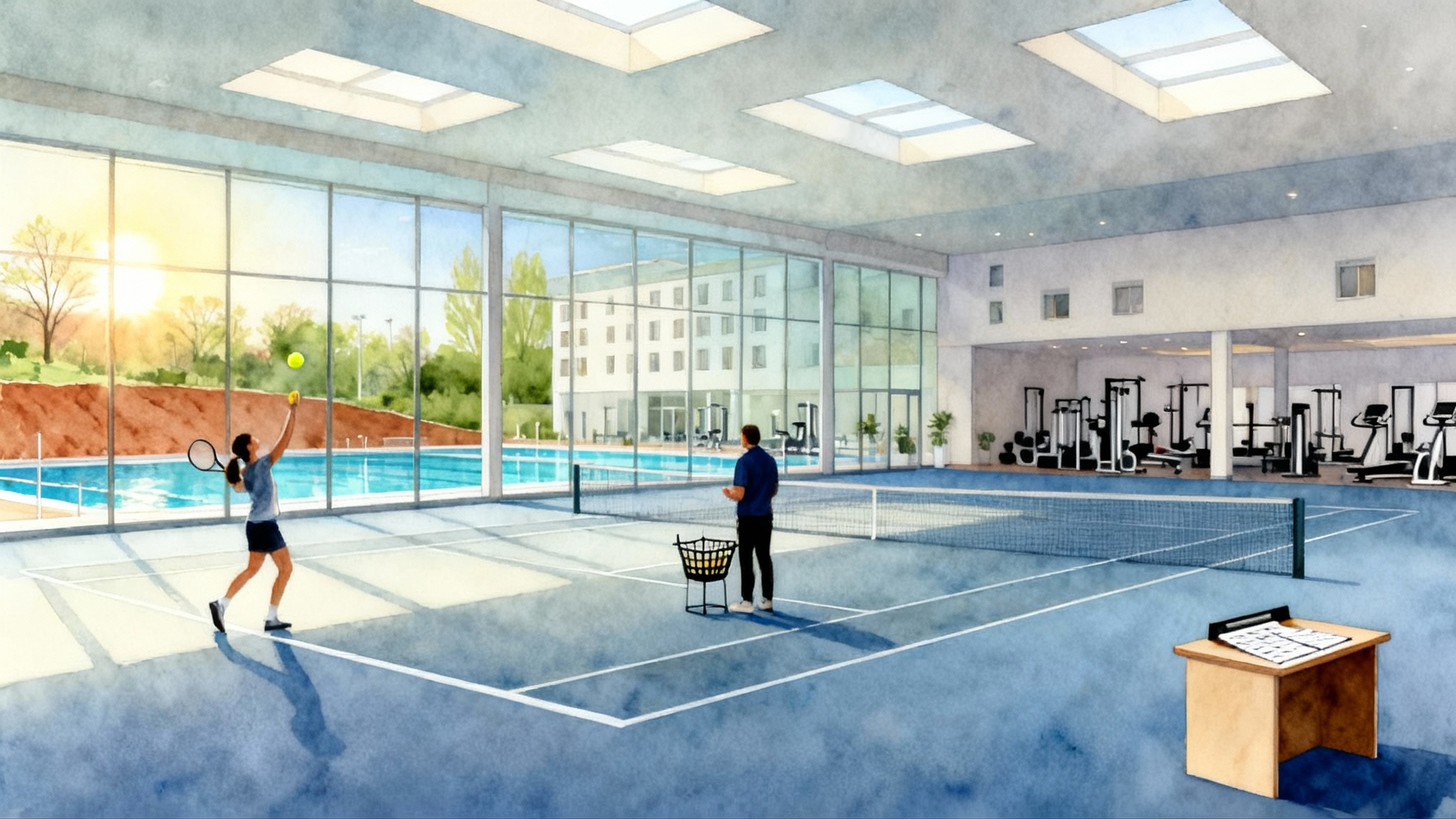
The home base has multiple outdoor clay courts and a two-court indoor hall with carpet surface. That gives ToBe a reliable winter schedule without long drives for training time, which is especially helpful for younger players who need earlier evening finishes on school nights.
Coaching model and ratios
Behrend’s pathway blends pro habits with age-appropriate progressions. Expect structured drilling to tighten repeatable patterns on clay, then measured transfer to points and sets. For a developing junior, a balanced week might include two technical blocks, one patterns block, two point-play sessions, and two strength and conditioning sessions. Ask for the ratio on each block type and how often coaches attend tournaments, since that is the best moment to coach decision making under pressure.
Academics and boarding around Alsdorf
Alsdorf sits in a practical triangle with Aachen, Cologne, and Düsseldorf. Many families enroll in local public Gymnasium tracks or bilingual programs in Aachen, while international families with younger children sometimes opt for bilingual primary options. Because ToBe is club-based, boarding is typically arranged through vetted host families. Confirm school release times and transport before committing to morning training blocks.
Competition pathways from Alsdorf
Your child can play DTB regional events across the Mittelrhein region, plus team tennis in club leagues. Weekend trips to Belgium and the Netherlands are realistic for extra matchplay, which makes Alsdorf a good launchpad for players chasing both volume and variety of opponents. Plan your calendar so January to March focuses on indoor adjustments and strength, while April to July targets clay tournaments in compact clusters to reduce travel time.
What it costs in Alsdorf
- Group training packages, three to five sessions per week: about 280 to 650 euros per month depending on indoor access and coach coverage
- Private lessons: about 40 to 80 euros per 60 minutes in the region; two per month adds 80 to 160 euros
- Strength and conditioning: about 60 to 150 euros per month
- Indoor hall time is usually cheaper than in Berlin or Munich, which helps the winter budget
Always verify whether indoor court fees are bundled or billed separately. That detail can swing your monthly total by several hundred euros in winter in any region.
Travel notes for Alsdorf
From Düsseldorf or Cologne Bonn airports, the drive to Alsdorf is usually under ninety minutes. Public transit works but adds transfers; many families combine rail to Aachen Hauptbahnhof with a short bus or car ride.
Bavaria spotlight: TennisBase Oberhaching and the Munich area
For high-performance players aiming at a national pathway, Bavaria’s flagship is the German Tennis Federation’s base at Oberhaching on Munich’s south side. The campus combines indoor and outdoor courts, athletic facilities, physio, and an on-site boarding option for selected players. See the DTB overview of TennisBase Oberhaching for facilities, school partnerships, and integrated support.
Facilities and winter access
The base equips seven indoor Rebound Ace courts for winter and six outdoor courts in summer, including five clay and one Rebound Ace. The site adds full athletic halls, modern gym hardware, on-site physio, and video tools such as PlaySight and Wingfield. For a player who needs consistent hard-court rhythm through February while keeping clay feel in spring, this mix is ideal. Oberhaching also hosts periodic professional and junior events, which helps juniors see and feel pro routines up close.
Academics and boarding
The base partners with regional schools and operates a small boarding program. For families outside federation structures, Munich has broad school options, but placements near Oberhaching fill early. If your child is not on a federation track, consider a hybrid approach that pairs a strong Munich-area club and private coaching with an academic plan that leaves afternoon windows open.
Costs and who thrives here
Pricing at federation bases varies by program and selection status. For planning, assume higher monthly totals if you require significant private coaching or off-peak indoor time. Players most likely to thrive are those already competing in national categories who can benefit from structured squads, regular physio, and hard-court volume in winter.
Travel notes for Munich
From Munich Airport to Oberhaching, plan 60 to 90 minutes by train and bus depending on the connection. Families often choose short-term rentals south of the city to shorten the evening commute.
UTR and DTB in Germany: how to build a smart calendar
-
DTB pathway: The German Tennis Federation pathway includes regional to national events plus club league matches. Ranking points reward tournament progression and league performance. Entry deadlines are firm, so align blocks of training around event clusters rather than scattering single events across distant weekends.
-
UTR pathway: Universal Tennis Rating events can add verified matchplay against a wider pool, especially useful in winter when regional calendars thin out. Use UTR for volume and confidence building, but protect weeks before targeted DTB or ITF tournaments for higher-quality training blocks and setplay.
How to combine them
- Use winter for UTR matchplay plus serve and return upgrades indoors
- Use spring for clay volume and DTB clusters in two or three bursts
- If your child is pushing toward ITF, add one two-week swing before summer exams to test travel and recovery routines
Price bands: a realistic monthly budget
Budgets vary, but these ranges help you plan. Assume a junior in the 14 to 16 range at 12 to 16 on-court hours per week.
- Day academy package with group sessions only: 300 to 700 euros per month
- Add private lessons, two hours per week: plus 320 to 600 euros
- Strength and conditioning, two sessions per week: 120 to 250 euros
- Tournament coaching coverage, two events per month: 200 to 500 euros
- Indoor court premiums in winter: plus 100 to 400 euros depending on region
A Berlin or Munich winter is typically at the upper end; Alsdorf and many towns in North Rhine-Westphalia often price lower indoor hours.
Decision checklist
- Surfaces your child needs this year: what percent clay versus hard, and why
- Indoor access at your training time in winter: how many courts, how many groups in the hall at once
- Coaching ratio by block type: technical, patterns, points; ask for a schedule snapshot
- Video routine: which sessions get filmed, how feedback is delivered, and how often
- Matchplay plan: internal ladders, UTR events, DTB tournament calendar, coach coverage
- Academic fit: school start and end times, language tracks, homework windows
- Boarding or host family: commute under thirty minutes door to door, agreed meals and curfew
- Price clarity: written monthly total with indoor surcharges, coaching at tournaments, and transport
- Travel simplicity: time from airport to housing to courts and school on a normal weekday
Sample week plans you can adapt
These are templates. Swap days as needed to fit local school timetables.
Plan A: Developing U14 on a balanced load (four on-court days)
- Monday: 90 minutes technical fundamentals, 45 minutes movement; evening homework
- Tuesday: 90 minutes pattern work and serve rhythm; light mobility
- Wednesday: Rest or school club; optional video review of serve
- Thursday: 60 minutes basket drill block for forehand contact height; 45 minutes strength
- Friday: 90 minutes point play with constraints; 30 minutes recovery
- Saturday: Ladder match or UTR verified matchplay
- Sunday: Off, light family hitting
Plan B: U16 pushing toward national DTB events (five on-court days)
- Monday: 2 hours clay patterns, serve plus one; post-session video of returns
- Tuesday: 60 minutes strength and speed; 60 minutes technique on backhand and transition
- Wednesday: 90 minutes competitive sets, short sets to four; mental reps on changeovers
- Thursday: 60 minutes mobility and injury prevention; 60 minutes serves and returns
- Friday: 2 hours matchplay; coach notes and tournament prep
- Weekend: DTB event or two UTR singles for verification
Plan C: High academic load with winter indoor emphasis (four on-court days plus study)
- Monday: 60 minutes morning serve and return indoors; evening study block
- Wednesday: 90 minutes technical plus 30 minutes core strength
- Friday: 90 minutes point play with patterns; quick video clips
- Saturday: Two singles sets; recovery routine
- Daily: Ten minutes serve toss rehearsal and shoulder prehab at home
Which academy fits which player type
- TennisTree, Berlin: A good fit for thinkers and competitors who thrive in game-based sessions and whose families value city logistics and flexible academics. Winter consistency is supported by a two-court dome and dense public transit.
- ToBe, Alsdorf: Strong for players who benefit from a pro-modeled training week on clay, with practical indoor access, and who want frequent regional competition including cross-border weekend events.
- TennisBase Oberhaching, Munich area: Best for national-level athletes needing integrated facilities, boarding, and a hard-court plus clay mix through winter under federation oversight.
Final thoughts
Choose the academy that best matches your child’s calendar, not just their ambition. Put three things on paper before you decide: the surfaces split month by month, the winter indoor plan with times and courts, and a tournament calendar in two to three clusters. When those pieces fit together, your child trains with intention, competes with rhythm, and recovers with enough time to be a student. The result is not only better tennis, it is a season you can sustain.