Best Tennis Academies in Japan 2026: Tokyo, Osaka, Yokohama
A buyer’s guide to Japan’s top tennis training in Tokyo, Osaka, and Yokohama. We compare Seijo Tennis Academy, Shi Shi Tennis Academy, and other standouts for juniors and adults, including coaching, courts, English support, costs, trials, and calendar fit.
 Tommy
Tommy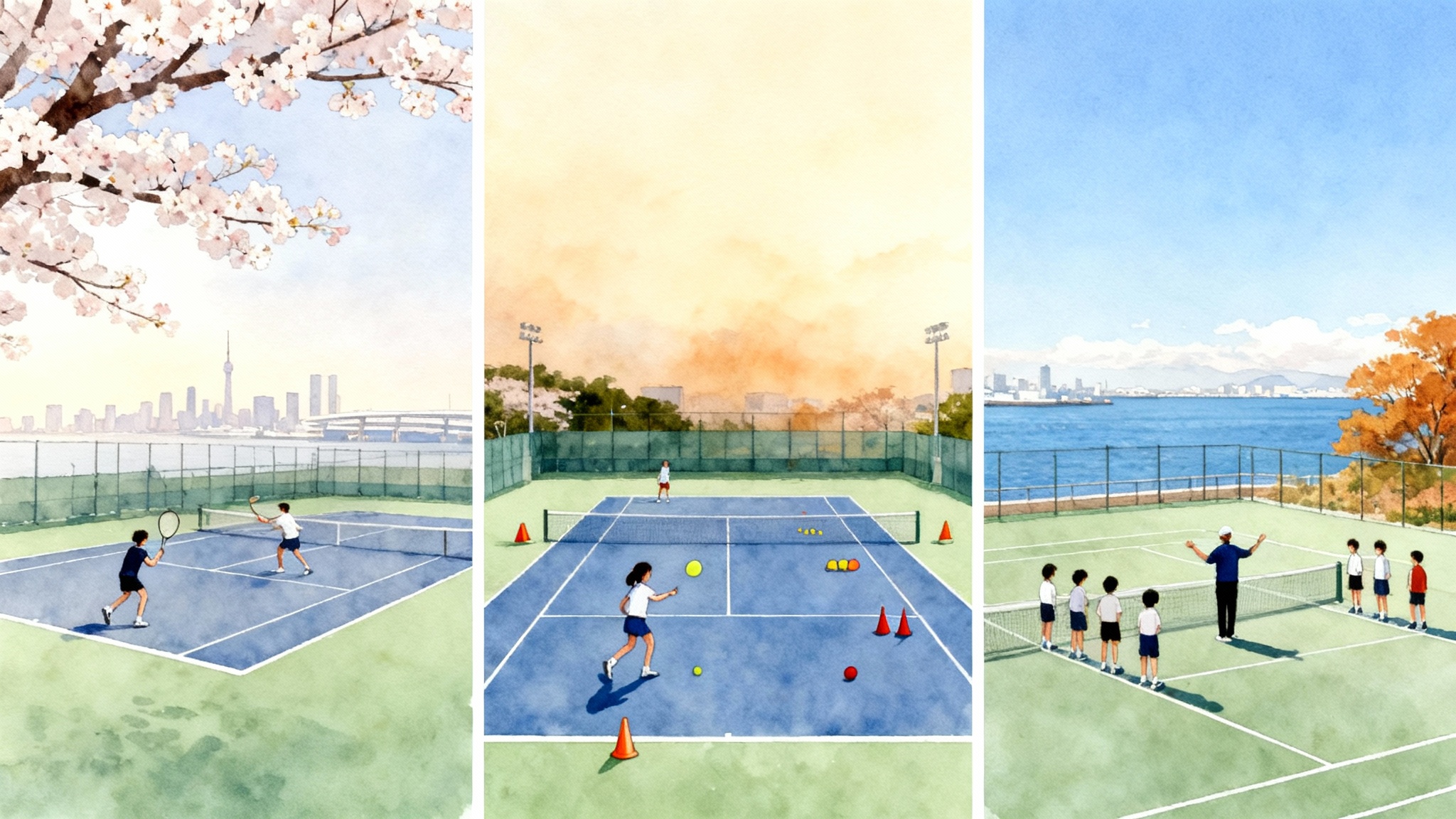
How to use this guide
If you plan to train or place a junior in Japan in 2026, the three biggest hubs are Tokyo, Osaka and Yokohama. This guide compares Seijo Tennis Academy, Shi Shi Tennis Academy and other reliable programs side by side. We focus on what actually shapes daily training and outcomes: coaching quality and style, court surfaces, language support, pricing in yen and dollars, trial class options, commuting versus boarding and how to time your training around Japan’s seasons and competition calendar.
To keep money comparisons simple, this guide uses an approximate rate of 150 Japanese yen per 1 United States dollar as of December 2025. Prices vary by coach seniority, court fees and location, so treat dollar figures as estimates.
Tokyo: Seijo Tennis Academy vs. Shi Shi Tennis Academy
Seijo Tennis Academy, Setagaya (Tokyo)
Who it suits
- Juniors who thrive in structured group blocks
- Families that want a straightforward commuter option near central Tokyo
- Adults who prefer predictable schedules over private itineraries
What stands out
- Location and access: The academy operates in Setagaya’s Seijo area, about a 10 minute walk from Seijo Gakuenmae Station on the Odakyu Line, which keeps weekday travel realistic for school age players.
- Courts and conditions: Sessions typically run on outdoor hard courts at the on site facility. Hard courts reward footwork economy and compact preparation, which helps juniors transitioning to higher pace play.
- Trials: A low cost trial lesson is available, historically around 1,100 yen, which makes it easy to test a class before committing.
- Language: Day to day communication is primarily in Japanese. Families who need ongoing English should confirm availability with staff in advance.
- Program details: See the Seijo Tennis Academy profile for classes, facilities and coaching pathway.
How it teaches
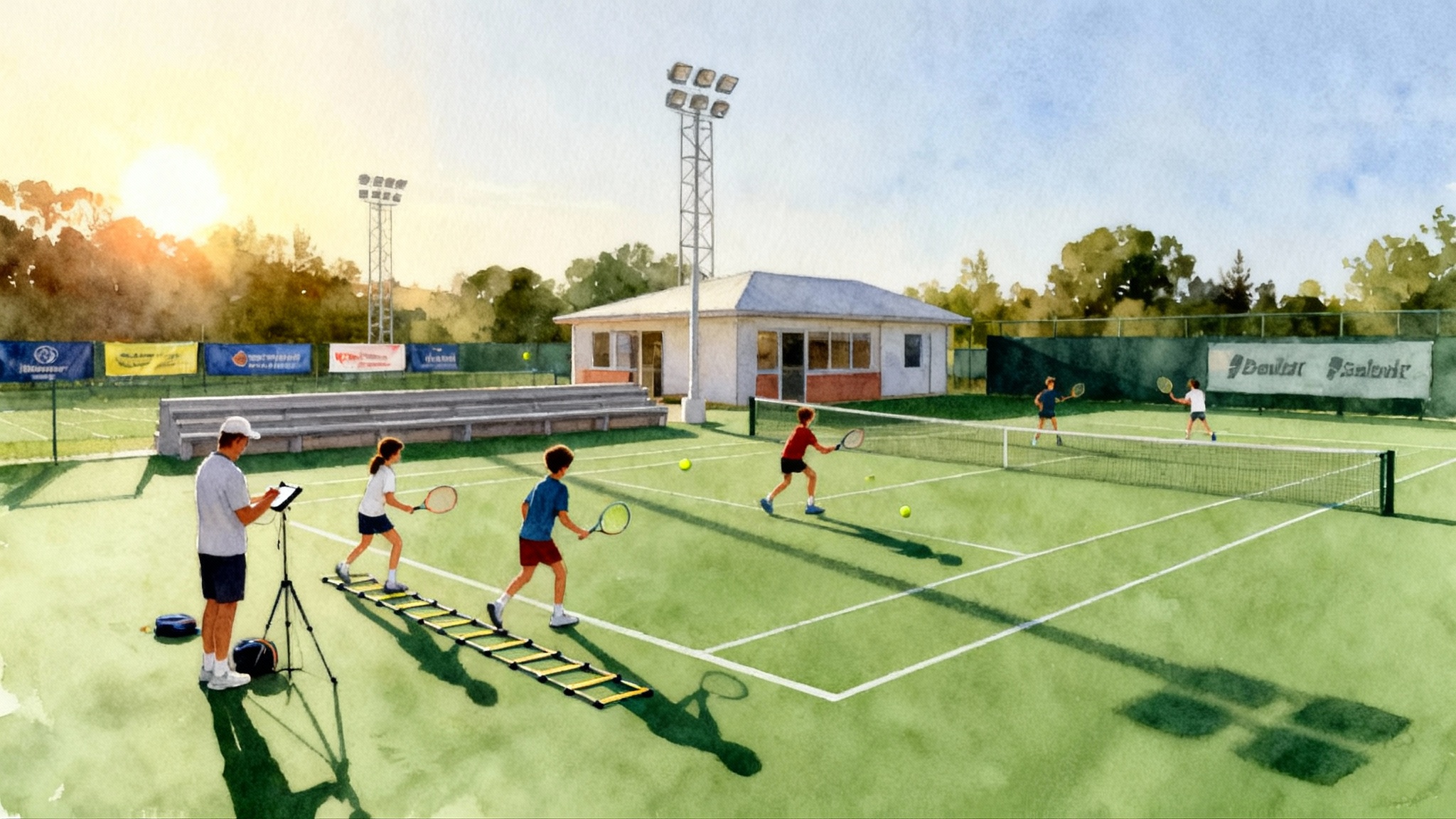
- Class sizes are kept manageable with skill tiered groups. Drills focus on consistent footwork lines, stable contact height and repeatable service motion checkpoints. Expect disciplined feeding sequences that progress to live rally and points.
Typical costs
- Group programs commonly run about 9,000 to 15,000 yen per month for weekly classes, roughly 60 to 100 United States dollars at the above rate. Private add ons cost more, and there may be separate court or lighting fees in some time slots.
Ideal use case
- A junior who needs regular reps, peer competition and a trainable daily route. Parents can build a tidy rhythm around school days and weekend match play in the wider Tokyo league ecosystem.
Practical tips
- Take the trial, then ask to watch part of a different level class. You will learn more about coaching cues and corrective feedback density by seeing how the staff works with both stronger and weaker groups.
- If you plan to play more than one day a week, ask about multi day discounts and whether you can mix technical classes with point play blocks.
Shi Shi Tennis Academy, Tokyo
Who it suits
- Adults who want bilingual instruction and fast, personalized gains
- Tournament minded juniors who need targeted mechanics, match habits and mental routines
- Families on flexible schedules who can book courts in different neighborhoods
What stands out
- Coaching pedigree: Instruction is led by a former national champion of Japan who also reached the National Collegiate Athletic Association Division I final in the United States. Lessons are delivered in Japanese or English, which is rare at this level in Tokyo.
- Format: Private, semi private or small group sessions tailored to your video clips, pain points and match calendar. The coach often teaches on public or member courts you reserve, so location is flexible.
- Planning: Expect a clear plan for grip fine tuning, swing path and spacing, serve routine and pattern work with specific constraints, for example deep crosscourt, then line, then approach with preset finish targets.
- Where to learn more: Check the Shi Shi Tennis Academy profile for booking approach and venues.
Typical costs
- Private coaching in central Tokyo commonly falls in the 10,000 to 16,000 yen per hour range, about 67 to 107 United States dollars, plus any court fee. Semi private or small groups bring the per player cost down. Because this is bespoke coaching, confirm your all in hourly number, including court booking, before you start.
Ideal use case
- An adult returner who wants to rebuild mechanics without relearning in Japanese, or a junior who needs specific pre tournament adjustments that group classes cannot deliver fast enough.
Practical tips
- Bring 3 short match clips and a list of top three outcomes you want in the next eight weeks. Ask for one technical and one tactical assignment for solo hitting between lessons, so progress continues on non lesson days.
Osaka: training around Utsubo, plus how the calendar helps you
Osaka’s flagship public complex is the Morita Tennis Center Utsubo in Nishi Ward. It has a center court and multiple outdoor hard courts, and hosts major events. Group and private lessons run on site through local providers. English may be limited by program and time slot, so ask specifically about language when you book.
Why Utsubo matters for juniors
- Osaka hosts one of the most important junior events of the year, the Osaka Mayor’s Cup, now in the International Tennis Federation J500 category. This is a late September fixture in most seasons and it draws many of the world’s best juniors. See recent timing on the ITF page for the Osaka Mayor’s Cup J500 tournament.
What to expect in lessons
- Osaka groups are practical and movement heavy. On hard courts you will see a lot of serve plus one patterns, deep crosscourt building and mid court approach choices. Programs will often add fitness blocks, sometimes at separate cost.
Typical costs
- Adult and junior group classes in Kansai often range from about 6,000 to 12,000 yen per month for weekly sessions, roughly 40 to 80 United States dollars, with private coaching higher. Night lighting and center court special classes may cost more.
Best fit
- Juniors who want strong public facility culture and tournament access. Adults living or working near the central business districts who can commit to consistent weekly slots.
Yokohama: English friendly choices for families
Yokohama has two dependable options for international families.
- Yokohama International Tennis Community, often called YITC, runs two hour classes for adults and juniors in level based groups. Several sessions are taught in English. Terms typically run as multi week cycles, and private lessons and game classes are available. The club also offers play rights by ticket, which can be a low commitment way to build volume before you decide on a full term.
- Yokohama Tennis International places coaches at multiple school and embassy locations in Yokohama and Tokyo. Staff include United States Professional Tennis Association certified pros and former competitive players. This is a practical solution if your child attends an international school with on site courts.
Typical costs
- Group programs in Yokohama often fall between 9,000 and 15,000 yen per month for weekly sessions, about 60 to 100 United States dollars. Private lessons will cost more and can vary by venue and coach certification.
Best fit
- Families who prioritize English communication for both the player and the parent, and who want a realistic commute after school. If your junior attends an international school, ask whether the academy already runs sessions at that campus.
Surfaces, weather and what that means for training blocks
Surfaces
- Hard courts are common in Tokyo and Osaka, especially at Ariake and Utsubo, and they reward early preparation and strong core stability.
- Sand filled artificial grass, called omni in Japan, is also widespread, especially at municipal facilities. It rewards precise footwork patterns and controlled acceleration, since the ball skids lower and the footing is different from acrylic hard.
Weather windows
- March to May is mild in Kanto and Kansai, a great time for building aerobic load and volume on court.
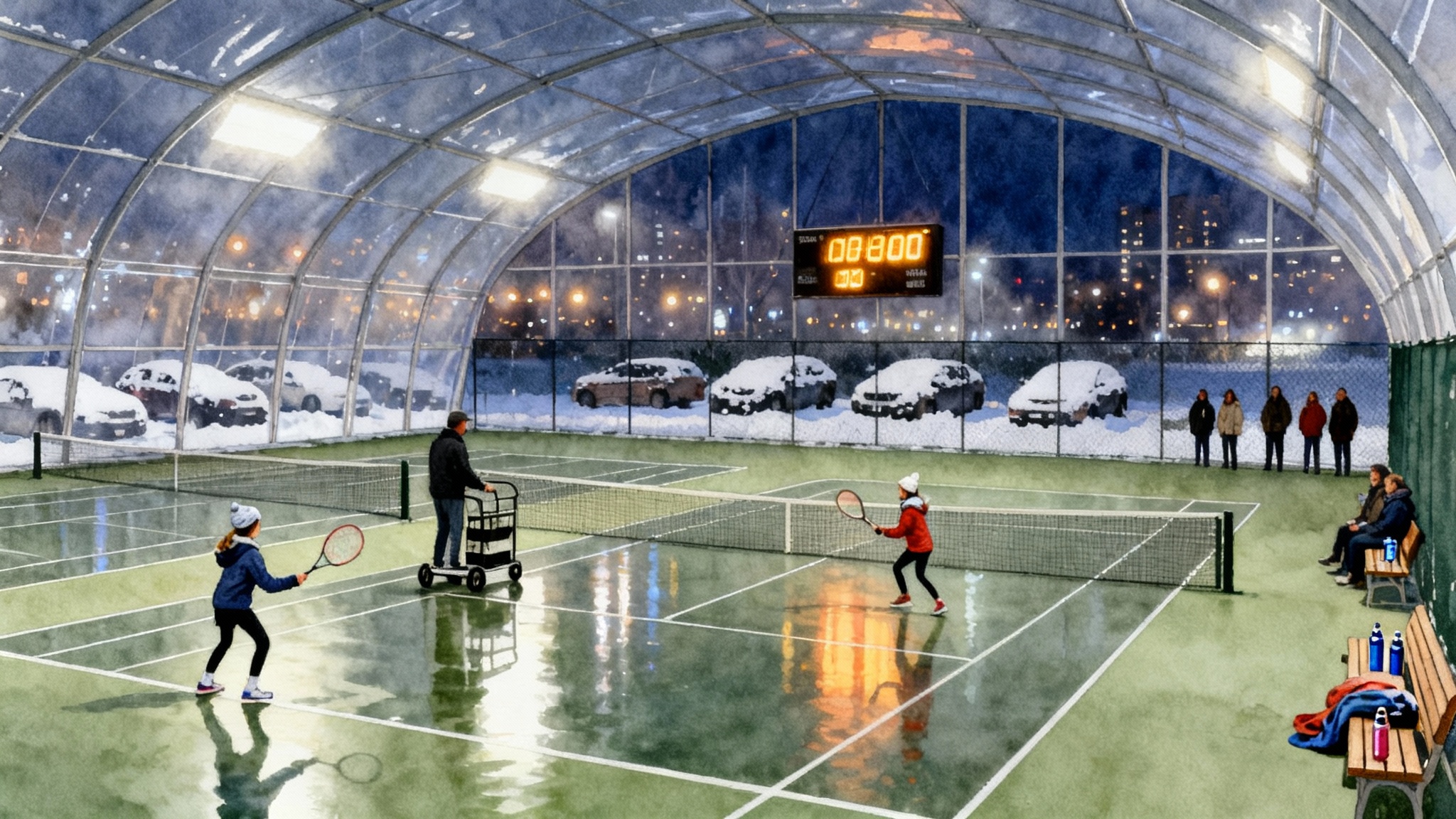
- June to early July brings the rainy season. Book extra indoor slots or plan movement and strength sessions for wet days. Public indoor courts often require advance lotteries.
- Mid July to early September is hot and humid. Plan earlier starts, heat acclimation protocols and hydration routines. Many academies adjust work to rest ratios and use more shade breaks.
- October and November are prime competition months. Osaka’s J500 junior event and other national competitions fall in this period. December to February can be windy and dry in Kanto, which is useful for serve work and heavy ball training on clear days.
Fitting your training to Japan’s 2026 competition calendar
Most juniors here anchor their year around the Japan Tennis Association’s national series, plus selected International Tennis Federation junior events. The All Japan Junior championship typically culminates in August. You can follow official updates and date windows on the JTA’s event pages, for example the All Japan Junior championship information.
If you are weighing Asia options, compare formats and seasons in our look at India tennis academies 2025–26.
A practical 2026 plan for a competitive junior
- January to February: Technical rebuild and movement capacity. Two strength sessions and four court sessions per week. One practice match per weekend.
- March to May: Pre season ladder. Add specific serve targets and return depth goals. Enter local ranking events to bank match repetitions.
- June to early July: Rain plan. Secure one indoor weekly slot and one flexible private session. Use wet days for video review and a sprint mechanics block.
- Late July to August: Peak and taper around regional and national junior championships. Two weeks out, narrow to your top two serve patterns and top two rally patterns. Focus on first ball accuracy and neutral ball depth.
- September to November: If you have the level, build around the Osaka Mayor’s Cup J500 or other ITF junior tournaments in the region. Shift to pattern reinforcement and recovery quality. Treat school workload explicitly in your plan.
- December: Recovery and audit. Run a two hour block to test grip integrity, contact height stability and return timing. Write next year’s two technical and two tactical goals.
Commuting vs. boarding in Japan’s big three cities
Tokyo, Osaka and Yokohama are commuter cultures for tennis. Boarding academies are uncommon in the metro areas and are usually tied to sports schools or remote camps. Expect to commute by train, bicycle or car. For heavy weekly volume, realistic travel time matters more than brand name.
How to make commuting work
- Keep the trip under 45 minutes door to door on weekdays. That one decision preserves sleep and homework bandwidth for juniors and work capacity for adults.
- Choose a facility with backup courts in case of rain. If your primary is outdoor hard, identify a nearby indoor backup or an omni option that drains fast after showers.
- Anchor two fixed class slots first, then layer flexible private or match play. That sequence makes rescheduling easier when weather or school events intervene.
Pricing, trials and what to verify before you pay
Pricing checklist
- Hourly rate and what it includes. In Tokyo, private coaching commonly lists only the coach fee. Court, lighting and new ball fees may be separate.
- Cancellation windows and wet weather policy. In rainy season, a clear policy saves both money and frustration.
- Multi day and family discounts. Many academies discount a second weekly class or a sibling.
Trial strategy
- Take a trial at a time that matches your real slot. Evening classes feel different from mornings because wind, court speed and player mix change.
- Ask for one measurable assignment to complete before the second lesson. Good programs give you objective tests, for example land 8 of 10 serves to a backhand target or rally 20 balls crosscourt above the service line.
What a reasonable budget looks like
- Adult improving to league level: One weekly group class plus one private per month, about 9,000 to 15,000 yen for group and 10,000 to 16,000 yen for a private hour, roughly 60 to 100 plus 67 to 107 United States dollars. Add periodic court fees.
- Competitive junior: Two weekly groups plus two private hours a month, about 30,000 to 50,000 yen total monthly, roughly 200 to 333 United States dollars, plus tournament entry and travel.
Quick buyer’s comparison: who is likely your best fit
- Seijo Tennis Academy, Tokyo: Choose this if you want a structured commuter program with low friction trials and reliable group progressions. Best for school age kids in western Tokyo and adults who like predictable routines.
- Shi Shi Tennis Academy, Tokyo: Choose this if you need bilingual private instruction and fast gains for adult players or performance juniors. Best for busy professionals and juniors who need specific match driven tweaks.
- Utsubo area programs, Osaka: Choose this if you want the heartbeat of public hard court tennis with direct access to major events, and you can commit to a steady weekly slot.
- Yokohama English friendly academies: Choose this if your family prefers English across coaching and parent communication, and you want a realistic after school commute.
Three simple actions to get started this month
- Map your commute and trial two places. Do one group class and one private in the same week. Compare how many quality contacts and coaching cues you received, not just how tired you felt.
- Write your 8 week goal. Pick one technical and one tactical goal, for example a higher contact point on the forehand and first ball depth after serve. Share it with the coach so every drill connects to these two outcomes.
- Align with the calendar today. If you are targeting All Japan Junior in August, your first conditioning block starts in January. If you are eying the Osaka Mayor’s Cup J500 in autumn, build endurance and serve development in spring, then pattern reinforcement in late summer.
Bottom line
Japan’s big three metro areas offer very different tennis experiences that can all work well in 2026. Seijo delivers structure and commuter convenience. Shi Shi brings elite, bilingual, private instruction that moves the needle quickly. Osaka’s Utsubo culture surrounds you with serious hard court tennis and major events. Yokohama’s international programs make communication easy for families. Pick the one that best fits your commute and goals, then set an eight week plan linked to Japan’s tournament windows. The match results will follow when the plan and daily work truly match the calendar.