From Dolomites to Bordighera: How Piatti Forged Jannik Sinner
Jannik Sinner left alpine skiing at 13 to join Riccardo Piatti in Bordighera. Inside the fundamentals-first build, the tight team that shaped his weapons, the 2022 coaching change, and how academy choices fueled his Grand Slam breakthrough.
 Tommy
Tommy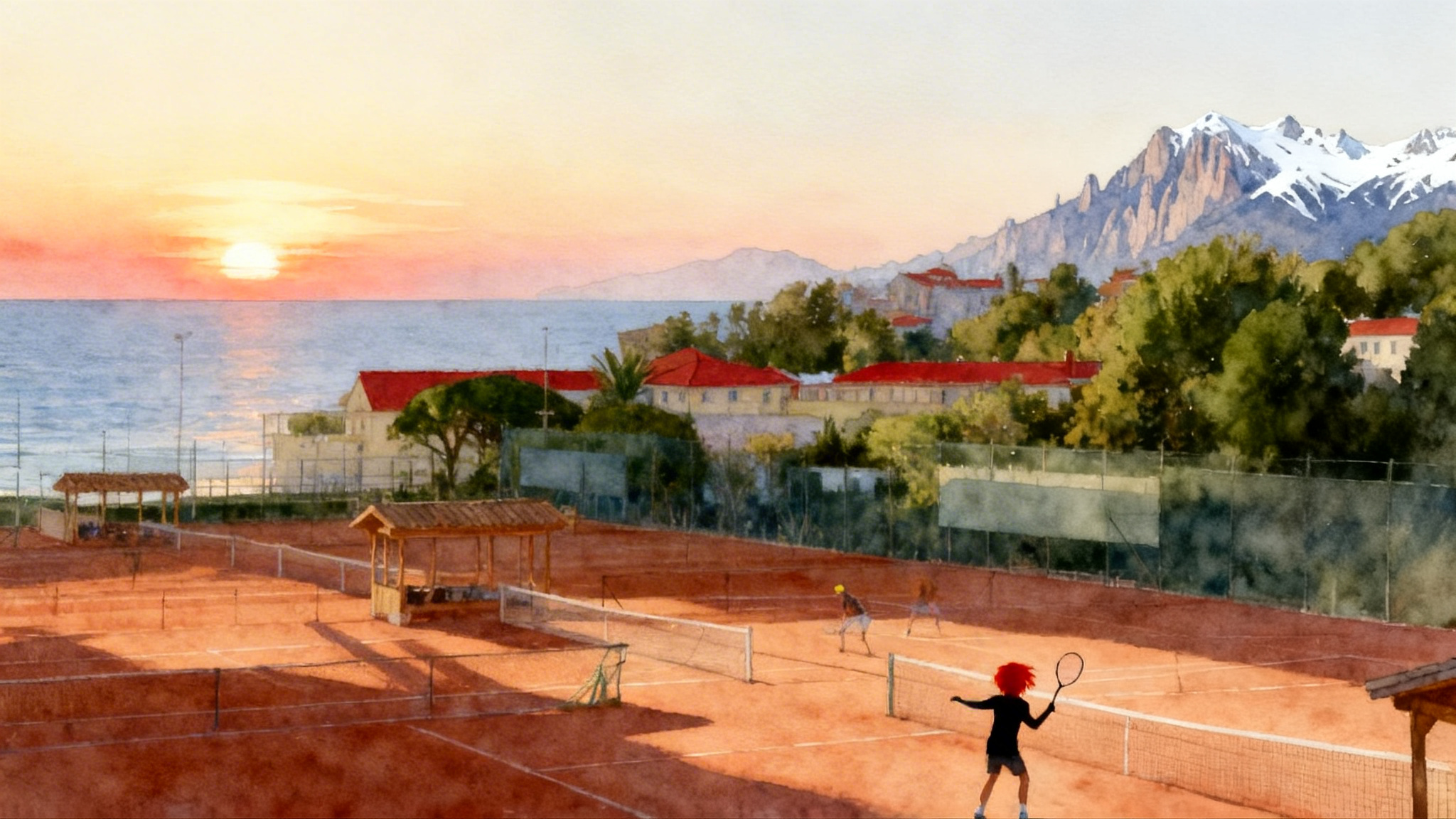
A boy from the mountains and a very modern tennis education
If you want a case study in how a great academy can shape a champion without rushing him, start in Italy’s Dolomites. Jannik Sinner grew up among chairlifts and snow fences, a gifted alpine skier who won junior races and seemed destined for gates and gondolas. At 13 he chose a different slope. He put away the racing skis and moved hundreds of kilometers south to train with Riccardo Piatti in Bordighera. He did not arrive as a polished prodigy. He arrived as a multisport kid with coordination, fearlessness, and an appetite for practice. Those raw inputs are the foundation of the story, because what happened next shows how the right academy, the right sequencing, and timely changes can launch a career.
Sinner’s leap was not just geographic. It was cultural. He left a tight‑knit valley to live near the sea, swapping winter rhythms for year‑round hard courts. The decision was decisive and early, but not too early. Until 13, he was not over‑coached in tennis. The late switch kept him curious, fresh, and resilient. That freshness is crucial for the long build Piatti prefers: install the engine first, race later.
As Sinner later described, he left home at 13, committed to tennis, and moved to Piatti’s center in Bordighera to learn how to build a professional game from the ground up. The choice is documented in a Roland Garros interview that notes he moved to Piatti’s centre to pursue tennis full time.
Why a fundamentals‑first build worked
Great academies resist the urge to rush to results. Piatti’s group worked on Sinner like a craftsman shapes a violin. The goals were simple and demanding:
- Repeatable strokes that hold up under pressure. That meant a compact takeback, early preparation, and a neutral balance at contact so the ball left the strings heavy and true.
- Footwork that is economical and aggressive. The gym language was not big muscles, it was angles, rhythm, and load transfer. Picture a skier carving clean arcs. Sinner learned to carve with his feet on the baseline.
- A serve that becomes a lever. Early on, Sinner’s delivery was a tool. Over time, it became an opening move.
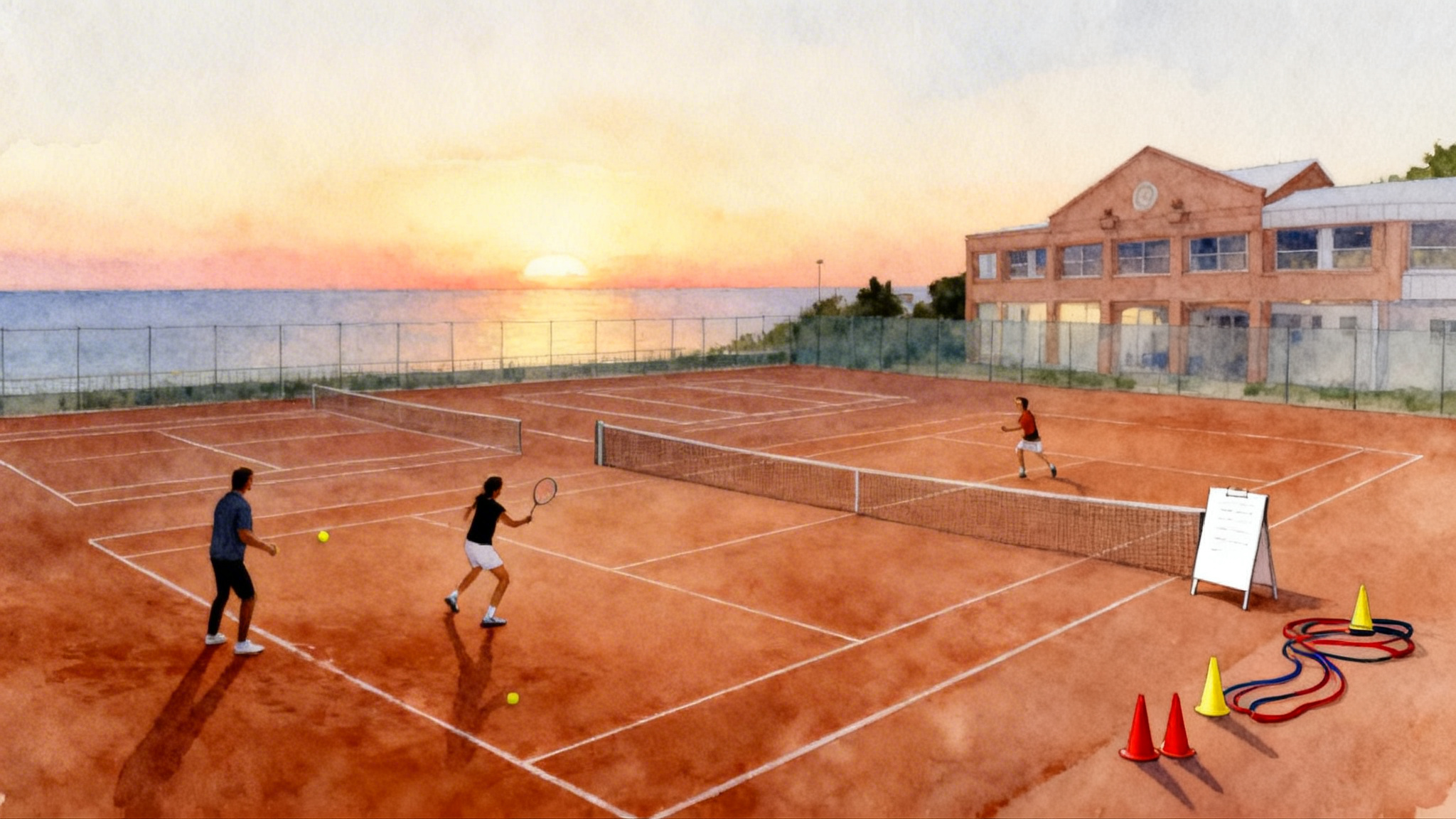
The daily work looked modest from a distance: basket drills on the rise, cross court to cross court before breaking line, transitional volleys to lock in posture, live point patterns with clear intentions. Winning juniors was not the point. Building a tour‑proof base was.
A small, focused team made this possible. Instead of a crowded court with overlapping opinions, Sinner had a tight circle echoing the same cues. When a player hears one message from three mouths, the brain adapts faster. The academy’s structure also gave him specialized inputs at the right time, from physical preparation to recovery habits, but always tethered to the central blueprint. The message was consistent: master the patterns that will matter as a pro, not just the tricks that win a boy’s match on Saturday.
Competition blocks that accelerate learning
Training alone never turned a player into a threat on the main tour. What Piatti’s academy did well was to send Sinner into carefully chosen competition blocks, then pull him back to practice to consolidate. Think of it as stress testing followed by controlled rebuilding.
- Block type 1: Rankings ladder. Enter Futures or lower tier Challengers in clusters so that improvements have a chance to stick. Three weeks on, two weeks to retool.
- Block type 2: Surface concentration. Stay on one surface long enough to sort out footwork patterns and timing windows, especially during growth spurts.
- Block type 3: Pattern practice under pressure. Pre assign two or three match patterns for the block. For example, first ball forehand inside in after a body serve, or backhand redirect up the line at 30 all. Track them like a pitch count.
These blocks are not about chasing trophies. They are about collecting data the coaching group can actually use. Video and match notes made their way back to Bordighera, where drills were written to address one or two issues at a time. This is how a player who left skiing at 13 could look unusually composed by 18. The habits were in place long before the stage got big.
The crystallizing years: Milan 2019 to tour contender
People often point to the 2019 Next Gen ATP Finals in Milan as Sinner’s reveal. He did more than win. He showed he could win on a stage with lights, graphics, and expectations, all while keeping his follow through short and his feet organized. The mechanical discipline that had been installed at the academy let him trade with older pros without flinching. He was not yet the finished product, but he was proof of concept.
From there, the climb was steady. Title runs and deep finishes came without loud declarations. The two constants were the stability of his mechanics and an attitude that treated hard points like puzzles, not emergencies. When the legs set and the eyes read the ball early, it is easier to stay calm.
For a parallel on long horizon academy work, see Niki Pilic’s impact on Djokovic, another example of patient development paying off on the biggest stages.
The 2022 decision: when to change environments
Every long project reaches a moment when familiarity becomes a crutch. In early 2022, after a strong rise under Piatti, Sinner decided it was time to change the inputs. He parted with the academy team and appointed Simone Vagnozzi as head coach in February, then added the Australian veteran Darren Cahill in July. The how and the why matter.
- Why change: To add new expertise without disrupting the technical base. Vagnozzi brought a modern tactical lens and day to day structure. Cahill added major match experience and a sharp eye for the serve and first strike patterns. The message to Sinner was clear: your mechanics are good, now we scale your weapons and your decision speed.
- How to change well: Keep roles tight, avoid committee confusion, and preserve what already works. The new team emphasized a united voice, even as they divided responsibilities.
Changing environments is risky. Players who swap coaches for novelty often lose their identity. The reason Sinner’s move worked is that his identity was already firm. He was not searching for who he was. He was upgrading how he did it.
From sturdy platform to signature weapons
Under the new staff, the serve and the plus one ball became priorities. Add a few miles per hour to the first serve, vary locations more, and everything behind it simplifies. With a stronger first strike, the backhand redirect and inside out forehand stopped being heroic shots and started being scheduled arrivals.
The return game also sharpened. Because his balance at contact was already sound, Sinner could take returns early without sacrificing depth. That put opponents under immediate pressure, especially on medium paced second serves. None of this was magic. It was cumulative work layered onto the fundamentals baked in Bordighera.
The breakthrough that validated the blueprint
In January 2024, Sinner raced through Melbourne with the look of a player who had added horsepower to a chassis built to last. He ended Novak Djokovic’s decade of dominance at the Australian Open with commanding, clear tennis, then clawed back from two sets down in the final to beat Daniil Medvedev. The comeback is chronicled in an ATP account of his two set comeback in Melbourne. For context on his opponent’s development pathway, see how Elite Tennis Center built Medvedev.
The following months confirmed the step change, with Masters level titles, consistent deep runs, and the ascent to world number one. Results like these tempt people to search for a single cause. The truth is layered. The Piatti years gave Sinner a rock steady base and a habit of disciplined reps. The 2022 shift supplied fresh eyes and sharper edges. Together, they produced a player who could finally absorb a bad set, adjust, and win the match that matters.
Practical takeaways for players, parents, and coaches
Late specialization can work
- Why: Multisport kids often develop superior coordination, balance, and competitive range. Sinner’s skiing background taught him how to commit to a line, manage fear, and trust his legs.
- What to do: Until 12 or 13, vary movement diets. Include sports that require edge control, rhythm, and quick read react skills. When tennis becomes the choice, switch decisively and respect the long build.
Build a tight technical base before you chase points
- Why: Mechanics that hold at speed save energy, protect from injury, and free the mind for tactics. Without that base, every upgrade is a patch.
- What to do: Audit three pillars every quarter: contact quality, posture through the swing, and footwork patterns into and out of contact. Track with slow motion video, not just coach memory. Do not move up a tournament tier until those pillars are stable against comparable peers.
Keep the coaching team small and aligned
- Why: Many voices create noise. A compact team accelerates learning because cues are consistent.
- What to do: Assign roles. One lead coach owns the technical map. One performance coach owns physical preparation and recovery. Support roles can rotate, but the player should hear one plan.
Know when to change environments
- Why: Stagnation hides in routine. The right switch resets standards and adds new expertise.
- What to do: Set trigger points in advance. For example, if a serve target speed or hold percentage plateaus for two full blocks, or if a player stops asking questions in practice, explore new inputs. When changing, keep the non negotiables. In Sinner’s case, the base strokes and footwork rules stayed. The team changed how to weaponize them.
Structure competition blocks like a syllabus
- Why: Random scheduling creates random learning. Blocks turn tournaments into labs.
- What to do: Plan 10 to 12 weeks as mini seasons with one or two themes. Sample progression for an academy player with pro ambitions:
- Weeks 1–3: Two Futures events plus one Challenger qualifier on hard courts. Theme: first serve location and plus one forehand. Metrics: first serve in, points won behind first serve, unforced errors on plus one.
- Weeks 4–5: Practice block focused on serve rhythm and return depth. Daily serve ladders to all three targets. Return drills that force early contact from inside the baseline.
- Weeks 6–8: Step into one Challenger main draw and one ATP 250 qualifying based on ranking. Theme: backhand redirect under pressure and transition patterns. Metrics: backhand line winners, successful approach percentage, break point conversion.
- Weeks 9–10: Practice block to consolidate, with heavier conditioning and match simulation sets that start at 3 all or 30 all.
- Weeks 11–12: Repeat at a higher tier only if metrics advanced. Otherwise, hold the tier and deepen the theme.
For juniors and their families, this approach can feel slow. The payoff is that when a player finally arrives on a big stage, he brings a game that is simple to run at speed and durable across surfaces.
For another academy model that balances patience with ambition, compare how Rafa Nadal Academy fueled Casper Ruud.
What academies can copy from Bordighera
- Install identity early. Teach players to stand on the baseline and take time away, even if you later expand their toolbox. An identity is a north star when matches turn.
- Train for contact quality, not just outcome. A clean ball, hit from a stable base, travels. Teach the feel of heavy spin and the sound of the sweet spot, then measure it in live points.
- Protect practice quality. Limit group sizes so coaches can see footwork details. Use short, frequent feedback loops and one sentence cues. When players repeat a cue back in their own words, it sticks.
- Normalize video and simple data. Chart a few patterns, not everything. If you cannot draw the week’s plan on one page, it is too complicated.
- Build partnerships with selective events. An academy with relationships at a few tournaments can secure wild cards or practice courts that make the block model possible.
The through line from the Dolomites to Melbourne
Sinner’s journey makes intuitive sense when you think like a coach. The skier’s balance shaped the tennis player’s base. The academy’s patience let the base harden. The small team aligned the message. Then, at the right time, a change of staff sharpened the weapons and decision speed. Finally, the world saw the result when he turned a two set deficit into his first major. The arc is coherent because each step served the next.
Players and parents often ask whether they should specialize early, whether to chase points, and when to switch coaches. The best answer is not a slogan. It is a sequence. Specialize when curiosity becomes commitment. Chase points only after the base is stable. Switch when the environment stops challenging you and you can protect your identity through the transition.
Sinner’s pathway shows that greatness is not an overnight sprint. It is a series of well timed steps, taken with clear eyes and a steady heart. For academies, the message is even simpler: if you build carefully, and change bravely, you give talent a place to grow. And once in a while, a teenager from the mountains walks in, and a champion walks out.