Algarve Tennis Guide: Lagos to Vilamoura, March to November
Plan a climate-smart tennis block in Portugal’s Algarve. Month-by-month guidance for clay and hard courts, 7 and 14 day camp itineraries, walkable lodging near clubs, Lisbon and Cascais tournament pairings, costs, and wind and rain workarounds.
 Tommy
Tommy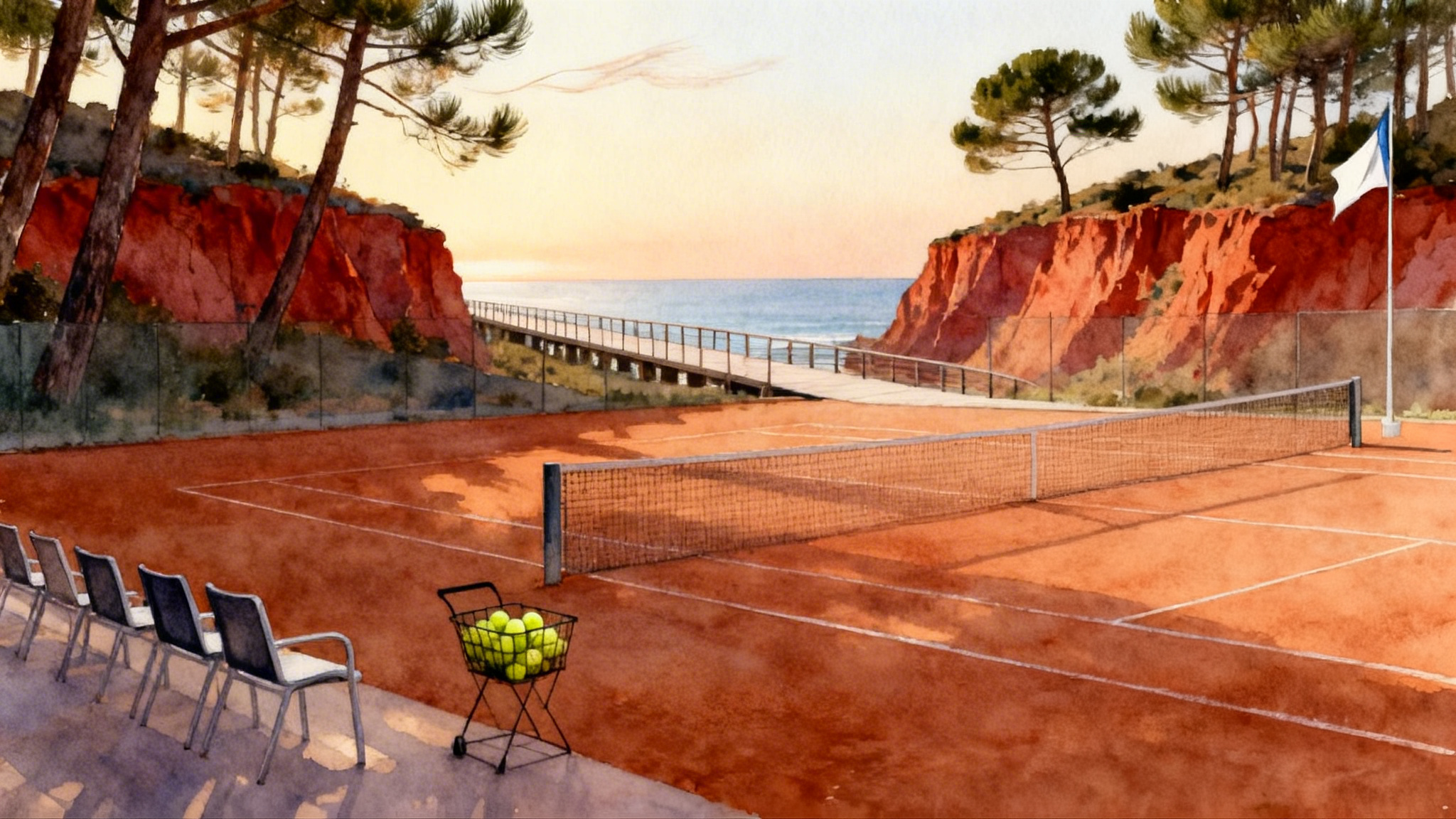
Why the Atlantic-breeze base works
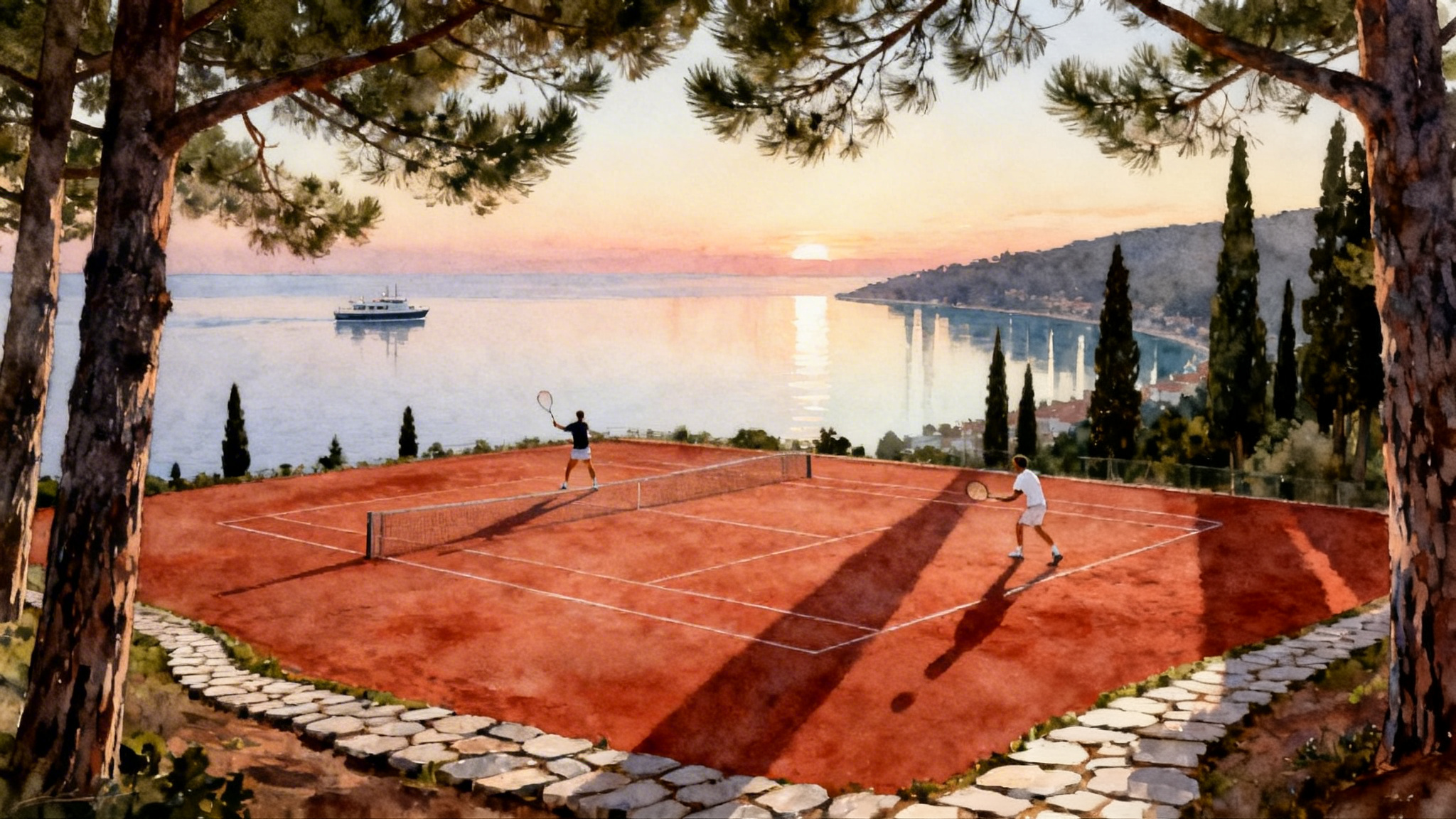
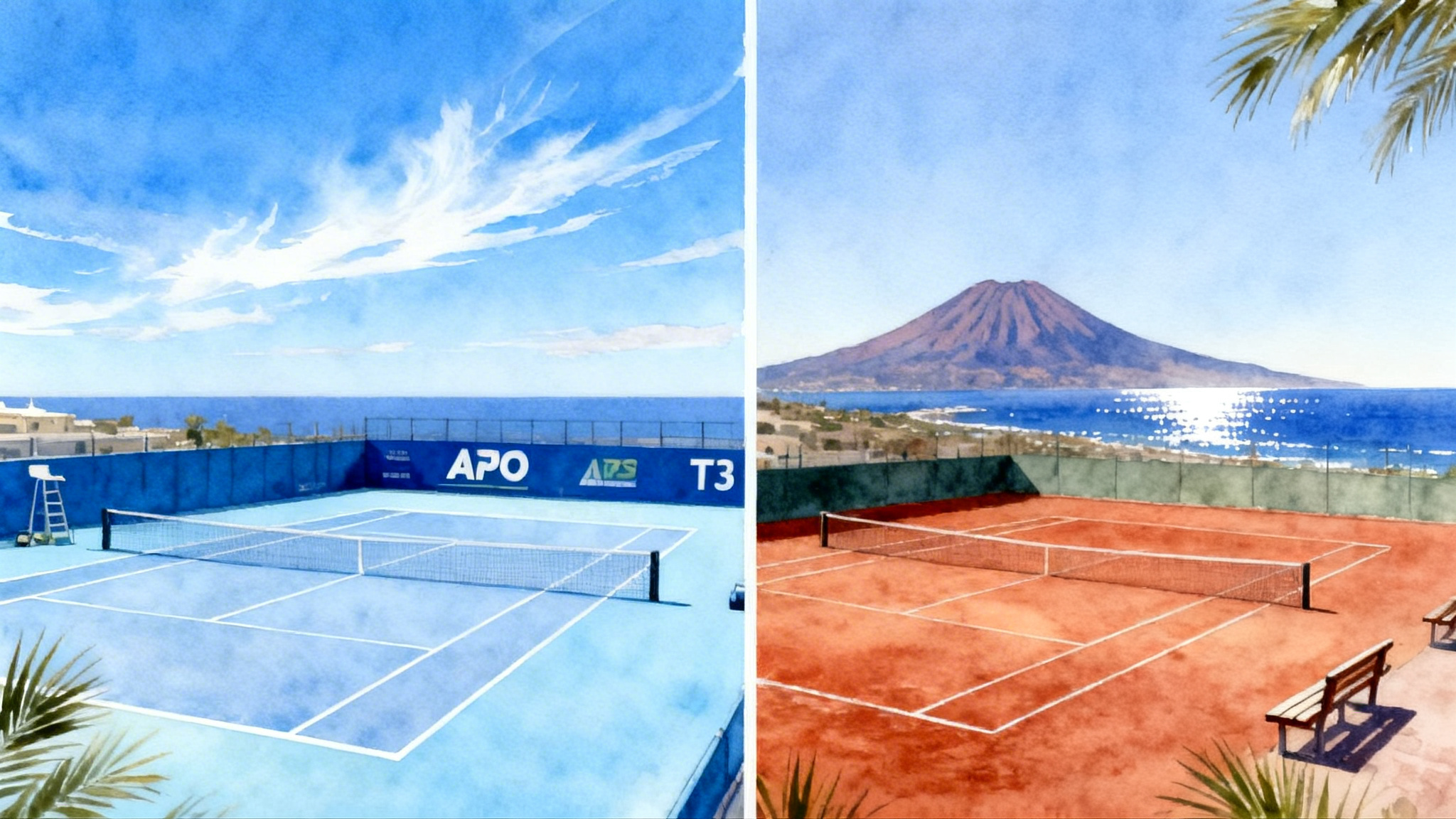
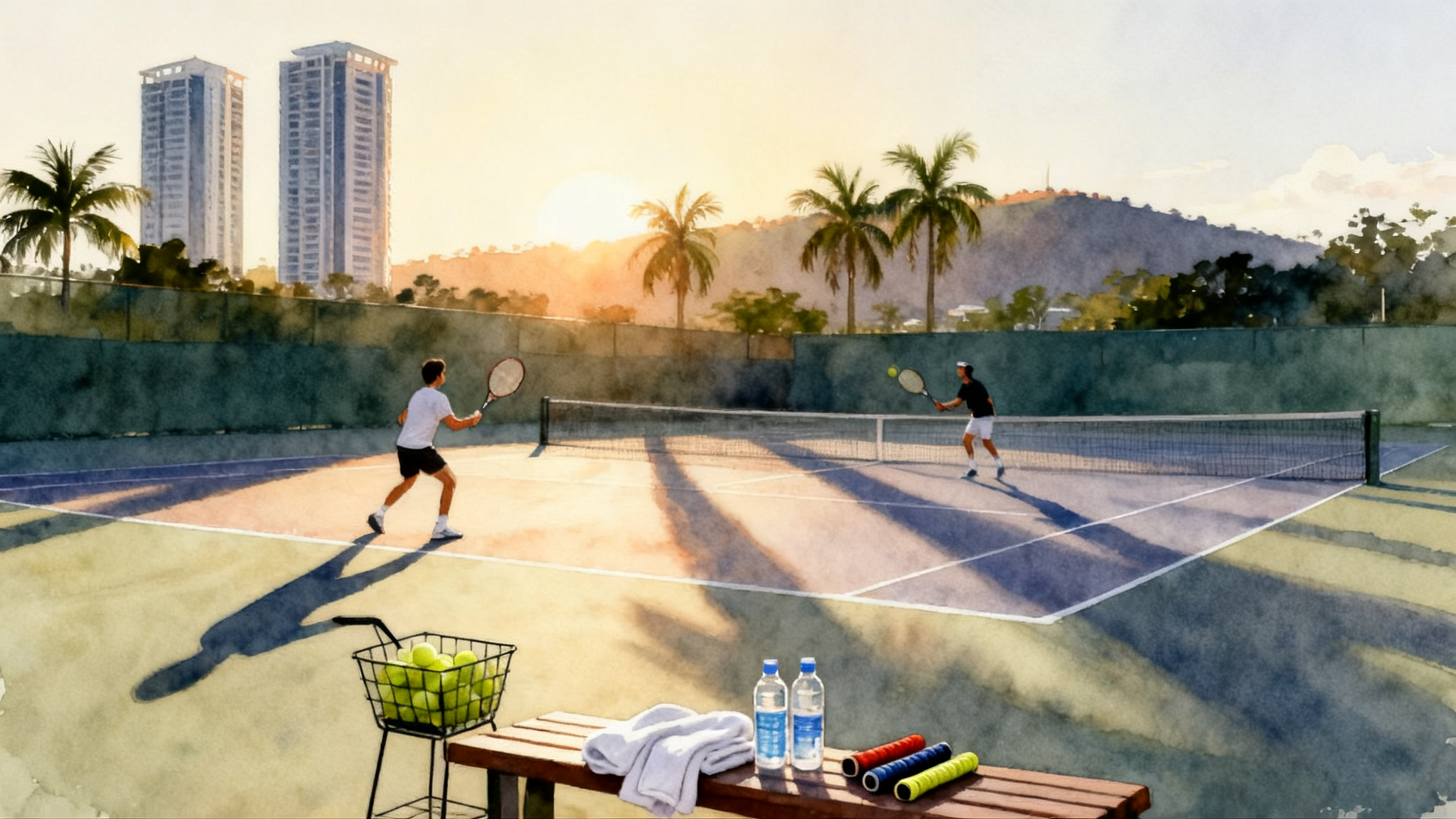
The western and central Algarve sit on the edge of the Atlantic, which matters more to your tennis than any hotel pool or breakfast spread. The ocean moderates spring and autumn heat, cools summer afternoons, and pushes a steady breeze across Lagos, Portimão, Albufeira, Vilamoura, and Quarteira. For players, that combination stretches session time, keeps heart rates manageable, and turns every hitting day into built-in ball-flight training.
By March, afternoon highs usually sit in the mid to high teens Celsius and climb into the low thirties during July and August, before settling back to the low twenties by October. Rain is scarce from late spring through early autumn, and daylight is generous. If you want the hard numbers to plan micro-cycles, check the IPMA climate normals for Faro.
Two more benefits stand out for long training blocks. First, the Algarve offers a balanced mix of clay and acrylic hard courts across clubs in Lagos, Portimão, Albufeira, and Vilamoura. You can blend surface phases without a cross-country move. Second, recovery is literally a short walk away. Flat promenades, pine trails above Praia da Falésia, and gentle Atlantic surf act like free physiotherapy.
Month-by-month planning from March to November
Below is a clay and hard-court plan for Lagos to Vilamoura. Assume a normal training day includes 90 to 120 minutes of on-court work in the morning, 60 to 90 minutes in the late afternoon, and 45 to 60 minutes of strength or mobility. For added movement detail, layer drills from our 4 week footwork plan.
March
- Weather profile: Cool mornings, mild afternoons, some showers. Breezy.
- Surfaces: Clay is ideal for building volume without joint stress. Hard courts are fine for targeted serve and first-strike patterns.
- Focus: Aerobic base with footwork ladders, cross-court shape on both wings, heavy use of crosswind to groove outside-in forehands. Serve patterns into the wind to force higher margin.
- Scheduling: Start on court by 9:00. Book a backup indoor fitness slot for rain days. Keep match play to two days per week.
April
- Weather profile: Reliable sun, breeze steady but less gusty than March.
- Surfaces: Split days. Clay in the morning for point construction, hard court in the late afternoon for return and transition.
- Focus: Add live-ball patterns. One-up-one-back drills to teach neutralizing in wind. Second-serve strength with 12-ball blocks.
- Scheduling: Three-day micro-cycle: build, build, absorb. Use a beach walk for recovery after the second session.
May
- Weather profile: Warm but not hot. Rain chances drop. Longer daylight.
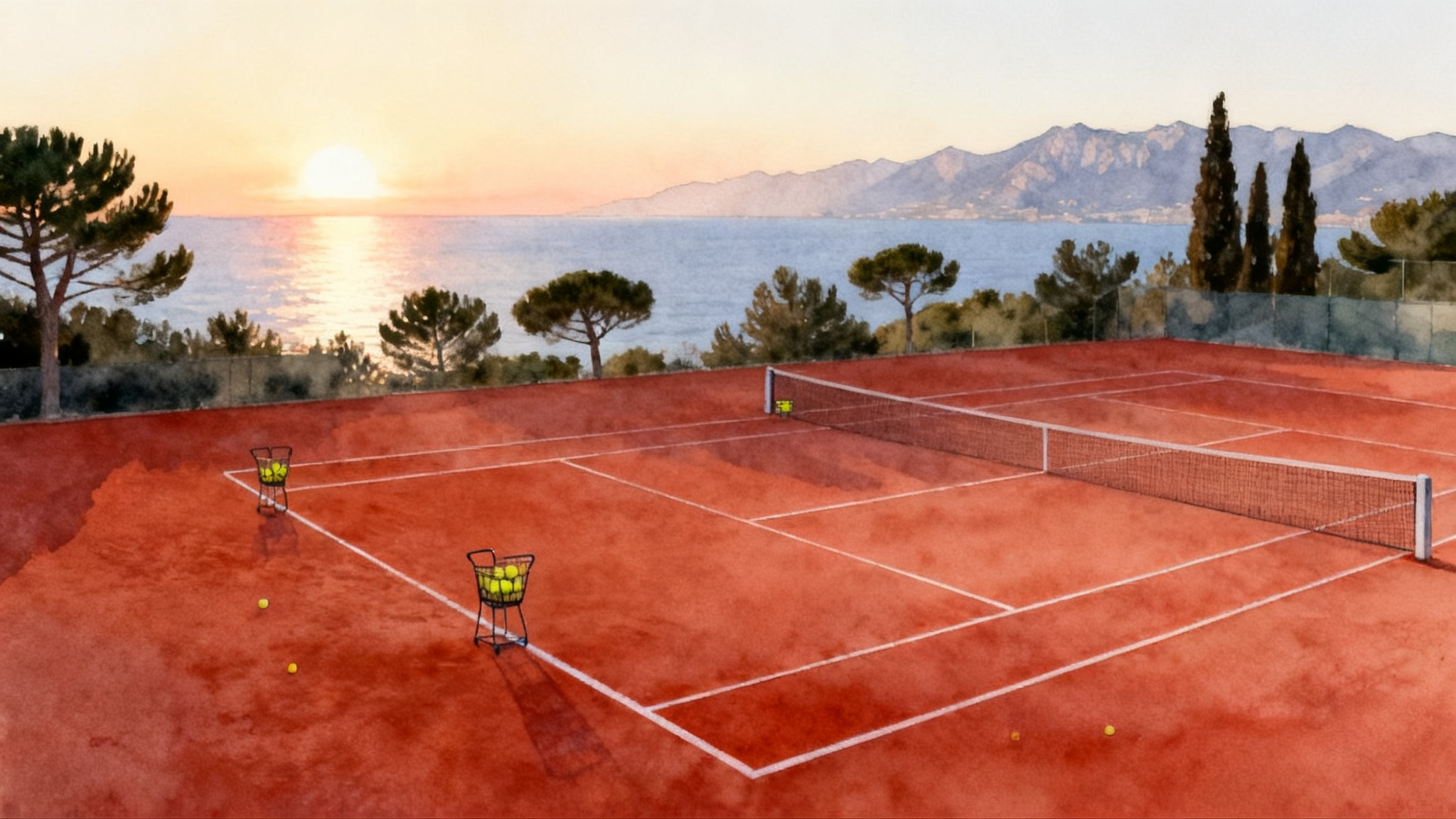
- Surfaces: This is your clay month if you are targeting summer tournaments. The ball sits up just enough in the breeze to reward shape.
- Focus: Play-test strings and tensions. The combination of dry air and wind can deaden stringbeds faster; plan a fresh set mid-month.
- Scheduling: Stretch morning sessions to two hours. Save serves and returns for later, when wind peaks and teaches trajectory control.
June
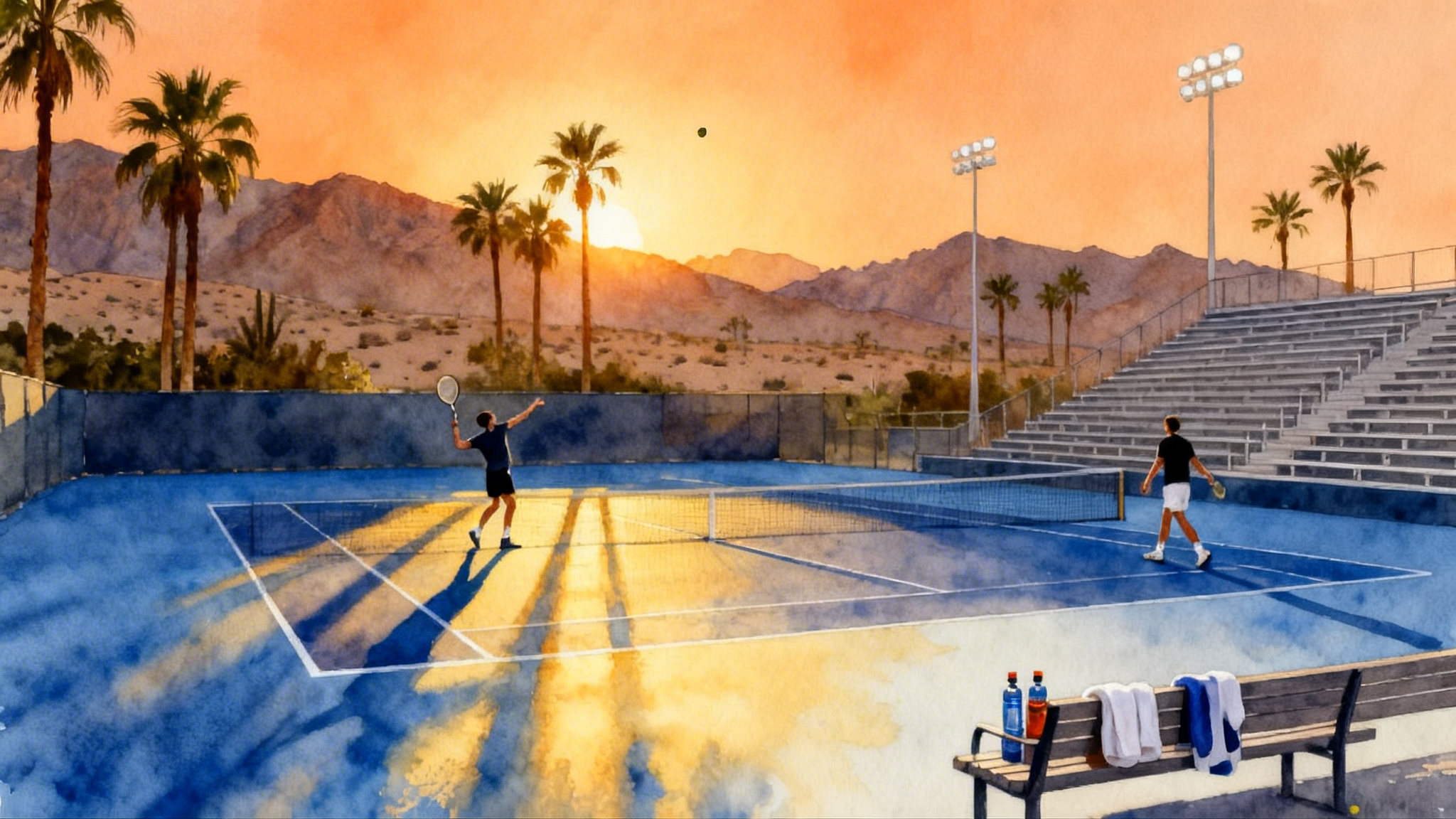
- Weather profile: Sunny, dry, reliable afternoon wind. Highs often mid to high twenties Celsius.
- Surfaces: Blend in more hard-court tempo to build first-strike confidence.
- Focus: Serve plus one on hard, cat-and-mouse defense on clay. Use sidewind to practice finishing down the line into wind hold.
- Scheduling: Hydration and shade breaks every 20 minutes. Book courts near tree cover or with wind screens.
July
- Weather profile: Hot afternoons but cooled by ocean air. Morning play is gold.
- Surfaces: Hard courts in early sessions for speed. Clay in late sessions to reduce joint load.
- Focus: Shorter, sharper sets. Tie-breakers with wind adjustments. Overhead and high forehand finishing work.
- Scheduling: On court by 7:30 to 8:00. Nap or deep rest at midday. Evening mobility on the promenade.
August
- Weather profile: Peak summer. Crowds rise near beaches. Breeze remains reliable.
- Surfaces: Similar to July, but protect volume. Clay is your friend for second sessions.
- Focus: Maintain performance. No new mechanics. Targeted match play two or three times weekly.
- Scheduling: Reserve two days in advance in tourist weeks. Alternate heavy and light days so recovery keeps up with heat.
September
- Weather profile: Sweet spot. Warm days, softer light, thinner crowds from mid-month.
- Surfaces: Rebalance toward clay if you are preparing for autumn events. Keep one hard-court speed session weekly.
- Focus: Extended rallies and patterns that travel well to inland Europe. Depth plus height under crosswind.
- Scheduling: Two-on, one-off micro-cycles with a half-day beach recovery.
October
- Weather profile: Mild, with a small chance of showers later in the month. Wind softens.
- Surfaces: Clay remains consistent. Hard courts are perfect for clean timing work as gusts ease.
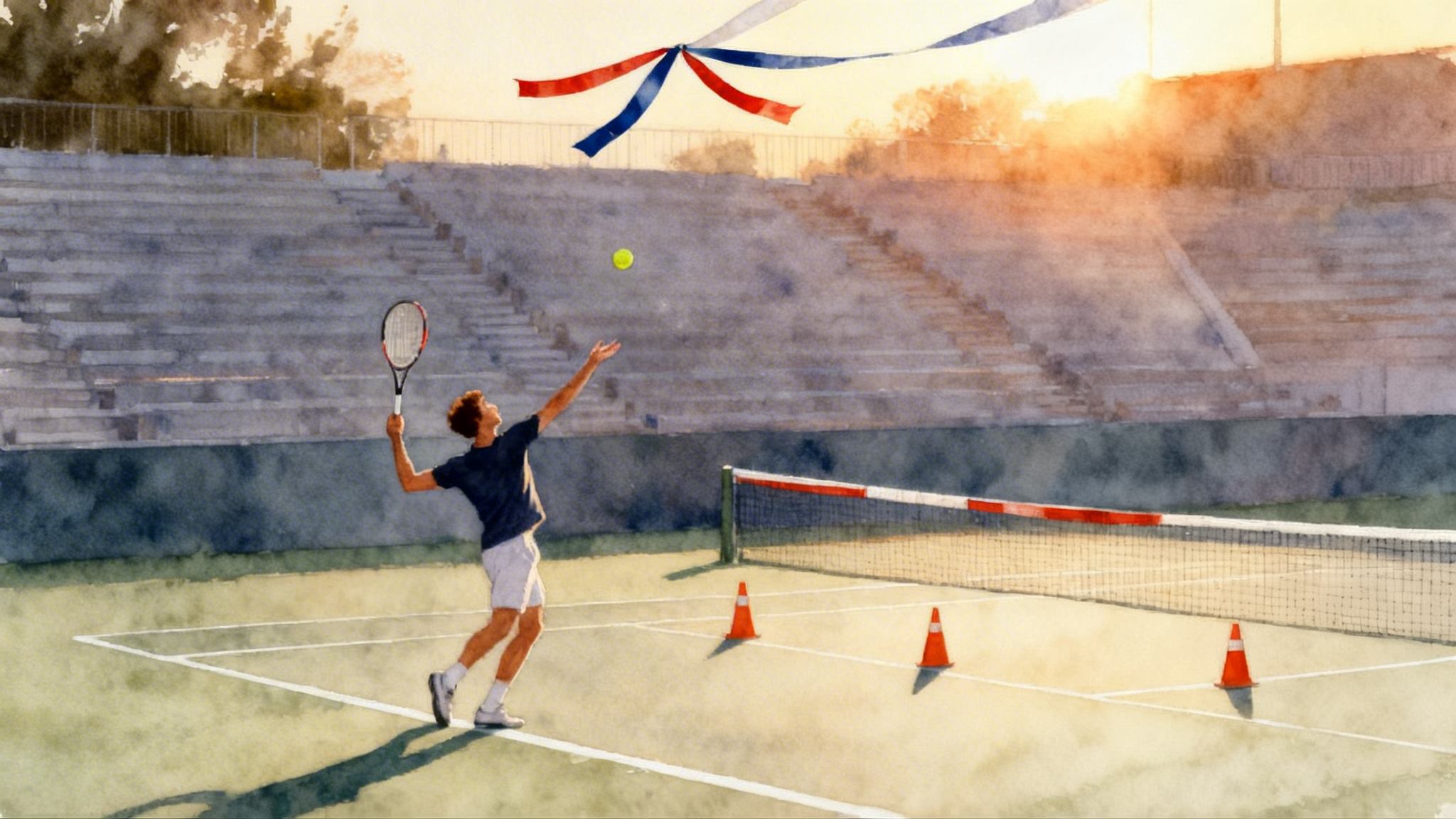
- Focus: Serving days in blocks. Use calmer air to refine toss height and placement. Add slice backhand skids on low-bounce mornings.
- Scheduling: Match play can extend to full best-of-three practice sets without heat risk.
November
- Weather profile: Cool mornings, pleasant afternoons, earlier sunsets. Some rain days.
- Surfaces: Clay on dry days. Hard court on days after light showers to avoid clay recovery delays.
- Focus: Technical consolidation and strength. More time in the gym. Keep a weekly touch session in wind to retain flight control.
- Scheduling: Book flexible slots and keep a wet-weather plan ready.
Sample 7-day camp itinerary
This template fits March, April, October, and November. Adjust start times earlier in summer.
-
Day 1, Arrival and assessment
- Morning: Travel and check-in. 30-minute easy walk to reset after flights.
- Afternoon: 60-minute technical screen on clay. Light serves, 20-ball forehand and backhand patterns, video capture.
- Recovery: Mobility flow, 15 minutes, plus short beach walk at Meia Praia or Quarteira.
-
Day 2, Foundation and shape
- Morning: 90-minute clay session. Cross-court height drills, target cones, footwork ladders.
- Afternoon: 60-minute hard-court serve and return, second-serve depth under breeze.
- Recovery: Contrast shower, calf and hip-mobility circuit.
-
Day 3, Transition and net
- Morning: 90-minute clay with approach selection, short-ball recognition.
- Afternoon: 60-minute hard-court transition volleys and overheads.
- Recovery: Easy jog on the promenade, 20 minutes, strides into wind.
-
Day 4, Match play
- Morning: Two sets on clay with coaching time-outs.
- Afternoon: 45-minute return games on hard, deuce and ad court patterns.
- Recovery: Light stretch, 8 minutes barefoot walk on firm sand for foot muscles.
-
Day 5, Serve blocks and speed
- Morning: 75-minute hard-court serve plus one. Radar or target sheets. Second-serve kick into wind; review our kick serve biomechanics guide before this session.
- Afternoon: 45-minute agility and medicine-ball throws.
- Recovery: Short swim, 10 to 15 minutes.
-
Day 6, Situational day
- Morning: Clay scenarios. Down-a-break games. Sidewind tactics.
- Afternoon: Optional 45-minute video review and goal setting.
- Recovery: Foam roll, early dinner.
-
Day 7, Test and taper
- Morning: Practice set or hitting ladder, then quality serves.
- Afternoon: Off. Pack and travel.
Sample 14-day camp itinerary
Use a 3-1-3-1-3-2 pattern: three build days, one recovery, repeat, then a two-day taper.
-
Days 1 to 3, Build block 1
- Morning: Clay, 2 hours daily. Rally tolerance, depth, and width in wind.
- Afternoon: Hard court, 60 to 75 minutes. Serve and return, plus four-ball point starters.
- Strength: Lower-body focus twice, upper-body once. Core daily, under 12 minutes.
-
Day 4, Recovery
- Beach walk, 45 minutes. Mobility and breath work. Optional swim.
-
Days 5 to 7, Build block 2
- Morning: Split-surface day. 60 minutes clay patterns, then 45 minutes hard court timing.
- Afternoon: Match play sets on clay every other day.
- Strength: Power day with medicine balls and jumps, then a lighter stability day.
-
Day 8, Recovery
- Easy cycle along Ecovia do Litoral, 60 to 90 minutes. Stretch and early night.
-
Days 9 to 11, Specificity
- Morning: Surface aligned with goals. Clay if red-ball season ahead, hard if indoor season looms.
- Afternoon: Serve plus one and return plus one, filmed on two of the three days.
- Strength: One heavier day, one maintenance day.
-
Days 12 to 13, Taper and test
- Morning: Quality over quantity. 75 minutes, high-intensity, low total volume.
- Afternoon: Off or 30 minutes of serves only.
-
Day 14, Off and depart
- Gentle walk, reflection, plan next micro-cycle.
Lagos to Vilamoura: walkable lodging near courts
Your legs pay for every extra kilometer between bed and baseline. Aim for accommodation within a 10 to 15 minute walk of a club. That keeps mornings simple and protects recovery time when afternoons get breezy.
- Lagos: The Lagos Tennis and Padel Club sits near residential streets with guesthouses and small apartments. Base near the marina or Meia Praia for flat walks and easy shakes after sessions.
- Portimão and Alvor: Several hotels and apart-hotels cluster near municipal courts. Choose streets behind Praia da Rocha for quiet sleep away from beachfront noise.
- Albufeira: Old Town is lively. For quiet early nights, look to Areias de São João areas within walking distance of courts.
- Vilamoura and Quarteira: The Vilamoura Tennis and Padel Academy is near flat, shaded paths. Apartments around the marina or in Quarteira keep you close without needing a car.
Checklist for walkability:
- 1 to 1.5 kilometers to courts along sidewalks or boardwalks
- Grocer within 500 meters for water and fruit runs
- Shaded route for hot afternoons
- A flat stretch for evening walks to jump-start recovery
Pair your Algarve block with a Lisbon or Cascais weekend
A practical way to add competitive edge is to insert a Lisbon-area tournament after week one or two.
- Travel timing: Drive on the A2 in 2.5 to 3 hours, or take a train from the Algarve to Lisbon in about 3.5 to 4 hours. Friday midday departures set you up for Saturday matches.
- Where to play: Cascais and Oeiras host frequent weekend events across age groups and levels. Lisbon city clubs also run draws that welcome visitors with a national license.
- How to plan: Monitor the Portuguese Tennis Federation calendar and enter early. Entry cutoffs sometimes land midweek. Build a light training day on Thursday, travel Friday, compete Saturday and Sunday, then return Sunday night or Monday morning for your next Algarve block.
Execution tips:
- Leave Thursday afternoon open for a final hit and packing.
- Book an apartment within 1 kilometer of Cascais train or a club in Oeiras to simplify match-day logistics.
- After competition, take Monday morning for a beach walk and mobility before resuming full training.
Costs and crowd levels: Algarve vs Costa del Sol vs French Riviera
Prices swing with school holidays and waterfront proximity, but you can budget using these typical ranges and comparisons.
Court time and coaching:
- Algarve
- Court hire: 12 to 25 euros per hour for hard, 15 to 30 euros for clay
- Private coaching: 50 to 80 euros per hour depending on experience and facility
- Costa del Sol
- Court hire: 18 to 30 euros per hour for hard, 20 to 35 euros for clay
- Private coaching: 55 to 90 euros per hour
- French Riviera
- Court hire: 20 to 40 euros per hour, with peak-season surcharges near Nice and Cannes
- Private coaching: 80 to 120 euros per hour
Lodging per night for a clean, athlete-friendly apartment within walking distance of courts:
- Algarve: 90 to 170 euros in shoulder months, 150 to 260 euros in July and August
- Costa del Sol: 110 to 190 euros shoulder, 170 to 290 euros in peak
- French Riviera: 140 to 230 euros shoulder, 220 to 380 euros in peak
What this means for planning:
- Algarve is commonly 15 to 25 percent cheaper than Costa del Sol for similar walkable setups, and 30 to 40 percent cheaper than the French Riviera in peak weeks.
- Algarve crowd levels spike on beaches in July and August, but courts remain bookable with 48-hour notice. On the Riviera, expect to secure courts a week ahead during school holidays. For route scouting and seasonal feel, see our French Riviera clay corridor guide.
- For intensive blocks longer than 10 days, the Algarve’s lower court and lodging costs compound into meaningful savings that you can reinvest in extra private sessions or massage.
Wind and rain workarounds that actually work
Wind is not the enemy. It is honest feedback. Build it into the plan.
-
Session design
- Into-wind baseline work forces higher net clearance and repeatable shapes.
- Crosswind drills teach body alignment and contact in front. Use targets three meters inside the opposite sideline.
- Downwind transition teaches finishing earlier and hitting through the court.
-
Equipment
- Bring two string setups: a slightly higher tension for gusty days, and a comfort setup for calm or clay-heavy days.
- Pack a cap with a snug band, sunglasses with good grip, and rosin for wet hands.
-
Court management
- Book fenced courts with wind screens when possible.
- Place ball baskets upwind to prevent chasing balls between reps.
-
Rain plans
- Have a daily Plan B: indoor strength, mobility, and footwork ladders in a garage or hallway.
- If clay is damp, shift to hard courts for serve and return while clay dries. Most Algarve facilities recover quickly after light showers.
Beach and trail recovery options that pay off
Recovery is easier to do when it is five minutes away and enjoyable. Use these low-cost, low-friction options.
- Meia Praia, Lagos: Firm sand near the waterline is perfect for a 20-minute barefoot walk that loosens calves and feet. Keep cadence steady, no jogging.
- Ponta da Piedade boardwalks: Gentle rolling wooden paths above the cliffs. Walk 30 minutes at sunset for nervous system downshift.
- Praia da Falésia, Vilamoura side: Pine-scented trails above the red cliffs. Run 30 to 40 minutes at conversational pace on off days.
- Ria Formosa paths near Faro: Flat and scenic for easy spins on a rental bike, 45 to 60 minutes.
Recovery protocol you can repeat:
- Post-session: 8 minutes of mobility, then a 10-minute walk in shade or along the promenade.
- Late afternoon: 10 to 15-minute cold-water immersion in the ocean on calm days.
- Evening: Light dinner, feet up, two glasses of water with a pinch of salt if you trained in heat.
Packing and booking checklist for March to November
- Surfaces: Plan for both clay and hard. Bring two pairs of shoes and a clay brush.
- Strings: Two setups and at least two restrings per two-week block.
- Sun and wind: High-SPF sunscreen, snug cap, sunglasses that stay put, and lip balm.
- Scheduling: Book courts 48 hours out in July and August. In spring and autumn, 24 hours is often enough.
- Transport: If you will race to a Lisbon event, pre-book an early Friday train and a late Sunday return.
- Food: Stock fruit, yogurt, nuts, and mineral water in your apartment on day one.
- Recovery: Pack a light resistance band, a trigger ball, and a travel foam roller.
The bottom line
If your goal is long, high-quality sessions with minimal friction and honest conditions, the Algarve’s Atlantic-breeze corridor from Lagos to Vilamoura is hard to beat from March to November. You get mild temperatures that extend practice time, a real mix of clay and hard courts, and recovery paths on your doorstep. Costs stay sane, tournament pairings with Lisbon and Cascais are simple to execute, and the wind sharpens ball control in ways that sterile indoor weeks cannot. Choose your month, set your micro-cycles, reserve courts within walking distance, and let the ocean carry the rest of the load.