Texas Tennis Academies 2026: Austin, DFW, Houston, San Antonio
A parent focused guide to Texas’s top junior tennis options in Austin, Dallas–Fort Worth, Houston, and San Antonio. Compare coach pedigrees and ratios, heat plans, indoor access, academics and boarding, pricing, and college placement.
 Tommy
Tommy
How to use this guide
Texas is a dream and a test for junior tennis. You get year round outdoor play, but also long, hot summers and busy tournament calendars. This statewide comparison is written for parents who want a clear picture of the strongest junior pathways in Austin, Dallas-Fort Worth, Houston, and San Antonio in 2026. We translate buzzwords into plain English, show you what to ask on tours, and include sample weekly schedules and quick compare matrices you can take to each academy.
Throughout the article we write DFW to mean Dallas-Fort Worth, and we spell out acronyms at first mention. USTA is the United States Tennis Association. UTR is the Universal Tennis Rating system. For a single-academy deep dive in Austin, read our Austin parents’ guide to Legend.
What matters most when choosing a Texas academy
Coach pedigree and coach to player ratios
Pedigree is the experience and results a coaching staff brings. It can mean former college captains, touring professionals who have coached on the road, or long tenures developing juniors into college lineups. Ask for specific examples from the last three graduating classes. You are looking for fit more than fame. A coach who has repeatedly helped players move from beginner tournament levels to consistent match wins in USTA Texas or to a UTR 7 to 10 climb may serve your player better than a famous name who only takes top seeds.
Ratios matter because attention matters. For drilling, a common sweet spot is 1 coach to 4 or 6 players. For point play and match evaluations, 1 to 6 to 1 to 8 can work if the session design includes live ball stations, charting, and feedback breaks. Anything higher should come with a clear plan that shows how each athlete still gets actionable feedback that week.
Questions to ask:
- Who runs day-to-day coaching on court, and who writes the periodized plan for the term?
- What are your drill ratios in summer, in the school year, and during tournament taper weeks?
- How do you assign coaches to players, and how often do you review that match?
Indoor and heat adaptation plans
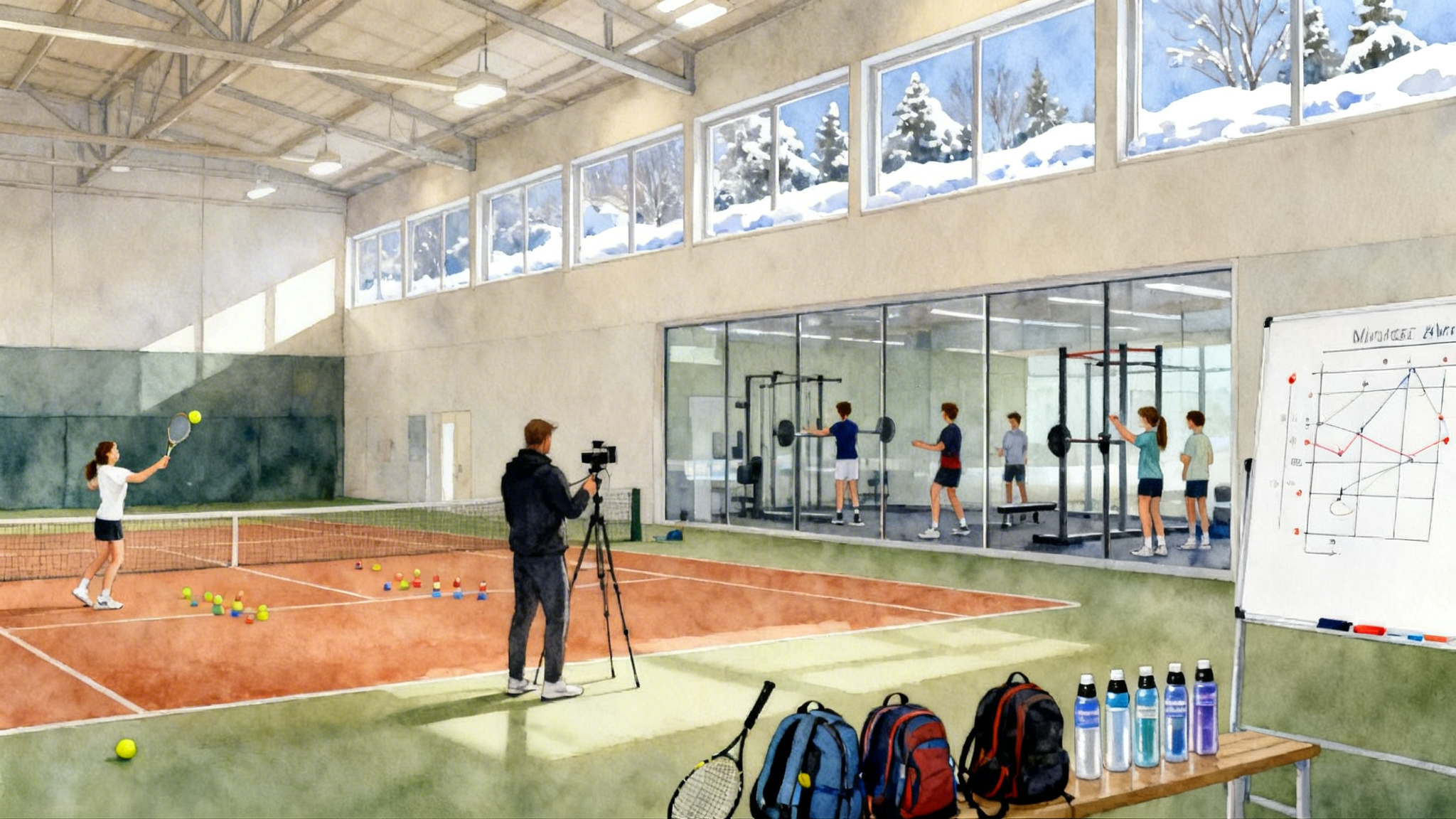
Texas summers demand a plan. Indoor courts are scarce in many parts of the state, especially outside DFW. That places even more weight on heat adaptation. A real plan includes shaded recovery areas, cold towels, mandatory hydration breaks, heart rate or perceived exertion checks, lighter ball baskets and footwork sets at peak heat, and earlier start times.
Ask for the written protocol. An academy that trains hard but safe will show you how they ramp loads in May and June, then protect players in July and August, while still keeping quality touches on the ball. If you are comparing hot-weather approaches across states, our Best Florida tennis academies 2026 guide offers useful contrasts on heat planning and indoor access.
USTA Texas and UTR tournament pipelines
A strong pipeline does three things. It helps your player select the right event tier, it manages entry deadlines and travel, and it coaches match craft between rounds and after losses.
Look for:
- A calendar that maps USTA Texas levels with Universal Tennis events in your region.
- Regular match play blocks on Fridays to simulate tournament conditions.
- Clear rules for on site coaching that match the competition you play.
Academics and boarding
Full time programs must prove they can balance school and sport. In Austin and San Antonio you will see options that integrate homeschool or partner schools into the tennis day. In DFW you are more likely to find commuter models with later practice blocks that respect traditional school hours. Boarding is uncommon in Texas but does exist, especially near San Antonio and the Hill Country. Where boarding is offered, ask about supervision ratios in housing, required study hall, and weekend policies when events are not scheduled.
Pricing and the real cost of a season
Published monthly program fees do not tell the full story. Budget for stringing, extra private lessons, travel, hotels, meals, tournament entry fees, and strength training. In Texas, travel can be light if you plan your schedule by region, but you will still have several road weekends per term. Ask every academy to show a sample twelve month total cost for a typical family at your level, including three out of town tournaments.
College placement and fit
Do not chase a list of logos. Ask for an annotated placement sheet from the last three years that shows academic major, roster spot as a first year, and whether the player is still on the team. A good academy will place a broad range of players into programs that match their academics, finances, and level. Ask how the academy collaborates with high school counselors on transcripts and how they time unofficial and official visits.
City by city shortlists and what stands out
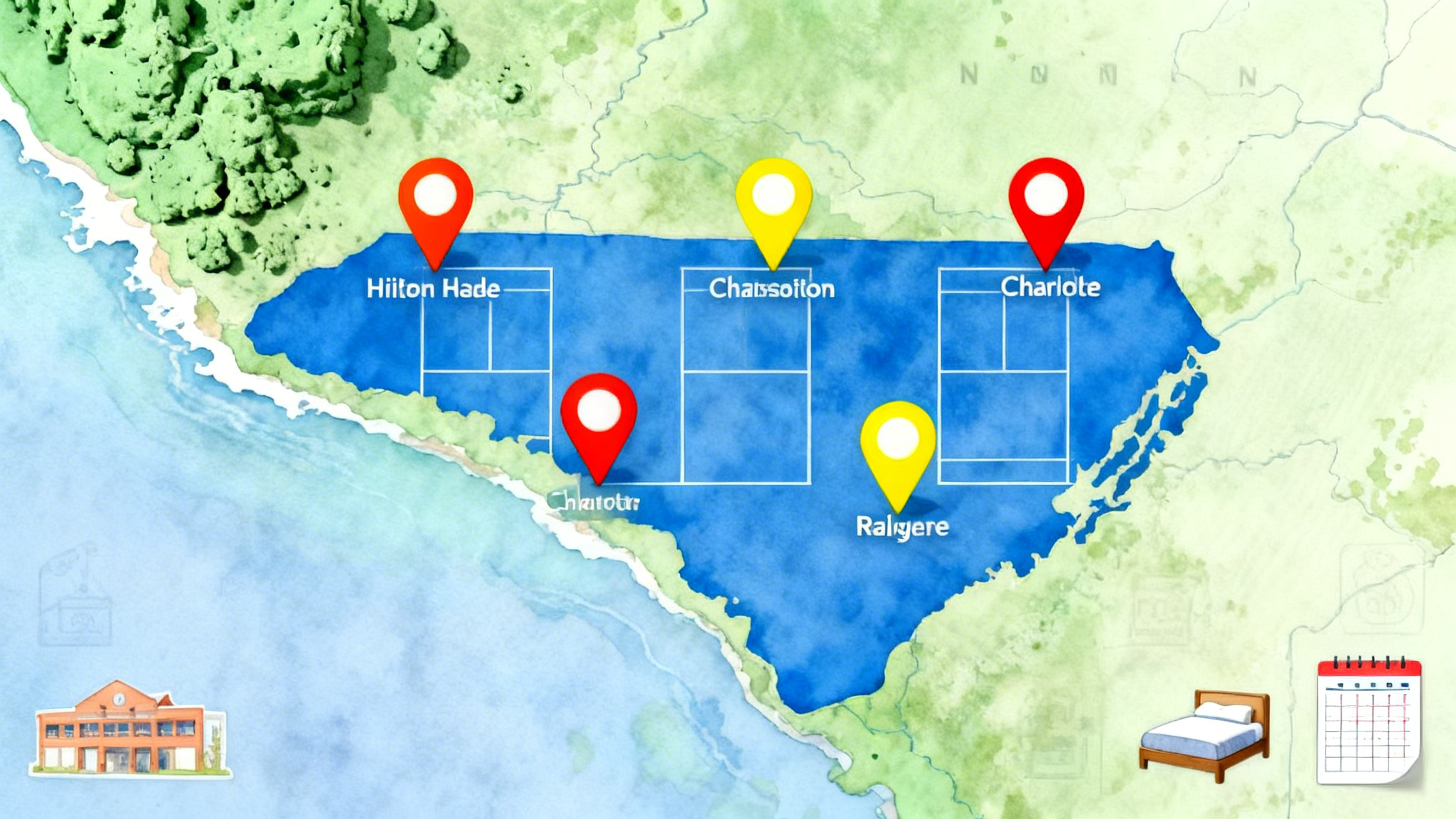
The programs below are the ones Texas families most often shortlist when they want a sustained junior pathway. Use this as a map for visits. Verify current offerings, ratios, and prices with each academy.
Austin
- Austin Tennis Academy. Known for a high performance junior pathway and a strong academic option during the school year through a partner model. Expect a commuter first culture with a tight tournament plan across Central Texas. If you are considering a Hill Country option, review Legend Tennis Academy Austin as part of your shortlist.
- West Austin and Northwest programs. Several clubs run robust after school performance blocks that feed into weekend USTA Texas events. Look for smaller pods, strong technical progressions, and early morning summer sessions to beat the heat.
Why families pick Austin:
- Consistent year round outdoor play and a deep local tournament circuit
- A collaborative culture across clubs that makes it easier to find level based practice matches during the week
- For homeschool families, options to build a true school plus tennis day that still leaves recovery time
Watch outs in Austin:
- Limited indoor access during storms
- Traffic patterns that can stretch after school commutes
Dallas-Fort Worth
- T Bar M style high performance programs in North Dallas and Addison. Expect deep player pools, frequent college and pro drop ins, and the best access to indoor courts in Texas.
- Brookhaven, Lakes, and Frisco area academies. Large court counts, strong ladder systems, and a tradition of team match play on Fridays make DFW a hub for in state competition.
Why families pick DFW:
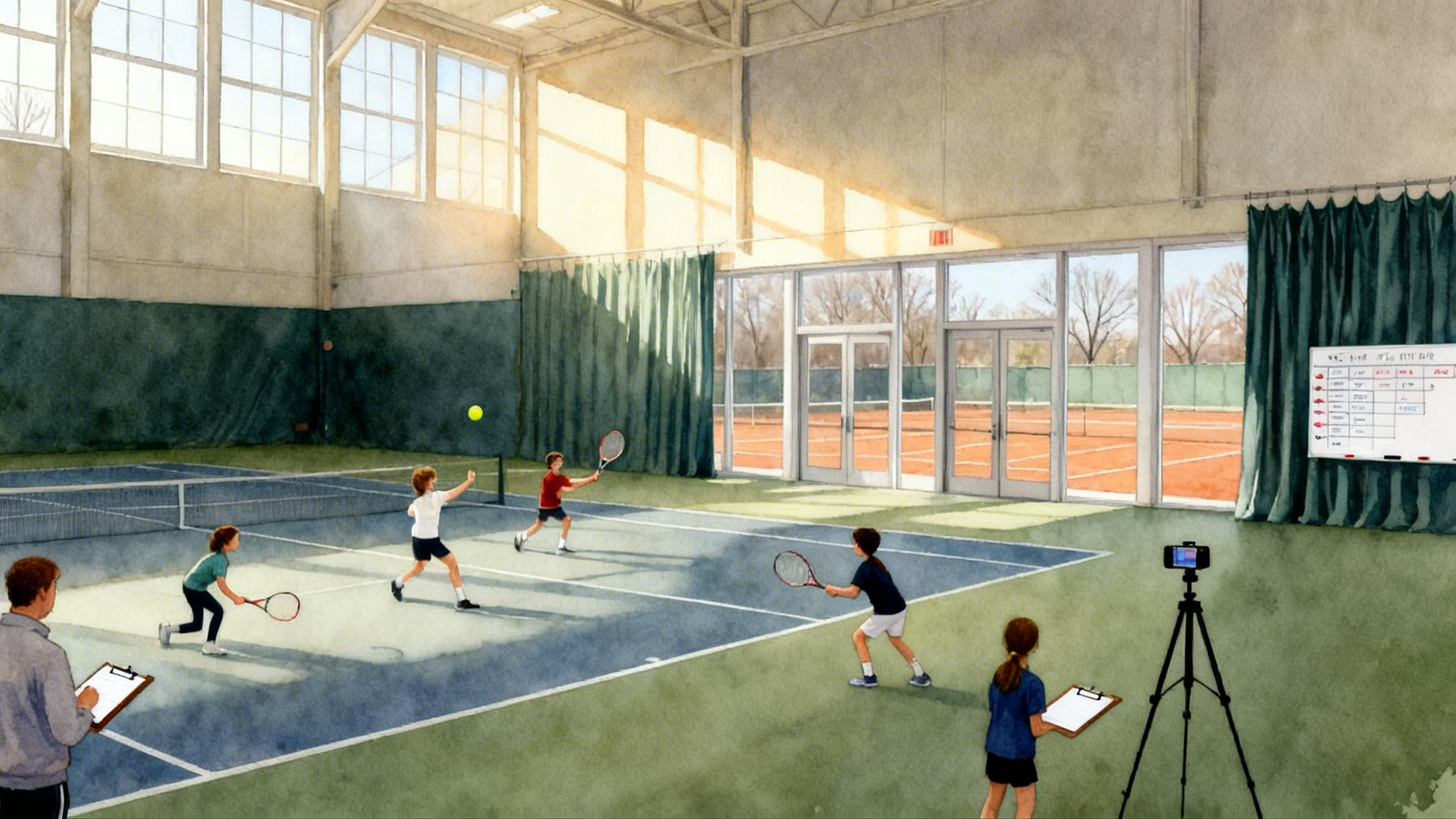
- The greatest indoor and covered court capacity in Texas
- Dense tournament calendar, which reduces travel miles and hotel nights
- Wide choice of coaches across technical, tactical, and competitive styles
Watch outs in DFW:
- Big groups can dilute feedback unless the academy has a clear rotation and charting plan
- Commutes across the Metroplex can be long if you do not anchor your choice near home or school
Houston
- West and Northwest Houston performance programs, including Spring and The Woodlands. Strong doubles development and a history of moving players into college rosters at a range of levels.
- Central Houston programs near Memorial Park and the Medical Center. Expect commuter schedules that pair well with traditional school hours and strong summer morning blocks.
Why families pick Houston:
- Year round outdoor play with coastal humidity that builds stamina if managed well
- Strong private lesson market with technical specialists
Watch outs in Houston:
- Storm patterns and heat require careful adaptation plans in midsummer
- Indoor courts are limited, so ask for written heat protocols and recovery rules
San Antonio and the Hill Country
- John Newcombe area boarding and high performance options in New Braunfels and the surrounding Hill Country. This is the state’s boarding hub and a draw for families who want an immersive environment.
- San Antonio commuter programs with strong ties to Central and South Texas tournaments.
Why families pick San Antonio:
- The only true boarding ecosystem in Texas for juniors
- Smaller city feel that keeps commutes manageable
Watch outs in San Antonio:
- Fewer indoor options
- Confirm the academic partner’s accreditation and credit transfer process if you consider boarding
Sample weekly schedules you can borrow
Below are three models to help you visualize the day. Use them to ask better questions on tours.
A. Commuter student at a traditional school
- Monday to Thursday
- 6:30 a.m. Light mobility and band work at home, 20 minutes
- School day
- 4:15 p.m. Arrival and dynamic warm up, 15 minutes
- 4:30 p.m. Drill blocks, 60 minutes. Focus on repeatable patterns and serve fundamentals
- 5:30 p.m. Live ball point play with constraints, 45 minutes
- 6:15 p.m. Match play or situational games, 30 minutes
- 6:45 p.m. Recovery and notes, 15 minutes
- Friday
- 4:15 p.m. Match play ladder with umpire rotations, 90 minutes
- Saturday
- Tournament or 90 minute hitting plus strength
- Sunday
- Off or easy movement with 15 minute serve practice
B. Full time day program with homeschool partner
- Monday to Friday
- 8:00 a.m. Academics, 120 minutes with breaks
- 10:30 a.m. On court technical block, 90 minutes
- 12:00 p.m. Lunch and recovery, 60 minutes
- 1:00 p.m. Tactical and point play progression, 75 minutes
- 2:15 p.m. Strength and speed, 45 minutes
- 3:15 p.m. Study hall or tutoring, 60 minutes
- Saturday
- Tournament or 90 minute practice sets
- Sunday
- Mobility, review video, goal setting for the next week
C. Boarding student in a high volume tournament phase
- Monday to Thursday
- 7:00 a.m. Breakfast and brief study hall, 45 minutes
- 8:00 a.m. Drills that emphasize first strike patterns, 75 minutes
- 9:30 a.m. Live ball and serve plus return progressions, 75 minutes
- 11:00 a.m. Video review and notes, 30 minutes
- 12:00 p.m. Lunch, 60 minutes
- 1:15 p.m. Supervised study, 90 minutes
- 3:00 p.m. Practice sets or ladder matches, 90 minutes
- 4:45 p.m. Strength and mobility, 45 minutes
- 6:00 p.m. Dinner
- Friday
- Travel day or in house tournament simulation
- Weekend
- Event coaching or recovery plan with light movement and serve work
Quick compare matrices
Use these tables as a starting point. They summarize how the four regions usually stack up. Always verify details with the specific academy you visit.
Regional snapshot
| Region | Indoor or covered access | Heat adaptation culture | Boarding availability | Tournament density | Commute complexity |
|---|---|---|---|---|---|
| Austin | Limited indoor, strong early morning blocks | Strong, with early start times | Rare, host family options exist | High in Central Texas | Moderate, traffic spikes near school hours |
| Dallas-Fort Worth | Best indoor and covered access in Texas | Strong, often paired with indoor shifts | Rare | Very high, frequent local options | High unless you choose close to home or school |
| Houston | Limited indoor, frequent weather workarounds | Essential, humidity focused plans | Rare | High in metro area | Moderate to high depending on quadrant |
| San Antonio and Hill Country | Minimal indoor, milder traffic | Strong in midsummer, morning heavy | Available near boarding hubs | Moderate, with travel north or east for some events | Low to moderate |
Program features to confirm on tours
| Topic | What good looks like | Questions to ask |
|---|---|---|
| Coach pedigree | Clear results across a range of levels, not just top seeds | Which coaches led players who resemble my child in age and level? |
| Ratios | 1 to 4 to 1 to 6 for drills, 1 to 6 to 1 to 8 for point play with charting | What are ratios in summer, school year, and before tournaments? |
| Heat plan | Written protocol with hydration, shade, cold towels, and adjusted loads | Can I see the written summer schedule and heat policy? |
| Match coaching | Friday ladders, charting, between round debriefs | How do you handle coaching at USTA and UTR events? |
| Academics | Scheduled study blocks and tutoring, transcript support | How do credits transfer and who monitors grades? |
| College placement | Annotated outcomes and ongoing support after signing | May I see last three years of placements with notes? |
| Pricing | Transparent monthly and yearly totals with travel estimates | What is a realistic twelve month total cost for a family like ours? |
Pricing, scholarships, and total cost planning
Programs publish base fees, but your true annual cost depends on add ons and travel. In Texas, families often assemble a plan that mixes after school group sessions, two private lessons per week in targeted phases, and a tournament every two to three weeks during the main season. Ask for a written plan that shows when lessons increase or decrease, when you taper before key events, and how that affects monthly costs. Scholarships exist at some programs. They are often tied to community service, leadership, or mentoring of younger players. Ask early, since many academies decide support before summer blocks fill.
How to visit and decide in two weekends
You do not need months to build clarity. Use this simple plan.
Weekend 1
- Visit two academies in the same metro. Watch the full session, not just the intro. Bring your own seat and observe court positioning, ball quality, and how coaches manage time.
- Ask for a twenty minute debrief with the lead coach. Share a short video of your player competing so they can react to real patterns.
- If possible, schedule a trial session for your child the following week.
Between weekends
- Track how the academy follows up. Do they send a written plan or only a price sheet?
- Ask for two parent references whose players resemble your child’s level and goals.
Weekend 2
- Visit one or two programs in a different region if you are open to moving or boarding. If not, revisit your top local choice on a different day to see how they run ladders or point play.
- Make a simple scorecard using the Program features table above. Weight the categories that matter most to your family. For example, a homeschool family may weight academics and mid day training higher than indoor access.
Decision week
- Request a six week ramp plan that starts next Monday. A prepared academy will send a short, dated plan with goals, key drills, and the first two tournament targets.
What success looks like after ninety days
You should see more than just wins. Look for these signs:
- Serve percentage and double faults stabilize, with a clear out wide or body first serve plan
- Fewer neutral ball errors in long rallies because spacing and height over the net are defined and rehearsed
- Two to three trusted patterns on big points, such as heavy crosscourt forehand to set up inside in, or body serve backed by a deep crosscourt reply
- Post match notes move from vague feelings to one or two measurable adjustments for the next week
City specific questions to bring on tours
Austin
- How do you coordinate match play across clubs during the week?
- What is your plan for storm weeks when outdoor courts are closed?
Dallas-Fort Worth
- How many hours per week can shift indoors during heat advisories?
- How do you protect feedback quality in large groups?
Houston
- What are your humidity specific recovery rules in July and August?
- How do you reschedule during heavy rain weeks without overloading players?
San Antonio and Hill Country
- If we board, what is the adult to student ratio in housing and study hall?
- How do academic credits transfer back to our home district if we return?
The bottom line
Texas gives juniors a rare combination of reps and resilience. Austin offers cohesive communities and flexible academics for day programs. Dallas-Fort Worth provides the deepest player pools and the best indoor safety net. Houston teaches stamina and problem solving in heat if recovery is planned well. San Antonio and the Hill Country are the home base for boarding in the state, with a simpler commute rhythm.
Families who win this process do three things. They find coaches who know how to grow a player like theirs. They insist on a heat and recovery plan that protects health. They align school, tennis, and travel so the calendar works as a whole. Do that, and ninety days from now your child will not only be playing better tennis, they will understand why, and they will know the next two steps to keep climbing.