French Riviera Shoulder-Season Tennis: Nice, Antibes, Cannes
 Tommy
Tommy
Why the Riviera delivers in spring and fall
If you want the highest odds of playable courts without summer crowds, the French Riviera’s shoulder seasons are your friend. From March to May and again from September to November, daytime highs are usually in the 60s to low 70s Fahrenheit, humidity sits in a comfortable middle, and rainfall arrives in brief episodes rather than all-day soakers. That recipe helps red clay settle and hard courts dry quickly. It also keeps balls lively without turning points into fitness slogs. For a climate reality check, review the Météo-France climate normals for Nice and you will see how spring and fall strike the best balance of mild temperatures and limited rain.
Add to that a compact, train-linked coastline. In one hour you can shuttle from Menton near the Italian border to Cannes, with clubs sprinkled along the way. With the right microclimate picks, you can train on clay in the morning, switch to hard courts in the afternoon, and still make it back for dinner on the Promenade des Anglais.
Microclimate map: Menton to Cannes
Think of the Côte d’Azur as a series of small amphitheaters facing the sea, each protected to a different degree by capes and hills. Wind and showers tend to break unevenly across these pockets, which you can use to your advantage.
- Menton and Roquebrune-Cap-Martin: The Maritime Alps tuck just behind town, trapping warmth and blocking some northerlies. Courts here often feel a few degrees warmer in spring. Light morning breezes and early sun make Menton a good choice for first-hit sessions on clay.
- Monaco area to Cap d’Ail: Cliffs and terraces create sharp exposures. When easterlies freshen, open seaside courts can feel gusty. Look for clubs shielded by hedges or walls, or move a couple of stops west by train.
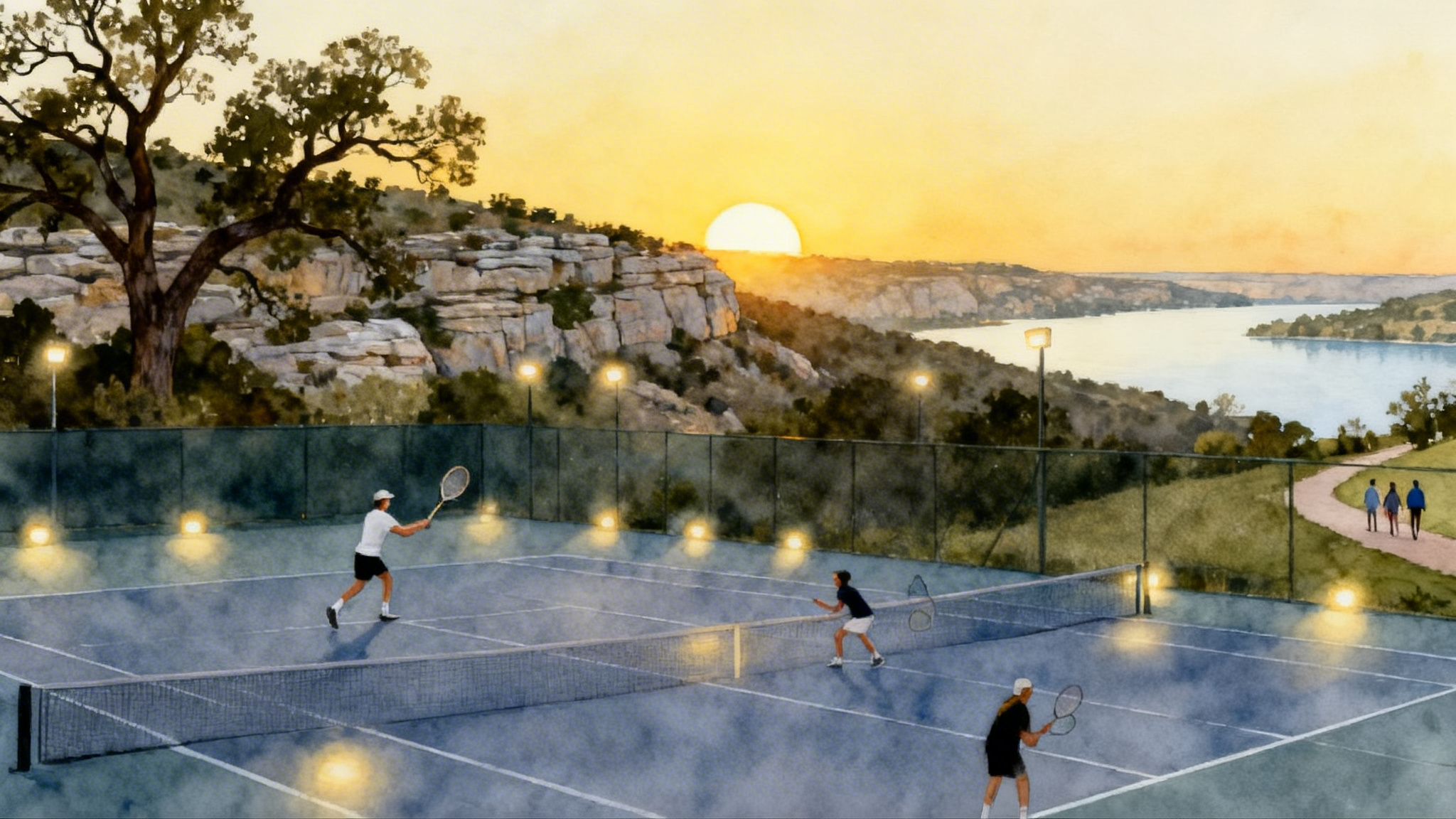
- Nice: The Bay of Angels forms a gentle curve that channels a steady, predictable sea breeze most afternoons. West Nice tends to be calmer than the open seafront, so if flags are flapping along the Promenade, consider inland clubs tucked near schools or parks. Mornings are reliably smooth on both clay and hard courts.
- Villefranche and Saint-Jean-Cap-Ferrat: The deep bay and the cap create glassy conditions in sheltered spots. If showers are skirting Nice, courts inside the bay can stay playable sooner after rain.
- Antibes and Juan-les-Pins: Cap d’Antibes blocks easterlies. Juan-les-Pins often has the quietest air after lunch when the rest of the coast picks up breeze. If clay feels slow in the morning, the afternoon warmth here helps the top layer dry and the bounce lift.
- Golfe-Juan and Vallauris: Hills sit tight to the shore, creating pockets of still air. These are utility zones when a forecast threatens showers. Hard courts here tend to be ready fastest after a passing cloudburst.
- Cannes and La Bocca: The seafront is open, but step inland toward Le Cannet or Mougins for wind relief. Late-day thermals are common by the water, so play your match blocks just behind the first ridge.
Working with the wind is not just about comfort. On clay, a steady cross-breeze magnifies topspin, pushing returns wide and making depth control tricky. Choosing a sheltered club on breezier days turns a guessy hitting session into quality repetition.
Clay or hard court, and why shoulder seasons help both
Red clay thrives on rhythm. In spring and fall, overnight moisture helps the top layer knit, morning maintenance is easier, and balls do not fluff excessively. You get enough grip for aggressive movement without the ankle-biting stickiness of a hot July afternoon.
Hard courts reward shoulder seasons for the opposite reason. They cool down enough to soften the impact on your joints, yet they warm quickly after a shower. When the sun peeks out, a light breeze will dry a playable patch in minutes. That makes split-surface scheduling possible without wasting hours waiting for courts to recover.
Practical surface tips:
- Clay on cool mornings, hard court after lunch to maximize consistency early and speed late.
- After overnight showers, book hard court first so it is ready sooner, leaving clay for the second session.
- Bring two pairs of shoes: clay-dedicated soles for traction and a non-marking hard-court pair. Rotate to keep feet dry.
The perfect base: All In Academy meets coastal courts
A smart Riviera week anchors technical work at a high-performance center, then layers in match play at scenic coastal clubs. The All In Academy campus in Villeneuve-Loubet sits almost equidistant from Nice and Antibes, with easy rail and road access. For background on program structure and locations, review the All In Academy overview. Book your core sessions there, then add single-court blocks in Nice, Antibes, or Cannes for variety and match rhythm. You can check facilities, trial weeks, and booking windows directly with All In Academy Villeneuve-Loubet.
What you can expect from a performance campus in this corridor:
- Bilingual coaching with video feedback for stroke mechanics.
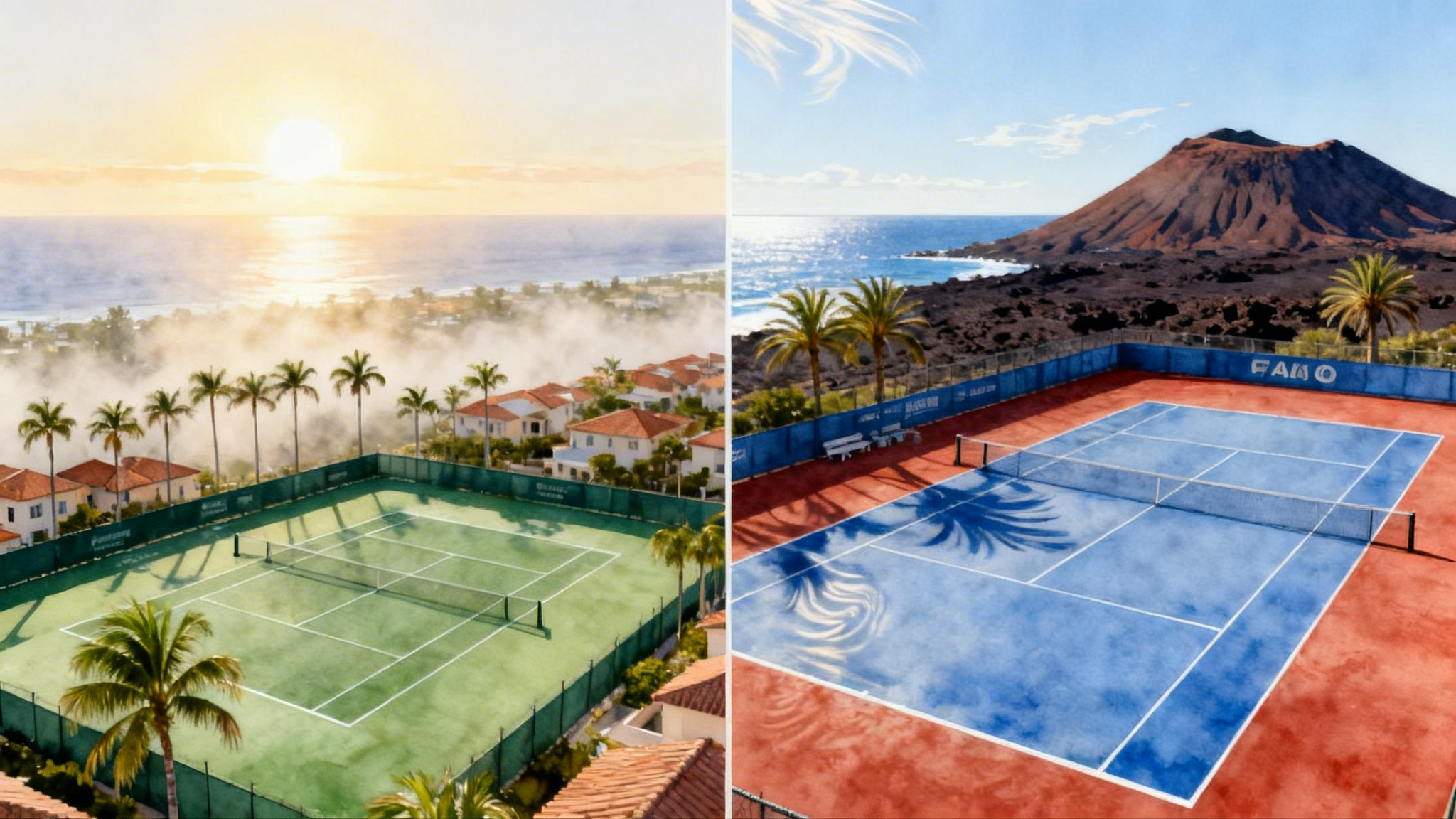
- A mix of red clay and hard courts, so you can train both ball trajectories.
- Strength and mobility sessions that fit tennis, not general fitness.
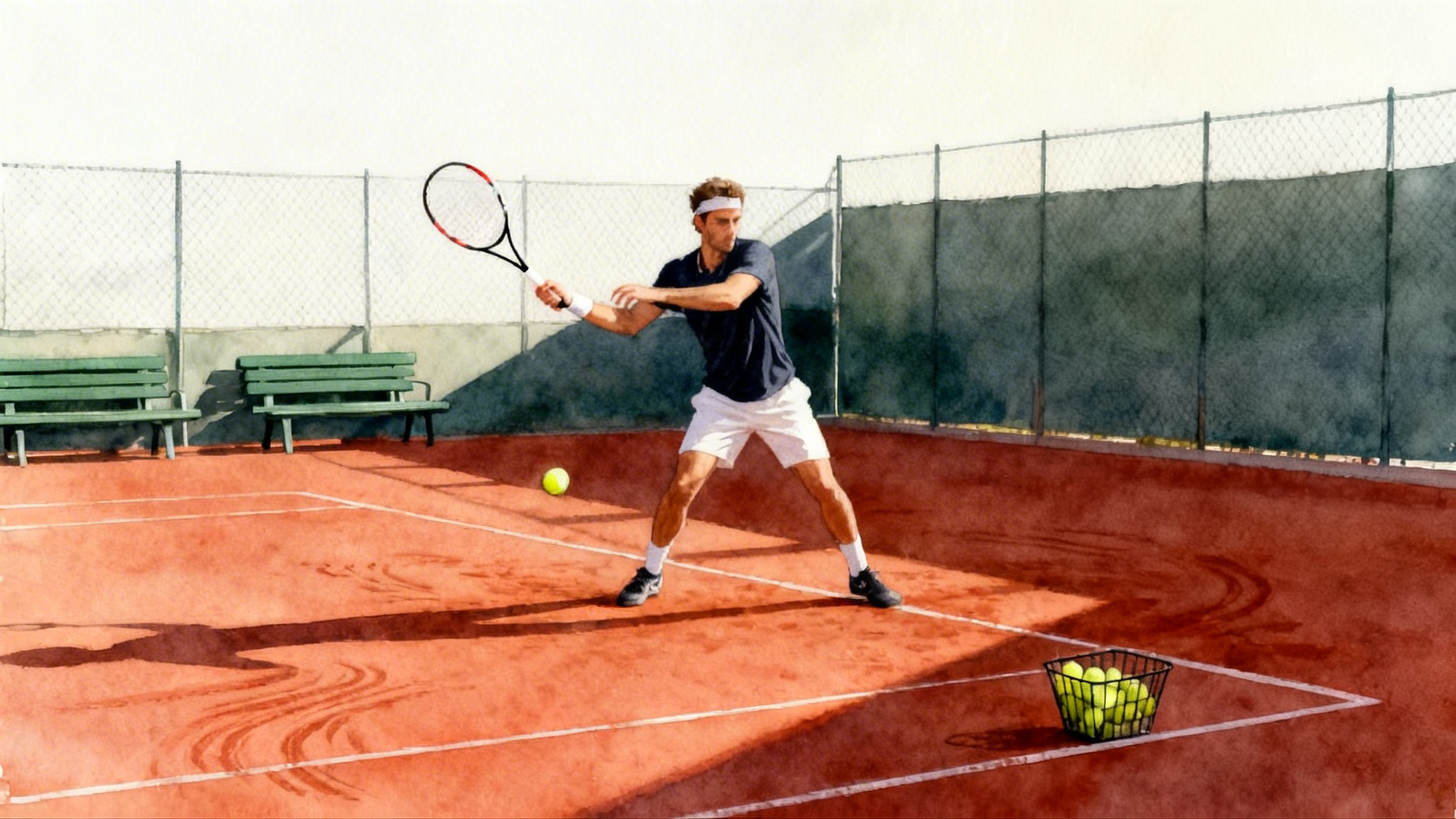
- Ball machines and basket-fed drilling for repeatable reps.
Coastal clubs add a different value. You learn to manage light breezes, deal with salt air, and play with background distractions. That is tournament reality and it hardens your decision making.
A seven-day training and travel plan
This template assumes two court blocks most days and a family-friendly cadence. Swap days as weather and match fatigue dictate.
- Day 1, Sunday, arrival and reset: Fly into Nice Côte d’Azur Airport. Settle in Antibes or west Nice to shorten commutes. Light afternoon hit on hard court near your lodging to shake off travel. Evening stroll through Old Antibes or along the Promenade for circulation.
- Day 2, Monday, technical day at All In: Morning two-hour lesson block at All In Academy on clay. Focus on first-step acceleration and rally tolerance. Afternoon, short hard-court basket session to groove serve-plus-one. Recovery walk on the beach and early dinner.
- Day 3, Tuesday, Nice microclimate play: Check breeze on the bay by mid-morning. If flags are still, book a clay match block at a sheltered inland club in Nice. Afternoon culture hour in the Old Town, then an easy ball machine session to end.
- Day 4, Wednesday, mixed-surface challenge: Morning at All In on hard court for serve and return patterns. Lunch in Villeneuve-Loubet marina. Afternoon Juan-les-Pins match play on clay, where the cap often calms the wind. Beach time for families.
- Day 5, Thursday, Antibes focus day: Start with a tactical clay session against a local sparring partner. Work on height and depth variation in crosswinds. Afternoon off-court strength at a nearby gym or a hill walk to keep legs lively without pounding.
- Day 6, Friday, Cannes closure: Warm morning hit inland near Cannes for wind shelter. Afternoon All In assessment on your preferred surface, record metrics, and build a six-week plan to take home. Family sunset on La Croisette.
- Day 7, Saturday, optional showcase or rest: If energy remains, schedule a short set-play ladder with other visitors. If not, take a ferry to the Lérins Islands for a no-tennis reset. Pack early, stretch, and prepare for travel.
Session structure guide:
- Warm-up: 15 minutes of mobility and band work.
- Technical block: 45 to 60 minutes on a stroke theme. Example: forehand height control to the deep middle.
- Pattern play: 30 minutes on serve-plus-one and second-shot depth.
- Competitive sets: 30 to 45 minutes with constraints, like second-serve points only.
- Cooldown: 10 minutes of isometric holds and breath work.
Getting there and around: NCE, trains, and local transit
Nice Côte d’Azur Airport is the Riviera’s hub, with a short runway that feels almost on the water. The airport sits at the west edge of Nice, which trims your ground transfer time whether you stay in Nice, Antibes, or Cannes.
- Airport to city: Trams connect the terminals with central Nice. Travel time is about 25 to 30 minutes to the main station district. If you are heading straight to Antibes or Cannes, a taxi or ride-hail can be cost effective for families, while solo travelers may prefer tram plus regional train.
- Regional train: The TER coastal line is your best friend. Stations lie close to the beach and many clubs. Trains run frequently in daylight hours. Validate your ticket before boarding and allow a small buffer at peak times.
- Buses: Local networks in Nice, Antibes, and Cannes cover last-mile connections to hillside or cap-area clubs. Schedules thin a bit on Sunday, so build a cushion.
- Driving: The A8 autoroute runs behind the coast. It is efficient off-peak but clogs near junctions on weekday mornings and late afternoons. Parking near seafront clubs can be tight. If you rent a car, book a compact model.
- Biking and walking: Distances between stations and clubs are short. A foldable scooter or compact stroller can make family logistics easy.
Where to stay near courts: three base camps by budget
You do not need to sleep above a baseline to be close to courts. Choose a base that lines up with your primary training site and your family’s rhythm.
- West Nice, near the airport and Promenade: Best for All In access with minimal transfers. Look for midscale chain hotels around the Grand Arénas district or serviced apartments a few blocks inland to cut noise. You will be near tram, early-opening bakeries, and supermarkets. Hard courts are common in nearby neighborhoods.
- Antibes and Juan-les-Pins: Ideal for families who want beaches and calmer afternoons. Pick small hotels or apartments within a ten-minute walk of the old town or pine park. Clay courts are easy to reach, and you get fast train access to both Nice and Cannes.
- Cannes and Le Cannet: Good for travelers who like dinner variety and evening promenades. Consider properties a little inland for quieter nights and sheltered morning sessions. Check that your hotel has parking if you rent a car.
Budget tiers to help you filter quickly:
- Savvy: Apartments or apart-hotels a few blocks from the waterfront, often with kitchenettes. Expect simple rooms and coin laundry nearby. You trade sea views for easy access to courts and transit.
- Smart midscale: Modern three-star or well-reviewed boutique four-star hotels near tram or train stops. Prioritize air conditioning, soundproofing, and breakfast included if you have early starts.
- Treat: Beachfront or historic properties with on-site fitness centers and spa options. Pay for the calm and the balcony, then use inland clubs for your wind-sheltered hits.
Budgeting your week, without guesswork
Every club sets its own prices, but the Riviera has predictable ranges. These will vary by location and season, so confirm when booking.
- Court time: Typical hourly court fees fall in the moderate range, with inland hard courts usually the most affordable and seafront clay at the upper end.
- Coaching: Private one-to-one lessons at reputable clubs and academies usually sit in the premium bracket. Group clinics can be more economical per hour.
- All In Academy blocks: Expect performance pricing that reflects coaching quality, facility access, and video analysis. Trial or camp formats can reduce the per-session cost compared to a la carte.
- Transit: Regional train fares make hopping between towns practical. Day passes on local buses and trams can be a bargain if you stack rides.
- Food: Bakeries and markets help keep lunch costs in check. Book dinners early on weekends.
A family of four can keep a week manageable by mixing academy mornings with self-run afternoon hits, leaning on trains, and choosing one or two restaurant splurges instead of nightly blowouts.
Weather-proof backups that keep momentum
Even in a kind spring or fall, a squall can slip through. Build in these backups so you never lose the training thread.
- Surface switch: If your clay booking is iffy after morning showers, pivot to a hard court nearby. Hard courts dry faster with a breeze and patchy sun.
- Inland hedge: When the seafront is gusty, book an inland club behind hedges or walls. The difference in ball flight can be dramatic.
- Fitness and film: Use a rain hour for band work, ankle and hip mobility, and a video review with your coach. You will fix more with movement patterns than with extra forehands in the wet.
- Museums and walks: Keep family morale high with short cultural breaks. Old Nice, the Picasso Museum in Antibes, or a quick ferry to the islands make the day feel like a win even without a full hit.
For a nearby alternative when the Med turns unsettled, consider our guide to year-round tennis in Portugal. If you prefer a quieter Adriatic setting with similar spring and fall appeal, see Croatia’s sleeper tennis base.
Smarter packing for clay and coastal air
- Shoes: One pair for clay, one for hard courts. A cheap boot brush in your bag saves hotel carpets and keeps traction consistent.
- Balls: Bring a new can for each session block. Coastal humidity can weight balls over time. A fresh can protects your timing.
- Layers: A light windbreaker for warm-ups, then a breathable top. Spring mornings can feel cool until you sweat.
- Sun and skin: The sun is sneaky even in October. Pack a hat, high-SPF sunscreen, and lip balm.
- Hydration: Electrolyte tabs earn their weight on back-to-backs. Bring a large bottle and refill between trains.
Booking checklist, from runway to baseline
- Lock your All In Academy sessions first. Those slots anchor your week and determine where you should sleep.
- Sketch your microclimate alternates. Pair each day with a sheltered inland option and an open seafront option so you can adjust by 9 a.m.
- Choose lodging near a train stop if you do not plan to drive. You will make better use of your afternoons.
- Preload transit apps and maps for Nice, Antibes, and Cannes. Screenshots help when signals drop.
- Confirm court surface at booking. Many clubs offer both clay and hard courts, but surfaces can rotate for maintenance.
- Communicate your level and goals when requesting sparring partners. You will get better matches and fewer cancellations.
Final word: a reliable base that still feels like a holiday
The Riviera’s secret is not luck but geography. Mountains catch the worst of the wind, capes carve out quiet air, and a tidy chain of towns gives you plan B and plan C within minutes. Blend high-quality technical work at Villeneuve-Loubet with coastal match play, use the trains like a local, and book a calm inland court when flags start to twitch. You will head home with a stronger game and the easy confidence that comes from a week where almost every ball felt clean off the strings.