San Diego and Orange County: America’s Most Reliable Tennis Base
 Tommy
Tommy
Why the San Diego to Orange County corridor stands apart
If you are designing a training season that stays outdoors twelve months a year, the stretch of coast from San Diego to Orange County is hard to beat. Average highs hover in the 60s and 70s for most months, rain concentrates in a short cool season, and the coast’s daily breeze keeps courts playable when inland areas overheat. Weather is not just pleasant here, it is consistent, which means more reps, fewer cancellations, and schedules you can actually trust. For climate benchmarking and norms, start with the National Weather Service’s coastal Southern California climate summary, which shows how narrow the temperature and precipitation swings are along the shoreline compared with inland basins.
Think of this corridor as a tennis metronome. While other regions lurch between storm systems, heat spikes, and cold snaps, the San Diego and Orange County coast ticks along at a steady tempo. The Pacific Ocean acts like a giant flywheel that smooths out extremes. The details of that flywheel explain when to book court time, how to choose surfaces, and what to pack.
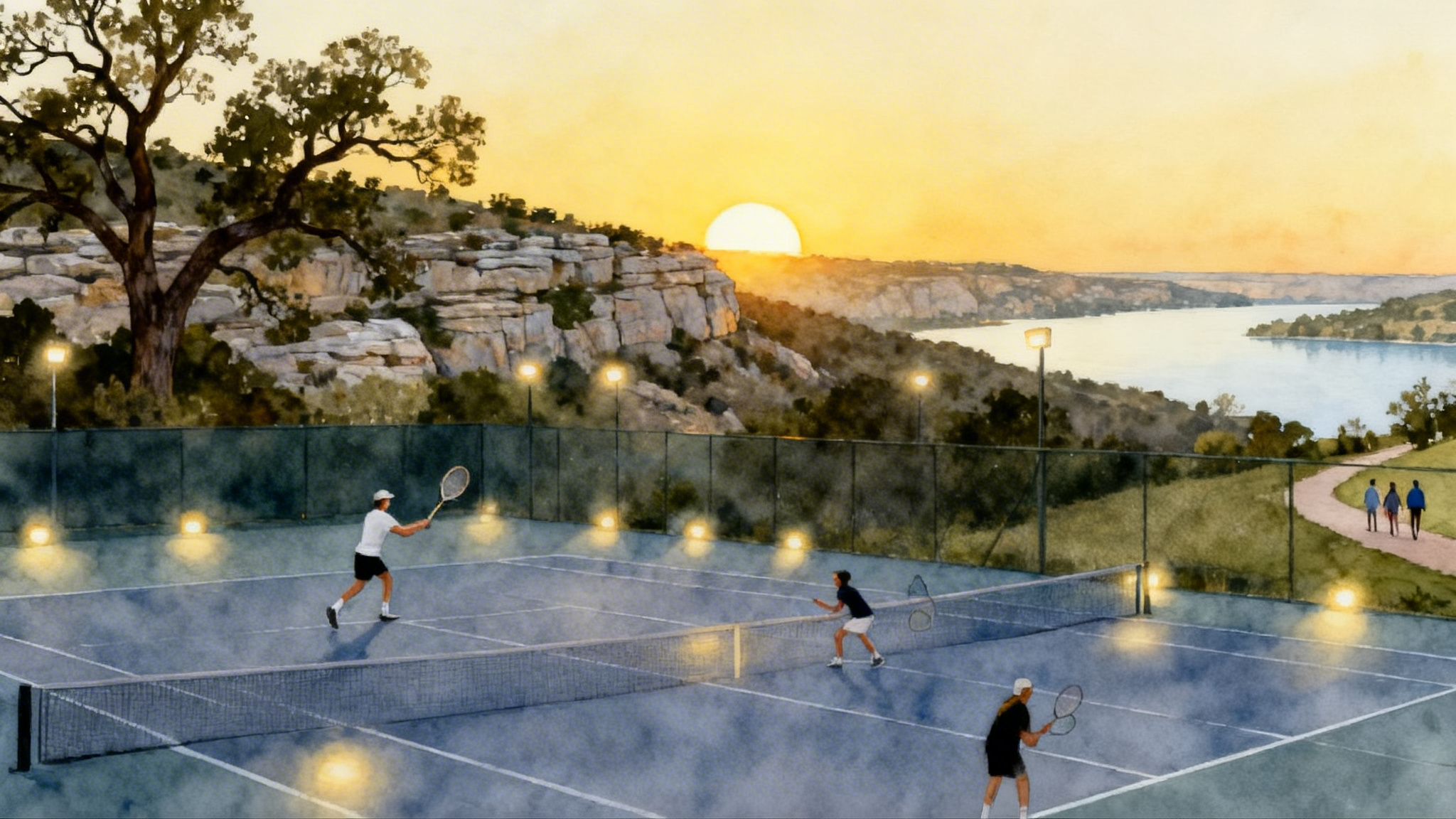
Planning a broader U.S. training map? Compare this coast with our Austin Hill Country year round base and the nearby Desert Winter Tennis Guide.
The microclimate playbook
The two most important local patterns are the morning marine layer and the predictable afternoon onshore breeze.
-
Marine layer mornings: A cool, shallow sheet of ocean air often settles along the coast overnight. It can bring fog or low clouds that burn off by late morning. Temperatures start cool and calm, balls feel a bit heavier, and visibility is soft but safe. This is prime time for technical drilling and serve accuracy because wind is minimal. For a clear explanation of the phenomenon, see Scripps’ overview of how the marine layer forms.
-
Afternoon onshore breeze: By late morning to early afternoon, a sea breeze often kicks in as inland areas warm. Expect a steady 8 to 15 miles per hour most days near the water, rarely gusty, which is ideal for learning to play through wind without chaos. Plan point play, patterns, and fitness here. Players develop confident ball control that travels anywhere.
-
Seasonal tweak: From late spring into early summer, low cloud cover can linger later into the day. Locals call it May Gray and June Gloom. In fall, occasional Santa Ana events bring dry, warmer, offshore winds. Those windows are short, and you can adapt by booking early morning or evening sessions.
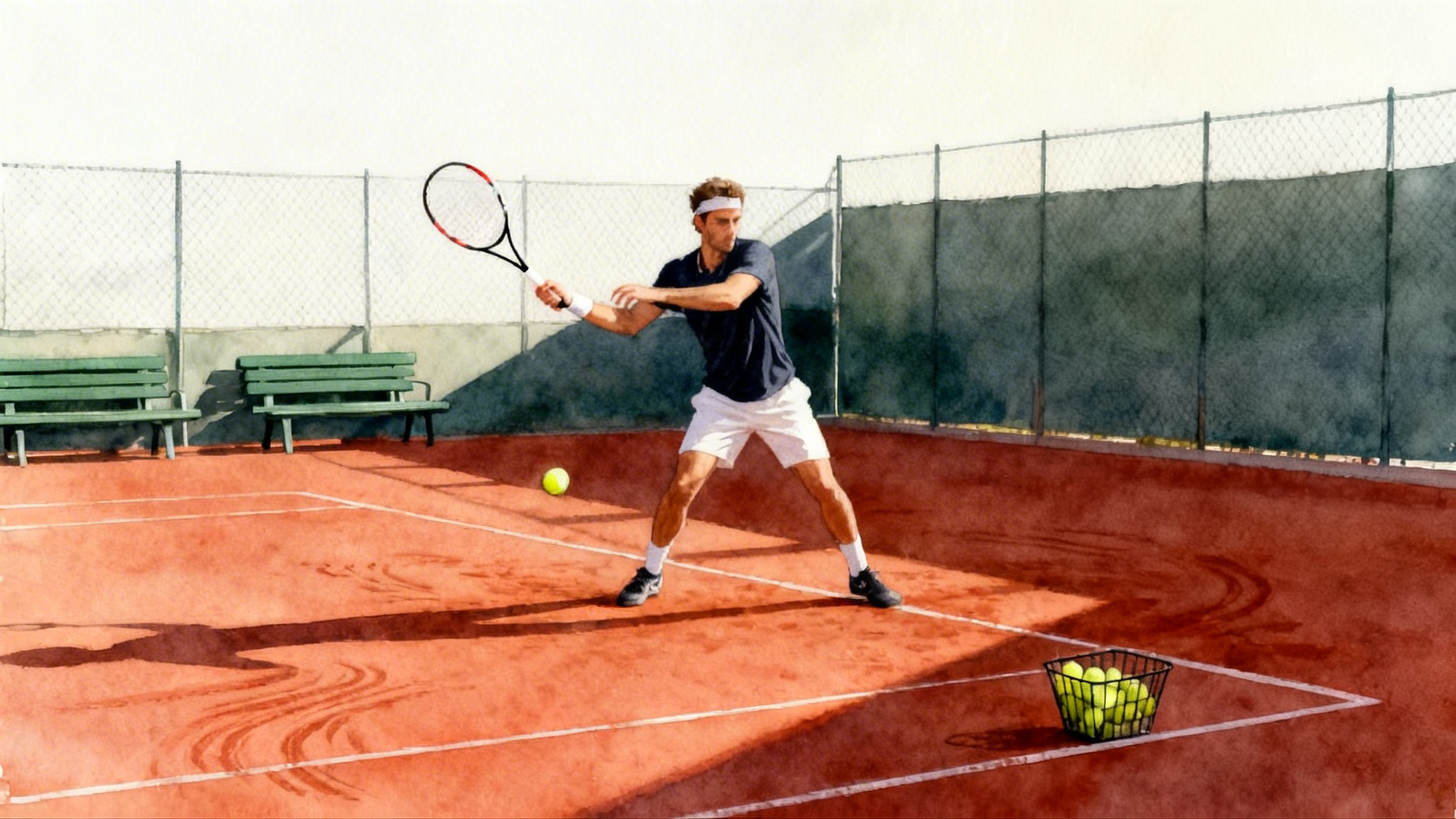
Tip: Use calm mornings for fundamentals with our modern forehand biomechanics guide.
Month by month, with training windows that work
-
December to February: Cool nights, crisp mornings, and the brief rainy season. When a storm cycle arrives, it tends to cluster over a few days, then clears for long sunny runs. Ideal windows are late morning to midafternoon on dry days. Keep a light layer for warmups, and schedule recovery walks on the beach after lunch.
-
March to May: The air dries out, the breeze becomes a daily friend, and mornings are calm under a marine lid. Book technical blocks from 8 to 10 a.m., then transitional drills from 11 a.m. to 1 p.m. as the breeze builds. This is a sneaky great stretch for match play because temperatures sit in the sweet spot.
-
June to August: The coastline stays comfortable while the inland valleys heat up. Coastal highs often land in the 70s, sometimes low 80s, so you can safely run two on-court sessions with a midday break. If clouds linger, use the softer light for serve targets and contact point work.
-
September to November: Golden season. Water is warmest, mornings are clear, and evenings glow. There can be a few hot, dry Santa Ana days. On those, slide your main session to early morning and use shaded recovery or indoor strength in the afternoon.
Surface choices and how to use them
The corridor is dominated by acrylic hard courts. That is good news for training durability and for replicating the pace and bounce of most United States tournaments. Within hard courts you will find three relevant variables.
-
Cushion vs noncushion: Cushion systems help reduce joint load and can be paired with high-volume drilling blocks. Noncushion courts play firmer and a hair quicker, great for live ball and fitness.
-
New vs seasoned paint: Fresh surfaces grip more on heavy spin and stop the skid. Seasoned acrylic is a touch quicker and lower. If your season includes different court ages, vary your weekly sessions between newer and older complexes.
-
Court orientation and wind: Courts set perpendicular to the afternoon breeze make one end play upwind, one downwind. Alternate ends for serve games in practice sets to learn how to adjust toss height and target windows.
Clay courts are limited and typically require a club or resort booking. Use clay days for movement patterns, point construction, and lower-impact volume. Natural grass is rare and usually private or event specific, so treat it as a novelty rather than a pillar of your plan.
Recovery, cross training, and the ocean advantage
Recovery is where this region shines beyond the baseline.
-
Ocean resets: A ten minute cold immersion in the Pacific after training can calm inflammation and improve sleep quality. Choose guarded beaches and avoid strong rip currents. Torrey Pines, Del Mar, and Newport Beach all offer gentle entries on typical days.
-
Trails and active mobility: Torrey Pines State Natural Reserve offers rolling paths above the cliffs, perfect for an evening 30 minute walk that restores hips and backs. In Orange County, Crystal Cove State Park and the Back Bay loop in Newport Beach deliver soft surface options away from traffic.
-
Strength and therapy: Gyms, Pilates studios, and sports physical therapy clinics are plentiful across both counties. Schedule two strength sessions per week during a training trip, lighter on match-heavy days, and set a soft tissue appointment midweek for teams or older adults.
-
Hydration and sun management: Even with marine clouds, the ultraviolet index can climb. Pack sunscreen rated to water and sweat, a hat with a dark underbrim, and a simple electrolyte plan.
Travel logistics that keep the week on rails
-
Airports: Fly into San Diego International Airport for southern bases and into John Wayne Airport in Orange County for northern bases. Both sit close to their respective coastlines, which cuts down on traffic surprises and helps you reach courts inside 20 to 30 minutes in normal conditions.
-
Getting around: A rental car remains the most flexible option, since clubs, parks, beaches, and groceries are spread along the shoreline hills. Trains add a scenic backup for day trips. The Coaster connects San Diego’s downtown to North County, Metrolink links Orange County towns, and the Pacific Surfliner ties the whole coast together.
-
Court density: Public complexes dot nearly every coastal town. Private clubs and resorts fill the gaps. If you need lights, confirm hours before you go, since some neighborhoods require earlier shutoffs.
-
Food and lodging: Beach town groceries carry quick recovery staples, such as cooked rice bowls, rotisserie chicken, and cut fruit. Condos with a small kitchen simplify junior trips and family weeks. If your group wakes up early, pick a place west of the freeway so you avoid morning traffic pinch points.
Roundup: programs, clubs, and where to book
The list below highlights reliable year round venues along the coast. For up to date coaching rosters, seasonal camps, and junior or adult tracks, use the regional directories on TennisAcademy.app during the season.
San Diego area
- Barnes Tennis Center, Point Loma: A major public hub with year round junior pathways and adult sessions. Home to numerous tournaments and community programs. Great for families who want lessons for kids and match play for parents on the same day.
- Balboa Tennis Club, Morley Field: Classic San Diego complex with depth of courts and a friendly match play culture. Easy to pair with a visit to Balboa Park for a recovery walk.
- La Jolla Beach and Tennis Club area: The neighborhood has a culture of tennis and ocean swims. Club bookings vary, and nearby public courts fill quickly on clear mornings.
- North County public clusters, including Encinitas and Carlsbad: A good base if you want quick access to both San Diego and southern Orange County, with plenty of cafes and coastal trails.
Orange County area
- Newport Beach Tennis Club: A coastal institution with adult leagues, junior training, and a social scene that keeps families engaged. Book ahead in peak evening windows.
- Palisades Tennis Club, Newport Beach: Popular for competitive adults and juniors, and convenient to Back Bay trails for post session mobility.
- Racquet Club of Irvine and public centers in Costa Mesa and Huntington Beach: Dense court networks support flexible last minute booking and match play.
- San Clemente and Dana Point public courts: Reliable microclimate, light sea breeze, and dramatic coastal sunsets that make evening hits a treat.
Itineraries: 3 day and 7 day plans for juniors, adults, and families
Below are modular templates tuned to the daily rhythm of the coast. Swap venues based on your base camp. Distances are short by design, which reduces fatigue and keeps you near the ocean for recovery.
Juniors
3 day intensive
-
Day 1
- Morning: Technical block under the marine layer, 90 minutes of serve, return, and forehand shape.
- Midday: Lunch, video review, and 30 minutes of mobility.
- Afternoon: Live ball and pattern play as the breeze builds, 90 minutes.
- Evening: Beach walk, 15 minute cold immersion for legs.
-
Day 2
- Morning: Footwork ladder, cross court consistency test, overheads and transition volleys.
- Midday: Strength circuit focused on hips and posterior chain, light and precise.
- Afternoon: Set play, two short sets to 6 with coaching between games.
- Evening: Film match highlights, set two technical cues for tomorrow.
-
Day 3
- Morning: Serve plus one patterns, return depth challenge, tiebreak practice.
- Midday: Recovery swim, nutrition reset.
- Afternoon: Match play showcase with parents or team, tiebreakers into short sets.
7 day development week
- Mon: Baseline shape and timing, afternoon live ball under light wind.
- Tue: Return games and passing shots, evening doubles skills.
- Wed: Clay or cushioned hard if available, focus on point construction, recovery massage.
- Thu: Serve speed and placement, strength session, night match play under lights.
- Fri: Pattern day, second ball depth, forehand inside in vs inside out.
- Sat: Team match day with local sparring partners, beach time after lunch.
- Sun: Off court adventure on trails, optional fun hit, early bedtime.
Adults
3 day reboot
- Day 1: Morning tune up with contact point and footwork, afternoon doubles formations, dinner near the beach and a gentle walk.
- Day 2: Singles day with serve and first strike patterns, midday Pilates or yoga, evening match set under lights.
- Day 3: Mixed drills, approach and volley confidence, end with a coached tiebreak ladder.
7 day performance and wellness
- Mon: Technical reset and tempo, afternoon spin control in the breeze.
- Tue: Doubles specialty day, returns at the feet, poach timing.
- Wed: Recovery morning, mobility and ocean dip, evening singles ladder.
- Thu: Serve and second serve under pressure, hydration and heat strategy refresh.
- Fri: Pattern play, defend to offense transitions.
- Sat: Play a local round robin, enjoy a long coastal walk for active recovery.
- Sun: Brunch, debrief, and a final relaxed hit before travel.
Families
3 day fun plus fundamentals
- Day 1: Kids camp in the morning while parents take a group clinic, family picnic lunch, beach volley or tidepool walk, evening mini sets on short courts.
- Day 2: Parent and child doubles workshop, midafternoon surf lesson or boogie board break, early dinner and sunset stroll.
- Day 3: Family skills challenge with targets, finish with a friendly tiebreak tournament.
7 day family blend
- Mon: Kids in morning camp, adults in technique clinic, shared lunch nearby.
- Tue: Half day off for a zoo or aquarium visit, late afternoon casual hit.
- Wed: Parents doubles play while kids try a movement class, sunset pizza by the pier.
- Thu: Beach morning, court games late afternoon when the breeze cools the courts.
- Fri: Family round robin, prizes for most improved and best teammate.
- Sat: Hike the bluffs or Back Bay loop, stretch and ice cream.
- Sun: Short hit, pack, and head to the airport relaxed.
A simple packing and planning checklist
- Layers for cool mornings, light fabrics for mild afternoons.
- Two hats, one with a dark underbrim to cut glare.
- Sunscreen and lip balm that perform in wind and sweat.
- Extra overgrips and a slightly higher string tension if you plan to hit many breezy afternoons.
- A small cooler for hydration and fruit between sessions.
- Resistance bands and a lacrosse ball for nightly mobility.
- Court shoes plus recovery sandals for beach walks.
Booking tips
- Reserve a morning and an afternoon slot each day rather than a single long block. The coastal rhythm rewards shorter, sharper sessions.
- If you want clay time, call clubs early and ask about guest access midweek. Weekdays are easier than weekends.
- For teams or groups, coordinate a single base with multiple nearby public options to spread out the play.
Why this corridor makes players better
Training here is not only about comfort. It is about quality repetitions in a predictable environment. Juniors learn to hit cleanly in calm mornings, then adapt to moderate wind in the afternoon. Adults gain confidence returning and serving in real wind, not a gale. Families stay on schedule, which reduces stress and increases fun. Coaches can actually plan a week, then run that plan without constant weather triage.
When you add ocean recovery, trails that keep joints happy, and a web of programs from San Diego to Newport Beach, you get something rare in North American tennis. You get rhythm that holds. Build your next camp or family week around that rhythm, and you will come home with more reps, clearer patterns, and a smile that tends to last the whole flight back.