Florida vs Tenerife: Gomez vs Tenerife Tennis Academy Guide
 Tommy
Tommy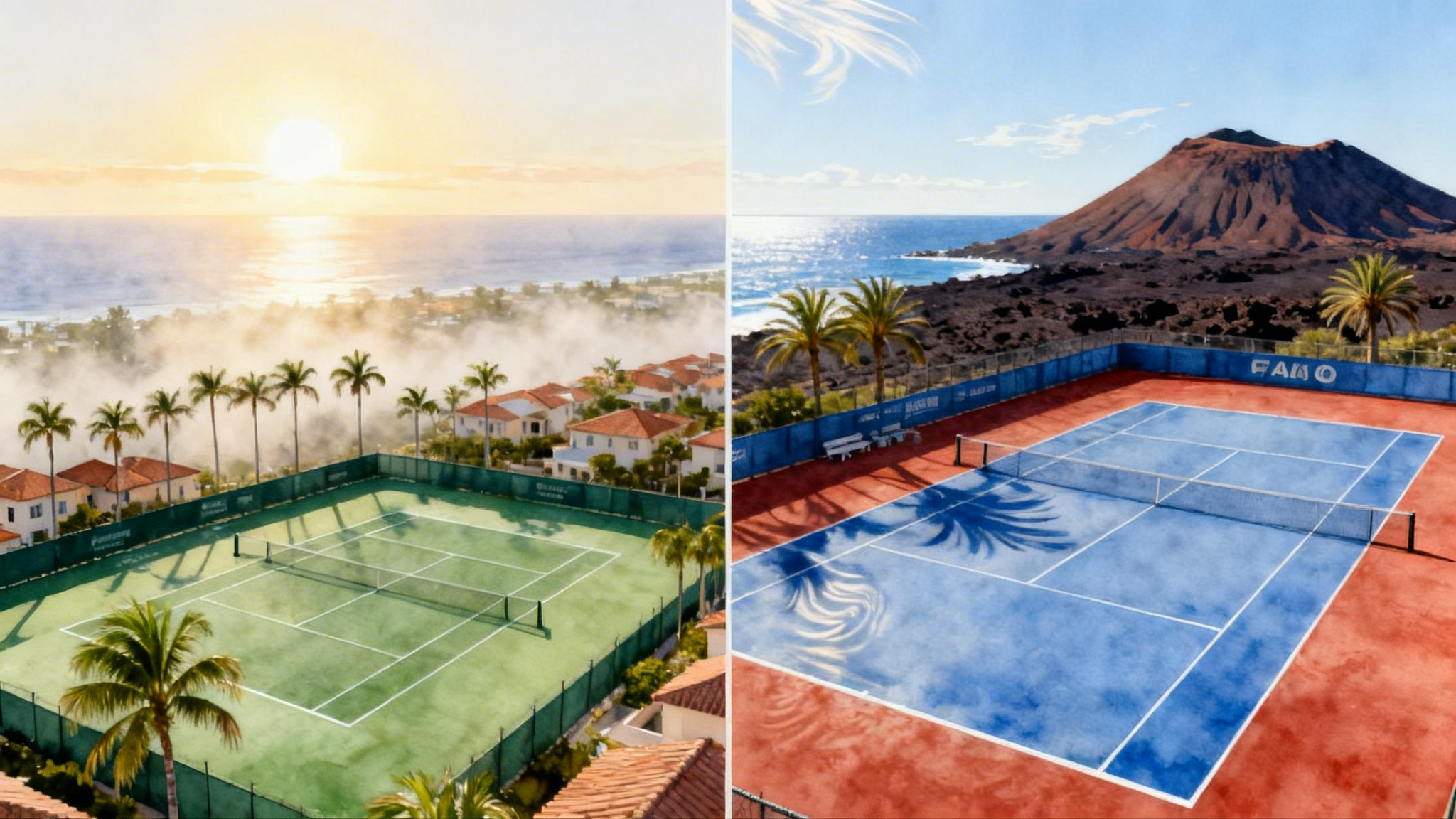
The decision: Florida or Tenerife for a winter tennis base?
If you have December to March circled for a push in training and rating jumps, your shortlist often narrows to two proven winter hubs: Naples, Florida with Gomez Tennis Academy in Naples and south Tenerife with Tenerife Tennis Academy in Chayofa. Both deliver sun, high court availability, and serious coaching. The real question is which environment best matches your goals, budget, and competition calendar. If you plan to build your trip around competition, start by cross checking the International Tennis Federation calendar for pro and junior events on your dates. The official ITF tournament search page is the global source for entries and deadlines.
Below is a side by side, book now guide to help you choose with confidence. Considering other warm weather bases too? Scan our Desert Winter Tennis Guide for more options.
Snapshot: what differs most
-
Climate reliability
- Naples, Florida: warm winter, higher humidity, occasional cold snaps, afternoon showers possible.
- South Tenerife: mild and dry, trade wind microclimate with many sun hours, wind management matters.
-
Court surfaces and feel
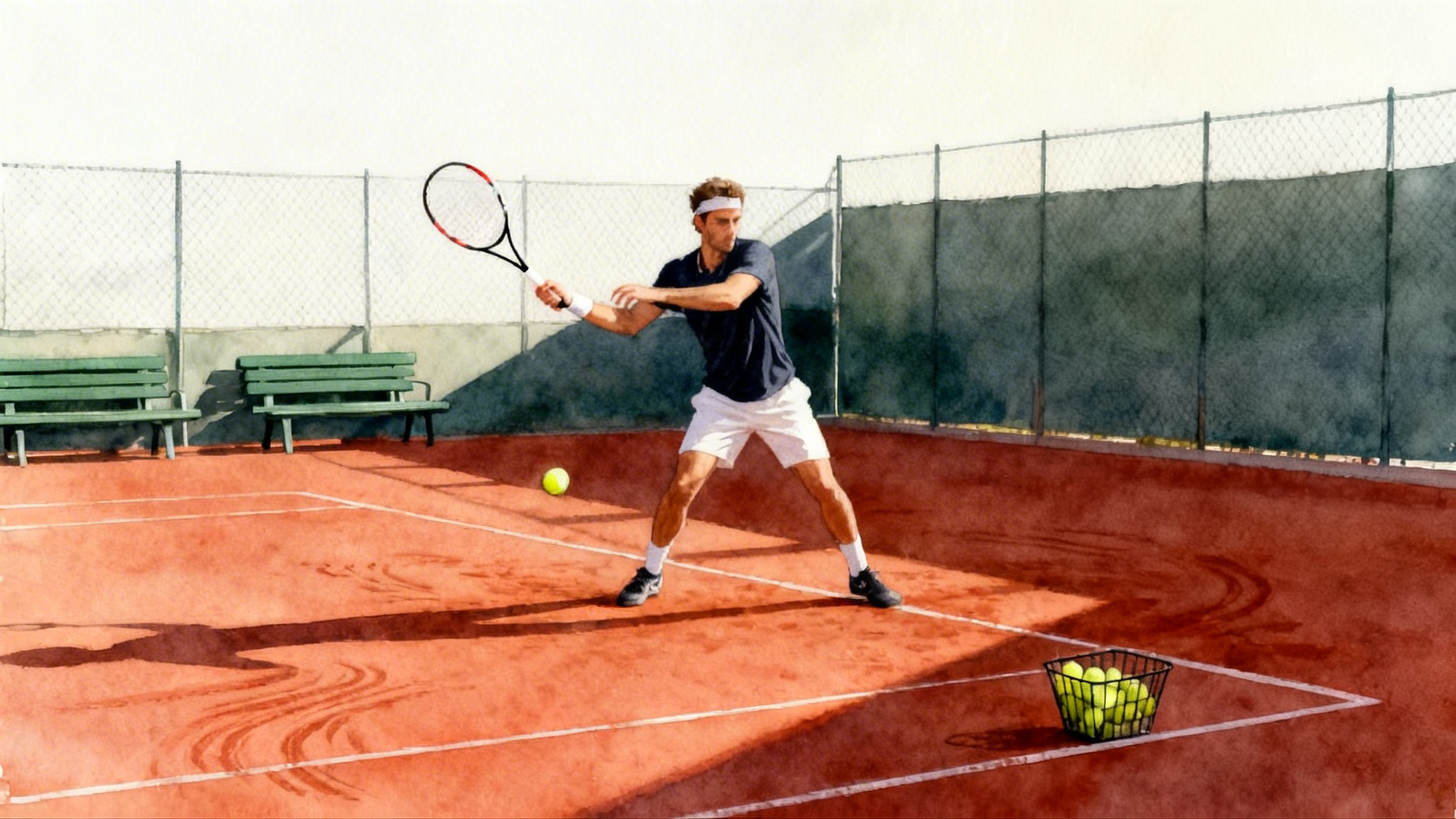
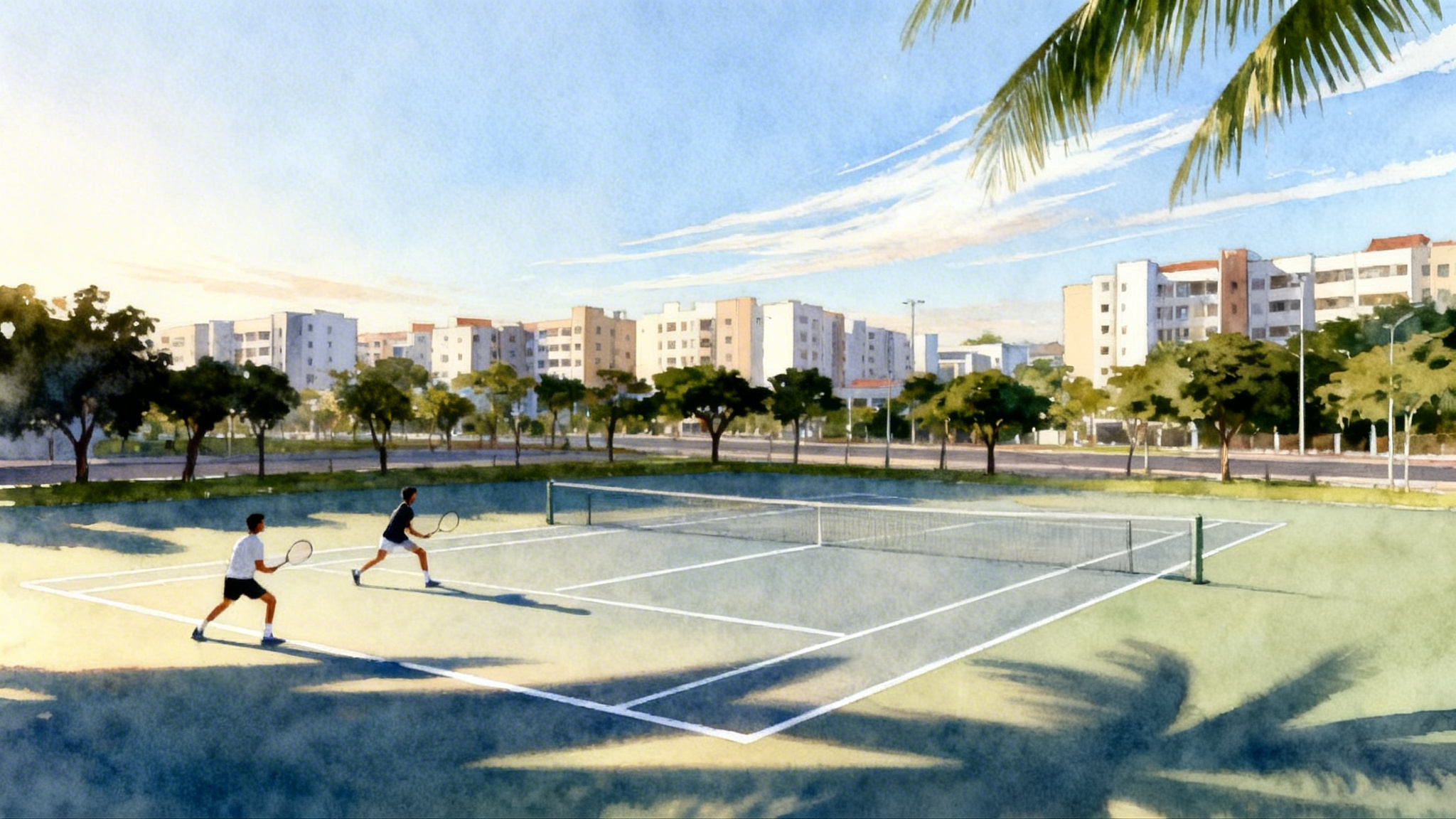
- Gomez Tennis Academy: Har Tru green clay plus hard courts. Softer underfoot, longer rallies, great on joints.
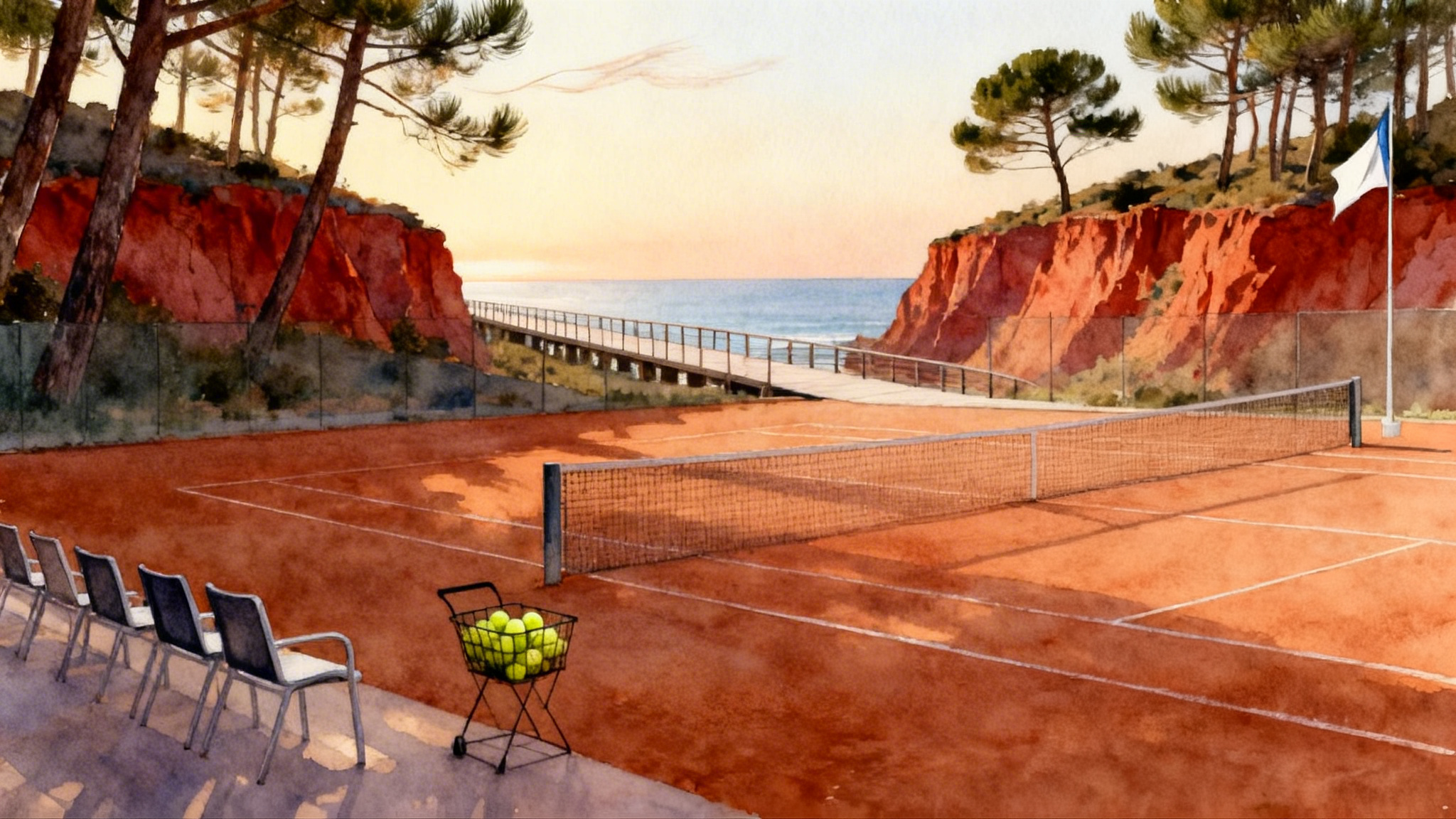
- Tenerife Tennis Academy: Australian Open style acrylic hard courts plus European red clay. Faster, livelier bounce, excellent transition to European clay season.
-
Travel logistics
- From the United States: Florida is direct and simple; Tenerife requires a transatlantic connection.
- From Europe: Tenerife is usually one direct hop; Florida typically needs a longer flight and visa or Electronic System for Travel Authorization.
-
Academy rhythm
- Gomez: strong day academy culture that fits families wintering in Naples, plus short stay housings with a homestay or supervised option when available.
- Tenerife: boarding first feel with multi national groups, walkable or shuttle based commutes, high repetition across blocks.
-
Match play ecosystem
- Florida: dense Universal Tennis Rating events, United States Tennis Association tournaments, and frequent exhibitions in Southwest and Southeast Florida.
- Tenerife and Canary Islands: frequent International Tennis Federation World Tennis Tour 15k and 25k weeks plus local league play on red clay.
-
Typical cost profile
- Naples: higher accommodation, car rental, and dining in peak season; private lessons trend pricier.
- Tenerife south: more range on lodging from budget to resort; food and car hire often cheaper in winter shoulder weeks.
Climate reliability: humidity versus a trade wind microclimate
Naples, Florida from December through March gives you many warm, playable days. Average daytime highs sit in the upper 60s to mid 70s Fahrenheit in December and January, climbing toward the high 70s by March. Humidity is the constant variable. Dew points can be sticky on certain days, so hydration and electrolyte planning are not optional. Afternoon showers can pop up, although winter is drier than summer on the Gulf Coast. You will occasionally get a two day cool spell, which makes layering essential for early morning sessions.
South Tenerife lives in a different weather story. The south coast around Costa Adeje and Playa de las Américas is protected by volcanic terrain and enjoys many more sunny days than the north of the island. Daytime winter highs typically sit in the high 60s to low 70s Fahrenheit. Rain is infrequent, and the main variable is wind. The trade winds, often in the 10 to 20 knot range, reward sound contact and spin management. Courts are usually oriented with wind screens and terrain to reduce gusts, yet you will still train your ball flight and trajectory control more than in a calm Florida morning.
What this means for your game
- If you want cardio load and heat tolerance in winter, Naples gives you those slow burn sessions that develop stamina.
- If you want consistent mild temps with a built in ball control skill builder, Tenerife’s microclimate creates that daily rehearsal.
Surfaces and how they shape development
Gomez Tennis Academy’s Har Tru courts are forgiving on knees and feet, invite longer patterns, and teach tempo patience. The green clay lets you practice defending, resetting with height and spin, and building points without rushing winners. Because many adult leagues and junior events in the United States use hard courts, Gomez also blends hard court reps so your serve targets, return stances, and first step speed move in parallel.
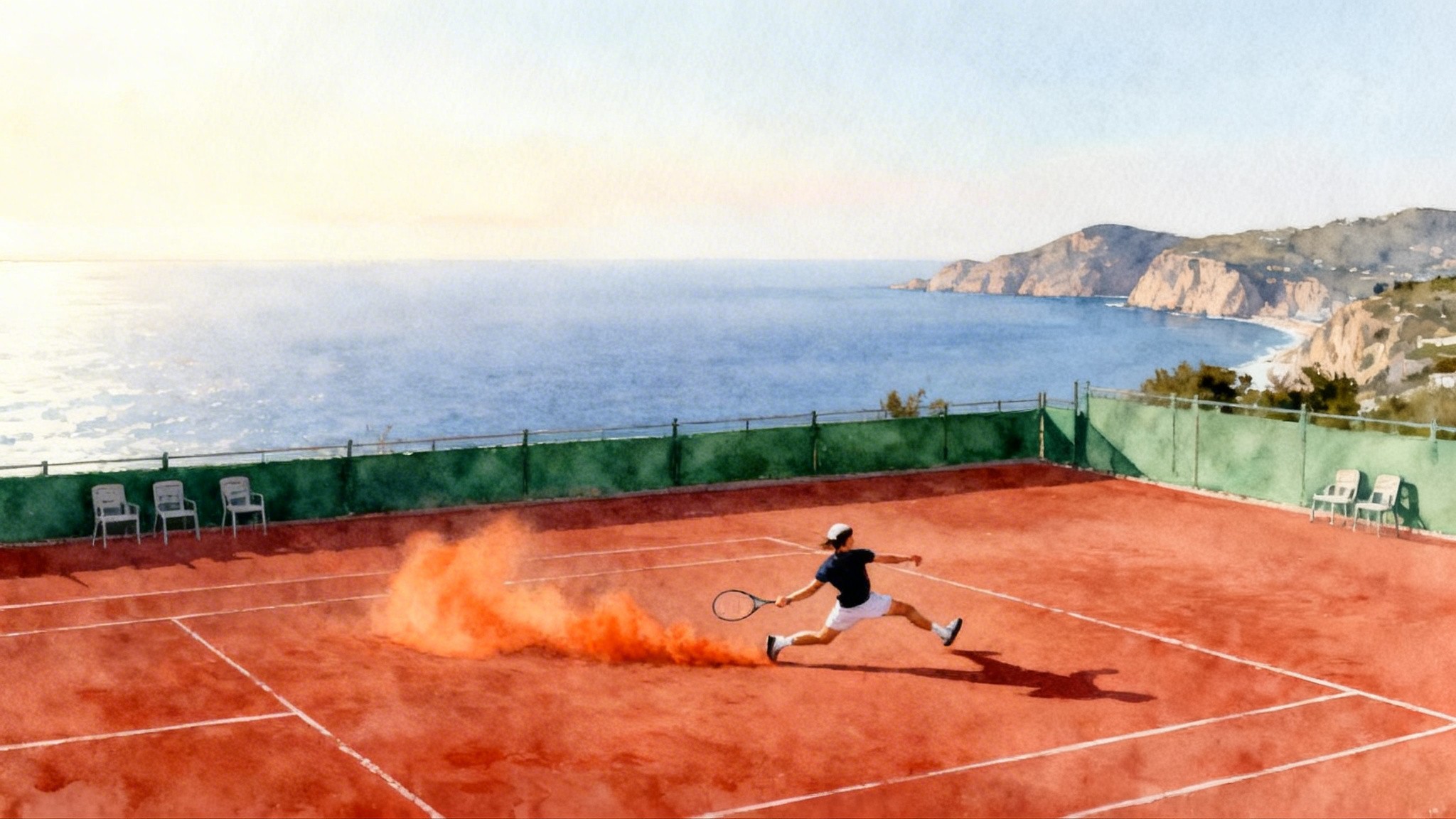
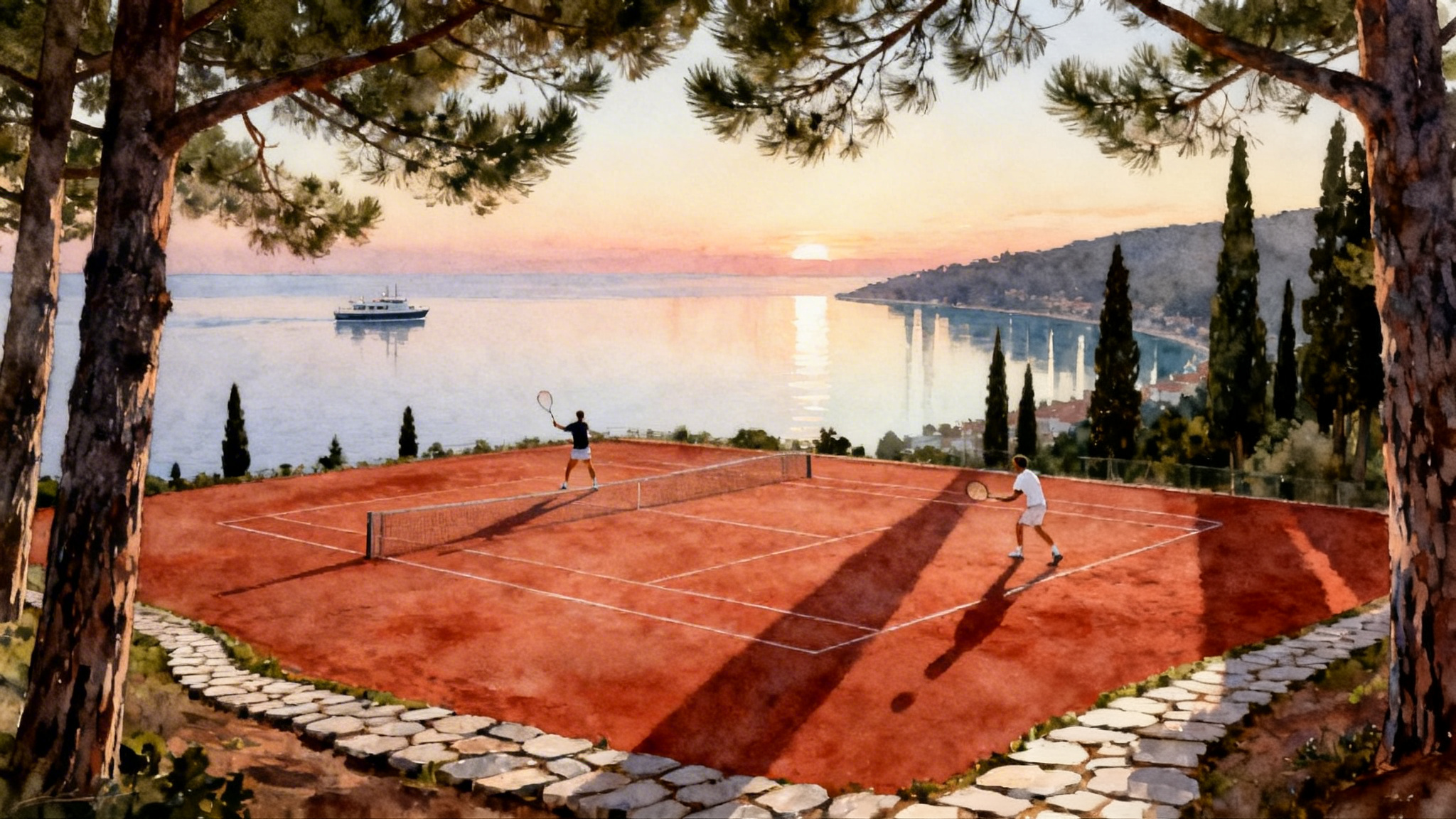
Tenerife Tennis Academy runs on Australian Open style acrylic hard courts and classic European red clay. The acrylic is quicker than Har Tru with a truer high bounce, which is ideal for serve plus one and backhand up the line timing. The red clay introduces sliding mechanics, return depth under heavy spin, and drop shot disguise. If you plan to compete on clay in spring events in Spain, France, Germany, or Italy, two weeks on Tenerife’s red clay is a smart bridge from indoor autumn habits to outdoor rally tolerance.
How to decide by surface
- Preparing for spring clay season or want to improve defense to offense transitions: lean Tenerife.
- Prioritizing joint friendliness, constructing points under mild physical stress, and maintaining hard court sharpness: lean Naples.
Travel logistics from the United States and Europe
Naples, Florida access
- Airports: Southwest Florida International Airport in Fort Myers, code RSW, is about 40 to 50 minutes by car. Miami International, code MIA, is roughly two hours. Fort Lauderdale Hollywood International, code FLL, and Tampa International, code TPA, are about two and a half hours.
- Car rental: strongly recommended. Naples is spread out, and grocery runs, physio appointments, and beach recovery are all easier with a car.
- Time zones and jet lag: for most Americans, minimal shift. You can train on day one with a light hit.
South Tenerife access
- Airports: Tenerife South Airport, code TFS, serves most winter flights. Tenerife North, code TFN, is mostly inter island and Spanish domestic.
- From Europe: many direct options from the United Kingdom, Germany, the Netherlands, and Scandinavia. Typical flight times are four to five hours from central Europe.
- From the United States: usually one connection through Madrid, Barcelona, or a major European hub. Plan an overnight and build a 24 hour buffer before heavy training.
- Car rental: optional in the south. Many accommodations are walkable or use academy shuttles. A compact car is useful for grocery runs and weekend hikes.
Academy rhythm: day academy versus boarding first feel
Gomez Tennis Academy fits the rhythm of Naples. Mornings and afternoons bring a mix of local juniors, snowbird families, and visiting college players tuning up. The culture is a day academy at heart, with high coaching attention and a schedule that suits families renting condos for two to twelve weeks. Boarding and supervised housing may be available for short stays, yet availability swings in peak months, so you should reserve far ahead. The wider Naples tennis community is active, which means you can source practice sets and Universal Tennis Rating matches quickly once coaches make a few calls.
Tenerife Tennis Academy feels built for boarding. You see rotating groups from Spain, the United Kingdom, Eastern Europe, and North Africa, which creates a competitive peer set in every level band. The daily routine is walk, shuttle, eat, train, recover, repeat. Staff are accustomed to minors traveling without parents. The island is compact, so weekend team excursions to the beach or a volcano hike can be arranged without losing the recovery focus.
Sample 7 day training itineraries
Naples, Florida
- Day 1, arrival: easy 60 minute hit, mobility, grocery run, early dinner. Hydrate aggressively due to humidity.
- Day 2: morning technical drilling on serve targets and return depth, afternoon point building on Har Tru, 20 minute bike flush, evening match charting on television.
- Day 3: strength session in the morning, two hour live ball and patterns on hard court, 30 minute contrast shower protocol.
- Day 4: practice set play arranged through the academy, focus on second serve plus one, evening beach walk for recovery.
- Day 5: private lesson on transition volleys, afternoon float day with optional yoga, early to bed.
- Day 6: tournament style morning warm up, two best of three sets against UTR matched opponents, ice and compression.
- Day 7: half day technical recaps, video review, stretch, pack for onward travel or week two.
South Tenerife
- Day 1, arrival: short loose hit on acrylic hard, light dinner, early sleep to sync time zone.
- Day 2: morning tempo control under wind, afternoon red clay sliding drills, 15 minute breathwork for recovery.
- Day 3: serve plus one patterns on acrylic, fitness block with lateral plyometrics, evening walk along the promenade.
- Day 4: clay day with heavy crosscourt forehand patterns, drop shot and lob combinations, cold plunge if available.
- Day 5: private lesson on return technique against kick serve, pool mobility, film review.
- Day 6: practice match on clay in the morning, doubles set in the afternoon, stretch and compression.
- Day 7: mixed surfaces live ball, taper to 60 minutes, plan logistics for event or second week.
Sample 14 day build for competition
If you are targeting a tournament in week two, front load volume in days 1 to 5, then sharpen and taper.
- Days 1 to 3: two sessions daily, one technical and one live ball. Add two strength workouts.
- Day 4: single long session, 90 to 120 minutes, then recovery modalities.
- Day 5: practice set morning, patterns afternoon at 70 percent intensity.
- Day 6: rest from court, aerobic 30 to 40 minute shakeout, mobility.
- Day 7: match simulation with full routines and changeover habits.
- Day 8: light hit only, serve basket, activation.
- Days 9 to 12: event days or controlled sets. If out early, keep daily hits under 90 minutes with purpose.
- Days 13 to 14: evaluation, private lesson for two priorities, then either rest or a bonus match if you have legs.
Typical costs from December to March
These are realistic ballpark ranges for winter 2025 to 2026. Always confirm with the academy at the time you book.
Training fees, per person
- Gomez Tennis Academy day program: 700 to 1200 United States dollars per week depending on hours and group size.
- Tenerife Tennis Academy training blocks: 450 to 850 euros per week depending on hours and whether you mix surfaces.
Private lessons
- Naples: 110 to 160 United States dollars per hour with senior coaches, 80 to 110 United States dollars per hour with assistants.
- Tenerife: 70 to 110 euros per hour with senior coaches, 50 to 80 euros with assistants.
Courts and extras
- Court fees, when applicable: included in program pricing or 10 to 25 United States dollars per hour in Naples, 8 to 20 euros per hour in Tenerife for extra bookings.
- Fitness and physio: 70 to 120 United States dollars per session in Naples, 50 to 90 euros in Tenerife.
Accommodation per night
- Naples winter peak: 150 to 300 United States dollars for a clean condo or suite. Resort options trend higher.
- South Tenerife: 80 to 180 euros for apartments or aparthotels. Resorts and sea view units are higher.
Transport and meals
- Car rental: Naples 50 to 90 United States dollars per day in peak months. Tenerife 25 to 60 euros per day for a compact.
- Meals: Naples 45 to 70 United States dollars per person per day if you eat out twice, less with groceries. Tenerife 25 to 50 euros with one restaurant meal and groceries.
Two week budget example per player
- Naples with day program, one private per week, shared condo, car split with a teammate: 3,200 to 4,600 United States dollars before flights.
- Tenerife with training mix, one private per week, shared apartment, compact car: 2,200 to 3,400 euros before flights.
Aligning training with ITF and UTR events
Your best winter block usually pairs structured training with match play that fits your level. Two calendars matter most: the International Tennis Federation World Tennis Tour and Universal Tennis events. Use the official Universal Tennis events calendar to find local UTR matches near Naples or on Tenerife that fit your rating window. For International Tennis Federation events in the Canary Islands or Florida, study entry deadlines, sign in rules, and site addresses in advance.
Practical steps
- Lock dates, then search both calendars for your window. Prioritize travel time and recovery gaps.
- Enter two events rather than one. If the first week falls through, you still have match play.
- Aim for your rating sweet spot. You should get two competitive matches minimum per entry. Ask the academy staff to help source practice sets if you go out early.
- Arrive two to three days before your first match in Tenerife if coming from the United States. In Naples, one to two days is enough for most.
- Use a taper. Forty eight hours pre match, reduce volume, keep intensity in short bursts, and protect sleep.
- Know rules on medical timeouts, code of conduct, and ball change schedules for the event you select.
Who should choose which base
Pick Naples with Gomez Tennis Academy if
- You want a gentle landing into volume on Har Tru to build match fitness with lower joint stress.
- You are a United States based player or family that prefers direct travel, a rental car, and a day academy rhythm.
- You plan to play a dense run of Universal Tennis Rating events in Florida and want fast access to opponents.
Pick south Tenerife with Tenerife Tennis Academy if
- You expect to compete on red clay from April to June in Europe and want to add sliding and height control now.
- You are Europe based and want a direct four to five hour flight with minimal jet lag.
- You want a boarding style routine with peers from many countries and walkable routines.
Booking checklist and timing
Six to eight weeks out
- Block academy dates and confirm hours per day.
- Reserve accommodation that fits your recovery plan. Kitchen access beats every restaurant on a training block.
- If Naples, book a car. If Tenerife, decide whether you want walkable plus shuttle or a compact.
Four weeks out
- Enter your target event on the International Tennis Federation or Universal Tennis Rating calendar and note the sign in details.
- Schedule two private lessons to focus on a single priority. Examples: second serve targets or forehand grip discipline.
- Build a packing list that fits the climate. In Naples, include extra sweat towels and electrolyte mix. In Tenerife, add a windproof layer and a cap with a snug fit.
One week out
- Pre set meal plan for the first three days so you do not burn energy hunting groceries after arrival.
- Send video clips of your last two matches to the academy to speed up your first lesson.
Arrival day
- Keep first hit to 60 minutes, serve basket last, then legs up and hydrate. Resist the urge to overdo session one.
The bottom line
If you want warmth and a day academy that meshes with a Florida lifestyle, Naples with Gomez Tennis Academy is an excellent winter base. If you want a boarding rhythm, red clay access, and a microclimate that quietly makes you better at ball control, south Tenerife with Tenerife Tennis Academy is hard to beat. Both will raise your level. The right choice is the one that aligns your surfaces, travel stress, and event calendar so that training turns into wins. Pick your dates, match the climate to your goals, and reserve now while winter slots are still open. Your game will thank you by April.