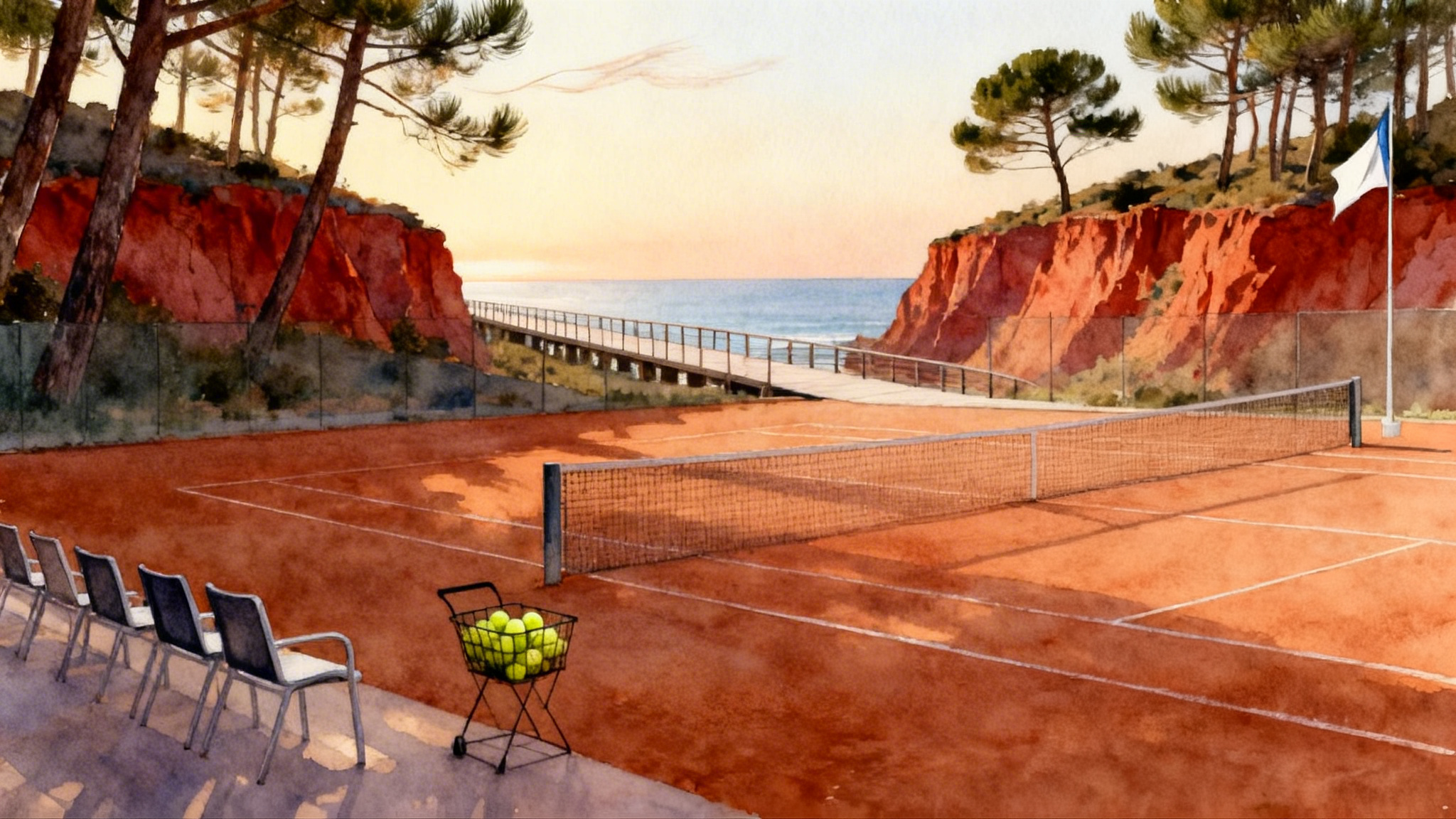
Monsoon-Smart Tennis: Year-Round Plan for Mohali, Bengaluru, Goa
Build a weatherproof tennis year in India with a climate-first map. Base in Mohali October to March at RoundGlass Tennis Academy, shift July to September to Bengaluru’s milder monsoon, and add November to February Goa weeks for recovery and match play.
 Tommy
Tommy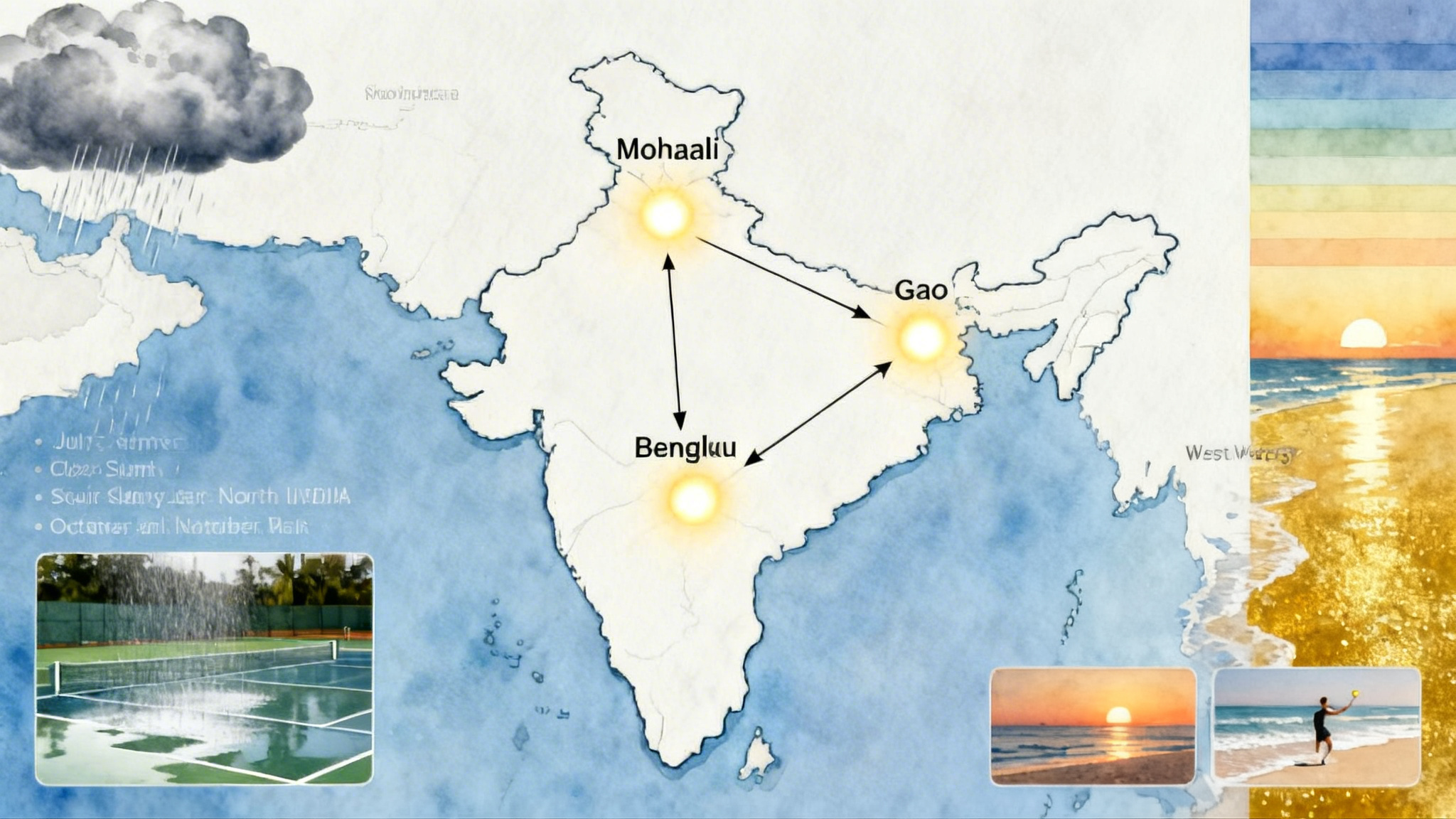
Why a monsoon-smart plan beats guesswork
India rewards planners who think like meteorologists. The southwest monsoon reshapes outdoor sport from June through September, while dry winter months open long, playable windows in the north and along the west coast. Families who align training blocks to those windows get more court time, fewer cancellations, and steadier progress. For broad seasonal context, the IMD monsoon climatology maps are the national reference coaches use when they sketch a year.
This guide builds a practical loop through three hubs that complement each other.
- Mohali, Punjab: October to March is cool and dry. Long daily play is realistic and ball speed is predictable. Anchor your heaviest skill and volume phases here. RoundGlass Tennis Academy in Mohali brings structure and match culture.
- Bengaluru, Karnataka: July to September still gets rain, but showers are often shorter and the temperature stays workable. Treat it as a high-quality wet-season base with smart contingencies.
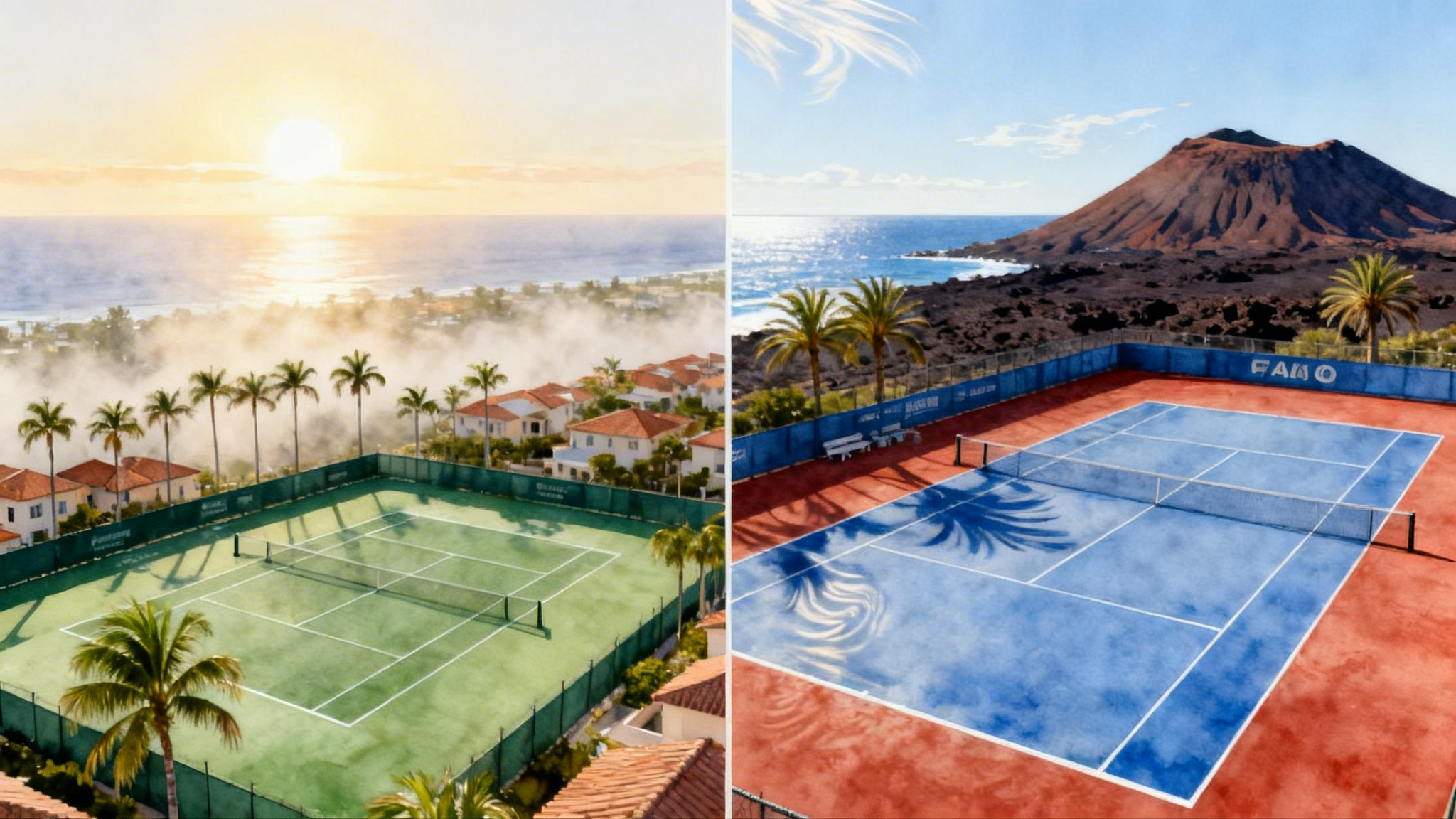
- Goa: November to February is beach season. Conditions are resilient, mornings are crisp, and evenings are comfortable. Use these weeks for recovery, lower-impact speed work, and controlled match play on hard courts.
Think of India like a three-court drill. You rotate through stations to train different qualities while dodging weather traps.
The three-city strategy at a glance
- Mohali, October to March: Technical rebuild and volume block. Cool mornings, low humidity, longer rallies. Great for big pattern work and serve mechanics because grip stays dry. Academy anchor: RoundGlass Tennis Academy in Mohali for structured squads, fitness testing, and tournament pathways.
- Bengaluru, July to September: Wet-season tactics and ball tolerance. Expect intermittent showers. Clubs that drain quickly allow two crisp sessions per day with a midday gym block when rain peaks. The city also hosts active league play and reliable sparring.
- Goa, November to February: Recovery plus match play. Lighter session density, quick feet in the sand for elastic strength, and beach jogs for low-impact aerobic work. Courts near Candolim, Calangute, Benaulim, and Panaji are widely available.
A sample year without weather surprises
Below are three plug-and-play calendars. Adjust for school breaks, ratings targets, and tournament calendars. Each plan includes a wet-weather backup so sessions convert to wins, not cancellations.
Option A: 12-month blueprint for a junior chasing rating gains
- October to mid-December: Mohali, 10 weeks
- Focus: Stroke quality, serve plus one, neutral ball tolerance.
- Weekly target: 10 to 12 on-court hours, 4 to 5 strength sessions, 2 mobility blocks.
- Weekend: UTR-style verified match play or local AITA-grade events when available.
- Rain backup: Indoor strength, video analysis, and short-court technical drills in covered spaces.
- Late December: Goa, 2 weeks
- Focus: Active recovery and light competition. Morning hitting, evening sets. One complete rest day per week.
- Add sand strides and low-amplitude plyometrics to keep pop without joint load.
- January to March: Mohali, 10 to 12 weeks
- Focus: Tournament prep and match sequencing. Add serve targets and return plays daily.
- Try a two-week micro-peak: volume down 20 percent, intensity up, lots of tiebreakers.
- April to June: Flexible block, 8 to 10 weeks
- Where: Split time between early mornings in Mohali or a Bengaluru mini-camp in April to beat the heat spike. Prioritize technical touch, one-rail movement patterns, and heat acclimation.
- Exams window: If academics are heavy, keep tennis to 60-minute quality hits plus short gym sessions. Protect sleep.
- July to September: Bengaluru, 8 to 10 weeks
- Focus: Wet-season skill sharpening. Interleave court time with gym and indoor footwork on rain days. Practice first-strike patterns in light drizzle and short rallies on slicker days.
Option B: 6-month preparation for a collegiate hopeful
- November to February: Mohali base, 14 weeks total with a Goa intermission
- Weeks 1 to 6: Volume and mechanics. Serve-hit combos to both short and deep targets. Two days each week end with fitness trials.
- Weeks 7 to 8: Goa reset. Three court sessions per week plus beach accelerations and mobility. Two friendly match days.
- Weeks 9 to 14: Competition phase. Practice sets most evenings. Insert two tournaments or verified match weekends.
- July to September: Bengaluru, 8 to 10 weeks
- Wet-weather agility, split-step timing, second-serve return patterns. Two gym days focused on eccentric control and tendon health.
Option C: 10-week summer for a U12 or U14 family
- July to September: Bengaluru, 6 to 8 weeks
- Morning technical sessions to dodge showers, lunchtime study, late afternoon match games like 21s and cross-court king. Gym twice weekly with medicine balls and coordination ladders.
- November to December: Goa, 2 to 4 weeks
- Keep it fun. Three tennis mornings, one sand-play day, one full off-day. One low-stakes weekend tournament if available.
Training block templates you can drop on a calendar
These templates fit 4, 8, and 12-week periods. They assume hard courts, with short clay exposures if available.
Four-week Bengaluru monsoon tune-up (July to September)
- Week 1: Acclimate and assess
- 60-minute hits, two per day when dry. One technical theme daily. Gym twice for base strength. Rain plan: indoor mobility and sprint mechanics drills in corridors or covered walkways.
- Week 2: First-strike focus
- Serve plus first ball, return plus first ball. High ball tolerance drills with targets. Gym twice with resisted accelerations.
- Week 3: Patterns and pressure
- Play short sets to four with no-ad scoring. Serve under fatigue. Video two sessions for feedback.
- Week 4: Consolidate and compete
- Drop volume 15 percent. Three verified match days or a weekend event. One full rest day.
Eight-week Mohali foundation block (October to December)
- Weeks 1 to 2: Mechanics rebuild
- Stroke spacing and contact depth. Serve kick and slice progressions. Use shadow swings and constraint-led drills.
- Weeks 3 to 4: Neutral tolerance and defense
- Cross-court ratios 70 to 30 neutral to offense. Defense to offense transitions twice a week. Gym adds eccentric squats and isometric calf holds.
- Weeks 5 to 6: Offense patterns
- Inside-out forehand lanes, backhand line change under set plays, approach and first volley. Two evenings of match play.
- Weeks 7 to 8: Pre-competition
- Volume trims by 20 percent. Add tiebreak ladders. Two-day mini-peak with fresh strings and full warm-ups.
Twelve-week blended cycle with a Goa reset (January to March with a mid-block beach week)
- Weeks 1 to 4: Baseline quality and physical base
- Ten on-court hours, four strength, two mobility. One cold evening match set for coping with heavier balls.
- Week 5: Goa reset
- Three on-court mornings, two beach tempo runs, one deep tissue session, one full rest day.
- Weeks 6 to 9: Competition phase
- Evening practice sets. Serve percentage tracking and return depth charts. Gym shifts to power circuits.
- Weeks 10 to 12: Peak and taper
- Volume drops 25 to 30 percent, quality rises. Target event or verified match weekend in week 11.
Surfaces, heat, and humidity: how to adapt fast
- Surface mix: Mohali and Goa are predominantly hard courts. Bengaluru offers hard and a few synthetic options. If clay is available, use one session per week for defensive footwork and patience training.
- Ball behavior: In Mohali’s cool, dry air, the ball travels quicker and grips well. In Bengaluru’s humid monsoon, the felt fluffs, rallies shorten on slick courts, and first-strike tennis wins more points. Train both modes.
- Heat acclimation: New arrivals from the United States or Europe should allow 7 to 10 days to adapt. Use a ramp: 60-minute sessions for three days, then 75 to 90 minutes. Hydration plan with 400 to 800 milliliters per hour, plus sodium 300 to 600 milligrams per hour based on sweat rate. Weigh before and after to keep losses under 2 percent of body mass.
- Humidity tactics: Practice with fresh overgrips and carry a rosin bag. Use a small towel at the back fence. Grip and footwork are your first safety checks after a shower.
- Sun and recovery: Wear a breathable long-sleeve top and a brimmed hat. Sunscreen reapplication every two hours. Evenings are perfect for mobility and soft tissue work. Pack a small massage ball and a short foam roller.
Tournament tie-ins that make sense
- Winter clusters: India often hosts January to March events across levels. Build a Mohali training base, then strike weekends in Chandigarh, Delhi, Punjab, or Rajasthan when the calendar aligns. Juniors can target J30 or J60 level weeks when present, and adults can look for World Tennis Tour 15K qualifying opportunities.
- Wet-season match play in Bengaluru: Use internal academy match ladders and verified rating nights. When rain interrupts, keep the match ladder going indoors with serve targets and return depth games.
- Goa as match-play low load: Slot a relaxed weekend event during a Goa recovery week. Keep training density low so competition does not steal recovery.
- Planning rule: Never stack two peak tournaments inside 10 days. Use a mini-peak, then a floor week, then rebuild.
Travel and logistics from the United States and Europe
- Gateways:
- Mohali: Fly to Delhi Indira Gandhi International Airport, then a short domestic hop to Chandigarh International Airport or a 4 to 5 hour ground transfer to Mohali.
- Bengaluru: Kempegowda International Airport has nonstop options from Europe and one-stops from major United States hubs.
- Goa: Dabolim Airport in South Goa and Manohar International Airport in North Goa serve the coast.
- Visas: Most families use India’s electronic visa. Check fees, photo specs, and validity windows on the Government of India e-Visa portal before booking.
- Domestic flights: IndiGo, Vistara, and Air India connect the three hubs frequently. Book early for rackets and oversized baggage. Keep strings and grips in carry-on in case of delays.
- Jet lag: India is 9.5 to 10.5 hours ahead of United States time zones and 4.5 to 5.5 hours ahead of Central and Western Europe. Shift sleep 30 to 60 minutes earlier for three nights before departure, hydrate on the flight, and schedule the first training day as a light hit.
- Connectivity: eSIMs from major providers now cover India. Local prepaid options are available with passport and visa at airport kiosks.
- Payments: Cards are widely accepted in metros. Keep some cash for cabs, stringers, and small eateries.
Budget and premium stays near courts
Prices vary by season. The ranges below are reference points so you can plan.
-
Mohali and Chandigarh
- Budget: Clean guesthouses and serviced apartments near Sectors 60 to 80 in Mohali. Typical range 25 to 60 United States dollars per night. Quick access to courts and markets.
- Mid-range: Business hotels around Elante and Industrial Area Phase 1, 60 to 120 United States dollars. Reliable breakfast and laundry.
- Premium: Five-star properties such as large international brands in Chandigarh, 150 to 300 United States dollars. Useful when traveling with grandparents or when you want full amenities.
- Tip: Ask RoundGlass Tennis Academy in Mohali for partner rates or trusted rentals near training.
-
Bengaluru
- Budget: Guesthouses and boutique stays around Indiranagar, Koramangala, and Whitefield, 30 to 70 United States dollars. Walkable eats and easy ride-hailing.
- Mid-range: Business hotels near MG Road or Manyata Embassy Business Park, 70 to 140 United States dollars.
- Premium: Central five-star hotels and resort-style properties, 160 to 320 United States dollars. Good gym facilities for rain days.
- Tip: Prioritize quick access to your chosen club so rain gaps become useful gym or video time instead of commute time.
-
Goa
- Budget: Beach huts and friendly guesthouses near Candolim, Calangute, Anjuna, or Benaulim, 25 to 70 United States dollars. Ask for quiet rooms away from music zones.
- Mid-range: Boutique hotels and serviced villas with pools, 80 to 160 United States dollars.
- Premium: Full-service resorts, 200 to 500 United States dollars. Great when you want kids clubs or spa recovery.
- Tip: Choose a place with early breakfast so morning sessions start cool and on time.
Wet-weather contingencies that save the block
- Designate a rain leader: one adult or coach who flips the plan in 5 minutes. The options are gym, video, or mental skills.
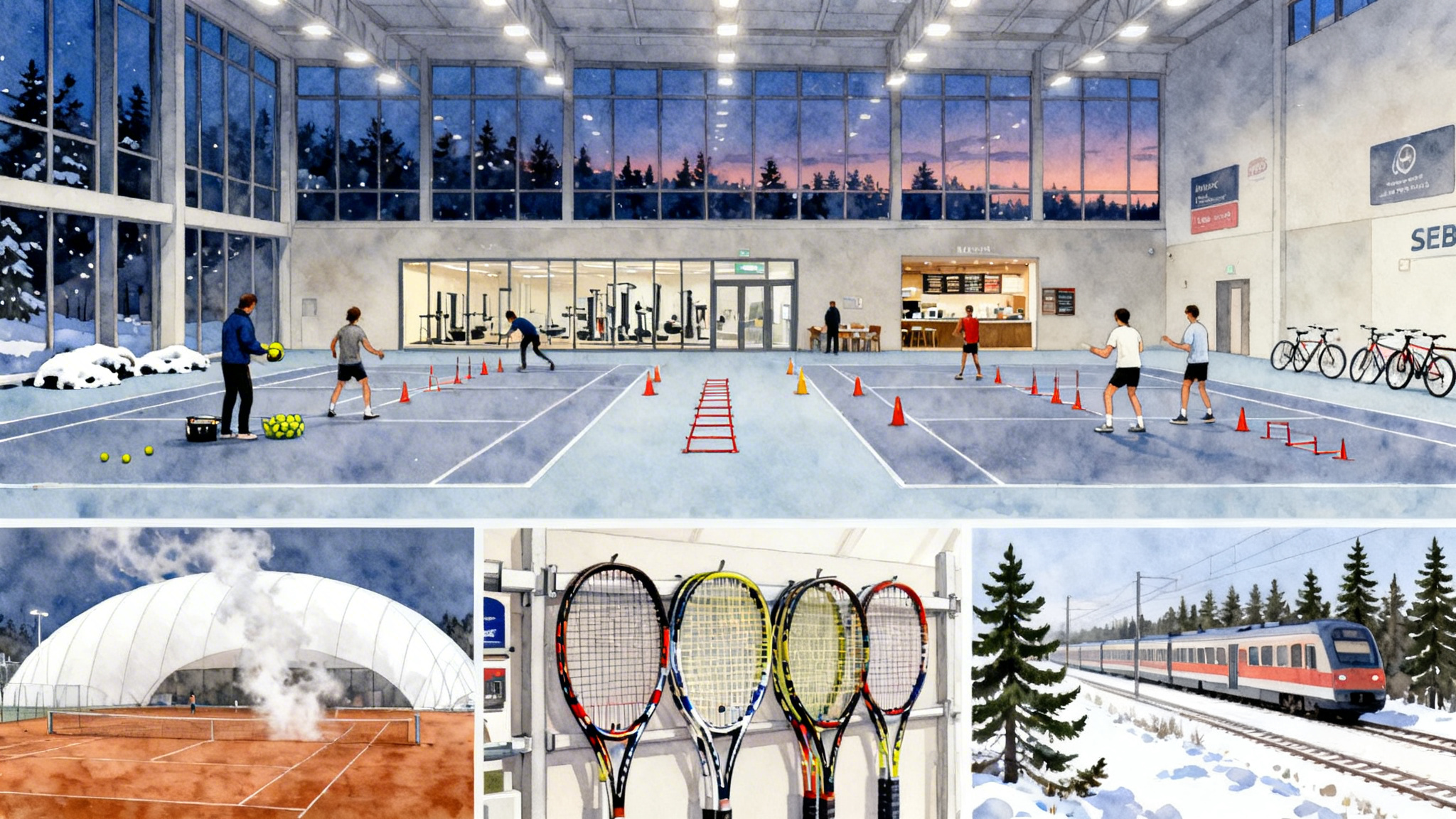
- Keep an indoor kit ready: cones, resistance bands, light medicine ball, skipping rope, and an agility ladder.
- Pre-assign film topics: serve rhythm, split-step timing, spacing off the backhand. Film three angles per week.
- Score the day: If at least one quality session and one development item are done, the day is a win.
What a Mohali week can look like in January
- Monday: 90-minute morning technical, 60-minute evening serve and return. Gym for total-body strength.
- Tuesday: Patterns and point building. Mobility at night.
- Wednesday: Practice sets to eight games, mental skills check-in for routines and between-point resets.
- Thursday: Neutral ball tolerance and direction changes. Gym focused on speed and power.
- Friday: Serve and first-ball targets. Short match play.
- Saturday: Ladders or verified match session. Evening stretch.
- Sunday: Full rest. Short walk and beach-style sand play if in Goa for a reset week.
How to use TennisAcademy.app while you plan
- Search for academies, group classes, and sparring partners in each city with the built-in academy finder. Save options and compare by schedule, surfaces, and coaching bios.
- Build your own calendar: log training blocks and share with coaches. Add travel days and rain backups as events so the team stays aligned.
- Track readiness: record wellness, sleep, and hydration notes next to session logs. Over time, your family builds a climate playbook for India.
For technique work that slots into these blocks, see our modern forehand biomechanics guide. If you want an alternative winter base in the same spirit of climate-first planning, explore our desert winter tennis guide.
Packing list for monsoon-smart weeks
- Rackets and strings: humidity can deaden strings faster. Pack extra sets and overgrips.
- Footwear: one wet-condition pair with better tread, one dry pair for Mohali and Goa.
- Sun and rain gear: breathable long-sleeve top, hat, sunscreen, small towel, compact umbrella, and a thin rain jacket.
- Recovery tools: massage ball, mini foam roller, and a lacrosse ball for feet and calves.
- Health kit: electrolytes, zinc oxide tape, simple blister kit, and insect repellent.
The takeaway in one line
Use Mohali for your big build, Bengaluru for your smart wet-season work, and Goa for restorative match play. That sequence turns India’s weather into a training advantage.
Final checklist before you book
- Pick your anchor: October to March in Mohali at RoundGlass Tennis Academy in Mohali if you want the most stable hours and a clear tournament path.
- Insert recovery: one or two Goa weeks between November and February to freshen legs and minds.
- Plan the monsoon: July to September in Bengaluru with a rain-ready schedule and quick-drain courts.
- Tie in events: target winter competitions and summer match ladders. Do not peak twice in 10 days.
- Solve logistics early: check e-visa rules, pick domestic flights that match session times, and choose stays near courts.