Best Midwest Tennis 2026: Chicago, Milwaukee, Rochester, Detroit
 Tommy
Tommy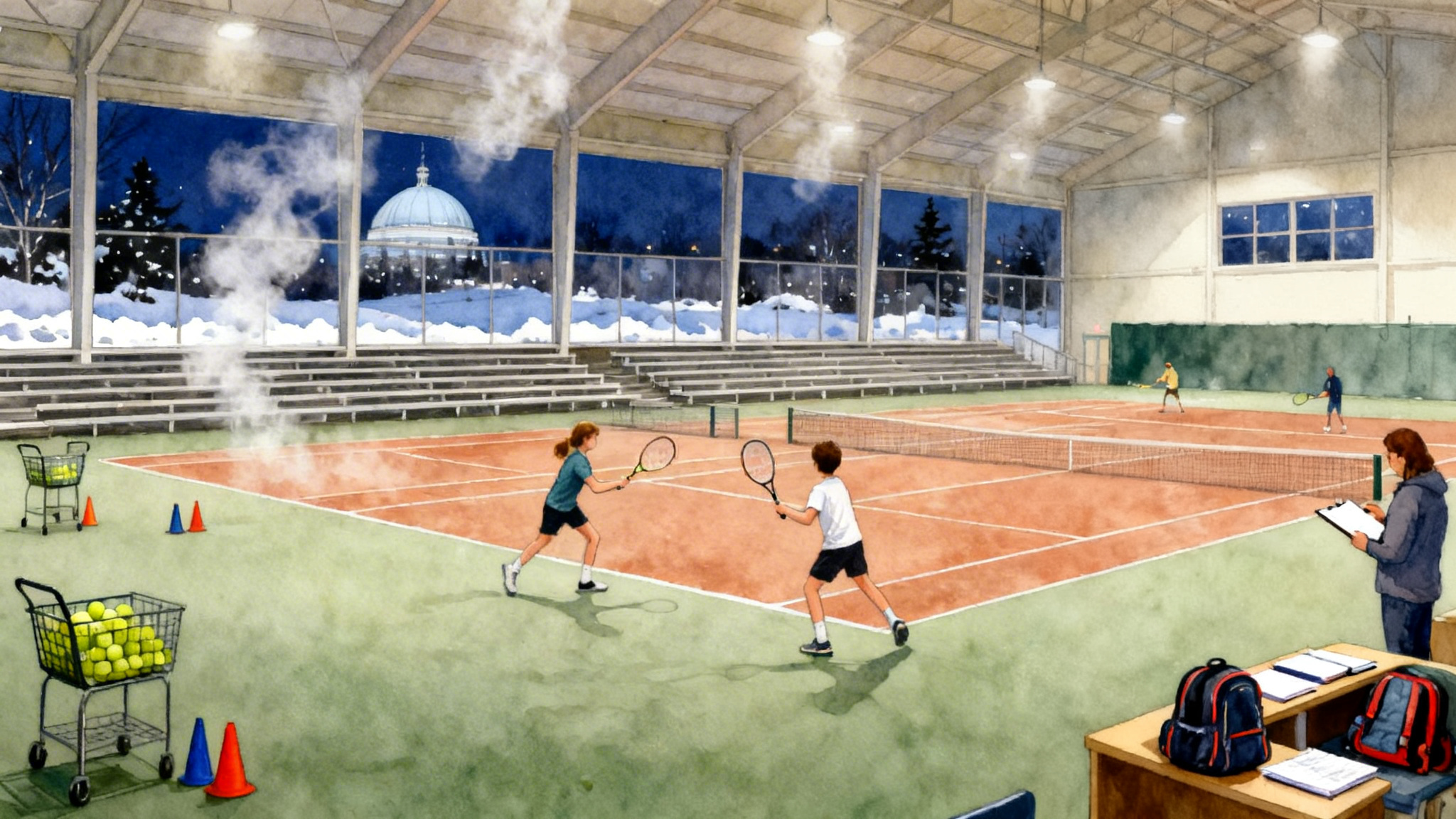
How to use this guide
If your player is serious about tennis and you live in the Midwest, winter is not a pause. It is the season that decides who improves and who treads water. This guide compares year-round programs in four hubs, Chicago, Milwaukee, Rochester and Detroit, with a parent-first lens. We focus on six things that truly move the needle for development and for college placement. If you are also considering a warm-weather training block, scan our cross-region primer in the Florida junior academies 2026 scorecard.
- Indoor coverage: domes versus permanent fieldhouses, plus how much court time is actually available when snow arrives
- Winter training blocks: intensity, length and progression from January through March
- Integrated academics: tutoring, homeroom space or formal school partnerships that make weekday training realistic
- Match-play volume: consistent, level-based competition that affects both Universal Tennis Rating and United States Tennis Association standings
- Coaching ratios: how many players per coach during drilling and live ball, and how much video or data is used
- Total cost: tuition, court fees, travel, stringing and the hidden items many families miss
This is not a one size fits all ranking. It is a map. We spotlight Empire Tennis Academy in Rochester and the Milwaukee Tennis and Education Foundation, and we outline leading Chicago and Detroit routes so you can pick a path that fits your player’s goals, school realities and budget.
The quick parent scoreboard
Use these yardsticks when you speak with any academy director. Ask for written details.
- Courts and cover: How many indoor courts from November through March, and are they domes or permanent fieldhouses. Domes are inflatable structures placed over outdoor courts; they are common and flexible, but they can be noisy and temperature sensitive. Fieldhouses are purpose-built permanent buildings; they are quieter and often allow longer booking blocks.
- Winter blocks: How many weeks are in the main winter cycle, and what are the attendance expectations. Strong programs publish a weekly load with drill, fitness and match play instead of leaving families to guess.
- Match play: How many Universal Tennis Rating verified events or match nights per month, and how many United States Tennis Association tournaments the staff targets. You are looking for a cadence, not a single showcase event.
- Ratios: What is the default player to coach ratio for red, orange, green ball, and then for yellow ball High Performance. Ask about minimums and caps during peak hours.
- Academics: Is there on-site study hall, transport from school or a formal arrangement with a school. This can save hours per week and prevent burn out.
- Cost clarity: Do they publish seasonal tuition, court or guest fees, tournament coaching fees, stringing and travel expectations. A clear program will help you budget before you enroll.
Rochester, NY: Empire Tennis Academy
Empire Tennis Academy gives Rochester families a competition-first route that blends school-day realities with reliable match play. See our Empire Tennis Academy profile for an overview of facilities and programming.
- Indoor coverage: Rochester winters demand real indoor solutions. Empire operates with school-year blocks on The Harley School campus when weather allows, then secures dedicated indoor time across partner facilities as snow and cold arrive. The result is steady court access through March without long gaps.
- Winter training blocks: Expect a January to March push that pairs two to four drill sessions per week with a scheduled match slot. Families can layer in private lessons if a player is moving up a lineup or preparing for a sectional event.
- Match-play volume: Empire is known locally for using Universal Tennis Rating verified sets and frequent United States Tennis Association weekends as the backbone of training. The staff leans on competitive reps to anchor technical work. That means more balls struck under pressure and less waiting for the next tournament to test progress.
- Coaching ratios: For yellow ball High Performance, families should target a working ratio around 4 to 1 during live ball and situational points, and a slightly higher ratio during feeding blocks. The staff uses simple video check-ins rather than elaborate camera rigs, which keeps the focus on footwork and patterns.
- Academics: The program’s culture acknowledges that Rochester students often balance honors classes and winter sports. Look for weekday late-afternoon start times, optional study hall windows before drill and a reasonable number of required tournament weekends.
- Cost pattern: Families typically pay by seasonal block for group training, then add private lessons, stringing and tournament costs. The Rochester travel footprint is compact, which holds down hotel spending in winter.
Parent action: Ask for the current winter block schedule and the monthly count of Universal Tennis Rating and United States Tennis Association match opportunities. If your player is moving from green to yellow ball, confirm the live-ball ratio and whether match charting is included during the first few tournaments of the season.
Milwaukee, WI: Milwaukee Tennis and Education Foundation
The Milwaukee Tennis and Education Foundation is a National Junior Tennis and Learning chapter that pairs tennis with tutoring and mentoring. Start with our MTEF academy page to understand the program’s tennis plus academics model.
- Indoor coverage: MTEF runs year-round through creative winter solutions that include school gyms with portable nets and partnerships that place students indoors when the weather turns. The strategy keeps volume up even when courts are scarce.
- Winter training blocks: Winter is organized into academic-supported cycles. Students complete study time before or after practice so weekday tennis does not crowd out homework.
- Match-play volume: MTEF’s development pipeline encourages level-based league play, Universal Tennis Rating verified match nights when available and targeted United States Tennis Association events for advancing players. The goal is progression from beginner through middle school and into high school varsity with a realistic schedule.
- Coaching ratios: Community sessions tend to be broader groups, then players graduate into smaller pods as they specialize. The foundation keeps a close eye on safety, attention and age-appropriate progressions.
- Academics: This is a core promise. Tutoring, mentoring and life-skills sessions are baked into the schedule. For families who value school stability, it is a powerful fit.
- Cost pattern: Scholarships and sliding-scale fees open the door for many families. For players pushing into tournament tennis, families can bolt on club-based drilling and private lessons as needed. The hybrid path keeps costs manageable while preserving MTEF’s academic support.
Parent action: If your player is already competing, ask MTEF to sketch a blended plan that layers a club’s high performance session on top of the foundation schedule from January through March. That blended approach supports both academics and higher-intensity drilling.
Chicago, IL: Big-program firepower and true year-round access
Chicago’s South Side hosts one of the country’s most complete community-centered academies. The XS Tennis and Education Foundation operates a village with classrooms and a large indoor footprint. The XS Tennis Village facilities overview details 12 indoor courts, 11 outdoor hard courts, 4 outdoor clay courts and dedicated academic space. This scale matters in winter because it protects court time for drills, live ball and verified match play during peak hours.
How Chicago programs typically stack up for serious juniors:
- Indoor coverage: Chicago leads the region in permanent indoor capacity. Alongside XS Tennis, private clubs in the city center and northern suburbs offer multi-court fieldhouses that run full schedules through late March.
- Winter training blocks: Expect formal High Performance tracks with attendance commitments. The top groups usually require three to five sessions per week plus weekend match play from January through March.
- Match-play volume: Families can piece together Universal Tennis Rating verified events nearly every weekend inside the metro. Many clubs run Friday Night UTR or weekly point play ladders to keep competitive rust off between tournaments.
- Coaching ratios: The strongest groups cap live-ball pods near 4 to 1 and run split-court work to maintain ball frequency. Video, ball machines and fitness coaches are common.
- Academics: XS Tennis integrates classroom time and study support on-site, which makes weekday training far easier for students who commute from charter and public schools. Other clubs provide later start times and homework spaces rather than formal tutoring.
- Cost pattern: Chicago has the widest price spectrum. Community programs offer sliding-scale access. High-end private clubs layer annual dues and guest fees on top of seasonal tuition. Budget for more verified matches and a healthy restringing cadence because players hit more balls here in winter.
Parent action: If your player is aiming at college tennis, ask for a two-semester plan that includes an indoor winter progression and an outdoor clay block in late spring. Confirm that staff will help select a tournament calendar that balances Universal Tennis Rating growth and United States Tennis Association ranking points.
Detroit, MI: Club-first routes with targeted high performance
Greater Detroit does not have one super campus that dominates the market. Instead, families build strong pathways through club-based academies and targeted winter schedules. The anchor many families use is the Pontiac-based Wessen Indoor Tennis Club. Its programming includes invitation-only Top Flight Academy for competitive juniors, with a clear ladder up to varsity and sectional play. Review the Wessen Indoor Tennis Club junior pathway for structure and seasonal blocks.
Other metro options include Birmingham Racquet Club, Franklin Athletic Club in Southfield and Beverly Hills Club. Together, these clubs offer enough indoor courts each winter to support two to four weekly drill blocks plus weekend match play when booked early.
What to look for in Detroit:
- Indoor coverage: Book early. Detroit’s indoor capacity is solid but fragmented. The strongest winter routine pairs a primary club with a secondary Friday match option so weather or events do not wipe out your competitive reps.
- Winter training blocks: Clubs publish six to ten week cycles. Ask to align consecutive cycles so you can hold the same practice days from January through March.
- Match-play volume: Detroit’s verified match ecosystem is growing. Look for Universal Tennis Rating match nights at your home club and United States Tennis Association weekend events across Oakland and Wayne Counties. When needed, plan one or two away weekends to Lansing or Grand Rapids for additional draws.
- Coaching ratios: Expect 4 to 1 or 5 to 1 in top pods, and 6 to 1 in broader clinics. Because programs vary, request the written ratio policy for your child’s exact group.
- Academics: The club-first model means fewer built-in tutoring options. Families typically protect one homework evening and schedule later time slots on heavy school days.
- Cost pattern: Detroit’s membership math can be favorable. Some clubs allow nonmembers to join group drills, while others require membership for court reservations. Confirm rules to avoid surprise fees.
Parent action: If your player is trending toward collegiate tennis, ask the director to plot twelve verified matches by March 15 and to circle two United States Tennis Association events that provide a realistic path to main draws at your player’s current level.
Domes versus fieldhouses: which fits your player
- When domes shine: Domes solve winter at scale. They are common on public or school sites and often deliver more total hours for programming. Players who thrive on noise and energy tend to enjoy domes during peak hours.
- When fieldhouses shine: Permanent buildings usually provide better acoustics, more consistent temperatures and more spectator space. Players who are sensitive to sound or who need quieter instruction blocks often prefer fieldhouses.
- Practical parent tip: Ask for a five minute video from a peak-hour practice in each setting. Let your player hear the sound and see the spacing before you commit.
Building a winter training block your family can keep
A strong January to March plan has four parts. Use this as a template and adapt per city.
- Drilling: Two to four sessions per week. Younger players and multi-sport athletes can start at two. Older players chasing lineup spots should lean toward three or four.
- Live ball and points: One focused session per week. This is where footwork patterns and serve plus one combinations are rehearsed under fatigue.
- Match play: One verified match set per week on average. That could be a Universal Tennis Rating night, a ladder match or a United States Tennis Association weekend. Track results to choose the right draws next month.
- Fitness and recovery: Two off-court blocks that include mobility and shoulder care. Tennis shoulder health is an investment that pays off in March.
Total cost: a clear budget families can actually use
Costs vary city by city and club by club, and they change each season. Rather than guess at current price tags, use this worksheet to build a realistic total as of March 2026.
- Seasonal tuition: Add up drill blocks from January to March. If the academy sells six to ten week cycles, align them to cover the full window.
- Private lessons: Multiply your target number per month. A monthly touchpoint with video feedback can be enough for many players.
- Court or guest fees: Some clubs include these in tuition while others charge per booking. Confirm rules for your child’s group.
- Tournament coaching: Ask whether staff fees apply when coaches travel to United States Tennis Association events, and whether Universal Tennis Rating match nights include coaching.
- Stringing and equipment: Track restringing by hours, not months. A heavy hitter may need weekly restringing in winter. Budget for a backup racquet and a fresh grip supply.
- Travel: Estimate two hotel weekends and two local day trips during winter. If your player is on the bubble for an out-of-state sectional, price that as an optional line.
Parent action: Put these numbers into a one-page spreadsheet and share it with your player. When a trip choice arises, you both can see how it affects the full season, not just this weekend.
Coaching ratios and what they mean for real improvement
- Ratios are not the whole story: Four players per coach is a strong number, but if ball carts are always low and rotations are long, your player still hits too few balls. Ask how many balls a typical player strikes per hour and what percentage is live ball versus fed ball.
- Video is a multiplier: A quick clip of the serve every two weeks can drive big gains. You do not need a complex camera system. Ask how the staff uses short phone videos and how often they revisit key positions.
- Match charting: Even a simple chart on serve patterns and second serve forehand errors can sharpen practice goals. Ask if match charting is included for the first two events after a player moves up a group.
Which city fits which player
- Rochester fit: Players who thrive with frequent verified matches and a staff that keeps the schedule practical around school. Families who want short winter drives and a tight tournament radius.
- Milwaukee fit: Players who benefit from strong academic support and community. A great home base for steady growth that can be blended with club drilling as goals climb.
- Chicago fit: Players who need more total winter volume and who respond to the energy of a large academy environment with many peers at similar levels.
- Detroit fit: Players who do well with a custom club-first plan and parents who like to engineer a schedule across facilities to maximize verified match play.
How to interview an academy director in 15 minutes
Use these questions to get crisp answers fast.
- What exact indoor court access does my player’s group have from January through March, by day and time
- How many verified Universal Tennis Rating matches and how many United States Tennis Association tournaments do you expect my player to play by March 31
- What is the default player to coach ratio in my player’s group during live point play
- If homework is heavy on weekday nights, what is the plan to keep training quality up without late finishes
- How will you measure progress at the end of winter and what data will you use besides win and loss
- What is my all-in cost for the winter cycle including tuition, lessons, stringing and tournament coaching
The bottom line
Midwest winters can either be your player’s competitive edge or an annual reset. Families who win the season do three things well. They secure reliable indoor time, they plan verified match play like a class on the schedule and they pick a program that makes school support a feature, not an afterthought. Whether you choose a competition-first lane in Rochester with Empire, the academics-plus route with Milwaukee Tennis and Education Foundation, the big-program horsepower of Chicago’s XS Tennis campus or a club-first plan in Detroit anchored by Wessen, the formula is the same. Put structure on the calendar, keep ratios tight and let frequent matches tell you what to fix next week. That is how a winter becomes a pathway to spring lineups, summer sectionals and, for many, a real shot at college tennis.