Top Northeast Tennis Academies 2026: NYC, NJ, Boston, Upstate
A winter-ready, data-backed buyer’s guide to the best tennis academies across New York City, New Jersey, Boston, and Upstate New York. We rank by five metrics and finish with quick picks by player type and a value spotlight.
 Tommy
Tommy
How we ranked the Northeast’s winter-ready academies
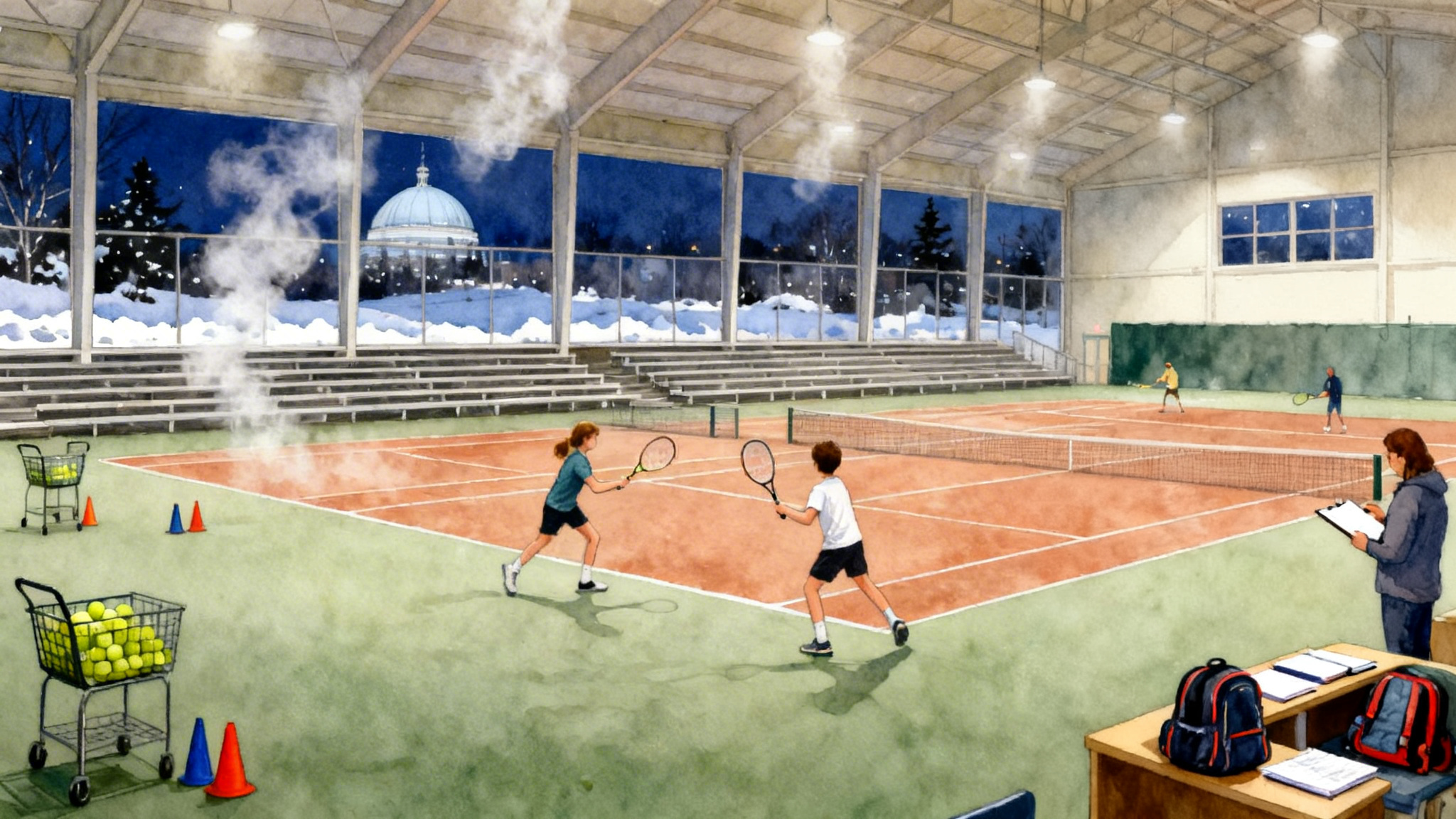
Families in the Northeast make hard choices each winter. Court time shrinks, driving windows tighten, and the tennis calendar compresses around bubbles and school schedules. To make those decisions easier, we scored academies on five practical metrics that predict a good winter season.
Our five-metric framework
- Indoor court capacity and surface mix: number of reliable winter courts and whether players can train on both cushioned hard and Har-Tru or other clay. We weight permanent indoor buildings and robust bubbles more heavily than seasonal tents with frequent closures.
- Junior pathway strength: local density of events within a 90 minute drive, including Universal Tennis Rating events and United States Tennis Association tournaments. We focus on verified match opportunities that affect a player’s trusted development signals. For families new to ratings, see this overview of the verified UTR model guide.
- Academics integration: how the program works with schools, tutoring, and test windows, and whether study hall, coursework coordination, or formal school partners exist.
- 2021 to 2025 college placement results: public commitments and roster outcomes across Divisions I, II, and III. We count both power programs and strong academic conferences.
- Cost and logistics: transparency of pricing, typical monthly or seasonal costs for high performance blocks, and commute friction such as bridge tolls, parking, and predictable after school slots.
How we used the data
- We compiled published facility specs, seasonal court maps, and program calendars, then cross checked with public tournament listings and college rosters.
- Scores run 1.0 to 5.0 for each metric, then we average. The goal is decision clarity, not hype. If you are choosing between two good options, pay extra attention to indoor access and commute consistency from November through March.
The 2026 Northeast rankings
Below are the highest scoring academies that consistently serve New York City, New Jersey, Boston, and Upstate New York families. Each write up includes our composite score plus quick context on the five inputs.
- John McEnroe Tennis Academy, New York City
Composite: 4.46/5
- Why it ranks: Deep training ladders across multiple sites with the Randall’s Island flagship anchoring the network. Year round indoor access, multiple surfaces across locations, and dense weekday matchplay.
- Five metrics at a glance: Indoor 4.7, Pathway 5.0, Academics 4.2, College 4.8, Cost and logistics 3.6.
- Start here: Tour the Randall’s Island flagship first and confirm weekday verified match availability.
- CourtSense Tennis Training Center, Tenafly and Bogota, New Jersey
Composite: 4.44/5
- Why it ranks: Two Bergen County clubs create a large winter footprint with strong coaching continuity and frequent level based competition. For many families west of the George Washington Bridge, commute time wins.
- Five metrics at a glance: Indoor 4.5, Pathway 4.7, Academics 4.3, College 4.5, Cost and logistics 4.2.
- Start here: Ask for a sample week calendar at both sites and confirm rotation between hard and clay.
- Longfellow New England Tennis Academy, Wayland and Natick, Massachusetts
Composite: 4.30/5
- Why it ranks: A large indoor footprint north and west of Boston, with clear junior progressions and a track record of New England college placements. After school blocks are predictable, which matters once the snow starts.
- Five metrics at a glance: Indoor 4.6, Pathway 4.4, Academics 4.1, College 4.4, Cost and logistics 4.0.
- Centercourt Tennis Academy Network, New Jersey
Composite: 4.24/5
- Why it ranks: Multiple sites across Morris, Union, and Monmouth Counties make planning easier and widen sparring networks. Event calendars are active, and winter access is strong across locations.
- Five metrics at a glance: Indoor 4.6, Pathway 4.5, Academics 4.0, College 4.3, Cost and logistics 3.8.
- Manchester Athletic Club Tennis Training Center, North Shore Boston
Composite: 4.10/5
- Why it ranks: A concentrated day academy environment with history as a United States Tennis Association training site, plus steady local event hosting. Day model integrates cleanly with strong public and independent schools on the North Shore.
- Five metrics at a glance: Indoor 4.2, Pathway 4.2, Academics 4.2, College 4.3, Cost and logistics 3.6.
- Start here: Ask for a day in the life schedule and confirmed weekday matchplay blocks.
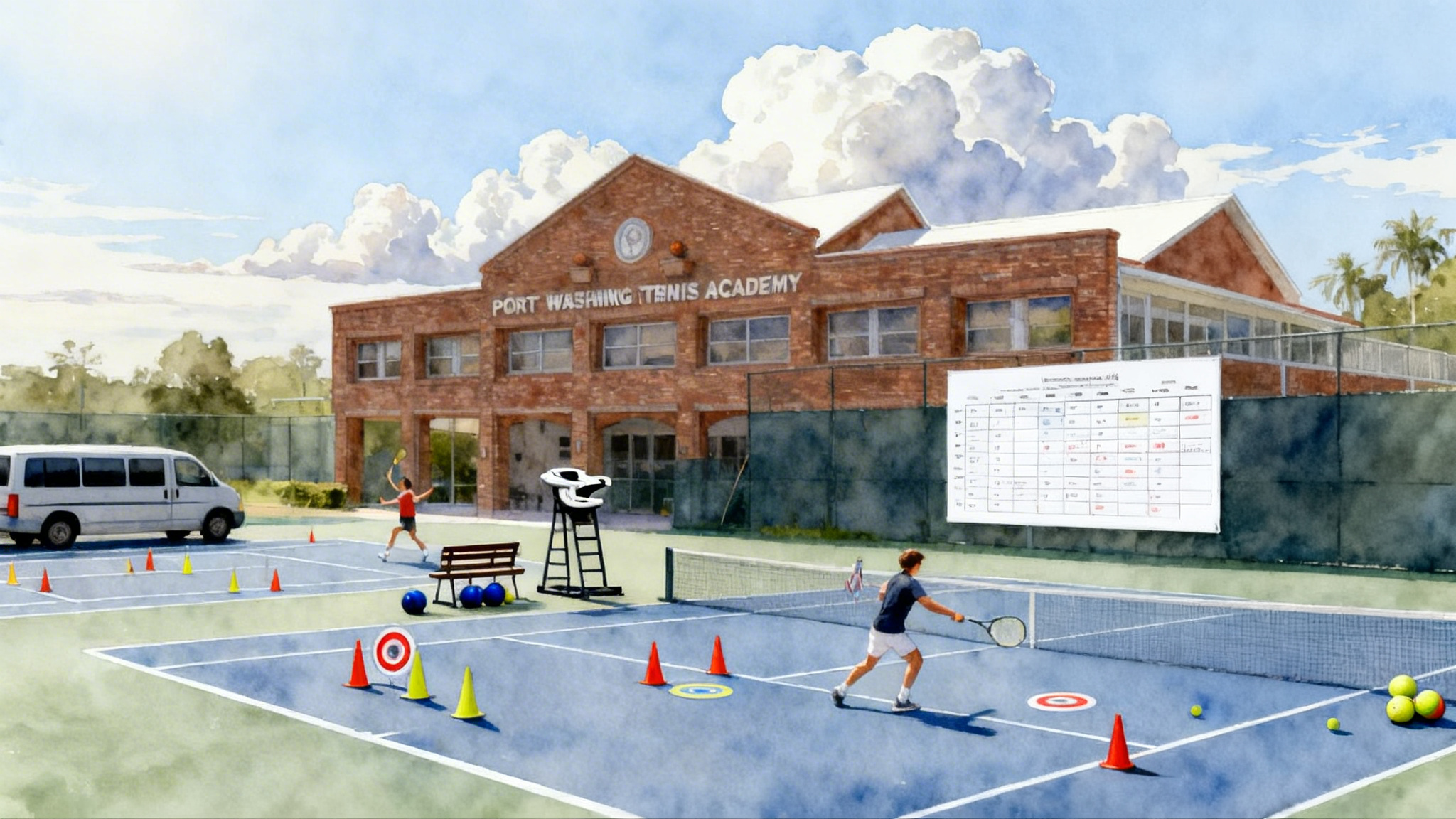
- SPORTIME Port Washington, JMTA Long Island
Composite: 4.05/5
- Why it ranks: Historic site with integrated John McEnroe Tennis Academy programming, strong indoor reliability, and frequent matchplay. Practical for Nassau County and parts of Queens.
- Five metrics at a glance: Indoor 4.5, Pathway 4.2, Academics 4.0, College 4.4, Cost and logistics 3.1.
- Start here: Request the winter weekday match ladder and late start morning options.
- Empire Tennis Academy, Rochester, New York
Composite: 3.94/5
- Why it ranks: High value Upstate option with targeted high performance blocks, flexible scheduling for strong academics, and access to a corridor of events from Buffalo to Syracuse within 90 minutes.
- Five metrics at a glance: Indoor 3.8, Pathway 3.9, Academics 4.2, College 4.0, Cost and logistics 4.0.
- Start here: See the Empire Tennis Academy profile for campus details and program structure.
Honorable mentions for specific needs
- Cary Leeds Center for Tennis and Learning, Bronx: scholarship pathways and a competition culture.
- Life Time based academies around New York and New Jersey: broad scheduling and club amenities that suit multi sport families. If you prefer a club-embedded pathway, review the Life Time Tennis Academy pathway.
Metro breakouts you can actually use
New York City
- Indoor capacity and surfaces: The strongest day academy option remains the McEnroe network centered at Randall’s Island, with permanent indoor buildings and a wider network of sites that add capacity and surface variety during the season.
- Junior pathway strength: Within a 90 minute drive you can reach dense ladders of Universal Tennis Rating events and United States Tennis Association tournaments across Queens, Long Island, North Jersey, and Westchester. On most winter weekends, you can assemble verified match play without crossing state lines.
- Academics integration: The prevailing model is day academy plus your own school. Expect structured after school high performance blocks, optional morning hits on late start days, and well attended holiday and February break camps.
- Cost and logistics: Plan for club membership where required, seasonal court packages for consistency, and higher lesson rates in prime time. Subway plus rideshare is workable for older juniors who commute to Randall’s Island or into Queens, but families should rehearse the trip at rush hour before committing.
New Jersey
- Indoor capacity and surfaces: CourtSense and Centercourt together create one of the largest indoor ecosystems in the Northeast. Multiple buildings, frequent live ball programming, and a mix of hard and clay across the network help athletes train without weather drama.
- Junior pathway strength: Bergen, Essex, Morris, and Monmouth Counties offer dense event calendars and active ladders. A practical rule of thumb is that strong juniors can play verified matches three weekends out of four without driving over 90 minutes.
- Academics integration: Day models dominate, with study hall options and late afternoon starts that respect school commitments. Several sites build in proctored time during exam weeks.
- Cost and logistics: Monthly high performance blocks are typically lower than Manhattan and competitive with Long Island. Toll math and parking are minor but real, so map your drive time on a school night before you finalize.
Boston area
- Indoor capacity and surfaces: Longfellow’s two club footprint plus North Shore hubs like Manchester Athletic Club give Boston families multiple winter lanes. Surface variety exists across the region, with both hard and clay available.
- Junior pathway strength: Verified matches are steady within 90 minutes across Greater Boston, Worcester County, and Southern New Hampshire. College showcases cluster in spring and early summer, so build winter around rep counts and save travel pushes for March through June.
- Academics integration: The strongest programs operate in lockstep with schools. Expect coaches to respect exam calendars and to help families balance course loads with training hours.
- Cost and logistics: Commute times swing widely with snow and Route 128 traffic. Prioritize clubs you can reach in 35 to 45 minutes on a weekday at 4:30 p.m., not just on a Sunday morning.
Upstate New York
- Indoor capacity and surfaces: Capacity is thinner than the metro areas, but well run clubs in Rochester, Buffalo, Syracuse, and Albany keep reliable bubbles through winter. Plan for more hard court than clay.
- Junior pathway strength: A smart Upstate calendar looks like a hub and spoke. Use Rochester or Albany as home base, then rotate Buffalo and Syracuse events for density. Toronto is a bonus for advanced players, but it sits beyond 90 minutes for most families and should be treated as a planned trip rather than a default.
- Academics integration: Day models with flexible scheduling are the norm. Families often build slightly longer weekday blocks and then keep weekends free to drive to events.
- Cost and logistics: Court time and lesson rates are generally lower than the city. Fuel, winter tires, and realistic arrival buffers matter more than tolls.
Quick picks by player type
- Ambitious 9 to 12 year old on green and yellow ball: Longfellow’s development ladder or CourtSense’s age appropriate tracks give clear progressions and frequent point play.
- Public school varsity hopeful, freshman year: Centercourt’s after school performance blocks and matchplay nights help convert drilling into varsity ready habits by August tryouts.
- College bound 15 to 17 year old targeting Division III with elite academics: John McEnroe Tennis Academy and Manchester Athletic Club both offer regular verified match opportunities and transparent feedback, which helps shape video and coach outreach.
- Division I recruit pushing for upper UTR: New York City families can stack weekday verified matches inside the McEnroe network and adjacent clubs, then concentrate national travel into two or three peak windows.
- Multi sport student who wants high quality tennis without overscheduling: Longfellow’s club environment and managed intensity strike a balance that keeps injury risk and homework crunches under control.
Spotlight: Empire Tennis Academy, Rochester, New York
Empire Tennis Academy is the classic Upstate value play. It is built for families who want serious coaching, flexible scheduling that respects strong academics, and a sensible event radius that does not swallow every weekend. The program’s tone is direct and practical. Players drill, compete, and review, then get back to schoolwork.
What we like in the data
- Indoor reliability: Rochester’s clubs maintain winter bubbles well, and Empire designs calendars that keep reps consistent even when snow closes roads for a morning.
- Pathway density: Within 90 minutes you can reach Buffalo and Syracuse, which adds tournaments and verified match nights without long hotel runs. The result is a steady drumbeat of competitive reps rather than feast or famine.
- Academics integration: Scheduling is friendly to honors and Advanced Placement coursework. The staff treats school as a partner rather than an obstacle and helps families build calendars that reduce stress.
- College outcomes: From 2021 to 2025, public commitments show a healthy mix of Division III placements at selective schools and Division I walk on opportunities for late bloomers. The thread that ties them together is steady verified match volume in junior years.
- Cost and logistics: Hourly court rates and lesson packages sit below big city levels, and parking is simple. The real win is time. Many families report door to door under 25 minutes on school nights.
Planning your visit: see program details and session options on the Empire Tennis Academy site. Arrive with three specific asks: current after school ratios for your player’s level, the exact calendar of verified match opportunities between December and March, and a short list of alumni placements from the past four classes.
How to pressure test an academy before you commit
Use this four step checklist to make your tryout week count.
- Verify winter access with your own eyes. Walk the building, count indoor courts, and ask which surfaces your player will actually touch from November to March. Ask how many courts are protected when weather is at its worst.
- Stress test the commute. Do a full door to door drive at 4:30 p.m. on a weekday, then repeat after a light snow. If the round trip exceeds 90 minutes, look for a closer option.
- Audit the pathway. Pull the next 10 to 12 weeks of Universal Tennis Rating and United States Tennis Association events within 90 minutes. Confirm how often your player can get verified matches on school nights, not only on weekends.
- Ask for evidence. Request the academy’s 2021 through 2025 college placement list, two recent player development case studies, and group placement criteria in writing. Clear answers are a trust signal.
What to budget for a strong winter
Prices vary, but a practical framework helps you plan.
- Training blocks: After school high performance programs in the Northeast often range from 8 to 15 hours per week. For most families, two to three weekdays plus one weekend session is sustainable.
- Private lessons: Prime time winter lessons command a premium. Many families reserve a small private lesson budget for targeted work every two to three weeks rather than weekly standing hours.
- Courts and travel: Seasonal court packages reduce friction for flexible hits. Tournament weekends should be planned in clusters, not one offs, to make travel and hotel costs more efficient.
- Hidden costs to track: stringing, shoes every 8 to 12 weeks on hard courts, and small group serve sessions that add real value for less money than full privates.
If you plan a warm weather training week, compare options in our Florida junior academies 2026 scorecard.
Final take
In the Northeast, the best academy is the one you can reach consistently on school nights that still delivers verified matches and steady coaching feedback. The data points in this guide tilt the odds in your favor. If you train where the courts stay open in a snowstorm, where the ladders are full, and where coaches respect your student’s academic finish line, you will see progress by March. Start with the ranking, pressure test your top two, and let the winter work stack up.