From Moscow to Cannes: How Elite Tennis Center Built Medvedev
 Tommy
Tommy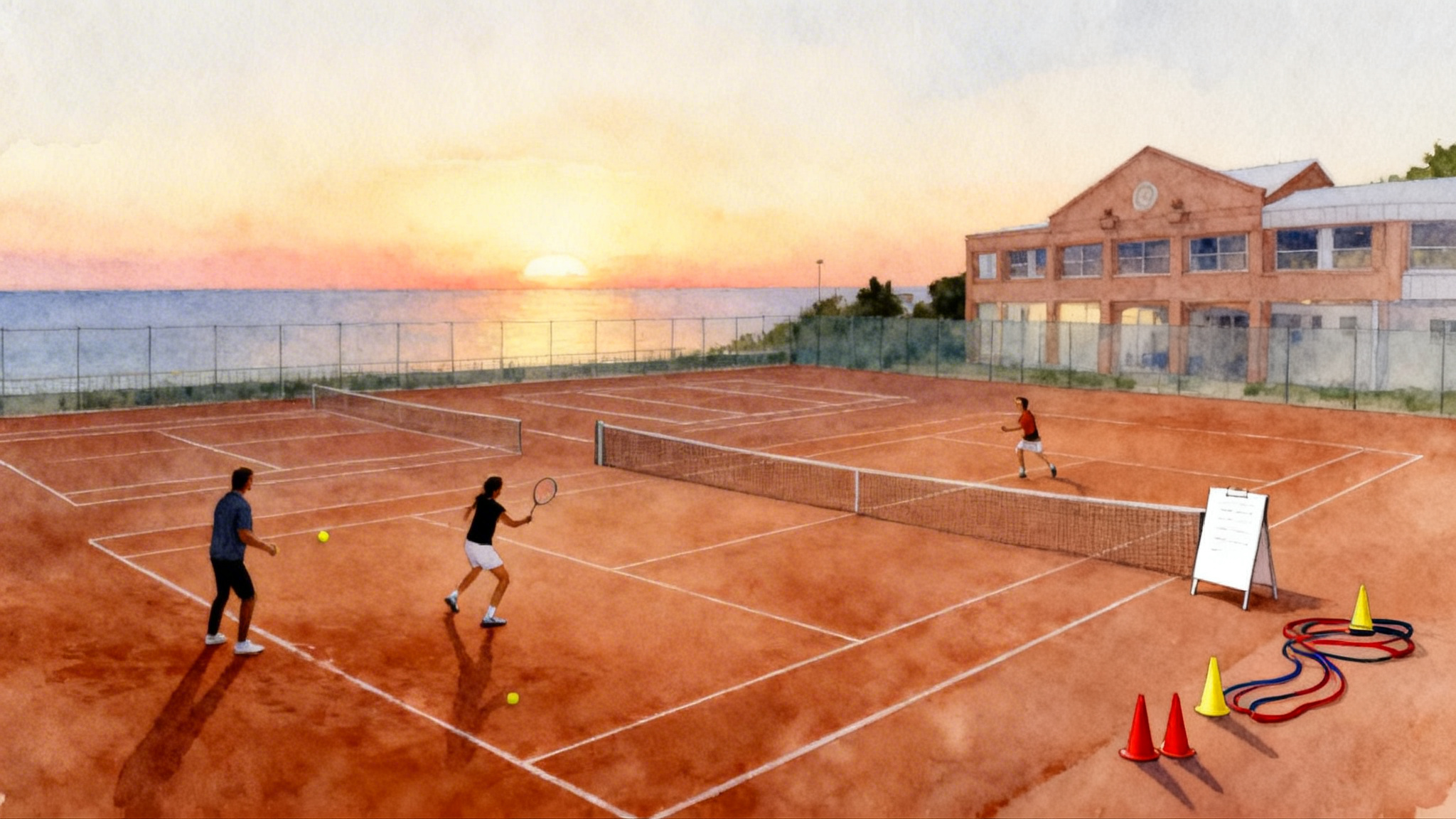
The decision that changed a career
At 18 years old, Daniil Medvedev made a choice that would define his path. He left Moscow for Cannes, swapping the scale of a big-city junior scene for a small, highly accountable environment at Jean-René Lisnard’s Elite Tennis Center. In interviews, he has described how he moved to Cannes at 18 and later committed to working exclusively with coach Gilles Cervara in 2017. That bet on a boutique setup paid off. The Russian who learned to love French courts and French rigor would grow into a Grand Slam champion at the 2021 United States Open.
This is not a fairy tale. It is a playbook. If you are a parent of a serious junior, Medvedev’s Cannes chapter reveals when a smaller academy can outperform a mega-camp, how to evaluate coach fit, and why late bloomers often flourish through tailored clay-plus-hard training blocks.
Why a boutique center can beat a mega-camp
Think of player development like signal and noise. Large academies can be impressive stadiums. There are courts as far as the eye can see, famous names, and a buzz that feels like progress. But the more people, the more schedules, the more generalized tracks, the easier it is for the real signal of your player’s needs to get drowned out.
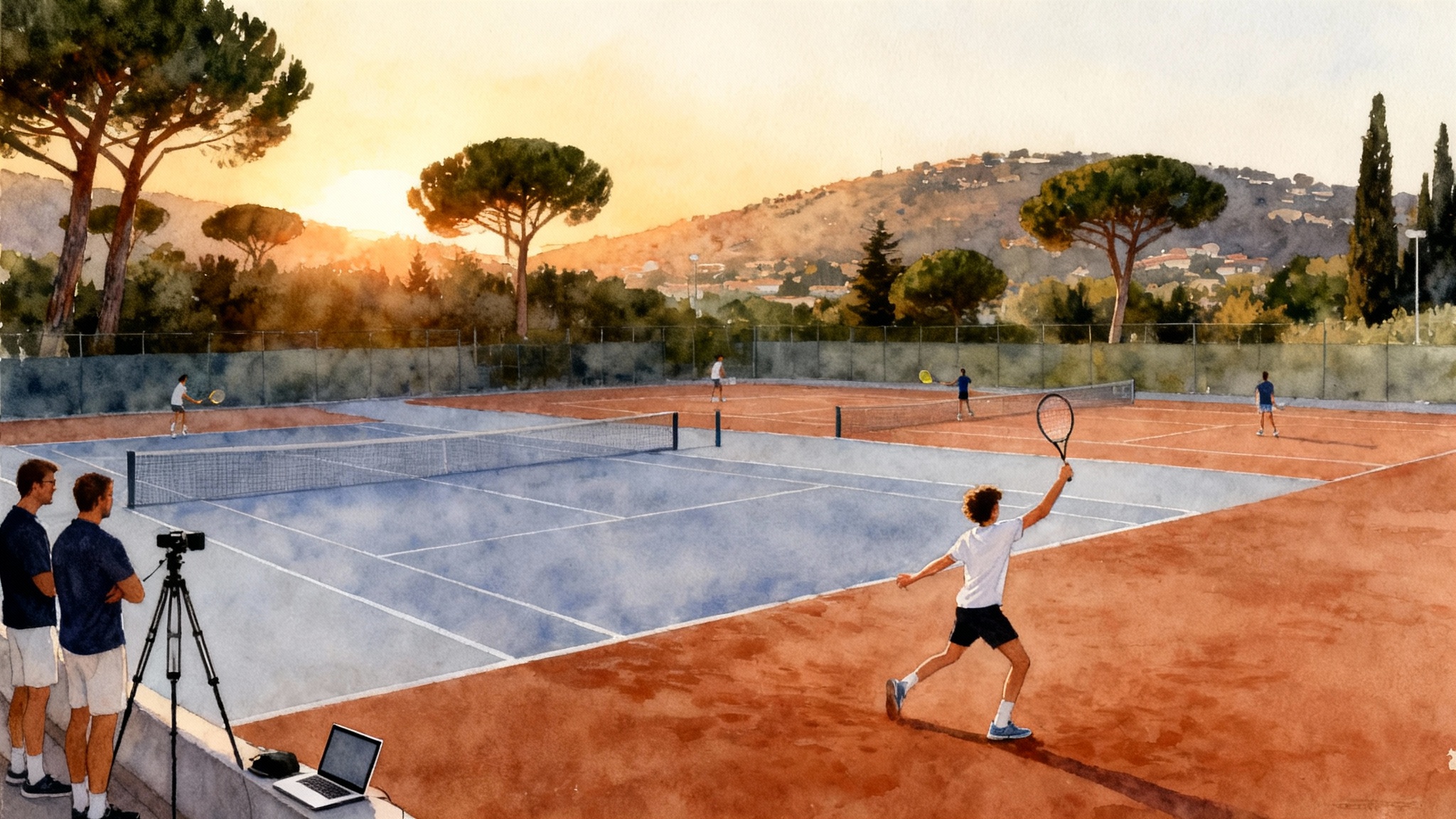
Boutique programs work like a control room. Fewer athletes. Fewer voices. More direct responsibility. At Elite Tennis Center, the design encourages two players per court per coach, integrated physical preparation, and quick feedback loops. The entire structure is built to reduce noise so that the signal of one player’s development gets amplified. You see similar small-room advantages in how Piatti Academy shaped Jannik Sinner.
In Medvedev’s case, that meant the staff could move fast. If his serve tempo drifted, the tennis coach and fitness coach adjusted the day’s work together. If a tactical pattern was not landing, video review and on-court constraints appeared the next session, not next month. Over time, small decisions compound into large gains.
What Medvedev found in Cannes
Jean-René Lisnard’s Elite Tennis Center sits inside a traditional French club setting, but its operating model is modern and lean. Its own materials emphasize comprehensive, personalized support that spans tennis, physical preparation, mental training on request, and medical and nutritional follow-up, with a promise of tight coach-to-player ratios and year-round availability. That mix of breadth and focus is unusual. Many programs offer variety. Far fewer knit it together in a single plan. Across the Riviera, programs like All In Academy in France echo this integrated model.
To Medvedev, the shift offered three crucial advantages:
- Continuity of message. The same small staff saw him serve, sprint, lift, and compete. Instructions felt consistent rather than pieced together.
- Real accountability. In a small room, there is nowhere to hide. Coaches notice the extra five minutes in the gym or the skipped stretch. Players feel seen, which changes behavior.
- Faster iteration. When the coach, fitness lead, and therapist share notes at lunch, tomorrow’s practice gets sharper.
These advantages map directly to results. Before he became the world-beating disruptor, Medvedev was a late-developing mover with idiosyncratic strokes. A boutique setting was built to shape a nonstandard profile without sanding off the edges that made him special.
The pivot to Gilles Cervara
As Medvedev’s level climbed, the question shifted from access to precision. He needed not just a good coach, but the right one. Enter Gilles Cervara. After working within the Cannes setup, Medvedev decided in 2017 to go all-in with Cervara as his day-to-day lead. The decision tightened the loop even more. One voice set the plan, coordinated the specialists, and owned the outcomes. Clarity of voice has also underpinned Tsitsipas’s Riviera academy path.
Why did that matter? Tennis careers often stall in the gray zone between committee and clarity. A player hears four small corrections from four smart people, each one logical, and none truly decisive. Medvedev’s switch to a single helm created decisiveness. Cervara embraced his player’s unique geometry, kept the backhand patterns that frustrated opponents, and attacked improvement areas with a clear order of operations. That clarity is not glamorous, but it wins seasons.
Integrated physical preparation that matched the game plan
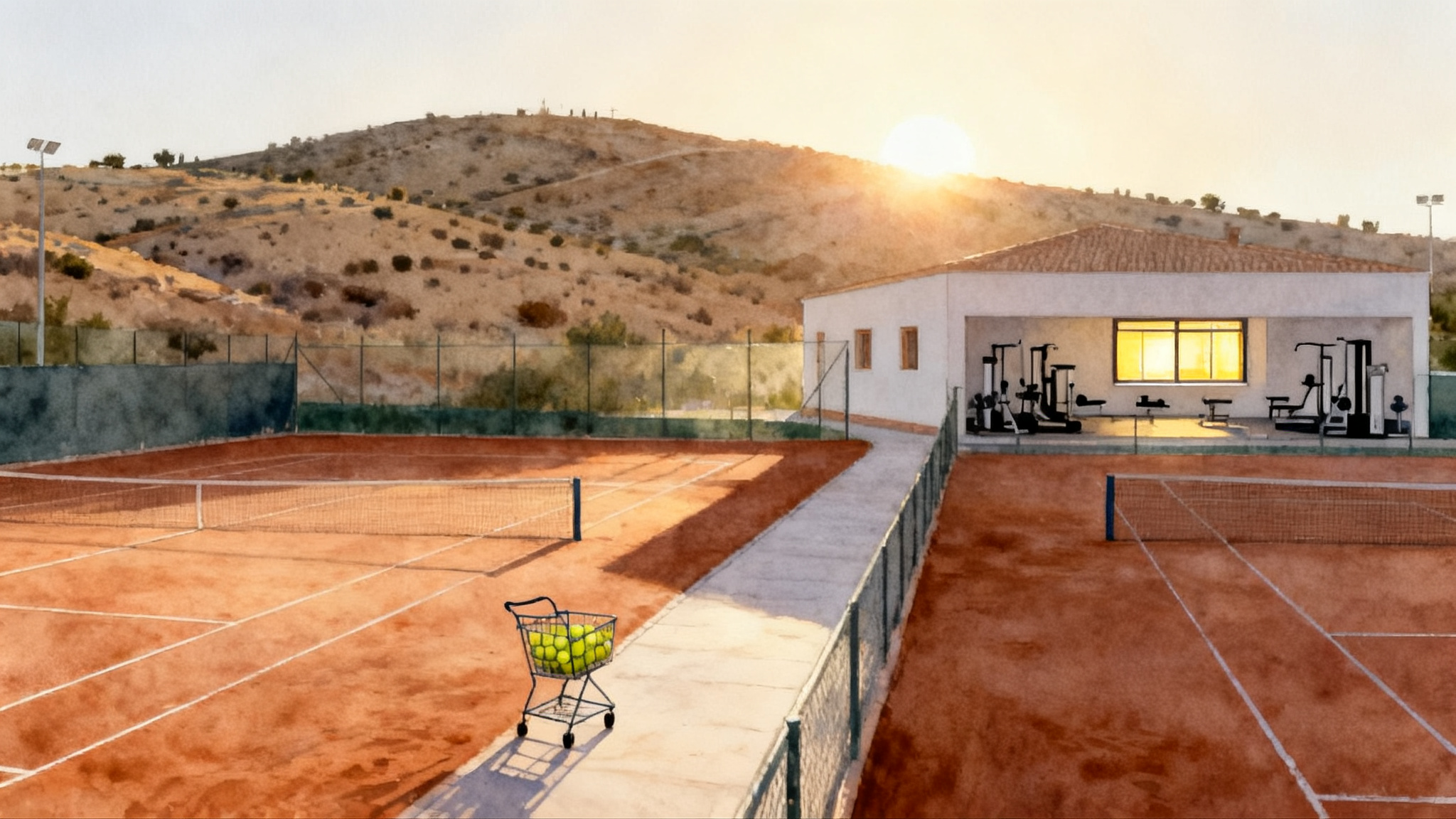
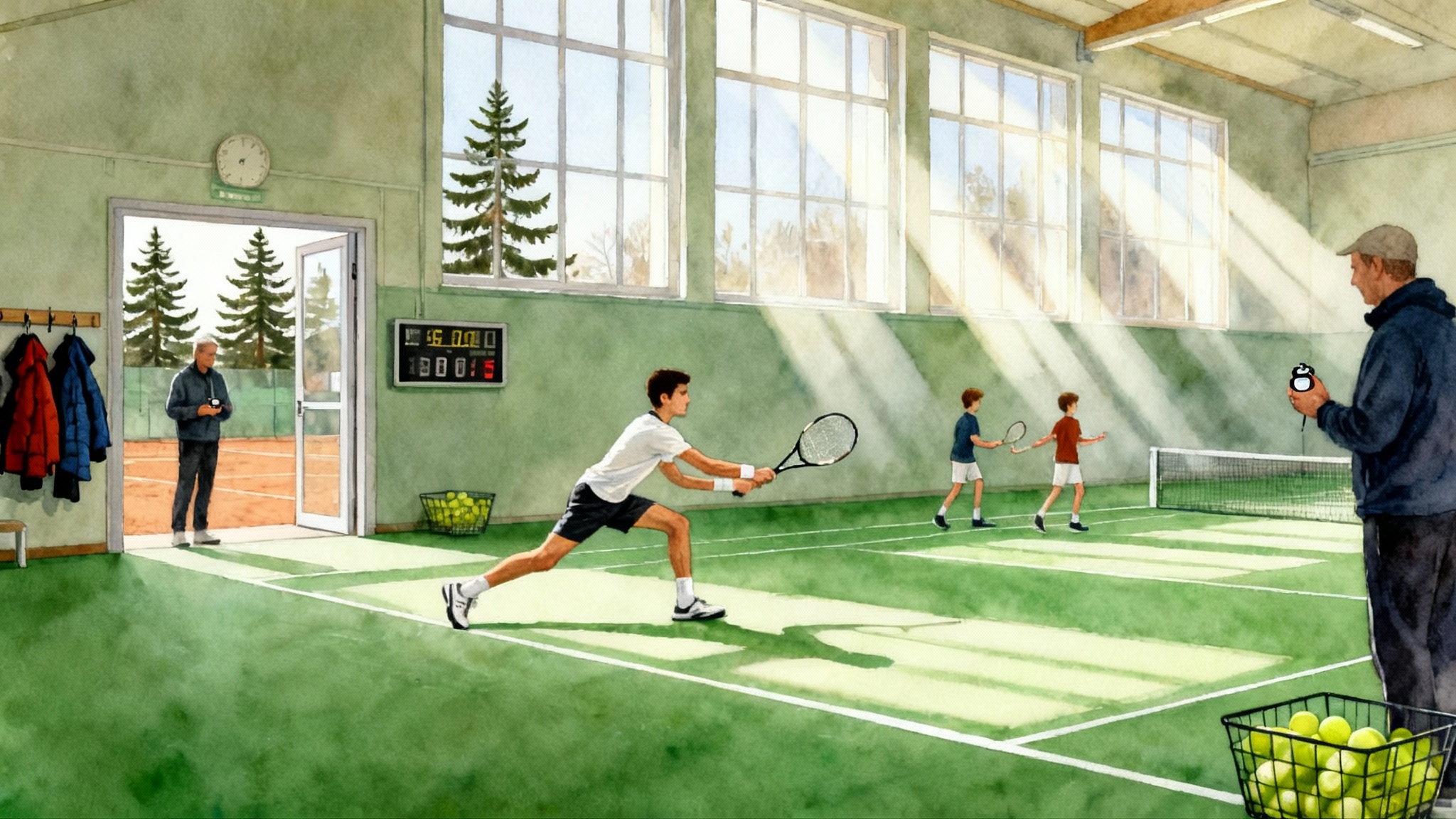
Elite Tennis Center’s approach joins technical, tactical, and physical work rather than treating each as a separate appointment. The center describes a fully integrated model with high-level coaches, physical and osteopathic monitoring, optional mental support, and individual programs with two players per court per coach as shown on the Elite Tennis Center training model. For Medvedev, that integration expressed itself in simple, repeatable structures.
- Example morning block: 30 minutes of elastic and mobility primers keyed to the day’s tennis themes, 90 minutes of live-ball patterns with strict serve tempo and depth targets, 15 minutes of footwork ladders that mirrored those patterns.
- Example afternoon block: Strength session built around anti-rotation and hip stability, not just general lifts, then 45 minutes of pattern play at match pace with constraints on rally length and court position.
- Daily recovery: Coaches and physio checked tissue readiness and adjusted next-day loads. Video clips from the afternoon fed into next morning’s drills. Nothing sat in a silo.
Notice the alignment. Physical work was not abstract. If the tactical priority was holding baseline depth against heavy topspin, the gym targeted the postural strength and ankle stiffness that sustain that depth late in sets. If the game plan demanded backhand redirects down the line, the conditioning finished with short, high-intensity bouts that trained decision quality under fatigue.
Clay plus hard blocks for a late bloomer
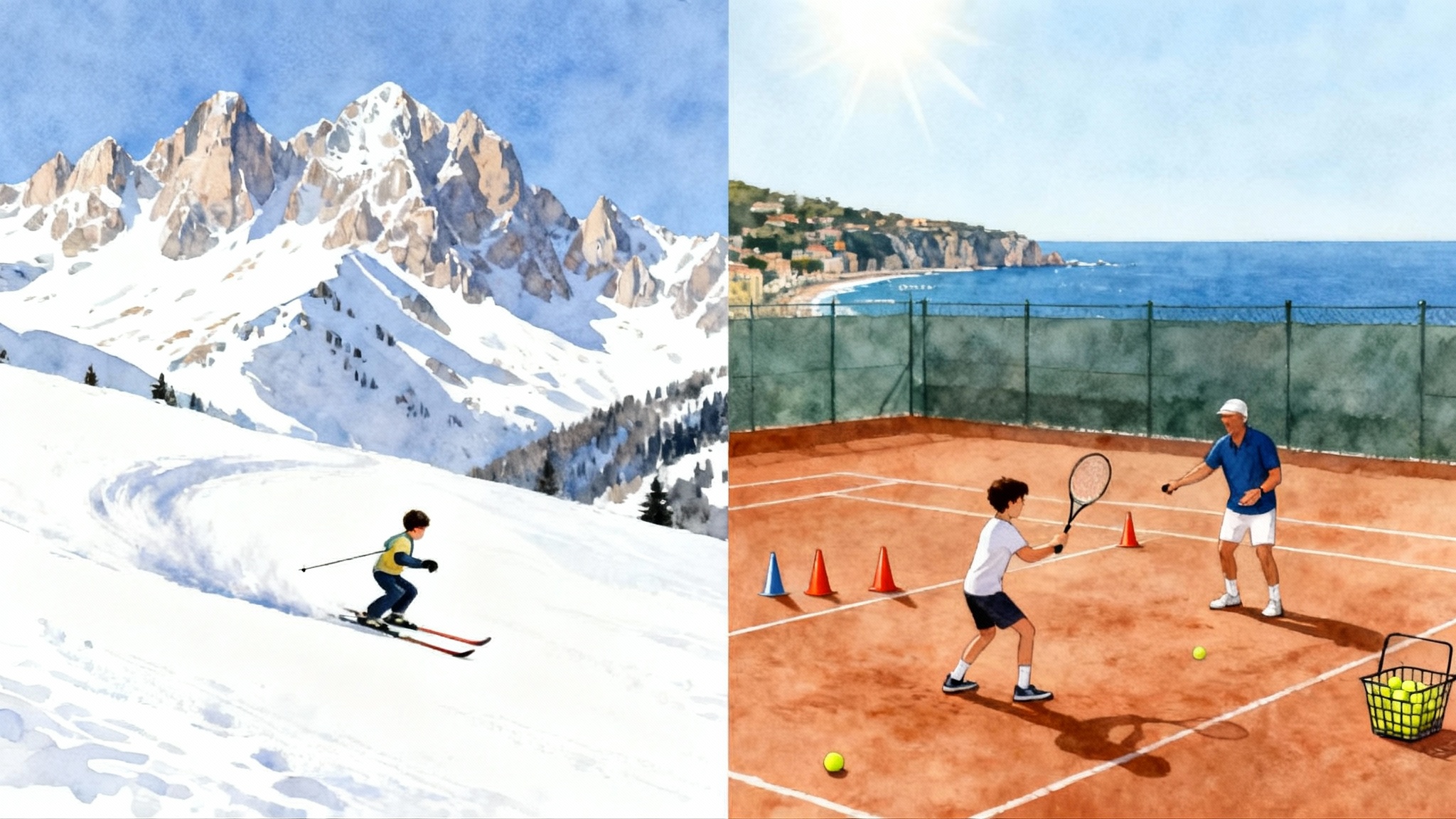
Medvedev was not a junior prodigy in the classic sense. He became elite by refining asymmetries and problem-solving. For late bloomers, two-surface training blocks are particularly valuable. Clay exaggerates time and movement patterns. Hard courts compress them. Rotating between the two forces a player to stabilize technique while adapting reads and footwork.
- On clay: Develop slide-to-balance mechanics, heavier rally tolerance, and point construction. Drills include crosscourt-to-inside-out forehand cages and backhand neutral patterns with height windows above the net.
- On hard: Sharpen first-strike patterns, serve tempo, and neutral ball depth that penetrates. Drills include serve plus one down-the-middle control and backhand redirect reps with precise targets.
For Medvedev, this alternation hardened his baseline depth and neutral-ball resilience while preserving his quick redirect patterns that give opponents no rhythm. The combination suits late bloomers because it layers adaptability without asking the body to mature overnight. It turns patience into a plan.
Coach fit: how to know you have the right one
Medvedev’s move to an exclusive relationship with Cervara provides a practical checklist for parents seeking coach alignment.
- One-page plan. Ask for a single-page outline that lists season goals, two technical priorities, one tactical identity statement, and two physical targets. If a coach cannot distill a plan, the plan is not ready.
- Practice-to-match bridge. Request examples of how practice constraints mirror match situations. Look for specific constraints, not vague hopes.
- Film habits. The coach should use short, focused video clips at least weekly. Ten minutes beats an hour of unfocused footage.
- Data without overload. Expect two or three simple metrics: first-serve percentage, unforced error rate under neutral pressure, and depth on rally ball. Too many charts create noise.
- Communication cadence. Weekly touchpoint with the player, monthly parent check-in, and a policy for day-of-competition communication. Clarity reduces sideline stress.
Red flags:
- Endless technical tinkering with no tactical purpose.
- Blaming fitness or mentality without changing the training design.
- A crowded voice environment where nobody owns the outcome.
When a smaller academy can outperform a mega-camp
Use this decision tree.
- Your player is 15 to 17, plateauing, and mismatched with group intensity. Choose a boutique program with a coach-to-player ratio of 1 to 2 or 1 to 3 for a three-month test block.
- Your player is 12 to 14 and craves peer competition. A larger academy may work if the technical base is solid and the group’s average intensity is higher than your player’s current norm.
- Your player is 17 to 19 and transitioning to futures and challengers. Favor a smaller unit with travel support and integrated physical prep. This is where two or three percentage points in serve tempo and depth turn into ranking movement.
Evaluation metrics during the test block:
- Serve tempo measured by consistent time from toss to contact.
- Rally depth percentage that lands past the service line.
- Error profile under neutral pressure. Are misses long and competitive, or short and passive?
- Fitness repeatability. Can the player hold decision quality late in practice games?
If these metrics do not improve after six to eight weeks, renegotiate the plan or move on.
Building high accountability at home
The Cannes lesson is not only about geography. Parents can build a high-accountability micro-environment at home.
- Appoint a single plan owner. Even if you use multiple specialists, designate one coach who sets priorities and owns results.
- Use short video clips. One forehand sequence, one serve sequence, one point at the end of the week. Ten minutes total.
- Align gym sessions to tennis goals. If the tactical goal is to win the backhand crosscourt exchange, the gym should include anti-rotation work and lateral accelerations that support that exchange.
- Schedule honest scrimmages. Weekly practice sets with defined patterns. Example: first two balls must be played crosscourt to start the point.
- Debrief with numbers. First-serve percentage, rally depth beyond the service line, and error profile are enough.
What late developers and their parents should expect
Late bloomers often carry two stories at once. One is the visible result line that parents and ranking sites follow. The other is the slower build of movement quality, decision habits, and emotional regulation. Expect the second story to lead the first. Progress may look like this:
- Weeks 1 to 4: Technical cleanup and pattern clarity. Results may dip as bad habits are replaced.
- Weeks 5 to 8: Fitness supports patterns. Neutral rallies lengthen. Close losses become coin flips.
- Weeks 9 to 12: Serve and first-strike patterns click. One or two key wins appear. Confidence shifts from hope to evidence.
Medvedev’s growth followed that kind of slope. The big trophy came later. The platform was built in months and years of integrated work where small wins stacked rather than reset.
A parent’s field test for any academy visit
When you tour a program, run this quick five-sense test.
- Look: How many athletes per court. Are coaches correcting in real time or spectating. Do players finish reps strong or drift.
- Listen: Do you hear specific cues like height windows, tempo counts, and target zones, or only motivational words.
- Ask: What is the coach’s two-point identity for your player. For example, a deeper neutral ball and cleaner serve tempo.
- Touch: Check the whiteboard or session plan. Does the gym sheet align with the court theme. If footwork is about drop steps, does the gym include lateral force work.
- Time: How quickly do they plan to deliver your player’s first feedback video. The best answer is within 72 hours.
What the breakthrough teaches
Medvedev’s 2021 United States Open title did not spring from a single magic drill. It came from years of work where a small team took big responsibility. The boutique model in Cannes provided intimacy and speed. The exclusive coach relationship provided clarity. The integrated physical preparation provided durability. The clay-plus-hard alternation provided adaptability. Together, these choices created a platform strong enough to stand up to the sport’s heaviest pressure.
Parents do not need to recreate Cannes to copy the logic. Choose a setup that reduces noise, assigns ownership, and ties the gym to the game plan. Test it with clear metrics over eight to twelve weeks. If the signal gets louder and the results follow, you will know you are on the right court.
The Cannes lesson
When Medvedev left Moscow at 18, he did not chase the biggest brand. He chose a place where his game would be seen, shaped, and tested every day. That is the blueprint. The right small room beats the wrong big one. Find the room that listens closely, decides quickly, and puts your player’s plan under one roof. Do that, and you give talent the structure it needs to become a career.