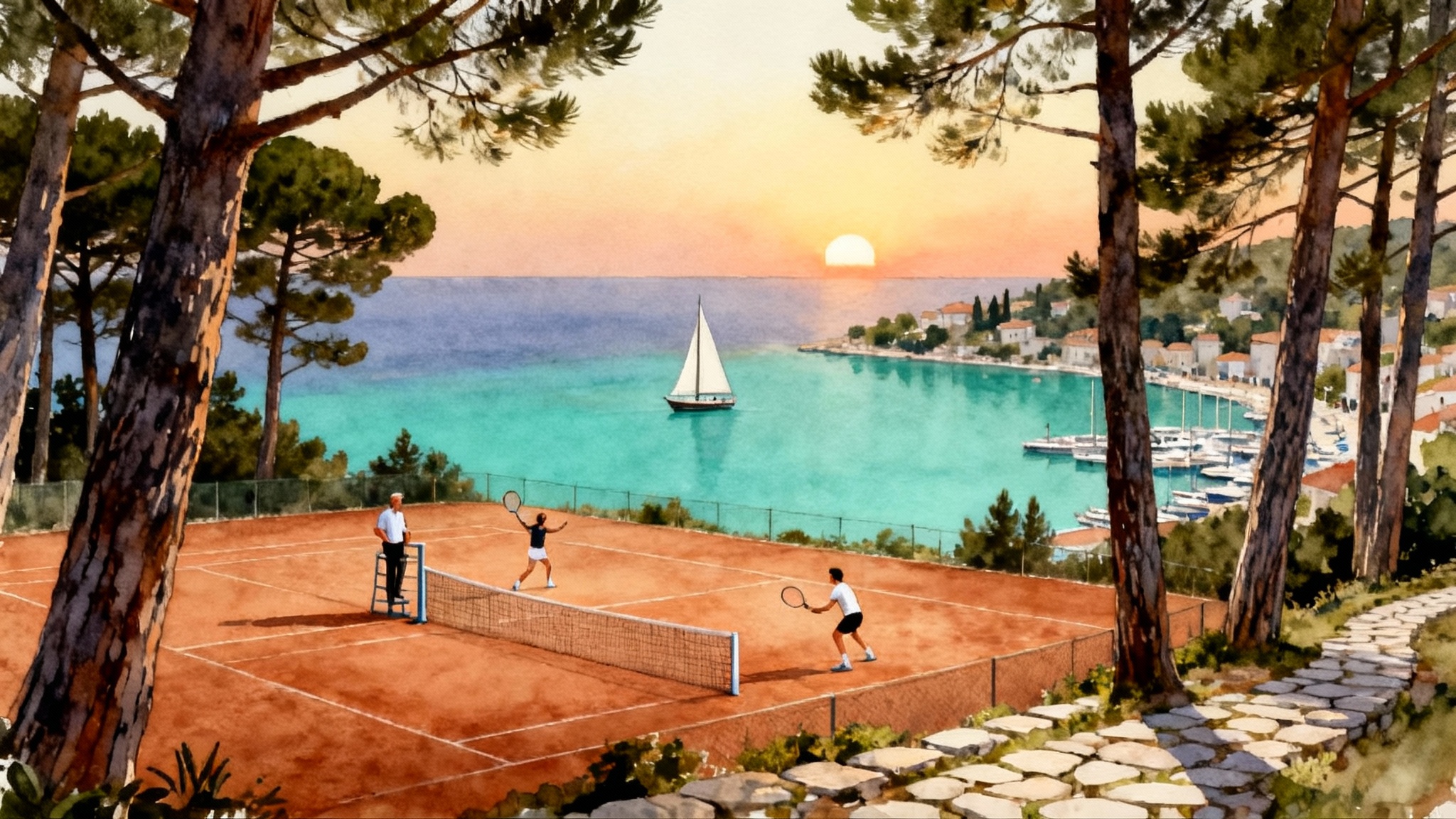
Lisbon to Cascais 2025–26: the best shoulder-season tennis base
From Jamor to Estoril, Lisbon’s coast blends mild Atlantic weather, dense clay and hard-court options, easy United States and European flights, and value pricing. Use this map-led guide to plan fall and spring training.
 Tommy
Tommy
Why Lisbon to Cascais is built for shoulder season
If you play your best when Europe’s big tennis hubs are either too hot or too cold, the Lisbon to Cascais corridor is a rare sweet spot. The Atlantic keeps daytime temperatures in the comfort band for long sessions, there is a concentrated web of clay and hard courts between Jamor, Oeiras, Carcavelos, Estoril, and Cascais, and flight access is simple from both the United States and the European Union. Add straightforward pricing and a train line that stitches beach towns to the capital, and you get a practical base for October to November and March to May.
Two things make this stretch unusually efficient for training:
- Climate consistency: the ocean moderates extremes. A typical October afternoon sits in the mid 60s to low 70s Fahrenheit, with light wind that toughens your footwork without turning points into coin flips. In March and April you get long light and gradual warmups, which makes double sessions realistic.
- Court density: you can warm up at Jamor in the morning, take a short drive to Estoril after lunch, and finish with match play in Cascais before dinner. Portugal’s national high performance cluster at Jamor National Sports Center anchors everything.
Weather windows that work in 2025–26
Plan around two clear windows for this season:
- September 15 to December 5, 2025: stable afternoons, sea breezes, and enough daylight for two on‑court blocks plus strength. Rain spikes are usually short and clear in hours rather than days. If a system does linger, Lisbon’s museums and cafes make the downtime easy to absorb without losing morale.
- February 25 to June 5, 2026: spring brings longer days and a natural ramp into tournament season. Mornings can start cool, so book the first hit on hard court and shift to clay by late morning. By late May, heat can build inland, but the coast stays playable.
What about rain and wind? Expect light to moderate Atlantic breezes most afternoons, useful for learning to play with shape and margins. Keep a second pair of clay shoes in rotation and dry grips in your bag. For rain days, build a recovery stack: mobility, video review, and a short strength circuit with medicine ball throws. Covered courts exist, but not everywhere, so prevention beats scrambling.
The Lisbon to Cascais tennis map you can actually use
Here is a practical, train‑and‑car friendly map in words. Travel times are from central Lisbon’s Cais do Sodré station unless noted.
- Jamor and Cruz Quebrada: 15–20 minutes by car, 20–25 minutes by train plus a short walk. The Jamor complex has multiple clay and hard courts, on‑site fitness spaces, and pro‑coach availability. It is perfect for morning technical blocks.
- Oeiras and Paço de Arcos: 25–35 minutes by train, slightly quicker by car outside rush hour. Several municipal centers and private clubs offer guest booking. Pair a late morning session with lunch nearby, then strength.
- Carcavelos and Parede: 30–40 minutes by train. Good mix of hard courts and a handful of clay. Carcavelos is ideal for afternoon match play because of train frequency and easy food stops.
- Estoril: 40–50 minutes by train, 35 minutes by car outside rush hour. The Estoril club sits near the pro tour venue and has a strong clay culture with match‑ready players.
- Cascais: 45–55 minutes by train. Scenic, compact, and walkable between courts, cafes, and coastal runs. Book sunset hits for atmosphere and lower wind.
Use our internal planner to see live options and distances: check the Lisbon to Cascais club finder and browse time slots before you lock accommodation. If you are anchoring in Cascais, favor clubs within a 15‑minute walk of the train line to simplify double sessions.
Booking basics and value pricing
Lisbon area pricing is straightforward compared with other European hubs. Expect these broad ranges for 2025–26.
- Municipal centers: typical guest rates from the mid teens to mid twenties in euros per hour for clay or hard. Lights, if needed, add a small supplement. Booking windows often open 3 to 7 days out.
- Private clubs: expect higher guest rates, often in the mid twenties to high thirties in euros, with better court prep and more hitting partners on site. Guest slots can be limited at peak evening hours.
- Coaches and sparring partners: certified coaching generally starts in the mid thirties to mid fifties per hour in euros, with bundles lowering the per hour cost. Strong adult sparring partners run lower than full coaching. Juniors can often share a coach at equal volume for less cost per player.
Three tips keep your costs down without losing quality:
- Anchor the week at two clubs, not five. You often get member pricing after the second booking and staff learn your patterns, which leads to smoother last‑minute court swaps.
- Hold one flexible block each day. If wind picks up, swap your match play to a more sheltered court or shift to hard court.
- Use off‑peak hours for high‑rep technical work. Late morning and mid afternoon are quieter than 18:00 to 20:30. Your per hour quality goes up because ball pick‑up and changeovers are faster.
Travel is easier than you think
Lisbon Portela Airport sits close to the city center. That short transfer matters when you arrive with racquets and want to hit the same day. United States gateways typically offer daily nonstops in season, and European capitals connect frequently throughout the day. For schedules and airlines, check the official listings at Lisbon Airport airlines and destinations. From the airport, plan on 25 to 35 minutes by ride share to central Lisbon, 35 to 50 minutes to Jamor or Oeiras, and roughly one hour to Estoril or Cascais depending on traffic.
On the ground, the Cascais Line runs from Cais do Sodré to Cascais with frequent service. Buy a reloadable travel card and base yourself within a short walk of a station. For early sessions at Jamor, a quick car ride or ride share is best because it compresses your commute and preserves warm‑up time.
Sample week for a junior player
This plan assumes a competitive junior who needs volume plus targeted technical work. Adjust set counts downward for younger juniors and upward for older teens who are match hardened.
- Sunday arrival: light jog, mobility, 45‑minute hit to feel the bounce. Early dinner and sleep.
- Monday: morning technical block at Jamor, 90 minutes on clay focused on serve plus first ball. Late lunch, 60‑minute strength and mobility. Late afternoon, 75‑minute open set with a local player of similar rating. Evening film review of 20 serve reps.
- Tuesday: morning hard court calibration at Oeiras, 75 minutes on pattern building. Afternoon study break. Sunset recovery run along the Carcavelos boardwalk and short core. Lights out early.
- Wednesday: Estoril clay, 120‑minute high‑intensity drills with points starting at 3 balls. Lunch. Afternoon set play to 10 games with tiebreakers. Ten‑minute cool down and stretching.
- Thursday: lighter day. Forty‑five minutes of serves and returns on hard court, followed by beach walk and nutrition focus. Optional 30‑minute hit in the evening if energy is high.
- Friday: Cascais clay, 90‑minute drilling plus match play, two sets. Strength session with medicine ball throws and rotational lifts. Early dinner.
- Saturday test day: morning match simulation best of three short sets. Afternoon video review and goal sheet for next month. Evening social hit if the legs allow.
That is 10–12 hours on court and 2–3 hours of strength and mobility. The split builds habits without overtraining, and the coastal climate keeps recovery steady.
Sample week for an adult player
This plan targets advanced intermediates to strong adults who want progress without burnout. Mix in tourism without losing rhythm.
- Saturday arrival and shakeout: 30‑minute mobility, 60‑minute hit near your lodging.
- Sunday: Jamor morning technicals on clay, 90 minutes. Lunch in Oeiras. Evening set on hard court to stress movement at speed.
- Monday: strength in the morning, then 75 minutes of serve and return work. Post‑session coaching debrief with three micro‑goals for the week.
- Tuesday: Estoril afternoon ladder matches, two tiebreak sets. Easy dinner in Cascais old town.
- Wednesday: tourist morning in Lisbon’s Baixa and Chiado. Late afternoon relaunch with 60‑minute drills on clay plus 30‑minute cool‑down walk.
- Thursday: Carcavelos morning hit, 90 minutes focused on forehand shape into the wind. Evening beach recovery walk.
- Friday: match day in Cascais, two full sets. End with a 20‑ball consistency test to measure progress. Celebrate with a seafood dinner.
This totals 7–9 hours on court with two light strength sessions. You will leave sharper without feeling like you worked a second job.
How Lisbon stacks up against Barcelona and the Algarve
- Against Barcelona: Barcelona has a deeper academy culture and more indoor courts. It is a powerhouse for year‑round volume and high‑level sparring. That said, shoulder season value in Lisbon is often better. Court fees trend lower, guest policies are simpler, and the Atlantic breeze forces point construction that transfers well to spring tournaments. Travel inside Barcelona can be slower across town. Lisbon’s train‑to‑coast rhythm lets you live in a small radius while still accessing multiple clubs.
- Against the Algarve: the Algarve is a resort dream with sun‑drenched courts. It is excellent for rest weeks and team camps that want a resort bubble. The tradeoffs are player density and travel time. Sparring partners can be thinner outside holidays, and flights often connect through Lisbon anyway. For training blocks where match play reps matter, Cascais, Estoril, and Jamor deliver more opponents per hour of logistics.
Where to stay and how to choose your base
Pick your base by your top two priorities.
- Double sessions with minimal transport: stay near Jamor or in Oeiras. You will lose fewer minutes moving and more minutes hitting. The area has practical apartments and quick access to supermarkets for athlete‑friendly meals.
- Scenic recovery and walkability: Estoril or Cascais. You can walk from courts to the beach, which keeps your off‑court stress near zero. The train back to Lisbon for a rest afternoon is easy.
- Blended city and coast: central Lisbon along the Cascais Line near Alcântara or Belém. You will sacrifice a little transit time for more restaurants and museums on rest blocks.
Book accommodation after you have two anchor clubs confirmed. Courts drive the calendar, not the other way around.
Practicalities that save sessions
- Shoes and strings: bring one pair of clay shoes and one pair of all‑court shoes. The Atlantic air can add bite to the ball, so string one racquet two pounds tighter than you would inland. Carry dry grips and a spare wristband for afternoon hits.
- Coaching cadence: avoid stacking three straight days of two‑hour lessons. Alternate technical days with match‑play days. You will retain more and avoid forearm fatigue.
- Wind planning: drill crosswinds with targets and accept more net clearance. Practicing on a blustery Carcavelos afternoon will make a still indoor match feel slow and simple.
- Food and water: Mediterranean staples are everywhere. Build a two‑meal routine around a late breakfast, early dinner, and bring fruit plus nuts courtside. Hydration counts more than you think in cool wind.
Suggested club and academy directory
Use this as a simple directory to sketch your week. Confirm current guest policies when you book.
- Jamor and Cruz Quebrada: national complex with multiple clay and hard courts, on‑site fitness, and pro services. Ideal for morning technicals and fitness combos.
- Oeiras and Paço de Arcos: municipal centers and private clubs with accessible guest booking. Look for weekday late morning openings.
- Carcavelos and Parede: mixed surfaces, good for quick train access and afternoon match play.
- Estoril: strong clay tradition and regular competitive sets around the club. Pair sessions with a recovery walk through the gardens.
- Cascais: scenic, compact cluster of courts and cafes. Book sunset sessions to minimize wind.
For live slots and coaching packages, browse the Lisbon to Cascais club finder and filter by clay or hard, time of day, and coach availability.
Rain plans without drama
You will occasionally lose a block to weather. Have a ready‑made plan so you keep improving.
- Mobility circuit: 25 minutes of hips, ankles, thoracic spine, and shoulders.
- Video review: 20 serves and 10 forehands from your last two sessions. Identify one pattern to test next hit.
- Strength set: two rounds of medicine ball throws, split squats, and band rows. Keep it crisp and under 30 minutes.
- Mental rehearsal: 10 minutes of breathing and point simulation. Work through your serve plus two‑ball pattern in your head.
If covered courts are available, use them for short, high‑quality technical reps rather than a full match. Save your legs for the next clear day.
Budgeting your 7‑day block
Here is a conservative estimate for a one‑week block for one adult or one junior plus a parent, excluding flights.
- Courts: five to seven hours at municipal rates plus two to four hours at private club rates.
- Coaching and sparring: three to five hours of coaching and two to three hours of hitting partners.
- Strength and recovery: one session in a local gym and one sports massage if desired.
- Transport: train passes plus two ride shares for early sessions.
- Food: groceries for breakfast and snacks, simple lunches near courts, and three to four dinners out.
The total commonly lands under what you would spend in Barcelona for a similar plan, and often under a resort week in the Algarve during peak periods. The reason is not low quality. It is a mature municipal network and a culture that treats tennis as daily life rather than a luxury product.
A crisp checklist before you book
- Confirm two anchor clubs and one backup within a 20‑minute radius of lodging.
- Pick a weather window: September 15 to December 5, 2025, or February 25 to June 5, 2026.
- Choose surfaces by day: hard for early chill, clay for late mornings and afternoons.
- Pre‑book coaching for day one and day three. Leave day two flexible for match play.
- Buy a reloadable train card if you plan to use the Cascais Line.
- Pack two string tensions and two pairs of shoes.
Related bases to compare
Planning a broader season? Compare shoulder‑season and year‑round options nearby and abroad:
- For winter sun and easy logistics, see our Tenerife winter‑sun tennis base.
- For a U.S. option with deep player density, read Greater Atlanta 2025–26 tennis hub.
- For a spring clay block in France, study the French Riviera and Lyon clay guide.
The bottom line
Lisbon to Cascais is not a fantasy brochure. It is practical, compact, and repeatable. Mild Atlantic weather supports long sets without heat stress. Jamor, Oeiras, Estoril, and Cascais give you surface choice and reliable sparring. Flights are easy, pricing rewards planning, and the train keeps logistics simple. If you need a base to sharpen in October or to launch a spring season in March, set your pin on this coast. Build two anchors, travel light, and let the Atlantic teach you control. You will go home with better patterns, better margins, and a clearer plan for the matches that matter.