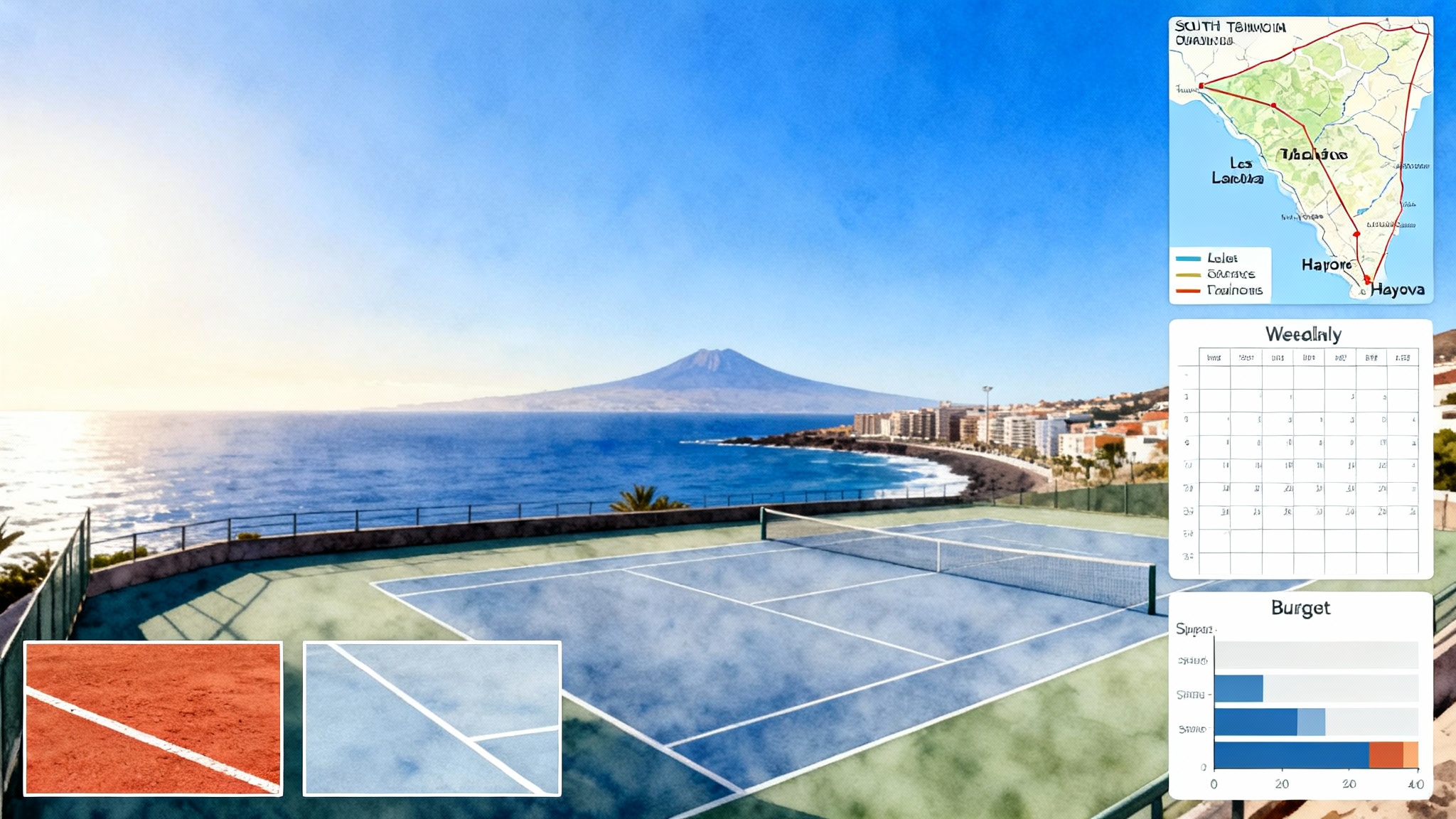
Manila Dry-Season Tennis 2025–26 at Philippine Tennis Academy
Use the Philippines’ November to April dry season to stack reliable court hours, English-speaking coaching, and results-driven competition. Base your weekdays at Philippine Tennis Academy in Manila, then add Cebu and Clark weekend match play.
 Tommy
Tommy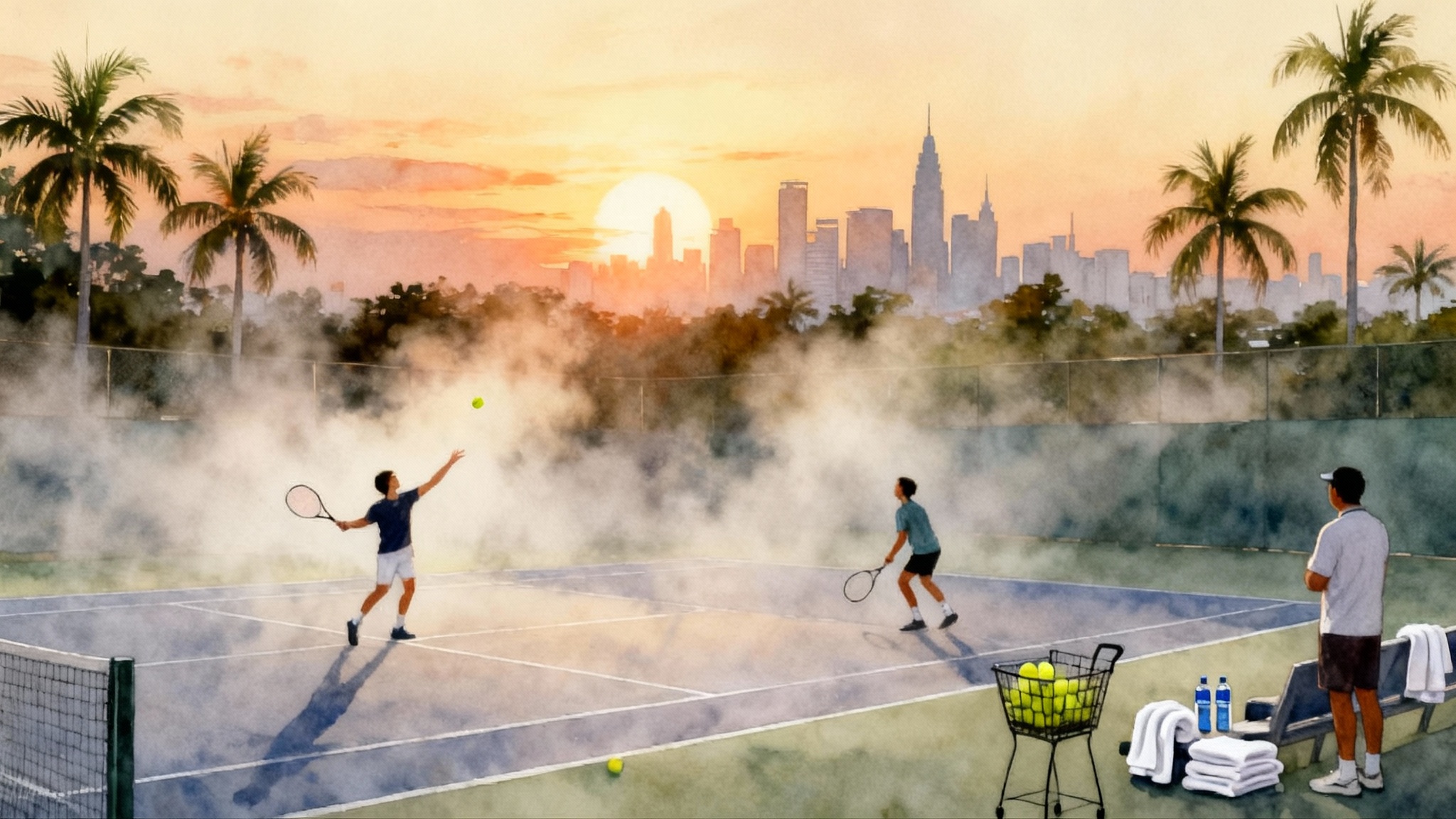
Why Manila is the smartest winter base for 2025–26
If you want guaranteed court time during the North American winter without flying halfway around the world to chase dry courts, Manila should be your first shortlist pick. The Philippines’ dry season typically runs from November through April, which lines up with the window when many players build their engines for spring and early summer competition. Combine that predictable weather with English-speaking coaches, a friendly cost of living, and excellent flight access, and you get a training block that is both practical and performance oriented.
For alternatives and comparisons, see our guides to Dubai and Abu Dhabi winter tennis and the Tenerife winter-sun tennis base.
The playbook here is simple. Anchor your weekdays at Philippine Tennis Academy in Manila for high-quality technical reps and structured fitness. On selected weekends, add short match play trips to Cebu or Clark to stress test your work under tournament-like pressure. While you build skill, you also build a real competitive rhythm, not just ball striking.
There is a second lever that makes the Manila plan powerful. You can align training with the ITF Asia tournament calendar so that your block produces tangible ranking progress rather than just better practice sets. The idea is to use the weekday academy base for skill and conditioning, then periodize sharpness around the competition dates that matter to you. For additional match volume, use the Universal Tennis event search.
Your base: Philippine Tennis Academy weekdays
A good base session blends coaching you understand, courts you can book consistently, and a daily rhythm you can repeat. Philippine Tennis Academy checks those boxes with English-friendly instruction, a player to court ratio that lets you hit a lot of balls, and the ability to schedule around the heat. Expect hard courts as your default surface with occasional access to partner venues if you want a clay or synthetic day for variety.
A sample weekday rhythm that works in Manila’s climate looks like this:
- 6:00 to 6:20, activation and prehab. Mini bands, ankle hops, split step timing, a few accelerations. The goal is to feel springy before the first ball.
- 6:20 to 7:40, technical block one. For example, serve and first ball patterns, followed by two focused constraints, such as second serve plus backhand line, or forehand on the hop from a deep feed.
- 7:40 to 8:10, serve volume and locations. Ten first serves to each target, then five second serves per target, log results, film a few reps.
- 8:10 to 8:40, high ball tolerance. Two-on-one crosscourt, then pattern out down the line, short rest intervals.
- 8:40 to 9:00, cooldown and refuel. Light jog, stretch, 500 to 700 milliliters of fluids, protein and carbohydrate intake.
- 15:30 to 16:15, strength or speed session indoors or shaded. Alternate lower body force, upper body push pull, and medicine ball throws.
- 16:30 to 18:00, pattern play and points. Situational sets, such as four ball patterns to the outside or return plus one depth tests. Finish with a short tiebreak.
The morning–evening split lets you bank quality volume while avoiding the hottest part of the day. You still get real intensity, and you arrive at the evening set with enough freshness to play sharp points.
Weekend match play: Cebu and Clark
Training is necessary, but matches expose the truth. A good Manila block inserts two to four weekend road trips over twelve weeks. Two favorites are Cebu and Clark because the logistics are simple and the tennis scenes are active.
-
Cebu, the island city with a vibrant tennis community. Fast access via a short flight from Manila, with ride hailing available on arrival. You will find a mix of hard courts and some slower surfaces at clubs around the city, plus a culture that welcomes visiting players for practice sets. Build a Friday evening arrival, Saturday two-set morning plus one-set evening, and Sunday morning two-set block. Eat light, hydrate aggressively, and fly back Sunday night.
-
Clark, the former air base area north of Manila. You can reach Clark by road from Manila and be on court the same afternoon if you leave after early training. Expect modern hard courts, clean air relative to the city center, and a tournament-style environment that rewards disciplined patterns. Use Clark for testing match rituals, not just strokes.
These trips are not vacations. Treat them like mini competitions. Arrive with a written plan. For example, two serve targets you want at 60 percent or better, a return depth goal of two neutral balls per game, and one defensive pattern you want to defend three times per set. After each match, capture two cues that helped you and one adjustment for the next day.
Heat and humidity: make the climate work for you
Manila’s heat index is not a reason to avoid training. It is a reason to plan intelligently. The athletes who thrive are the ones who respect thermoregulation and make it a performance advantage.
- Time of day. Hit hard work from 6:00 to 9:00, then 16:00 to 19:00. Use the midday for recovery, film review, and strength indoors.
- Hydration. Start the day with 500 milliliters of fluids before you leave for courts. During a ninety minute session, aim for 600 to 900 milliliters total, not all at once. Add electrolytes if you are salting your hat or cramping. After practice, replace losses with another 500 to 700 milliliters and a salty snack or recovery shake.
- Cooling strategies. Use shade between drills, ice neck towels on changeovers, and an extra dry shirt at the sixty minute mark. Your brain perceives effort as lower when skin temperature drops, which lets you maintain decision quality late in sets.
- Fuel. Manila food culture makes it easy to eat rice, fruit, and lean protein. A breakfast of eggs, rice, and mango, then a simple lunch of grilled chicken with vegetables works. Keep sweets for the evening.
- Skin and eyes. Sunscreen applied at the apartment, not courts. A cap with a dark underbill and polarized lenses if you are sensitive to glare.
Treat the heat as a constraint that shapes the day. When you do, your technical sessions are cleaner, and your point play holds intensity.
Choose surfaces wisely
Most Manila sessions will be on hard acrylic courts, which are ideal for building serve patterns, return depth, and movement economy. If you plan to compete later on clay, insert one surface day per week via partner venues or on a weekend trip. That small dose keeps your slide timing and height tolerance alive without diluting the main work.
Two practical levers matter more than people think:
- Ball choice. If you are preparing for hotter tournament sites, use a firmer ball to simulate bounce and timing. If you are preparing for indoor play after the block, a slightly heavier ball can increase stroke stability demands.
- Strings and tension. In humidity, many players gain free spin and lose a bit of control. A one to two kilogram tension increase often restores trajectory and contact confidence. Note your match ball trajectory before changing anything, then adjust once, not three times.
Align with competition: UTR and ITF Asia
A training block delivers real value when it converts to results. There are two competition pathways to integrate.
- International Tennis Federation Asia. Identify two to three tournament clusters within the dry season months. Pencil your micro peaks for those windows and shape training quality around them. Enter early, confirm surface, and track draw sizes so that your physical taper matches the likely number of matches.
- Universal Tennis Rating events and local match series. Use these for volume, especially on weekends before or after International Tennis Federation weeks. Target events that draw players at, or slightly above, your rating so that your patterns get punished when you get lazy.
Create a one page calendar that shows three things on the same line for each week. One, the training emphasis. Two, the number of likely sets. Three, the competition candidate if it exists. When an event locks in, move it from candidate to committed.
To find options quickly, pair the International Tennis Federation list with the Universal Tennis search links above, then filter by surface and date. The right combination is two big competitive pushes, one in the first half of the block, one in the second, with strategic Universal Tennis events on the shoulders of each push.
A twelve week blueprint: example dates and structure
Below is a template you can apply to 2025–26, whether you start in November 2025 or January 2026. Adjust by one or two weeks to line up with your priority events.
- Weeks 1 to 4, build the engine. The priority is contact, footwork quality, and serve location. Mornings are technique and volume. Evenings are pattern play and short points. Insert one Cebu or Clark weekend in Week 3 for honest feedback. In Week 4, reduce total volume by ten percent and increase the share of point play.
- Weeks 5 to 8, compete and refine. Enter your first International Tennis Federation or Universal Tennis set of events in Week 6 or 7. Week 5 includes two match play days in Manila, Week 6 is a taper into the event. After competition, Week 8 returns to fundamentals with one constraint per stroke that broke down under pressure.
- Weeks 9 to 12, sharpen and cash in. The second push aims for improved results. Reduce gym volume slightly, raise serve and return reps, and schedule a Clark weekend dress rehearsal with full match routines, including scouting, journal entries, and between point breathing.
A sample week during the build phase:
- Monday. Morning serve plus first ball and return depth, evening two-on-one tolerance and a short set.
- Tuesday. Morning forehand on the move and backhand depth under pressure, evening pattern play to outside, speed session indoors.
- Wednesday. Morning slice, net skills, and transition footwork, evening match play first to nine games.
- Thursday. Morning second serve quality and high ball tolerance, evening lifting session and agility circuits.
- Friday. Morning return patterns against different spins, evening tiebreak ladders and doubles points for variety.
- Saturday. Active recovery or light hit, film review, mental rehearsal.
- Sunday. Rest or travel for a road match play weekend.
During a competition push, keep mornings light, prioritize quality over volume, and script your routines. For example, match day warm up at 7:20, activation at 7:35, serve targets at 7:45, walk to court at 7:55 with two breathing cycles and a single cue word. Write down three controllables after the match and one tactical adjustment for the next round.
Budgeting and value
Costs vary by accommodation, number of private sessions, and travel frequency, but the Manila model usually delivers more hours per dollar than large United States markets. The big drivers are housing and coaching. If you share an apartment near the academy and use a mix of private, semi private, and group sessions, you can increase your weekly on court hours without inflating spend. Flights to Cebu are frequent and often inexpensive if booked early. Road trips to Clark remove flight costs and let you control timing. The result is a block that feels like a full time tennis month without paying full time tourist premiums.
Two small tips compound value.
- Book accommodation within a short ride of the courts. Time saved equals more sleep and more focused sessions.
- Put your money into high leverage days. Private serve sessions, a hitting partner for return work, and one video analysis per week pay off more than random extras.
Practical logistics
- Neighborhoods. Many players base in central Manila areas that balance safety, convenience, and access to courts. Pick a place with quiet mornings, then test the commute twice before committing for many weeks.
- Transport. Ride hailing apps are widely used. Build a fifteen minute buffer for morning arrivals and a larger buffer in the late afternoon.
- Connectivity. A local data plan helps with map apps, ride hailing, and tournament communications.
- Health. Pack a small first aid kit with blister care, tape, and electrolyte packets. Add a lacrosse ball and a mini band for mobility.
- Recovery. Use indoor gyms or apartment facilities at midday. Ice, compression, and naps beat extra junk reps. Treat recovery like a skill you are training.
Who this block is for
- Ambitious juniors who need a winter block that converts to measurable ranking progress.
- College players on break who want consistent hitting, a friendly language environment, and access to competition without long travel days.
- Adult competitors who like sunshine and structure and want a results oriented training holiday.
If your goals involve learning a new skill, logging real volume, and then validating it in matches, the Manila dry season model fits.
A checklist you can copy
- Confirm your start date. November 2025 or early January 2026 both work. Align with your priority events.
- Reserve weekday training at Philippine Tennis Academy. Lock morning and evening slots before you arrive.
- Draft weekend trips. Two to four total, mix Cebu and Clark based on surfaces and travel preferences.
- Build your competition shortlist. Two International Tennis Federation windows, three or four Universal Tennis events.
- Pack heat intelligent gear. Light shirts, two hats, sunscreen, polarized sunglasses, two towels, electrolyte packets.
- Set your metrics. Serve in, first ball depth, return depth, break points saved and converted, unforced errors in neutral.
- Plan recovery. Midday nap three times per week, gym two to three times, soft tissue daily.
The bottom line
A great winter training block is not an accident. It is a set of choices that stack in your favor. The Philippines’ dry season supplies the weather. Manila provides the coaching, courts, and access. Cebu and Clark add the match stress you need. When you line all three with a smart calendar of Universal Tennis and International Tennis Federation events, you turn winter sun into measurable progress. Do the simple things well, repeat them on the right schedule, and let the block produce the results you came to find.