Singles Pattern Play 101: High-Percentage Rally Maps
A practical, age-banded guide to five singles patterns that win points. Learn constraints-led drills, target zones, parent-feed progressions, solo ball-machine settings, simple match charting, and a Gomez Tennis Academy case study.
 Tommy
Tommy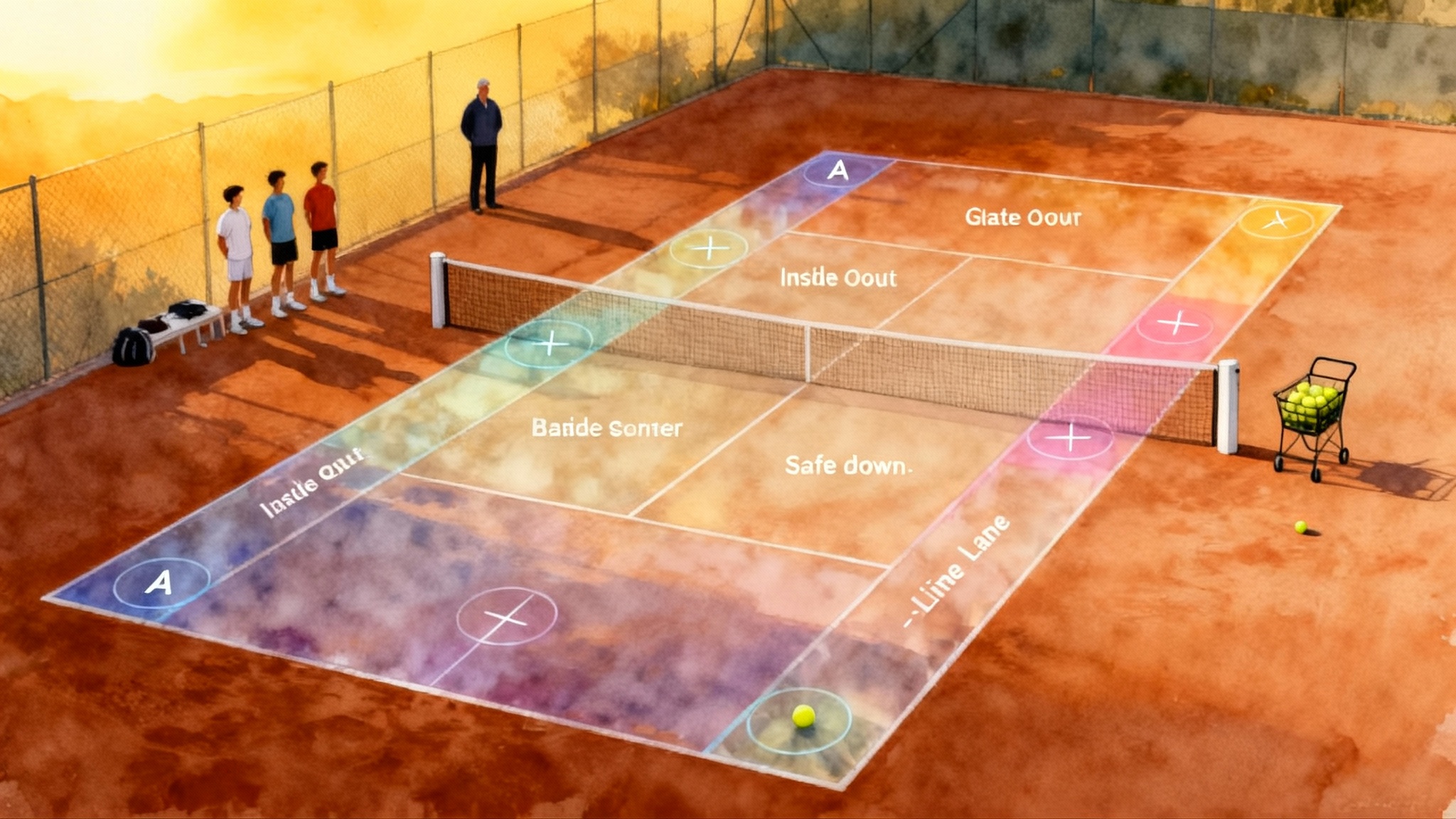
Why patterns win more than pretty strokes
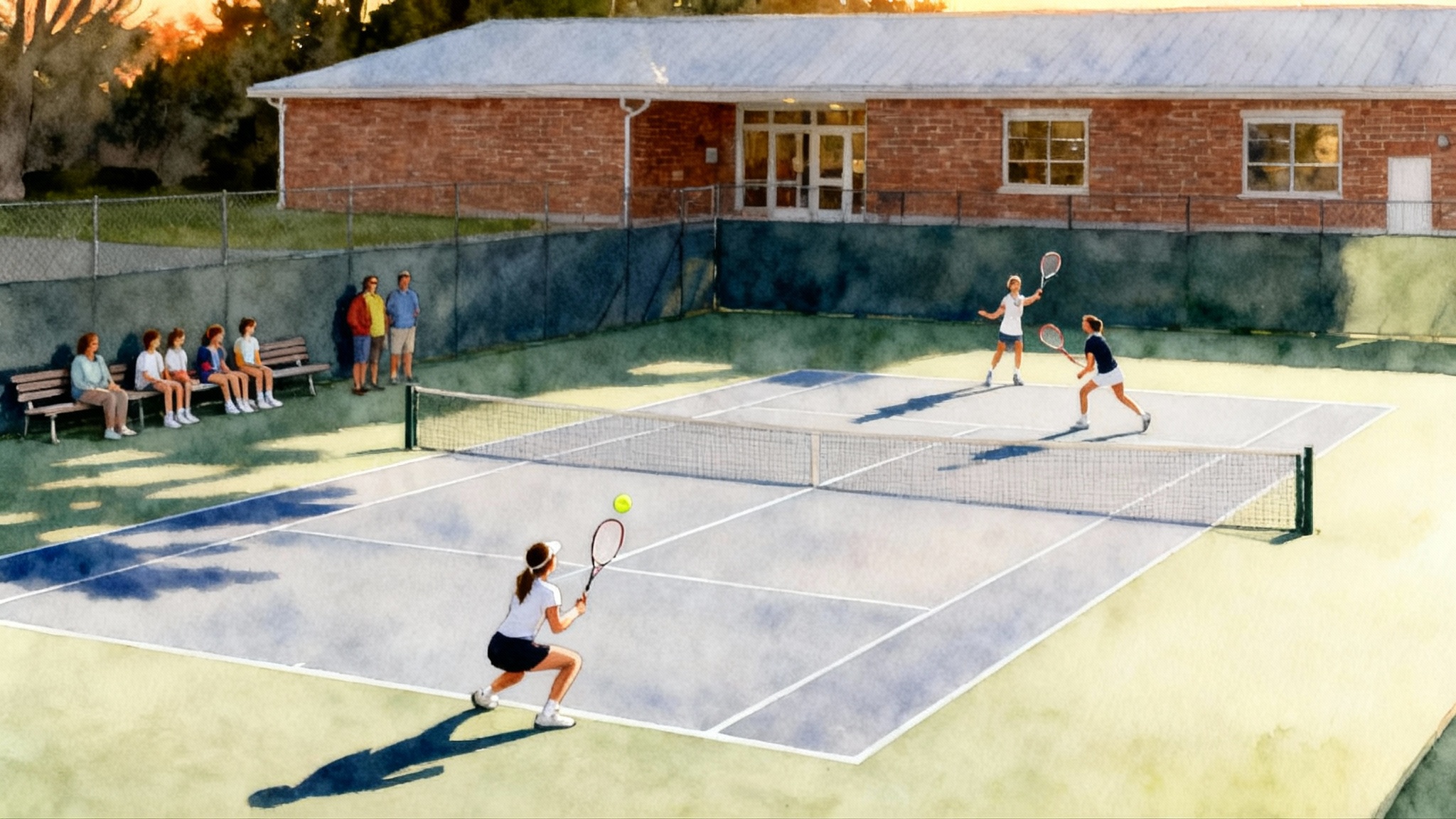
If you watch a long rally between two solid players, it can look like chaos. In reality, the ball moves along a few well-worn highways. Singles is about steering the rally onto roads that favor you and avoiding the ones that set traps. Pattern play is the map. It turns big, fuzzy ideas like “be consistent” into precise routes: where to hit, when to change direction, and how to build the next ball.
This guide breaks singles down into five core patterns that juniors, parents, and adults can learn fast: cross-court control, the backhand cage, the inside-out forehand, safe change-of-direction, and serve plus one. We use constraints-led drills to help players self-organize good decisions under pressure. If you are new to the term constraints-led, it means shaping the task, equipment, and scoring so the environment nudges the right solution without long lectures. For background on the method in tennis, read an ITF Coaching Review article on the constraints-led approach in tennis.
Rally maps: simple targets that scale
Think of the opponent’s court as a three-by-three grid of big targets. Forget paint lines for now. We will label deep cross-court targets as A1 and A2, deep middle as B1, and deep line as C1. For short angles use A0. For safe build shots, we live mostly in A1 and A2. These are large, low-risk windows that clear the net by three to five feet and land past the service line.
Rally map rules that never go out of style:
- Big targets beat small heroes. Aim for windows the size of a car hood, not a license plate.
- Net clearance buys time. Clear the tape by the height of your water bottle at a minimum.
- Cross-court first. The court is longer on the diagonal and the net is lower.
Pattern 1: Cross-court control
What it is: establish depth and width to the opponent’s cross-court corner until you earn a short ball. Then either repeat to push them back or take the next ball into open space.
Why it works: longer court plus lower net equals higher margin. You also pull the opponent off the center line, creating open space on the next ball.
Target zones: A1 for deuce side, A2 for ad side. Miss long rather than into the net.
Constraints-led drills
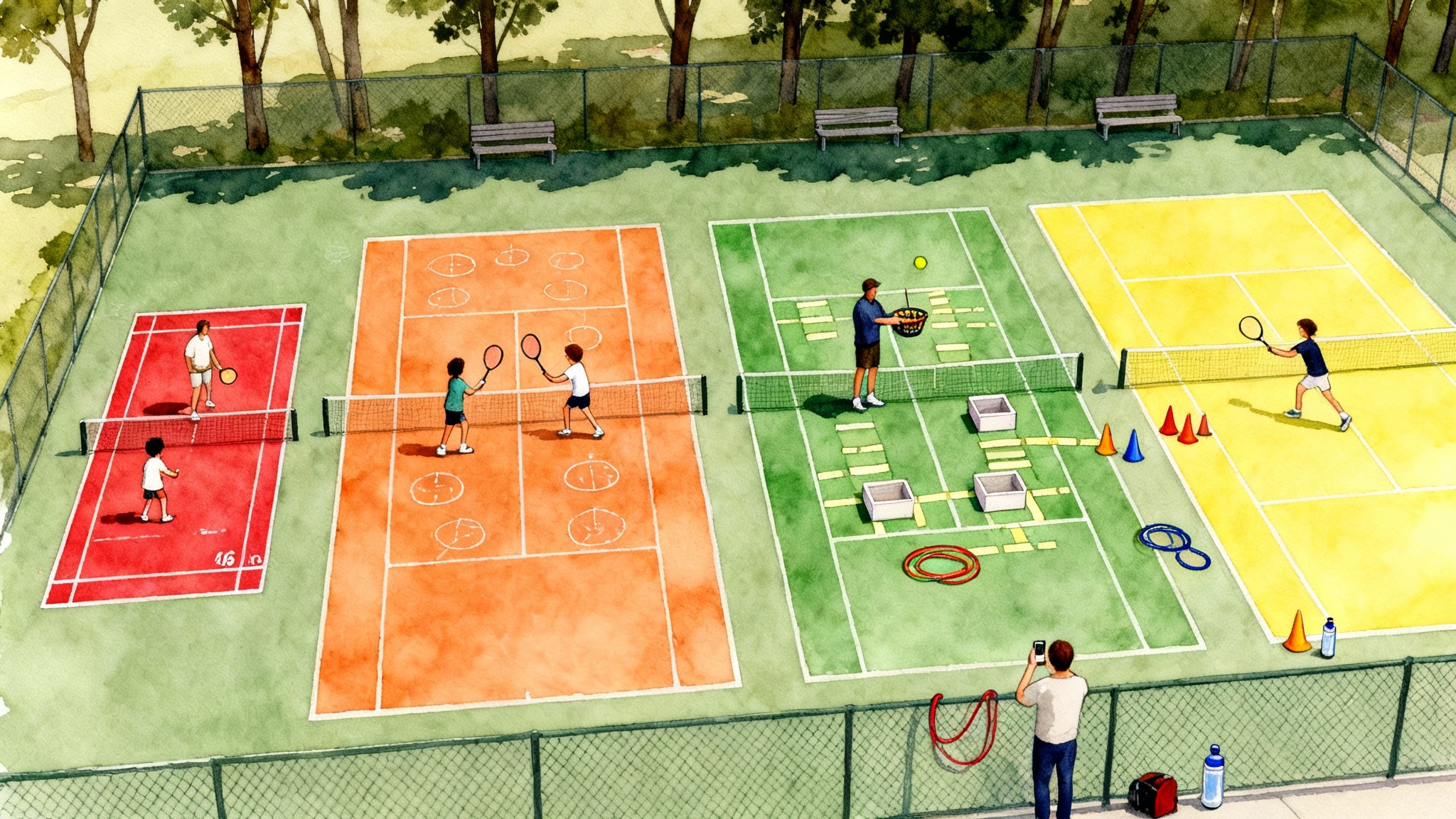
- Red and orange ball juniors: service-line box only. Both players must hit cross-court into the half court beyond the service line. If a ball lands inside the service boxes, replay the point. This constraint rewards height and depth.
- Green ball and up: two-shot rule. Player A must hit two consecutive cross-courts before a change is allowed. If they change early, they lose the rally regardless of outcome.
- Adults: two-cones width. Place two cones three feet inside the sideline and three feet inside the singles line. Score only when the ball lands between the cones and past the service line.
Parent-feed progression
- Stand at the center mark with a basket and hand-feed to your junior’s forehand cross-court. Call the target out loud, for example “A1.” After ten balls, switch sides. Use ten good reps to one miss as the quality threshold.
Ball-machine settings
- Portable machine such as a Lobster: deuce side feed, medium topspin, 35 to 45 miles per hour, 3 to 4 on the height dial, oscillation on half-court to deuce corner. Interval 3.5 to 4 seconds. Count how many strike the back two thirds of the court cross-court.
Match cues and charting
- Cue: bounce and contact. Say “bounce, set, lift” to remind yourself to shape height, not just speed.
- Chart: tally how many cross-court balls you hit before your first error. Target average is three or more in junior and adult league play.
Pattern 2: The backhand cage
What it is: keep the opponent in their weaker backhand corner until they float a short ball. Then take the open court safely.
Why it works: many players defend more on the backhand. Locking them there reduces their ability to hurt you with inside-out forehands.
Target zones: A1 and A2 backhand corners, then attack into B1 or the opposite A corner depending on how far you moved them.
Constraints-led drills
- Juniors: must hit every third ball to the backhand corner. Feed from the service line. If they hit the forehand side before the third ball, restart the rally.
- Parents feeding: call the direction late. Point left or right with your non-feeding hand just before the junior starts their unit turn. This sharpens reading skills.
- Adults: odd-even scoring. Odd points can only be won by landing the ball in the deep backhand corner; even points can be won normally. This forces repeated visits to the backhand cage.
Ball-machine settings
- Aim feeds to land two to three feet inside the singles sideline on the ad side. Moderate topspin, 30 to 40 miles per hour, interval 3 seconds. Put a target mat in the backhand corner to get visual feedback.
Match cues and charting
- Cue: “backhand then breath.” After two balls to the backhand corner, pause your feet for a microsecond as you recover. This prevents drifting and opens the lane for the next ball.
- Chart: tick marks for backhand-corner balls that land past the service line. Goal is eight or more per set.
Pattern 3: Inside-out forehand
What it is: step around a backhand to strike a forehand into the opponent’s backhand side. Follow with either another inside-out or the inside-in to the forehand corner.
Why it works: you hit your best shot to their weaker side while standing slightly inside the baseline where you can take time away.
Target zones: A2 for inside-out from the ad side, then C1 for the occasional inside-in when the lane opens.
Constraints-led drills
- Juniors: the “no backhands” round. Coach or parent feeds five balls around the backhand hip. The player must run around and hit forehands without stepping across the doubles alley. Add points for hitting past the service line.
- Teens and adults: two-inside rule. You must hit two inside-out forehands before an inside-in is permitted. This prevents early, low-percentage line changes.
Parent-feed progression
- Stand a step inside the baseline on the ad side and toss balls slightly to the player’s left. Cue them to move early with a drop step. Reward clean recovery by placing a coin on the court they can collect only if they recover on time.
Ball-machine settings
- Feed to backhand hip on the ad side with slight inside-out oscillation. Medium height, 40 to 50 miles per hour, interval 2.8 to 3.2 seconds. Add side spin if your machine supports it.
Match cues and charting
- Cue: “step, load, show strings.” This reminds players to load the outside leg and show racquet strings to the target.
- Chart: number of inside-out forehands won within three shots. Target two to three such wins per set for developing players.
Pattern 4: Safe change-of-direction
What it is: change ball direction only when one of three green lights appears: you are inside the baseline on balance, the incoming ball is slow or short, or you are attacking into open space with their momentum moving away.
Why it works: changing direction against a heavy ball from behind the baseline produces short, net-bound errors. Waiting for green lights keeps your miss long and wide instead of into the tape.
Target zones: start cross-court into A targets until a green light appears, then take the ball down the line to C1. Aim two to three feet inside the line and net for safety.
Constraints-led drills
- All ages: traffic-light scoring. Green light balls may change direction. Yellow balls must continue cross-court. Red light balls must be lifted high cross-court. Coach or parent calls the light on each feed.
- Adults: two-bounce rule. If the ball would bounce twice inside the service box, you must change direction. This builds the feel for attacking short balls.
Parent-feed progression
- Alternate slow floaters and heavier drives so the player reads speed. If they change direction on a fast incoming ball from behind the baseline, subtract a point.
Ball-machine settings
- Alternate feeds: one slow feed landing inside the service line followed by one deeper, heavier feed. Use a 2.5 second interval for the short, 3.5 for the deep. Requires manual adjustment or preprogrammed drills on newer machines.
Match cues and charting
- Cue: “behind the ball.” If you cannot get your chest behind the bounce point, keep it cross-court.
- Chart: number of line changes attempted and success rate. Goal is at least 60 percent success on changes for juniors and 70 percent for experienced adults.
Pattern 5: Serve plus one
What it is: pair your serve to a predictable first groundstroke. Examples: serve wide deuce, then hit forehand to the open court; or serve body ad, then backhand cross-court to the backhand cage.
Why it works: most returns are short or neutral. Planning the next ball eliminates hesitation and improves footwork to the first shot after serve.
Target zones: serve to corners or body, then aim first groundstroke to A targets unless you identify a green light for a line change.
Constraints-led drills
- Juniors: two-ball points. Serve, coach feeds the return, player hits the plus one to a called target. Score only if the plus one lands deep.
- Adults: serve ladders. You cannot move up a ladder rung until you hit three consecutive plus ones to the called target after a legal serve.
Parent-feed progression
- Stand inside the service box and bunt returns back after the serve. Call out “time” if your child rushes the plus one. They must re-set and start the two-ball sequence again.
Ball-machine settings
- Many machines have no return simulation. Use a partner to catch serves and drop feed the return to the server’s predicted plus-one strike zone. If solo, place a bucket of balls near the baseline center mark and self-drop after each serve to rehearse footwork. To anticipate return quality, study our guide to return of serve tactics.
Match cues and charting
- Cue: decide the plus one target before you bounce the ball to serve.
- Chart: track first-serve location, return depth, and plus-one target. Set a goal of winning at least 60 percent of serve-plus-one points at the junior and club level.
Simple match charting that fits in your pocket
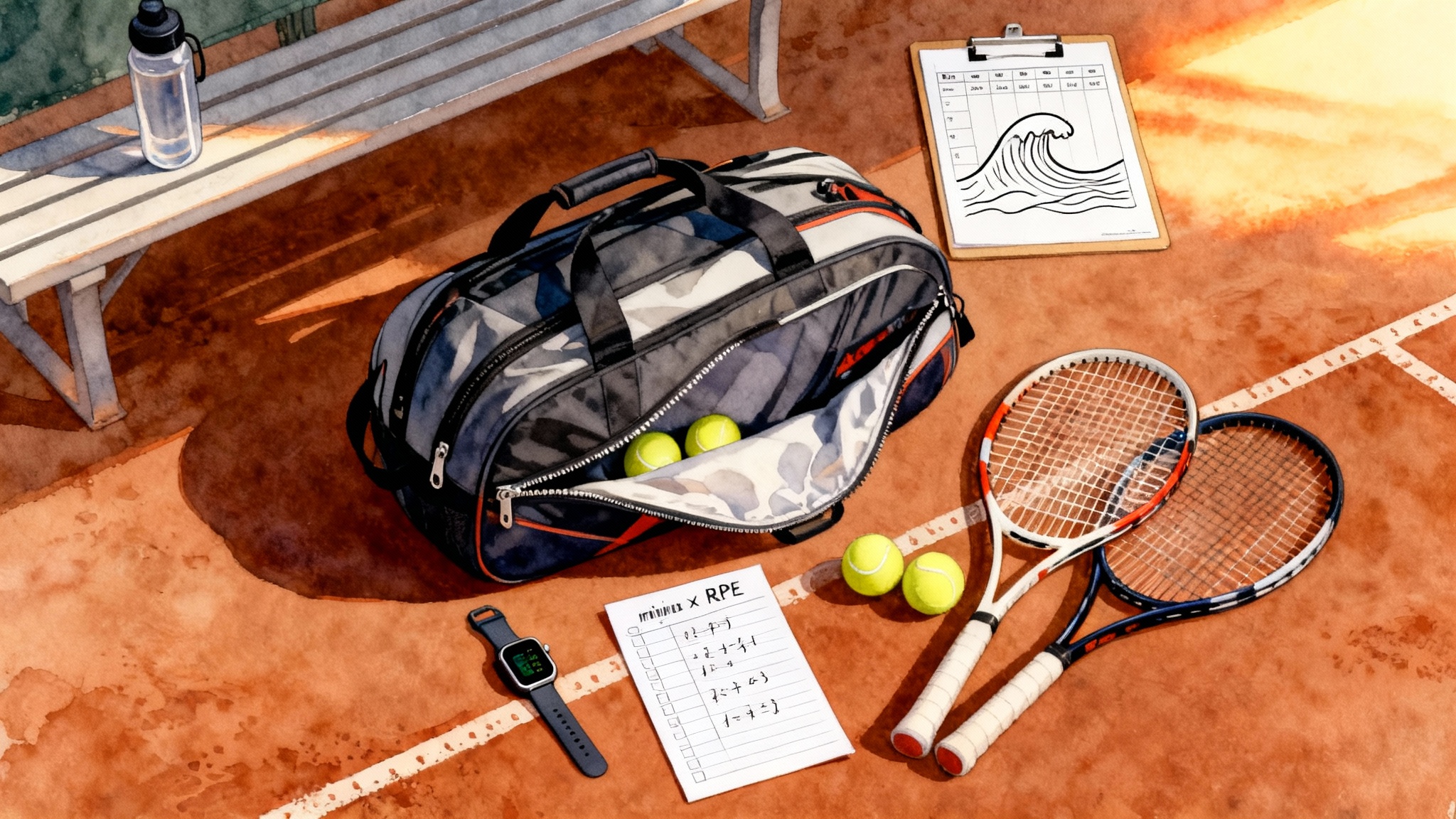
You do not need an app to learn from your matches, although tools like SwingVision or a simple spreadsheet help. Use a half-sheet and a pencil.
- For each game, draw four small boxes labeled CC, BOH, IO, S+1. CC is cross-court control, BOH is backhand cage, IO is inside-out forehand, and S+1 is serve plus one. Put a check mark every time you executed the pattern and won the point. Put a dot when you tried it and lost.
- Track only the first four balls of each point: serve, return, ball three, ball four. This keeps your notes quick enough to maintain focus.
- At changeovers, circle any pattern with fewer than three tries. That is a nudge to run your map more often.
Parent-feed progressions: quick wins in 15 minutes
Parents can do more than shag balls. Use short, focused progressions that teach reading, balance, and intent.
- Service-line height ladder: from the service line, feed five balls while holding your non-feeding hand at different heights. The player must clear the net by that height. This builds adjustable trajectories for cross-court control.
- Direction call late: call left or right after the player starts the unit turn. This enforces early preparation and flexible decision making.
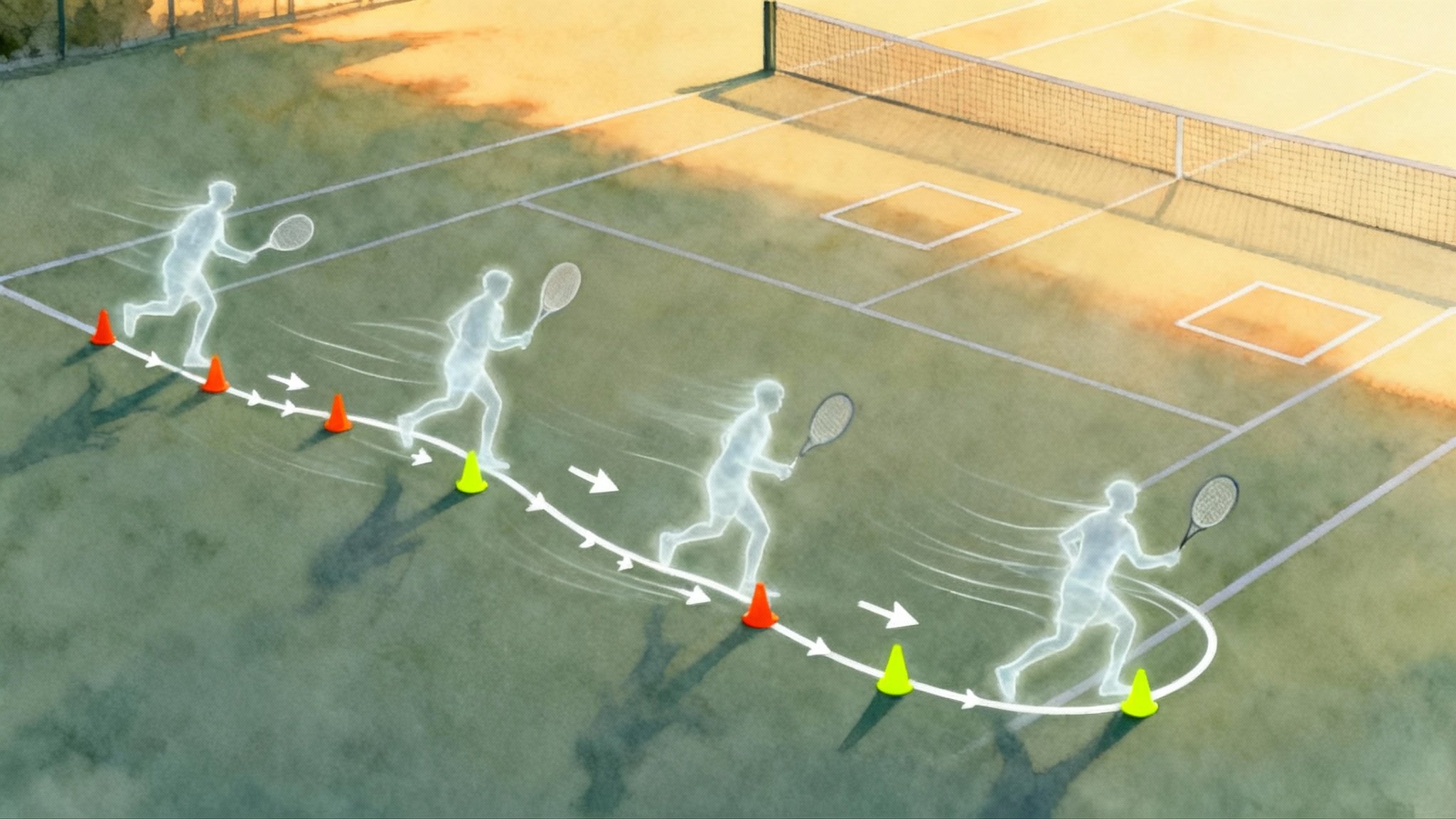
- Recovery coin game: place a coin on the center mark. After each pattern rep, the player can collect the coin only if they recover behind the mark before the coach feeds the next ball. If footwork is your limiter, follow our 30-day footwork plan.
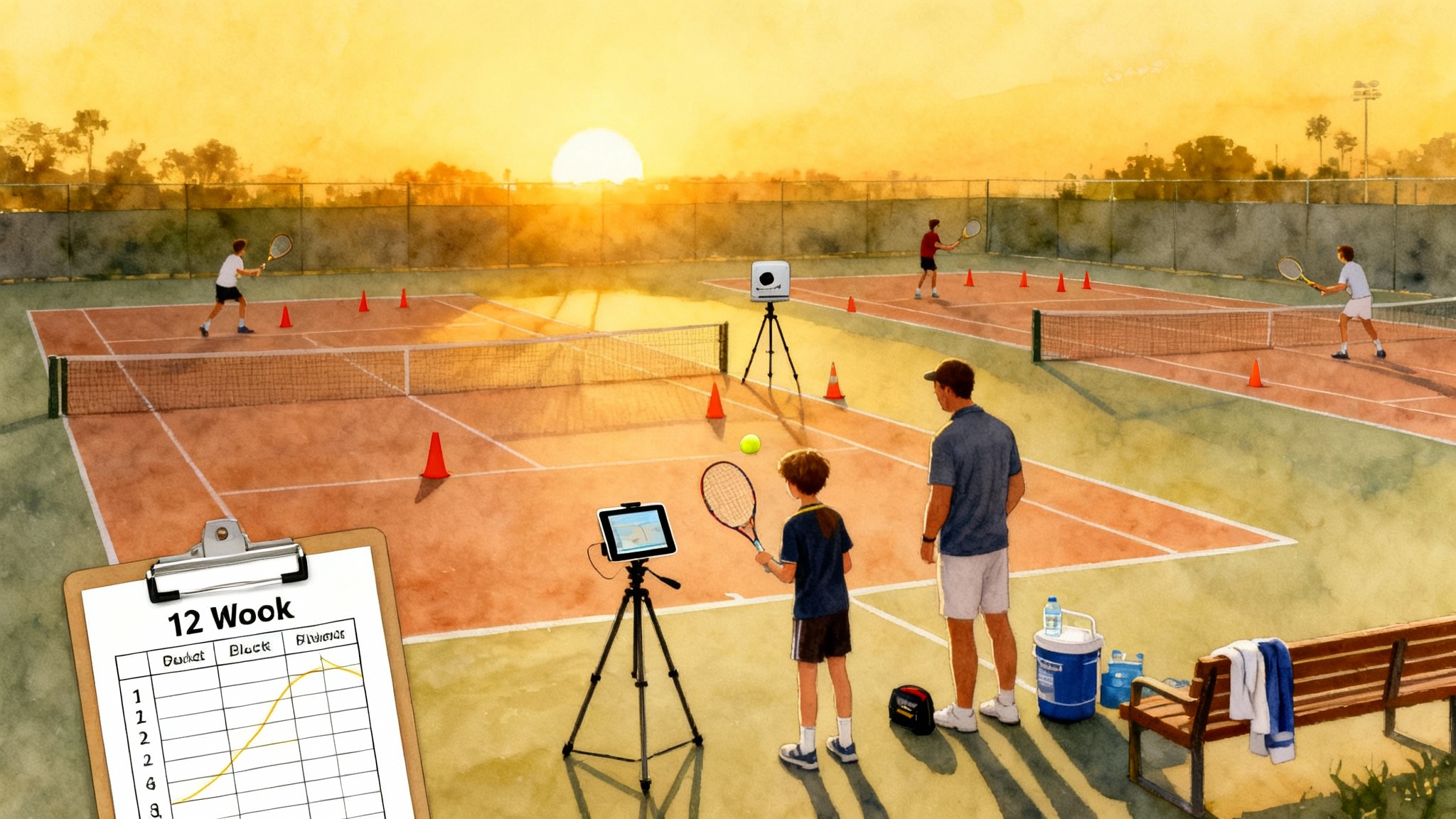
Solo ball-machine programs: three 20-minute blocks
If you have access to a club machine, you can build reliable patterns alone.
Block 1: cross-court control
- Settings: half-court oscillation to the deuce corner, 35 to 45 miles per hour, medium topspin, 3.5 second interval, medium height.
- Scoring: 30-ball sets. You need 20 or more to land past the service line cross-court. If you hit the net more than five times, lower your contact height and slow your swing.
Block 2: backhand cage to inside-out
- Settings: fixed feed to your ad-side backhand hip with moderate topspin, 40 miles per hour, 3 second interval.
- Task: three inside-out forehands in a row before one inside-in. If you miss an inside-in, restart the count at three.
Block 3: serve plus one rehearsal
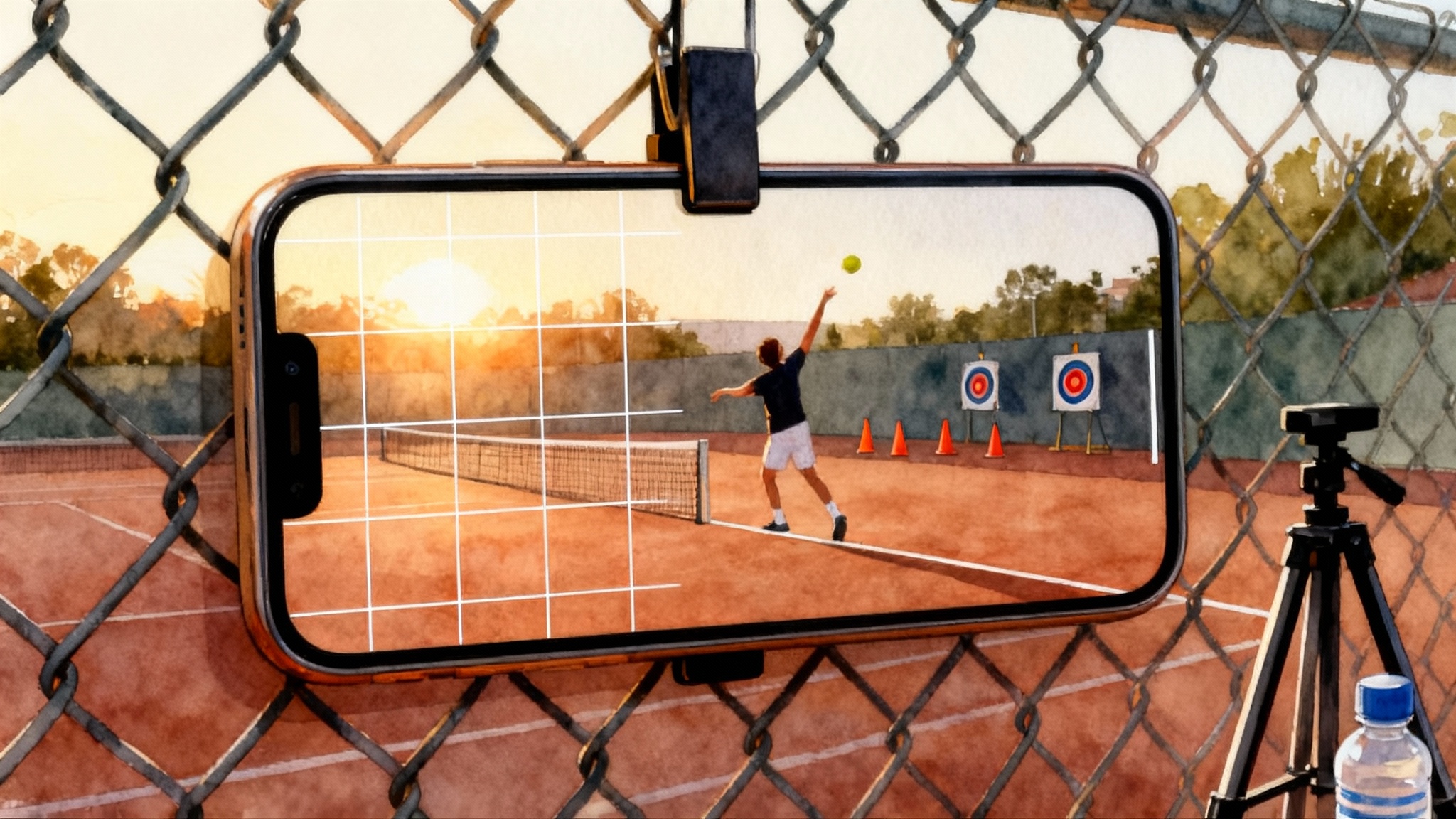
- Settings: not applicable to the machine. Serve ten balls wide on the deuce side with targets. After each serve, self-drop a ball at your predicted plus-one strike zone and hit to the opposite A target. Repeat on the ad side.
Weekly plans by age and stage
Use these templates as a starting point. Adjust volume to your fitness and schedule. Each session below is 90 minutes.
Under 10 and beginners
- Monday: cross-court control. Service-line cross-court rally to big targets. Parent feeds 15 minutes. Finish with traffic-light game.
- Wednesday: backhand cage. Two-in-a-row to backhand before any change. Finish with a short-court game where line changes only count if the ball lands past the service line.
- Saturday: serve plus one. Two-ball points with parent return feeds. Track how many plus ones land deep.
Ages 11 to 14 or improving adults
- Tuesday: cross-court control into safe change-of-direction. Two-shot cross-court rule, then change only on short floaters. Ball-machine block for depth.
- Thursday: inside-out forehand focus. No backhands round, then two-inside rule. Add recovery coin game.
- Sunday: match play with charting. Use the four-box system per game. Review patterns at changeovers.
High school, tournament juniors, and league adults
- Monday: live-ball pattern waves. Coach calls CC, BOH, IO, or S+1 before the feed. Rallies to seven. You must announce the pattern out loud before the point starts.
- Wednesday: serve plus one with location specificity. Wide deuce into open court, T serve ad into backhand cage. Ladder scoring; move up only after three consecutive deep plus ones.
- Friday: pressure testing. Ten-ball cross-court depth challenge, then safe change-of-direction with 60 percent success target. Finish with two sets of match play using the pocket chart.
Case study: how a 4:1 coaching model builds live-ball habits
Small coach-to-player ratios improve the amount of live-ball reps each player gets and allow fast feedback while the ball is still in flight. At the Gomez Tennis Academy 4:1 model, groups are capped at a four-to-one player to coach ratio, and training leans heavily on live-ball practice to turn patterns into habits. Here is how a 4:1 structure makes patterns stick.
- More touches per minute. With four players, you can run two cross-court lanes plus one rotation court. Players touch the ball every 10 to 15 seconds, enough density to automate cross-court control and backhand cage sequences.
- Micro-coaching on the fly. While two players rally cross-court, the coach gives a five-second cue to the pair off to the side such as “two insides, then recover.” This reinforces the inside-out pattern without stopping play.
- Constraints are easier to police. The coach can enforce the two-in-a-row rule or traffic-light calls without losing track.
- Pattern ladders for mixed levels. A stronger player can be assigned a harder ladder, for example two inside-outs before an inside-in, while a developing player works one and one on the next court. Both progress without waiting on the other.
A sample 30-minute 4:1 block
- Minutes 0 to 10: cross-court control to A targets. Every fourth ball must be hit higher than the shoulder to teach height-versus-depth control.
- Minutes 10 to 20: backhand cage with a change only on green lights. The coach stands near the sideline and acts as a live constraint by closing the line if the ball is not short and slow.
- Minutes 20 to 30: serve plus one rounds. Two players serve cross-court while the other two simulate returns. The plus one must land deep to score.
Bringing it together
Patterns are not scripts. They are rally maps that make good decisions easier and safer under stress. Give yourself big targets and simple rules like two cross-courts before any line change, green lights for direction changes, and a clear serve plus one plan. Use constraints to shape better choices without overthinking. Parents can feed in short doses that build reading and recovery. Solo work with a ball machine can be purposeful when you set height, speed, and intervals with the pattern in mind. Track a few key numbers so you know what to repeat next week.
You do not have to train like a pro to think like one. Pick one pattern for this week, one constraint, one cue, and one charting number. Win the week. The next week, add a second pattern. Your game will start to look less like chaos and more like a well-driven trip on familiar roads.