Tenerife Winter Tennis 2025–26 with Tenerife Tennis Academy
Chase winter sun the smart way. This climate-first guide explains Tenerife’s north–south microclimates, wind and elevation, the most reliable months, and how to mix Australian Open style hard courts at T3 with red clay at Chayofa.
 Tommy
Tommy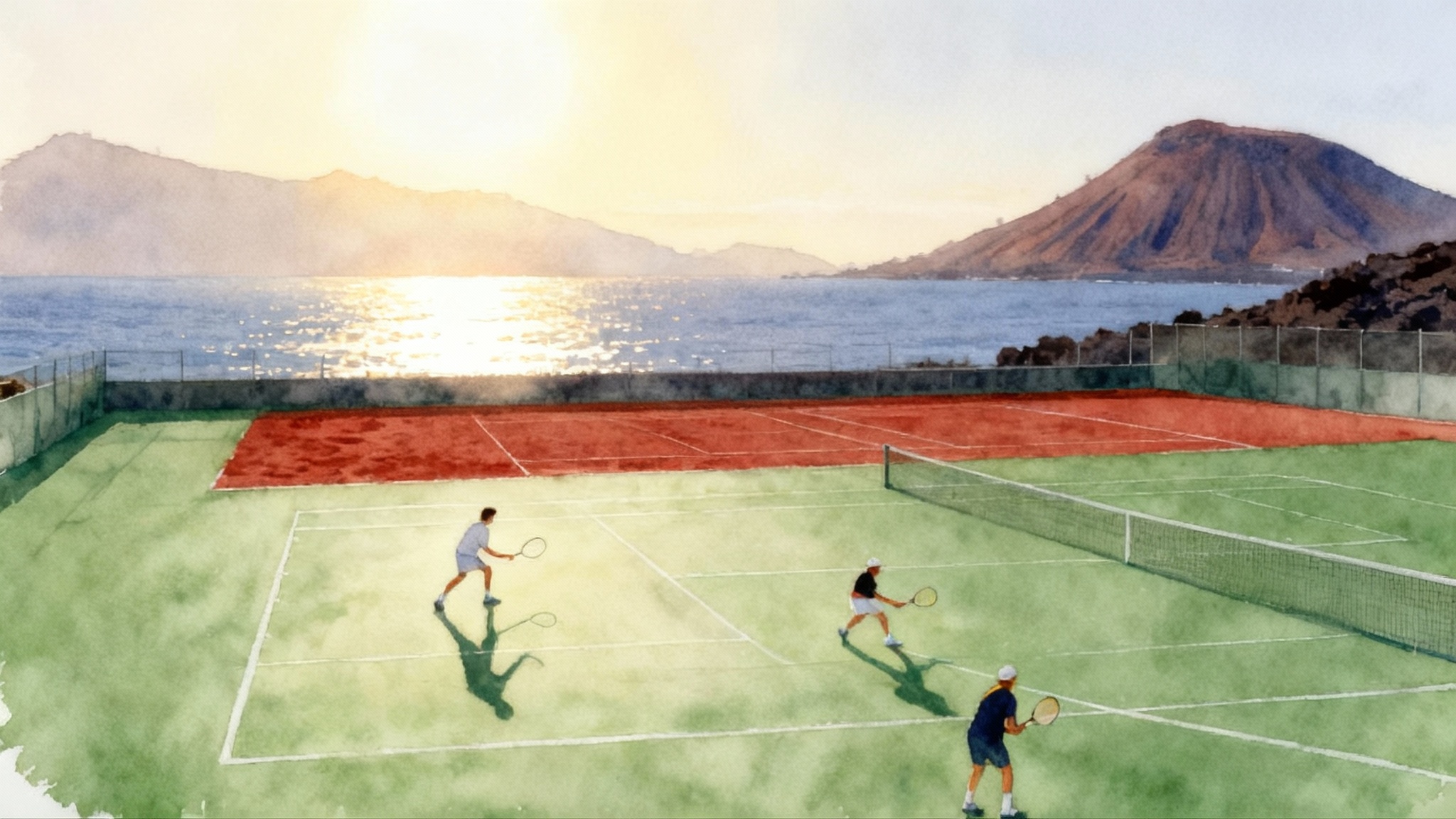
Why Tenerife is Europe’s year‑round sweet spot
If you want real winter practice without crossing an ocean or losing match sharpness to bad weather, Tenerife sits in a rare Goldilocks zone. The island is far enough south for reliable warmth yet moderated by ocean currents and trade winds. That mix gives tennis players something precious between December and April: outdoor volume with predictable surfaces, predictable light, and enough breeze to build decision making rather than wreck sessions.
Tenerife Tennis Academy operates two complementary bases in the sun‑favored south: Australian Open style GreenSet hard courts at Tenerife Top Training in La Caleta, known locally as T3, and three traditional European red clay courts at Chayofa. The pairing lets you sharpen on hard, then deepen patterns on clay inside a single week. For surface lineage, Melbourne has used GreenSet since 2020, so when you drill on T3’s GreenSet you are practicing on the same surface family as the Australian Open’s courts, as confirmed by the official AO GreenSet court surface.
For more on how microclimate can shape training destinations, compare Tenerife with Croatia’s island setups in our guide to Lošinj microclimate and Ljubicic Academy.
Microclimates explained for tennis brains
Tenerife is a small island with a big mountain in the middle. Mount Teide rises high enough to split airflow and create a rain shadow. Northeasterly trade winds hit the north face, climb, cool, and form cloud. The south and southwest, where T3 and Chayofa sit, are downwind and typically stay warmer and drier. It is the same island, but it behaves like two different training environments separated by a ridge.
For a player, that means a few practical outcomes:
- South vs north: the south coast is usually sunnier and a touch warmer at sea level. The north has more cloud days in winter, so it is a better choice for hiking in laurel forests but a riskier bet for a high‑volume tennis block. The tourism office’s concise north versus south contrast explainer matches what you feel on court from December through April.
- Wind: the trade wind typically comes from the northeast. Mornings are calmer, afternoons can build. On the south coast, many tennis hours land in a sweet window where the breeze is real enough to teach you to shape through contact and control your toss, but not so strong that your session turns into a survival drill.
- Elevation: a few hundred meters up can feel like a different season. Keep the bulk of hitting near sea level if your goal is volume and ball‑striking quality, then use altitude for hiking, recovery walks, and heat‑management days.
Think of Tenerife like a training lab: choose the south for reps and light, venture north for variety, and keep the mountain for cross‑training.
When the calendar is on your side
December through April is the reliability zone for tennis. Daytime highs on the south coast often sit in the low 20s Celsius, with long, bright spells and short showers. The island does get calima days when Sahara dust rides in, which can add haze. On those days, early sessions are best and sunglasses with good lenses become more than a fashion item. If you are scheduling a two or three week block, target mid January through late March for the best mix of daylight and mild breezes.
If you want even warmer winter insurance for a second stop, compare with our Dubai and Abu Dhabi winter tennis guide.
Practical checklist by month
- December: warm enough for full sessions mid‑day. Christmas and New Year weeks are busy, so pre‑book courts and coaching slots.
- January: the winter sweet spot. Calm mornings, fresh evenings. Great for adults and juniors building base fitness between events.
- February: still very reliable in the south, with excellent light for late‑afternoon match play. Family travel is popular around half‑term weeks, so secure lodging early.
- March: the transition month for clay prep. Keep volume on hard early in March, then shift emphasis to clay and heavier footwork patterns.
- April: slightly warmer, with more day‑to‑day variability. A good final tune‑up window before mainland clay tournaments.
The two‑surface advantage: hard at T3, clay at Chayofa
A single week in Tenerife can mimic a mini preseason. Here is how to structure it so sessions talk to each other.
- Hard court goals at T3: first‑step speed, serve and first strike, return depth, neutral ball quality under a mild crosswind. GreenSet gives a fair bounce with enough grip to reward decisive footwork and clean contact. It is ideal for fine‑tuning toss location and serve patterns without fighting cold air or damp balls.
- Red clay goals at Chayofa: depth and height control, defensive movement, point building that leans on repeatable patterns, plus transition work after short, higher bounces. Clay in winter is where you harden patience without losing aggression.
Sample week plan for adults
- Monday AM hard court: 90‑minute serve and plus‑one session. Focus on targets 1, 2, and body serve from both sides, then patterns that finish between the hash and the sideline.
- Monday PM gym and mobility: posterior chain and shoulder care. Keep total volume under 45 minutes.
- Tuesday AM clay: height over net and cross‑court depth ladders. Use cones at three depths to force decisions.
- Tuesday PM match play: best of three short sets on clay with no‑ad scoring to compress time and keep intensity high.
- Wednesday AM hard court: return depth blocks and third‑ball quality. Finish with 20 minutes of approach and volley on GreenSet to normalize faster movement.
- Wednesday PM recovery: ocean swim or contrast bath at the facility, plus a 40‑minute sunset walk along La Caleta promenade.
- Thursday AM clay: pattern day. For example, backhand cross, forehand inside‑in, recover; repeat under light fatigue.
- Thursday PM doubles: 90 minutes on hard with Australian formation and I‑formation reps to sharpen communication.
- Friday AM hard court: scoring drills. First to 11 on serve plus‑one, then breaker simulators.
- Saturday hiking add‑on: half day to Teide caldera trails or a coastal path. Keep it low intensity.
- Sunday reset: light hit on clay, 60 minutes of rhythm and serves, then depart.
Sample week plan for juniors
- Morning blocks: two hours on hard for footwork and contact windows, with 30 minutes of serve routine and between‑point habits.
- Afternoon blocks: 90 minutes on clay four days out of six to build rally tolerance and patience. Finish each with a short set to reward focus.
- Insert two match days: one on hard, one on clay. Keep debriefs short and actionable. One key shot to change next time, not ten.
- Fitness: three sessions of speed, strength, and mobility spread across the week, never on back‑to‑back evenings.
Sample week plan for families
- Parents: alternate mornings. One parent trains on hard for 90 minutes while the other enjoys free time with kids. Swap the next day.
- Kids: book a junior clinic or private hour on clay at a time that coincides with the parent’s adult session, then regroup for lunch.
- Shared afternoon: one social doubles slot on hard or clay, then a pool session or a short coastal walk.
Who this suits and why
- Competitive adults: you want volume under good light, with match play that feels like summer but strategy that reflects spring events. Tenerife’s south coast delivers that rhythm.
- Juniors 12–18: moving cleanly on two surfaces in winter is a skill differentiator by April. The island’s south gives you a controlled lab to earn that edge without cold joints or rainouts.
- Families: logistics are simple. Both venues sit near lodging, food, and short excursions that do not undermine recovery.
Match play options that add real value
- Set ladders: ask the academy to place you in a day ladder by level. Two timed sets against similar players beat a random open hit every time.
- Crossover days: if you drilled on hard in the morning, schedule clay sets late afternoon to test height management with a bit of breeze.
- Doubles nights: book one evening mini‑league across two courts. Keep pro sets to eight games to fit in three rounds.
If you are traveling with a group, the academy can assemble local opponents so you experience styles you will meet on the mainland in spring. Think heavy forehand plus kick serve, flat backhand blockers, and lefties who live on the ad alley.
Wind, elevation, and gear: set up to win
- Timing: book morning drilling on hard when winds are lightest, then play sets late afternoon when you want decision pressure.
- Toss and contact: when the breeze rises, lower your toss a touch and commit to your front shoulder so the racquet stays on plane. Treat it as a skill, not an annoyance.
- Strings and balls: in warmer, drier air, many players drop string tension 1–2 kilograms on hard for feel, then raise it back on clay for control. Bring a fresh set of clay‑specific shoes with a herringbone tread.
- Hydration and sun: start hydrating at breakfast, not when you step on court. Pack a cap, sunscreen, and a light long sleeve for mid‑day sessions.
Recovery that actually speeds improvement
T3’s recovery basics are right where you finish hitting: ice baths, sauna, and two gyms for strength and mobility. Use a simple rotation that pairs with your court plan:
- Hard day pairings: finish with 10 minutes of contrast water followed by 15 minutes of band work for shoulders and glutes.
- Clay day pairings: add 12 minutes of easy bike or walk to clear the legs, then low‑intensity mobility for hips and ankles.
- Weekly massage: place it after your heaviest clay day, not before a match‑play block.
Hiking doubles as recovery if you keep intensity low. The Teide caldera has broad, even trails with big views and dry air that feels like a reset. Save summit ambitions for an off week and treat this block as active recovery, not a fitness badge.
Practical travel and lodging tips
- Airports: fly into Tenerife South. La Caleta and Costa Adeje are around 20–30 minutes by car. Chayofa sits inland above Los Cristianos at a similar distance.
- Car hire: book a small hatchback with room for two racquet bags. Parking is straightforward near both venues.
- Lodging: many players like to base in La Caleta for the walkability to T3 and easy access to coastal paths. If you prefer to stay closer to Chayofa, look near Los Cristianos or the hills above for quieter nights. The academy can coordinate hotel partners near both sites if you want one invoice and simple transport.
- Food: keep lunches simple and repeatable. Grilled fish, rice, and salad near the sea between sessions works better than a heavy buffet if you plan to hit again at four.
- Court booking: December and February are busy. Reserve coaching, fitness, and court time early, especially if you want a daily hard‑then‑clay sequence.
For program logistics and contacts, see the Tenerife Tennis Academy profile.
How to roll Tenerife into a spring Spain clay block
Use Tenerife to arrive on the mainland with a head start. Here is a three week template that works for many players.
- Week 1 in Tenerife: emphasize GreenSet at T3 for serve plus‑one and return depth. Two sessions on clay at Chayofa to introduce height control and movement.
- Week 2 in Tenerife: flip the ratio. Four clay sessions, two hard sessions. Start point‑building sets on clay with specific patterns and a few lefty‑specific returns.
- Travel day: fly from Tenerife South to either Madrid or Barcelona. Keep it a true rest day. A short mobility session on arrival is enough.
- Week 3 on the mainland: full clay immersion at a club near your planned competition schedule. Drop string tension slightly if temperatures are cooler than Tenerife. Insert two match days with opponents who mirror your likely draw levels.
Transition rules that make this stick:
- Keep the serve as the anchor. Maintain your toss window from GreenSet to clay so your patterns transfer.
- Do not abandon hard court footwork. The quick first step you grooved at T3 helps you earn short balls on clay.
- Respect recovery. Mainland nights may be cooler. Keep the same sleep and nutrition cadence you built on the island.
Example training blocks for different goals
- Beginners to intermediates: two weeks in January with four coaching days per week, hard in the morning and clay in the afternoon every other day. One social doubles evening and one hiking day each week. Goal: confident serve routine and consistent rally length to five balls.
- Tournament juniors: ten day block in February. Seven hitting days, five on clay. Two competitive set days with local opponents. Two fitness lifts and three mobility blocks. Goal: pattern clarity, better red zone decisions, and match toughness.
- Adults prepping for club season: one week in March. Three mornings of hard on serve patterns, three afternoons of clay on point length and height. Two doubles evenings. Goal: cleaner first strike and calm defense on slower courts.
What about weather outliers
Tenerife’s south coast is steady in winter, but good planning beats good luck. Keep two flex slots in your booking to shift sessions earlier or later when a breeze picks up, and pack a thin windbreaker for late‑afternoon walks. If a calima day appears, push heavy clay movement to the next morning, move a serve session indoors to the gym with medicine ball work, and keep the racquet in your hand for 45 minutes of shadow swings.
Booking with confidence
Winter tennis trips can fail on the small stuff: a court that plays like an ice rink, a schedule that ignores wind, a hotel that adds 40 minutes of driving each way. The south coast pairing of T3 and Chayofa solves the big variables. You get the surface you need, the light you want, and enough breeze to teach you how to win points, not just strike pretty balls. Build your plan around those constants, and the island does the rest. Start by confirming dates on the Tenerife Tennis Academy profile, then map your week with the hard to clay progression that fits your goals.
The takeaway
Tenerife rewards players who plan like coaches. Put climate first. Drill on GreenSet to sharpen weapons. Shift to red clay to harden patterns. Stack smart recovery and a little hiking so your body arrives in spring feeling both trained and fresh. Done right, a December to April block on the island is not just a pleasant escape. It is a competitive advantage you will feel on your first mainland draw.