Lošinj Tennis 2025–26: Microclimate and Ljubicic Academy
Plan a spring or autumn training block on Croatia’s island of Lošinj. Sea-moderated temperatures and steady winds keep clay playable. Learn the best months, Rijeka and Pula ferry routes, sample week plans, and the Ljubicic Academy approach.
 Tommy
Tommy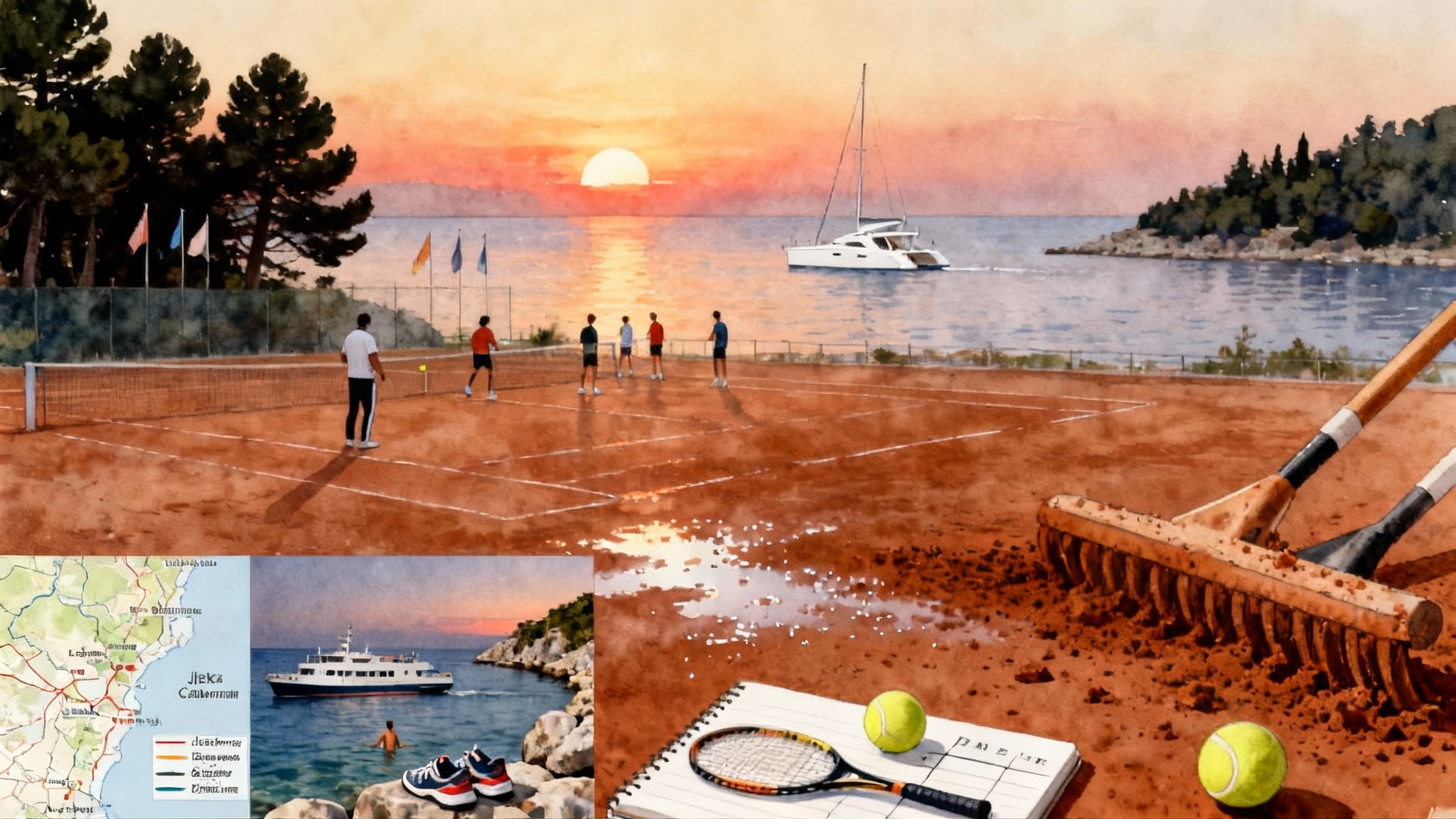
Why Lošinj stays playable when Europe is wet
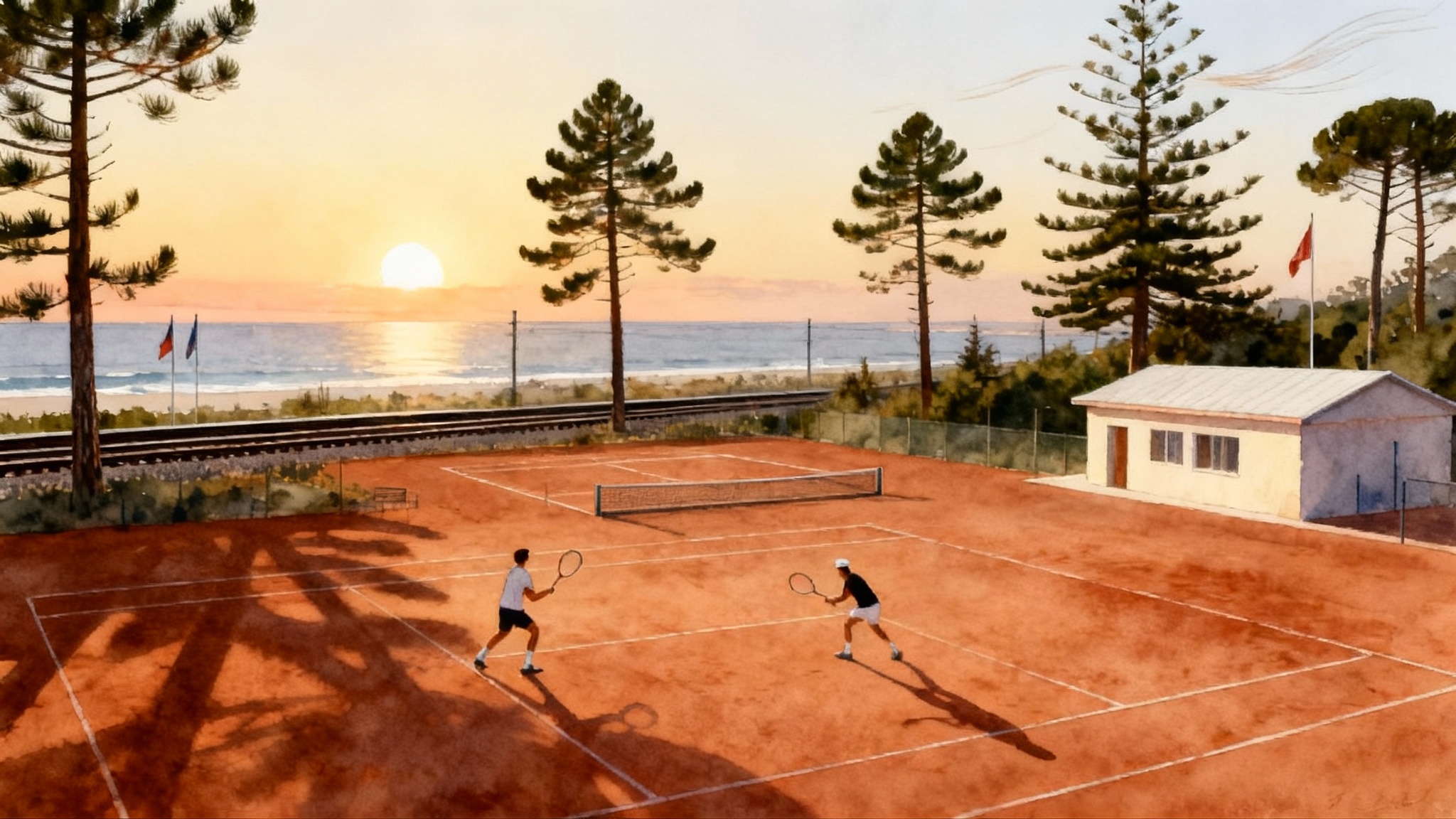
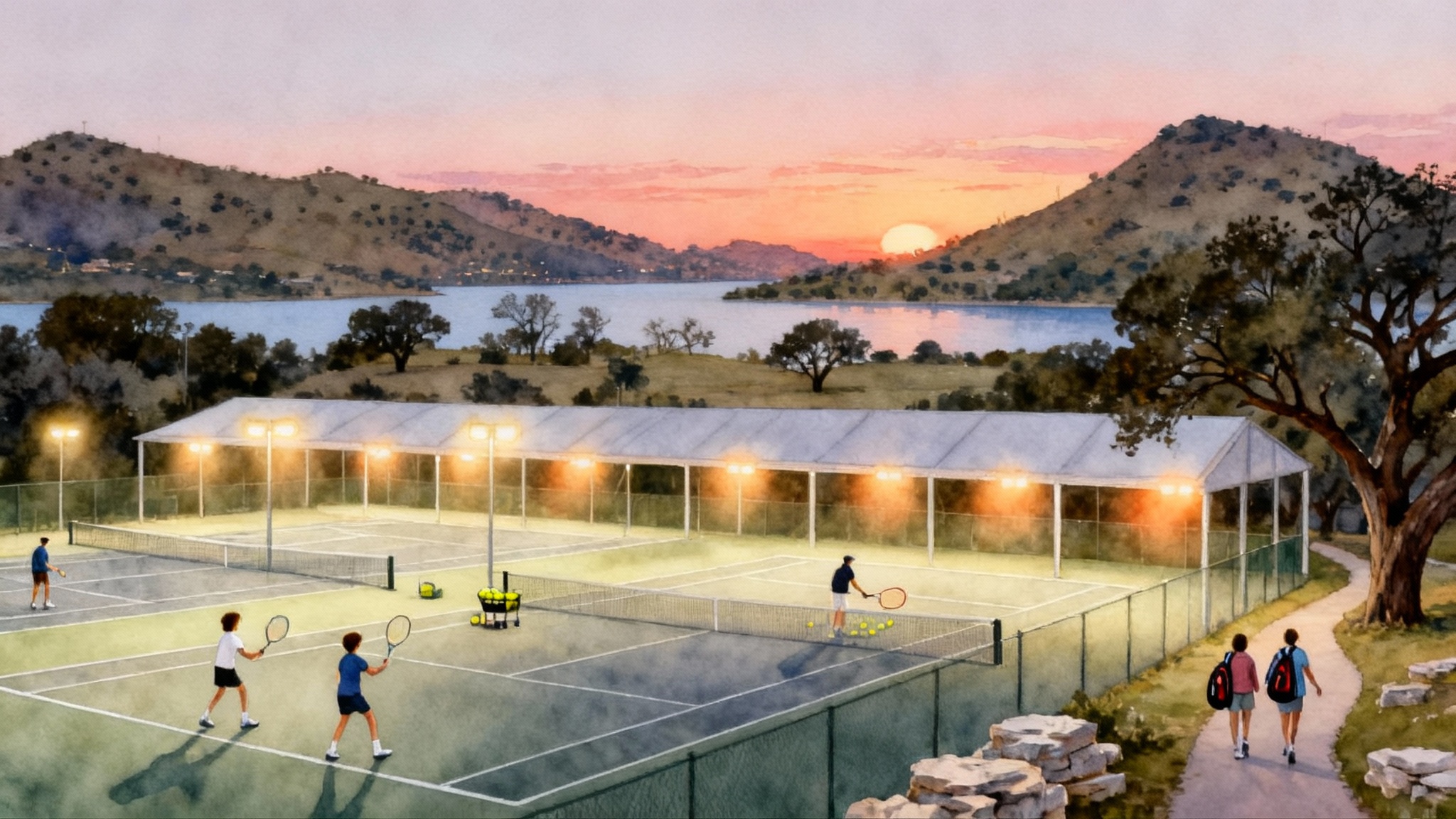
If you want shoulder-season court time that feels like a cheat code, point your compass toward Lošinj, a pine-clad island in Croatia’s Kvarner Gulf. The secret is physics as much as geography. The Adriatic behaves like a giant heat battery. Water warms and cools more slowly than land, so the sea acts like a thermostat, cooling the island in summer and gently warming it in spring and autumn. That buffering narrows temperature swings, which is exactly what clay wants. When the thermometer avoids extremes, crews can keep a consistent top layer, and players get a truer, more predictable bounce.
Wind completes the equation. The island regularly hosts a trio of helpful breezes. The maestral is the friendly afternoon northwest wind that arrives like a clock. The bura is a dry, gusty north to northeast visitor that clears the sky and strips moisture from the top dressing. The jugo is a warmer south wind that brings humidity and the occasional squall, but even jugo days tend to come with airflow that accelerates dry time once showers pass. Think of Lošinj as a clay court with its own hair dryer built into the weather.
On the mainland, a rainy week in March can shut down outdoor clay for days. On Lošinj, the combination of sea-moderated temperatures, fast drainage, and regular winds often turns a morning delay into an afternoon hit.
For a complementary shoulder-season option on the mainland, see our Lisbon to Cascais shoulder-season base. If you need true winter sun, compare with our Tenerife winter-sun tennis base.
The best months and what they feel like
Target March through June, then September through November. That window gives you cool mornings for high-quality movement sessions and mild afternoons for point play.
- March: Cool starts, breathable afternoons. Expect jackets at 08:00 and T-shirts by midday. Great for technical rebuilds and aerobic base work.
- April: Reliable tennis weather most weeks, with some passing showers. Clay stays lively, which rewards footwork and early preparation.
- May: Near-ideal tennis climate, long daylight, and drying breezes. Plan more live ball and set play.
- June: Warmer but still moderated by the sea. Mornings are golden. Shift gym work to late afternoon.
- September: Summer warmth without extremes. Courts hold moisture nicely for grippy movement.
- October: The sweet spot for adult training weeks. Light layers in the morning, match play after lunch.
- November: The wettest of this group, yet still valuable if you build rain plans and stay flexible. Book accommodations with easy access to courts and gym so you can pivot to video, mobility, and tactical sessions if showers linger.
A useful rule for packing: plan for a five degree Celsius swing between morning and afternoon, and bring two pairs of clay shoes. Clay-friendly socks and a lightweight wind shell will pay for themselves on breezy days.
Where to train: Ljubicic Tennis Academy
Your base on the island is the boutique, player-first academy in Veli Lošinj. Read our Ljubicic Tennis Academy profile for facilities and programs, and check the Ljubicic Tennis Academy official site for current camp dates. The tone is high touch and purposeful rather than crowded or performative. Expect small working groups, individualized progressions, and coaches who remember what you worked on yesterday.
What that looks like in practice:
- Assessment-led planning: Day one is not a generic drill carousel. Coaches map ball height, strike zone, and contact quality, then choose one or two keystones to train across the week, such as earlier unit turn or a more stable outside leg on the forehand.
- Clay-specific movement: Sessions emphasize repeatable patterns that decide points on clay, from controlled slides into a neutral stance to the cross-over retreat when you are jammed on the backhand.
- Strategy built from patterns: Rather than lecture on smart tennis, coaches give you three pattern families that fit your game style, then rehearse first-ball decisions until they become automatic under pressure.
- Island recovery: Short sea dips, easy pine-forest walks, and consistent sleep. Recovery is the counterweight that lets you stack quality work across a full block.
The facilities focus on clay, with supporting spaces for strength, mobility, and video review. Accommodations range from sport-forward hotels near Veli Lošinj to apartments within cycling distance of the courts.
Travel logistics from Rijeka and Pula
From the United States, fly to a major European hub, then connect to Zagreb, Rijeka, or Pula. The last leg is straightforward.
- Catamaran from Rijeka: A daily fast passenger line connects Rijeka with Mali Lošinj. Check the Jadrolinija catamaran 9308 schedule. Travel light if you choose this option, since it is foot passengers only.
- By car via Cres: If you rent a car in Rijeka or Pula, drive to the Brestova or Valbiska ferry, cross to Cres, then continue to Lošinj over the small bridge at Osor. The Brestova to Porozina crossing takes about 20 minutes, and the scenic drive across Cres and into Lošinj takes roughly two hours in normal conditions.
- From Zadar: There is a longer ferry link that can work if you are exploring northern Dalmatia first. It is slower but scenic, and it drops you close to base.
Practical tip: set your arrival to align with afternoon training on day one. Morning travel, a light lunch, a 90-minute loosening hit, dinner, and early sleep is a recipe that works.
Sample week plans that actually build skill
Below are two practical, shoulder-season templates. Adjust volume based on age, training age, and current match load.
Junior performance week, ages 12 to 17
Goal: raise floor-level performance by cleaning up contact, sharpening patterns, and improving repeatable movement on clay.
-
Day 1, Monday
- 08:00 Mobility and rhythm run along the pine path, 20 minutes
- 09:00 Court 1: Assessment and contact windows, 90 minutes
- 11:00 Snack and video notes, 20 minutes
- 12:00 Lunch
- 15:30 Court 2: Forehand outside-leg load, neutral recovery, 90 minutes
- 17:30 Sea dip, 5 minutes, then relaxed walk, 20 minutes
-
Day 2, Tuesday
- 08:00 Warm up, skipping rope and footwork ladders, 15 minutes
- 08:30 Court 1: Serve foundations, 60 minutes; return short hop work, 30 minutes
- 11:00 Strength: total-body basics, 45 minutes, focus on tempo
- 15:30 Court 2: Pattern family 1, serve plus one to backhand corner, 90 minutes
- 17:30 Mobility and breath work, 20 minutes
-
Day 3, Wednesday
- 09:00 Court 1: Point-start drills, 90 minutes
- 12:30 Lunch and nap
- 16:00 Match play, two short sets, charting first four shots
-
Day 4, Thursday
- 08:30 Court 1: Backhand contact and height control, 90 minutes
- 11:00 Speed session: short hill sprints or mini bounds, 20 minutes
- 16:00 Court 2: Pattern family 2, rally re-direction off neutral balls, 90 minutes
-
Day 5, Friday
- 08:30 Serve and second-ball tolerance, 60 minutes
- 10:00 Video review and goal check, 30 minutes
- 16:00 Match play, two short sets with constraints, such as backhand re-direct allowed only off high balls
-
Day 6, Saturday
- 09:00 Team games, approach and volley competitions, 90 minutes
- Afternoon free, optional kayak or hike
-
Day 7, Sunday
- Travel or rest, ten-minute mobility before flight or drive
Key adjustments: on windy days, emphasize height control and body positioning into the wind. Have juniors call out contact height and intended target to force focus.
Adult development week
Goal: consolidate one or two technical upgrades and translate them into reliable patterns, without overload.
-
Day 1, Monday
- 10:00 Arrival, light lunch
- 15:30 Court: assessment and feel, 75 minutes
- 17:00 Mobility and recovery walk, 20 minutes
-
Day 2, Tuesday
- 08:30 Court: forehand or backhand keystone, 75 minutes
- 10:00 Coffee and notes, 20 minutes
- 16:00 Court: serve locations, plus first pattern, 60 minutes
-
Day 3, Wednesday
- 08:30 Court: transition game, approach off shorter balls, 60 minutes
- 10:00 Gym: strength circuit, 40 minutes, low fatigue
- 16:30 Doubles patterns or coached points, 60 minutes
-
Day 4, Thursday
- 08:30 Court: second technical point, 60 minutes
- 10:00 Sea swim or contrast shower, then nap
- 16:00 Set play, charting unforced errors by height and direction
-
Day 5, Friday
- 09:00 Court: serve plus one, 45 minutes; returns, 30 minutes
- 16:00 Match play with constraints, 60 minutes
-
Day 6, Saturday
- 09:00 Court games, 60 minutes, then free afternoon
-
Day 7, Sunday
- Check out, short walk, travel
The island setting helps adults keep quality high because there are fewer distractions and shorter commutes. That translates into better focus during the golden ninety minutes each morning when your brain learns fastest.
Recovery that multiplies your training
The island gives you simple, proven recovery levers.
- The pine canopy filters strong sun while giving a cool, resin-scented walking route for ten-minute cooldowns.
- Short sea dips deliver a gentle hydrostatic squeeze that calms the legs. Think five minutes in, dry off in the sun, then a warm shower.
- Sleep hygiene is easy when your room is quiet and meal timing is consistent. Aim for seven to nine hours, lights down at the same time nightly.
- Food is close to the source. Grilled fish, olive oil, vegetables, and fruit form a ready-made athlete’s table. Keep breakfast balanced rather than sweet so you do not spike and crash before your 09:00 hit.
Budgeting and booking windows
Shoulder season is usually kinder to the wallet. Flights into Rijeka or Pula tend to price lower than peak July and August dates. Hotels on Lošinj often run spring and autumn sport offers. Book the academy week first, then layer travel on top. If you are pairing a junior and an adult week back to back, try late May into early June, or late September into early October. You will straddle the best weather with the lightest crowds.
Two cost savers that do not hurt performance:
- Share a rental car with another family if you plan to explore Cres on the academy rest day.
- Bring your own balls for the first two sessions, then buy locally once you calibrate the felt and pressure for island humidity.
Weather-proofing your clay block
The microclimate helps, but good plans still hedge risk.
- Build a rain plan: a video session on ball height and spacing, plus a mobility circuit you can do in the gym. Keep rackets and shoes dry so you can resume as soon as the wind does its work.
- Pack for wind: a snug hat, low-profile sunglasses, and one extra towel. On gusty bura days, aim crosscourt more often and respect height over the net.
- Adjust string tension: when it is cooler or breezier, consider dropping two to four pounds of tension (about one to two kilograms) for a heavier, more forgiving ball.
- Choose the right shoes: two pairs of clay-specific shoes rotated daily will keep the outsole pattern from clogging, which improves braking and sliding control.
A two-week progression that compounds gains
If you have the time, a fourteen-day block on Lošinj pays off. Here is a simple template.
-
Week 1, Foundation
- Morning: one keystone technical change, such as earlier unit turn or firmer contact in front on the backhand.
- Afternoon: serve locations and the first pattern family that matches your game identity, for example heavy crosscourt forehand to open the line.
- Gym: two total-body sessions with tempos that protect tissue quality.
- Recovery: nightly walks under the pines, five-minute sea dips on warm days.
-
Week 2, Translation
- Morning: point-start drills where every rep begins with a specific serve or return location and a first-ball commitment.
- Afternoon: structured match play with charting. Focus on the first four shots in the rally. Keep the tally to make pattern choices visible.
- Gym: one strength session, one mobility-only session.
- Recovery: hold sleep and meal timing steady. Resist the temptation to add more.
Frequently asked practical questions
- Is November too wet to bother? It can be the rainiest month, but the island’s airflow and drainage still deliver usable windows most weeks. Build flexible schedules and prioritize mornings when the forecast looks unstable.
- Which balls play best? Start with a slightly heavier felt. If day one feels fluffy, buy locally for days two and three.
- Can I mix junior and adult training in one trip? Yes. Book a junior performance week and an adult development week that overlap. Coordinate check-in and check-out so the family lands together and leaves together.
- What if the catamaran is canceled due to wind? This happens a few days a year. Watch the operator’s notices and keep the car route via Cres as a backup.
The balanced block that keeps paying you back
The reason Lošinj works in spring and autumn is simple. The environment helps you do more smart work and waste less time. The sea keeps temperatures in the training sweet spot. The prevailing winds turn showers into short delays rather than full-day write offs. The island scale keeps logistics light, which keeps your attention on the next ball. Pair that with a coaching team that sets clear goals and measures progress, and you get a block that changes your game rather than just filling your calendar. Book the week, pack the wind shell and two pairs of clay shoes, and let the island’s microclimate do what it does best: make good tennis possible, day after day.