Lošinj Croatia: Shoulder-Season Clay with Ljubicic Academy
 Tommy
Tommy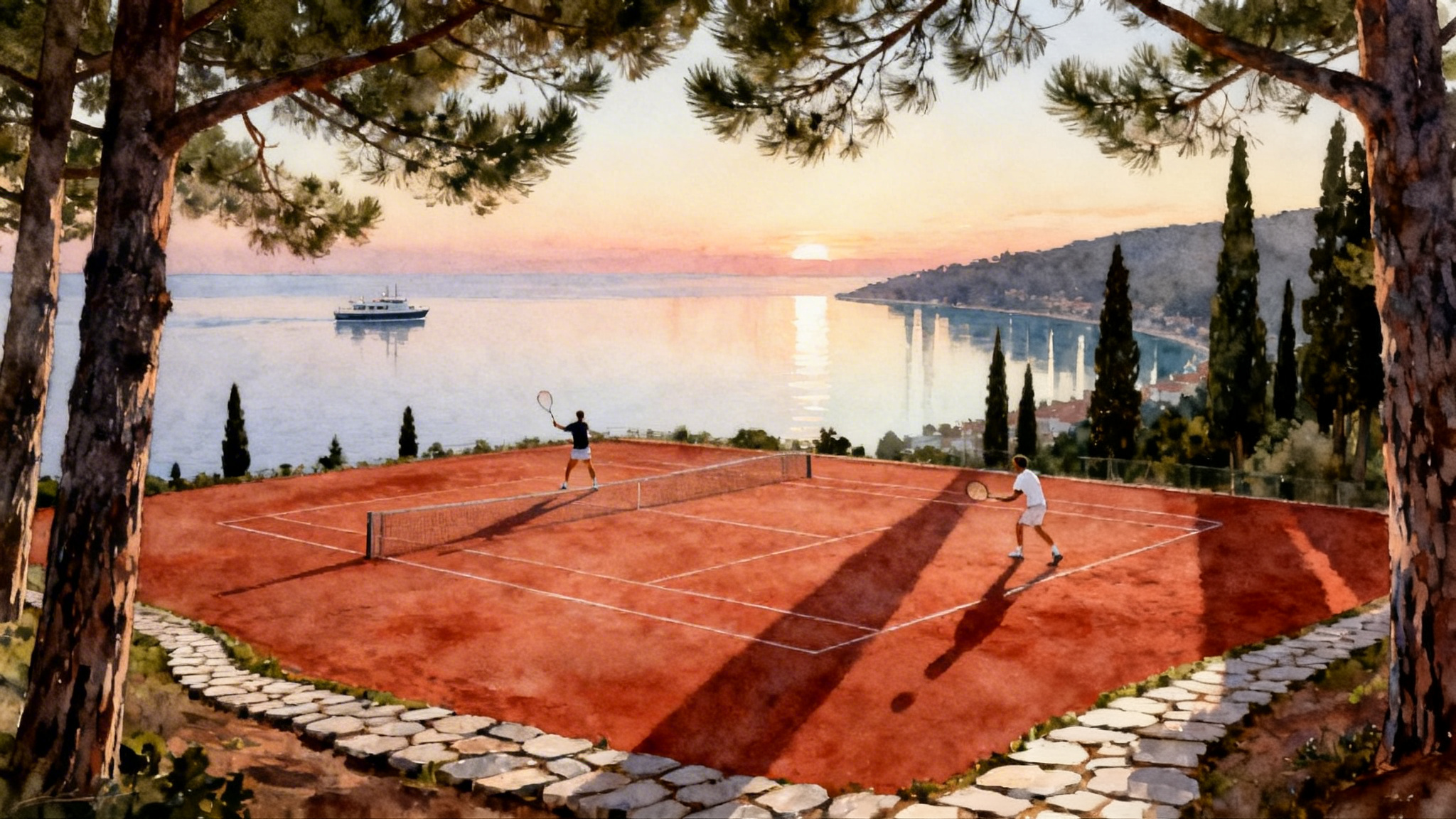
Why Lošinj is a shoulder-season sweet spot
Pull up a map of the upper Adriatic and you will see why Lošinj flies under the summer-rush radar. The island sits south of Istria, screened by Cres and hugged by warm, relatively shallow seas. Spring and autumn arrive earlier and linger longer than on the mainland. Typical daytime highs reach the mid 60s Fahrenheit in April and the low 70s by May, then settle back into the high 60s and low 70s in September and the mid 60s in October. Showers roll through, but quick-draining clay and steady breezes mean courts are often dry again by the afternoon. In other words, you can grind on clay in comfort while most of Europe is still debating layers.
The other gift of Lošinj is space. Pine forests muffle sound, paths braid the coastline, and even in April, May, September, and October you can jog on seaside promenades or drop into the water for a salty reset without weaving around umbrellas. That matters for training outcomes. Athletes recover better when logistics are simple and environments are quiet. On Lošinj, the commute is often a five minute walk under shade.
The anchor: Ljubicic Tennis Academy
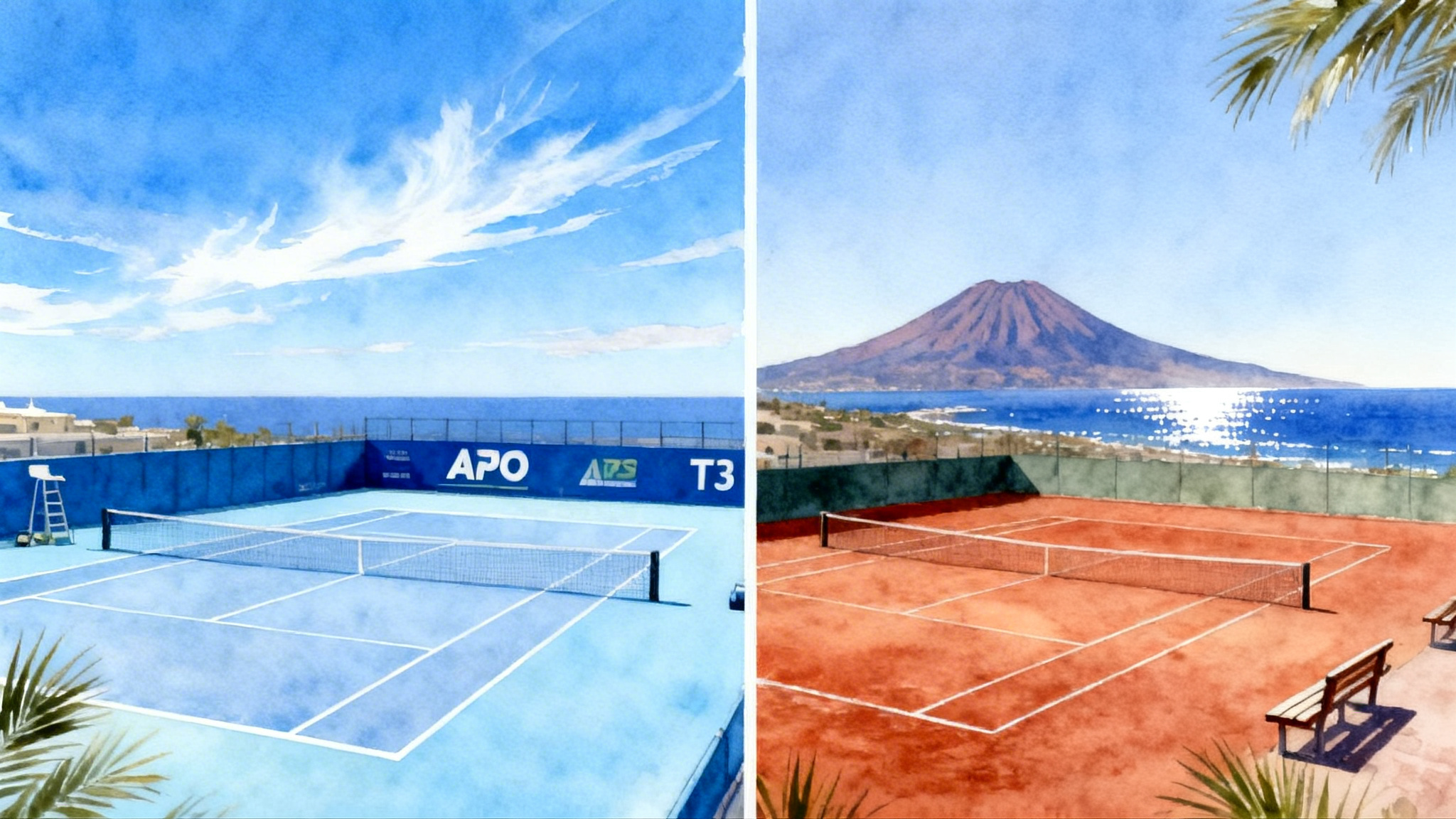
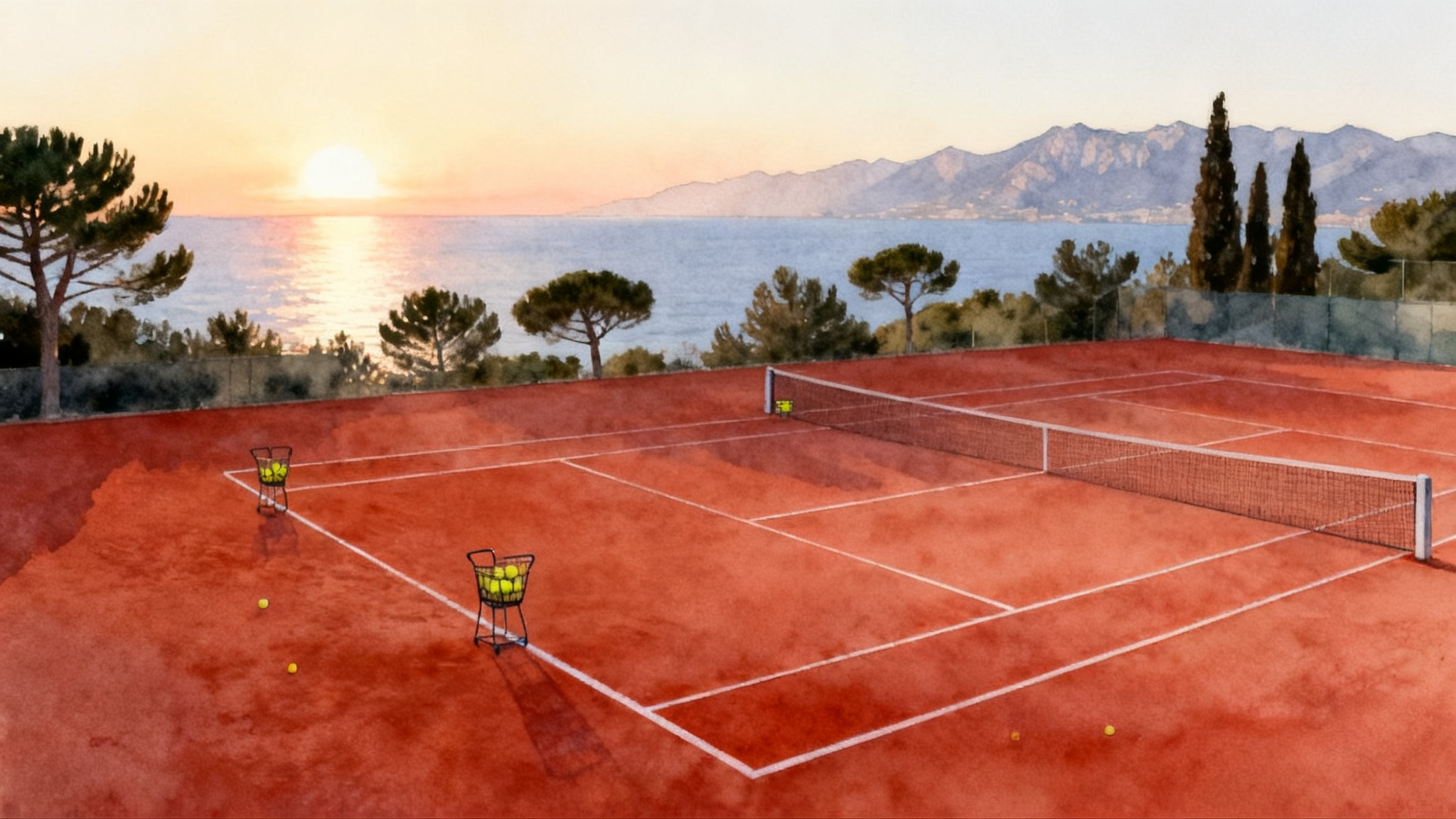
Ivan Ljubicic’s academy has made Lošinj a focused training base rather than a holiday afterthought. The setup is boutique by design: small groups on court, a coaching staff that teaches rather than entertains, and surfaces that match what competitive players need between April and June and again in September and October. The facility counts 9 clay courts and 4 hard courts, so finding repetitions on your preferred surface is rarely a problem in shoulder season. The clay plays true, with consistent bounce and the right grip underfoot for sliding mechanics. For a deeper look at programs and day flow, see our in-house Ljubicic Tennis Academy profile.
Who thrives here
- Juniors on a pre-summer clay block who need rhythm and confidence before June tournaments.
- Adult competitors who want to retool after a United States hard-court stretch and convert their movement and point construction to clay. Pair this with our Tennis footwork that wins plan for carryover.
- College players making a surface transition and building aerobic base without training in heat extremes.
How it compares to Italy and the French Riviera
- Italy’s northeast coast and much of inland northern Italy can be wetter and cooler in April, with club calendars crowded by regional events. Courts are abundant, but prime training slots go fast and rain delays can stack. Lošinj’s island microclimate and capacity make it easier to secure daily clay windows and keep plans intact.
- The French Riviera’s climate is broadly similar in spring and fall, but demand spikes around major events and holiday periods. Courts cost more, accommodation is pricier, and traffic can erode recovery time. If you are weighing options, read our Riviera clay corridor guide for a clear comparison.
The takeaway
If you value predictable surface access, shorter walks, and calmer surroundings, Lošinj is engineered for training first and sightseeing second. That balance is rare on the Mediterranean.
Recovery that actually works
Recovery on Lošinj is not a spa brochure. It is practical and close. Finish a morning block, then:
- Sea swim in coves where water warms into the low to mid 60s Fahrenheit by late spring and early autumn. Cold immersion is free, and the short stroll back keeps you loose.
- Pine-forest runs on soft gravel promenades that trace the shore for miles. Shade plus a light onshore breeze keeps heart rates honest.
- Mobility sessions on seaside decks. The scent of Aleppo pines is a bonus, not a distraction.
If you prefer a structured reset, the academy’s partner hotel offers multiple pools, a proper gym, and a wellness center with massage. The point is not indulgence. It is building a repeatable day that lets you hit quality balls again tomorrow.
Practical travel: how to get there
For most travelers, the easiest approach is to fly into Pula, Rijeka, or Zadar, then connect by catamaran or bus and shuttle to Mali Lošinj. The island also has a small airport for private and seasonal operations, but scheduled international flights are limited or nonexistent in shoulder season.
- Pula Airport: about 2.5 to 3.5 hours to Lošinj with road plus ferry or direct catamaran on select days.
- Rijeka Airport: bus or taxi to Rijeka, then the daily catamaran to Mali Lošinj. Total time roughly 3.5 to 4.5 hours door to door depending on connections.
- Zadar Airport: seasonal catamaran routes via the islands or road plus ferry, usually 4 to 5 hours depending on the day.
Catamaran capacity is limited, bikes and pets may have restrictions, and luggage allowances are smaller than you may expect. In peak summer, boats sell out days ahead. In spring and autumn they still fill before weekends. Check the Mali Lošinj Tourist Board’s concise planning page at Arrival logistics and contacts.
Local transfers are simple. The academy can arrange a shuttle from Mali Lošinj harbor to your lodging and courts. Taxis are available, but most accommodations and the courts are walkable.
Where to stay: three tiers that fit most players
- Good: family-run apartments and guesthouses in Veli Lošinj or Mali Lošinj. Expect a kitchenette, balcony, and a quiet street. The win here is flexibility for food and laundry.
- Better: mid-range hotels near Sunčana Uvala or Veli Lošinj, including options with fitness rooms, indoor and outdoor pools, and direct access to promenades. Breakfast buffets save time before a 9 a.m. warmup.
- Best: premium properties in Čikat or wellness-focused hotels near the courts. If you prioritize sleep quality and recovery facilities, this tier returns its cost in the second half of the week.
Tip: choose an address within a 10 to 15 minute walk of the academy. The cumulative time you save walking instead of driving or waiting for a shuttle turns into 30 to 45 minutes of extra rest per day.
A 7-day clay-first training itinerary
This template fits juniors, adult competitors, and parent-players traveling together. Adjust intensity with your coach.
-
Day 1, Sunday arrival
- Afternoon: light mobility, 20 minute promenade jog, 10 minute sea dip.
- Evening: racquet check and stringing plan. Agree a tension strategy for cooler mornings versus warmer afternoons.
-
Day 2, Monday
- 45 to 60 minutes gym prep focusing on hips and ankles.
- 90 minutes on clay: neutral rally tolerance and depth windows, 2-ball patterns off return and second-serve plays.
- Afternoon 90 minutes: cross-court plus middle transition, finish with 20 minute tie-break set play.
- Recovery: contrast shower and calves-hips mobility.
-
Day 3, Tuesday
- 45 minutes warmup and med-ball sequence.
- 90 minutes on clay: forehand and backhand shape work, inside-out footwork, short forehand conversion.
- Afternoon 90 minutes: serve plus one, heavy to light ball progression, 30 minutes of patterns under scoreboard pressure.
- Recovery: easy 2 to 3 kilometer pine-forest jog, sea dip.
-
Day 4, Wednesday
- 45 minutes activation only.
- 90 minutes on clay: receive and neutralize against a bigger ball, counter-attack lanes.
- Afternoon off for family excursion or massage.
-
Day 5, Thursday
- 60 minutes gym: trunk rotation and decel.
- 90 minutes on clay: defensive to neutral resets, depth windows again, add drop-shot and short-angle layers.
- Afternoon 90 minutes: point constructions from 15-30 and 30-15 starts, then six games of live return games.
-
Day 6, Friday
- 45 minutes warmup and serve groove work.
- 90 minutes: match-play sets with video capture if available.
- Afternoon 60 to 90 minutes: targeted technical block based on morning findings.
-
Day 7, Saturday
- 30 minutes light activation.
- 90 minutes test: laddered drills for depth, height, and accuracy with score targets. Finish with a super tie-break.
- Afternoon off for hike or boat trip.
Match-play and nearby clubs
The island’s club scene is active year round. The Lošinj‑Jadranka Tennis Club operates courts around Sunčana Uvala, Čikat, and Veli Lošinj and often welcomes visiting players for friendly sets. The academy can organize sparring partners or arrange match-play with local juniors and adults. On nearby Cres, additional clay courts offer a change of scenery without burning a full day. Plan on paying a modest court fee plus new balls and arranging transport if you leave the immediate area. The advantage in shoulder season is simple: court times are available and evenings are calm enough for focused set play under lights.
Estimated budgets for a 7-day block
These are ballpark figures for April to June and September to October 2026. Prices fluctuate by week and inventory. Use them to plan, then confirm with the academy and your accommodation.
-
Solo adult competitor
- Training: year‑round half‑day program from about 950 euro; intensive full‑day from about 1,350 euro.
- Lodging: apartments 70 to 120 euro per night; mid-range hotels 120 to 180 euro; premium 200 to 350 euro.
- Local transport and ferries: 60 to 120 euro total depending on route and season.
- Meals: 35 to 60 euro per day if mixing groceries and restaurant meals.
- Estimated total for 7 nights: 2,100 to 3,200 euro before flights.
-
Junior with one parent
- Training: same as above for the player; add a few private lessons if you want technique videos to take home.
- Lodging: apartments 90 to 140 euro per night; hotel with breakfast 140 to 220 euro.
- Meals and extras: 45 to 80 euro per day for two.
- Ferries and buses: 80 to 150 euro total.
- Estimated total: 2,300 to 3,600 euro before flights.
-
Team of six players with a coach
- Training: group rates vary by court time and video or fitness add‑ons; budget 900 to 1,200 euro per player for half‑day focus or 1,200 to 1,500 for an intensive format.
- Lodging: apartments in one complex 40 to 70 euro per person per night; mid‑range hotel half‑board 90 to 130 euro per person per night based on twin occupancy.
- Ground transfers and ferries: 50 to 100 euro per person.
- Estimated total: 1,500 to 2,100 euro per player before flights.
For United States travelers, a conservative conversion of 1 euro to about 1.10 United States dollars gives you a quick sense of totals in dollars.
2026 booking windows and how to secure your week
Shoulder-season training weeks on Lošinj for 2026 fall into two practical blocks:
- Spring block: early April through mid June 2026. If you want Easter or late May weeks, send requests by late January. Other spring weeks are best secured 8 to 12 weeks out.
- Autumn block: early September through late October 2026. For the first three weeks of September, which are popular with adult players, request by late June. October tends to be quieter, but you still want 6 to 10 weeks of lead time to match your preferred room type with court slots.
If your group needs multiple adjacent courts or daily video, ask the academy about staggering start times. That solves both coach coverage and conditioning room capacity without compromising training volume.
Add-on excursions for families and rest days
- Dolphin watching with a local institute that monitors the resident bottlenose population. Educational, short boat time, and easy to schedule between sessions.
- Museum of Apoxyomenos in Mali Lošinj, dedicated to a 2,000 year old bronze statue of an athlete recovered from nearby waters. Compact and memorable.
- Day trip to Susak or Ilovik for swims on sandy shallows and village lunches. Pack light; catamarans have luggage limits.
- Hike Osoršćica ridge for a panoramic view of Cres and Lošinj. Choose the easier trailheads on training weeks and save the longer routes for rest days.
- Pine-forest picnics at Čikat or Sunčana Uvala. Flat promenades work for strollers and grandparents.
What to pack for clay in spring and autumn
- Clay-specific shoes with a fresh herringbone sole. Sliding confidence is half the point of a clay block.
- Two string reels or at least four pre-strung frames if you are a frequent string breaker. Humidity swings can nudge tension more than you expect.
- Light layers, a thin beanie for early starts in April and October, and a compact rain shell.
- A small recovery kit: lacrosse ball, mini band, and a travel foam roller. You will use them.
Putting it all together
Pick Lošinj if you want a week where logistics melt away and training volume goes up. You will have clay when you need it, courts that stay playable after a shower, and a coaching environment tuned to small groups rather than mass camps. Anchor your plan with the Ljubicic Tennis Academy profile, choose a bed within a short walk, and map a couple of ferry options using the tourist board’s Arrival logistics and contacts. Everything else is repetition and recovery. By Saturday you will have a more stable base, clearer patterns on clay, and just enough island color to want one more set before the boat home.