Tokyo Spring Tennis 2026: Book Seijo and Shi Shi, 5-Day Plan
A climate-smart guide to Tokyo’s late March to May tennis window. Learn how to book Seijo in Setagaya and Shi Shi sessions, plan a 5-day train-and-train itinerary, estimate court and transit costs, find UTR or JTA matches, and pack for cool mornings and humid nights.
 Tommy
Tommy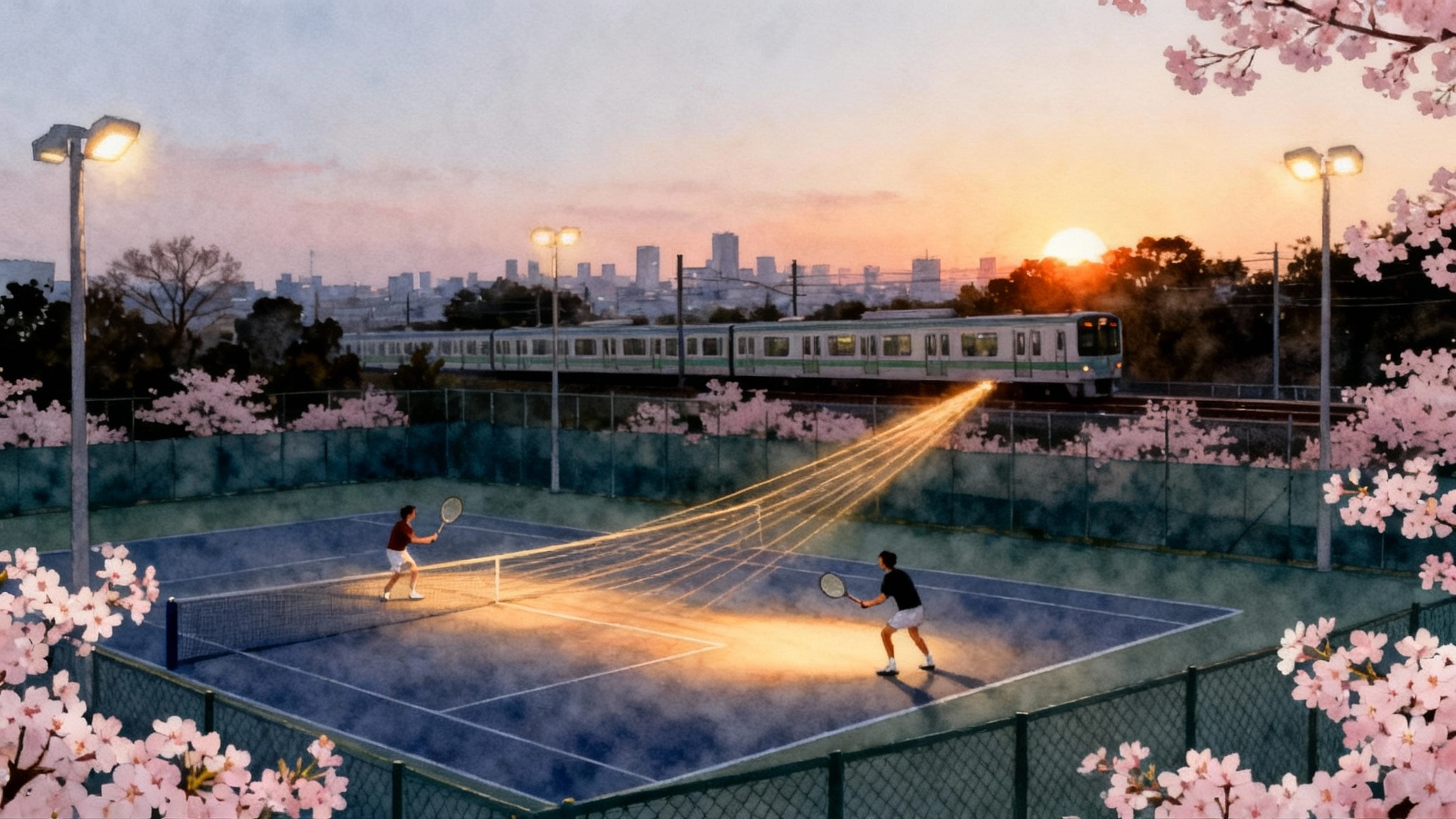
Why Tokyo’s spring window is the sweet spot for tennis
Late March through May in Tokyo gives you exactly what tennis craves: cool mornings, mild afternoons, and longer light for evening play. The rainy season usually arrives in early June, so spring offers a pre-rainy-season pocket with drier courts, fewer washouts, and temperatures that reward movement. Expect brisk starts that warm quickly, then slightly humid nights that make a breathable top feel like a secret weapon.
Think of it as a three-gear season. Late March is gear one: layers, optional gloves at sunrise, cherry blossoms overhead, and firm bounce. April is gear two: light jacket in the bag, reliable sunshine, and the confidence to book later hitting blocks. May is gear three: short sleeves from midday, vibrant parks, and sunset that stretches your practice window into the evening under lit courts.
If you are pairing Japan with Europe this spring, consider our French Riviera spring clay guide for a second stop that keeps match rhythm high.
Where to train: Seijo and Shi Shi at a glance
- Seijo Tennis Academy, Setagaya: A calm, residential setting in western Tokyo, with coaches used to both local and international players. Expect technically focused sessions, clear practice goals, and realistic constraints about public court access in Setagaya. For background, see the Seijo Tennis Academy profile.
- Shi Shi Tennis Academy, central-west Tokyo: Bilingual coaching, private or small-group formats, and a personal, high-performance lens that translates NCAA and national-level experience into drills you can apply immediately. Get context on venues and approach in the Shi Shi Tennis Academy profile.
If your goal is to upgrade patterns fast, alternate days: one day tune technique and footwork, the next stress test with points and applied patterns. Seijo and Shi Shi complement each other well: one leans into calm, structured reps, the other presses on purposeful intensity and match readiness.
How to book sessions with Seijo and Shi Shi
Booking in Tokyo often involves two parts: the coach and the court. Many coaches ask clients to reserve a public or club court for the lesson. If you cannot, ask if the academy can help. Lead times matter in spring, so set alerts and offer multiple time windows.
- Contact Shi Shi: review formats, language support, and availability on the official page, then message with your preferred area and time bands. Include whether you can book a court or would like help. See current formats via Shi Shi Tennis Academy lesson options.
- Contact Seijo: confirm current offerings, English support, and lesson slots, then propose a location in Setagaya or nearby that you can reserve. A useful jumping-off point is Seijo Tennis Academy classes and contact.
Sample outreach note you can paste into your first message:
“Hello Coach, I will be in Tokyo from April 8 to April 14. I am an intermediate right-hander with a strong forehand and developing backhand. I want two 90-minute sessions focused on footwork patterns, serve consistency, and first ball after serve. I can reserve a court in Setagaya or Shibuya area if you prefer. Available windows: 7:00 to 9:30, 13:00 to 15:00, or 18:30 to 20:30. Thank you.”
Tips that increase your chance of getting the slot you want
- Offer three windows across morning, midday, and evening.
- Volunteer to book the court, then ask the coach for a preferred venue list.
- Mention your nearest stations so the coach can recommend convenient courts.
- Ask if video review is possible and whether the coach can bring a tripod.
Court access in Tokyo: realistic, visitor-friendly paths
Public courts in Tokyo are excellent but often require advance reservations through ward systems that prioritize residents. That does not mean visitors cannot play. Here are the workable paths:
- Same-week or day-before openings: cancellations pop up, especially in spring after sudden showers. Check evening slots with lighting.
- Multi-court parks: complexes with many courts increase your odds. In Setagaya, ask coaches about options near Seijo-Gakuen-mae or Futako-Tamagawa.
- Hotel or private clubs: some allow paid guest access when accompanied by a coach. Availability varies by day and price point.
- Coach-held slots: a few coaches regularly secure recurring slots and can add you if timing aligns. Ask politely and be flexible.
Typical public pricing ranges to plan for: daytime courts often run roughly 1,000 to 3,000 yen per two hours, plus 300 to 700 yen for lighting in the evening. Expect to show up 10 minutes early to check in, pay lighting fees if needed, and sweep the court if requested.
Getting around: transit, cards, and what it really costs
If you are hopping across wards for practice, an IC card is your friend. Load a Suica or Pasmo into your phone wallet or pick up a physical card at the airport. Mobile setup saves you the deposit and is the simplest choice for short stays. Plan on 180 to 330 yen for typical subway hops, more for longer private rail segments, and about 1,200 to 1,800 yen total on a day with two practice trips plus sightseeing. Trains are nearly always on time, so you can plan 25 to 40 minutes door to door for most cross-town tennis rides.
Pro tip: set your session to start at the 10 after mark, not right on the hour. It gives you margin to move through big transfer stations like Shibuya or Shinjuku without rushing.
A five-day train-and-train itinerary
This plan blends morning rhythm work with evening application, keeps travel efficient, and respects recovery. Tweak the stations to match your hotel.
Day 1: Arrival tune-up and court feel
- Morning: Shakeout run in a nearby park. Light dynamic warmup: carioca, A-skips, shadow swings. 30 minutes total.
- Late morning: Court search for a same-day 60 to 90 minute solo hit or ball machine if available. Goal is rhythm, not volume.
- Evening: 60 minute private with Shi Shi focusing on movement-first patterns: split timing, first step to the ball, and braking into the hit. End with five minutes of serve rhythm.
- Transit: Keep it simple, one zone from your hotel. Eat early and hydrate.
Day 2: Technique in calm, then points
- Morning: 90 minute Seijo session in Setagaya. Focus on one stroke family only, for example backhand drives and neutral ball tolerance. Drill example: two cross, one down the line, recover to center on a line. Emphasize footwork cadence.
- Afternoon: Sightsee within two stations. Kinuta Park in spring is ideal for a slow walk and stretching.
- Evening: Optional 60 minute matchplay set with a hitting partner arranged by your coach. Play first to eight games, tiebreak at 7-all. Keep it playful, log first-serve percentage.
Day 3: Mobility, serve, and rest
- Morning: No court. Mobility and strength circuit in your room. Hinge, split squat, band rows, shoulder external rotations, calf raises, then 15 minutes of meditation or calm breathing.
- Afternoon: Video review of your first two sessions. Identify one movement cue and one tactical cue. Example: “Quiet head through contact” and “Play higher margin crosscourt until I earn the middle.”
- Sunset: 75 minute serve and return block under the lights. Target 80 to 120 serves total with varied locations. Ten minutes of second serve to backhand corner only. Finish with 20 returns off a live serve.
Day 4: Pattern consolidation and test set
- Morning: 90 minute lesson with Shi Shi to connect your serve day with patterns, for example serve plus first forehand to a big crosscourt window, recover, then look middle. Add two play-based games: two-in-a-row depth challenge and alley-avoidance rally.
- Evening: Open set or round robin if available through the coach’s network. If none materializes, play a timed 40 minute set to 4 with a tiebreak at 3-all. Record unforced errors by shot family.
Day 5: Match window and decompression
- Morning: 60 to 90 minute Seijo session to sharpen, then a full match or Universal Tennis format set if logistics align. Keep the camera rolling for the first four games only. Review over lunch.
- Evening: Recovery walk by the river or through a park, then pack.
UTR and JTA match options for visitors
- Universal Tennis (UTR): UTR events, matchplay, and flex formats run in Tokyo throughout the year. Short-stay visitors do best with small draw events or same-day matchplay blocks that coaches can help you find. Ask your coach to connect you with the right organizer and be ready to share your current rating.
- Japan Tennis Association (JTA): Many adult tournaments require advance registration in Japanese, a player number, and sometimes residency or club affiliation. If you will be in Tokyo only one week, prioritize coached matchplay or UTR-style events. If you will stay three to eight weeks, ask your coach whether a local open, a club friendly, or a practice league is a fit for your dates.
What to bring for either pathway
- A printed or digital profile with recent results, NTRP or UTR if you have one, plus a short note on your best patterns. It speeds up matchmaking.
- Photo ID and cash for small on-site fees. Many venues accept cards, but small events may not.
Costs you can actually plan around
Use these planning ranges for spring 2026 to set a realistic budget. Your actual costs will depend on which court you secure and how many lessons you stack.
- Coaching: 10,000 to 22,000 yen per hour for private, less per person for semi-private. Elite or specialty sessions may cost more.
- Court rental: 1,000 to 3,000 yen for two hours daytime at public venues, lighting 300 to 700 yen extra. Private clubs can be higher.
- Transit: 180 to 330 yen per metro ride, 220 to 500 yen for longer hops on private lines. Plan 1,200 to 1,800 yen on tennis days with two or three rides.
- Balls and small items: 800 to 1,500 yen for a new can of balls, 300 to 600 yen for wristbands or grip tape.
Sample day subtotal for one player
- 90 minute private lesson at 16,000 yen
- Shared court fee of 1,200 yen
- Three train rides at 1,400 yen total
- One new can of balls at 1,000 yen
- Estimated subtotal: 19,600 yen
Packing for cool mornings and humid nights
- Layer logic: one light base layer, one breathable mid, one packable shell. Mornings can feel chilly, but you will heat up fast on court.
- Shoes: bring a breathable pair and a more supportive pair. Tokyo surfaces vary from grit hard to smoother asphalt, so a steady outsole is safer.
- Grips and wristbands: carry extra dry overgrips and a thin towel for humid evenings. Swap the grip at the first sign of slip to protect biomechanics.
- Socks: thin synthetic for morning, slightly cushioned for evening. Rotate pairs to keep your footwork crisp.
- Serve kit: a small tripod, phone clamp, and spare battery. Ten minutes of video on day two will pay off all week.
- Quick-dry hygiene: wet wipes and a packable hand towel. You often move straight from court to train.
- Allergy note: cherry blossom season overlaps with cedar and cypress pollen. Pack your go-to antihistamine if you are sensitive.
Station-to-court tactics that save time
- Pick courts within one transfer of your hotel. The Odakyu Line and Den-en-toshi Line corridors are convenient for Setagaya.
- Avoid the minute before the hour. Arrive odd minutes early so you never stand in a line for lighting payments or keys.
- Screenshot your route. Station Wi-Fi is reliable, but underground navigation is faster when you have a static map.
A simple way to combine both academies
Book two lessons with each academy, then leave one floating slot you can aim at an opening. Example schedule for a seven-night stay around the first half of April:
- Day 1: Arrival and light hit
- Day 2: Shi Shi morning lesson
- Day 3: Seijo morning lesson
- Day 4: Serve block and night set
- Day 5: Shi Shi morning lesson
- Day 6: Seijo morning lesson
- Day 7: Matchplay or UTR-style event
Use the first two lessons to set your focus, the third to consolidate, and the final to test. Ask each coach for one movement cue and one tactical cue to carry home.
Internal tools and one tap planning
Keep all details in one place by saving your Tokyo plan in our app. Track sessions, travel time, and costs for each day using your academy contact notes and the profiles linked above.
Final checklist for a smooth spring tennis week
- Two booked lessons set at least 72 hours apart so you can absorb changes
- One evening court with lighting reserved for serve or returns
- Mobile IC card loaded, 3,000 to 5,000 yen starting balance
- Extra overgrips, one new can of balls, thin towel, and a packable shell
- A short player profile with goals and a coach contact for matchplay leads
The bottom line
Spring in Tokyo rewards the prepared player. The weather lets you stack smart sessions before the rains, the trains make the city feel small, and Seijo and Shi Shi give you complementary coaching paths that actually move the needle. Plan with realistic court access, keep your costs in a range you control, and pack for both crisp mornings and warm nights. Do that, and you will leave Tokyo with new patterns in your body, a camera roll full of proof, and a clear plan you can repeat next season.