2026 Post-Juniors Roadmap: College Tennis or ATP/WTA Points?
Your first year after juniors should not be guesswork. Compare an ITF M/W15–25 path with an NCAA or NAIA season, set match and fitness targets, plan travel blocks, and time prep weeks in Austin to peak for each swing.
 Tommy
Tommy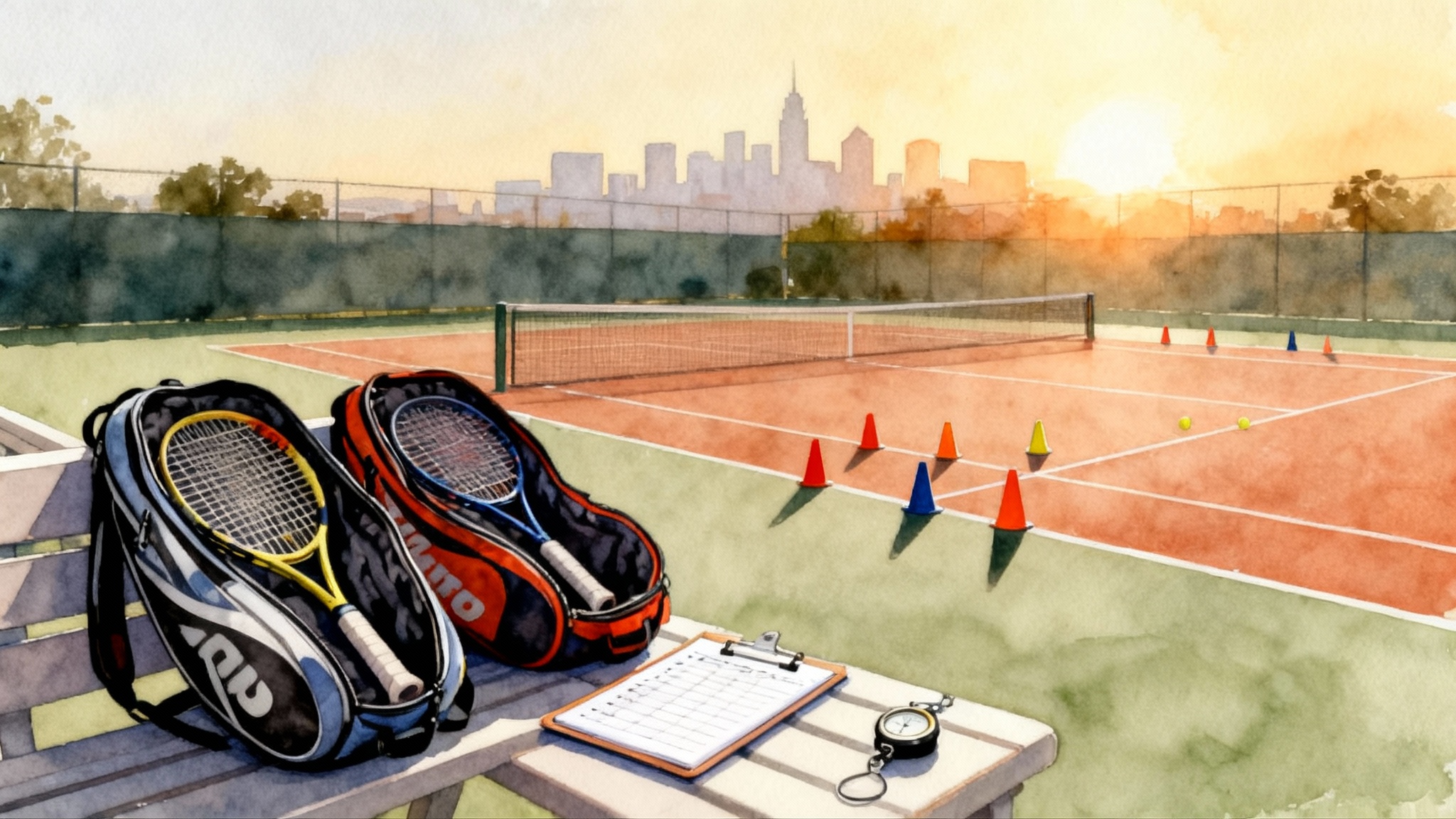
What you are choosing in the first 12 months
You have two credible ways to launch a serious tennis career after juniors in 2026. Option one is to pursue your first Association of Tennis Professionals or Women’s Tennis Association ranking points by playing International Tennis Federation events at the 15k to 25k level (often labeled M15 to M25 for men and W15 to W25 for women). These tournaments are part of the ITF World Tennis Tour, and strong results convert into professional ranking points. Option two is to enroll and compete in college tennis through the National Collegiate Athletic Association or the National Association of Intercollegiate Athletics, building physically and tactically within a team season while taking classes.
This guide is not a recruiting how-to. It is a 12-month operating plan you can adopt on January 1, 2026. You will assess readiness, compare schedules, set measurable fitness and match-volume benchmarks, design training and travel blocks, and place targeted prep weeks at Legend Tennis Academy in Austin to peak for your chosen tournament swings.
Step 1: Assess readiness with a simple scorecard
Before you pick a path, you need a baseline. Use this four-part scorecard. Be honest. Film two competitive practice sets this week and fill it in.
- Technical repeatability
- First serve: 60 percent in with a clear target pattern on deuce and ad. Track over 100 serves.
- Second serve: double faults limited to 2 per set on average across a 5-set practice block.
- Forehand and backhand: 10-ball crosscourt drill at 75 percent pace, repeat three sets with fewer than 2 errors per set.
- Tactical clarity
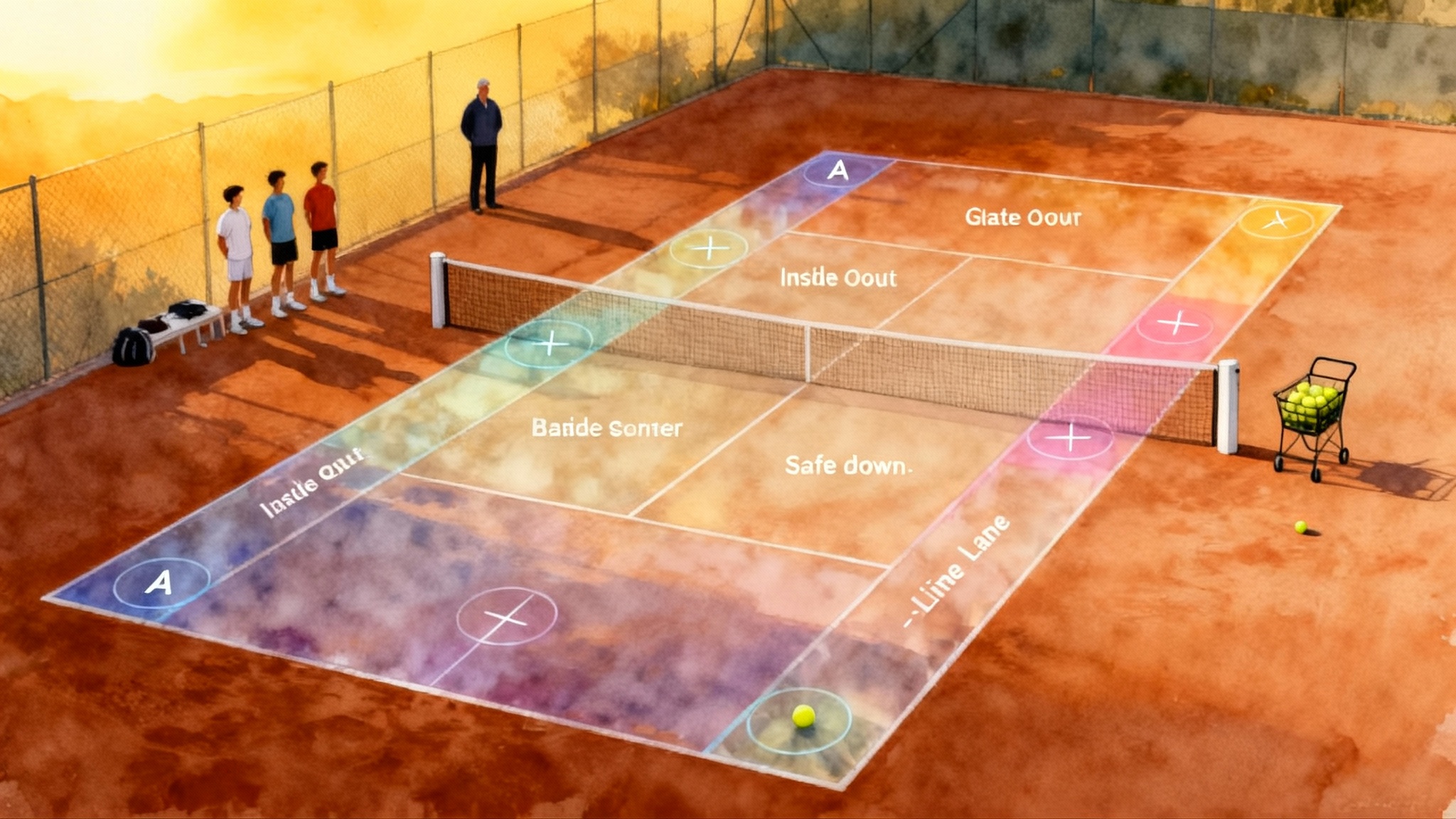
- A-plan: one clearly defined pattern to hold serve and one to break, both rehearsed under pressure games. Revisit our guide to high percentage singles patterns.
- Score management: plays change at 30-30 and break points. Coach can state your two default patterns without asking you.
- Mental consistency
- Between-point routine is visible on video in at least 80 percent of points.
- Body language does not deteriorate after losing two games in a row.
- Physical markers
- Acceleration: 5-0-5 agility test at 2.35 seconds or faster for men, 2.50 seconds or faster for women.
- Repeat speed: 6 × 20-meter shuttle sprints with 20 seconds rest; average under 3.55 seconds for men, 3.75 seconds for women.
- Aerobic base: 3,000-meter time trial under 11:00 for men, under 12:30 for women.
- Power: standing medicine ball rotational throw, 3-kilogram ball, 6.0 meters men, 5.0 meters women.
If you hit most technical and tactical marks but miss two or more physical markers, start with the college path or build an eight-week base before chasing points. If you hit the physical targets and can already win practice sets from players with professional points, you are likely ready for the entry-level professional schedule.
Two roadmaps at a glance
- Roadmap A: First professional points via ITF M15 to M25 and W15 to W25
- Who thrives: players with a clear A-plan, robust travel support, and the ability to win two pressure tiebreaks per week.
- Primary risk: admin and travel fatigue that kills quality practice days.
- Key number: 60 to 75 real matches in 12 months; aim for 70 percent of practice courts set for patterns and serve-plus-one work.
- Roadmap B: College tennis via NCAA or NAIA
- Who thrives: players who make large gains with high-volume doubles and structured strength and conditioning.
- Primary risk: no plan for summer and winter breaks, leading to flat performance when the team season starts.
- Key number: 46 to 60 real matches in 12 months, split between team season, individual events, and summer tournaments.
Roadmap A: Your first ATP or WTA points via ITF M/W15 to M/W25
How the entry works and what that means for training
The International Tennis Federation’s entry-level professional events at 15k to 25k prize money are the gateway to ranking points. The practical takeaway is that qualifying draws and early rounds often require two to three wins in 48 hours. Your training must simulate that density. Two heavy match days per week capped by a serve-recovery session prepare you for tournament rhythm better than random hitting marathons.
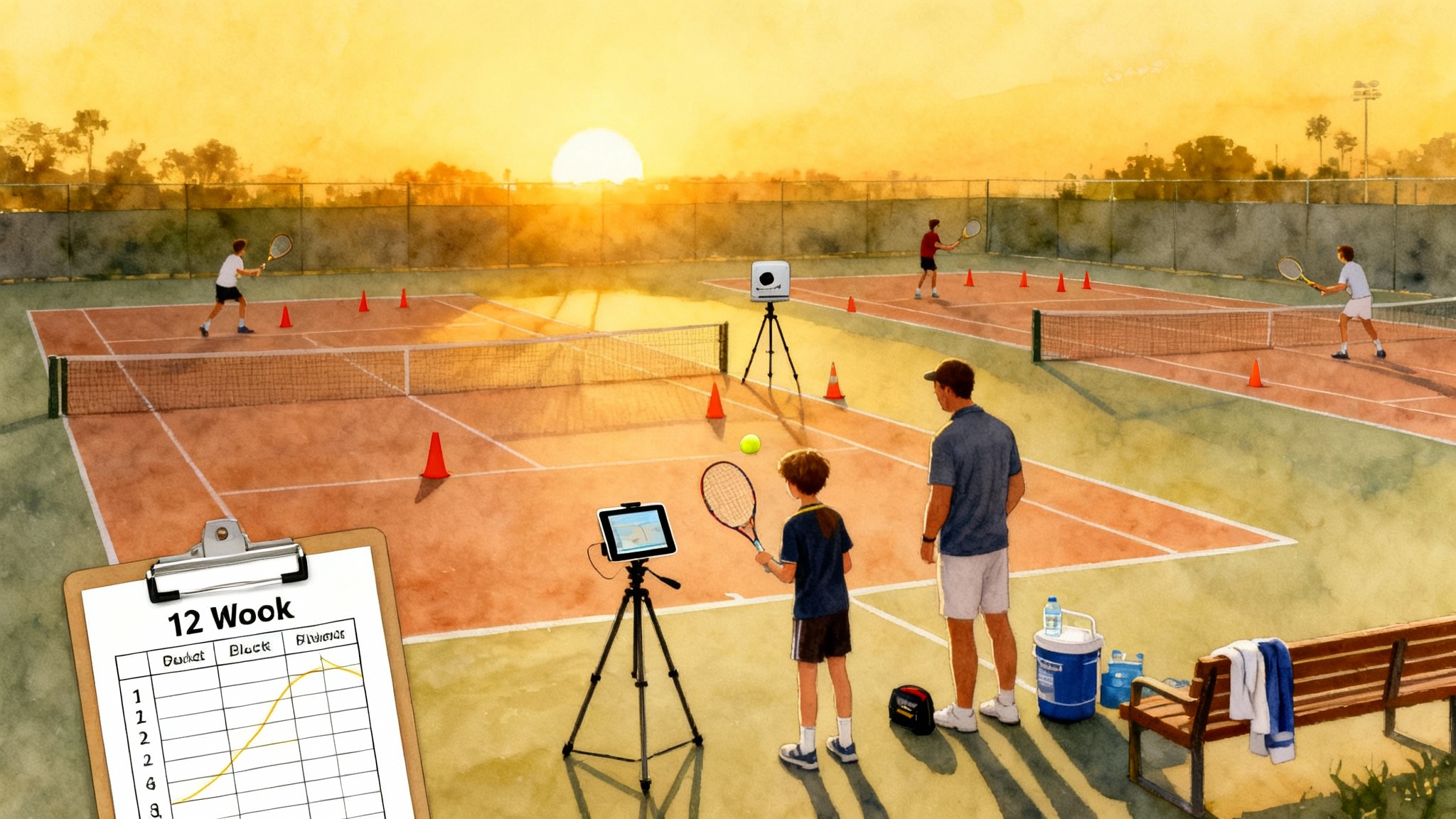
A 12-month sample calendar for 2026
The exact dates will vary by country, but the structure holds. Use rolling four-week blocks. Week 4 of each block is lighter unless it is a tournament week.
- January to mid-February: Base and micro-competition
- Focus: physical base, serve foundations, two local prize money events to keep match feel.
- Matches: 10 to 12.
- Legend Tennis Academy prep week: last week of January in Austin to build heat tolerance, serve metrics, and lefty/righty patterns.
- Mid-February to March: Hard court swing 1
- Enter two M15 events in the same region to limit travel. Use Monday to Wednesday for qualifying and main draw; Thursday is either match or recovery and pattern rehearsal.
- Matches: 12 to 15.
- April to May: Clay swing
- Three events in four weeks. If you grew up on hard courts, allocate two pre-event days to movement patterns and neutral-ball tolerance.
- Matches: 15 to 18.
- June to July: Hard court swing 2
- Two events separated by a light week. Add doubles to increase match count and net reps.
- Matches: 10 to 12.
- August: Heat-acclimated push
- Legend Tennis Academy prep week in Austin, then one W25 or M25 attempt. Expect deeper fields and familiarize yourself with match scheduling and recovery in heat.
- Matches: 6 to 8.
- September to October: Regional cluster
- Choose a two-country loop with reasonable flights. The goal is back-to-back main draw appearances. Travel with a hitting partner to ensure quality pre-match sets.
- Matches: 10 to 12.
- November: Consolidate and fix
- One event early, then three weeks to strengthen your weakest metric from the year.
- Matches: 4 to 6.
- December: Rebuild and review
- Testing, small technical cleanup, lighter exhibitions. No chasing late points at the cost of January readiness.
Total target matches: 60 to 75 across singles and doubles, with at least 40 singles.
Training week template between events
- Monday: Serve and return heavy, 90 minutes patterns, 45 minutes mobility and contrast recovery.
- Tuesday: Two-hour set play with pressure scoring, 30 minutes sprint mechanics, 20 minutes arm care.
- Wednesday: Live ball defense and neutral ball, 60 minutes doubles patterns, gym total-body strength.
- Thursday: Serve-plus-one and returns in tiebreak formats, 45 minutes hot-conditions conditioning.
- Friday: One long set, then point-start games, foam rolling, sleep extension.
- Saturday: Hitting windows only, visualization, scouting next draw.
- Sunday: Travel or match day 1.
To shape those sessions, build two specific hold and break sequences from our high percentage singles patterns.
Travel and admin that protect performance
- Cluster tournaments by geography to avoid losing Mondays to flights.
- Book accommodations with kitchen access to control food. A simple rice cooker and portable blender pay for themselves in one month.
- Build a two-bag routine: racket bag for courts, daypack for recovery tools. Keep electrolyte packets, tape, and a spare string set within reach.
Where Legend Tennis Academy fits
Place a seven-day prep week before each major swing. In Austin you get outdoor hard courts, summer-style heat for real acclimation, and experienced practice partners. Ask for three deliverables at the end of each prep week:
- A serve and return dashboard with in-percentage by target and second-serve kick height.
- A pattern playlist for deuce and ad games, both on serve and return, that you can review the night before matches.
- An individualized recovery script for hot conditions that includes arrival weight, target in-match fluid intake per hour, and sodium targets. For extra detail on fueling and cooldowns, use our tournament nutrition and recovery guide.
Roadmap B: College tennis via NCAA or NAIA
Why the college calendar can accelerate growth
College tennis gives you guaranteed match volume, a strength and conditioning program, and team pressure that feels like pro doubles finals. Division I and Division II programs within the National Collegiate Athletic Association often deliver 20 or more dual matches from January to April, with events in the fall to tune up. The National Association of Intercollegiate Athletics can offer similar volume with a different scholarship and scheduling structure.
A 12-month sample calendar for 2026
- January to April: Team dual season
- Matches: 18 to 25 duals plus conference tournament. Treat doubles as an accelerator for net skills and serve patterns.
- Strength: two lifts per week in season; keep the Tuesday speed session short and sharp.
- May: Reset and finals
- Two weeks lighter during academic exams. Add technical video sessions to capture key changes while load is lower.
- June to July: Summer tournament block
- Enter two to three tournaments. Mix one or two ITF events with high-level prize money tournaments or U.S. Tennis Association sectionals to keep confidence high.
- Legend Tennis Academy prep week in late May or early June to set summer goals and test.
- August: Preseason on campus
- Arrive fit. Hit sprint and serve metrics in week 1 so coaches spend September on patterns, not fitness.
- September to October: Fall individual events
- Two college individual tournaments and one external event. Maintain one strength session and one speed session each week.
- November to December: Build and refine
- Two focused four-week blocks. End with an Austin prep week that produces a January serve and return plan for the team season.
Total target matches: 45 to 60 across the year. Summer doubles count, because college doubles is sudden-pressure tennis that transfers to pro tiebreaks.
Prize money and amateurism
If you play outside events, know the rules that govern amateur status. They evolve. Confirm current limits on accepting prize money related to actual expenses through the NCAA amateurism rules and your school’s compliance office. NAIA amateurism policies are separate, so ask your coach to connect you with the compliance staff before you enter events.
What to do inside a college week
- Monday: scouting and serve targets based on next opponent’s return patterns.
- Tuesday: doubles formations and return plays, short speed session.
- Wednesday: pattern rehearsal for the top two singles patterns you will use at 30-30.
- Thursday: walk-through and recovery.
- Friday to Sunday: matches.
Fitness and match-count benchmarks that keep you honest
You need numbers that repeat across both paths so you can compare apples to apples. Test every eight weeks. Record results and adjust loads.
- Aerobic base: 3,000-meter time trial. Target under 11:00 men, 12:30 women. If you miss by more than 30 seconds, pull one tournament week and plug a base week.
- Repeat sprint ability: 6 × 20-meter shuttles, 20 seconds rest. Average time and the drop-off between rep 1 and rep 6, which should be less than 6 percent.
- Acceleration and change of direction: 5-0-5 test, two trials each side. Bad side must be within 0.05 seconds of good side. If not, add asymmetric strength and footwork days.
- Serve speed and quality: measure first-serve speed with a radar gun and track kick height on second serves. Combine with in-percentage by target to see quality, not just power.
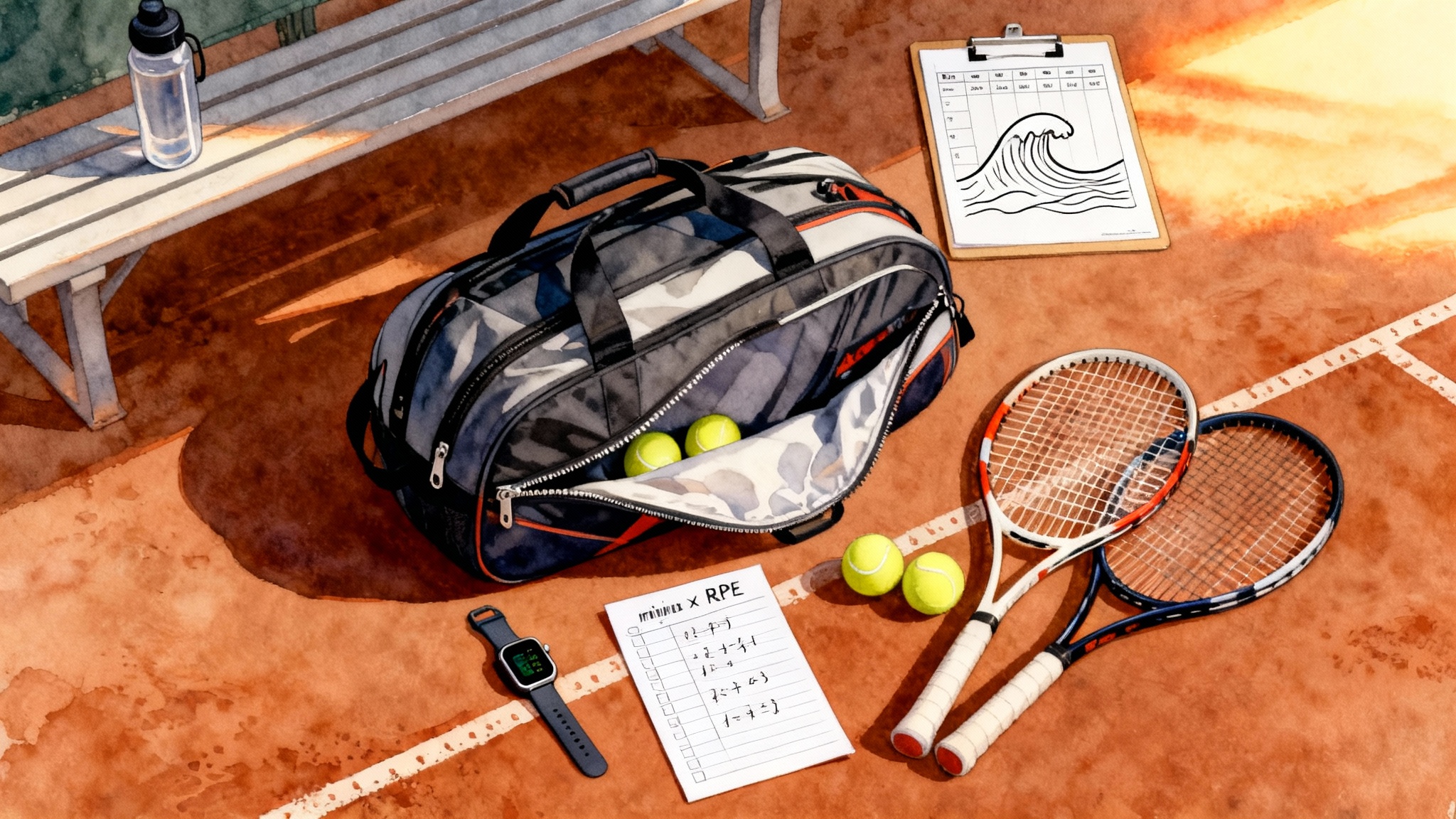
- Workload integrity: use a training log to monitor total weekly hours and number of high-stress points. A good week is 12 to 16 hours total, including mobility and strength. If your acute workload jumps more than 30 percent week to week, you are courting an injury.
How to build training and travel blocks
You are not choosing tournaments. You are choosing the next four weeks of your life. Think in blocks that get you ready to play two real matches on back-to-back days.
- Block design
- Week 1: technical cleanup and aerobic base.
- Week 2: speed and serve development, heavy doubles net reps.
- Week 3: two match simulations, one played under heat or wind to increase variability tolerance.
- Week 4: tournament or light-taper week.
- Travel rules
- Pick clusters of events so that the ratio of match days to travel days is at least 2:1.
- Choose flights that land before noon local time to secure a proper hit on arrival.
- Book housing within a 15-minute drive of the site. Use that time for meals and recovery instead of commuting.
- Practice courts on the road
- Pack mini-cones and a 10-meter measuring tape to lay out serve targets on unfamiliar courts.
- Schedule your heaviest serve day two days before first match. The day before is light patterns and returns only.
What a Legend Tennis Academy prep week in Austin includes
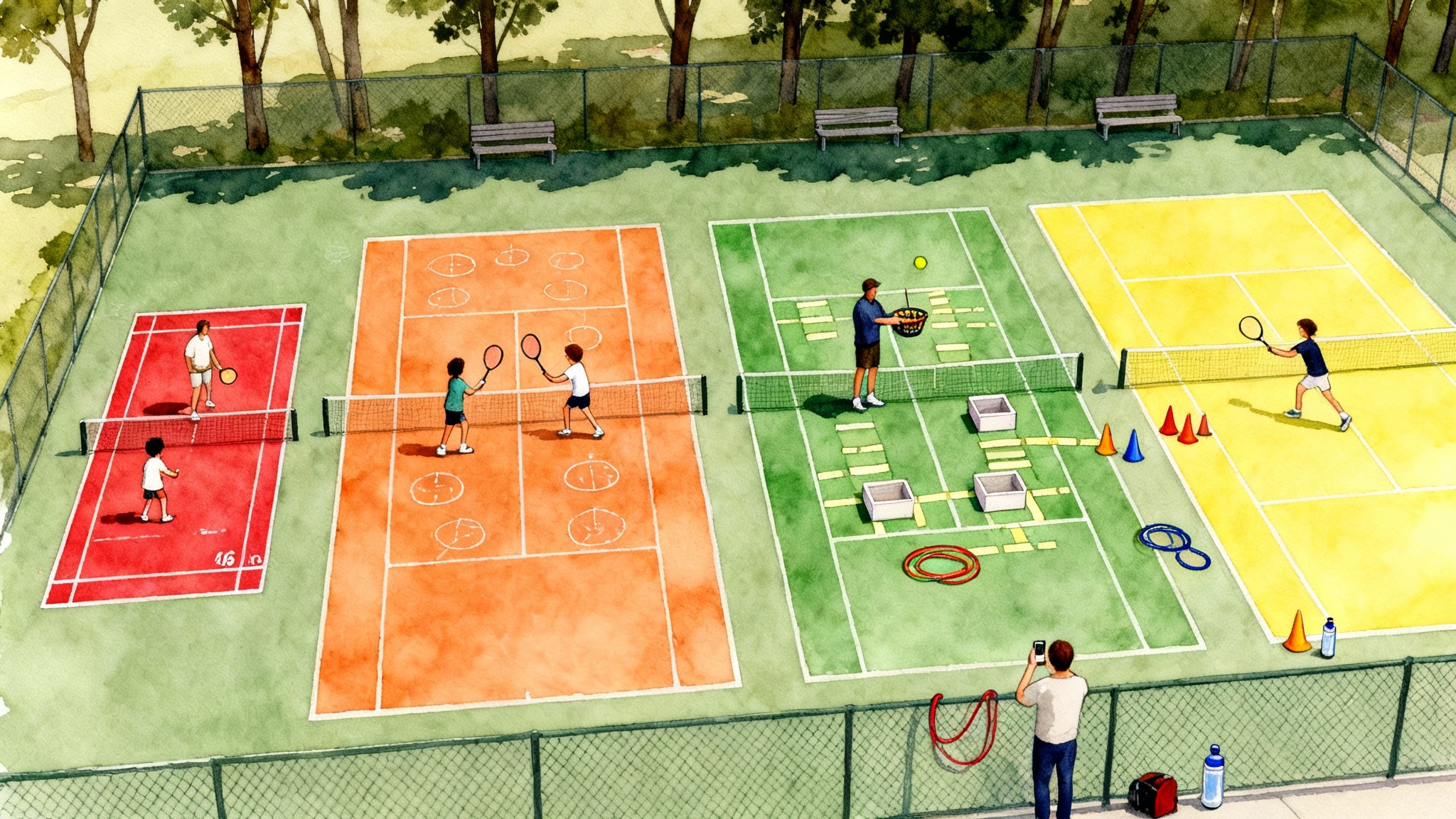
Legend Tennis Academy prep weeks are designed to create momentum before tournament swings. There is no fluff. Ask for the following structure.
- Day 1: Assessment
- Video capture of serve and two baseline patterns. Baseline fitness tests and mobility screens. Set targets for the week.
- Day 2: Serve and return immersion
- Two sessions totaling 150 to 200 serves with specific targets, return depth ladders, and second-serve spin goals. Arm care and isometric shoulder work.
- Day 3: Patterns under pressure
- Best-of-three practice set with one changeable variable only, such as return position or first-ball direction. Post-set debrief with video stills.
- Day 4: Heat and recovery protocol
- Midday hit in heat, practice hydration plan, check sweat rate by weighing pre and post. Build the match-day recovery script you will follow on the road.
- Day 5: Doubles and net aggression
- Poach timing, I-formation reps, return plays. Short competitive set to decide the week’s theme.
- Day 6: Match play rehearsal
- Full best-of-three with umpire scoring and changeover routines. Work with a lefty sparring partner if your next swing has lefty seeds.
- Day 7: Taper and pack
- Light hit, mobility, visualization, and finalize the pattern playlist and serve targets you will take into the event.
Deliverables you carry out of Austin: a two-page plan, your serve and return dashboard, and a 10-clip video playlist you can watch the night before matches.
Common pitfalls and how to avoid them
- Chasing too many events
- Symptom: second-serve quality falls after week two.
- Fix: protect prep weeks and make one week per month lighter.
- Ignoring doubles
- Symptom: poor net instincts and slow starts.
- Fix: one doubles event each month builds pressure skills fast.
- Training like a generalist
- Symptom: long hits without purpose.
- Fix: specify the next two patterns you will use to hold serve and to break, then build those patterns into every session.
- No accountability to numbers
- Symptom: guesses about form.
- Fix: test the same four metrics every eight weeks and adjust the plan accordingly.
How to choose now, and what to do next
- If your readiness scorecard is strong and you can afford clustered travel, pick Roadmap A and start with a four-week hard court swing in February. Book a Legend Tennis Academy prep week the week prior to that swing.
- If you need structure, academic progress, or a little more time to build weapons, pick Roadmap B. Put two prep weeks in Austin on the calendar: one at the end of May for a summer block, and one in December ahead of the January team season.
- Whichever path you choose, lock the first 16 weeks today. Commit to the tests, the match-count targets, and the prep weeks that make tournament days feel familiar.
Your first post-juniors year is not a verdict on your ceiling. It is a lab year to prove that your game survives travel, pressure, and back-to-back days. Build blocks, track numbers, and step into events with a plan that has been rehearsed. The result is momentum you can feel, one swing at a time.