Algarve October–May: Portugal’s most reliable tennis base
 Tommy
Tommy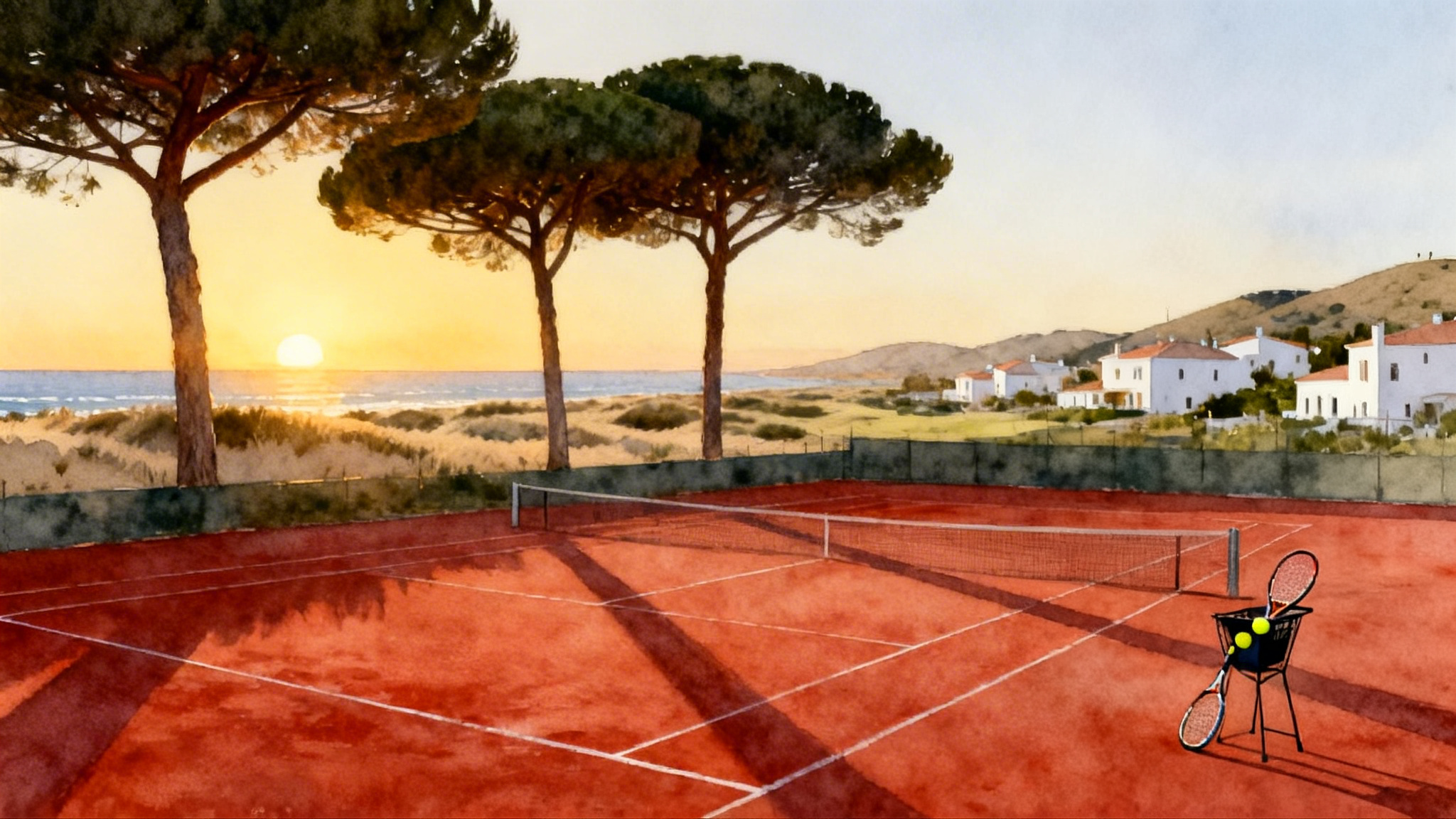
Why the Algarve becomes your shoulder‑season court
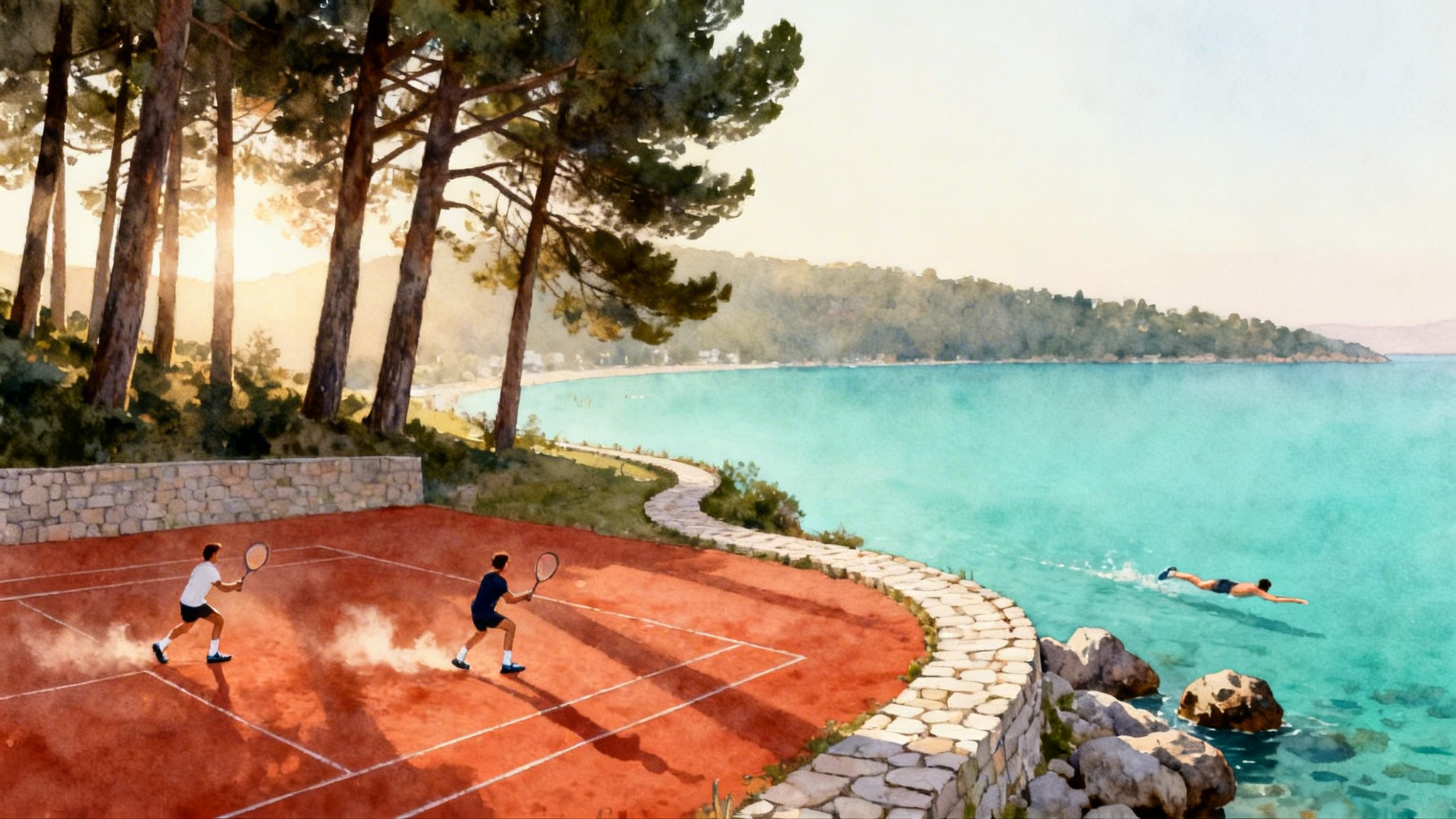
If you are looking for an outdoor training block in Europe between October and May, the Algarve is the safest bet. The southern tip of Portugal sits in a weather sweet spot where the Atlantic moderates temperature and the Serra de Monchique hills help deflect the worst of winter systems. Average daytime highs hover in the high teens to low twenties Celsius from October through May, with a rain profile that is concentrated in short bursts rather than week‑long washouts. For a quick check on the monthly pattern in Faro, see the simple table on Faro climate averages. It shows why coaches and players can plan morning sessions with confidence.
Reliability is only half the story. The Algarve also packs courts into tourist zones that stay active year‑round, which keeps coaches, hitting partners, and restring services available long after summer crowds thin. Add shoulder‑season pricing on accommodation and flights, and you get more court hours per euro than in the peak months.
A quick comparison: Algarve vs Costa del Sol vs Madeira
- Spain’s Costa del Sol is the closest rival. Málaga’s winter highs are similar, often 16 to 20 Celsius from December to March. Rain tends to arrive in short, heavy episodes, but overall November to March still brings a fair share of sunny days. Check the simple monthly picture on Málaga climate averages for context. The difference you will feel is price and density. Marbella and nearby resorts are fantastic for tennis, yet lodging and court fees often sit higher than the Algarve in the shoulder season. You also face busier roads and a livelier nightlife scene that can be distracting during a focused training block.
- Madeira is springlike year‑round with lush hills and spectacular levada trails. Tennis can be superb on clear days, but the island’s microclimates bring frequent showers and gusty moments, especially on exposed sites. Court inventory is thinner and spread across hotels, which limits match‑play variety if you are staying for multiple weeks. As a cross‑training playground Madeira is elite. As a high‑certainty tennis base between October and May, the Algarve wins on the consistency checklist.
If you are choosing a midwinter island or US option, compare conditions in our Florida vs Tenerife data guide.
Where to base: three proven hubs
You can train anywhere along the coast between Tavira and Sagres, but three hubs work best for tennis logistics, accommodations, and day‑trip options.
Quinta do Lago
- Who it suits: players who want a polished resort environment, high‑quality hard courts, easy bike paths for recovery spins, and access to structured coaching with video feedback.
- Surfaces: mostly acrylic hard, some artificial grass in nearby resorts, with padel on site in many complexes.
- Coaching: resort academies offer private lessons, small technical clinics, and supervised match play. Look for coaches who blend basket drills with live point patterns in the same hour, since shoulder season air is cool enough to handle high reps.
- Extras: gyms with recovery tools, pools for aqua jogging, golf short‑game areas if you enjoy skill transfer drills.
Vale do Lobo
- Who it suits: groups that want a social setting with restaurants around the square and an academy that understands visiting teams.
- Surfaces: a mix of acrylic hard and artificial grass, with some clay courts in the wider Golden Triangle area if you want to split your week.
- Coaching: good for doubles patterns, return formations, and serve plus first‑ball sequences. Many coaches here are used to prepping league teams in short windows.
Lagos
- Who it suits: players who like a walkable old town, surf beaches a short drive away, and quick access to the quieter western Algarve.
- Surfaces: hard and clay options in and around town, and more municipal courts at value prices.
- Coaching: local clubs can line up hitting partners for grooved rhythm sessions, then plug you into social doubles in the evening.
Court density and what that means for your plan
The Algarve is not a single mega complex. It is a necklace of resort academies and municipal clubs that sit 10 to 25 minutes apart. In the eastern half you have clusters around Faro, Vilamoura, and Quarteira. In the west you have Alvor, Portimão, and Lagos. That spread lets you vary opponents and surfaces without long drives. It also makes rain days less stressful, since you can often find a drier window 15 kilometers away.
Practical takeaways:
- Book your primary base with on‑site courts. Then pre‑book two backup slots at nearby clubs on alternating days. If weather or a tournament blocks your main courts, you move without losing volume.
- Mix surfaces on purpose. Algarve hard courts tend to be medium pace and honest, which is perfect for rebuilding mechanics. Adding one or two clay sessions midweek helps footwork discipline and point construction.
- Use municipal clubs for sparring value. Court fees there are usually lower and the player pool is more varied.
Typical surfaces, balls, and stringing
- Surfaces: acrylic hard is the default, with artificial grass and red clay sprinkled across the region. Clay plays truer in the cool months when moisture keeps bounce consistent. Artificial grass can skid if dew lingers early, so start later on those days.
- Balls: choose a slightly heavier, more durable ball for windy weeks. A ball labeled for hard courts will reduce flyers and wear less quickly on abrasive acrylic.
- Strings: many visiting players add 1 to 2 kilograms of tension on windy stretches to control launch angle, then drop back on calm days. If you normally use a polyester at 23 kilograms, consider 24 to 25 kilograms until you feel settled.
Climate and wind: the planning edge
Between October and May the pattern is friendly. Mornings are commonly calm to light, afternoons can see a bump in onshore breeze. After a frontal passage you may get a day of brisk westerlies. East of Faro, occasional easterly episodes can feel warmer and a little gusty near open beaches.
Planning cues:
- Schedule technical work and serve reps from 08:30 to 11:30, when wind is usually light and shadows are softer.
- Book live points and fitness blocks from 15:00 to 17:30, when breeze helps you learn depth control under stress.
- Choose wind‑screened courts if possible. Tall pines or dune backdrops reduce cross‑gusts noticeably.
- Pack a thin layer for changeable mornings. You will shed it by the end of the warmup, but it helps prevent tight forearms.
If a front lingers for several days and you need guaranteed court time elsewhere, our guide to year‑round indoor tennis can help you maintain volume.
Coaching options and formats that travel well
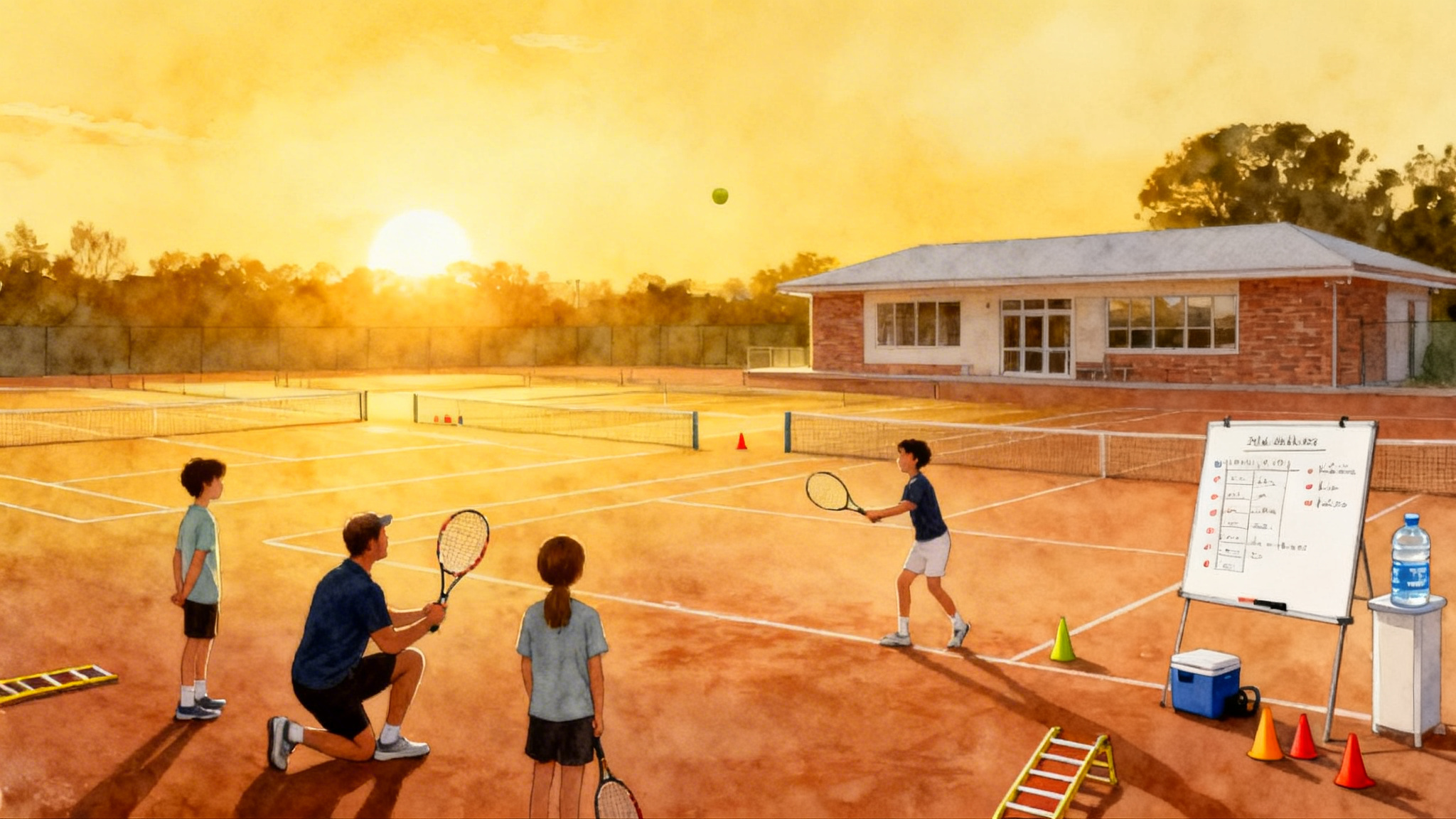
- One‑to‑one session, 60 to 90 minutes: film serve from rear and side, focus on toss stability and first‑ball pattern. Use a target ladder for depth control.
- Small group technical clinic, 90 minutes: two courts, four to six players. One court works on crosscourt stability, the other on approach and transition, then switch.
- Supervised match play, 120 minutes: coach runs serve plus one constraints and scoreboard pressure. Finish with three first‑to‑five tiebreak sets.
- Hitting partner sessions, 60 minutes: call this your rhythm anchor. No instruction, just ball striking at agreed pace.
Expect shoulder‑season rates roughly 20 to 35 percent below July and August. Private coaching often runs 50 to 90 euros per hour depending on venue and seniority. Group clinics land between 20 and 45 euros per person. Municipal court rental can be 8 to 15 euros per hour, while resort courts range 18 to 30 euros. Prices vary by club and date, but the pattern holds: October to May stretches your budget further.
Costs vs peak summer and how to book smart
- Accommodation: plan for 25 to 50 percent savings compared with July and August, especially if you book apartments or townhouses with kitchenettes. For three or more players sharing, that usually beats hotel rooms.
- Flights and car hire: both typically drop outside school holidays. Book a compact wagon that can swallow four racquet bags and two rollers without blocking rear visibility.
- Courts and coaching: reserve your core sessions two to three weeks out, then leave 20 percent of your schedule open for local match play you find on arrival.
Month‑by‑month shoulder‑season guide
- October: warm afternoons, often 22 to 25 Celsius, low to moderate rain. Ideal for a high‑volume technical block. Beaches are pleasant for recovery walks.
- November: 18 to 22 Celsius typical. Some rain days, but they are usually short. Bring a light waterproof and plan indoor video reviews on soggy afternoons.
- December: 16 to 19 Celsius. Shorter days and cooler mornings, yet courts dry quickly after showers. Clay can play beautifully when lightly damp.
- January: similar to December. Wind chill can make late afternoons feel crisp, so book your hardest sessions in the morning slot.
- February: light starts creep earlier, wildflowers appear in the hills, and calm spells lengthen. This is a great month for doubles systems and serve accuracy goals.
- March: 18 to 21 Celsius is common. You can add a third on‑court block two or three days per week if your legs can handle it.
- April: longer days and more stable weather. Start introducing heat management habits, since midday sun can feel strong.
- May: crisp mornings and warm afternoons, 22 to 25 Celsius is common. You can push volume, then reward yourself with ocean swims.
If you want to chase the most stable summer pattern from June to September, consider pivoting north to the Lisbon and Cascais corridor. Afternoon Atlantic breezes keep temperatures in the comfortable low to mid twenties Celsius, though wind is stronger after lunch, so book morning sessions and save afternoons for sightseeing. For clay-centric summer planning in southern France, see our Riviera clay window guide.
A seven‑day train and travel plan
This sample week balances court time with cross‑training on water and trails. Base yourself in the Golden Triangle for the first half, then move to Lagos for variety.
- Day 1, Sunday, Arrival and reset: Check in near Quinta do Lago. Easy 60‑minute hit to loosen travel legs. Evening walk in the Ria Formosa boardwalks and early dinner.
- Day 2, Monday, Mechanics and mobility: Morning 90‑minute private focused on serve rhythm and forehand spacing. Afternoon bike loop on the resort paths or a 45‑minute mobility circuit. Sunset stretch on the beach.
- Day 3, Tuesday, Patterns and points: Morning crosscourt stability drills into approach and first volley. Afternoon supervised match play, first‑to‑four sets with no ads to sharpen focus. Quick cold plunge in the pool.
- Day 4, Wednesday, East‑side day trip: Light 60‑minute hit at 08:30. Late morning drive to Tavira for lunch by the river. Ferry to the island, barefoot strides on the sand for foot and ankle conditioning. Return via Olhão for seafood.
- Day 5, Thursday, Westward move to Lagos: Check out, stop in Silves for a castle stroll and espresso. Late afternoon 75‑minute clay session in Lagos, focusing on height over net and rally length. Evening wander in the old town.
- Day 6, Friday, Surf cross‑training and doubles: Morning surf lesson at Praia do Amado or Arrifana. The paddling and stance shifts translate well to leg load and balance. Late afternoon doubles clinic in Lagos, return formations and poach timing.
- Day 7, Saturday, Hills and hero points: Morning hike on the Seven Hanging Valleys Trail near Benagil, 6 to 12 kilometers depending on energy. Late afternoon match play, two sets to full scoring, finish with a 10‑point tiebreak. Dinner in Sagres while watching the sunset.
Optional extras if you extend your stay: a drive up to Monchique for cooler forest air and stair‑step hill sprints, a kayak along the Lagos cliffs for shoulder stability, or a padel taster session to add reflex training.
Practical transport and daily rhythm
- Car hire unlocks the region. Roads are simple, and most clubs have easy parking. If you prefer not to drive, choose a base with on‑site courts and walkable restaurants.
- Plan your day in three blocks: morning technical training, afternoon fitness or match play, evening recovery and light tactics review. This keeps mental load manageable and leaves room for rest.
- Lunch smart. Grilled fish, rice, and vegetables sit well between sessions. Hydrate with water and a pinch of salt after surf or hikes.
Day‑to‑day wind plays that save sets
- On crosswind days, start points with a higher net clearance to buy margin, then knife slice approaches that stay low.
- If you face a stiff headwind, flatten the second serve slightly and aim deeper. Into a tailwind, add spin and aim higher to keep the ball in.
- Pick the sunny side in the first set only if your toss is rock solid. If it is not, start with the sun at your back and serve with confidence, then swap.
When to choose Costa del Sol or Madeira instead
- Costa del Sol edge cases: if your group needs many top‑end clay courts plus bustling nightlife, and you accept higher lodging costs, Marbella can make sense. Clay volume is excellent and the restaurant scene is larger.
- Madeira edge cases: if your priority is cross‑training on epic trails and you are flexible about the number of uninterrupted court hours, Madeira rewards you with unforgettable rest days. Plan indoor gym sessions for rainy spells and keep your tennis slots opportunistic.
The bottom line
From October to May, the Algarve gives you a rare bundle: mild weather that behaves, a web of courts and coaches within easy reach, and pricing that rewards longer stays. Spain’s Costa del Sol matches much of the climate but usually not the value. Madeira delivers wonder but less certainty. Choose a base in Quinta do Lago, Vale do Lobo, or Lagos, think like a weather coach when you schedule sessions, and follow a rhythm that pairs tennis with surf and trails. You will leave with cleaner mechanics, better feel under crosswinds, and the kind of training momentum that carries into the summer. When June arrives, slide north to Lisbon and Cascais for chilled mornings and breezy afternoons, then circle back to the Algarve when the next shoulder season begins.
A seven‑day train and travel plan
This sample week balances court time with cross‑training on water and trails. Base yourself in the Golden Triangle for the first half, then move to Lagos for variety.
- Day 1, Sunday, Arrival and reset: Check in near Quinta do Lago. Easy 60‑minute hit to loosen travel legs. Evening walk in the Ria Formosa boardwalks and early dinner.
- Day 2, Monday, Mechanics and mobility: Morning 90‑minute private focused on serve rhythm and forehand spacing. Afternoon bike loop on the resort paths or a 45‑minute mobility circuit. Sunset stretch on the beach.
- Day 3, Tuesday, Patterns and points: Morning crosscourt stability drills into approach and first volley. Afternoon supervised match play, first‑to‑four sets with no ads to sharpen focus. Quick cold plunge in the pool.
- Day 4, Wednesday, East‑side day trip: Light 60‑minute hit at 08:30. Late morning drive to Tavira for lunch by the river. Ferry to the island, barefoot strides on the sand for foot and ankle conditioning. Return via Olhão for seafood.
- Day 5, Thursday, Westward move to Lagos: Check out, stop in Silves for a castle stroll and espresso. Late afternoon 75‑minute clay session in Lagos, focusing on height over net and rally length. Evening wander in the old town.
- Day 6, Friday, Surf cross‑training and doubles: Morning surf lesson at Praia do Amado or Arrifana. The paddling and stance shifts translate well to leg load and balance. Late afternoon doubles clinic in Lagos, return formations and poach timing.
- Day 7, Saturday, Hills and hero points: Morning hike on the Seven Hanging Valleys Trail near Benagil, 6 to 12 kilometers depending on energy. Late afternoon match play, two sets to full scoring, finish with a 10‑point tiebreak. Dinner in Sagres while watching the sunset.
Optional extras if you extend your stay: a drive up to Monchique for cooler forest air and stair‑step hill sprints, a kayak along the Lagos cliffs for shoulder stability, or a padel taster session to add reflex training.
Practical transport and daily rhythm
- Car hire unlocks the region. Roads are simple, and most clubs have easy parking. If you prefer not to drive, choose a base with on‑site courts and walkable restaurants.
- Plan your day in three blocks: morning technical training, afternoon fitness or match play, evening recovery and light tactics review. This keeps mental load manageable and leaves room for rest.
- Lunch smart. Grilled fish, rice, and vegetables sit well between sessions. Hydrate with water and a pinch of salt after surf or hikes.
Day‑to‑day wind plays that save sets
- On crosswind days, start points with a higher net clearance to buy margin, then knife slice approaches that stay low.
- If you face a stiff headwind, flatten the second serve slightly and aim deeper. Into a tailwind, add spin and aim higher to keep the ball in.
- Pick the sunny side in the first set only if your toss is rock solid. If it is not, start with the sun at your back and serve with confidence, then swap.
When to choose Costa del Sol or Madeira instead
- Costa del Sol edge cases: if your group needs many top‑end clay courts plus bustling nightlife, and you accept higher lodging costs, Marbella can make sense. Clay volume is excellent and the restaurant scene is larger.
- Madeira edge cases: if your priority is cross‑training on epic trails and you are flexible about the number of uninterrupted court hours, Madeira rewards you with unforgettable rest days. Plan indoor gym sessions for rainy spells and keep your tennis slots opportunistic.
The bottom line
From October to May, the Algarve gives you a rare bundle: mild weather that behaves, a web of courts and coaches within easy reach, and pricing that rewards longer stays. Spain’s Costa del Sol matches much of the climate but usually not the value. Madeira delivers wonder but less certainty. Choose a base in Quinta do Lago, Vale do Lobo, or Lagos, think like a weather coach when you schedule sessions, and follow a rhythm that pairs tennis with surf and trails. You will leave with cleaner mechanics, better feel under crosswinds, and the kind of training momentum that carries into the summer. When June arrives, slide north to Lisbon and Cascais for chilled mornings and breezy afternoons, then circle back to the Algarve when the next shoulder season begins.
A seven‑day train and travel plan
This sample week balances court time with cross‑training on water and trails. Base yourself in the Golden Triangle for the first half, then move to Lagos for variety.
- Day 1, Sunday, Arrival and reset: Check in near Quinta do Lago. Easy 60‑minute hit to loosen travel legs. Evening walk in the Ria Formosa boardwalks and early dinner.
- Day 2, Monday, Mechanics and mobility: Morning 90‑minute private focused on serve rhythm and forehand spacing. Afternoon bike loop on the resort paths or a 45‑minute mobility circuit. Sunset stretch on the beach.
- Day 3, Tuesday, Patterns and points: Morning crosscourt stability drills into approach and first volley. Afternoon supervised match play, first‑to‑four sets with no ads to sharpen focus. Quick cold plunge in the pool.
- Day 4, Wednesday, East‑side day trip: Light 60‑minute hit at 08:30. Late morning drive to Tavira for lunch by the river. Ferry to the island, barefoot strides on the sand for foot and ankle conditioning. Return via Olhão for seafood.
- Day 5, Thursday, Westward move to Lagos: Check out, stop in Silves for a castle stroll and espresso. Late afternoon 75‑minute clay session in Lagos, focusing on height over net and rally length. Evening wander in the old town.
- Day 6, Friday, Surf cross‑training and doubles: Morning surf lesson at Praia do Amado or Arrifana. The paddling and stance shifts translate well to leg load and balance. Late afternoon doubles clinic in Lagos, return formations and poach timing.
- Day 7, Saturday, Hills and hero points: Morning hike on the Seven Hanging Valleys Trail near Benagil, 6 to 12 kilometers depending on energy. Late afternoon match play, two sets to full scoring, finish with a 10‑point tiebreak. Dinner in Sagres while watching the sunset.
Optional extras if you extend your stay: a drive up to Monchique for cooler forest air and stair‑step hill sprints, a kayak along the Lagos cliffs for shoulder stability, or a padel taster session to add reflex training.
Practical transport and daily rhythm
- Car hire unlocks the region. Roads are simple, and most clubs have easy parking. If you prefer not to drive, choose a base with on‑site courts and walkable restaurants.
- Plan your day in three blocks: morning technical training, afternoon fitness or match play, evening recovery and light tactics review. This keeps mental load manageable and leaves room for rest.
- Lunch smart. Grilled fish, rice, and vegetables sit well between sessions. Hydrate with water and a pinch of salt after surf or hikes.
Day‑to‑day wind plays that save sets
- On crosswind days, start points with a higher net clearance to buy margin, then knife slice approaches that stay low.
- If you face a stiff headwind, flatten the second serve slightly and aim deeper. Into a tailwind, add spin and aim higher to keep the ball in.
- Pick the sunny side in the first set only if your toss is rock solid. If it is not, start with the sun at your back and serve with confidence, then swap.
When to choose Costa del Sol or Madeira instead
- Costa del Sol edge cases: if your group needs many top‑end clay courts plus bustling nightlife, and you accept higher lodging costs, Marbella can make sense. Clay volume is excellent and the restaurant scene is larger.
- Madeira edge cases: if your priority is cross‑training on epic trails and you are flexible about the number of uninterrupted court hours, Madeira rewards you with unforgettable rest days. Plan indoor gym sessions for rainy spells and keep your tennis slots opportunistic.
The bottom line
From October to May, the Algarve gives you a rare bundle: mild weather that behaves, a web of courts and coaches within easy reach, and pricing that rewards longer stays. Spain’s Costa del Sol matches much of the climate but usually not the value. Madeira delivers wonder but less certainty. Choose a base in Quinta do Lago, Vale do Lobo, or Lagos, think like a weather coach when you schedule sessions, and follow a rhythm that pairs tennis with surf and trails. You will leave with cleaner mechanics, better feel under crosswinds, and the kind of training momentum that carries into the summer. When June arrives, slide north to Lisbon and Cascais for chilled mornings and breezy afternoons, then circle back to the Algarve when the next shoulder season begins.
A seven‑day train and travel plan
This sample week balances court time with cross‑training on water and trails. Base yourself in the Golden Triangle for the first half, then move to Lagos for variety.
- Day 1, Sunday, Arrival and reset: Check in near Quinta do Lago. Easy 60‑minute hit to loosen travel legs. Evening walk in the Ria Formosa boardwalks and early dinner.
- Day 2, Monday, Mechanics and mobility: Morning 90‑minute private focused on serve rhythm and forehand spacing. Afternoon bike loop on the resort paths or a 45‑minute mobility circuit. Sunset stretch on the beach.
- Day 3, Tuesday, Patterns and points: Morning crosscourt stability drills into approach and first volley. Afternoon supervised match play, first‑to‑four sets with no ads to sharpen focus. Quick cold plunge in the pool.
- Day 4, Wednesday, East‑side day trip: Light 60‑minute hit at 08:30. Late morning drive to Tavira for lunch by the river. Ferry to the island, barefoot strides on the sand for foot and ankle conditioning. Return via Olhão for seafood.
- Day 5, Thursday, Westward move to Lagos: Check out, stop in Silves for a castle stroll and espresso. Late afternoon 75‑minute clay session in Lagos, focusing on height over net and rally length. Evening wander in the old town.
- Day 6, Friday, Surf cross‑training and doubles: Morning surf lesson at Praia do Amado or Arrifana. The paddling and stance shifts translate well to leg load and balance. Late afternoon doubles clinic in Lagos, return formations and poach timing.
- Day 7, Saturday, Hills and hero points: Morning hike on the Seven Hanging Valleys Trail near Benagil, 6 to 12 kilometers depending on energy. Late afternoon match play, two sets to full scoring, finish with a 10‑point tiebreak. Dinner in Sagres while watching the sunset.
Optional extras if you extend your stay: a drive up to Monchique for cooler forest air and stair‑step hill sprints, a kayak along the Lagos cliffs for shoulder stability, or a padel taster session to add reflex training.
Practical transport and daily rhythm
- Car hire unlocks the region. Roads are simple, and most clubs have easy parking. If you prefer not to drive, choose a base with on‑site courts and walkable restaurants.
- Plan your day in three blocks: morning technical training, afternoon fitness or match play, evening recovery and light tactics review. This keeps mental load manageable and leaves room for rest.
- Lunch smart. Grilled fish, rice, and vegetables sit well between sessions. Hydrate with water and a pinch of salt after surf or hikes.
Day‑to‑day wind plays that save sets
- On crosswind days, start points with a higher net clearance to buy margin, then knife slice approaches that stay low.
- If you face a stiff headwind, flatten the second serve slightly and aim deeper. Into a tailwind, add spin and aim higher to keep the ball in.
- Pick the sunny side in the first set only if your toss is rock solid. If it is not, start with the sun at your back and serve with confidence, then swap.
When to choose Costa del Sol or Madeira instead
- Costa del Sol edge cases: if your group needs many top‑end clay courts plus bustling nightlife, and you accept higher lodging costs, Marbella can make sense. Clay volume is excellent and the restaurant scene is larger.
- Madeira edge cases: if your priority is cross‑training on epic trails and you are flexible about the number of uninterrupted court hours, Madeira rewards you with unforgettable rest days. Plan indoor gym sessions for rainy spells and keep your tennis slots opportunistic.
The bottom line
From October to May, the Algarve gives you a rare bundle: mild weather that behaves, a web of courts and coaches within easy reach, and pricing that rewards longer stays. Spain’s Costa del Sol matches much of the climate but usually not the value. Madeira delivers wonder but less certainty. Choose a base in Quinta do Lago, Vale do Lobo, or Lagos, think like a weather coach when you schedule sessions, and follow a rhythm that pairs tennis with surf and trails. You will leave with cleaner mechanics, better feel under crosswinds, and the kind of training momentum that carries into the summer. When June arrives, slide north to Lisbon and Cascais for chilled mornings and breezy afternoons, then circle back to the Algarve when the next shoulder season begins.
A seven‑day train and travel plan
This sample week balances court time with cross‑training on water and trails. Base yourself in the Golden Triangle for the first half, then move to Lagos for variety.
- Day 1, Sunday, Arrival and reset: Check in near Quinta do Lago. Easy 60‑minute hit to loosen travel legs. Evening walk in the Ria Formosa boardwalks and early dinner.
- Day 2, Monday, Mechanics and mobility: Morning 90‑minute private focused on serve rhythm and forehand spacing. Afternoon bike loop on the resort paths or a 45‑minute mobility circuit. Sunset stretch on the beach.
- Day 3, Tuesday, Patterns and points: Morning crosscourt stability drills into approach and first volley. Afternoon supervised match play, first‑to‑four sets with no ads to sharpen focus. Quick cold plunge in the pool.
- Day 4, Wednesday, East‑side day trip: Light 60‑minute hit at 08:30. Late morning drive to Tavira for lunch by the river. Ferry to the island, barefoot strides on the sand for foot and ankle conditioning. Return via Olhão for seafood.
- Day 5, Thursday, Westward move to Lagos: Check out, stop in Silves for a castle stroll and espresso. Late afternoon 75‑minute clay session in Lagos, focusing on height over net and rally length. Evening wander in the old town.
- Day 6, Friday, Surf cross‑training and doubles: Morning surf lesson at Praia do Amado or Arrifana. The paddling and stance shifts translate well to leg load and balance. Late afternoon doubles clinic in Lagos, return formations and poach timing.
- Day 7, Saturday, Hills and hero points: Morning hike on the Seven Hanging Valleys Trail near Benagil, 6 to 12 kilometers depending on energy. Late afternoon match play, two sets to full scoring, finish with a 10‑point tiebreak. Dinner in Sagres while watching the sunset.
Optional extras if you extend your stay: a drive up to Monchique for cooler forest air and stair‑step hill sprints, a kayak along the Lagos cliffs for shoulder stability, or a padel taster session to add reflex training.
Practical transport and daily rhythm
- Car hire unlocks the region. Roads are simple, and most clubs have easy parking. If you prefer not to drive, choose a base with on‑site courts and walkable restaurants.
- Plan your day in three blocks: morning technical training, afternoon fitness or match play, evening recovery and light tactics review. This keeps mental load manageable and leaves room for rest.
- Lunch smart. Grilled fish, rice, and vegetables sit well between sessions. Hydrate with water and a pinch of salt after surf or hikes.
Day‑to‑day wind plays that save sets
- On crosswind days, start points with a higher net clearance to buy margin, then knife slice approaches that stay low.
- If you face a stiff headwind, flatten the second serve slightly and aim deeper. Into a tailwind, add spin and aim higher to keep the ball in.
- Pick the sunny side in the first set only if your toss is rock solid. If it is not, start with the sun at your back and serve with confidence, then swap.
When to choose Costa del Sol or Madeira instead
- Costa del Sol edge cases: if your group needs many top‑end clay courts plus bustling nightlife, and you accept higher lodging costs, Marbella can make sense. Clay volume is excellent and the restaurant scene is larger.
- Madeira edge cases: if your priority is cross‑training on epic trails and you are flexible about the number of uninterrupted court hours, Madeira rewards you with unforgettable rest days. Plan indoor gym sessions for rainy spells and keep your tennis slots opportunistic.
The bottom line
From October to May, the Algarve gives you a rare bundle: mild weather that behaves, a web of courts and coaches within easy reach, and pricing that rewards longer stays. Spain’s Costa del Sol matches much of the climate but usually not the value. Madeira delivers wonder but less certainty. Choose a base in Quinta do Lago, Vale do Lobo, or Lagos, think like a weather coach when you schedule sessions, and follow a rhythm that pairs tennis with surf and trails. You will leave with cleaner mechanics, better feel under crosswinds, and the kind of training momentum that carries into the summer. When June arrives, slide north to Lisbon and Cascais for chilled mornings and breezy afternoons, then circle back to the Algarve when the next shoulder season begins.