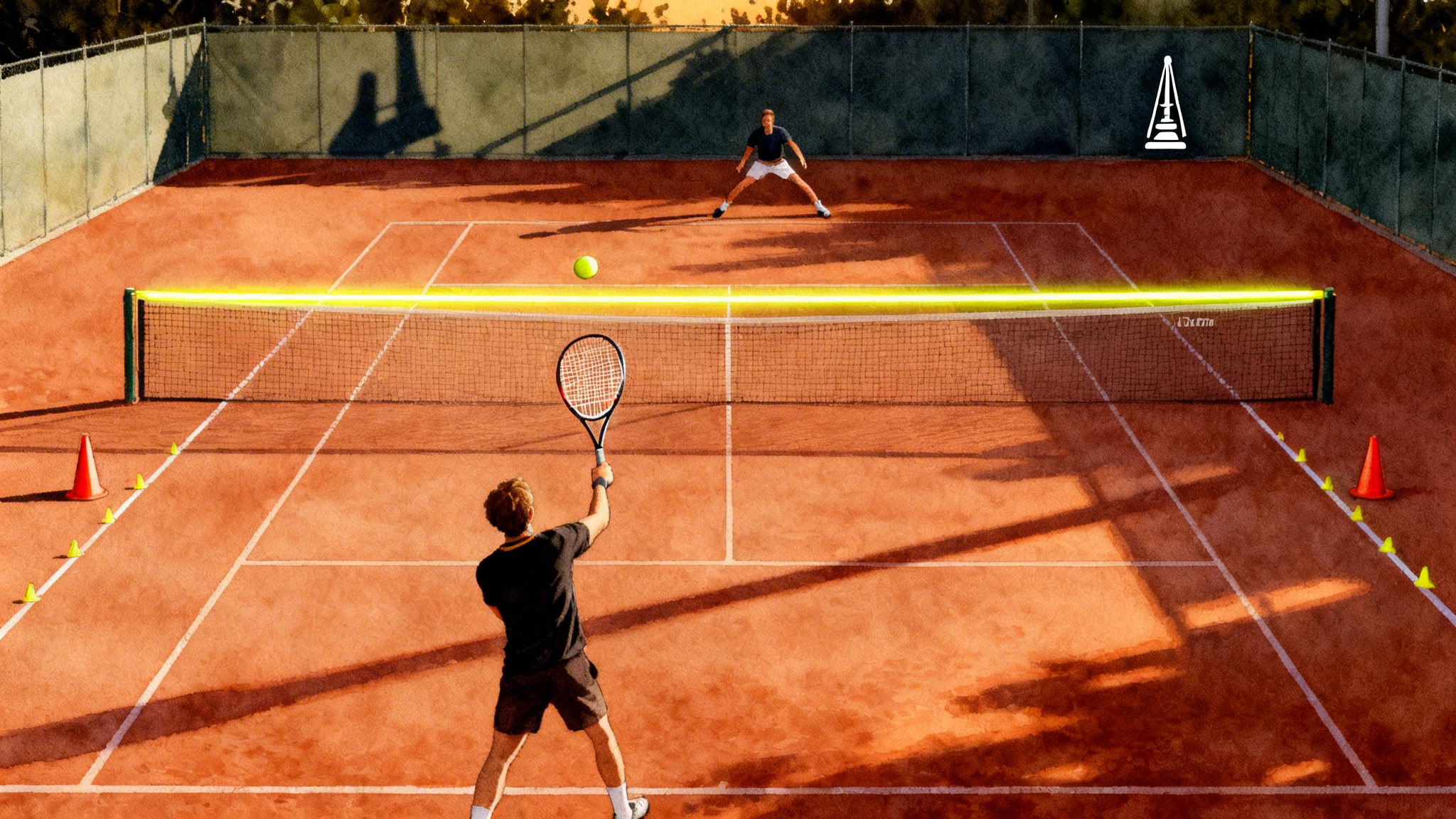
High Altitude Summer Tennis Training Guide: Rockies and Alps
A performance-first summer plan for altitude tennis. Learn how thinner air changes ball flight and aerobic load, best temperature windows June to September, and where to train in Aspen, Vail, Park City, Breckenridge, Gstaad, Kitzbühel, and St. Moritz.
 Tommy
Tommy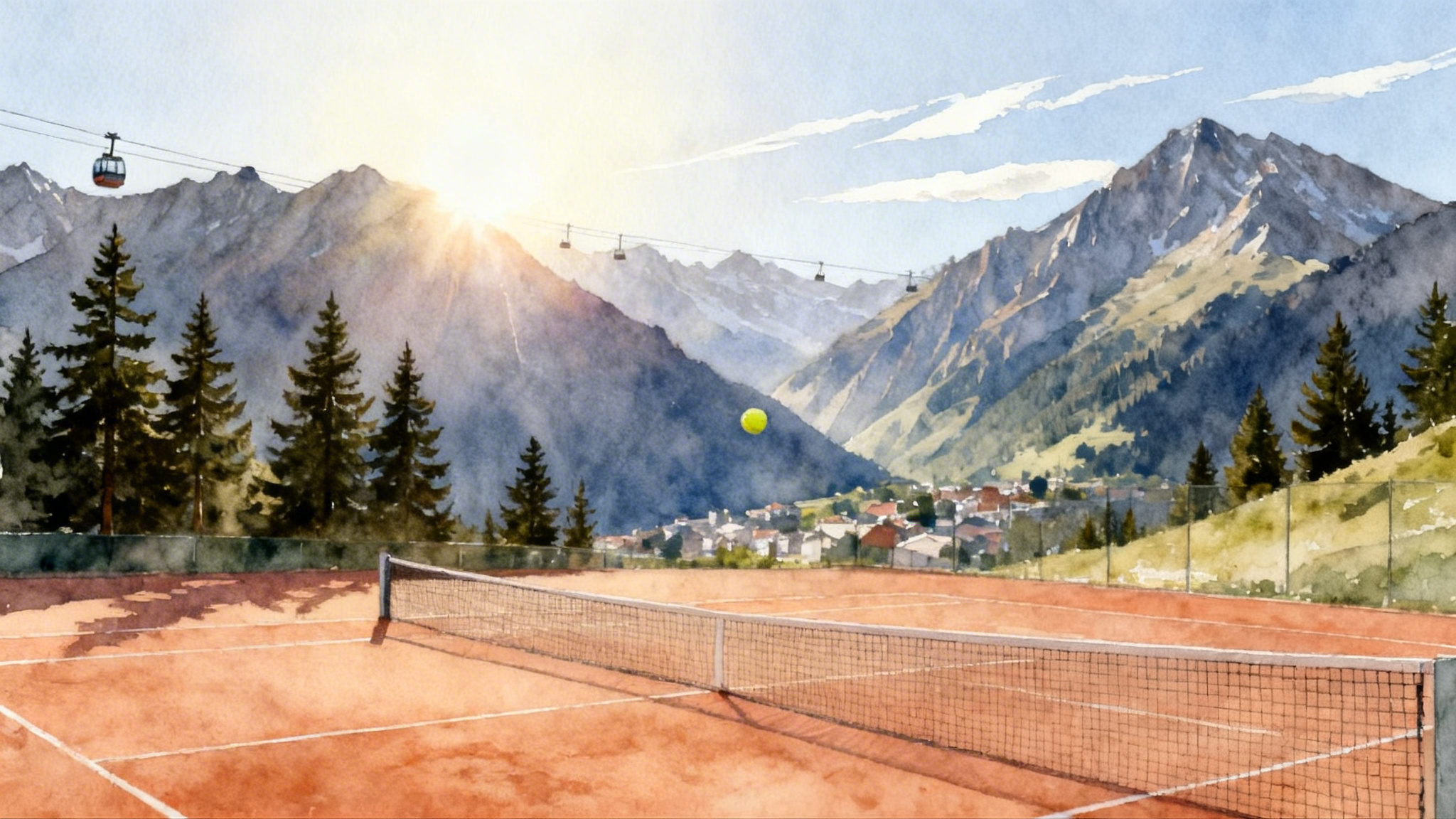
Why altitude tennis belongs on your summer calendar
High mountain towns offer a rare mix for serious players. The air is thinner, the days are dry and bright, and many courts sit within walking distance of trails, pools, and family activities. From Colorado and Utah to the Swiss and Austrian Alps, June through September is the sweet spot. Train hard in the cool mornings, recover with big scenery in the afternoons, and, if you plan it right, use the UTR tournament search filters to slot a match test before heading home.
This guide keeps performance first. You will learn what thinner air actually does to the ball and to your body, how to pick the right training temperatures by month, where to base in the Rockies and the Alps, how to structure short-stay camps, where to find nearby UTR events, and how to make the logistics work for families.
What the thinner air really does
Think of air as a fluid your ball must push through. At altitude that fluid is less dense. Two things happen that matter immediately to tennis.
- Ball flight changes
- Less drag means shots carry farther and arrive faster. Depth control tightens, and flatter trajectories become more dangerous for your opponent.
- The Magnus effect, which bends and dips spin-heavy balls, weakens. Heavy topspin drops less and slices float a bit more in flight. That is why high balls can sail if you swing like you do at sea level.
- After the bounce the story depends on what arrives at the court. Because the ball retains more speed and much of its spin, topspin serves and kick second serves can jump high on medium to firm courts. The ball feels livelier across the board.
- Above roughly 4,000 feet, governing bodies recommend high altitude balls to tame the bounce and depth. See the ITF rules on high altitude balls.
- Your physiology changes
- Oxygen pressure is lower, so repeated sprints and long rallies cost more. Expect a higher heart rate at a given pace and faster breathing under match stress.
- Most players need 3 to 5 days for the initial “whoa, this is harder” feeling to settle. Ten to fourteen days brings more comfortable work, but full adaptations take longer.
- Hydration and recovery matter more. Dry air hides sweat losses, ultraviolet exposure is stronger, and sleep quality can dip the first few nights.
Ideal training temperatures by month
You can hit in almost any mountain weather, but performance and recovery improve when you target smart temperature windows. Use this as a planning guide for June through September.
- June: Aim for 55 to 70 F in the mornings and early evenings. Midday can be crisp in Switzerland and warm in Colorado. Start with two shorter sessions per day to adjust.
- July: Best windows sit between 58 and 75 F. Mornings are prime across all regions. In drier Rockies towns you can hit at midday if there is light cloud cover and wind stays moderate.
- August: Similar to July. Plan high-intensity sets from 7 to 10 a.m., then light drilling or recovery from 4 to 7 p.m. The 60 to 75 F band is ideal.
- September: Cooler starts and golden afternoons. Target 50 to 68 F for your main work. Ball control often feels best this month as daily thermal swings narrow.
Pack layers. A sunny 62 F at altitude can feel warmer than 70 F at sea level because of the intense sun and low humidity.
The best mountain bases and what to expect
Below are the classic training hubs named in this guide, with altitudes, typical court surfaces, and a quick sense of travel and off-court life. Counts change by year, but the surface mix is consistent.
Rockies
-
Aspen and Vail, Colorado
- Altitude: Aspen roughly 8,000 feet, Vail roughly 8,150 feet.
- Surfaces: Outdoor hard at public parks, plus clubs that add clay in summer. Many sites offer ball machines and junior clinics.
- Travel: Fly to Aspen or Eagle County. Denver works with a scenic drive over high passes. Afternoon showers are short, mornings are dry.
- Off-court: Pools and bike paths are close to courts. Gondola rides, beginner hikes right from town, and river paths for easy recovery walks.
-
Breckenridge, Colorado
- Altitude: Roughly 9,600 feet. This is true high altitude training territory.
- Surfaces: Mostly outdoor hard at parks and recreation centers, some private club clay. Expect a fast ball.
- Travel: Denver to Breckenridge is a two hour drive in good traffic. Plan extra water and conservative opening sessions.
- Off-court: Family-friendly downtown, alpine slides, and short hikes around the ski base. Weather changes quickly, so keep a light jacket in your bag.
-
Park City, Utah
- Altitude: Roughly 7,000 feet.
- Surfaces: A strong mix of outdoor hard courts at municipal centers and clubs, with indoor options nearby for weather backups.
- Travel: Salt Lake City airport to Park City is under an hour. Stable summer weather with dry heat and cool mornings.
- Off-court: Miles of paved paths for easy spins, mountain coasters for kids, and a compact town center with food options that work for training days.
Alps
-
Gstaad, Switzerland
- Altitude: Roughly 3,450 feet.
- Surfaces: Predominantly European red clay at clubs and public courts. The town hosts a summer ATP event on clay, and local courts reflect that style.
- Travel: Train links from Geneva and Zurich make this a stress-free arrival. Mornings are cool, afternoons mild.
- Off-court: Village lanes, gentle valley trails, and family cable cars. Clay rewards patient patterns and footwork.
-
Kitzbühel, Austria
- Altitude: Roughly 2,500 feet.
- Surfaces: Red clay is the standard. Players who want to build long-rally patterns thrive here.
- Travel: Easy rail access from Munich or Salzburg. Warm afternoons in July and August, crisp mornings in September.
- Off-court: Lakes for cold dips, bike paths, and a walkable center for easy meals between sessions.
-
St. Moritz, Switzerland
- Altitude: Roughly 6,000 feet.
- Surfaces: A mix that includes clay in summer, with some private clubs offering hard or carpet indoors for rainy days.
- Travel: Rail from Zurich through spectacular passes. Even midsummer mornings can feel fresh.
- Off-court: Lakeside promenades, beginner trails, and high-mountain day trips by funicular.
How to tune your game for altitude
- String setup: Add 2 to 4 pounds of tension for control, or choose a slightly firmer string to lower launch angle. If you normally hybrid, consider a stiffer cross during mountain weeks.
- Ball choice: Above 4,000 feet, choose high altitude balls when available. They help bring bounce and depth back to a normal window, as recognized by the ITF rules on high altitude balls.
- Serve patterns: Use a higher toss and more body lift on kick serves to maintain clearance, but do your damage with accurate flat and slice serves out wide. The ball will carry. Aim for bigger margins on second serves during your first three days.
- Groundstrokes: Aim three to four feet inside the baseline until your eyes recalibrate. Think heavy through the court rather than loopy to the back fence. Drive cross, then change down the line when balanced.
- Footwork: Because the ball does more after the bounce, over-prepare the first step. Altitude rewards early positioning and compact swings.
Short-stay camp formats that work
Many mountain towns welcome visitors who want to train hard for a few days, then explore. If you are traveling in peak summer, book court time early and confirm ball machines, clinics, and stringing on arrival day.
Three common formats work well:
-
3-day power tune-up
- Ideal for: Tournament prep, a family weekend, or a work trip add-on.
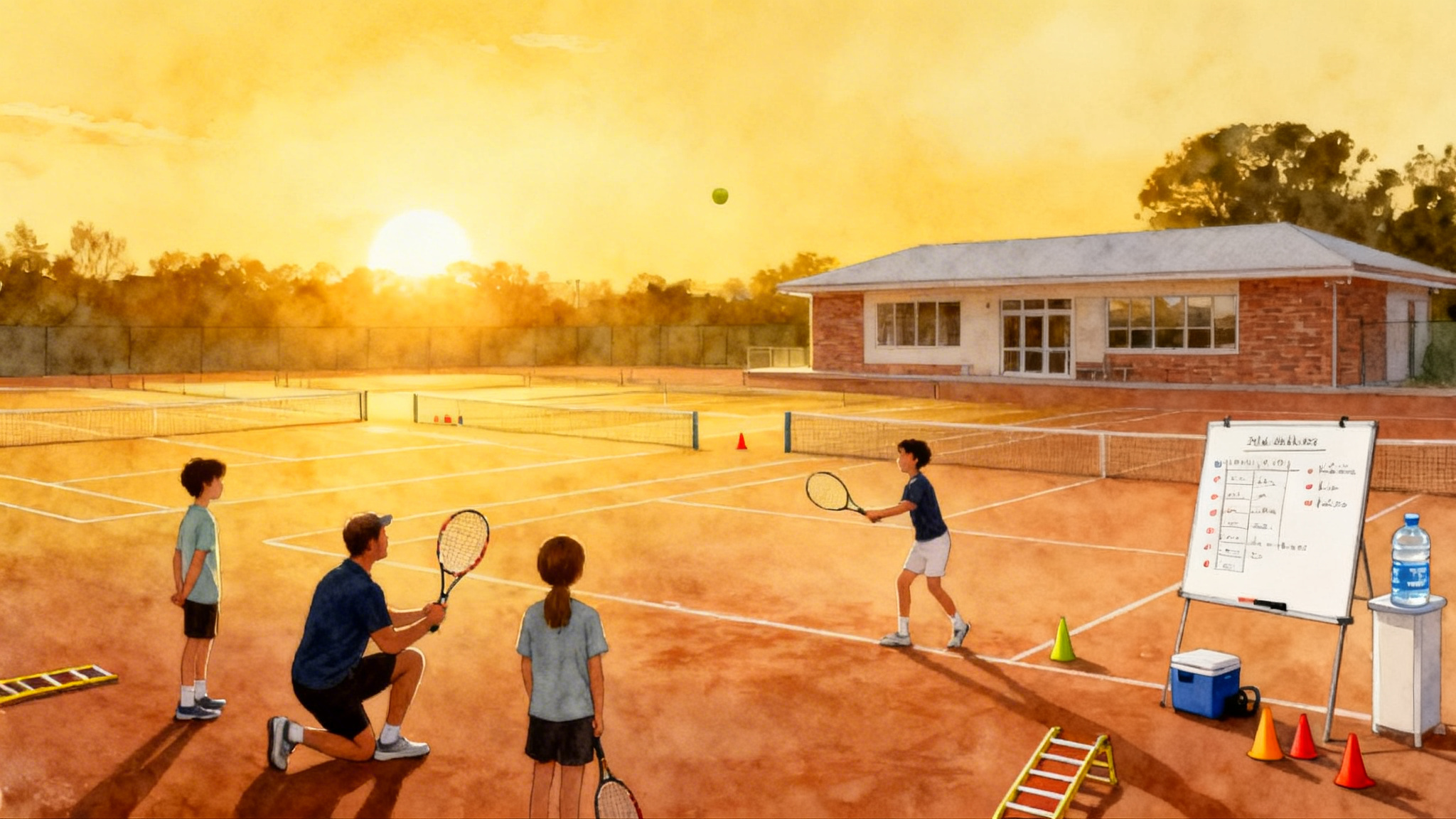
- Structure: Two on-court blocks per day, 90 minutes each, with a light strength circuit and mobility. Keep day one at 70 percent intensity to adjust.
-
5-day skills block
- Ideal for: Players rebuilding patterns or auditing technique.
- Structure: Morning fundamentals and live-ball drills, afternoon serve plus one and return plus one, then pattern play with targets. Reinforce mechanics with the checklist from build a forehand under pressure.
-
7-day full reset
- Ideal for: Players seeking both adaptations and a test match.
- Structure: Two hard days, one moderate day, rest and sightseeing, then two hard days and a match day with stats.
Sample week plans
Below are two plug-and-play outlines. Adjust for your level and altitude.
Plan A: Competitive junior or adult, 7 days at 7,000 to 8,000 feet
-
Day 1 — Arrival and prime the system
Morning: Easy jog or bike 25 minutes, dynamic mobility.
Midday: Light technical hit 75 minutes. Emphasize timing and depth targets, 60 percent pace.
Evening: Hydration plus 5 minutes nasal breathing before bed. -
Day 2 — First quality day
Morning: 90-minute on-court block. Serve accuracy ladder, crosscourt to alley patterns, 9-ball live rally games.
Afternoon: Strength circuit 30 minutes, posterior chain and core. Finish with 10 minutes of soft tissue. -
Day 3 — Speed plus skills
Morning: 75-minute on-court speed session. Split-step timing drills, approach and close, plus 10 point tiebreakers.
Afternoon: Easy lake walk with family, stretch bands 15 minutes. -
Day 4 — Moderate plus exploration
Morning: 60-minute serve and return only. Film serves from behind for feedback.
Afternoon: Gondola ride and short hike. Early dinner. Lights out before 10 p.m. -
Day 5 — Peak load day
Morning: 2-hour match play with scoring and changeover routines. Track first serve percentage and unforced errors.
Afternoon: Cold soak in stream or hotel pool, then 20-minute nap. -
Day 6 — Reset and review
Morning: Technique micro-block. Groove crosscourt backhands and neutral forehands.
Afternoon: Family activity or rest. Pack for match next day. -
Day 7 — Test day
Morning: Match or local round robin with match stats. Close with 15-minute cool down and notes for home coach.
Plan B: Family-first player, 5 days at 3,000 to 6,000 feet
- Day 1: Easy technical hit in the morning, park picnic with kids.
- Day 2: Morning clinic at the local club, afternoon swim. Keep nutrition simple and salty for hydration.
- Day 3: Match-play set in the morning, short mountain train ride or bike path cruise.
- Day 4: Rest day with mobility and a light walk. Book a sitter for a 60-minute evening hit.
- Day 5: Serve plus one and return plus one in the morning, tiebreaker challenge, celebrate with the family in town.
Nearby UTR events and how to find them fast
Mountain towns run pop-up match days and weekly events in summer, and larger draws sit in nearby cities. Use the UTR tournament search filters to set your month, rating range, and a 25 to 100 mile radius.
- Rockies ideas: Aspen and Vail often point you toward events in Glenwood Springs, Vail Valley, or down the I-70 corridor. Breckenridge players look to Frisco, Silverthorne, and Denver metro. Park City players can tap Salt Lake City suburbs throughout July and August.
- Alps ideas: Gstaad entries often find weekend UTR play in the Bernese Oberland or Lausanne region. Kitzbühel connects to Innsbruck and Salzburg. St. Moritz players can look toward Chur, Zurich, or the Engadin valley network.
Set alerts two to three weeks in advance. Many events accept last minute entries, but you will schedule smarter if you lock a draw date before booking courts.
Court surfaces and how to use them
- Hard courts in the Rockies: The ball stays quick and skids through at altitude. Reward patterns that take time away. Serve accuracy, early contact points, and front-foot returns.
- Clay in the Alps: Red clay slows the bounce and stretches rallies, which is perfect for rebuilding point construction. Learn to recover diagonally after every shot and vary height, especially with the thinner air making deep balls penetrate. For more clay specifics, see the Riviera clay window guide.
- Mixed setups: Park City and St. Moritz often let you switch surfaces in the same week. Start on the surface that matches your next tournament, then finish with the other for skill transfer. If weather pushes you indoors in major hubs, check these year-round indoor tennis options.
Practical logistics for families
-
Airports and transfers
Aspen and Vail: Aspen, Eagle County, and Denver airports all work. Build in buffer if you cross mountain passes during afternoon storms.
Breckenridge: Denver is the play. Consider arriving in the afternoon, eating early, and sleeping long before your first hit.
Park City: Salt Lake City to Park City in 40 to 50 minutes.
Gstaad: Trains from Geneva or Zurich with one or two connections. Rolling luggage works fine.
Kitzbühel: Access from Munich or Salzburg by rail.
St. Moritz: Zurich to St. Moritz by train through alpine passes that kids will remember. -
Where to stay
Look for lodging within a 10 to 15 minute walk of courts and a grocery. A pool or cold lake nearby is a bonus for recovery.
Ask clubs about temporary guest passes and junior clinics. Some municipal centers sell week passes that include ball machines. -
Weather and contingencies
Mornings are reliable. Afternoon showers pop and pass quickly. Keep a microfibre towel, light shell, and a second grip in your bag.
Have a rainy-day plan for kids within walking distance, like a small museum or indoor pool. -
Health and recovery
Hydration: Add electrolytes, not just water. Dry air masks sweat losses.
Sun: Use high SPF on face and hands. Reapply between sets.
Sleep: Keep the bedroom cool and dark. A gentle humidifier helps some travelers.
A three-step approach to altitude adaptation
- Days 1 to 2: Reduce volume 30 to 40 percent and play for feel. Aiming three feet inside the lines is a simple, effective constraint.
- Days 3 to 5: Insert one quality session per day, then a second shorter hit. Track first serve percentage, return depth, and unforced errors. If numbers do not stabilize by day five, cut volume and keep intensity high.
- Days 6 to 10: Build back to full volume if you plan a match or UTR event. Serve accuracy plus one patterns deliver the best altitude payoff.
What to pack and how to set up your day
- Racquets: Two frames minimum, strung 2 to 4 pounds tighter than home. Bring overgrips and a dampener if you normally use one.
- Balls: At or above 4,000 feet, look for high altitude balls. Below that, regular balls are fine, but expect extra jump on hot afternoons.
- Shoes: If you split time between hard and clay, bring one pair with a durable hard court outsole and one clay-specific pair if you plan heavy clay blocks.
- Hydration kit: Soft flask or bottle you enjoy using, electrolyte packets, and salty snacks. In dry towns you will drink more than you think.
- Recovery: Light compression tights for evenings, lacrosse ball or travel roller, swimwear for cold dips.
- Sun kit: Cap, sunglasses, mineral sunscreen, lip balm.
Daily schedule template that works almost everywhere
- 6:30 to 7:00 a.m. Wake and hydrate. Small snack with carbs and a bit of protein.
- 7:30 to 9:00 a.m. Prime session. Live-ball work and serve targets while the air is cool.
- 9:30 a.m. Breakfast and short walk.
- 2:00 to 3:15 p.m. Skills or film session, or gym if thunderstorms threaten.
- 4:30 p.m. Family activity or nap. Early dinner.
- 8:30 p.m. Lights out. Sleep is the cheapest performance enhancer at altitude.
Putting it all together
Pick your base, book morning courts, and plan a simple week where you increase intensity after day two. Use firmer strings, respect the sun, and hydrate more than you think. In the Rockies you will get quicker courts that reward early preparation and accurate serves. In the Alps you will find clay that stretches rallies and teases out better patterns, with cooler mornings that make two-a-days realistic. If you want a match test, set a calendar alert and search a UTR draw within 100 miles. You will come home with a livelier serve, tighter depth control, and a real sense of how to manage your body when the air gets thin.
The best part is how this type of trip blends effort and memory. A strong hit before breakfast, a cable car ride with the kids, a quiet stretch by the lake, and an early night so you can do it again. Train well, play smarter, and let the mountains do the rest.