Riviera Clay Window: Côte d’Azur Tennis in May, June, September
Use the French Riviera’s calm pre Roland Garros weeks and mellow September shoulder to level up your clay game while enjoying the beach. Base at All In Academy, add open court hits, day trips, and tune‑up events across Nice to Menton.
 Tommy
Tommy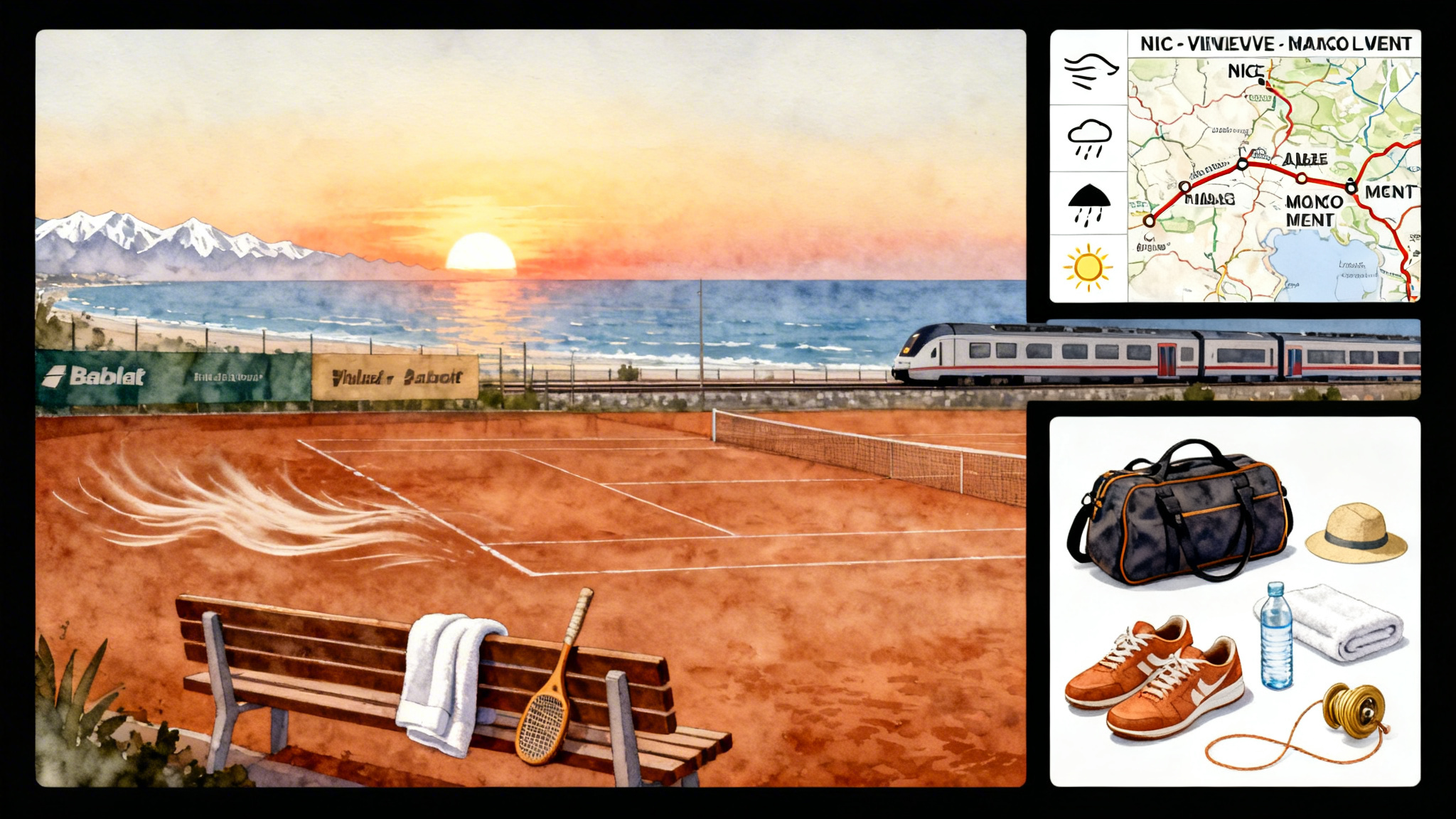
Why the Riviera clay window is different
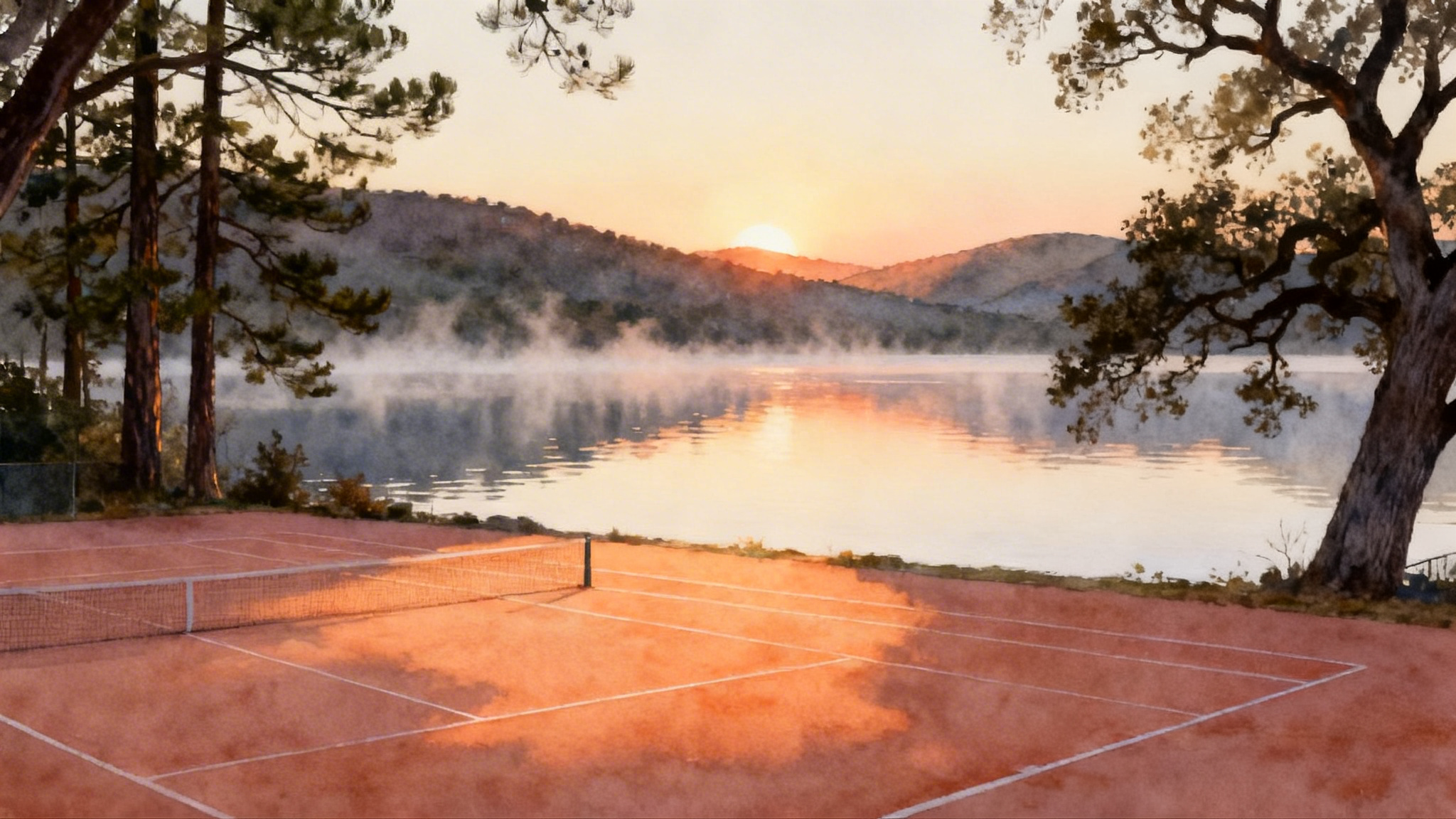
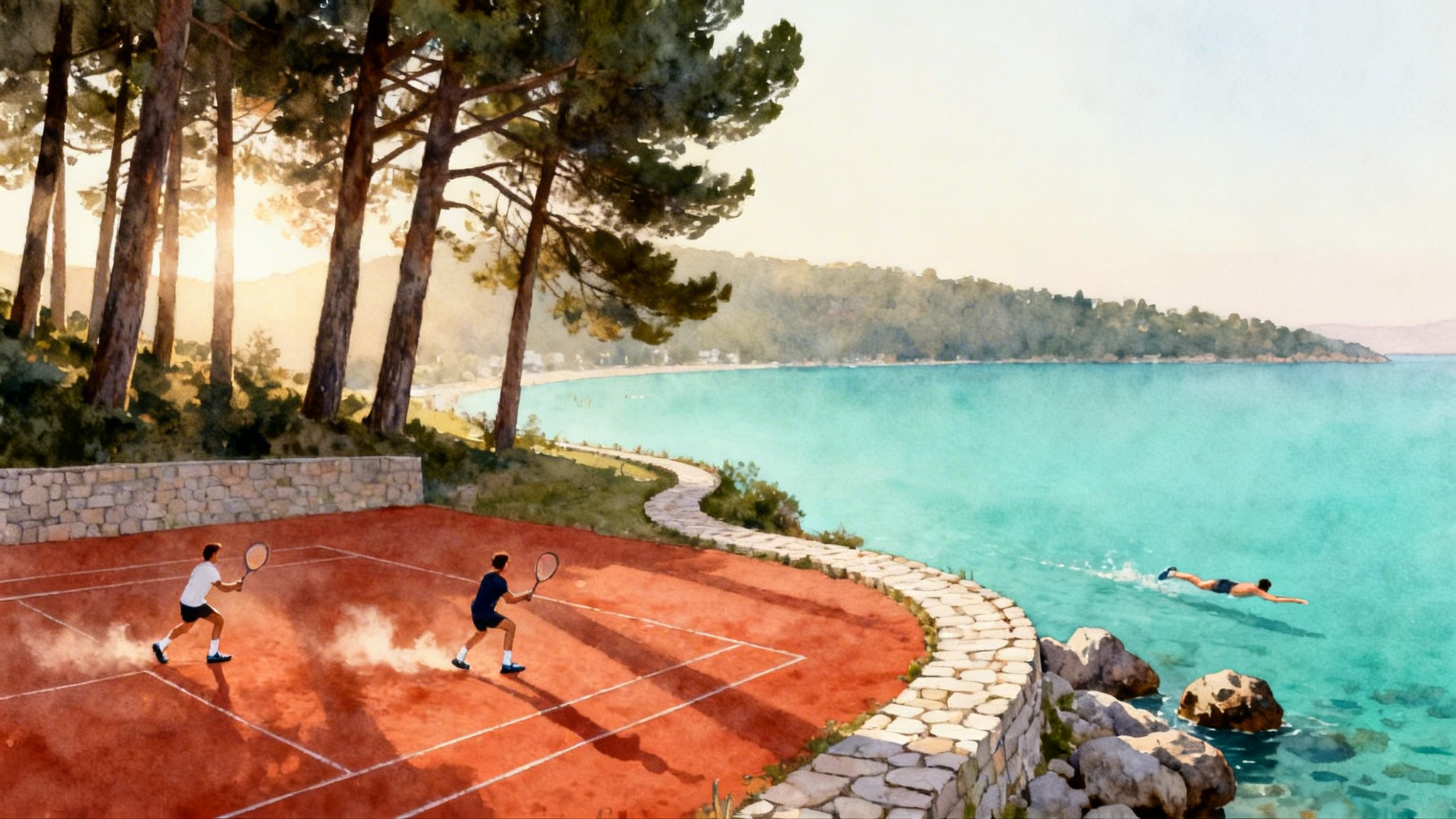
Clay tennis on the French Riviera feels like a cheat code. The Alps sit just behind the coast and block harsher northern systems, while the Mediterranean moderates temperature. That mix creates a spring and early summer stretch that is warm, bright, and playable, followed by a September encore when the sea is still inviting but the crowds thin. Most clubs and municipal facilities along Nice, Villeneuve‑Loubet, Antibes, Monaco, and Menton run on red clay, so you can stack meaningful repetitions on the same surface the pros use in Paris.
This guide shows you how to plan a climate‑smart week or two: build your training core around All In Academy in Villeneuve‑Loubet, then layer in open‑court sessions, day trips, and competitive hits. You will learn when to go, how to plan around wind and rain, which surfaces to expect, and how to travel car‑free.
When to go: May to June and September
-
Temperature: Expect daytime highs in the low to mid 20s Celsius in May, rising toward the mid 20s to around 27 Celsius in June, with cooler mornings that are perfect for heavy drilling. September brings back similar temperatures with the sea at its warmest. For planning, consult official climate normals for Nice to get a feel for typical rain and sunshine patterns, then set your session times accordingly. See the Nice climate normals data for baseline trends.
-
Wind: Morning air is usually calmer. By early afternoon, a gentle sea breeze often arrives from the south or southeast. It keeps things comfortable but can push your topspin long if you do not adjust your targets. Plan technical footwork and high‑repetition drills before lunch, then move to point play later in the day when the breeze helps cool courts.
-
Rain: May can bring short showers. They are often brief and clear quickly. June tends to be drier on average. September is warm but can feature the occasional late‑day thunderstorm. Clay drains fast here; clubs typically broom and reopen courts soon after light rain. Build a backup plan with indoor footwork ladders, elastic band routines, and video analysis in case a shower pops up.
-
Calendar context: Roland Garros qualifying and main draw run from late May into early June. The weeks just before and during that window bring clay‑hungry players to France, yet the Riviera’s training courts stay accessible if you book smart. September is a second season with locals back at work and sea temperatures still friendly.
Anchor your week at All In Academy in Villeneuve‑Loubet
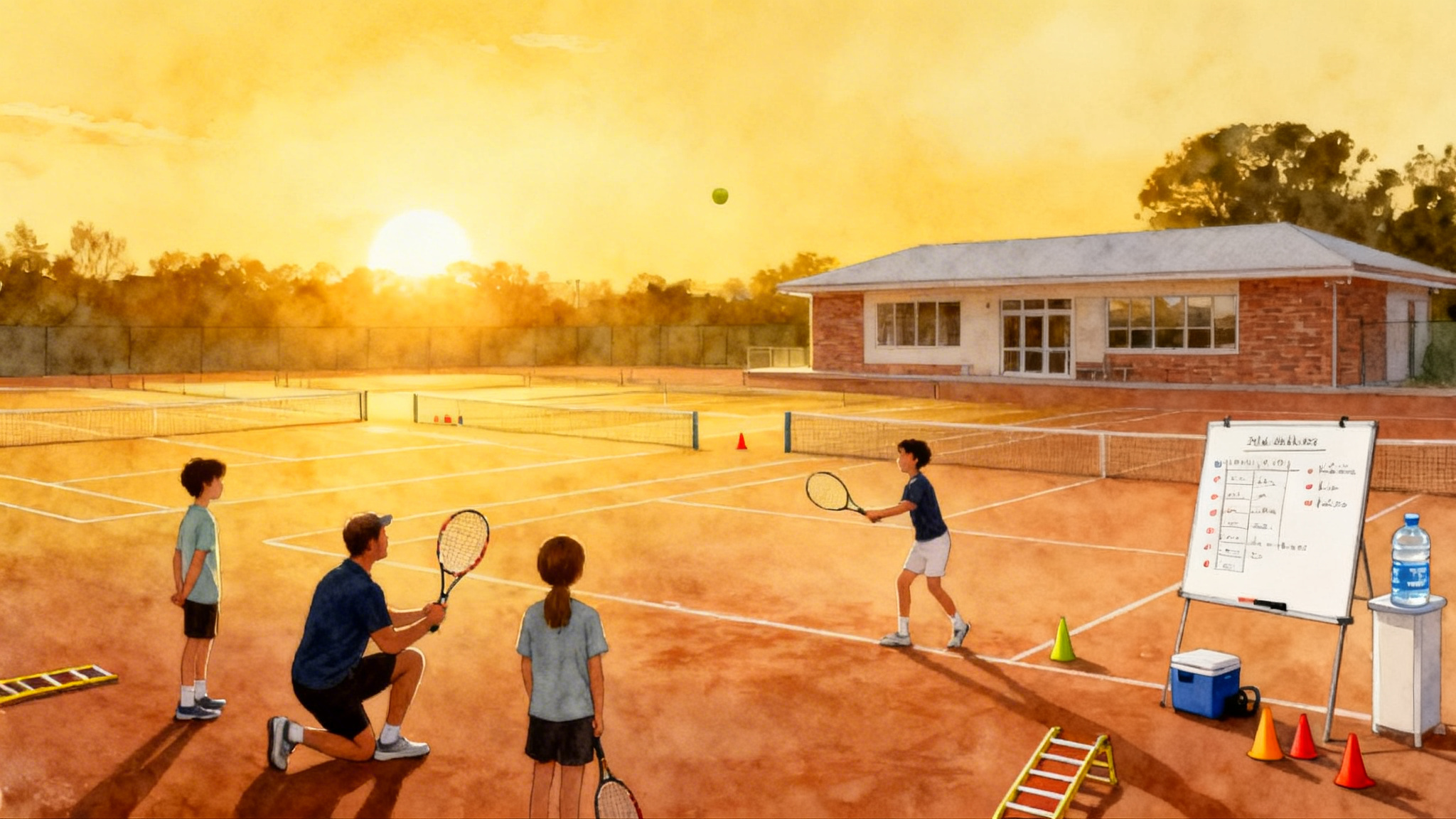
Villeneuve‑Loubet sits between Nice and Antibes, with quick rail access in both directions. All In Academy in Villeneuve‑Loubet is purpose‑built for structured blocks. Think two to three hours in the morning, focused on movement patterns, consistency under fatigue, and serve plus first ball, followed by a lighter afternoon of point play or beach recovery. If you are deciding between programs, see how to choose the right academy.
How to use it well:
- Book a four to six day block that sequences volume early and intensity late. For example, Monday to Wednesday emphasize repetitions and patterns. Thursday to Saturday sharpen patterns into match situations.
- Ask for video on day one and day four. On clay, the biggest gains often come from spacing and loading mechanics. Two check‑ins keep you aligned.
- Request paired hitters at your level for the second hour of each session, then mix in a slightly stronger player on day three or four to simulate pressure.
- If you are tuning up for a tournament, script service games with scoreboard pressure: alternate serving at 15–30 and 30–40, then play two no‑ad deuce points at the end of each basket.
Surface mix and what it means for your game
The Riviera is predominantly red clay. Courts are medium to medium‑slow with a reliable, higher bounce when well watered. You will also find some hard courts and the occasional artificial clay surface in municipal complexes.
What to change in your tennis:
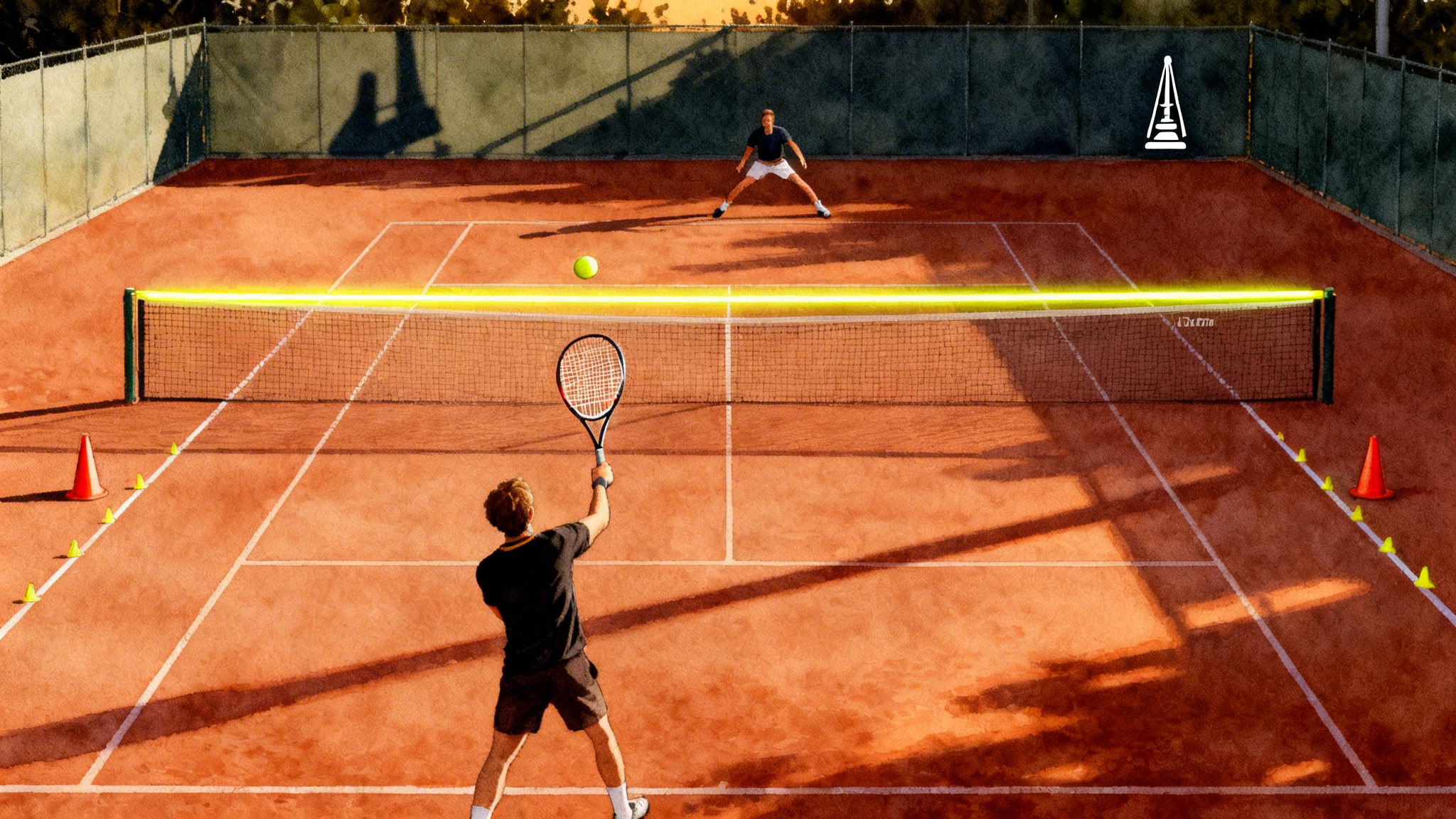
- Movement: Build a braking step two to three micro‑steps earlier than on hard courts. Practice a controlled slide into an open stance on your outside leg, then recover with a crossover. Use dots or cones to mark your braking zones during drills.
- Spacing: Aim to strike the ball a palm’s length farther from your body than on hard courts. It creates room for the ball’s higher bounce and unlocks clay‑friendly spin.
- Height and shape: Rally crosscourt with a shoulder‑high net clearance to push opponents back. Save the flatter change‑up for short balls and approach opportunities. See how to build a forehand that holds up.
- Serve patterns: A kick serve gains more margin here. Build second‑serve points around a heavy kicker to the backhand, then attack the first forehand to the open court.
- Strings and shoes: If you string your own frames, consider one kilogram lower tension than on hard courts. Bring dedicated clay‑soled shoes. The herringbone pattern clears clay and grips on the slide.
Sample seven‑day adult itinerary
This plan assumes two training blocks at All In Academy, one open‑court session, and easy rail day trips.
- Day 1 Sunday. Arrival day. Fly into Nice Côte d’Azur Airport, drop bags in Villeneuve‑Loubet, and take a 30‑minute beach walk to unwind. Light mobility at sunset.
- Day 2 Monday. Morning 2.5 hours at the academy. Emphasis on movement ladders, crosscourt patterns, and forehand load. Afternoon one hour of easy doubles on a nearby municipal court. Evening recovery swim.
- Day 3 Tuesday. Morning 2 hours of serve plus first ball and kick serve targets. Late afternoon point play sets to simulate tournament finishing. Dinner in Antibes old town and sunset stroll on the ramparts.
- Day 4 Wednesday. Active recovery morning. Take the train to Menton for coffee in the old town and a light beach run. Sunset challenge set on clay back near Villeneuve‑Loubet.
- Day 5 Thursday. Morning academy block with video review. Afternoon rail up to Monaco for sightseeing. If courts are available for visitors at a local club, book a late session, otherwise return to Antibes for a spar.
- Day 6 Friday. Academy in the morning focusing on return games and first‑strike patterns. Afternoon open‑court tiebreak ladder with new partners you met earlier in the week.
- Day 7 Saturday. Optional tune‑up event or match play morning, then a long lunch and a swim. Pack in the late afternoon, or add one more sunset hit if the legs still feel lively.
Sample five‑day junior itinerary
For a travel team or family with competitive juniors, balance volume with recovery and schoolwork windows.
- Day 1 Monday. Arrival and a short orientation hit. Thirty minutes of footwork plus forty minutes of live ball.
- Day 2 Tuesday. Morning academy block. Midday schoolwork. Late afternoon match play sets, parents or coaches charting first‑serve percentage and unforced errors.
- Day 3 Wednesday. Morning technical session with video. Afternoon beach recovery and a light mobility workout. Early night.
- Day 4 Thursday. Morning intensity day. Serve games under scoreboard pressure. Afternoon open‑court doubles that focuses on returns and poaching.
- Day 5 Friday. Tournament or Universal Tennis Rating match play if available, or an internal ladder with prizes for hold percentage and break points converted. Wrap with a group dinner and sunset swim.
Open‑court hits across Nice and Antibes
The strip from Nice to Antibes is rich in municipal complexes and friendly member clubs. Many offer pay‑as‑you‑play slots outside of junior team hours.
- Booking strategy: Walk by in the early afternoon to find the club administrator, or call in the morning. If your French is limited, a friendly hello and your preferred time window usually do the trick. Bring cash for one‑off court fees.
- Timing: Courts open early. Book 7:30 to 9:30 in May and June for the best conditions. In September, consider 8:00 to 10:00 as the sun angle softens.
- Partners: Ask the front desk if there is a WhatsApp group or notice board. Offer a structured set with a new partner one afternoon, then invite them to your tiebreak ladder the next day.
Day trips that add tennis spice: Monaco and Menton
- Monaco: Take the coastal train to the station carved into the rock. Courts in the principality are beautifully maintained and often busy. If visitor slots are not available, make it a scouting trip. Watch local team practice, then return to Villeneuve‑Loubet for your own session.
- Menton: The last French stop before Italy has a laid‑back feel and a high chance of sun. Combine a morning coffee in the old town with an 11:00 court and a swim. Humidity can rise, so practice kicking the ball above shoulder height and work on patience.
Events to target: ITF and UTR
Look up the International Tennis Federation, which runs the ITF World Tennis Tour. Small professional and high‑level junior events rotate through the Riviera towns in spring and early fall. Drop in one day to watch or plan your trip to line up with a qualifying week. The official ITF tournament calendar lists dates and entry deadlines.
Universal Tennis Rating events can be a useful check on progress. Search the platform a month before travel, then leave the final decision until you see your week’s training load. If your legs feel heavy, choose a shorter format or doubles.
How to use events wisely:
- Enter one event in week one only if it fits between academy blocks. Avoid stacking matches after your heaviest training day.
- If you are preparing for summer tournaments at home, treat a Riviera event as a dress rehearsal. Time your pre‑match warmup, test your string setup, and rehearse nutrition.
Practical guide: airports, rail, lodging, car‑free options
- Airports: Nice Côte d’Azur Airport is five to fifteen minutes by tram or taxi from central Nice and about twenty to thirty minutes by road to Villeneuve‑Loubet and Antibes. Marseille Provence and Genoa Cristoforo Colombo are secondary options if airfare works better, each roughly two to three hours away by rail.
- Rail: The coastal regional trains connect Cannes, Antibes, Villeneuve‑Loubet Plage, Nice, Monaco, and Menton. Trains are frequent in daytime and ideal for car‑free travel with a racket bag. Buy tickets at the machine or on your phone. Validate paper tickets before boarding. For arrival day, Nice Saint‑Augustin station is a short walk or tram ride from the airport area.
- Local transit: Trams in Nice make it simple to get from the airport to the city and to the main station. Buses run the coast if you prefer a scenic route, but trains are faster at peak hours.
- Lodging near courts: In Villeneuve‑Loubet, look at apartments in the marina area to be a short walk or quick bike ride from training. Antibes old town is charming and works well if you plan to split days between academy sessions and open‑court hits closer to town. In Nice, choose neighborhoods along the tram line to ease airport transfers.
- Car‑free setups: A folding scooter or a simple city bike shortens last‑mile gaps to courts. Most towns have bike lanes along the promenade and side streets. If you rent a car, reserve a compact model. Street parking tightens in June and eases in September.
- Budgets: Court fees for municipal clay are comparatively modest. Private clubs vary, with higher prices for prime evening slots. Plan your heaviest volume in morning windows to save money and avoid heat.
What to pack and how to adapt fast
- Two pairs of clay‑specific shoes and extra socks. Rotate daily so the cushioning recovers.
- Two reels worth of your preferred string or a few factory strung frames if you do not travel with a machine. If you like a 24 kilogram hard‑court tension, try 23 on clay to add shape.
- A light towel for the bench, a cap, mineral sunscreen, and a big bottle you can refill. Humidity rises in September afternoons, so plan two hydration breaks per hour.
- One recovery tool: a small massage ball or a short foam roller. Clay movement asks a lot from your adductors and glutes. Ten minutes nightly goes a long way.
- Drill cards: bring three laminated one‑page checklists for crosscourt patterns, approach plus volley, and serve plus first ball. Having them on court makes self‑coaching simpler when you switch from academy to open hits.
How to settle in on clay by day three:
-
Target windows, not lines. On day one and two, build windows two meter long and one meter inside the sideline and baseline. Accuracy grows once your feet trust the slide.
-
Make gravity your friend. After contact, let your torso keep rotating and your back heel release so you ride the slide. Stopping the body early is how players fall.
-
Scoreboard honesty. Track hold percentage, first‑serve percentage, and errors per set. Clay rewards problem solvers who adjust mid‑set.
Weather‑aware scheduling in practice
- May mornings: Dry, calm, and crisp. Load your heaviest basket drills here. If a shower arrives, grab a coffee and wait it out. Many courts are playable within an hour after light rain.
- June afternoons: Use the sea breeze. Play longer rally games to build patience. Mix in drop shots and high loopy balls to stretch opponents.
- September evenings: Warm air and a steady bounce make this the best time for match play. Start at 17:00 or 18:00 to finish under a cooler sky and then swim.
Putting it together
The Riviera clay window rewards planning. Start with a four to six day block at All In Academy in Villeneuve‑Loubet, then reserve two or three open‑court sessions at municipal clubs, and pencil a light‑on‑legs day trip to Monaco or Menton. Check the ITF tournament calendar for a local event if match reps fit your week, and keep Universal Tennis Rating options as a flexible alternative. Build mornings around volume, afternoons around point play, and evenings around recovery.
If you do that, you return home with a smoother slide, a heavier second serve, a calmer forehand window, and real confidence for the rest of your season. The beach and the bright Riviera light are a bonus, but the real souvenir is the clay in your shoes and the new habits in your game.