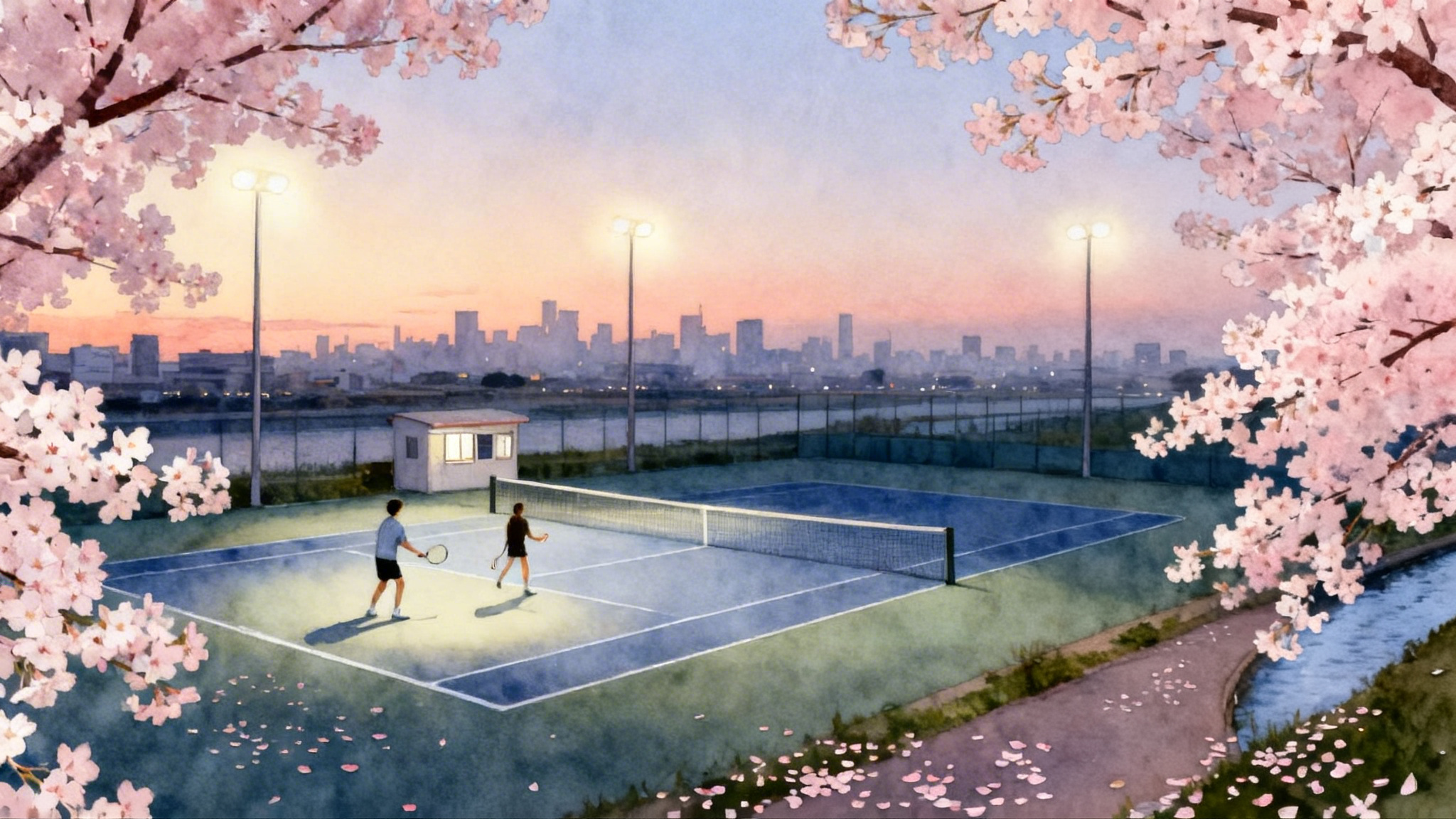
The Dome Circuit: Year-Round Indoor Tennis in Cold Cities
Build a reliable, year-round training calendar inside modern air domes. We profile Ottawa’s SCORE Tennis Academy, Berlin’s TennisTree, and Poland’s Tenis Kozerki with climate insights, tech, sample weeks, budgets, and travel tips.
 Tommy
Tommy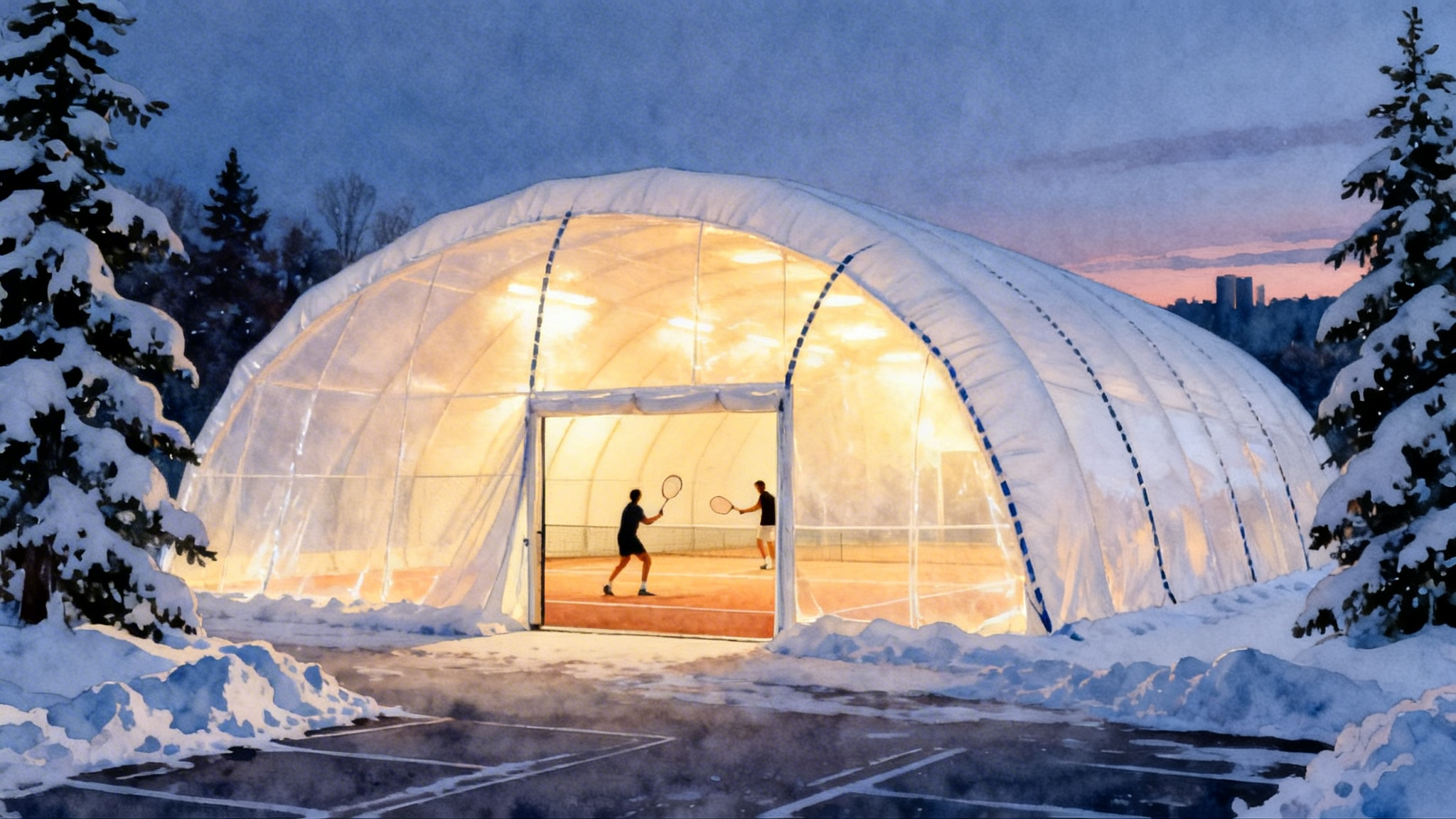
Why a winter dome circuit beats waiting for spring
When the forecast turns into a mix of snow, wind, sleet, and ice, progress often stalls. Air-supported domes and insulated indoor halls solve that problem by creating a predictable arena for work. You get the same ball flight every day, consistent lighting, and dry courts even during a blizzard. That stability reduces wasted sessions and lets you stack quality reps through the cold months.
Here is the simple logic for players who live where winter is real: pair dependable indoor training from late fall through early spring with a smart transition plan for outdoor tournaments. In practice, that means building a circuit of trusted hubs in cold-weather cities that keep you sharp until the clay and hard courts outside are ready.
This guide focuses on three proven stops that fit together well on a calendar: SCORE Tennis Academy in Ottawa, TennisTree training in Berlin, and Tenis Kozerki near Warsaw. Each offers a strong winter environment, modern facilities, and coaches who are used to helping players peak for spring.
Weather realities that shape your plan
Cold-weather tennis is about managing risk. You do not control storms, so you control the venue. The three cities below reward a dome-first mindset.
- Ottawa: Winters are long and cold. Average January temperatures often sit below freezing, and snow is common from November into March. Domes in Ottawa are not a luxury. They are the season.
- Berlin: Winters are chilly, wet, and cloudy. Outdoor courts can be playable in brief spells, but rain and short daylight make consistent training hard from November to March. Indoor domes and halls carry the workload.
- Grodzisk Mazowiecki near Warsaw for Tenis Kozerki: Winters are cold with frequent freeze-thaw cycles that keep outdoor clay soft or icy. Reliable training moves indoors from roughly November through March.
Best months for dome reliability across the circuit:
- Prime dome window: November to March in all three locations
- Shoulder season to start outdoor transition: April in Berlin and central Poland, May in Ottawa
Practical takeaway: schedule your heavy technical work, fitness, and volume during the dome window, then shift toward outdoor adaptation as daylight and temperatures rise.
Meet the hubs that make winter work
Ottawa’s SCORE Tennis Academy
What stands out: Ottawa has embraced air-supported structures for decades because it must. SCORE Tennis Academy operates inside this tradition with multiple indoor courts, structured programming, and coaches who understand long winters. The big benefit is reliability. When temperatures plunge, the schedule holds.
On-court feel: Domes in Ottawa are typically bright with even LED lighting, a firm hard-court bounce, and good sound absorption that keeps the ball strike crisp rather than echoey. Expect consistent ball speed that rewards clean timing.
Programming notes: SCORE has a reputation for technical clarity and for blending players across levels into competitive live-ball segments that simulate match patterns. You will find junior high performance blocks, adult performance groups, and private lesson availability that can be paired with fitness.
Travel and logistics:
- Airport: Ottawa Macdonald–Cartier International Airport with direct connections to major Canadian and some United States hubs
- Getting around: Ride-hailing and short car rentals are easy. Public transit can work, but winter footwear and buffer time are smart additions on storm days.
- Lodging zone: Look for short-term rentals or hotels within a twenty-minute drive of your training base to keep commute stress low.
Best window: November through March for maximum certainty. April can deliver some outdoor opportunities, but you will likely still favor the dome.
Typical costs and budgeting in Ottawa:
- Court time per hour: often forty to seventy Canadian dollars depending on time and membership
- Small group training block per week: roughly five hundred to nine hundred Canadian dollars depending on hours and coach assignment
- Private lesson per hour: commonly ninety to one hundred fifty Canadian dollars plus court
- Hitting partner per hour: thirty to fifty Canadian dollars plus court
- Strength and movement sessions: twenty to forty Canadian dollars in small groups
- Lodging: one hundred to one hundred eighty United States dollars per night for midrange hotels near training
Action tip: Ottawa rewards planners. Book blocks early, expect waitlists in peak after-school and early evening hours, and keep morning slots in your back pocket for add-on reps.
Berlin’s TennisTree
What stands out: Berlin is a year-round tennis city that leans on domes and insulated halls in winter, then bursts outdoors in spring. TennisTree is known for patient technical work, high-quality ball feeds, and smart use of video or sensor feedback. The coaching culture is comfortable handling adult competitors, college-bound juniors, and performance-minded club players.
On-court feel: Surfaces vary across Berlin domes and halls. Expect a mix of indoor hard courts with medium speed and indoor carpet or textile surfaces with lower friction that can play quick off the skid. Coaches adjust patterns accordingly, emphasizing first-strike clarity and return depth.
Travel and logistics:
- Airport: Berlin Brandenburg Airport with wide European access
- Getting around: The transit network is excellent. A weekly pass reduces car dependence and makes split sessions more feasible.
- Lodging zone: Neighborhoods with quick rail access cut door-to-door time. Look near lines that shorten transfers to your training site.
Best window: November through March for winter reliability. April is the month when outdoor options expand fast, so you can schedule both dome sessions and first outdoor hits.
Typical costs and budgeting in Berlin:
- Court time per hour: often twenty to thirty five euros depending on surface and time of day
- Small group training per week: roughly four hundred to eight hundred euros depending on volume and staff
- Private lesson per hour: commonly seventy to one hundred twenty euros plus court
- Hitting partner per hour: twenty to forty euros plus court
- Strength and movement sessions: twenty to forty euros in small groups
- Lodging: eighty to one hundred fifty euros per night for midrange hotels or business apartments
Action tip: Surfaces differ more in Berlin than in Ottawa. If your spring target is slow outdoor clay, add two weekly sessions on the grippiest indoor surface you can book and sharpen your height and depth through the middle third of the court.
Tenis Kozerki in Poland
What stands out: Tenis Kozerki has built a modern campus feel near Warsaw with indoor training that carries players through winter, then extensive outdoor courts for spring and summer. It has hosted notable events and camps and is used to athletes planning multi-week blocks.
On-court feel: You will encounter modern indoor courts that deliver true bounces and quality lighting. Because the venue shifts seamlessly into a larger outdoor footprint in spring, it is ideal for players who want a longer stay that straddles the indoor-to-outdoor changeover.
Travel and logistics:
- Airport: Warsaw Chopin Airport for most flights, with regional trains or car service to Grodzisk Mazowiecki
- Getting around: Rides are simple by car, and train links are solid for day trips to Warsaw on rest days
- Lodging zone: Consider on-site or nearby hotels and short-term rentals to reduce commute time, then expand options once you move outdoors in spring
Best window: November through March indoors. From mid-April the outdoor courts come into consistent play and red clay preparations are excellent through May and June.
Typical costs and budgeting at Kozerki:
- Court time per hour: often sixty to one hundred twenty Polish zloty depending on surface and peak hours
- Small group training per week: roughly four hundred to eight hundred euros depending on hours and staff
- Private lesson per hour: commonly sixty to one hundred twenty euros plus court, or in local currency when billed on site
- Hitting partner per hour: twenty to forty euros plus court
- Strength and movement sessions: twenty to forty euros in small groups
- Lodging: sixty to one hundred twenty euros per night in the local area, with seasonal variation
Action tip: Use Kozerki as your bridge from indoor training to a clay-focused spring. Add outdoor shadow sessions in cool but dry afternoons as soon as courts open, then lengthen point patterns from four-ball to eight-ball to rally-to-finish.
Dome technology that actually matters on court
Air-supported structures rely on positive air pressure and strong fabric shells to keep a stable envelope over the courts. Modern domes and halls tend to share a few features that affect performance.
- Lighting: LED fixtures provide even, bright light with minimal glare. You see the ball early off the strings and track it cleanly against the roof.
- Heating and ventilation: Consistent temperatures make footwork friction predictable. Good ventilation keeps the air dry enough that balls do not fluff up too quickly.
- Surfaces: Indoor hard courts in domes often feel one step faster than outdoor equivalents because there is no wind, no sun, and less ambient dust. Many indoor carpets or textile surfaces play faster off the skid and reward forward momentum and compact backswings.
- Acoustics: The fabric and insulation in many domes absorb sound, which reduces fatigue and makes coach feedback easier to hear.
Action tip: Treat dome sessions like a ball striking laboratory. If you miss wide or long, you missed. There is no wind to explain it away. That honesty speeds technical fixes.
Sample week plans you can use right away
Below are sample seven-day blocks tailored to each hub. Adjust volume to your age, training age, and current match load.
Ottawa SCORE Tennis Academy week
- Monday: Morning technical session focused on contact height and depth targets. Afternoon strength session for lower body with emphasis on single-leg strength and calf resilience.
- Tuesday: Serve and return blocks in the morning. Afternoon doubles patterns with first-volley and poach decisions.
- Wednesday: Live-ball baseline games to twenty-one points, then video review of error clusters. Light aerobic flush in the evening.
- Thursday: Pattern day. Forehand inside-out plus transition, backhand cross to down-the-line switch, approach plus two volleys.
- Friday: Match simulation. Two no-ad sets with changeovers limited to ninety seconds. Evening mobility and soft tissue work.
- Saturday: Mixed drilling with different level hitters to simulate qualifying and main draw opponents.
- Sunday: Full rest in the morning, optional easy bike in the afternoon, and thirty minutes of serve targets.
Berlin TennisTree week
- Monday: Footwork ladder into live feed forehand patterns. Strength session that targets trunk rotation and anti-rotation.
- Tuesday: Return plus two balls, then point starts from second serve. Add a short sprint finisher.
- Wednesday: Play four sets to four games with fast starts and tiebreakers. Video tags on serve location and first-ball neutral tolerance.
- Thursday: Cross-court height control on lower-friction indoor surfaces. Emphasize three-foot margins above the net tape.
- Friday: Doubles day with middle control, I-formation patterns, and return through the center.
- Saturday: Mental skills block in the morning with pressure games, then five-point tiebreakers in the afternoon.
- Sunday: Rest with thirty minutes of mobility and band work.
Tenis Kozerki week
- Monday: Technique audit on forehand rhythm and spacing. Afternoon gym for posterior chain strength.
- Tuesday: Serve slots and slice serve development. Finish with approach and overhead patterns.
- Wednesday: Long rally tolerance with targets. Add deceleration drills to protect knees and ankles.
- Thursday: Clay-readiness indoors. High, heavy cross-courts that land deep and lift off the baseline.
- Friday: Singles set play with tight changeovers. Track first serve percentage and unforced errors per set.
- Saturday: Point construction on second serve starts. Add drop shot and lob sequences.
- Sunday: Rest and movement assessment. Ten-minute jump rope, easy jog, mobility circuit.
Travel and logistics that save your season
- Booking windows: Winter is prime time. Reserve courts and program spots at least four to eight weeks ahead. For late bookings, target early morning or mid-afternoon slots.
- Visas and entry: Check your country’s current requirements for Canada, Germany, and Poland. Many athletes can enter visa-free for short stays, but rules change. Confirm before purchasing nonrefundable tickets.
- Air travel strategy: Look for flights that arrive by midday to allow a light hit on arrival. For transatlantic trips, schedule the first intense session forty eight hours after landing to protect sleep and movement quality.
- Ground transport: In Berlin, public transit is often fastest. In Ottawa and around Kozerki, a rental car or ride-hailing shortens door-to-door time in winter weather.
- Food and recovery: Book lodging with a kitchenette when possible. Winter training burns through fuel, and cooking simple meals keeps cost down and nutrition up.
The budget: realistic ranges and smart savings
Prices vary by season, court surface, coach seniority, and membership status. Use these 2026 guide ranges to frame your plan, then confirm current rates when you book.
-
Court rental per hour
- Ottawa: forty to seventy Canadian dollars
- Berlin: twenty to thirty five euros
- Kozerki area: sixty to one hundred twenty Polish zloty
-
Small group performance week
- Ottawa: five hundred to nine hundred Canadian dollars
- Berlin: four hundred to eight hundred euros
- Kozerki area: four hundred to eight hundred euros
-
Private lesson per hour
- Ottawa: ninety to one hundred fifty Canadian dollars plus court
- Berlin: seventy to one hundred twenty euros plus court
- Kozerki area: sixty to one hundred twenty euros plus court
-
Hitting partner per hour
- All three hubs: twenty to fifty in local currency plus court
-
Lodging per night for midrange options
- Ottawa: one hundred to one hundred eighty United States dollars
- Berlin: eighty to one hundred fifty euros
- Kozerki area: sixty to one hundred twenty euros
Savings ideas that do not cut quality:
- Train off-peak: Early morning and midday often mean cheaper courts and more open lanes.
- Share sessions: Two players with one coach lowers the per-person cost while keeping intensity high.
- Bundle weeks: Many programs offer better rates for multi-week bookings.
- Use transit passes where it makes sense: In Berlin, a weekly pass removes parking stress and adds reliability when winter roads are slick.
How to transition outdoors for spring tournaments
The move from a dome to outdoor courts is more than swapping a roof for the sky. Wind, sun, bounce variability, and temperature change how points unfold. Use this three-week progression. Adjust the pace to your schedule and climate.
Week one: keep indoor skill, start outdoor feel
- Two indoor sessions that protect your timing and confidence
- One outdoor hit focused on height, depth, and shape with big safety margins
- Serve session outdoors to calibrate toss in light wind and sun
- Movement emphasis on deceleration and first step out of corners
Week two: extend rallies, stretch margins
- Split the week evenly between indoor and outdoor courts
- Outdoor returns, especially second serve returns that land deep through the middle
- Add cross-court heavy patterns to push the ball three feet above the net tape
- Fitness work that includes side shuffles and short acceleration on gritty surfaces to recondition ankles and calves
Week three: full outdoor patterns and point play
- Three to four outdoor sessions with live points and set play
- String and ball checks: slightly lower string tension or a marginally softer string can add dwell time outdoors
- Serve targets with wind: practice down the tee and body serves to manage gusty days
- Tactical review: aim to win with depth and margin rather than line-painting
Common pitfalls to avoid:
- Skipping sun and wind acclimation: build in short sessions at the windiest part of the day and practice with a cap or sunglasses you can play in
- Overloading calves and Achilles tendons too fast on gritty outdoor surfaces: add eccentric calf raises and progress court time gradually
- Expecting indoor winners to translate outdoors without shape: plan to lift more, rotate more, and accept longer rallies
Build your year-round calendar
Here is a simple template you can personalize.
- November to January: Volume and technique block at Ottawa’s SCORE Tennis Academy or Berlin’s TennisTree. Pick the city that best fits your travel distance and budget.
- February to early March: Add match play blocks indoors. If Europe is your base, keep Berlin or shift to Kozerki to mix in more clay patterns under a roof.
- Late March to April: Begin the outdoor transition at Kozerki or in Berlin as soon as the weather stabilizes. Keep one weekly dome or indoor hall session to protect timing.
- May to June: Full outdoor mode. If your spring tournaments are in Europe, Kozerki offers a natural runway for red clay. If your schedule moves back to North America, Ottawa’s late thaw means you may split time between dome sessions on bad-weather days and outdoor hits when the sun cooperates.
Action plan to book with confidence:
- Choose dates now for your two longest winter blocks and reserve courts or program spots
- Arrange lodging within a short commute to reduce weather risk and improve recovery
- Pre-book two strength sessions per week and treat them as nonnegotiable
- Schedule the first three outdoor adaptation sessions on your calendar before winter ends so you do not lose momentum when the weather turns
The bottom line
Winter weather is chaotic. Domes and modern indoor halls turn that chaos into a controlled lab for progress. Ottawa’s SCORE Tennis Academy gives you cold-proof reliability, Berlin’s TennisTree adds variety and a big-city training ecosystem, and Tenis Kozerki stitches winter work to a smooth spring outdoor runway. Pick your windows, book early, and treat each dome session as a chance to make a clean, measurable gain. Do that from November to March, then step outside with skills that stick when the wind arrives and the bounce gets real.