Austin Hill Country Tennis Near Lake Travis: Spring to Fall Hub
Discover why March to May and late September to November are prime for tennis west of Austin. Get climate context, 3 and 5 day camp itineraries, a Spicewood training spotlight, lake and trail recovery ideas, and family lodging picks.
 Tommy
Tommy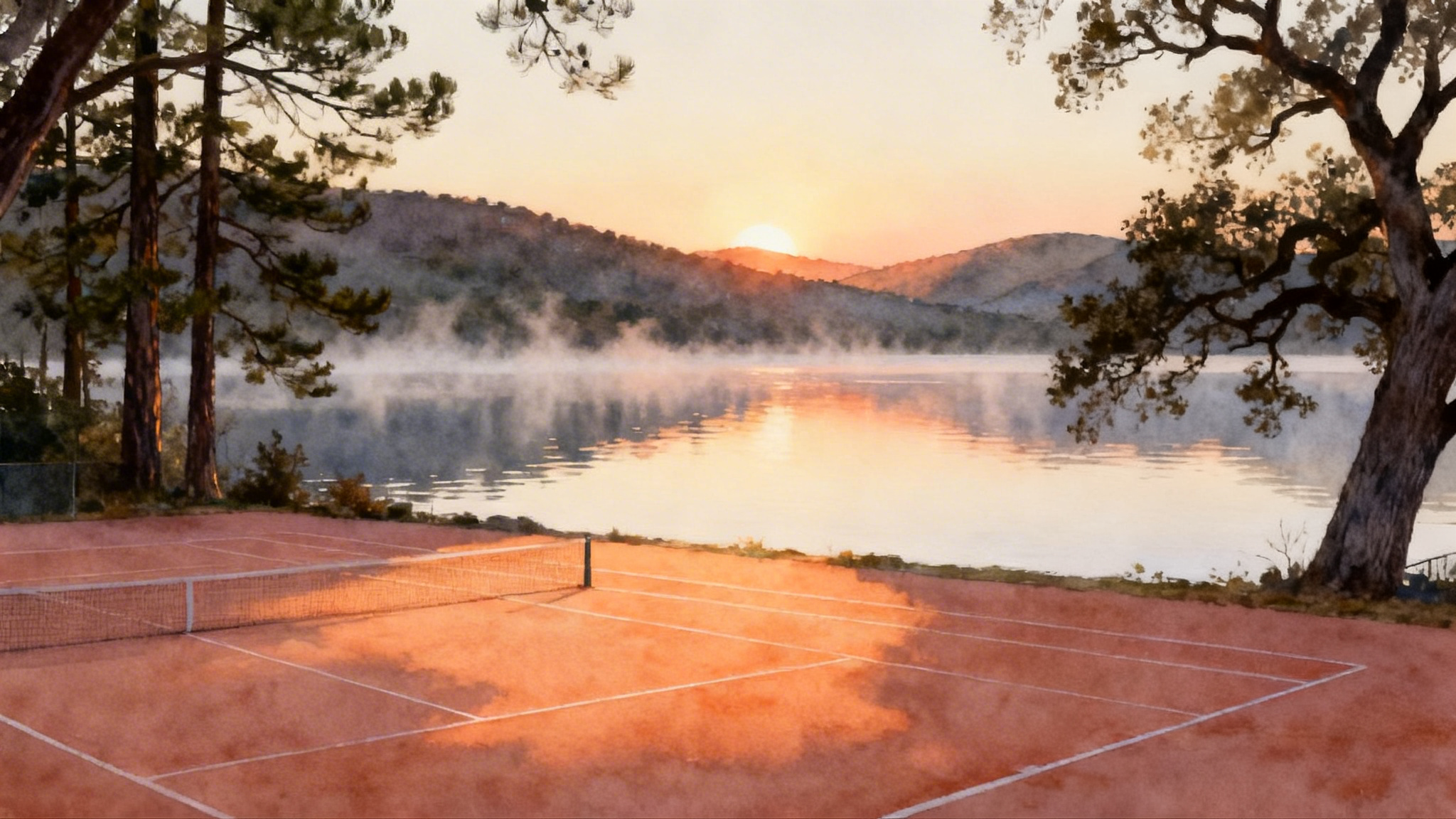
Why spring and fall feel made for tennis in the Hill Country
Stand on a court above Lake Travis in March and you feel it at once: the air is comfortable, the light is generous, and the breeze moves the ball without knocking it off course. Spring and fall deliver the Goldilocks window for outdoor and covered-court training west of Austin. The reasons are practical. Temperatures are mild, storm cells are usually brief, and the sun hangs around long enough to support two focused training blocks with a sensible recovery window in between.
Let us ground this in data. Typical high temperatures around Austin move from the low 70s in March into the 80s by April and May, then settle back into the 80s in late September and the low 70s again by November. Rain does happen in Texas, but in this corridor it tends to arrive in short, fast-moving fronts. Courts often dry quickly thanks to sun exposure and the porous limestone terrain. For historical norms that frame your planning, the National Weather Service posts month-by-month numbers for Austin that show why these shoulder seasons are reliable windows for purposeful work on court. See the Austin climate normals for specifics.
Daylight also cooperates. In March and April you get about 12 to nearly 13.5 hours of usable light; in May that stretches a bit longer. From late September through October you still have about 11 to 12 hours, which is plenty for an early technical session, an unhurried recovery block, and then a late afternoon tactical session that wraps before dinner. That span helps you avoid the two extremes that sabotage productive training: the chill of dark mornings and the heat of midday sun.
Finally, the tennis itself benefits from the Hill Country daily rhythm. Mornings trend calm and cool, which is perfect for skill acquisition. Late afternoons bring a light breeze that rewards footwork and shape on the ball. You get variety without volatility.
Where to train: the Spicewood corridor and a local spotlight
Just west of Austin, the Hill Country folds into a string of small communities that ring Lake Travis and Lake Austin. Spicewood sits in the sweet spot for players who want quick access to courts, water, and trails without big-city traffic.
Spotlight: Legend Tennis Academy, Spicewood
Legend Tennis Academy in Spicewood is a practical base for spring and fall programs. It is close enough to the city for airport access yet far enough to feel like a retreat. The setting makes it easy to plan focused morning sessions, step off court for purposeful recovery, then return for decision-making and point play in the afternoon. If you want to evaluate current camp offerings, small-group clinics, or private progressions, start with the Legend Tennis Academy profile.
What sets this area apart is how the environment supports the work. The elevation is modest, the air moves, and you can design blocks that respect temperature and light. If a passing shower interrupts a session, covered and shaded options in the region help you pivot to footwork patterns, serve progressions, or video review without losing the day. That flexibility is the quiet advantage of training here when many players chase courts in Florida or the desert.
Other court options in the Hill Country arc
- Lakeway and Bee Cave: a cluster of club and community courts with easy access to groceries, coffee, and family dining.
- Dripping Springs: a blend of high school facilities and community courts for additional court-time buffers during busy weeks.
- Marble Falls and Briarcliff: smaller-town options that work well for match play blocks if your group wants a change of backdrop.
When you combine these nodes with Spicewood as a base, you get a triangle of accessible courts that shortens commutes and gives you redundancy if weather nudges the plan.
The training calendar: March to May and late September to November
Here is how the environment shapes what you do on court in each window.
- March to April: Cool mornings favor technique accuracy and rhythm building. Aim your video-heavy, high-rep work early. Afternoons are ideal for live-ball patterns and situational games that demand focus but not all-out heat exposure.
- May: Warmer afternoons mean you lean into morning blocks even more and shift tactical and serve work into late day. Hydration and shade breaks become part of the plan. The payback is fast court-dry times if showers pass through.
- Late September to October: The heat eases but the light stays long. This is the sweet spot for tournament tune-ups, pattern clarity, and point construction.
- November: Crisp mornings reward footwork quality, and afternoons can deliver some of the most playable air of the year. Great for upgrading the backhand return and second-serve patterns without fighting summer fatigue.
Sample itineraries that convert good weather into progress
The best camps treat time and temperature like equipment. With that in mind, here are two itineraries designed for the Hill Country spring and fall.
A focused 3 day camp
This itinerary assumes arrival the evening before Day 1 and departure after the final session on Day 3.
Day 1: Baseline recalibration
- 8:30 a.m. to 10:45 a.m.: Warm-up patterns, contact point calibration, and forehand tempo ladder. Use slow feeds to shape the ball, then progress to cooperative crosscourt to down-the-line switches. End with serve rhythm drills.
- Recovery block: Protein-forward lunch, 20 minutes of easy mobility, and a light lake walk to drop your heart rate.
- 4:00 p.m. to 6:00 p.m.: Pattern building. Two-ball combos from the ad and deuce sides, then add the first-strike ball after serve or return. Finish with 11-point pattern games that reward depth and shape. For added homework, see how to Build a reliable forehand.
Day 2: Serve plus first ball
- 8:30 a.m. to 10:45 a.m.: Serve progression from deuce to ad, second-serve shape focus, plus plus-one forehand footwork. Introduce target boxes and simple scoring so every set has a consequence.
- Recovery block: Lake Travis paddle or easy shoreline spin for 30 to 45 minutes. The goal is low effort and high circulation.
- 4:00 p.m. to 6:00 p.m.: Return games, neutral ball defense, and short-ball conversion. End with tiebreakers to consolidate decision-making under light fatigue.
Day 3: Transfer and test
- 8:30 a.m. to 10:30 a.m.: Pattern refreshers and point starts that reflect your match style. Finish with a timed practice set with coaching constraints.
- Early afternoon: Lunch, stretch, and debrief. You leave with a two-week progression you can run at home.
What you get from three days is sharper timing, two to three reliable plays from each side, and a precise feel for the first four shots of the point.
A comprehensive 5 day camp
This itinerary builds in more recovery and matchplay while keeping mornings technique-forward.
Day 1: Assessment and anchors
- 8:30 a.m. to 11:00 a.m.: Movement screen, stroke assessment, and anchor drills for contact height and spacing. Set two personal cues.
- 4:00 p.m. to 6:00 p.m.: Live-ball forehand and backhand patterning with depth windows. Introduce scoreboard constraints.
Day 2: Serve architecture
- 8:30 a.m. to 11:00 a.m.: Flat, slice, and kick foundations with target ladders. Build a first serve to ad side and a second-serve bailout.
- 4:00 p.m. to 6:00 p.m.: Plus-one plays, approach selection, and transition volleys.
Day 3: Return identity and defense
- 8:30 a.m. to 11:00 a.m.: Return position, split timing, and shape against second serves. Add block returns versus pace.
- 4:00 p.m. to 6:00 p.m.: Defensive neutralization, height and depth changes, and corner escapes.
Day 4: Patterns under pressure
- 8:30 a.m. to 11:00 a.m.: Pattern rehearsals with scoring overlays. Players track first-four-shot wins and errors.
- 4:00 p.m. to 6:00 p.m.: Matchplay with coaching timeouts and between-set adjustments.
Day 5: Consolidation and plan
- 8:30 a.m. to 10:45 a.m.: Test sets or team matchplay.
- 11:00 a.m.: Individual debrief with a six-week progression, including two strength moves, two mobility moves, and one serve routine to keep.
Across five days you graduate with a repeatable serve pattern, clear return choices, and a small library of patterns that fit your movement and strike window.
Recovery that speeds learning: lakes, springs, and trails
Great weather tempts you to stay on court, but the fastest way to improve is to pair deliberate practice with low-intensity recovery. The Hill Country makes that effortless.
- Lake Travis shoreline walks: Ten to twenty minutes of easy movement after lunch speeds glycogen replenishment and keeps the lower back happy.
- Light paddling: A mellow paddleboard spin stabilizes hips and shoulders without taxing your legs. Early afternoons are often calm enough for beginners.
- Springs and cool water soaks: Short, cool immersions help nudge the nervous system back toward baseline. They also make the late session feel crisp.
- Pace Bend loops: The park trails are perfect for a short off-feet shakeout. For access details, check the LCRA Pace Bend Park page.
If you want a simple rule, use the water for temperature relief and the trails for circulation. Both set up the second session.
Family-friendly lodging that fits a tennis week
You have three broad lodging strategies that work well in spring and fall:
- Waterfront hotel or resort near Lakeway or Bee Cave
- Pros: pools, on-site dining, and easy access to groceries. Family members can swim or walk to parks while you train.
- Best fit: families who want convenience and short drives.
- Lake house rental around Spicewood or Briarcliff
- Pros: room for gear, quiet mornings, and a deck for stretching or video review. Great for groups or two families sharing a camp week.
- Best fit: player groups that want control over meals and a home base close to courts.
- Hill Country cabin near trailheads
- Pros: quick access to trail recovery, star-filled nights, and low noise. The calm helps players sleep.
- Best fit: couples or solo players who prize quiet and routine.
No matter your choice, put sleep first. Good sleep is the multiplier that converts great weather into durable skill.
How the Hill Country compares to Florida and the desert
- Crowds: West of Austin you will face less competition for courts in spring and fall than in Florida or the big desert hubs. That means more consistent start times and fewer last-minute changes. For a broader Southwest picture, see our Southwest desert tennis guide.
- Humidity and heat: Florida in spring can feel heavy, which slows recovery between points. The desert is crisp but often swings from cool mornings to hot afternoons. The Hill Country sits in the middle, which makes two-a-day schedules realistic.
- Travel efficiency: Austin-Bergstrom International Airport is connected to most major hubs. The drive to Spicewood is about 45 to 60 minutes depending on time of day, so you can land, check in, and stretch before dinner.
- Terrain variety: Water and limestone trails are minutes away. That mix supports the recovery blocks that make two sessions daily feel sustainable.
If you already have a winter tune-up in Florida or Arizona, think of the Hill Country as your spring or fall refinement. You are not chasing a tan; you are building plays and decision-making that survive tight points.
A practical packing list for spring and fall
- Two pairs of court shoes: rotate daily to keep your feet fresh.
- Light layers: a breathable long sleeve for cool mornings and a sun hoodie for late afternoons.
- Refill bottles and electrolyte packets: you will sweat, even in October.
- Mini tripod or phone clip: record serve and return work in the calm morning light.
- Trail shoes or sandals: for shoreline walks or quick trips to the springs.
- Hat and two towels: one for sweat, one for the lake.
Small items, big gains. The goal is to remove friction so you walk on court ready to work.
Booking and customization
Ready to build a camp that fits your calendar and style of play? We track academy options, coaches, and seasonal schedules so you can match training blocks to your goals. For dates and formats in Spicewood, visit the Legend Tennis Academy profile and note your preferred spring or fall windows.
A final word on weather and workflow
You cannot control the forecast, but you can control the design. That is the Hill Country advantage. Mornings arrive cool and steady, afternoons offer playable light, and courts dry quickly after passing showers. Use that rhythm to your benefit. Book the high-precision work when the air is quiet, slip into the lake or the trails at midday, then come back for pattern clarity and matchplay when the sun softens. In three to five days you will feel the difference. In three to five weeks of continued practice at home, you will see it on the scoreboard.
Spring and fall in the Austin Hill Country make tennis feel straightforward. The environment stops fighting you, and your training starts compounding. That is what a good hub does. It turns time and place into progress.