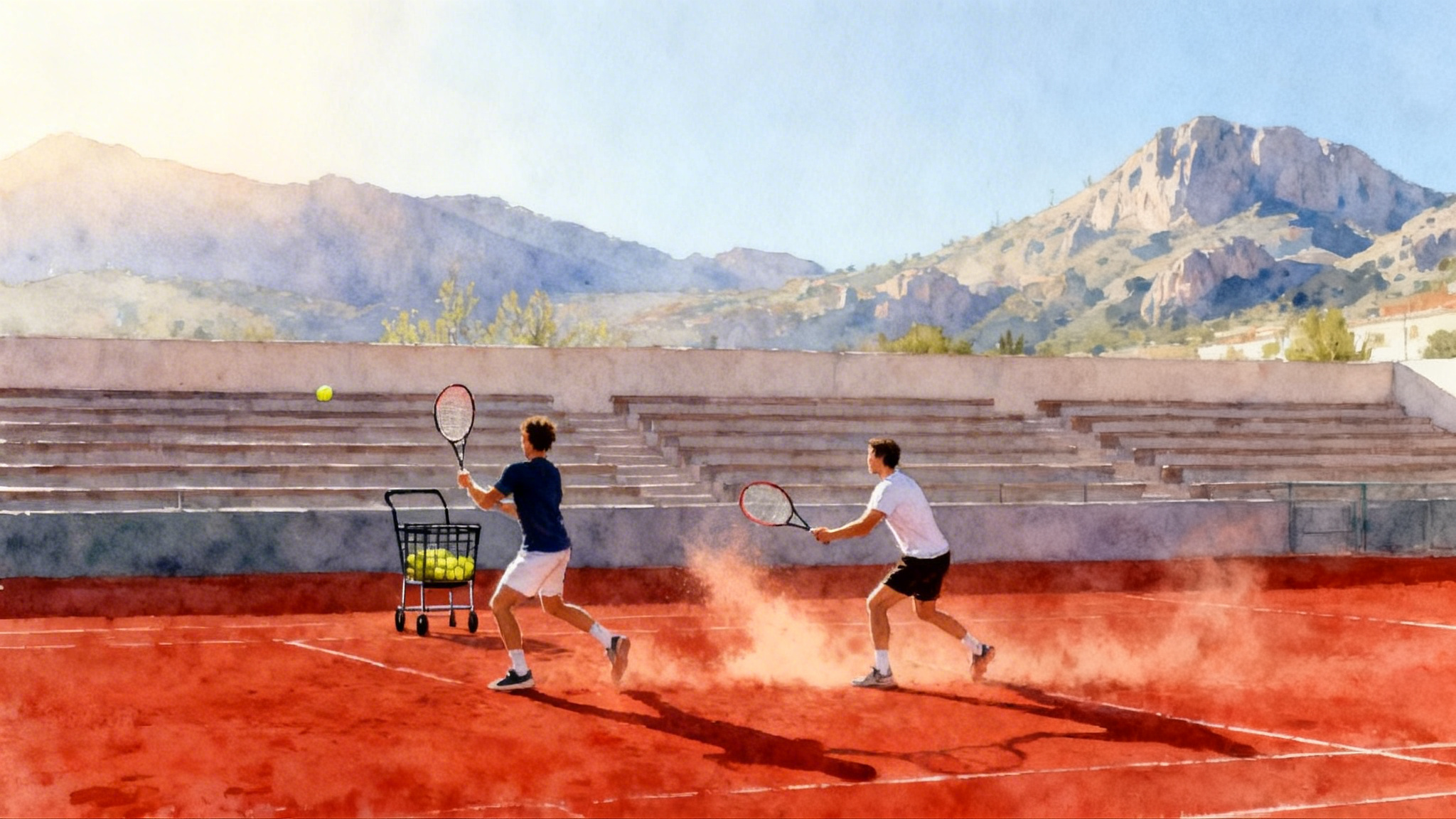
Florida vs Tenerife: Midwinter Tennis Camp Data Guide
Planning a winter or shoulder‑season tennis camp? This guide compares Florida and Tenerife with month‑by‑month climate data, surface mix, travel time and cost realities, and ideal player profiles, plus sample itineraries and recovery ideas.
 Tommy
Tommy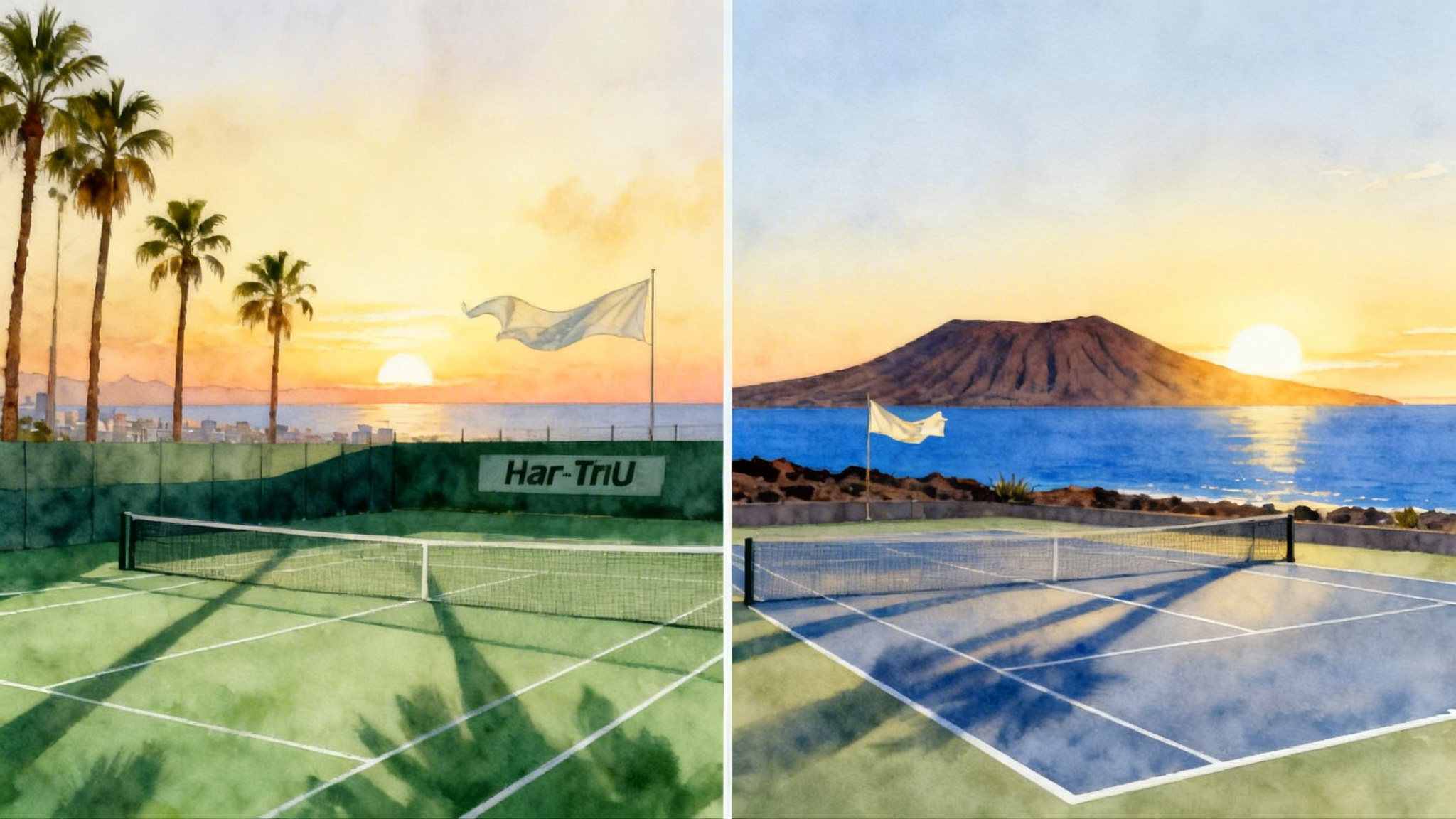
Why these two places dominate winter tennis
If you open a world map and draw lines from where players live to where outdoor courts stay playable in winter, two destinations light up: Southwest Florida and South Tenerife. Both deliver consistent sunshine when much of North America and Europe are indoors. What sets them apart are the details that shape real sessions: month‑by‑month weather, court surfaces, wind, jet lag, and the rhythm of each training day. This guide compares Florida and Tenerife with practical data and clear actions, then spotlights two academies often chosen by serious players: Gomez Tennis Academy profile in Naples and Tenerife Tennis Academy overview in Chayofa with additional sessions at the T3 complex.
Use this as a planning tool, not travel poetry. The goal is better forehands in March, cleaner movement on day five, and confidence that your schedule, body, and budget all align. If you also like dry desert sun, see our desert tennis guide Feb to Apr.
Month‑by‑month weather snapshot, November through April
These are typical midwinter and shoulder‑season patterns for Naples, Florida and the south of Tenerife near Chayofa and Costa Adeje. Values are rounded climate normals that describe averages rather than single‑day extremes. When you pack, plan for the range around these numbers.
- November
- Naples: high 80 F, low 63 F; 3 to 5 rain days; average wind 8 to 11 mph; moderate humidity
- Tenerife South: high 75 F, low 66 F; 2 to 4 rain days; average wind 9 to 12 mph; dry to moderate humidity
- December
- Naples: high 76 F, low 57 F; 3 to 4 rain days; wind 8 to 11 mph; cooler mornings
- Tenerife South: high 72 F, low 61 F; 3 to 5 rain days; wind 9 to 13 mph; mild seas
- January
- Naples: high 74 F, low 55 F; 3 to 5 rain days; wind 9 to 12 mph; crisp at first hit
- Tenerife South: high 70 F, low 59 F; 3 to 5 rain days; wind 10 to 14 mph; stable temps
- February
- Naples: high 75 F, low 56 F; 3 to 4 rain days; wind 9 to 12 mph; dry air streaks
- Tenerife South: high 70 F, low 59 F; 2 to 4 rain days; wind 10 to 15 mph; occasional stronger trade winds
- March
- Naples: high 78 F, low 60 F; 3 to 4 rain days; wind 9 to 12 mph; humidity begins to tick up
- Tenerife South: high 72 F, low 60 F; 2 to 3 rain days; wind 9 to 14 mph; very reliable sun
- April
- Naples: high 83 F, low 64 F; 3 to 5 rain days; wind 8 to 11 mph; warm and trending humid
- Tenerife South: high 73 F, low 62 F; 1 to 3 rain days; wind 9 to 13 mph; very low rainfall
What this means for tennis:
- Ball speed and bounce: Naples warms rapidly into April, which adds pop to serves and more kick on topspin. Tenerife stays springlike, so the ball is quick in the afternoon but rarely gets heavy and mushy.
- Session timing: In Naples, start earlier in March and April to minimize sun load. In Tenerife, late morning to early afternoon offers the best combo of light and warmth without oppressive heat.
- Wind: Tenerife’s prevailing trade winds are more consistent. Plan wind‑aware drills, such as serve targets against and with the wind, and crosscourt neutral ball work that forces depth control. Naples has lighter, more variable breezes that reward precise height over the net.
Surface mix and how the ball behaves
-
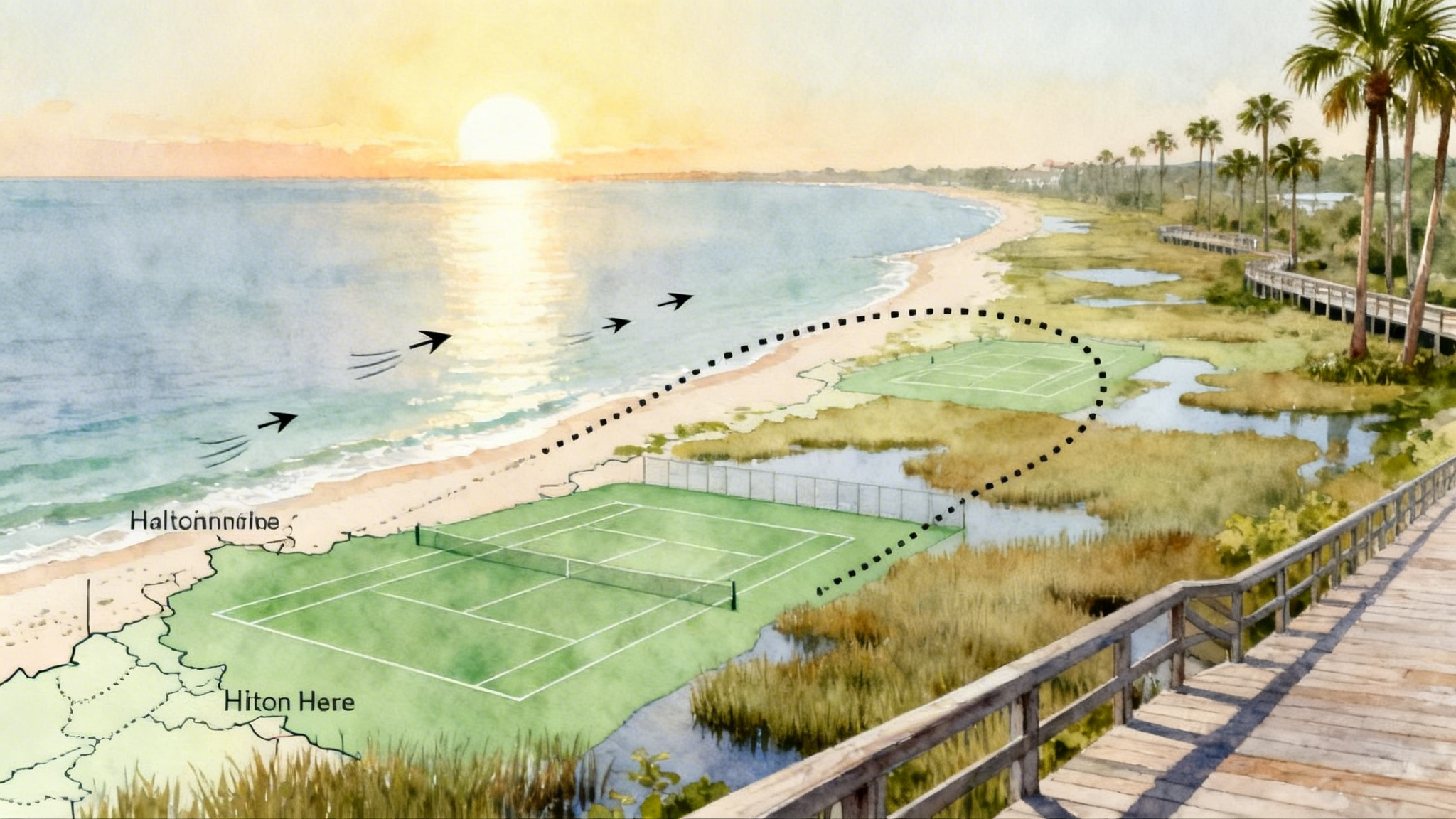
Florida’s mix: Many Naples programs offer Har‑Tru green clay plus hard courts. Har‑Tru is slightly faster than European red clay and is forgiving on joints, which is ideal for volume weeks. The ball sits up a touch longer on slow mornings, so point construction, transition footwork, and return depth work very well. Hard courts in Florida tend to be medium pace, so you can toggle between endurance rally patterns on clay and first‑strike patterns on hard.
-
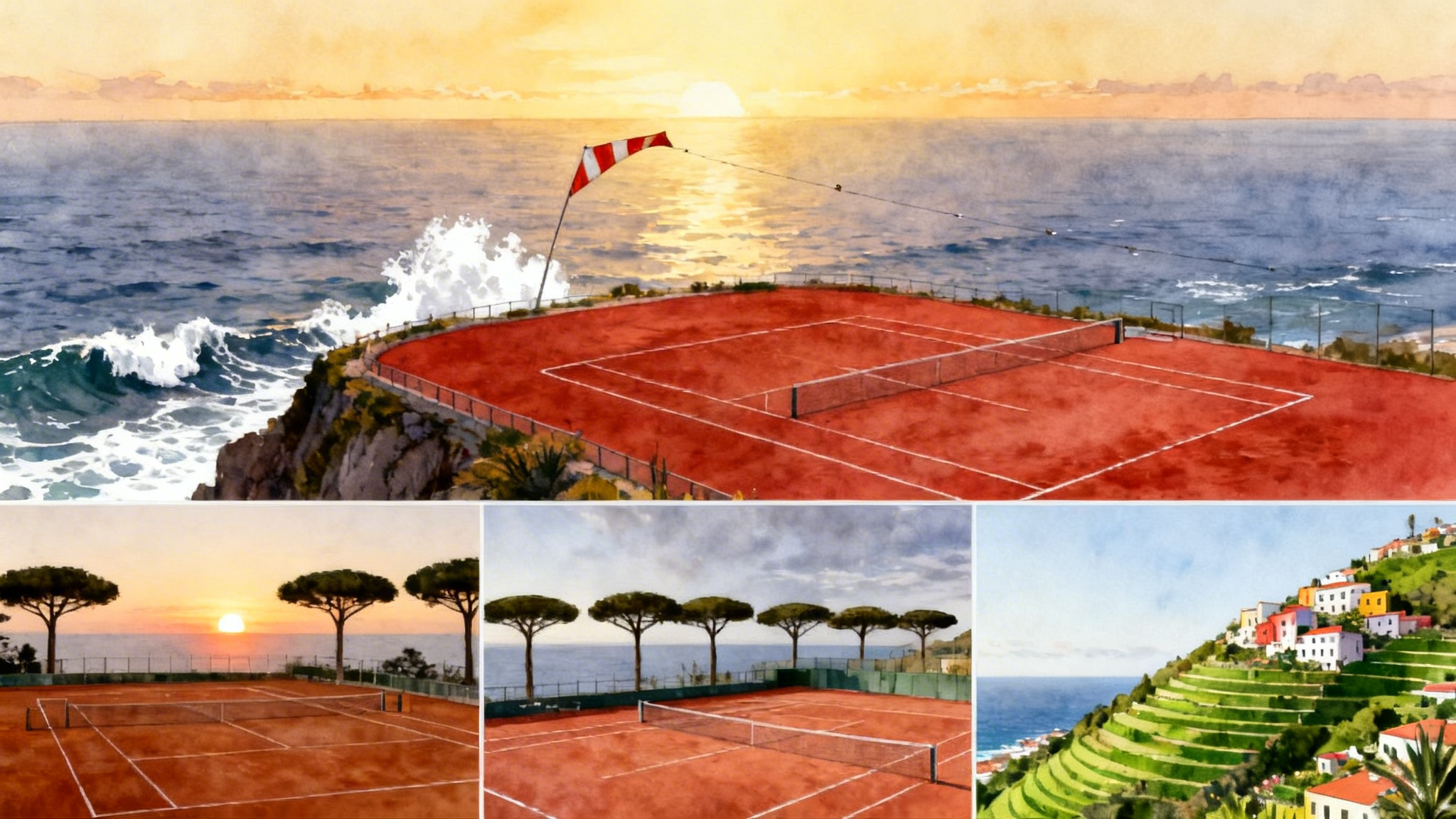
Tenerife’s mix: South Tenerife features acrylic hard courts built to the same category used at the Australian Open along with traditional red clay. The hard courts are crisp and reward aggressive baseliners and serve‑plus‑one players. Red clay lets you groove sliding patterns and high‑heavy shapes. Add the island’s reliable breeze and you get a great laboratory for decision making: flatten into the wind, roll with the wind, and train your legs to load and slide without overreaching.
Actionable takeaway: If you want a week focused on movement quality, stamina, and rally tolerance with lower impact, Florida’s Har‑Tru balance is tailor‑made. If you want to stress your offensive patterns and work through wind and pace changes, Tenerife’s acrylic hard plus red clay is ideal.
Travel time, cost, and jet lag
Numbers vary by your home airport and season, but the patterns are consistent.
-
From the United States and Canada
- To Naples, Florida: nonstops from major East Coast hubs to Southwest Florida International in Fort Myers or to Miami with a short drive. Typical flight times are 2 to 3 hours from the East Coast and 4 to 6 hours from the West. One to three time zones of shift, which most athletes handle in a day. Fare ranges outside peak holidays are usually at the lower end of your annual travel budget.
- To Tenerife: one or two connections, often via Madrid, Barcelona, or London to Tenerife South airport. Door to door is commonly 12 to 16 hours from the East Coast and longer from the West. A 5 to 6 hour time shift adds two days of sleep alignment for most athletes. Fares are typically higher than Florida and can spike during school breaks.
-
From Europe and the United Kingdom
- To Tenerife: abundant nonstops from many European cities, 4 to 5 hours from Western Europe, 5 to 6 from Northern Europe. One hour time shift or none, so recovery is simple. This is why February half‑term weeks book early.
- To Florida: one or two connections and a 5 to 6 hour shift. Add at least one day of adjustment on arrival, and plan a lighter first session.
Actionable takeaway: If you live in North America and want to minimize travel stress, Florida wins on time and cost. If you live in Europe and want sun with almost no jet lag, Tenerife is the clear favorite.
Ideal player profiles
-
Choose Florida if you:
- are building a base of volume on a forgiving surface and want daily doubles or match play on clay
- need to tune return depth, rally tolerance, and transition footwork
- are recovering from a layoff or managing joint load and prefer predictable, lighter winds
- want a family‑friendly setting with beaches, short drives, and easy meals
-
Choose Tenerife if you:
- want to sharpen serve‑plus‑one patterns and first‑strike offense on crisp acrylic hard
- plan to add sliding and shape on real red clay without cold‑weather instability
- want to train decision making in steady winds and learn to shape trajectories on demand
- are coming from Europe and want minimal jet lag, or from North America with extra days to enjoy the island
Academy spotlight: Gomez Tennis Academy, Naples
Location and vibe: Gomez Tennis Academy sits in the Naples tennis corridor, close to residential rentals and the Gulf. The culture is technical, competitive, and personal. Staff emphasize footwork patterns, live hitting volume, and match habits that travel. For a deeper look at programs and boarding, see the Gomez Tennis Academy profile. The mix of Har‑Tru and hard lets you tailor stress on the body across the week.
Stay near the courts:
- Look for rentals or hotels along the Immokalee Road and Airport‑Pulling Road corridors and in North Naples. That cluster keeps your drive to morning sessions short and gives easy access to groceries and post‑session meals. Families that want a beach walk after afternoon fitness often choose the Vanderbilt Beach area for a short sunset drive.
Recovery options:
- Har‑Tru days already lower joint load, but pair them with short evening walks on firm sand, light mobility, and contrast showers. Many local gyms offer day passes for sauna and light mobility equipment. The Gulf is cool in winter, which turns an ankle‑deep shoreline wade into an easy cold exposure session.
Sample 5‑day performance block, Florida
- Day 1, reset and assess: 90 minutes on Har‑Tru, forehand and backhand shape to targets, 30 minutes serves, 30 minutes light mobility and core. Afternoon, match play tiebreak sets only, then stretch. Early dinner, lights out.
- Day 2, rally and return: 2 hours on Har‑Tru, crosscourt neutral ball with depth gates, return plus two patterns, 20 minute volley clinic. Afternoon, 45 minutes conditioning on grass or track, 15 minute breathwork.
- Day 3, transition and offense: 2 hours on hard court, approach decision tree, mid‑court footwork ladders, serve plus one to three zones. Afternoon, 60 minutes strength circuit, hips and hamstrings focus.
- Day 4, pressure day: 2 hours on Har‑Tru, one ball in play scoring, 21 ball rally games, situational serving. Afternoon, match play best of three short sets with no ad scoring.
- Day 5, consolidation: 90 minutes tactical review on preferred surface, 30 minutes serves under time pressure, 30 minutes guided recovery and video review.
Sample 7‑day mixed block, Florida
- Day 1 to 3: identical to the 5‑day through Day 3
- Day 4: recovery morning with 60 minutes light drilling and footwork, optional beach walk, afternoon off
- Day 5: clay court patterns and returns, two hour block, then 45 minutes strength
- Day 6: match day on hard courts, two to three sets with coaching on changeovers
- Day 7: test and taper, 75 minute diagnostic drills plus serve targets to 50 total makes by location, then mobility and travel prep
Coaching notes for Florida weeks:
- Pack two pairs of clay shoes if you plan daily Har‑Tru. Clay clogs treads and makes rotation less secure after day three.
- Strings and balls: higher humidity plus clay fluff add friction. Most players benefit from dropping polyester string tension by 2 to 3 pounds on clay, then returning to baseline on hard. Bring one hybrid setup if you want a softer feel on long rally days.
- Sunscreen and hydration: the midwinter sun is gentle, but Naples warms quickly by April. Aim for at least 500 milliliters of fluid per on‑court hour and include electrolytes after two hours.
Academy spotlight: Tenerife Tennis Academy, Chayofa and T3
Location and vibe: Tenerife Tennis Academy operates in Chayofa in the hills above Los Cristianos with access to additional training blocks on acrylic hard courts and red clay, including sessions at the T3 complex. Expect international squads, a steady breeze, and coaches who lean into physical footwork patterns and thoughtful point building. The setting is more alpine‑by‑the‑sea than beachfront, so mornings feel crisp and afternoons bright. For program structure and academics, read the Tenerife Tennis Academy overview.
Stay near the courts:
- Chayofa offers quiet apartments and villas a short drive from courts. For walkable beaches and restaurants, Los Cristianos and Costa Adeje are the usual bases and keep travel times reasonable. If your plan includes more hard‑court sessions near T3, Costa Adeje shortens the commute.
Recovery options:
- Trade winds keep sessions fresh but dry. An ocean swim in the afternoon doubles as a flush. Many hotels and gyms in the area have saunas, cold plunge options, and sports massage. Hikers can add a gentle day on lower Teide trails between blocks without overreaching.
Sample 5‑day performance block, Tenerife
- Day 1, wind and width: 90 minutes acrylic hard, crosscourt width games into the wind, 30 minutes serves plus targets, 30 minutes mobility. Afternoon, 60 minutes red clay patterns with height control.
- Day 2, serve‑plus‑one focus: 2 hours on acrylic hard, depth gates off the return, plus inside‑out and inside‑in decision making. Afternoon, 45 minutes hill‑based conditioning, 15 minutes breathwork.
- Day 3, clay sliding: 2 hours red clay, long cross patterns, backhand change‑up to down‑the‑line, volley finishing. Afternoon, 60 minutes gym strength, calves and adductors focus.
- Day 4, match scenarios: 2 hours mixed surfaces depending on wind, break‑point games and 30‑30 starts. Afternoon off for ocean and stretch.
- Day 5, consolidation: 90 minutes favorite pattern reinforcement, 30 minutes serve targets to corners into and with the wind, 30 minutes video review and recovery.
Sample 7‑day mixed block, Tenerife
- Day 1 to 3: identical to the 5‑day through Day 3
- Day 4: low‑impact morning bike or walk, then 60 minutes feel session on clay, afternoon off
- Day 5: hard‑court offense day, two hours serve‑plus‑one plus return depth ladders
- Day 6: match day with wind rules, for example slice only on the outside, finish only off a short ball, then 45 minutes band‑based strength
- Day 7: test and taper, 75 minutes diagnostic drills, then mobility and travel prep
Coaching notes for Tenerife weeks:
- Strings and balls: the dry air and crisp acrylic reduce dwell time. Many players add 1 to 2 pounds of tension on hard courts to sharpen the contact and reduce launch. Keep your baseline tension or drop 1 to 2 pounds on red clay for easier shape.
- Wind tactics: build a short playbook before you arrive. Into the wind, aim higher net clearance and step in on short balls. With the wind, aim for bigger margins crosscourt and flatten only inside the baseline. Practice second serves into the wind to protect the kicker from getting held up.
- Hydration and sun: low rainfall does not mean low sun load. Plan shaded breaks and start with one bottle of water and one bottle with electrolytes for any session longer than 90 minutes.
Lodging, food, and logistics that keep training first
- Walk or short drive to courts: in both destinations, the most important lodging metric is minutes to first ball. Choose apartments or hotels that keep your morning commute under 15 minutes. That reduces cortisol spikes from traffic and gives you a cushion for warm‑up if a string snaps.
- Kitchens beat room service: simple breakfasts, a known pre‑session snack, and a light protein‑carb dinner are easier in apartments. When you do eat out, keep spice levels manageable two hours before training and avoid heavy fried meals the night before test sets.
- Cars and parking: Naples spreads out, so a rental car is practical. Tenerife South is compact but hilly. If you stay in Los Cristianos or Costa Adeje, a small car makes hill drives and parking much simpler.
Packing list and pro tips
- Two racquets with at least one backup string job per three on‑court days. If you alternate surfaces daily, bring both hard and clay setups ready.
- Two pairs of shoes if you will see clay every day. Brush and air them after each session.
- Sun protection that you will actually reapply: stick format for the face and a hat you like.
- A light resistance band kit and a mini‑roller. Use them in the last 15 minutes of lunch to reset before the afternoon block.
- A scale or hydration test plan. A one kilogram drop during a two hour session tells you to add 1 liter of fluids next time. For stroke quality under pressure, study our guide on building a forehand that holds up and apply one focus per session.
Decision cheat sheet
- You live in North America, have five days, and want lower impact with high volume: choose Florida, prioritize Har‑Tru mornings and hard court afternoons.
- You live in Europe, have seven days, and want to sharpen offense and wind management: choose Tenerife, split acrylic hard and red clay with one recovery afternoon.
- You are returning from injury or managing joint load: Florida’s clay‑first plan is your friend.
- You thrive with steady breeze and want to pressure your first strike patterns: Tenerife wins.
- You are price sensitive from the United States: Florida flights and shorter stays cut costs.
- You want a light vacation feel around training from Europe: Tenerife hotels near Los Cristianos or Costa Adeje make the non‑tennis hours easy.
The bottom line
Both Florida and Tenerife are winter tennis engines, but they ask different questions of your game. Florida’s Har‑Tru lets you build volume and rhythm under soft feet, with hard courts ready for offense days as you warm up into spring. Tenerife’s crisp acrylic hard and red clay plus reliable breeze sharpen decision making and first‑strike execution without cold mornings or heavy rain. Pick based on the question you want to answer next month, not the postcard.
If you commit to a plan, tune strings for the surface and climate, keep your commute short, and script your recovery like a session, you will leave either place fitter, clearer, and eager for the next match when your home courts finally thaw.