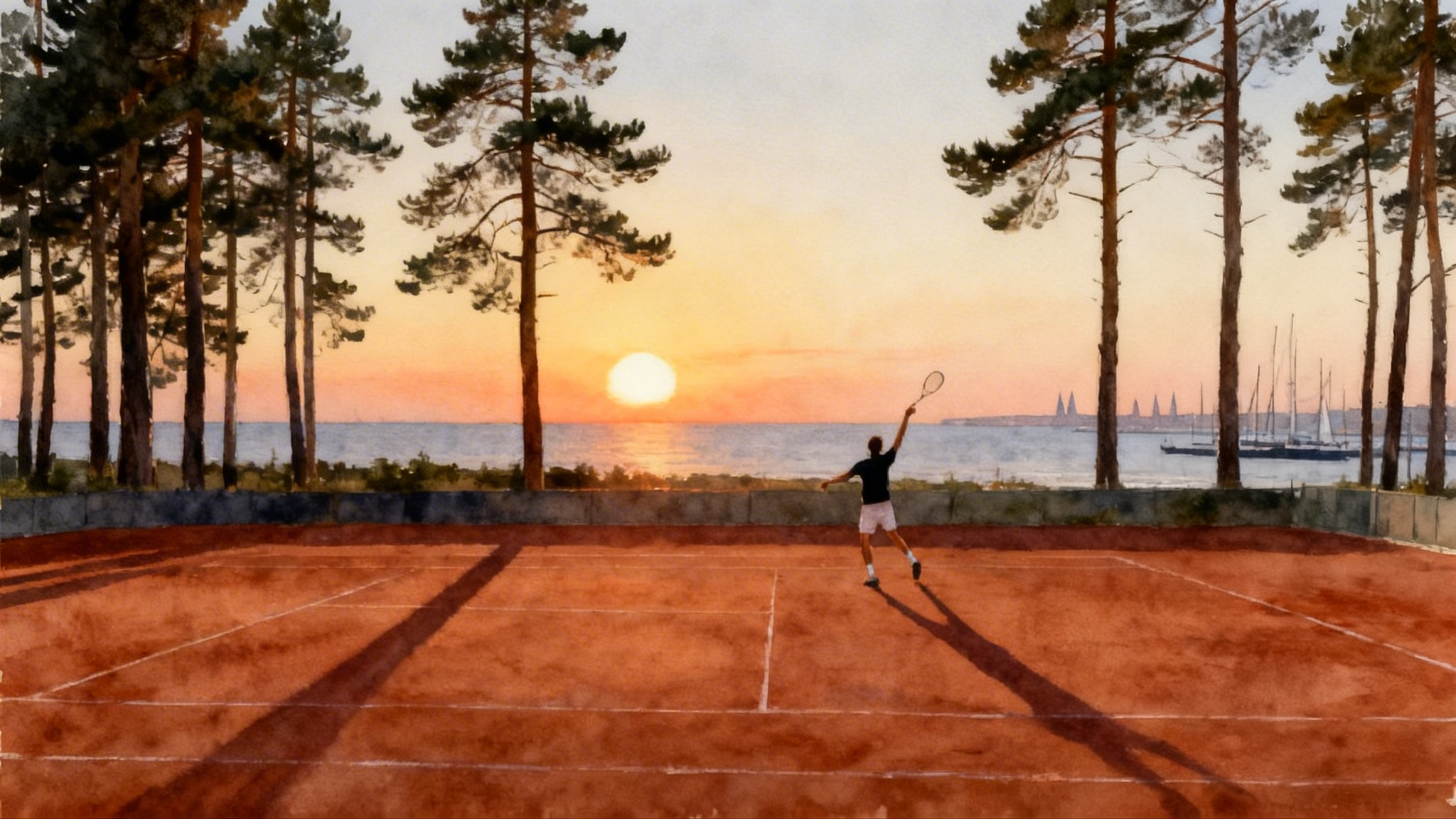
Tokyo Tennis: Cherry-Blossom and Autumn Training Windows
Plan high quality Tokyo tennis blocks in late March to early May and late September to early November. Map courts, lights, and transit. Pair Seijo and Shi Shi academies with Kanto match play, avoid tsuyu and peak typhoon weeks, and base near fast lines.
 Tommy
Tommy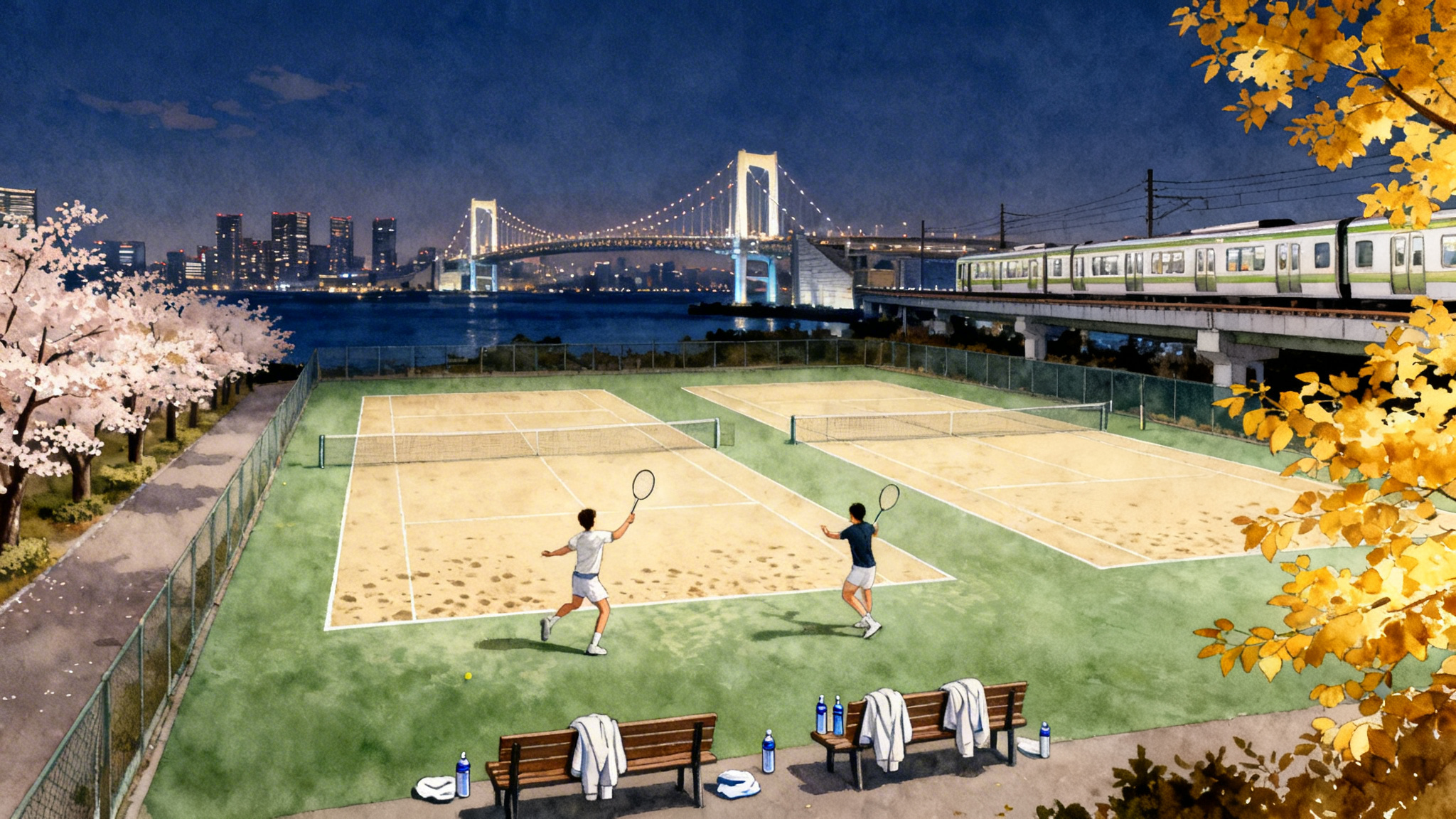
Why Tokyo shines in spring and autumn
Tokyo rewards patient planners. Two shoulder seasons deliver mild temperatures, quick transit, and plenty of lit courts for structured training days that still leave time for a bowl of udon after night hits. Target two windows:
- Late March to early May for cherry blossoms and steadily warming days
- Late September to early November for crisp afternoons and clear evenings
Across these months, average temperatures in Tokyo typically sit in a comfortable band for sustained on-court work without constant heat stress, as shown in the Japan Meteorological Agency’s long term climate normals. See monthly averages for March to May and September to November in the Japan Meteorological Agency climate normals.
Two cautions keep your plan clean: avoid the early summer rainy season known as tsuyu, which usually runs through June into July, and build a buffer around late August through early October when tropical systems can snarl schedules. With that calendar in mind, you can build training blocks that feel like a professional camp rather than a scramble.
The two block blueprint
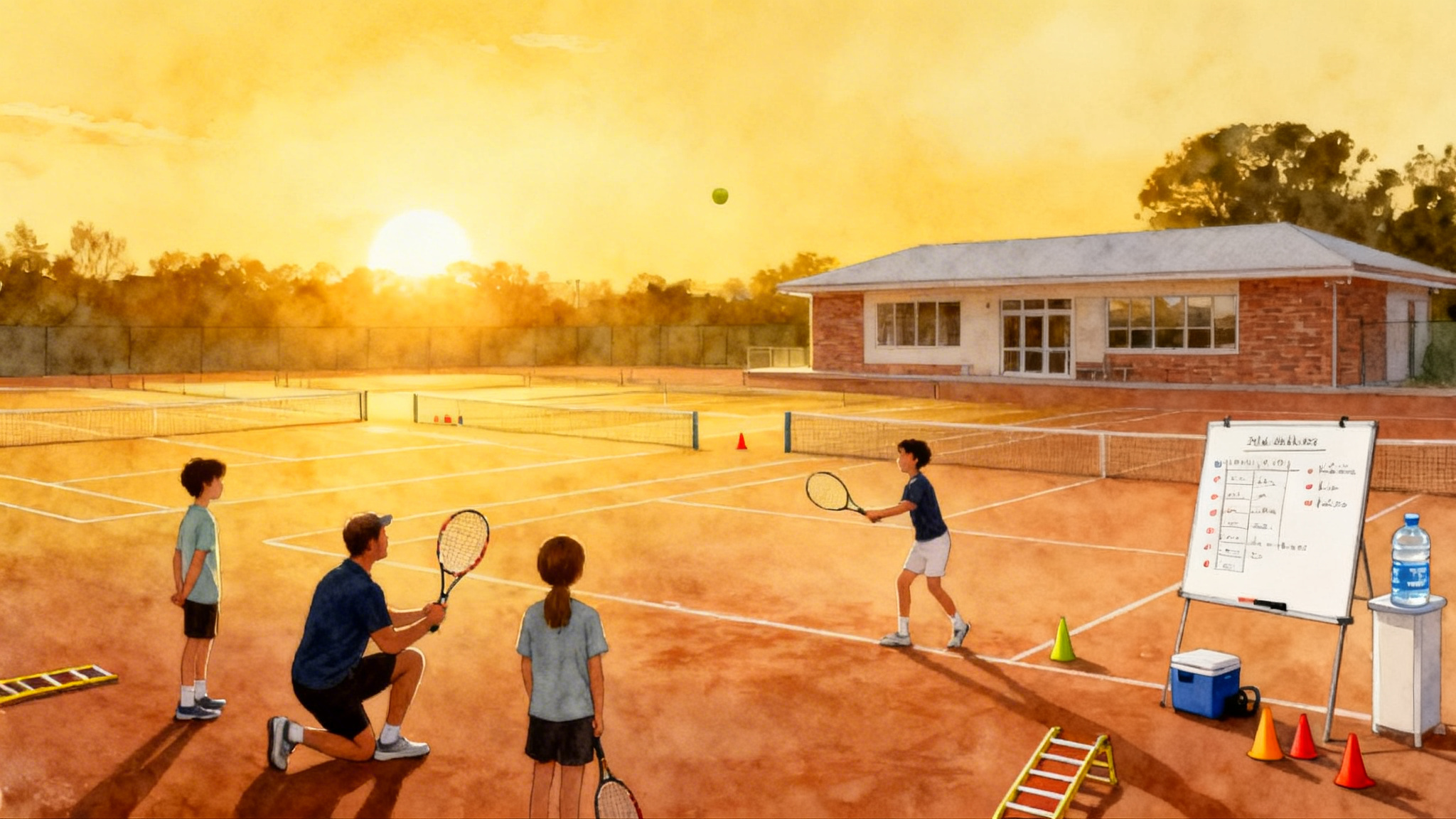
Design a spring block and an autumn block that each last 10 to 21 days. Think like a coach setting a camp: one academy anchor for skill work, one or two public park hubs for volume and match play, and a clean commute corridor so you do not spend your recovery time in transit.
- Spring block focus: technical cleanup, footwork cadence, serve rhythm after winter layoff, and a controlled ramp in total weekly hours
- Autumn block focus: point construction, patterns under light fatigue, and match simulation as humidity recedes
The anchor academies below are commuter friendly options that fit neatly into those corridors:
- Seijo Tennis Academy overview in Setagaya for structured group pathways and ladders on hard courts
- Shi Shi Tennis Academy sessions for boutique, bilingual private and small group work across top Tokyo Bay east venues
Use one academy as your weekday technical base, then fold in Kanto match play on public courts or with local circles on weekends. For specific stroke goals, pair your block with focused at-home drills from Build a forehand that holds up.
Map your corridors, courts, lights, and transit
Tokyo tennis works best when you stop thinking in single addresses and start thinking in corridors tied to rail and river.
West corridor: Seijo and Setagaya
- Academy anchor: Seijo Tennis Academy near Seijo Gakuenmae in Setagaya
- Public courts to mix in: Komazawa Olympic Park General Sports Ground, Setagaya General Athletic Field near Kinuta Park, and riverside courts along the Tama River
- Rail lines that matter: Odakyu Odawara Line for Seijo Gakuenmae, Tokyu Den en toshi Line for Futako Tamagawa and Sangenjaya, Keio Inokashira Line to connect Shibuya with Shimokitazawa for quick Odakyu transfers
Typical door to door ranges when you choose the right lodging hub:
- Shinjuku to Seijo Gakuenmae via Odakyu express service: about 16 to 28 minutes depending on time of day and transfers
- Shimokitazawa to Seijo Gakuenmae on Odakyu local or express: about 8 to 15 minutes
- Futako Tamagawa to Seijo by short taxi ride or bus link: about 15 to 25 minutes in normal traffic
Evening play is realistic because many Setagaya courts operate with lights until roughly 9 pm. Expect an added light fee billed in half hour blocks. Bring coins or a posted prepaid method, and allow a few extra minutes to switch courts at scheduled times because turnover is punctual.
Bay east corridor: Ariake, Toyosu, and Koto Ward
- Academy anchor: Shi Shi Tennis Academy schedules in Koto Ward, including Shiomi and the Ariake cluster when available
- Public courts to mix in: Ariake Tennis Park’s semi hard courts with lighting, plus riverfront and ward managed courts in Koto and nearby Odaiba
- Rail lines that matter: JR Keiyo Line to Shiomi and Shin Kiba, Rinkai Line for Kokusai Tenjijo, and Yurikamome for the Odaiba loop
Typical door to door ranges with an east bay base:
- Tokyo Station or Hatchobori to Shiomi via Keiyo Line: about 7 to 15 minutes platform to platform, plus a short walk
- Toyosu or Ariake to Kokusai Tenjijo or Ariake Tennis Park by Rinkai or Yurikamome: about 5 to 12 minutes station to station
- Ginza to Ariake with one clean transfer: about 20 to 30 minutes
Ariake’s public complex is purpose built for tennis, including lighted courts suitable for evening blocks, and sits on lines that stay frequent after work. The metropolitan sports overview confirms lighted semi hard courts at Ariake, helpful when you plan twilight sessions; see the Tokyo Metropolitan sports facilities overview.
Lodging hubs that keep commutes under 30 minutes
Rather than force a single base across the city, choose a compact hub for each corridor.
- West corridor hubs: Shimokitazawa for instant Odakyu access and food within a five minute walk, Sangenjaya for nightlife with quick Den en toshi transfers, Futako Tamagawa for river paths and easy buses up to Setagaya venues, or Seijo itself for a quiet, walkable base
- East corridor hubs: Toyosu for supermarkets and bayfront jogging, Ariake for guaranteed quick hops to courts, Monzen Nakacho or Kiba for good value and straight shots to Shiomi, or Hatchobori for a short Keiyo Line run
If you are bringing juniors or working remotely, prioritize flats within a five to eight minute walk from your nearest station. The unpredictability of summer storms or a surprise maintenance closure feels trivial when your base is that close to rail.
The surfaces and balls you will meet
Public Tokyo courts come in two main flavors:
- Hard courts, which play close to the North American baseline speed you know
- Artificial turf with sand, often called omni courts in Japan, which play lower and reward clean footwork, patient point construction, and slice variety
Plan gear accordingly:
- Shoes: bring one hard court pair and one all court or omni friendly pair with a slightly less aggressive herringbone to avoid slipping in loose sand
- Balls: the Dunlop Fort family and other premium pressurized balls are a safe default that handle cooler evenings and the slightly abrasive top layer of omni courts
Booking and how to actually get a court
There are three reliable paths to court time:
- Academy blocks: let the academy hold the court. This is best for technical sessions. Communicate your target surfaces so your match play later in the week lines up with the same bounce profiles.
- Ward and metropolitan park reservations: these systems often run a lottery with late release inventory a few days out. In practical terms, weekday late evenings and early mornings have better availability. Keep a simple script in your notes with court names, preferred time windows, and backup slots so you can click fast when inventory drops.
- Private rentals and club day passes: pricier, but they can save a rainy week. If you need a guaranteed two hour slot on short notice, this works.
Expect hourly fees to vary with surface and location. Artificial turf with sand is usually more affordable than the highest demand hard courts at flagship parks. Light usage is billed separately in many facilities, so factor that into your budget for twilight blocks.
Transit made easy for tennis days
Use a rechargeable integrated circuit transit card such as Suica or Pasmo and load it onto your phone if supported. Tokyo Metro, Toei Subway, and JR lines interoperate cleanly with these cards. For door to door speed when you are carrying gear, the most valuable micro trick is to choose stations with easy interchanges. An example is connecting on the concourse at Shimokitazawa between the Keio Inokashira Line and the Odakyu Odawara Line for westbound moves.
If you play a late match under lights, keep your return rail options in mind. Most lines reduce frequency after 10 pm, but you will still find regular departures across both corridors until close to midnight.
Pairing academy work with Kanto match play
Match play in Kanto runs on three tracks:
- Academy ladders and internal league nights
- Ward level round robins and visitor friendly circles that welcome intermediate to advanced players for match sets
- Ad hoc hits via community apps and clubs, often posted the day before when courts open up
Your job is to align the match load with the week’s intent. If Monday and Tuesday are technical days, aim for three to four high quality sets on Friday evening and Saturday, then a single controlled set or tiebreaker play on Sunday to keep the legs moving without heavy central fatigue.
Two sample week plans you can copy
Here are two weeklong outlines. Both assume two to three hours per day on court and one hour of strength or mobility. Scale sets and rest for juniors.
Spring week, cherry blossom window
- Monday: morning 75 minute technical with your academy coach on hard, 45 minute footwork ladder and medicine ball throws in the afternoon, brisk 30 minute walk under blossoms for recovery
- Tuesday: serve and return emphasis, 60 minutes plus 30 minutes of point starts from 30 all, evening 45 minute upper body strength and shoulder care
- Wednesday: light day, 45 minutes of hand feeds and rhythm, 30 minute mobility and glute activation, 20 minutes of film review
- Thursday: pattern day on omni, cross court drive plus line change every third ball, short ball attacks, 15 minutes of slice and transition
- Friday: two match sets at sunset under lights, start every game at 30 all for pressure exposure, 20 minutes of contrast shower and breathing after
- Saturday: three set round robin, target 18 to 22 service games total, 30 minute green tea and onigiri picnic to refuel between sets
- Sunday: recovery hit, 45 minute cooperative rally and volleys, 30 minute bike or river jog, 20 minutes of soft tissue work
Autumn week, crisp air window
- Monday: technical tune on backhand shape and spacing, 60 minutes, 20 minutes of serve targets, 40 minute posterior chain strength session
- Tuesday: pattern plus transition work on hard, 90 minutes, finish with 15 minutes of overheads and defensive lobs, evening subway ride to a downtown dinner to keep steps high and stiffness low
- Wednesday: aerobic base, 45 minute cooperative rally at 60 to 70 percent, 20 minute mobility and trunk stability
- Thursday: point simulation on omni, 90 minutes of serve plus one, return plus two, and approach plus volley, tally first ball errors in a notebook
- Friday: ladder night or league doubles, protect hamstrings with a longer 15 minute warmup as temperatures drop after sunset
- Saturday: two to three sets of singles, then a 30 minute doubles set for touch and reflexes
- Sunday: recovery circuit, 30 minute easy jog, 20 minutes of banded shoulder work, 15 minutes of mindfulness or visualization
Rain planning and typhoon buffers
Tsuyu concentrates rain and humidity in early summer. Even inside the shoulder seasons, frontal shifts can add a wet day. Build a simple weather protocol:
- Two day buffer: when you book a core block, add one rain cushion day for every five training days
- Venue alternates: pair a hard court venue with an omni venue in the same corridor so you can keep volume if one surface puddles more slowly
- Time of day pivot: mornings are often steadier in autumn, evenings can be cooler but windier in spring
- Gear: pack two towels per player and a change of socks for night sessions after light rain
During the late August to early October window, keep an eye on tropical advisories and stay flexible with match play. Hotels near rail with underground concourses make rainy day movement safer.
Food, recovery, and life between sessions
- Convenience store fuel: onigiri, bananas, and bottled water are everywhere and reliable, which makes it easy to leave the apartment light for dawn sessions
- Hot days within the spring window still happen: carry electrolytes and a light sun hoodie for midday transit walks
- Cool autumn nights: bring a thin thermal top for post match walks so you do not stiffen on the ride back
- Shops for quick string jobs: major racket retailers near Shibuya and Shinjuku offer same day service, useful after a wet session on omni courts
Two corridor commutes, broken down
To visualize how your days can run smoothly, here are two sample commutes that keep you under 30 minutes each way when based well.
- West corridor morning: depart Shimokitazawa at 7:40 on the Odakyu Line, arrive Seijo Gakuenmae by 7:50 to 7:55, walk or short taxi to court for an 8:15 start at Seijo Tennis Academy. Cool down and ride back before 10 to start work or school by 10:30.
- East corridor twilight: depart Toyosu at 17:50, ride one stop to Shin Toyosu, transfer to Yurikamome or take the Rinkai Line toward Kokusai Tenjijo, walk to Ariake courts for a 18:30 warmup. Play until lights out around 20:30 to 21:00, then grab dinner nearby and return by 22:00.
Putting it all together
- Choose your window: late March to early May or late September to early November
- Pick the corridor for that block: west for Seijo and Setagaya parks, east for Shiomi, Ariake, and Koto Ward parks
- Book academy anchors first, then layer in park slots and match play
- Base yourself within one to two stops of your rail hub to keep door to door times under 30 minutes
- Pack for both hard and omni surfaces, plan for lights, and protect the recovery window that makes your gains stick
Tokyo rewards the planner who treats the city like a training partner. The blossoms and the fall light give you perfect bookends for the year. Set your corridors, protect your commute, and you will discover how a world city can feel like your personal tennis campus.