From NCAA to Pro Tennis in 2026: Your 12–18 Month ATP/WTA Plan
A step by step roadmap for college seniors and recent grads to move from NCAA tennis into the ITF World Tennis Tour and on to Challengers in 12 to 18 months. Includes sample 90 day blocks, benchmarks, budgets, travel pods, wildcards, and sponsorship tips.
 Tommy
Tommy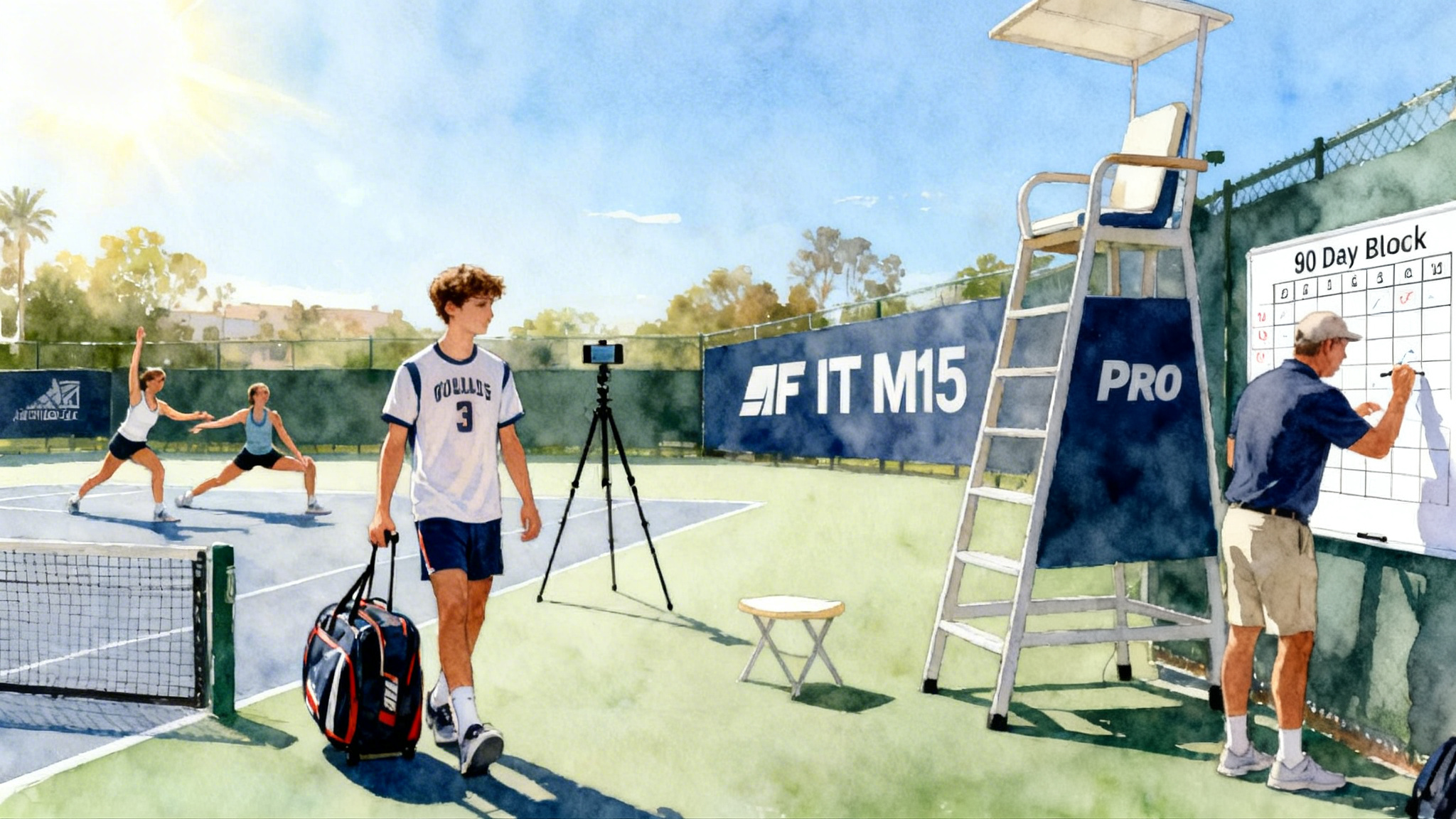
The leap from campus to courtside life
You have finished the grind of National Collegiate Athletic Association tennis, where buses run on time and stringing is covered by the program. Now the calendar reads 2026 and the next question is real: how do you turn that senior season into a first ranking on the professional tours and then into Challenger level relevance within a year and a half?
This guide is a practical map for players, parents, and coaches who want clear steps, not slogans. It starts with where to play, then lays out 90 day blocks, fitness and performance targets, budget math, wildcard tactics, video and analytics habits, and a primer on agents and sponsorship. The goal is simple: help you build momentum on the International Tennis Federation World Tennis Tour, step into qualifying at Challengers, and earn main draws by month 12 to 18 if execution and health cooperate.
Start line: where your first points live
Your first professional matches should focus on the International Tennis Federation World Tennis Tour. The entry level tiers are M15 and M25 for men and W15 and W25 for women. The International Tennis Federation explains how these events feed the professional pathway and how points roll upward into tour rankings in its official overview of the structure. Read it once, then build your plan around it: World Tennis Tour structure.
Why M15 and W15 first:
- Fields are strong but accessible for a top college player.
- Budgets are lighter than for multi country swings at higher levels.
- You can string together back to back events in one region to reduce costs and raise match volume.
When to try M25 or W25:
- After you are consistently qualifying and winning rounds at 15s.
- When your hold percentage and return numbers meet the targets listed below.
- If you are in form during a cluster of nearby 25s, use it to test and learn without breaking your travel budget.
The 12 to 18 month roadmap
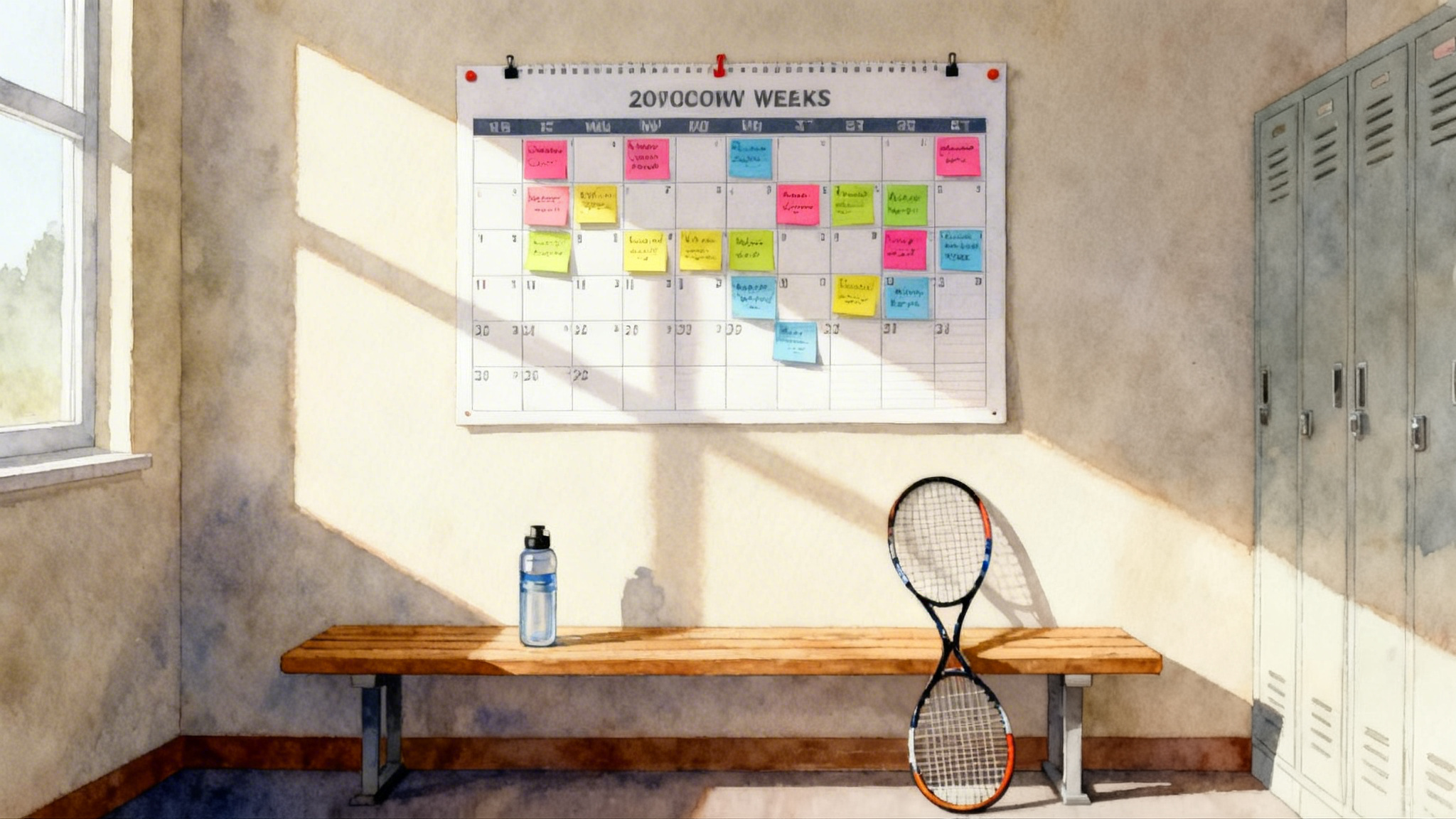
Think in 90 day blocks. Each block has a training emphasis, a match focus, and clear outcomes.
Block 1, months 1 to 3: establish a base
Objective: earn first ranking points and test your game under pro pacing.
Tournament load: 3 events at M15 or W15, ideally in the same region. Enter qualifying if needed, aim for at least one main draw appearance.
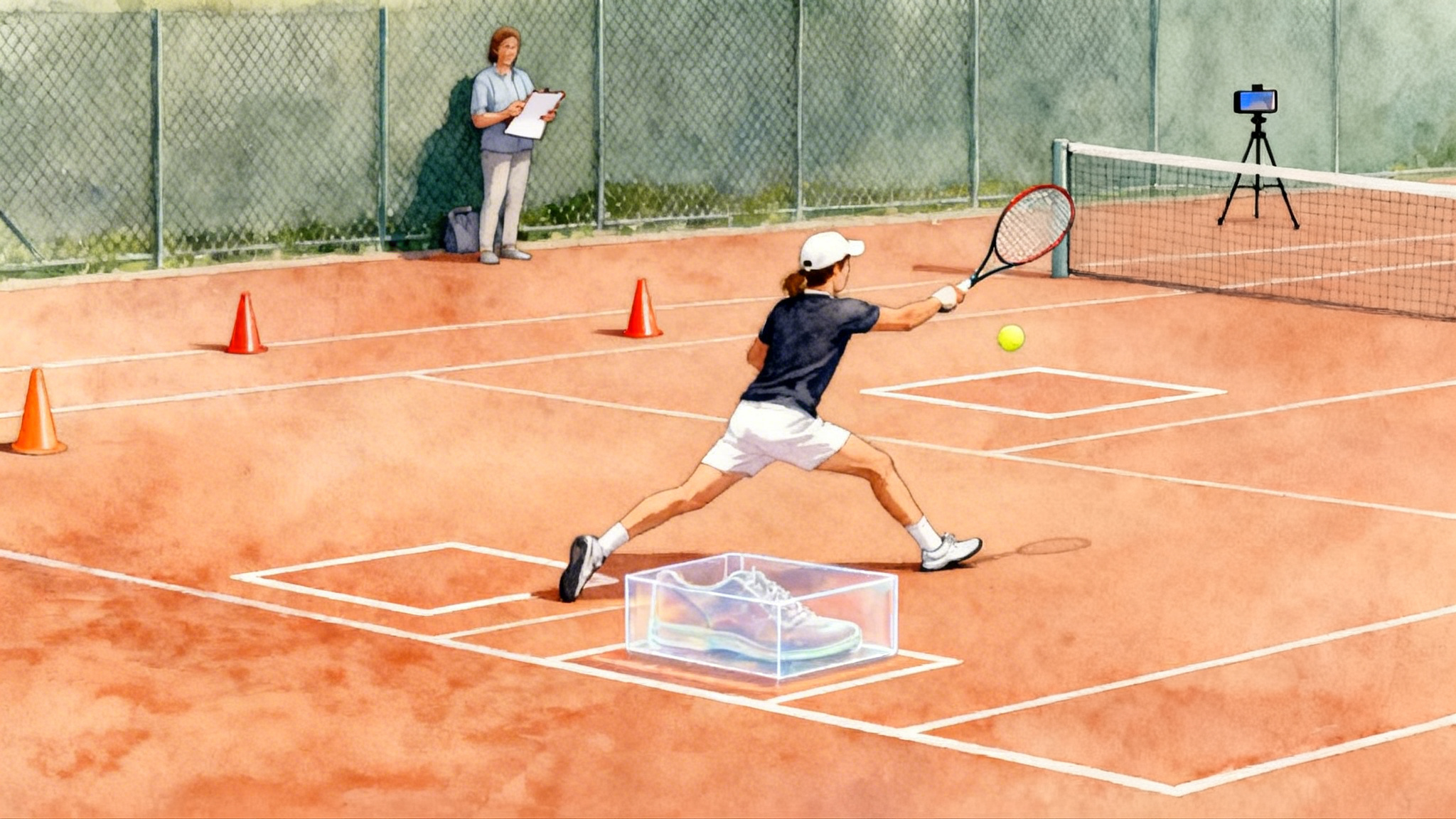
Training emphasis: serve quality, first ball patterns, and professional return depth. Add a weekly match charting session. For mechanics, review the serve blueprint checkpoints.
Outcomes: at least 8 to 12 matches played, two to three wins against ranked players, and a short list of patterns that hold under pressure.
Block 2, months 4 to 6: consolidate at 15s, test 25s
Objective: raise win rate and learn 25s tempo.
Tournament load: 4 events, split 3 at 15s and 1 at 25s if travel allows.
Training emphasis: transition footwork and second serve reliability. Add specific return plus one drills.
Outcomes: consistent qualifying through to main draw at 15s, at least one main draw win, and a feel for 25s margins.
Block 3, months 7 to 9: push toward 25s, plan a two event cluster
Objective: accumulate points, prove stamina on back to back weeks.
Tournament load: 4 events with at least 2 at 25s.
Training emphasis: match fitness, recovery routines, and tiebreak reps. Start scouting likely Challenger qualifying sites in months 10 to 12.
Outcomes: a ranking that gets you into 25s qualifying directly, plus two quality wins over higher ranked opponents.
Block 4, months 10 to 12: first Challenger qualifying attempts
Objective: translate pace handling to the next level.
Tournament load: 3 events at 25s and 1 Challenger qualifying shot in a familiar region.
Training emphasis: first strike discipline, serve placement under scoreboard stress, and return aggression on second serves.
Outcomes: at least one competitive match in Challenger qualifying, continued point accumulation at 25s, and a ranking trend moving upward.
Block 5, months 13 to 18: hold your ground at 25s, break into Challengers
Objective: regular 25s main draws, more Challenger qualifying, target a main draw within the window if healthy and trending.
Tournament load: 5 to 6 events, with at least 2 Challenger qualifying attempts and 3 to 4 25s. Use byes and rest weeks with purpose.
Training emphasis: pattern reliability under travel fatigue, specific set piece plays, and injury prevention.
Outcomes: established at 25s, periodic success in Challenger qualifying, and at least one main draw appearance if the numbers and draws line up.
Performance benchmarks that predict progress
Targets are guideposts, not ceilings. Use them to make scheduling and training decisions.
Serve and return
- First serve percentage: 60 to 65 percent while maintaining intent. If you drop below 58 percent in a block, adjust targets and patterns.
- Double faults: keep to 1 to 2 per set average. Track weekly.
- Hold rate targets: men at 75 percent or higher in 15s, women at 60 to 65 percent or higher. If you sit below these, delay a move up a tier.
- Break rate targets: 25 to 35 percent at 15s. Create return games with two high margin patterns per opponent.
Patterns and shot tolerance
- Return depth: at least half of second serve returns landing deep middle third or to the backhand corner you prefer.
- Short ball conversion: 65 percent or higher on neutral short balls inside the baseline when you choose to attack.
- Rally tolerance: win at least 55 percent of rallies of 0 to 4 shots at 15s. Use video to confirm, not memory.
Movement and defense
- Split step timing measured on video: contact lands before opponent impact in 8 of 10 returns in a set.
- Corner recovery: two steps out of the corner completed before the opponent hits, visible on baseline angle video.
Fitness and strength standards for entry level pros
Build a test sheet you repeat every six weeks. Here are reference ranges for healthy graduates.
- Acceleration, 10 meters: under 1.80 seconds for men, under 1.95 seconds for women.
- 5-0-5 agility test: under 2.35 seconds for men, under 2.50 seconds for women.
- Broad jump: 2.30 meters for men, 1.90 meters for women as baselines. Retest after each block.
- Countermovement jump: 45 to 55 centimeters men, 35 to 45 centimeters women. Track asymmetry as much as height.
- Yo Yo intermittent recovery test level 1: target 18 to 20 for men, 16 to 18 for women.
- Isometric mid-thigh pull relative strength: 2.5 times body mass men, 2.0 times body mass women as an advanced goal.
- Core bracing: side plank 90 seconds per side with quality.
If you fall short, schedule a mini block of two weeks to rebuild tissue capacity and retest before you chase a higher tier.
Budget, travel pods, and the business of weeks on the road
You will spend money before you earn it. Plan for it with realistic ranges.
Typical weekly costs at M15 or W15 in a cluster
- Flights: 300 to 800 United States dollars for domestic trips, 800 to 1,200 for international economy when booked three to five weeks out.
- Accommodation: 60 to 120 United States dollars per night when shared, 90 to 180 solo. Apartments can beat hotels if you split with a pod.
- Food: 40 to 60 United States dollars per day with simple cooking.
- Ground transport: 30 to 60 United States dollars per day if you split a rental, or use ride share sparingly.
- Entry fee and stringing: 40 to 60 United States dollars entry plus 20 to 25 per racquet and four to six string jobs per event.
Monthly reality checks
- Without a traveling coach: 3,000 to 6,000 United States dollars per month depending on flight density.
- With a coach on the road: 6,000 to 10,000 United States dollars per month once you factor day rates, travel, and lodging.
Travel pods save money and keep quality high. Build pods of two to four players who can share practice courts, scouting notes, transport, and apartments. Assign roles each week: one player leads logistics, one runs video tagging, one tracks practice planning. Rotate so no one burns out.
How to assemble a 90 day block that works
Here is a sample template you can adapt to your ranking and region.
Weeks 1 to 3
- Two weeks of training with three match play days each week and two quality lift sessions. One day fully off.
- Technical focus: serve targets to three zones on both sides, return depth to deep middle third, and favorite pattern out of neutral.
- Fitness priority: acceleration and deceleration mechanics, ankle and hip mobility, and two high intensity intervals after practice twice a week.
Weeks 4 to 6
- Two events at M15 or W15 in the same country. Travel on Sunday, compete Monday to Sunday, active recovery on travel days.
- Between events: one light hit and a mobility session only on the Monday between tournaments.
Weeks 7 to 9
- Review numbers from the two events. Keep what holds. Add one event at M25 or W25 if progression allows, or a third 15.
- Insert a three day micro training block between week 7 and 8 if you have a gap. Use it to sharpen your best patterns rather than learn new ones.
Weeks 10 to 12
- One full recovery week, then a final 15 or 25 depending on the data. Schedule a medical screen and an honest check on sleep and mood.
Wildcards: how to ask and when to expect one
Wildcards are not charity, they are investments by a tournament. Approach them like a small business pitch.
Timeline
- Reach out four to six weeks before the event. Follow up at two weeks. Confirm at one week.
Who to contact
- Tournament director, national federation pathway staff, and if in the United States, your local section contacts. Ask your college coach to send a short endorsement that includes your competitive habits, not just results.
What to send
- A 60 to 90 second highlight video with recent points that show your identity. Anchor it with clips from the last six months only. For filming details, see our smartphone video setup and loop.
- A one page results sheet with best wins, recent form, and your next three event entries. Keep it visual and scannable.
- A short paragraph on why their event fits your plan. Mention that you will arrive early, practice with seeded players if asked, and be available for fan engagement.
Follow through
- If you receive a wildcard, arrive two days early, be respectful with practice court requests, and say thank you with a short note on departure. If you do not receive one, keep communicating and send your next update after two to three more events.
If you want a formal framework for the next step to Challengers, the ATP provides an overview of the middle tier that helps you see how qualifying and main draws work and how points stack. Keep it in your bookmarks: ATP Challenger Tour overview.
Video and analytics that compound improvements
Your phone becomes a coaching staff on the road if you use it properly.
Capture
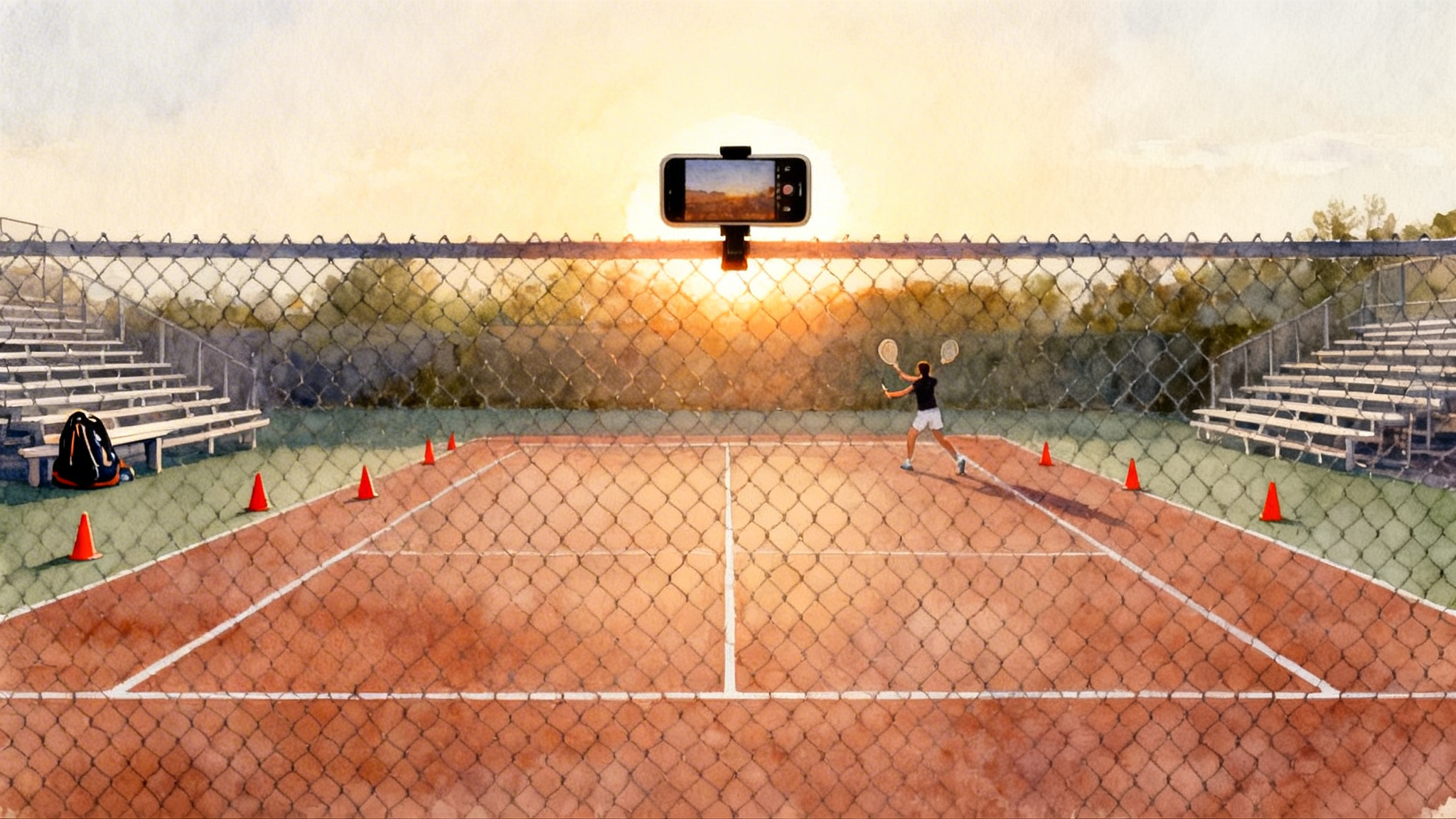
- Camera placement: one meter above head height behind the baseline, centered. Use 1080p at 60 frames per second. Stabilize with a fence mount or tripod.
- Audio: do not worry about it during matches. Focus on angle and continuity.
Tagging
- Keep tags simple: serve type and location, return depth, rally length bands of 0 to 4, 5 to 8, and 9 plus, and the pattern that ended the point.
- Build a one page dashboard that shows first serve percentage, double faults, return depth ratio, and rally length distribution.
Review cadence
- Daily: two to three clips that confirm identity, two clips that show a leak.
- Weekly: one hour deep dive on a day off with your pod, compare numbers to your benchmarks, and choose one technical change and one tactical emphasis only.
Agents and sponsorship: timing, terms, and traps
You do not need an agent to start. You might want one when two things are true: you are consistently earning points at 25s and you plan a heavier schedule that touches Challengers, or you have specific equipment offers on the table.
What a fair agreement looks like
- Commission only, typically a percentage of prize money and appearance fees. Avoid monthly retainers early in your career.
- Short term length with performance clauses. Two years with an option tied to ranking progress is common.
- Clear scope: prize money negotiation, scheduling advice, equipment deals, and sponsorship activation. If an agent will handle travel logistics, define that in writing.
Equipment deals
- Racquet and string packages often include product plus stringing support and a modest annual retainer once you win consistently at 25s and beyond.
- Apparel and footwear tend to scale with ranking and social reach. Be honest about your media habits before you promise deliverables.
Red flags
- Pressure to sign a long agreement before you have data in the professional ranks.
- Vague promises about wildcards or guaranteed sponsorships.
- Any contract you are told not to share with an attorney.
Optional pro block: sharpening at a high performance base
Many graduates use an eight to ten week pro block at a private academy to turn college habits into professional ones. Programs at places like Gomez Tennis Academy or Legend Tennis Academy can make sense when you need integrated strength and conditioning, daily match play, and support for travel between events. Always confirm the current services and staff fit by visiting for a week before you commit.
A simple pro block template
- Weekly load: four on court intensity days, one tactical day with patterns and video, one lift focused day, one full rest day.
- Match play: two practice matches per week with new balls, umpire chair if possible, and full scoring.
- Strength and conditioning: two heavy lower body lifts, one upper body power session, two tissue care sessions, sprint mechanics twice weekly.
- Integrated support: a coach or performance lead helps book practice partners, lines up travel plans for the next swing, and runs a 30 minute video meeting after each event.
Putting it together: one sample 12 week calendar
Assume you are a recent graduate based in the United States with no current professional ranking, healthy, and ready for four events in the quarter.
Weeks 1 to 2
- Training base at home. Serve targets every session, plus 30 minutes of return practice with a ball machine or live feed. Two lifts per week.
Week 3
- Travel to a nearby M15 or W15. Aim to qualify, fight for main draw. Film both matches.
Week 4
- Recovery and review. One day fully off, one day light hit, two days pattern work. Finalize entries for the next two events.
Weeks 5 to 6
- Two event cluster. Share an apartment with your pod, rotate cooking, and assign one teammate as the video tagger each day.
Week 7
- Three day rebuild. Acceleration mechanics, serve placement under fatigue, and return depth drills. Mobility and tissue care.
Week 8
- Test a 25 if entries allow and you have earned wins at the 15 level. Otherwise play a third 15.
Weeks 9 to 10
- Off week then two days of sharpening. Renew grips and strings, audit your budget, and send one update email to any tournament director you contacted for wildcards.
Weeks 11 to 12
- Final event of the block. Review after. Decide whether the next block leans into 25s or stays at 15s based on your numbers, not your hopes.
Common traps and how to avoid them
- Moving up too soon: stay at 15s until your hold and break rates hit the targets for three straight events. Moving up early rarely saves time in the long run.
- Over scheduling: cap yourself at two back to back events before a mini break. Fatigue hides as poor timing and turns small aches into real problems.
- Ignoring video: your eyes are biased. Your camera is not. A ten minute review is more useful than a ten minute argument with yourself.
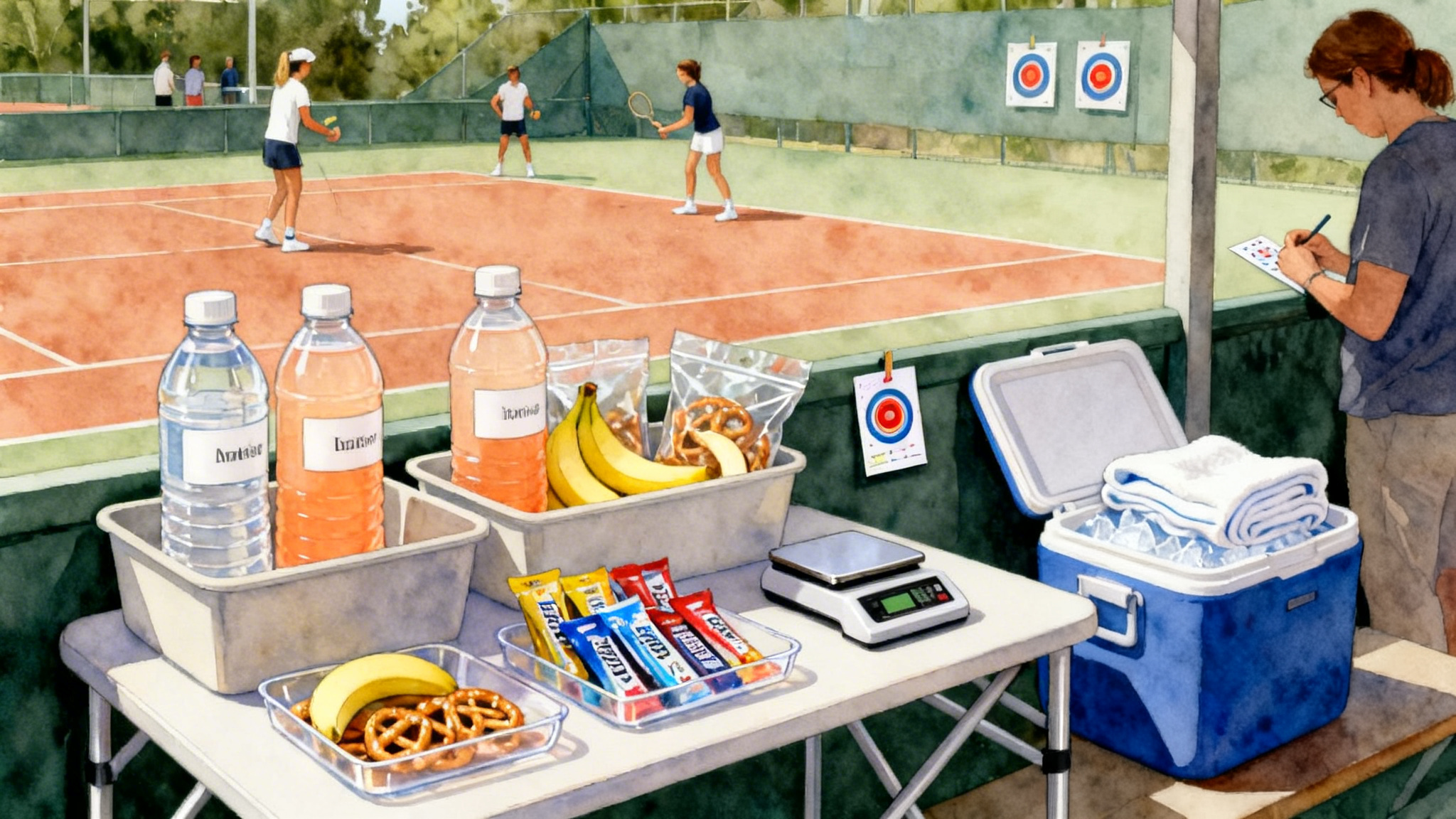
- Under fueling: budget for groceries, cook simple, and batch meals. For race day details, see Tournament Day fueling guidance.
- Neglecting the business: track every dollar. A detailed spreadsheet prevents surprise shortfalls during a long swing.
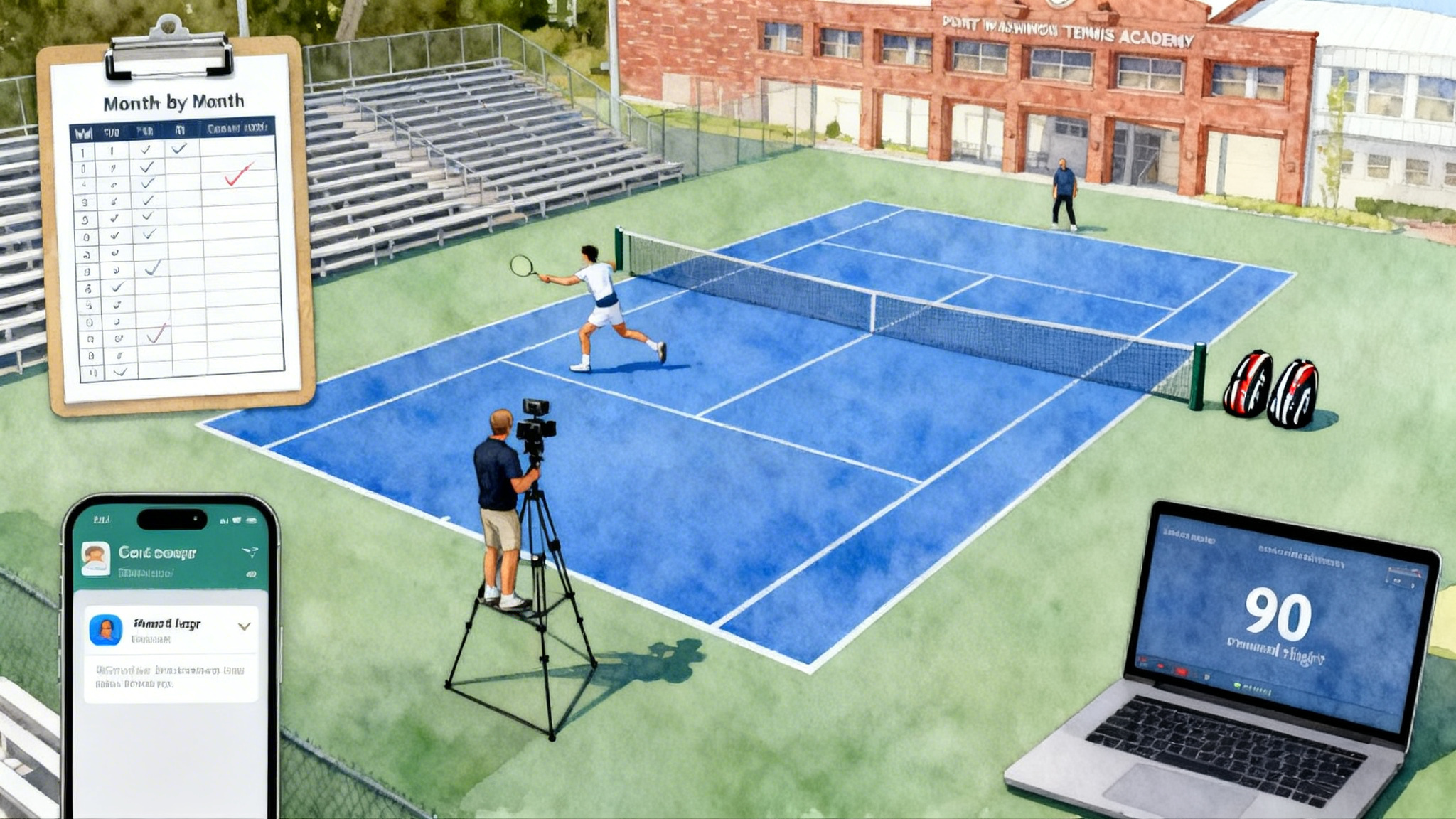
A final checklist you can print
- Registration: complete your International Tennis Federation player registration and read the entry deadlines for your first three events.
- Calendar: pick your first 90 day block, cluster events, and protect two true recovery weeks.
- Benchmarks: write your targets and test every six weeks. Adjust training accordingly.
- Budget: set a monthly floor and a ceiling with and without a coach. Build a travel pod to hit the floor, not the ceiling.
- Wildcards: build your outreach list with dates, contacts, and a three touch plan.
- Video: set your angle, pick your tags, and keep a one page dashboard.
- Support team: define who does what. If you add an agent, keep terms simple and clear.
The smart way to start
The college to pro jump in 2026 rewards players who think like athletes and operators. Your sports science work matters, but so does your scheduling, your emails, your receipts, and your video tags. Set your 90 day blocks, measure what counts, move up only when the numbers say move, and travel with people who make you better. Do this for 12 to 18 months and your game will not just visit the professional level. It will belong there.