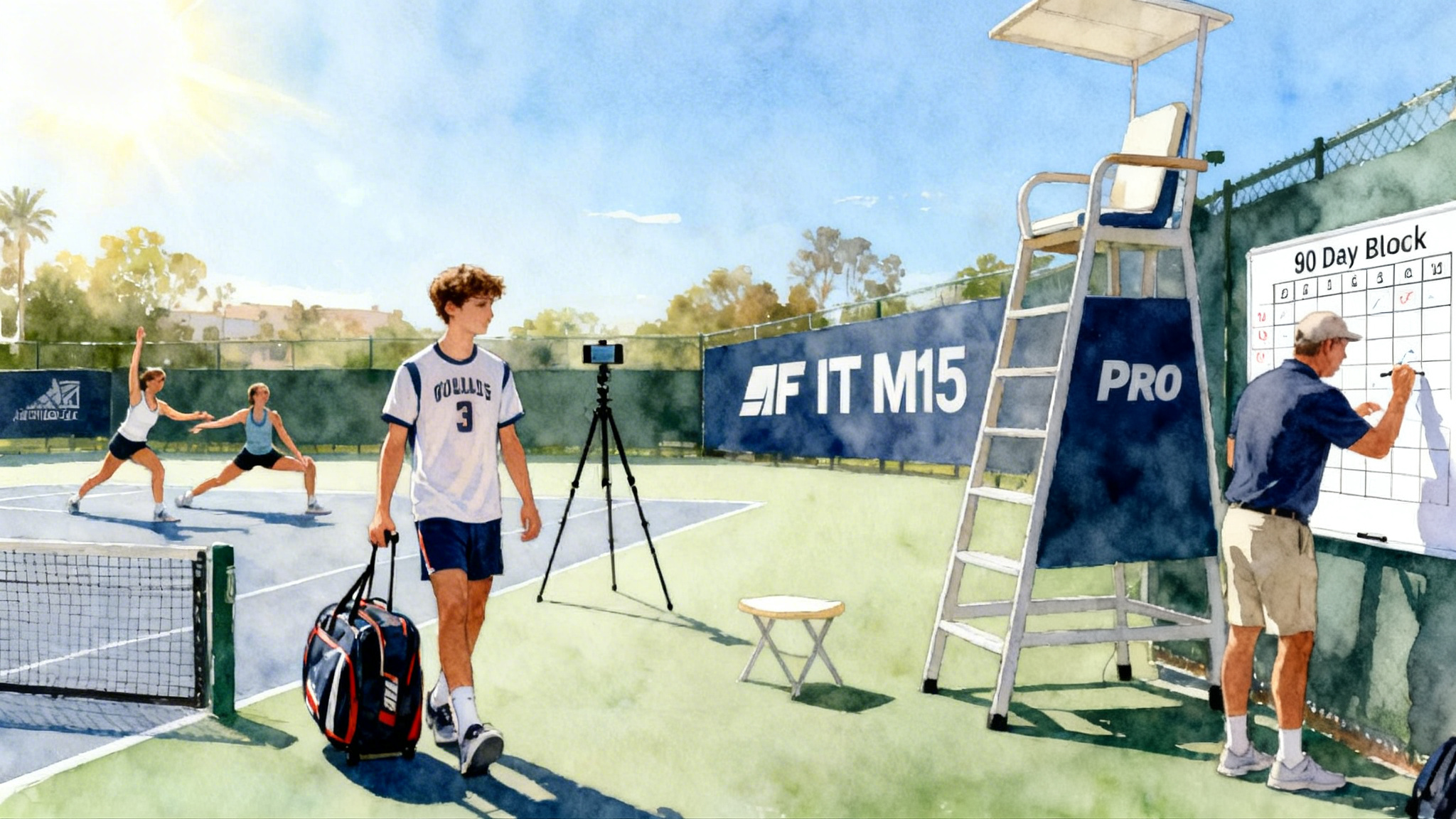
College Tennis Combine 2026: Tests, Benchmarks, 8-Week Plan
Get ready for the 2026 college tennis combine with clear test protocols, age-smart benchmark ranges, and an 8-week plan you can run twice per week. Includes warm-ups, at-home alternatives, and a printable evaluation sheet.
 Tommy
Tommy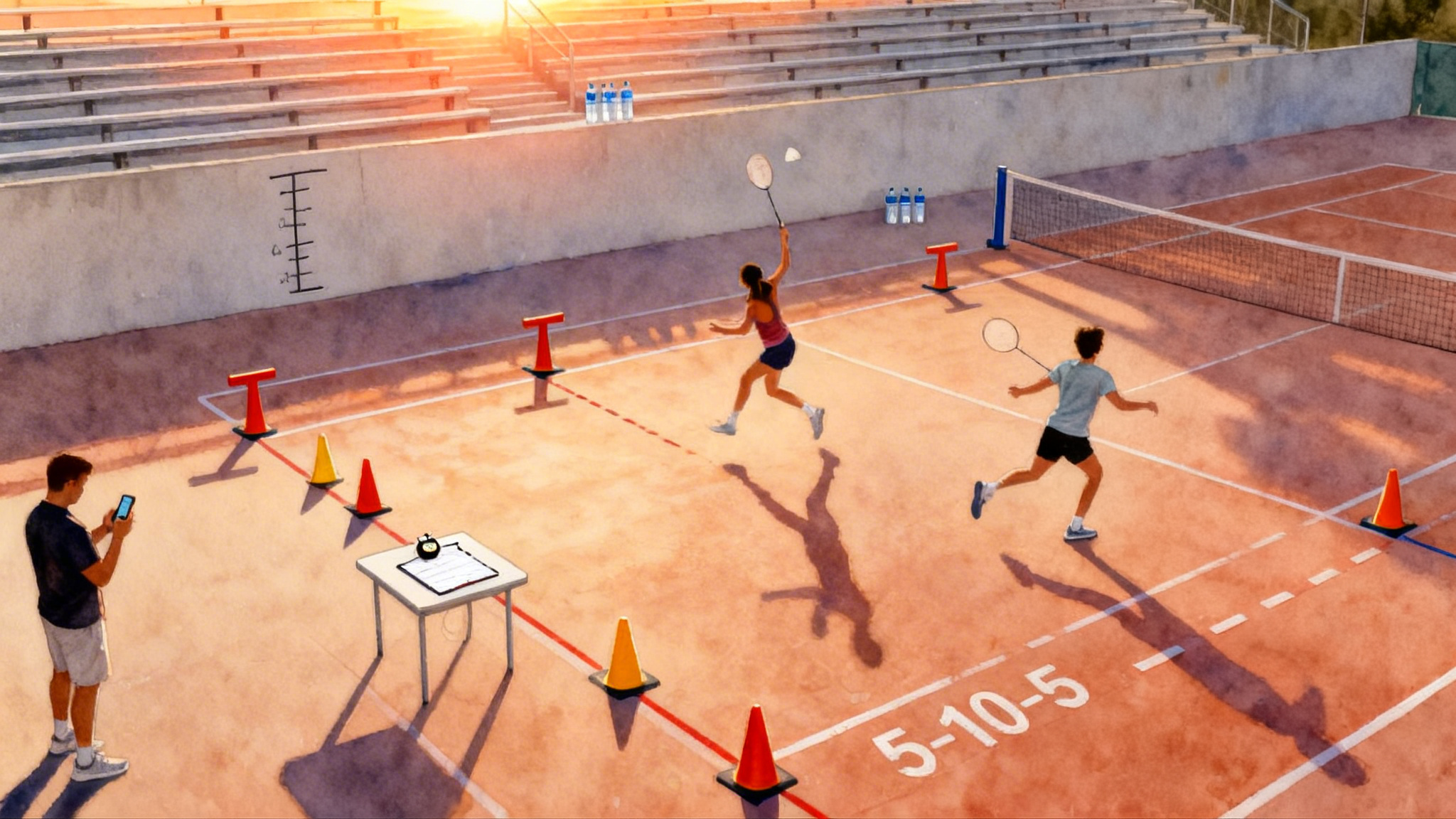
Why a tennis combine matters in 2026
College coaches want players who can repeat explosive movements, change direction without losing balance, and stay sharp in long matches. A fitness combine turns those qualities into numbers that show readiness. Think of it as a report card for how your body moves and endures pressure. If you are a junior trying to earn a roster spot, a parent guiding a teenager, or an adult returning to high-level play, knowing the tests and benchmarks allows you to prepare with purpose. If recruiting is on your horizon, pair this plan with our college recruiting roadmap.
Below you will find the most common fitness screens used by college programs and tennis academies. Each test includes what it measures, a simple protocol, coaching tips, and at-home alternatives. You will also get age-smart benchmarks, an 8-week plan you can execute twice per week, and a printable evaluation sheet. Last, we explain how Legend Tennis Academy’s Saturday Combine delivers a baseline test day and a re-test four weeks later so you can track progress with confidence.
The tests you will face and how to run them
1) Yo-Yo Intermittent Recovery or Beep Test
- What it measures: Intermittent aerobic capacity and repeat sprint recovery. This mirrors tennis, where short bursts are followed by brief rests.
- Standard protocol: Use a 20 meter shuttle. For the Yo-Yo Intermittent Recovery Level 1, run to the line and back in time with audio beeps, rest briefly, then repeat at slightly faster speeds until you cannot make the line on two consecutive shuttles. For a classic Beep Test, there is no micro rest between shuttles. Record total distance or the final level.
- Coaching tips: Run the first half of the test with even pacing, keep turns tight without reaching, and breathe through the nose and mouth together to relax shoulders.
- At-home alternative: Mark 20 meters with a tape measure or 22 yards on a field. Use any free audio track on a phone. If space is limited, do 15 meter shuttles and add 10 percent to distance as a rough correction.
2) 5-10-5 Pro Agility
- What it measures: Lateral speed, re-acceleration, and plant quality, all crucial for wide balls and quick recoveries.
- Standard protocol: Place three cones in a straight line, 5 yards apart. Start straddling the center line, hand on the line. Sprint 5 yards to the right, touch the line with your hand, sprint 10 yards to the far cone, touch, then 5 yards back through the middle. Time from first movement to crossing the middle line at the finish.
- Coaching tips: Push laterally off the inside edge of your shoe, keep hips level, and avoid bending at the waist when touching the line.
- At-home alternative: Use chalk lines on a flat driveway. A smartphone stopwatch captured by a friend works well.
3) T-Test
- What it measures: Multi-directional change of direction with forward, lateral, and backpedal phases, just like a point that pulls you corner to corner.
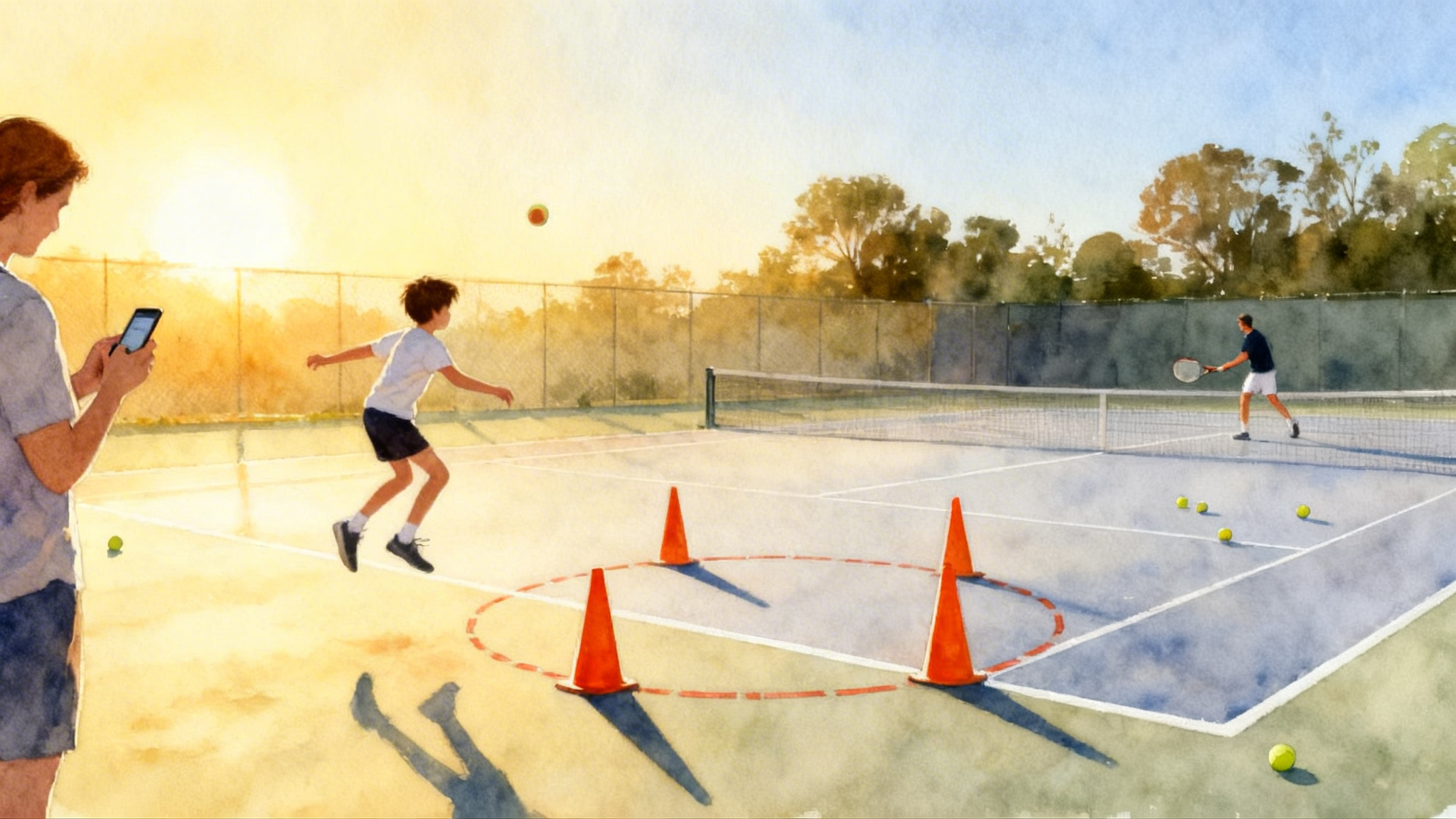
- Standard protocol: Set four cones in a T shape: one base cone, 10 yards ahead the middle cone, then 5 yards left and right of that middle cone to form the top of the T. Sprint forward to the middle, shuffle left to the left cone, shuffle all the way to the right cone, shuffle back to the middle, then backpedal to the start. Time to the nearest tenth.
- Coaching tips: Stay low on shuffles, feet parallel, chest tall. Do not cross legs. Turn hips before the backpedal so steps are clean.
- At-home alternative: Shorten the distances to 8 and 4 yards if space is tight.
4) 20 to 30 meter sprint
- What it measures: First step speed and acceleration, the engine of every aggressive approach.
- Standard protocol: From a two point start, sprint 20 or 30 meters on a track or marked court. Take two attempts with full recovery and record the best time.
- Coaching tips: Think tall through the torso, drive the ground away, and use a strong arm swing. Do not overstride.
- At-home alternative: Measure distance with a tape or long court tape. A smartphone with a slow motion video can help time by counting frames.
5) Timed mile
- What it measures: Aerobic base and mental pacing. While tennis is not a mile race, a strong base helps you maintain quality between points and in long matches.
- Standard protocol: Run 1 mile on a 400 meter track or measured loop. Aim for even splits.
- Coaching tips: Start conservative for the first lap, then settle into a pace you can hold. Increase cadence slightly in the final 400 meters.
- At-home alternative: Use a treadmill or a measured neighborhood loop. If your mile terrain is hilly, repeat it on the same course for apples to apples comparisons.
6) Vertical jump
- What it measures: Lower body power, ankle stiffness, and elastic recoil. These are tied to aggressive movement and explosive serves.
- Standard protocol: Use a Vertec or a wall with chalk. Reach up to mark standing reach. Jump with a simple countermovement, touch as high as possible. The difference is your vertical.
- Coaching tips: Land softly with knees tracking over toes. Keep the arm swing crisp.
- At-home alternative: Chalk your fingertips and use a garage wall. Wipe clean after.
7) Pull-ups and push-ups
- What they measure: Upper body strength endurance that supports posture, racquet speed, and shoulder health.
- Standard protocol: For pull-ups, use a full hang to chin-over-bar standard with smooth tempo. For push-ups, keep a straight line from head to heels, chest to fist or to a line on a foam block, full lockout on each rep. Record one max set for each.
- Coaching tips: Stop the set when form breaks. Quality over quantity keeps the shoulders happy.
- At-home alternative: Doorway pull-up bar, sturdy frame, or band-assisted variations. For push-ups, elevate hands on a bench if needed.
8) On-court shuttle
- What it measures: Tennis-specific movement quality under fatigue.
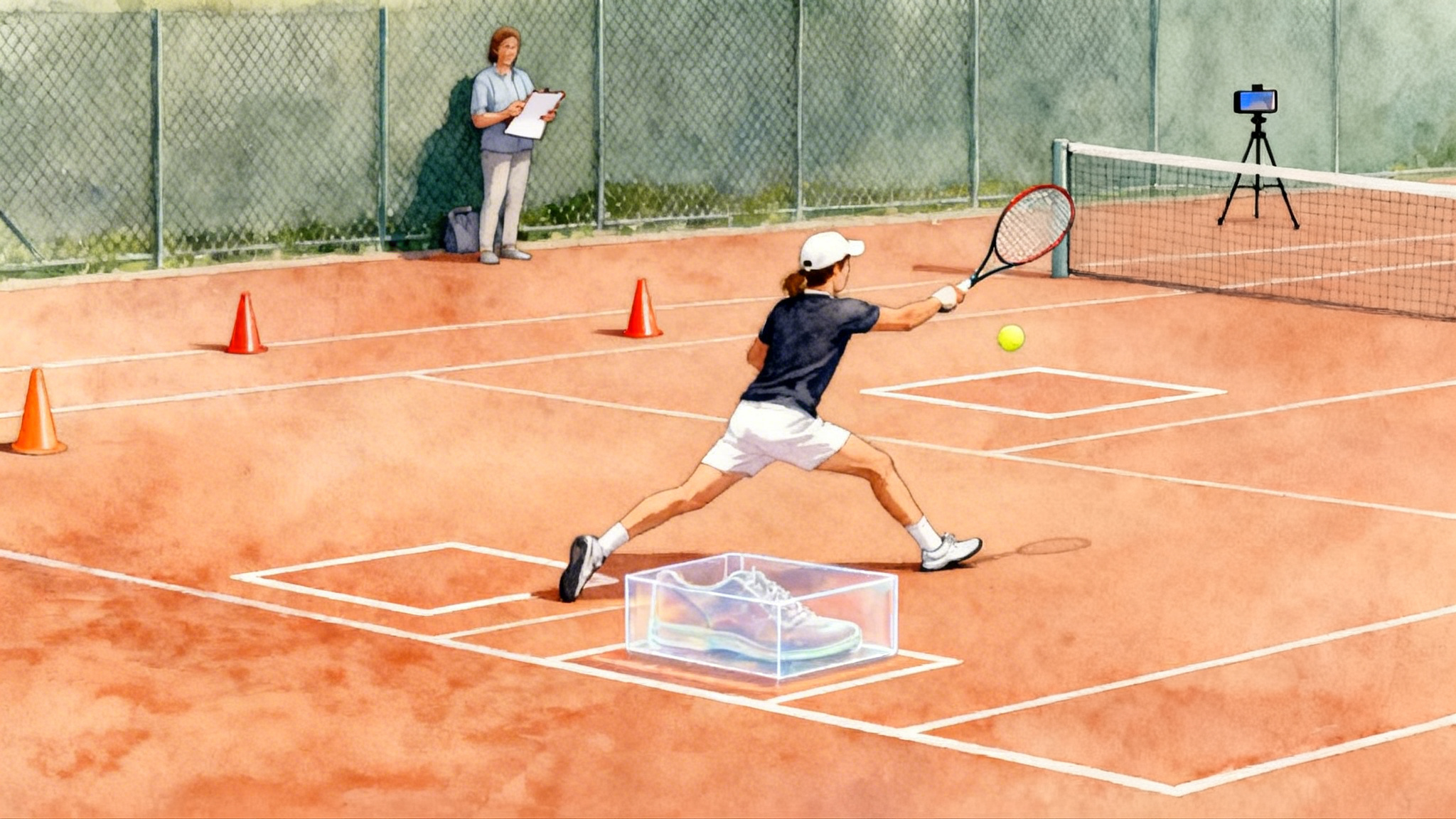
- Standard protocol: Place five targets on the court. A common layout is baseline center, deuce corner, ad corner, service line center, and back to baseline center. Start at baseline center. Sprint and touch each cone in a prescribed order, then finish at the starting point. Record total time.
- Coaching tips: Use small braking steps into the corners. Point the hips toward the next target before you push out.
- At-home alternative: Recreate the pattern in a driveway with cones or water bottles.
Age-smart benchmark ranges
These ranges help juniors, parents, and adult players understand where they stand. They are realistic for healthy, trained players. Injury history, growth spurts, and training age matter. Treat them as guides, not judgments.
| Test | U14 | U16 to U18 | College-ready 18 to 22 | Adults 26 to 40 | Adults 40 plus |
|---|---|---|---|---|---|
| Yo-Yo Intermittent Recovery Level 1 distance | 600 to 1000 meters | 1000 to 1600 meters | 1200 to 2000 meters | 1000 to 1600 meters | 600 to 1200 meters |
| Beep Test 20 meter level (if used) | 6 to 8 | 8 to 11 | 10 to 13 | 8 to 11 | 6 to 9 |
| 5-10-5 Pro Agility | 5.6 to 6.4 seconds | 5.2 to 5.9 seconds | 4.6 to 5.3 seconds | 5.0 to 5.8 seconds | 5.5 to 6.5 seconds |
| T-Test | 11.5 to 13.5 seconds | 10.5 to 12.0 seconds | 9.5 to 11.0 seconds | 10.5 to 12.5 seconds | 11.5 to 13.5 seconds |
| 20 meter sprint | 3.6 to 4.2 seconds | 3.2 to 3.8 seconds | 2.9 to 3.4 seconds | 3.2 to 3.9 seconds | 3.5 to 4.3 seconds |
| 30 meter sprint | 4.7 to 5.6 seconds | 4.3 to 5.1 seconds | 4.0 to 4.7 seconds | 4.3 to 5.2 seconds | 4.7 to 5.8 seconds |
| Timed mile | 7:30 to 9:00 | 6:30 to 7:45 | 5:30 to 6:30 | 6:30 to 8:00 | 7:30 to 9:30 |
| Vertical jump | 12 to 18 in 30 to 46 cm | 16 to 24 in 41 to 61 cm | 18 to 30 in 46 to 76 cm | 16 to 26 in 41 to 66 cm | 12 to 22 in 30 to 56 cm |
| Pull-ups max set | 1 to 5 | 3 to 10 | 5 to 15 | 3 to 12 | 1 to 8 |
| Push-ups max set | 10 to 25 | 20 to 40 | 25 to 60 | 20 to 50 | 15 to 35 |
| On-court shuttle five-spot | 22 to 28 seconds | 19 to 24 seconds | 17 to 21 seconds | 19 to 24 seconds | 21 to 27 seconds |
Notes:
- The Yo-Yo and Beep numbers are not identical tests. If you only have one of them, track the same test each time to see progress.
- Sprint times assume a hand-timed start. Electronic timing usually reads 0.1 to 0.2 seconds slower.
The 8-week, twice-per-week prep plan
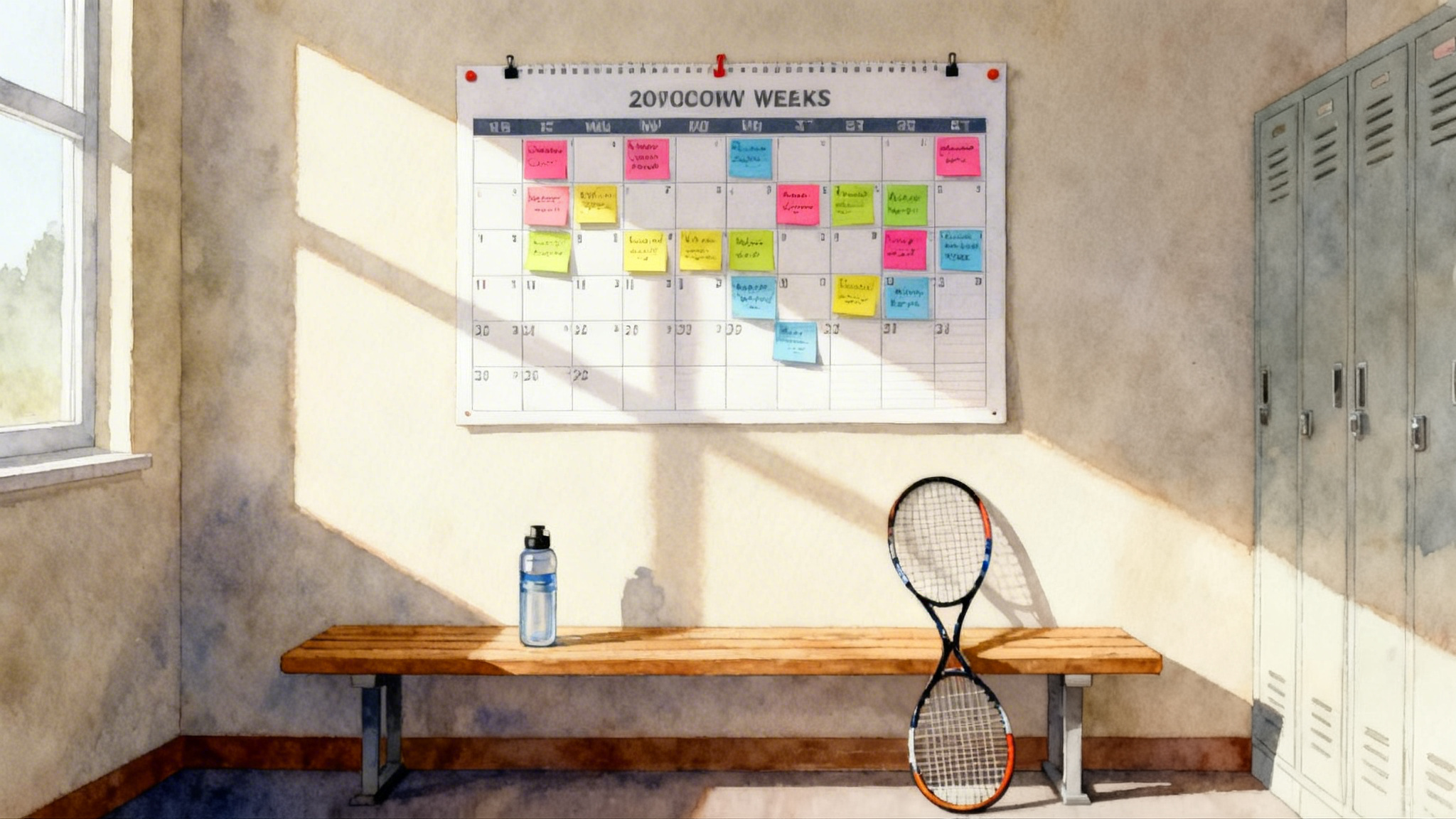
This plan fits around normal tennis practice. Commit to two sessions per week, about 60 to 75 minutes each. Day A focuses on speed and change of direction. Day B builds aerobic capacity and strength endurance. If you already play or coach three to five tennis sessions per week, place these on lighter hitting days.
Standard warm-up for every session
- Tissue prep: 2 minutes of jump rope or light jog. 60 seconds each of calf, quad, and hip flexor mobility.
- Dynamic series: 10 meters each of high knees, butt kicks, leg swings, walking lunges with a reach, lateral shuffles, and skips for height.
- Movement prep: 2 sets of 10 pogo jumps, 2 sets of 10 snap downs to rehearse landing mechanics, 2 sets of 10 meter acceleration buildups at 70 percent.
- Racket rhythm: 2 sets of 15 seconds of split step plus two quick shuffles and a shadow swing. Rest 30 seconds.
Day A: Speed and change of direction
Weeks 1 to 4
- Acceleration sprints: 6 to 8 reps of 20 meters. Walk back recovery.
- 5-10-5 Pro Agility practice: 4 to 6 timed reps. Aim for consistent touch technique.
- T-Test shuttles: 3 to 4 reps at 90 percent speed, 60 to 90 seconds rest.
- Jumps: 3 sets of 5 vertical jumps with stick landings. Rest 60 seconds.
- Core: 3 sets of 20 seconds of side plank each side. 30 seconds rest.
Weeks 5 to 8
- Acceleration plus flys: 4 reps of 20 meter build then 10 meter sprint at full speed. Walk back recovery.
- 5-10-5 under fatigue: 4 reps with 15 seconds between reps, 2 minutes between sets.
- On-court shuttle: 3 reps at full speed, 2 to 3 minutes rest. Log best time.
- Jumps: 4 sets of 4 continuous vertical jumps. Focus on quick ground contact.
- Core: 3 rounds of 20 seconds hollow hold and 10 controlled dead bugs per side.
At-home alternatives for Day A
- Use a measuring tape on grass or a quiet street for the sprints. If weather is bad, do stairs: 6 to 8 sets of 8 to 12 seconds up, walk down.
- Replace the T-Test with three cone triangle shuttles using water bottles.
Day B: Aerobic capacity and strength endurance
Weeks 1 to 4
- Yo-Yo or Beep practice set: Stop two levels short of failure. Focus on turns and breathing.
- Strength circuit 1: 3 rounds, rest 2 minutes between rounds.
- Push-ups 10 to 20 reps
- Band or ring rows 10 to 15 reps
- Split squat 8 to 12 reps each leg
- Glute bridge 12 to 15 reps
- Farmer carry 20 meters with dumbbells or heavy backpacks
- Finisher: 6 by 20 seconds court shuttles at 7 out of 10 effort, 40 seconds rest.
Weeks 5 to 8
- Yo-Yo or Beep progression: Aim to match your baseline score by week 7, then surpass it in week 8.
- Strength circuit 2: 3 to 4 rounds, rest 2 minutes between rounds.
- Pull-ups or assisted pull-ups 4 to 8 reps
- Push-ups 12 to 25 reps
- Rear foot elevated split squat 8 to 10 reps each leg
- Single leg Romanian deadlift 8 to 12 reps each leg
- Pallof press 10 to 12 reps each side
- Finisher: 10 by 15 seconds high tempo line touches, 45 seconds rest.
At-home alternatives for Day B
- Replace pull-ups with band pulldowns looped over a door. Replace farmer carries with loaded grocery bags.
- If you cannot shuttle inside, do 30 seconds brisk step-ups on a sturdy stair, 30 seconds easy, for 10 minutes total.
Weekly layout suggestions
- Two tennis heavy weeks: place Day A on Monday, Day B on Thursday. Hit or match play on other days.
- Tournament week: complete only Day A early in the week and keep it submaximal. Replace Day B with a 20 minute easy spin or walk.
Progression guardrails so you do not overreach
- Add only one variable per week: either one more rep, a little distance, or a slight speed increase.
- Keep all sprints and jumps crisp. If contacts feel heavy, cut volume by 20 percent for that day.
- Aim to sleep 8 hours on training nights and hydrate until urine is pale yellow.
How to coach technique inside the tests
- For planting and cutting: Think of your foot as a tripod. Big toe, little toe, and heel all share the load. This keeps knees tracking above the middle toes. For deeper practice, use our age-smart footwork training.
- For backpedaling: Turn the hips first, then step. This shortens the switch from defense to offense.
- For pacing the mile and shuttles: Use nasal breathing as a governor early. If you cannot breathe partly through the nose, you are going too fast at the start.
Printable evaluation sheet
Print this table and bring it to your next session. Use the target column to set a realistic goal for the next four weeks.
| Athlete name | Date baseline | Date re-test | Notes |
|---|---|---|---|
| Test | Score baseline | Target | Score re-test | Pass or needs work |
|---|---|---|---|---|
| Yo-Yo Intermittent Recovery Level 1 distance | ||||
| Beep Test level | ||||
| 5-10-5 Pro Agility | ||||
| T-Test | ||||
| 20 meter sprint | ||||
| 30 meter sprint | ||||
| Timed mile | ||||
| Vertical jump | ||||
| Pull-ups max set | ||||
| Push-ups max set | ||||
| On-court shuttle five-spot |
Printing tip: On most browsers you can press Control plus P or Command plus P, choose landscape, and scale to fit one page.
How to use the benchmarks without losing the big picture
Numbers are a tool, not a label. If your T-Test time is slower but your vertical jump is strong, you likely need more lateral braking and posture work, not endless conditioning. If your pull-ups are low, start with isometric hangs and band assistance. If your mile is lagging yet your Yo-Yo is solid, you probably pace well in intermittent work and can keep two short aerobic sessions per week until the next combine.
Legend Tennis Academy’s Saturday Combine
Legend Tennis Academy runs a Saturday Combine built for players and families who want structure and clarity. The flow is simple and friendly, while still precise.
- Baseline Saturday: Check in, dynamic warm-up with a coach, then rotate through stations. The station list includes Yo-Yo or Beep, 5-10-5, T-Test, 20 meter sprint, vertical jump, pull-ups and push-ups, and on-court shuttle. The mile is completed later that day or next morning on a track using our pacing guide.
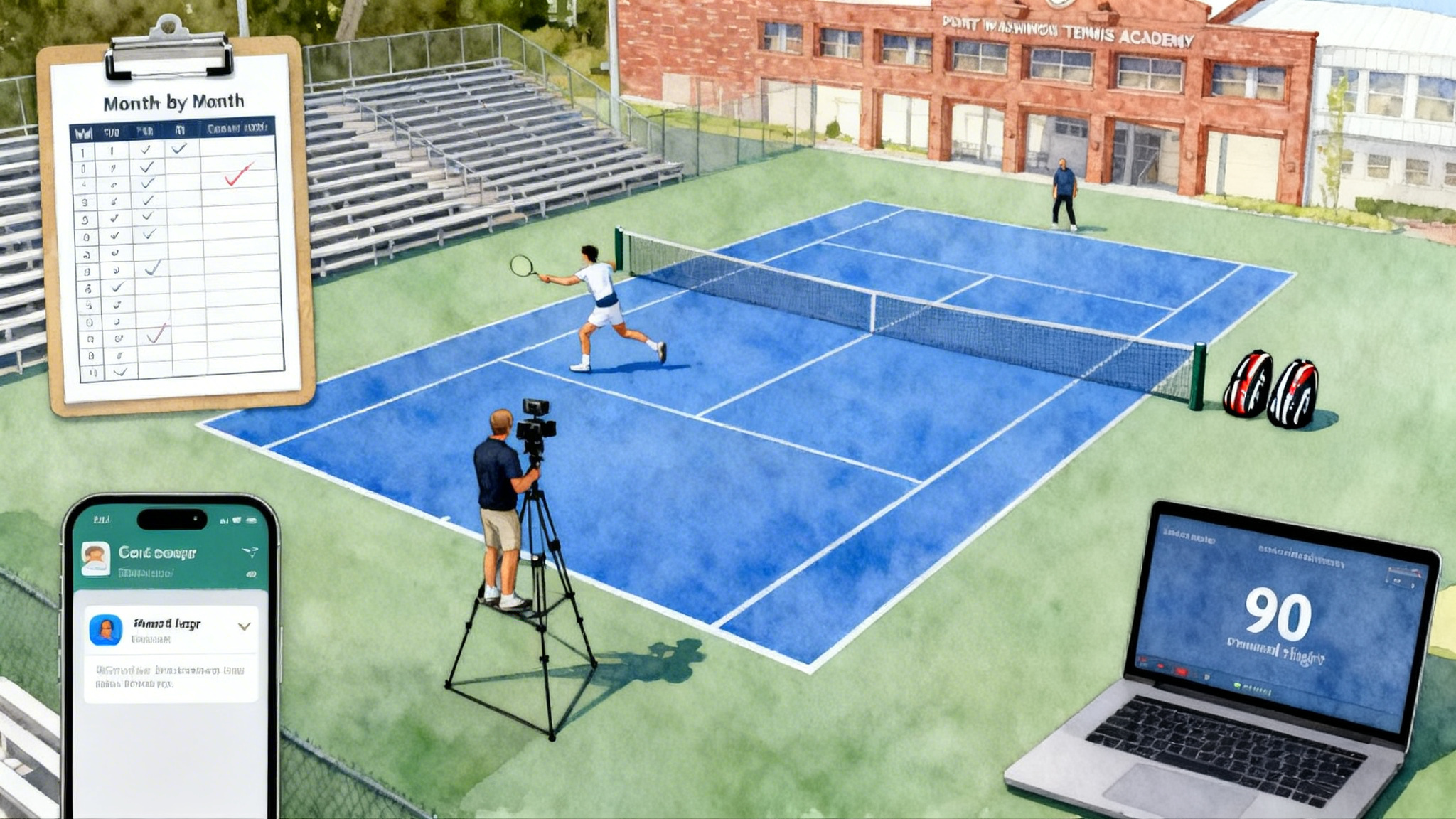
- Digital report: Within 48 hours you receive a clean scorecard with charts, plus age-smart targets and practice ideas tied to your numbers. You can access it anytime on your phone.
- Four-week re-test: Return on a Saturday four weeks later, repeat every station, and see the change. Most players who follow the two day per week plan in this article record clear gains in at least three categories.
You can reserve a spot or learn more through the Legend Tennis Academy Saturday Combine.
A sample week for juniors, parents, and adult players
- Junior path example: A 15 year old with a 5:45 mile but a 5-10-5 time of 5.8 seconds should bias Day A. Add one extra set on lateral shuffles and two extra minutes of technique work on cuts. Keep Day B at base volume.
- Parent path example: A 42 year old playing USTA league with good 5-10-5 but a low Yo-Yo distance should bias Day B. Keep the strength circuit consistent and swap the finisher for bike intervals if knees are cranky.
- Adult player example: A 21 year old transfer aiming for college roster readiness should retest weekly on one test only, such as 20 meter sprint, while saving the full combine for Saturday week four.
Safety first without slowing momentum
- Warm up until the first sprint feels fast and relaxed. A warm muscle is a safe muscle.
- If pain is sharp or alters your stride, stop and swap running for bike or pool work that day. Good training is specific, but smart training is adaptable.
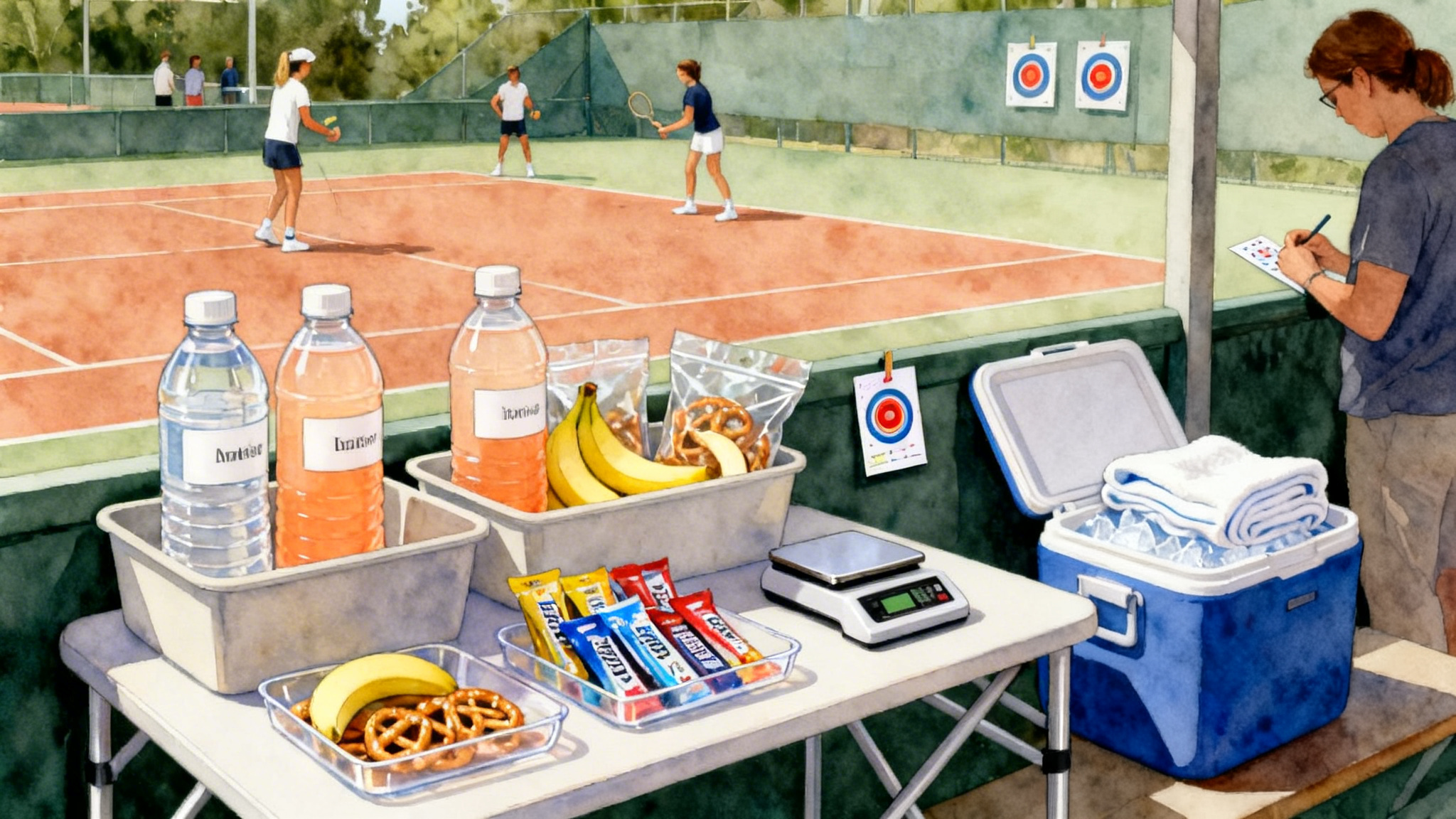
- Eat a snack with a mix of protein and carbohydrate within an hour after sessions. A peanut butter sandwich with a banana works fine. Hydrate with water and a pinch of salt if you cramp in heat.
Timeline to combine day
- Weeks 1 to 2: Learn the tests. Form first. Record a practice score for each.
- Weeks 3 to 4: Build volume. Make the warm-up automatic. Add a little speed if freshness is good.
- Weeks 5 to 6: Sharpen. Shorter rests on shuttles, quality jumps, and a small push on pull-ups and push-ups.
- Weeks 7 to 8: Specificity. Rehearse your exact combine sequence, then taper 3 days before testing. Move daily but keep intensity modest.
What to bring on test day
- Two pairs of socks and your regular match shoes. Dry feet make better cuts.
- A charged phone if you log scores digitally, plus a paper backup using the sheet above.
- A light snack and water bottle. Aim for small sips between stations.
The payoff
A good combine result is not luck. It is the outcome of dozens of quality starts, smart shuttles, strong landings, and clean recovery. The plan above is short on fluff and long on clarity. Run it, track it, then retest in four weeks to prove it is working. When you are ready to show coaches, organize your materials with our college recruiting roadmap.
Conclusion: Make readiness visible
College tennis rewards players who can move with purpose, repeat efforts, and stay poised. The combine turns that into visible proof. You now have test protocols, realistic benchmarks, and an 8-week plan that fits real lives. Print the sheet, schedule a Saturday, and commit to two good sessions each week. The next time a coach asks if you are ready for college-level training, you can answer with results that speak for themselves.