From College Park to Arthur Ashe: How JTCC Shaped Tiafoe
 Tommy
Tommy
The kid who grew up at the courts
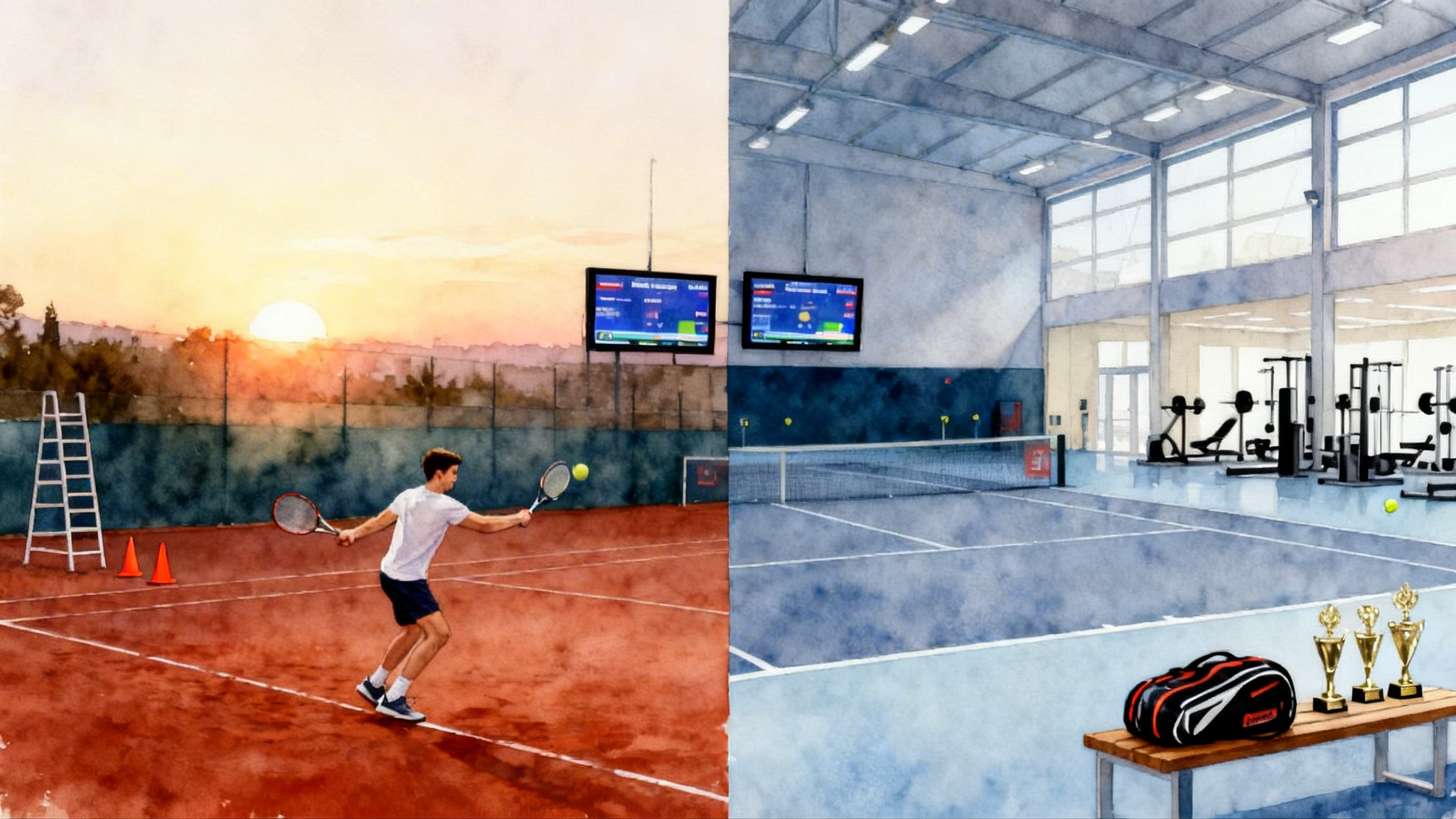
Before Frances Tiafoe lit up Arthur Ashe Stadium under the New York lights, he was a kid who spent more waking hours at a tennis facility than most pros do as adults. The Junior Tennis Champions Center in College Park, Maryland, was more than a training site. It was a daily environment, a community, and a classroom. His father worked there, his friends were there, and his competitive identity grew there.
That origin story matters because it reveals the engine behind his style and resilience. From the first day he picked up a racket to his breakthrough on the Association of Tennis Professionals tour, several ingredients repeated like a drumbeat: immersion, repetition against real opponents, and a calendar that always pointed to the next match that mattered. Tiafoe’s path shows how the right academy model, paired with federation support and timely coaching decisions, can move a family from dreaming about pro tennis to planning for it.
What JTCC did differently
The Junior Tennis Champions Center is best known for a scholarship-driven immersion model. Families who needed financial support could still access elite training. Scholarships were not a one-off award tucked in a file; they were part of a system designed to keep kids in the building, on court, and inside a peer group that trained like a team. If you want a sense of the place, start with JTCC in College Park. The site explains the mix of community outreach and high-performance tennis that shaped players like Tiafoe. For contrast, look at how Ferrero Academy built Alcaraz, another immersion-first pathway.
At JTCC, immersion meant time with a purpose. Players did not just log hitting hours. They lived through structured match-play blocks that created feedback loops you cannot get from drilling alone. Coaches stacked competitive sets, changed opponents mid-session to test adjustments, and tracked who solved problems fastest. In that environment, winning a drill did not mean much. Solving a tight second set did.
The academy also planned tournaments like a coach plans a fight camp. Junior schedules included waves of local events to build confidence and rhythm, followed by regional and national trips that introduced new surfaces, altitude, and pressure. The goal was to become good at winning on deadline, not just good at rallying on a Tuesday.
JTCC’s model also respected education. Players balanced training with school rather than pretending academics and tennis did not coexist. For families, this is not a small point. An academy that treats school as an obstacle usually burns kids out. One that coordinates with schools and tutors keeps options open, reduces stress, and allows the athlete to develop as a person who happens to be very good at tennis.
Staying put during key junior years
One of the most underrated choices in Tiafoe’s journey was staying at College Park through critical junior stages. Plenty of American juniors relocate to Florida or hop between programs seeking a magic formula. Tiafoe doubled down on continuity. He trained in a familiar place with coaches who knew his habits and triggers. He faced the same practice rivals who wanted his court time tomorrow.
Why did this matter? Because growth needs signal and noise. The signal was clear: repeat the patterns that win under pressure. The noise was reduced: no need to learn a new culture or reinvent relationships every six months. That stability let his confidence compound. When the calendar ramped up to national events, he arrived with a reliable identity. Families sometimes chase novelty; Tiafoe’s family chose consistency.
The USTA bridge from juniors to the pros
When a junior is ready to test the next level, the transition can feel like stepping from a swimming pool into the ocean. This is where the United States Tennis Association became a bridge. United States Tennis Association Player Development facilitated weeks of training with older pros, fitness assessments, and strategic wild cards into Futures, Challengers, and domestic tour events. That combination let Tiafoe collect real data against men, not a highlight reel against other kids. If you want to understand the system he tapped, read the USTA Player Development pathway.
The key concept is staged exposure. Rather than leap across a canyon in one jump, he took a series of controlled steps: a Futures event to learn the travel and the grind, a Challenger to feel the speed of play and shot tolerance, a main-draw opportunity to understand the noise and lights. Each step came with video feedback and a return to training where JTCC coaches and United States Tennis Association staff could align on priorities. That loop is gold for development.
Heavy match play built skills that scale
Ask what separates Tiafoe when he is winning at the highest level and you will hear familiar themes: first-step speed, creativity at net, and the confidence to play bold in tie-breaks. These did not appear overnight. They were reinforced by JTCC’s match-play blocks. The emphasis mirrors how Piatti forged Jannik Sinner, where pressure reps were nonnegotiable.
- First ball clarity: Sets began with forced patterns. Serve to the backhand, attack the first short ball, then finish at net. Score was kept. Video was reviewed. The objective was to make shot selection automatic under stress.
- Tie-break competence: Players started practice with a tie-break and ended with a tie-break. Pressure was trained, not wished away.
- Versus variety: Opponents changed mid-session. One hour you saw a heavy roller, the next hour a flat hitter who took your time away. Adaptation stopped being a surprise and became the point.
Families can copy this without elite resources. On a public court, rotate opponents every 25 minutes, always keep score, and design service games around one or two patterns the player will own during tournaments. Use a phone on a tripod for review. Pressure is not a fancy facility. Pressure is a habit.
Tournament planning was a roadmap, not a hope
JTCC did not wait for a ranking to hand a player status. Coaches set a calendar with clear milestones. A typical sequence looked like this: two to three local events to lock in patterns and confidence, then a regional tournament with tougher draws, then one national tournament that served as the checkpoint. After each wave, there was a short reset for skill development and physical work.
Translation for families: write a 12-month plan that includes specific event windows, rest weeks, and focus themes. The plan should name surfaces, likely opponents, and the skills you expect to test. If your player is building a more aggressive first serve, schedule events on faster courts during the block where that skill is emphasized. Planning is strategy. Random entries are roulette.
Early pro exposure, measured and meaningful
Tiafoe’s team used domestic events to make pro tennis feel familiar. That meant wild cards and qualifying shots at home tournaments where travel stress was low and family support was high. It also meant repeated visits to the same venues, so the second or third time he walked into a locker room he felt like he belonged there.
The most important part was what happened after those events. Each match generated a list: serve percentage by pattern, conversion on second-ball forehands, defend-to-offense wins, and break-point resolve. You will hear analysts call this a player’s operating system. Tiafoe’s operating system was tuned not by nostalgia but by numbers.
Adding Wayne Ferreira and leveling up
As he matured on the tour, Tiafoe made another pivotal choice: he brought in coach Wayne Ferreira, a former top-ten player with a reputation for clear, simple solutions. The Ferreira phase focused on better first-strike patterns, more commitment to finishing at net, and daily habits that protect energy across long seasons.
What should families learn from that move? Change coaches for a reason, not a vibe. Ferreira’s value proposition was specific. He did not rewrite Tiafoe’s identity. He sanded off the rough edges that kept him from winning close sets against the best. When you consider a coaching change, define the job: two or three measurable skills, a time frame, and how training will look different next Monday.
The JTCC blueprint, broken down
Here are the building blocks that transformed potential into results, and how you can assess them when choosing an academy.
- Funding that keeps the athlete present
- What it looks like: published scholarship criteria, multi-year support, and a staffer who manages school coordination and travel logistics so families can sustain the schedule.
- Why it matters: attendance is the highest predictor of training value. If a player cannot be on site consistently, you do not have a program. You have a field trip.
- Immersion with a peer group you want to chase
- What it looks like: ladders by age and level, daily competitive sets, and match charts posted where everyone can see them.
- Why it matters: peers set your pace. If the room is strong and honest, the room teaches you to compete.
- Match-play blocks that look like tournaments
- What it looks like: start times, warmups, coin tosses, and chair-based coaching windows. Players change ends on time, hydrate on time, and problem-solve on their own.
- Why it matters: habits save mental energy during real matches.
- A calendar that builds and tests
- What it looks like: three-event waves, surfaces labeled in advance, and a review week that changes what you do on court.
- Why it matters: practice should reflect the next events. That is how skills transfer.
- Staff who align across roles
- What it looks like: a lead coach who sets themes, assistants who run stations, and a fitness coach who times sprints and owns recovery plans.
- Why it matters: misalignment wastes reps. Alignment compounds them.
- A bridge to the next level
- What it looks like: contacts at federation pathways, relationships with tournament directors, and a track record of placing players in Futures and Challengers when they are ready.
- Why it matters: opportunity is part planning, part network. You want both.
A sample 12‑month plan you can adapt
This is a template inspired by how JTCC structures development. Adjust for age, ranking, and school. For a US-based example of a clear pathway and integrated academics, see Legend Tennis Academy in Austin.
- January: Training block with indoor hard. Emphasis on serve plus one and return depth. Two local events on consecutive weekends.
- February: Regional tournament on indoor hard. Add one doubles event. Fitness focus on acceleration and first step.
- March: Two local events outdoors if climate allows. Introduce clay footwork sessions. One week of heavy tie-breaks.
- April: National tournament 1 on clay. Video every match. Review week after with second-serve targets and drop-shot patterns.
- May: Local event plus regional on clay. Add one day per week of transition drills with mandatory net approaches.
- June: Training block. Heat adaptation protocols. Two internal match days with coaches acting as chair umpires.
- July: National tournament 2 on hard or grass if available. Doubles emphasis for returns and reflexes. Mental skills sessions on momentum shifts.
- August: Rest week. Then two local events to rebuild rhythm. Serve speed testing and pattern tracking.
- September: Regional event on hard. Introduce night matches if possible to simulate big-stage feel.
- October: Training block. Film serve and return only sessions. Fitness testing. Reassess calendar and goals with staff.
- November: National tournament 3 on hard. Doubles plus singles. Post-event review that sets winter themes.
- December: Offseason build. Three weeks. Strength, movement, and first ball aggression. Intra-squad tournament to end the month.
The key is the loop. Every event feeds the next practice theme. Every practice theme appears in the next event plan. Families should print the plan, mark results, and adjust at quarterly check-ins.
What to ask on a visit, and what to avoid
Questions that reveal the truth:
- How many scholarships did you award last year, and what percentage were renewed? If renewals are low, the scholarship is a headline, not a system.
- Show me last month’s match charts. If there are no charts or logs, match play is informal. Informal usually means optional.
- Who writes the 12-month calendar, and how often is it revised? You want a named person and a predictable process.
- What is the weekly ratio of drilling to live sets? Look for at least three sessions per week that keep score.
- How do you integrate with school schedules and exams? Specifics beat slogans.
- Which tournament directors and federation staff know your players by name? Relationships matter.
Red flags that should slow you down:
- Lots of talk about secret methods, little talk about events and results.
- Promises of rapid ranking jumps without a written plan.
- A culture that celebrates ball speed in practice more than set wins.
- Constant staff turnover, or no one who will be accountable for your player’s plan.
Translating Tiafoe’s choices into family actions
- Choose continuity first. Do not move for hype. Move for a coach who can name two or three skills that will change and show you the drills that prove it.
- Fund attendance, not gadgets. Save for travel and entry fees before you buy new tech. Being at the right events accelerates growth more than a ninth sensor.
- Train pressure on purpose. Start and finish sessions with tie-breaks. Keep score. Record outcomes in a notebook.
- Schedule in waves. Cluster events, then reset. Let the calendar tell practice what to do.
- Build a bridge. Ask your academy which United States Tennis Association contacts they will call when your player is ready. Get names.
The result on Arthur Ashe
By the time Tiafoe walked into Arthur Ashe Stadium as a real contender, he had already fought through hundreds of pressure rehearsals. Big crowds and bright lights were new, but problem solving under a timer was not. He knew how to hold serve when the hands shook. He knew how to trust a first-strike pattern he had rehearsed since he was a kid at College Park. That is not a fairy tale. That is training and planning, sustained over years.
Closing thought
From College Park to Arthur Ashe is not a straight line. It is a spiral that returns to the same themes with more weight each year: immersion, honest competition, and a calendar that puts your strengths in the right places. JTCC provided the immersion. United States Tennis Association Player Development provided the bridge. Adding the right coach at the right time sharpened the edges. Families do not need famous zip codes to copy that. They need clarity, a peer group that keeps score, and a written plan that turns good sessions into better Sundays. For more academy case studies, compare with how Ferrero Academy built Alcaraz or review how Piatti forged Jannik Sinner.