Tokyo Fall Tennis: Train with Seijo and Shi Shi in Oct to Nov
 Tommy
Tommy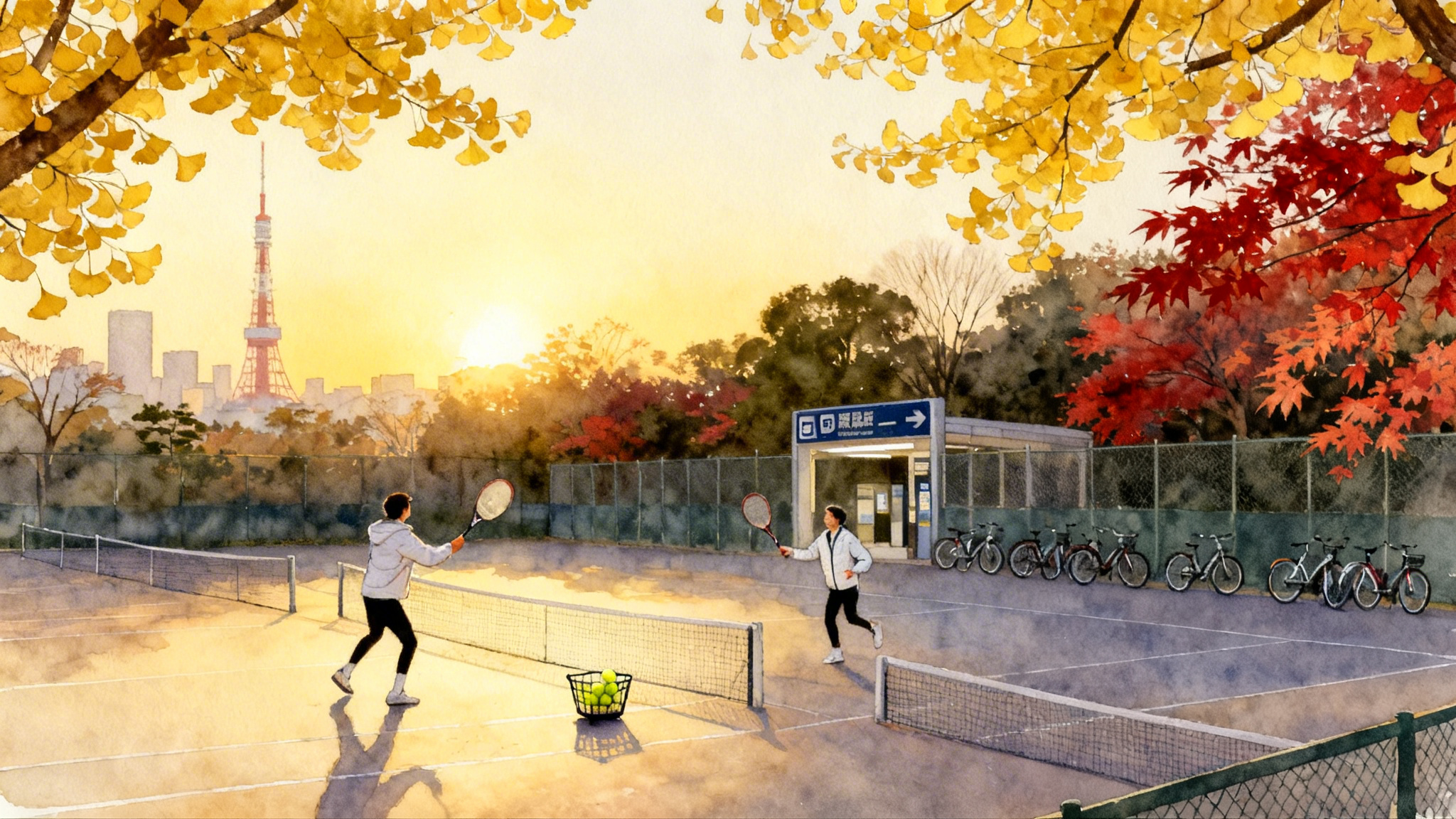
Why Tokyo’s autumn is perfect for hard‑court training
Think cool air, dry skies, and maple leaves edging the sideline. From late September to November, Tokyo’s weather steadies into the sweet spot for tennis. Daytime highs usually sit in the mid teens to low twenties Celsius, humidity drops enough that grips stay tacky, and showers are brief rather than all‑day washouts. Hard courts feel quicker in the afternoon sun, while crisp mornings reward clean timing. For visiting players, that combination makes October and November the smartest months to stack technical work in the morning with match play later in the day.
Two strong options: Seijo vs. Shi Shi
Tokyo has many coaches and clubs, but two consistently serve visiting adults and juniors well.
-
Seijo Tennis Academy in Setagaya
- Home base: residential Setagaya, with a local feel and plenty of municipal courts nearby.
- Strengths: structured progressions and video‑assisted feedback. Expect clear themes like serve plus one, neutral ball tolerance, and first step speed.
- Best fit: travelers who like a fixed base and the rhythm of returning to the same area each day. Ideal if you are staying along the Den‑en‑toshi or Odakyu lines and want short, predictable commutes.
-
Shi Shi Tennis Academy in Tokyo
- Home base: flexible. Coaches meet you at municipal or private courts around the city.
- Strengths: session design that adapts to location and time. If you want to train near your hotel on Tuesday and closer to a park on Thursday, they can move.
- Best fit: travelers who want to minimize transit time or who are pairing tennis with sightseeing across different neighborhoods.
Both serve adults and juniors. Both can group similar levels and arrange sparring partners. English coaching is available, but confirm it when you book. If you are bringing a junior, share match videos and recent results before you arrive so the first session starts at full speed.
Where to stay for an easy commute
Pick a base that puts you close to courts and trains you will actually ride.
- Near Seijo Tennis Academy: Sangenjaya, Sakura‑shinmachi, and Shimokitazawa. These areas are lively at night but quiet in the morning, with bakeries and coffee before a 10 to 20 minute hop to Setagaya courts.
- For citywide training with Shi Shi: Meguro, Ebisu, Shibuya, and Otemachi. From these hubs you can reach east or west easily. If you want quick access to the bayside facilities and parks, Kachidoki or Toyosu shorten the ride.
Tip for families: if you split adult and junior schedules, choose a station where express and local trains both stop. That keeps timing predictable when one person heads to a morning drill block and another meets a coach elsewhere.
Booking municipal courts without headaches
Tokyo’s municipal courts are clean, well kept, and bookable. Here is how most visiting players make it work.
- Timing: sessions open in two‑hour blocks. Morning blocks fill first on weekends and holidays. Weekdays after 1 p.m. are usually easier.
- Who reserves: some wards require a local account to book in advance. If you cannot register, ask your academy to book on your behalf or use pay‑on‑the‑day courts that allow walk‑in once the block is open. Plan this before you land.
- Where to look: think by area, not only by name. In the west and southwest, Setagaya and Meguro wards have many hard courts. For bayside and east, Koto and Edogawa have large multi‑court parks. If you are staying central, Chiyoda and Shinjuku offer smaller facilities but fast commutes.
- Proof of use: bring a photo ID and a screenshot of your reservation. Staff will often check the booking number at a small office next to the courts.
Court etiquette that locals expect
- Arrive 10 minutes early and check in politely. A simple greeting goes a long way.
- Do not enter a court while a point is live next door. Wait at the net post.
- Return balls to adjacent courts with a gentle bounce, not a drive.
- Sweep or squeegee if staff ask you to. Keep benches and the baseline area tidy.
- Keep music in headphones. Phone calls off court.
- Separate garbage and recycling. Many parks expect you to pack out trash, so carry a small bag.
Ball and court‑speed notes for October and November
- Surface: most municipal hard courts in Tokyo are acrylic with a medium pace and moderate grit. Shoes with a hard‑court herringbone pattern work best.
- Temperature: cool mornings make balls feel heavier. Bump your swing speed or lower string tension slightly if you struggle to clear the net early. By midday the ball livens up.
- Balls: Dunlop Fort is common and holds pressure well. If you like a softer feel, try a fresh can each afternoon block or string two pounds lower than your summer setup.
- Wind: parks are often sheltered. On calm days, depth control matters more than spin. Use high and heavy shapes to push opponents back rather than chasing winners.
Want to level up one specific weapon before the trip? Save this kick serve biomechanics guide for your next stringing and practice day.
A 5–7 day plan that stacks skill and matches
Design your week around mornings for technical blocks and afternoons for match play. Nights are for mobility, food, and light sightseeing.
Day 1: Arrival and reset
- Morning or mid‑day: travel and check in. Light jog or train mobility in a local park. Five sets of ten ankle rocks, hip airplanes, and shoulder openers.
- Late afternoon: 60 minutes of feel on a nearby wall or mini court. Focus on contact in front and relaxed grip. No more than 70 percent effort.
- Evening: string check and hydration. If your racquet traveled in the hold, strings may read tighter. Note the feel for tomorrow’s session.
Day 2: Stroke foundation and neutral tolerance
- Morning technical block with Seijo or Shi Shi, 90 to 120 minutes
- Warm‑up ladder: 6 minutes of carioca and crossover steps, then 20 shadow swings per side.
- Drill: cross‑court forehand ladder to 20 balls without a miss, then to 30 with depth beyond the service line.
- Backhand build: two cross‑court patterns, then switch to inside‑out forehand plus recovery steps. Finish with 12 minutes of serve rhythm, no targets, only toss height and tempo.
- Afternoon match play, 2 hours on a municipal court
- Format: two no‑ad sets. If you are solo, book a sparring partner through your academy.
- Focus: no backhand errors in the first four balls of a rally. Track your neutral‑ball make percentage.
Day 3: Serve plus one and transition
- Morning technical block, 90 minutes
- Serve start in the deuce court, hit to body and jam serves first. Build to wide and T. After each serve, play the plus one to a cross‑court target.
- Transition: short ball recognition. Coach feeds mid‑court. Approach down the line, split step, and close with two volleys.
- Afternoon match play, 2 hours
- Format: serve games only for 45 minutes, then full sets.
- Focus: first serve percentage over 60 and a plus one to the open court. If you hit two second serves in a row, commit to heavy spin and deep middle.
Day 4: Patterns and pressure
- Morning technical block, 90 minutes
- Pattern one: forehand inside‑in to backhand corner, recover, then rally cross‑court neutral. Repeat to build movement habits.
- Pattern two: backhand up the line followed by cross‑court forehand, then neutral rally.
- Competitive drill: 15 ball live ball, point starts with a deep middle feed. Score only when you create space then finish safely.
- Afternoon match play, 2 hours
- Format: three short sets to four games. Change ends fast. Practice score pressure.
- Focus: defend cross‑court with height. Use a moonball only if it lands within one meter of the baseline.
Day 5: Choice day and recovery
- Option A: rest morning with 45 minutes of guided mobility and footwork ladders. Book only an afternoon match block.
- Option B: private lesson to clean up one stroke. Record 10 minutes of side‑on video for takeaways.
- Afternoon: one set of doubles with locals or another pair from your academy. Doubles teaches first step decisions.
Day 6: Return and repeat with higher demands
- Morning technical block, 90 minutes
- Serve plus volley reps if you are comfortable at net. Otherwise repeat Day 3 at a faster tempo.
- Add return of serve patterns. Think split step timing and contact in front. Focus on depth over lines.
- Afternoon match play, 2 hours
- Format: full match with a new opponent. Play with new balls to stress control.
- Focus: first four shots. Track how many points you win when the first four land deep.
Day 7: Test day and taper
- Morning, 60 to 90 minutes
- Short test: 20 cross‑court forehands with target, 20 backhands, 10 serves to each corner. Record scores to compare against Day 2.
- Afternoon, 90 minutes
- Play a pro set to eight. Finish with 20 minutes of volleys and overheads. End with a cool‑down walk through a nearby park to enjoy the foliage.
If you only have five days, skip Day 5 and combine elements of Days 6 and 7 into one longer session. The key is to alternate between skill building and pressure testing so that technique shows up under match stress.
Rain‑day plans that keep momentum
Tokyo’s fall is kind, but rain still happens. Protect your training like this.
- Hold one indoor or roofed option in reserve. Many wards list roofed courts that remain playable in light rain. Your academy can often shift your morning technical block indoors if you give notice.
- Keep a flexible afternoon block. Book a late afternoon slot and be ready to slide to evening if showers pass.
- Pack for wet conditions. Bring a small towel for grips, an extra pair of socks, and a light shell. Keep a handful of overgrips in your bag.
- Use a movement session when rain is heavy. Thirty minutes of split step drills, side shuffles, and shadow swings in a hotel gym preserves the training rhythm.
Sample costs to plan your week
Actual fees vary by ward, time, and court type. Use these ballpark numbers to shape a budget for two players training together.
- Group clinic, 90 minutes: 4,000 to 6,000 yen per player.
- Private lesson, 60 minutes: 10,000 to 15,000 yen for the coach, plus court and ball fees.
- Sparring partner, 90 minutes: 6,000 to 9,000 yen.
- Municipal hard court, 2 hours: 1,300 to 3,500 yen per court block depending on ward and time. Split among four, that can be under 1,000 yen per player.
- Indoor or roofed private court, 60 minutes: 5,000 to 8,000 yen per court. Some venues charge a small registration or day fee.
- Balls: 600 to 900 yen per can for standard pressurized balls. For two daily blocks, plan on two cans per day.
- Stringing: 2,000 to 4,000 yen labor, plus 1,500 to 3,000 yen for string. If you prefer a specific model, pack one set in your bag.
- Transport: 600 to 1,000 yen per day using a rechargeable transit card such as Suica or Pasmo. Most courts are within a short walk of a station.
A seven day plan for two players might look like this: four private or semi‑private morning blocks, three group clinics, six municipal court afternoons, two sparring sessions, twelve cans of balls, and transit. That totals roughly 80,000 to 120,000 yen for two, excluding lodging and food. Treat this as a planning baseline rather than a quote.
How to book smoothly and show up ready
- Contact the academy early. Share dates, level, video, and goals. Ask them to reserve courts if your ward of choice requires a local account.
- Confirm language. If you want English instruction, say so up front. If you are open to bilingual sessions, you may unlock more coach options.
- Clarify rain policy. Ask what happens if the morning is wet but the afternoon clears. Many coaches will slide time rather than cancel outright.
- Bring first‑day details. Cashless payment is widely accepted, but some park offices still prefer cash for ball rentals or small fees. Carry both.
- Pack smart. Two racquets, five overgrips, a ball mark pen, a small towel, and a light long‑sleeve for morning starts. Hard‑court shoes only. Clay shoes are too soft for Tokyo acrylic.
Foliage add‑ons around tennis
Use the training week to catch peak color without long detours.
- Meiji Jingu Gaien ginkgo avenue: a short walk from Aoyama‑Itchome Station. The tunnel of yellow trees peaks from mid to late November. Pair it with a light doubles hit nearby earlier in the day.
- Rikugien Garden and Koishikawa Korakuen: two classic gardens that glow red and orange from late November. They are compact, perfect for an evening stroll after a match block.
- Komazawa Olympic Park: easy from Setagaya sessions. Tall trees ring the running course, and the park offers soft recovery walks after tough drills.
- Mount Takao day trip: if you schedule a rest morning, take the Keio Line west for a short hike and views of the city. Go early, return by mid afternoon for a low‑intensity hit.
Adults vs. juniors: how to tailor the same week
- Adults: emphasize repetition in the morning and points under time pressure in the afternoon. Keep recovery tight with a short mobility routine every night. Use the first two days to clean up contact, then layer in patterns.
- Juniors: place more live ball in the morning and track clear metrics. Examples include returns in play out of 20, cross‑court rally tolerance to a target, and first serve percentage to the body. Add one video review near midweek to lock a single technical cue.
A note on string tension and scheduling
Strings respond to weather. If mornings are below 15 degrees Celsius, lower tension by one to two pounds or use a softer cross if you are in a hybrid setup. Schedule the most technical lesson in the morning when your brain is fresh and courts are quieter. Save the heaviest hitting for midday when the ball is livelier and joints are warm.
Example daily schedules
-
Adults, central base in Meguro
- 07:00 light jog and coffee
- 08:30 technical block with Shi Shi near your area station
- 12:00 lunch and short rest
- 14:30 municipal court match play, two hours
- 18:00 dinner within a ten minute walk of your hotel, stretch before bed
-
Family with a junior, Setagaya base
- 08:00 junior technical block with Seijo, adult wall session beside the court
- 11:30 lunch, short homework or video review
- 14:00 junior match play with local sparring partner, adult doubles on the adjacent court
- 17:30 walk through Komazawa Park, dinner nearby
Putting it together
Tokyo in October and November gives you everything a tennis week needs. Cool mornings that make technique crisp. Dry afternoons that reward brave patterns. Municipal hard courts that are clean and fair. Two academies that match different travel styles. If you plan the details now, you will spend your time in rhythm rather than in transit.
Choose a base with simple train lines. Decide whether you want a fixed Setagaya hub with Seijo or flexible citywide sessions with Shi Shi. Block mornings for technical work and afternoons for match pressure. Carry fresh balls. Adjust strings to the weather. Have one roofed option on deck. Then let the city do the rest. Leaves will change. Parks will quiet at dusk. You will walk back from your last session of the week already knowing which court you want first next time.