Austin 2026: Wind-Smart Winter Tennis at Legend Tennis Academy
Why Austin beats Florida for winter-sun tennis in 2026. Train at Legend Tennis Academy’s covered, lighted courts, master Hill Country winds and cedar pollen, follow a 7-day plan, and explore Lake Travis, food, and music.
 Tommy
Tommy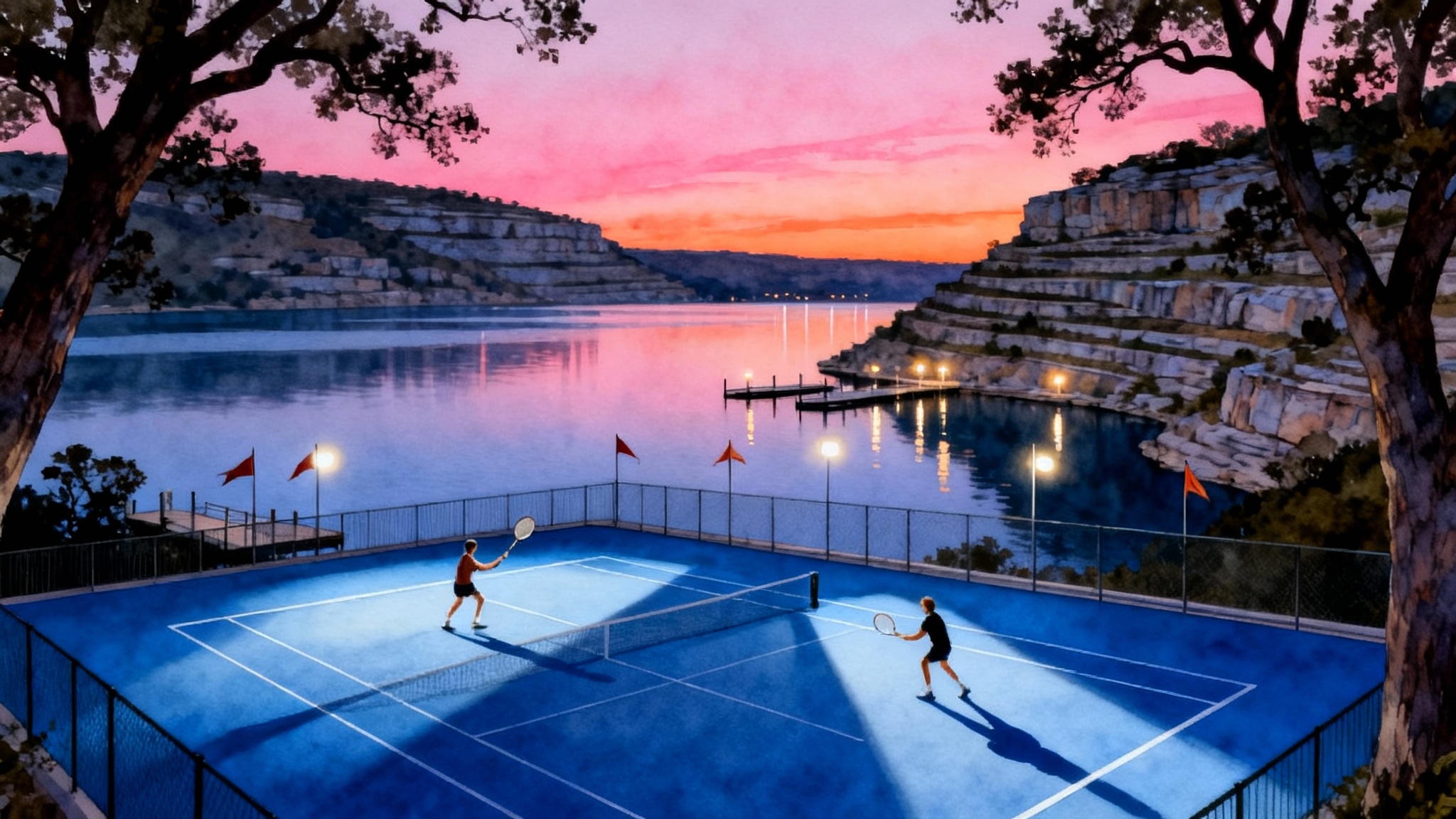
Why Austin is the winter-sun alternative to Florida
If you love winter tennis but want a fresh playbook beyond Florida, the Austin Hill Country belongs at the top of your 2026 list. The air is drier, the afternoons are mild, the sunsets stretch over limestone ridges, and the Legend Tennis Academy courts are protected, lit, and ready for serious reps. The city offers a rare combination: a big-league tennis culture, a manageable airport, and a compact set of neighborhoods that let you sleep by the lake and hit in the hills before lunch. When a norther rolls through, the topography provides pockets of shelter that make training possible when open coastal courts would turn into a wind tunnel. Put simply, Austin gives you the sun, the variety, and the control.
From October through April, afternoons often sit in the 60s and low 70s Fahrenheit, with cool mornings that wake up your footwork without draining your energy. Rain tends to come in short bursts rather than all-day soakers, which means a flexible schedule can salvage most practice windows. Florida may offer palm trees and a larger resort grid, but Austin balances comfort with predictability. If Florida is still on your radar, compare conditions in our Naples winter tennis guide.
Legend Tennis Academy: covered light and smarter reps
Legend Tennis Academy is built for winter consistency. Covered, lighted hard courts remove the big variables of drizzle, early dusk, and glare. That infrastructure matters because one canceled session can derail a plan, especially on a short trip. With lights on, you can shift to early morning or late evening without losing quality. With a roof overhead, a quick shower becomes a five-minute pause rather than a lost day. If you prefer fully enclosed domes in deeper winter elsewhere, consider these dome-season training options for future blocks.
Expect high-ball live drilling in the mornings, patterns and transition work in the afternoons, and match play blocks that mirror the conditions you are likely to face in weekend leagues and Universal Tennis Rating events. Coaches will push you to build a wind plan, not just a forehand. That means clear targets, set routines, and decisions that withstand gusts. If you are booking a focused week, you can request a progression that moves from heavy ball tolerance to first-strike accuracy to point construction under time pressure. You can also ask for a doubles day that applies the same wind rules to poaches, lobs, and overheads.
If you want to lock in dates or customize a block for your level, you can reserve training at TennisAcademy.app and note that you are planning a wind-smart winter week in the Hill Country. Sharing that cue helps coaches set the right sessions and match partners from the start.
Hill Country microclimate, simplified
Think of the Hill Country as a chessboard of ridges and coves. A cap of cool air after a cold front can sit in low areas at dawn, then mix out as the sun rises. Afternoon breezes often build from the northwest or southeast, depending on the timing after a front. Lake Travis and the surrounding hills cut that flow into lanes. That is your opportunity.
- Ridges and open plateaus: more wind exposure, better for stamina and footwork on gusty days.
- Tree-lined coves and leeward slopes: less wind, ideal for precision work and serve rhythm.
- Covered courts at Legend: controlled environment for technical changes, string testing, and video.
Fronts usually pass in pulses. The day a front arrives is blustery and cooler, the following day is crisp and bright, and by day three the breeze relaxes. Plan your week to ride that wave: defense and movement while the wind howls, offense and accuracy when it calms.
Cedar pollen, without the mystery
Locals call it cedar fever. It is not a fever, but the itchy eyes, stuffy nose, and fatigue can feel like one. The pollen spikes mainly in late December through February, with lighter edges in early March depending on rain and wind. If you are sensitive to mountain cedar or other winter pollens, build a simple routine:
- Start a daily saline rinse the week before you fly.
- Keep a non-drowsy antihistamine in your bag, plus lubricating eye drops.
- Shower quickly after outdoor sessions; change shirts before lunch hits.
- Close windows on breezy nights; use the air conditioner’s filter even when it is mild outside.
With covered courts and a plan, cedar season becomes manageable. If your symptoms spike, move your highest-intensity work indoors or under cover for a day, then return to open courts once the breeze settles.
When to go: October through April
- October to early November: warm afternoons, cool mornings, little humidity. Great for volume and offensive pattern building.
- Late November to January: the crisp season. Expect a few true cold snaps, but many blue-sky afternoons. Cedar season begins in earnest late December.
- February: often the best balance of sun and calm, with longer daylight and fewer holiday crowds. Cedar is tapering but not gone.
- March to April: spring shift. Wildflowers, more daylight, and the occasional storm line. Mornings are ideal for consistency and serve blocks.
Two planning notes for 2026. First, weekends around big events and festivals can tighten lodging near downtown and push traffic closer to the city core. Second, spring break weeks bring families to the lake. If you want quiet mornings and predictable travel times, arrive Sunday to Friday, or choose a lake cove address with quick highway access.
The wind-smart playbook you will use all week
Wind is a coach if you let it be. Here is a simple system that makes it your ally instead of a mood killer.
- String and gear: bump tension up two to three pounds if you tend to overhit when it blows. Poly strings maintain control; a hybrid with a firmer main can help if you like a bit more feel. Heavier racquets stay stable in the wind, but do not overdo swing weight at the cost of racquet head speed.
- Targets: add a ball’s width of margin above the net on drives into the wind, and aim a foot inside the lines with the wind. On approach shots with a tailwind, choose more depth over pace; behind the ball is better than past it.
- Serve: into the wind, flatten first serves and aim at the body to reduce timing gifts. With a tailwind, slice wide in the deuce court and kick to the backhand in the ad court; both serves jump away after the bounce.
- Returns: shorten the backswing, move up a half step, and pick a big crosscourt window. Neutral beats heroic when the ball moves late.
- Footwork: think small steps and still shoulders. The legs do the work, the upper body stays quiet. On lobs and overheads in gusts, track the ball with your off hand longer than usual, then commit.
Where to stay on Lake Travis
Your best base is the mid-lake zone near Lakeway and Hudson Bend. You are twenty to forty minutes from most Austin neighborhoods, yet you get quiet nights and big-sky mornings.
- Resort comfort: Lakeway Resort and Spa sits on a bluff with sunset views, pools, and restaurants. It suits families or players who want amenities and quick highway access.
- Villas and condos: Lakeway proper has townhomes and condos that keep gear storage simple. Choose units with a carport or garage if you travel with a ball machine or multiple bags.
- Lakeside rentals: Hudson Bend and Volente have coves with small docks and decks. These are perfect for morning mobility work and coffee, then a quick drive to the courts.
Search by cove and driveway angle rather than headline photos. A flat driveway and easy street parking save minutes when you are shuttling to early sessions. Ask for blackout shades in bedrooms so you can recover after late sets under the lights.
Off-court food and music that serve your training
- Breakfast tacos: simple fuel after morning drills. Order egg, potato, and avocado on corn tortillas. Add salsa after practice, not before. You want carbs and salt, not a gut check.
- Barbecue: ribs and brisket are worth a stop, but go easy on heavy sides on match day. Beans and pickles travel; creamed corn does not. If you want a lighter plate, order turkey and slaw.
- Tex-Mex: fajitas give you protein and peppers without the fried overload. Save queso for off days.
- Coffee and tea: the independent scene is strong. Choose a pour-over or black tea before afternoon drills. Skip sugary blended drinks until after your session.
- Live music: anchor one night around a small venue instead of a giant stadium show. You will get to bed earlier, and you will feel it in your legs the next day. The Continental Club, ACL Live at the Moody Theater, and neighborhood stages across South and East Austin are reliable picks.
A 7-day wind-smart training plan
The plan assumes you arrive Sunday evening on Lake Travis, train at Legend in the mornings, and use afternoons for match play, mobility, or recovery. Adjust for your level and goals. If a true norther slams through, slide the days forward one slot and use the covered courts to hold onto volume.
-
Day 1, Monday: Assessment and foundations
- Morning at Legend: 90-minute on-court assessment. Forehand and backhand depth ladders, neutral rally tolerance, and 20 minutes of serve locations. Video capture from behind the baseline.
- Afternoon: Easy mobility on a lakeside path, then 30 minutes of band work and shoulder care. Dinner early, lights out early.
-
Day 2, Tuesday: Defense in the wind
- Morning at Legend: Gust simulation. Crosscourt heavy-ball rallies into the wind, high over net tape with big margins. Footwork ladders between reps to keep the legs live.
- Afternoon match play: Public courts in town or a booked set with a local partner. Play two no-ad sets starting with down-the-line serves, then a ten-point tiebreak to finish. Emphasize return height and shape.
-
Day 3, Wednesday: Offense and first strike
- Morning at Legend: Serve plus one from both sides. Short targets inside the service boxes followed by depth to the opposite corner. Add approach and first volley patterns.
- Afternoon: Optional doubles. Work on low chip returns and body serves. Finish with overheads in variable tosses to mimic gusts.
-
Day 4, Thursday: Recovery and precision
- Morning: Active recovery only. Hike a short hill path, then 30 minutes of yoga or a guided stretch. If cedar pollen is high, keep the morning indoors and rinse after.
- Late afternoon at Legend: One hour of precision games. Alleys-only points, five-ball patterns, and serve accuracy ladders to nine targets.
-
Day 5, Friday: Match rehearsal
- Morning at Legend: Two-hour practice match with coaching. Switch balls at the change of sets to mimic tournament conditions. Film the first five games from a side angle.
- Evening: Light dinner and a small-venue show. Hydrate before and after. Set your bag for the weekend.
-
Day 6, Saturday: Austin circuit day
- Morning: Travel to a different part of town for a fresh surface and feel. Warm up with crosscourts, then play a best-of-three no-ad match. Focus on serve patterns built all week.
- Afternoon: Optional mixed doubles set or a serving pyramid workout under the lights if you want volume without pounding your legs.
-
Day 7, Sunday: Choice day and taper
- Morning at Legend: Choose your gap. If your returns lag, run 60 balls of short backswing returns. If your forehand sailed in the wind, do shoulder-height rally tolerance drills. Finish with ten minutes of serves to your weakest corner.
- Afternoon: Pack, rinse, and refuel. Quick walk on the lake, then early dinner. Leave with notes and two adjustments to keep at home.
Match play around Austin
If you want more opponents, line them up before you fly. Two options work well:
- Universal Tennis Rating: post open hit invitations and filter by verified match results. Explain that you are training in the wind and want match sets with new balls and short warmups. Players love clarity.
- United States Tennis Association leagues: if your dates match a league season, ask coordinators for practice match contacts. You are more likely to get a reply if you give your level, preferred side in doubles, and a two-hour window.
Keep afternoons flexible. A 2:30 p.m. hit often avoids lunch traffic and catches the calm between daytime heating and the evening breeze near the water.
Rain or gusts, do this
- Rain window: shift to covered courts and shorten work bouts. Do fifteen-minute blocks of serve targets, then volleys, then returns with a ball machine if available. Use the time to experiment with string tension or lead tape without sacrificing your week’s tactical work.
- Gusts above your comfort: move to a court with trees on two sides or a small ridge to the windward side. Drill high percentage patterns with a larger target. Film your serve to check toss height; most players toss too high into wind.
- Cedar spike: schedule an indoor gym circuit or mobility day, then resume outdoor afternoon sets. The second session after a rest day is usually your best of the week.
Getting around and packing smart
- Fly into Austin-Bergstrom International Airport. Pick up a compact SUV so your gear sits flat and dry.
- Pack light long sleeves for mornings, a thin down vest, and two pairs of court shoes so you can rotate after rain.
- Bring a small towel for grips, a hat that cinches, and two sets of strings if you plan to adjust tension midweek.
- Stock a basic recovery kit: compression sleeves for the flight home, a massage ball, and your preferred electrolyte mix. The dry air will sneak up on you.
How to book, and how to save
- Book training first, lodging second, flights third. Court slots in the covered bays are the scarcest resource on good-weather weeks. Once those are set, everything else will fall into place.
- Aim for Sunday arrival and Friday departure to beat weekend crowds on the roads and at restaurants.
- Consider two back-to-back short trips rather than one long stay. Your body will absorb technical changes better with a week at home between blocks.
If you want help pairing training with match play and a Lake Travis base, include those notes when you reserve training at TennisAcademy.app. A clear brief gets you better partners and smarter court times.
Bottom line
Austin is not a consolation prize for people who could not get courts in Florida. It is a different idea of winter tennis, built around control. The covered, lighted courts at Legend Tennis Academy protect reps from rain and early sunsets. The Hill Country microclimate turns wind into a factor you can plan for rather than a random hazard. Lake Travis gives you quiet nights and quick drives. The city feeds you well and sends you home with a playlist. Commit to the October to April window, pack a wind-smart plan, and let Austin sharpen your game when others are hibernating.